Category: Uncategorized

DID: Christmas music

DID: Christmas music

When I was in college back in the early 1970s, my friends and I used to entertain ourselves by making up Desert Island Lists. Here’s how it worked: If you were stranded on a desert island, what ONE book would you want to have with you? [Easy for me: the Bible.] What five photographs? What 10 records (OK, now it would be CDs, or downloads to an iPod? So a “DID” is a list of Desert Island Discs. You get the idea.

I’ve been listening to and playing Christmas music for decades and have put together a collection of music I turn to year after year as Christmas rolls around. So here is my DID of Christmas albums. Most are easily available. Some are difficult to find. All are, in my mind, well worth tracking down. I now that when it comes to this kind of thing, it’s different strokes for different folks. But I don’t think you’ll be disappointed in any of these albums. Links to the album on amazon.com or other vendors are provided with each title.
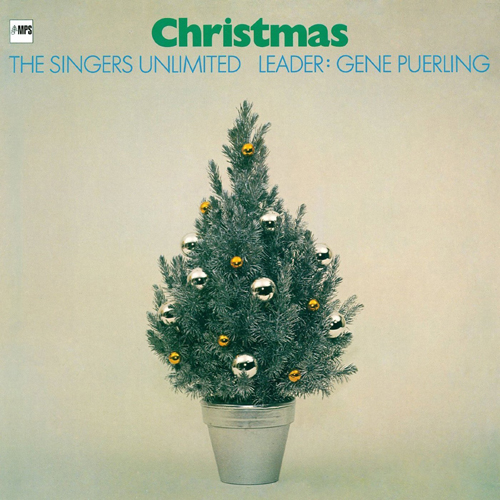
christmas-singers-unlimited

Christmas. The Singers Unlimited

This album was made in 1972 but was one of the first CDs I bought when that technology was new in the 1980s. This is a superb collection of sacred Christmas carols, sung by the absolute premiere acapella singing group – Gene Purling, Don Shelton, Len Dresslar and Bonnie Herman – the original Singers Unlimited. I enjoy this album over and over because of the group’s spectacular blend, intonation, vocal quality and balance.

messiah-robert-shaw

Handel: Messiah. The Robert Shaw Chorale & Orchestra (Robert Shaw)

At last count I own eight recordings of Handel’s Messiah. It remains, to me one of the most important works of classical music ever composed. It tells the story of Jesus Christ’s birth, death and His resurrection in a work of stunning craft. It’s difficult for me to recommend one recording of Messiah; there are so many, ranging from performances that use modest forces to ones that utilize huge choirs. But the one I turn to for sheer listening pleasure is the one I purchased back in 1973 and which has stood the test of time. Recorded in 1966 – it won a Grammy at that time – Robert Shaw Chorale and Orchestra play with umparalleled blend and the soloists are uniformly superb. As is James Smith’s fine trumpet solo on “The Trumpet Shall Sound.”

hipsters-holiday

Hipsters HolidayVarious Artists

Sometimes I just want an album that makes me smile. Through every track. This is it. This album contains some classic jazz and R&B Christmas performances by Louis Armstrong (if you don’t break out into a big grin when you hear him should, “‘Zat You, Santa Claus!” then you don’t have a pulse), Ertha Kitt (her “Santa Baby” is THEEperformance of this song; nothing else comes close),  The Marquees, Leo Watson (whose “Jingle Bells” is a tour de force of skat singing that starts off with a trombone solo by Vic Dickinson), Pearl Bailey and many more. Pure fun, fun fun.

alfred-burt-carols

This Is Christmas: A Complete Collection of the Alfred S. Burt Carols. The Jimmy Joyce Singers

When I joined the Boston Symphony Orchestra in 1985, John Williams was Conductor of the Boston Pops. It was with John that I got to know the extraordinary carols of Alfred S. Burt. The tradition of composing a new carol for each Christmas – and sent around to the Burt family’s friends – started with Alfred Burt’s father in 1922 and continued with his son until Alfred Burt’s death in 1954. These carols are beautiful, meaningful, and exquisitely sung by the Jimmy Joyce Singers. While this recording was made in 1963, the singing is first-rate and it is fresh today. I love these carols.
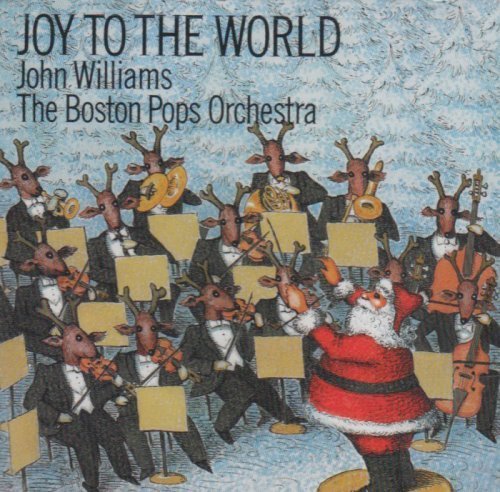
joy-to-the-world-pops-williams

Joy to the WorldJohn Williams and the Boston Pops Orchestra

During my 27 years as a member of the Boston Symphony and Boston Pops Orchestras, I recorded dozens of albums, including 2.5 Christmas albums with the Boston Pops Orchestra. The first of these Christmas albums was recorded in 1992 with John Williams conducting; the other two were conducted by Keith Lockhart. The .5 comes from the album “A Boston Pops Christmas: Live From Symphony Hall” that had half of its tracks recorded in my last season with the Boston Symphony, 2011, and half recorded with Jim Markey on bass trombone in 2012. But “Joy to the World” is my favorite of these three Christmas albums with the Boston Pops Orchestra. It contains many classic Boston Pops arrangements that, sadly, are not played as often today. It also includes a beautiful medley of Alfred Burt Carols, as well as those great, familiar arrangements of “White Christmas,” “Parade of the Wooden Soldiers,” and “Sleigh Ride.” This is a Christmas album classic.
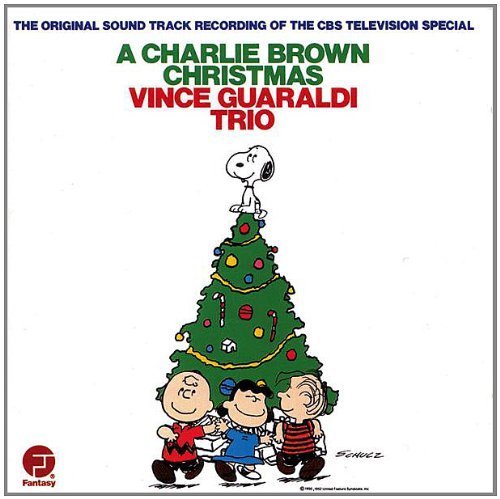
charlie-brown-christmas

A Charlie Brown ChristmasVince Guaraldi Trio

Television has given us many memorable shows about Christmas and the Christmas season, but many people believe the most iconic is “A Charlie Brown Christmas.” I think so, too. This album contains the original sound track recording to the television show, performed by the Vince Guaraldi Trio. As soon as you hear the first note you are transported back to the first time you saw this memorable Christmas program. The soundtrack also includes Linus’s classic reading of the Gospel of Luke, Chapter 2, where he tells the story of the birth of Jesus and closes with these simple but profound words: “That’s what Christmas is all about, Charlie Brown.” Joyful, ebullient, and this will make you smile. And get a little wet around your eyes.

christmas-cookin

Christmas Cookin’Jimmy Smith

Oh, boy, this is hot. My good friend, Douglas Wright (principal trombonist of the Minnesota Orchestra) gave this to me as a gift many years ago. It features the great jazz/R&B organ player Jimmy Smith with an all star big band conducted by Billy Byers that includes Jimmy Cleveland and Chauncey Welsh on trombone, Paul Faulise and Tommy Mitchell on bass trombone and Harvey Phillips on tuba. This is a WILD disc, joyful to the extreme, and you will have no choice but to get up and dance. Seriously.
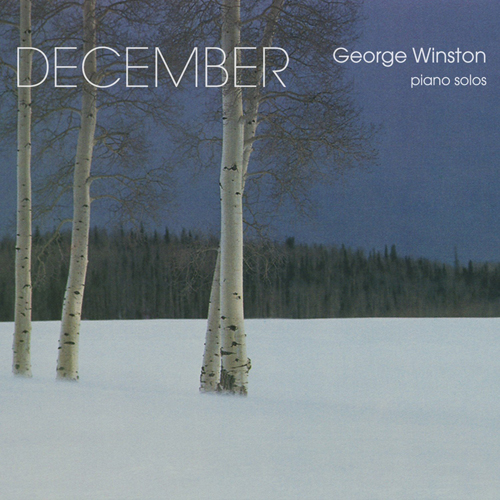
george-winston-christmas

DecemberGeorge Winston

Solo piano. These are creative, uncomplicated arrangements that are tastefully performed. When I just want to sit quietly and think around the Christmas season, this is the album I go to. Winston combines some original compositions with classic Christmas melodies and plays them with grace and style. Mood music with a message.

hollywood_trombones

Have Yourself a Merry Little Christmashe Hollywood Trombones

This album is a little hard to find, having originally been released on HMA Records and then Summit Records. But it’s around (see the link, above) and worth tracking down. It features some of the great Los Angeles players including Dick Nash, Phil Teele, Tommy Pederson, Jeff Reynolds in a great collection of arrangements for trombones and rhythm section, mostly by Tommy Pederson. Pure trombone delight and performed at the highest level.

asu_trombone_tuba_christmas_cover

It’s Beginning to Look a Lot Like ChristmasArizona State University Desert Bones Trombone Choir and Tuba Euphonium Ensemble

During my four years as Professor of Trombone at Arizona State University, I worked to expose my students to a lot of diverse experiences. Recording was one of them. We made two CDs including a Christmas album that we shared with the ASU Tuba Euphonium Ensemble conducted by Deanna Swoboda. The album was a great success, a nice part of our recruiting efforts, and the students played superbly. Since I’m no longer at ASU, the CD isn’t used to promote the program as much as it was when I was there, but if you contact Deanna Swoboda through the link above, chances are she still has copies and you could arrange to get one by making a small donation to the program.

Carols for Christmas.jpg

Carols for Christmas, Volumes I and IIRoyal College of Music Chamber Choir and Brass Ensemble

When I just want to sit down with my Oxford Book of Carols and enjoy listening to superbly performed arrangements of traditional Christmas carols, I reach for this set of CDs. Unfortunately, it seems to be out of print, but copies can still be found, as at the link above (don’t be thrown off by the outrageous price of some copies; used copies at affordable prices are there for for you). There is never a moment where you are aware that these are students playing and singing; this is a first rate compilation.
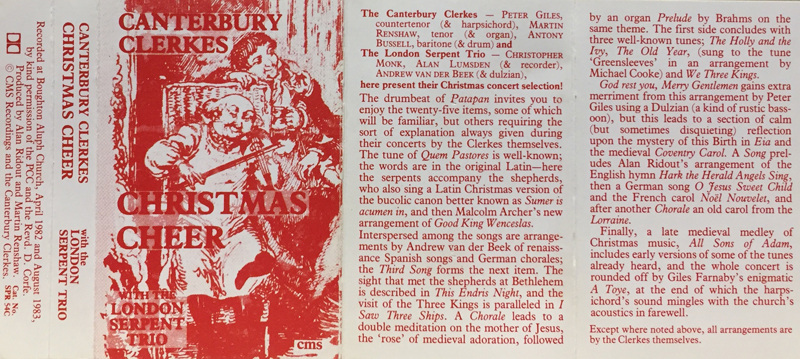
canterbury-clerkes-christmas

Christmas Cheer. The Canterbury Clerkes and London Serpent Trio.

I confess that this recording is one of the most unusual I have ever hear. But I love it. Every second of it. Here is a group of great singers along with the original London Serpent Trio: Christopher Monk, Alan Lumsden and Andrew van der Beek. Yes. A serpent trio. The combination is memorable, one of the most charming Christmas albums you would ever hear. Unfortunately, it was only released on cassette (this just goes to show that not everything made it to CD and digital format). I have one of these original cassettes but have not found others for sale. But who knows, you might do better and track one down. It’s worth searching high and low to get you hands on this most unique Christmas recordings.

nebb_christmas

This is Christmas: The New England Brass Band

During my ten year tenure as Music Director of the New England Brass Band (1998-2008), the band recorded five CDs in Boston’s Symphony Hall. Our second Christmas album, “This is Christmas,” was recorded in 2005 and shows the band to be in superb form. While we sold over 1000 copies after it was released, I believe the disc is now out of print and no longer available; you could contact the NEBB through the link above and ask, although I know they have a newer Christmas CD available under the direction of current music director Stephen Bulla. Here’s a bonus for readers of The Last Trombone: click HERE to listen to a track from the CD, an arrangement of “Once in Royal David’s City” arranged by Terry Everson (Professor of Trumpet at Boston University who was also principal cornet and assistant conductor of the NEBB when I was there); I am the bass trombone soloist. This track always brings back such wonderful memories of a special time of my life, working with the NEBB. Enjoy!
 

A Very Merry Phoenix TubaChristmas

A Very Merry Phoenix TubaChristmas

I’m a trombone player. But I also play other instruments as well, and some unusual ones, like the serpent. One of the nice things about playing historical instruments like the serpent is that I get to play music and do things with people that I couldn’t do with a trombone in my hand.

Like play at TubaChristmas. Yup.

The brainchild of the late Harvey Phillips – Professor of Tuba at Indiana University for many years – TubaChristmas has been going for 43 consecutive years. What started at Rockefeller Center in New York City on January 1, 1974 as a tribute to Phillips’ teacher, tuba great William “Bill” Bell (who played tuba with the Sousa Band and the New York Philharmonic Orchestra for many years among many outstanding contributions to the music world) blossomed into a world-wide event. This year, my wife, Pat, and I took part in our first TubaChristmas.

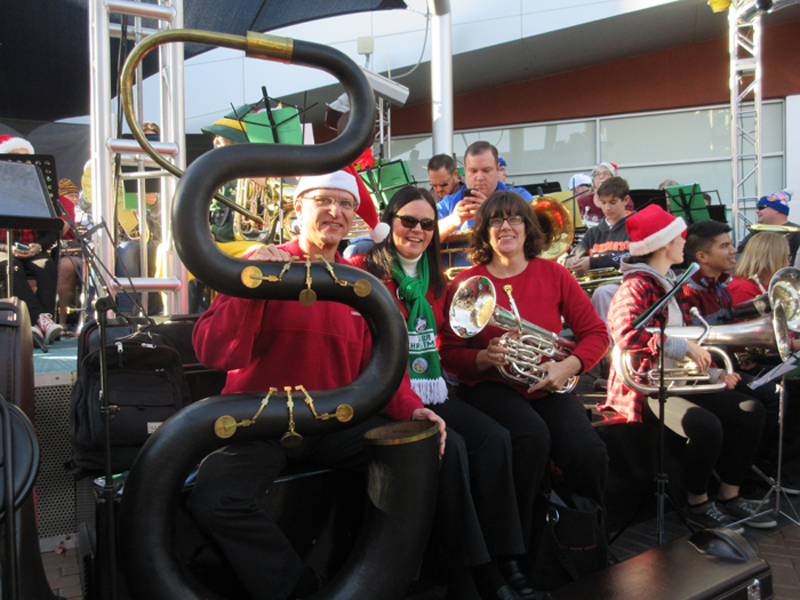
blog_doug_deanna_pat_tuba_christmas_2016a

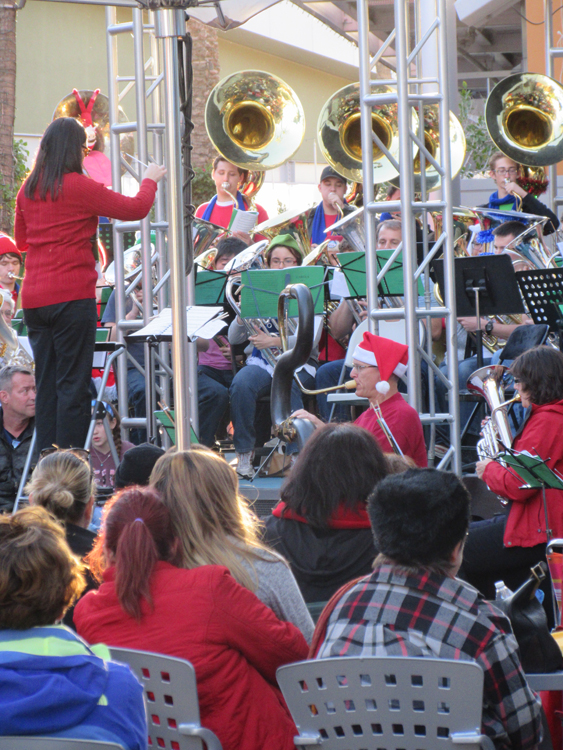
The Phoenix TubaChristmas was led by my ASU Tuba Professor colleague, Dr. Deanna Swoboda . Deanna is a tremendous teacher, player and person, one of my best friends, and she brought her musical expertise and great, fun personality to lead a group of 122 players – a record number for the Phoenix TubaChristmas event – of every type, size and shape of tuba related instrument. Contrabass tubas, bass tubas, Sousaphones, euphoniums, baritones. And a contrabass serpent. The photo above shows me with my “anaconda” serpent, “George,” along with Deanna and Pat (with her British style baritone horn – she played baritone horn in the New England Brass band from 1998-2008 when I was the Band’s music director) at Tempe Marketplace near Phoenix, Arizona.

OK, a word about “George.” Made in 1990 by the late Christopher Monk, “George” was the second contrabass serpent ever made, the first being constructed in the 19th century in Huddersfield, England. “George” was commissioned by the late Philip Palmer and after Phil’s death, I purchased this extraordinary instrument from his widow, Connie Palmer.

blog_doug_pat_tuba_christmas_2016b_small

“George” got its name because it was on April 23 – St. George’s Day – in 1990 that this instrument first received breath from Christopher Monk. 16 feet long, it is in CC; it is made of choice sycamore covered with leather. It was built to be a double size French church serpent with brass keys since the holes are too large to be covered by one’s fingers. The boxwood mouthpiece was made for me by the late Keith Rogers who succeeded Christopher Monk as serpent and cornet maker of Christopher Monk Instruments in England. The serpent is considered the ancestor of the tuba family, a bass wind instrument with a cup shaped mouthpiece that had its origins in – well, it all depends on where you come down on serpent scholarship. Certainly it was being used in France by 1590 but it very likely had origins in Italy somewhat before that time. You can get a lot more information about the serpent by visiting The Serpent Website where you can also download past issues of The Serpent Newsletter. Seriously!

blog_deanna_doug_pat_playing_tuba_christmas_2016b

Bringing “George” along to TubaChristmas – and I should say that this is a real, serious instrument, capable of playing with a beautiful sound; I used this instrument on my CD of music for serpent, Le Monde du Serpent – was great fun. Deanna asked me to say a few words about the serpent both at the rehearsal and the performance, and I played a verse of “Good King Wenceslas” to demonstrate its capabilities. I posed for a photo with many audience members who wanted to be seen with “George,” and I enjoyed many conversations with people who wanted to know more about the serpent.

phoenix_tuba_christmas_2016_playlist

Our playlist featured 18 well-known Christmas tunes, both popular songs and traditional carols. The audience was enthusiastic and appreciative. Well, you don’t exactly see 122 tuba-type instruments gathered in one place, with players from age 13 to in their 70s, celebrating “the most wonderful time of the year” in a festive way. Part of the fun was knowing that this same kind of event was going on all around the world. Not every place could have their TubaChristmas outside like we did here in Phoenix; Chicago, for instance, had their TubaChristmas in a ballroom at the Palmer House Hotel. But no matter whether it was inside our out, with few or many players, TubaChristmas has developed into a very special event that bring people together with music. A big thank you to Deanna Swoboda for her great leadership, and to all participants and audience members. Merry TubaChristmas!

blog_doug_george_tuba_christmas_2016

Cliff Barrows (1923-2016): A man of song. And the trombone.

Cliff Barrows (1923-2016): A man of song. And the trombone.

by Douglas Yeo (November 16, 2016)

Clifford “Cliff” Barrows, long-time song leader for evangelist Billy Graham, died yesterday at the age of 93. He was part of a trio – along with Graham and singer George Beverly Shea – who defined large-scale Christian evangelism in the second half of the twentieth century. Graham, Shea and Barrows preached, sang and led singing before millions of people since they first worked together in 1946. The photo above shows Cliff Barrows leading singing at the 1946 Youth for Christ meeting in Seattle, Washington.

The newspapers today are full of tributes to Cliff Barrows and a good summary of his life and career is found in his obituary in the Charlotte (North Carolina) Observer. This was a Godly man who changed lives in many ways and he is more than deserving of all of the warm remembrances that are being written about him today.

But several years ago, I learned about a side of Cliff Barrows that most people had either not ever known about or had long forgotten: he played the trombone.

low_bgc_barrows_trombone_02_front

I first learned that Cliff Barrows played trombone while touring the Billy Graham Center Museum at my undergraduate alma mater, Wheaton College (Illinois). As I came around a corner, I saw photographs of two men that were holding trombones: Homer Rodeheaver (I had never heard of him before) and Cliff Barrows (I didn’t know he had played trombone). I learned quickly that Rodeheaver was the trombone-playing song leader for evangelist Billy Sunday in the first third of the 20th century. And this realization – that the two most influential Christian evangelists of the 20th century were both named “Billy” and both had song leaders that played the trombone  – sent me running to learn more.

I turned my attention to Rodeheaver, a man who was a household name for decades but today has been largely forgotten. Here was a man who played the trombone for over 100 million people; his tremendous influence as a trombonist is incalculable. “Surely,” I thought, “there must be a story in all of this.” And indeed there was. It first led to my writing an article, “Homer Rodeheaver: Reverend Trombone” that was published in the Historic Brass Society Journal earlier this year. And, happily, it has now led to my co-authoring a book about Rodeheaver for University of Illinois Press with my friend, Kevin Mungons. We are, at this moment, deep into the process of writing the book and when it appears in a few years, it will be accompanied by a two-CD set of recordings of Rodeheaver singing, speaking and playing trombone. More on this in time! But while doing research about Rodeheaver at the Billy Graham Center Archives and at Grace College in Winona Lake, Indiana (where Billy Sunday and Rodeheaver had their homes and archives for both Sunday and Rodeheaver are found) and the Winona History Center, photos of Cliff Barrows kept popping up. I needed to know more.

barrows_graham_1949

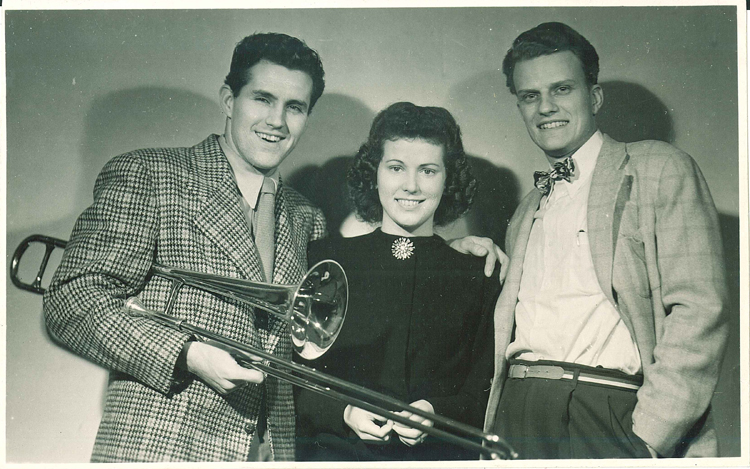
As I researched Cliff Barrows, I learned that he had played trombone while growing up in Ceres, California. With his first wife, Billie (shown above, with Cliff Barrows and Billy Graham around 1946), Barrows worked with evangelist Jack Shuler. The Statesville (North Carolina) Record & Landmark newspaper had this to say about Cliff Barrows at one of Shuler’s meetings in an article from June 26, 1945:

The Barrows’ specialize in piano and trombone arrangements, and their duets and solos have made them friends of everyone who has attended their performances. It was ventured by one who attended the great Billy Sunday campaigns that Mr. Barrows is the equal of Homer Rodeheaver, song leader for the late evangelist, so skillfully does he lead the large crowds in congregational singing of hymns and choruses. Billie Barrows, who, by the way, has been Cliff’s wife for just 13 days, has thrilled young and old with her renditions of favorite songs at the piano.

The mentioning of Cliff Barrows in the same sentence with Homer Rodeheaver was no accident. On April 1, 2014, I interviewed Cliff Barrows and he spoke about Rodeheaver’s influence on his life and ministry:

Homer Rodeheaver  was a most wonderful man. He had a way of using a crowd to prepare them for Billy [Sunday] and Billy would get anxious; he’d want to get up and start to preach and Homer would turn around and say, “They ain’t ready yet.” So he’d pick up his trombone and say, “This is a Methodist trombone, it slips and slides all over the place.” . . . I never met a more gracious man. We had him come to every [Billy Graham] Crusade when he was alive until he died in 1955 and I went to his funeral. They asked me to stand by his casket at the piano at [his home at] Rainbow Point [in Winona Lake, Indiana] and lead some of his favorite songs. And I did. I led “Beyond the sunset, O blissful morning…”

barrows_la_1949

Unfortunately, there are no known recordings of Cliff Barrows playing the trombone. But there is a brief moment where he is seen on film with the trombone in his hands. The screenshot above is from a video of Cliff Barrows playing the trombone at the 1949 Christ for Greater Los Angeles Billy Graham Crusade. You’ll find the footage of Barrows at around 5:00 in the video (click on the link in the text above to view the complete film).

In my conversation with Cliff Barrows, his affection for the trombone was palpable. By that time, he had not played the trombone in many years. After the 1953 London Billy Graham Crusade, Graham and Barrows began making changes in their manner of presenting the Christian Gospel, creating their own style after having been compared so frequently to Sunday and Rodeheaver. By 1957, he had put the trombone down. Still, during our interview, he told me that he was holding a trombone in his lap that had been given to him by the 1950 Atlanta Billy Graham Crusade Choir, on which was inscribed the verse from Psalm 98:1: Sing to the Lord a new song, for he has done marvelous things; his right hand and his holy arm have worked salvation for him. As we spoke at that moment, Cliff Barrows was nearly blind and near the end of his life, yet when we talked about the trombone, he wanted it in his hands. Of Rodeheaver and the trombone, Cliff Barrows said, “Well, they are two of my best friends.”

bgc_barrows_graham_yfc_england_01_1946-7_small

Cliff Barrows, like Homer Rodeheaver before him, found that the trombone was an effective tool in leading song for large groups of people. The photo above, from the 1946-1947 Youth for Christ meetings in England, show the young Billie Barrows, Billy Graham and Cliff Barrows standing out with their exuberant, youthful energy. In our interview, Cliff Barrows talked about how he used the trombone to lead singing:

I would play with the choir and bring the downbeat with my horn and when I would hold a long note, I’d hold it out with them and the horn was just a part of me. I felt so natural with it hanging on my arm.

bgea_barrows_helsinki_trombone_front_small_full

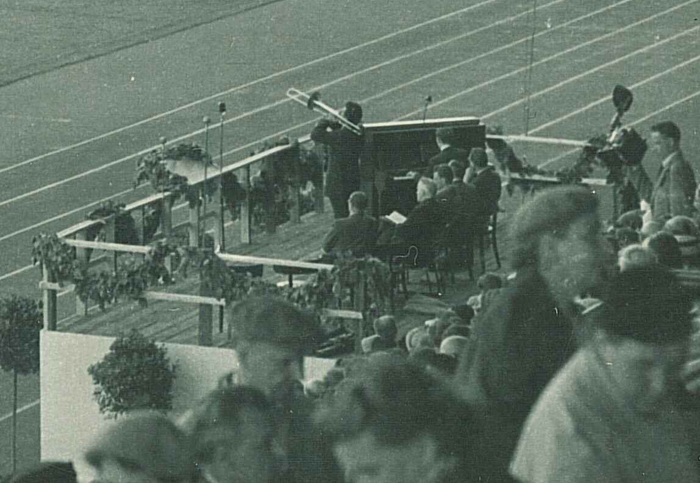
Of all of the photographs I have seen of Cliff Barrows, it is the one above, taken at the 1954 Billy Graham Crusade at the Olympic Stadium in Helsinki, Finland, that I like the best. Look at the tens of thousands of people sitting in the stadium. The infield is empty. And on the platform is Cliff Barrows, playing his trombone accompanied by an upright piano (see the enlargement, below). Two people playing a hymn tune. They are minuscule and nearly lost in the enormity of the crowd. But when a trombone was in his hand, Cliff Barrows knew how to make it sing.

bgea_barrows_helsinki_trombone_front_detail_small

When my interview with Cliff Barrows was drawing to a close, I thanked him for his time and insights. But this humble man turned it around on me, and said,

You’re welcome, Brother Yeo. God bless you brother. Thank you for letting me visit with you.

And with that, two trombone players named Cliff Barrows and Douglas Yeo hung up the phone. Today, as I reflect on the life and ministry of Cliff Barrows, I am so grateful my life intersected with his for a brief moment, where our shared love of Jesus Christ, music and the trombone came together. It was Homer Rodeheaver who led me to Cliff Barrows, the same Homer Rodeheaver who was such an encouragement when Cliff Barrows was just beginning his ministry with Billy Graham. And like Rodeheaver, shown below with Billy Sunday (in a white suit standing behind Rodeheaver) at Winona Lake, Indiana in 1931, Cliff Barrows used the trombone as a tool for leading singing and for bringing the Good News of Jesus Christ to millions of people. It’s something I’ll be doing this Sunday when, with my wife at the piano, I pick up my trombone and play the great song by George Beverly Shea and Rhea Miller, I’d Rather Have Jesus Than Silver or Gold as the offertory in our church’s Sunday morning service. At that moment, I certainly will be thanking God for the life, ministry and influence of Cliff Barrows, a man of song. And the trombone.

rodeheaver_sunday_winona_lake_cropped

[With thanks to the Billy Graham Center Archives and Winona History Center and Grace College for the photos that accompany this post.]

76 Trombones

76 Trombones

by Douglas Yeo (November 12, 2016)

Last week I had the great pleasure of traveling to University of Illinois Urbana-Champaign to take part in several immensely rewarding activities.

Over the years I have been a guest artist at dozens of schools, colleges and universities around the world. The opportunity to engage with students – whether in a lecture, performance, masterclass or, as was the case at University of Illinois, something completely different – is exceptionally rewarding and I always enjoy becoming part of the local musical culture when I am visiting.

The invitation to travel to Urbana-Champaign came from Scott Schwartz, Archivist for Music and Fine Arts and Director of the Sousa Archives and Center for American Music on the University of Illinois campus. Scott and I had met many years ago at the Great American Brass Band Festival in Danville, Kentucky, where I had presented a paper about the use of serpent and ophicleide in brass bands and I performed a solo on ophicleide accompanied by the Athena Brass Band.

yeo_lecture_table

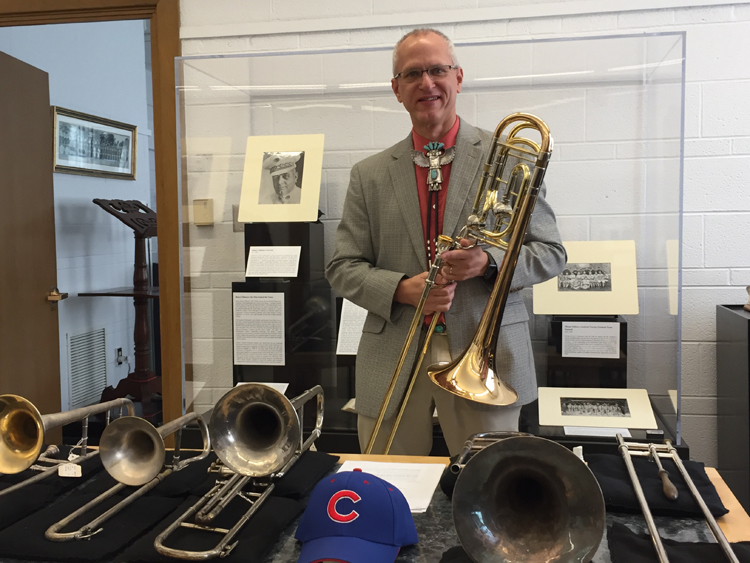
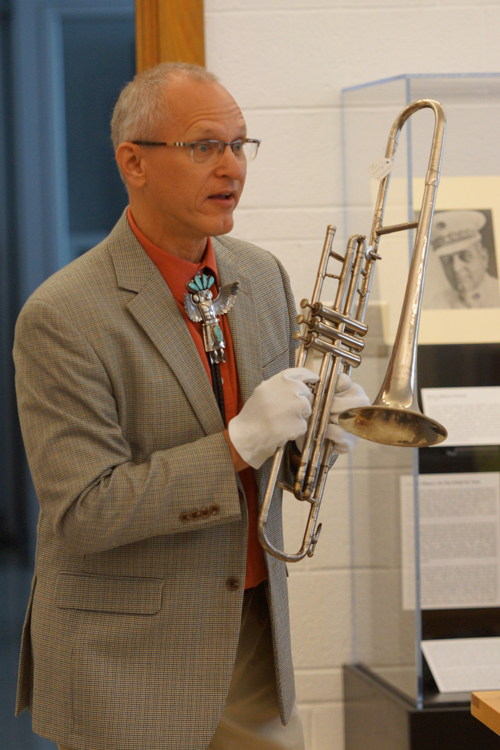
Scott asked if I would be interested in coming to Illinois to give a lecture/demonstration about early American trombone makers, their innovations and marketing strategies. The Sousa Archives had set up a very nice exhibit of six late-nineteenth and early-twentieth trombones as well as mouthpieces, catalogs, advertisements and other ephemera. In addition, we had selected six other instruments for me to play and demonstrate. Oh, and not to be lost in the moment is that the Chicago Cubs had just won baseball’s World Series and it seemed appropriate to make my Cubs hat part of the display.

yeo_lecture_03

I always enjoy getting my hands on, talking about and playing old instruments, such as the alto valve trombone pictured above. The time at the Sousa Archives was very rewarding and was made more so because of the engaged audience and their great questions.

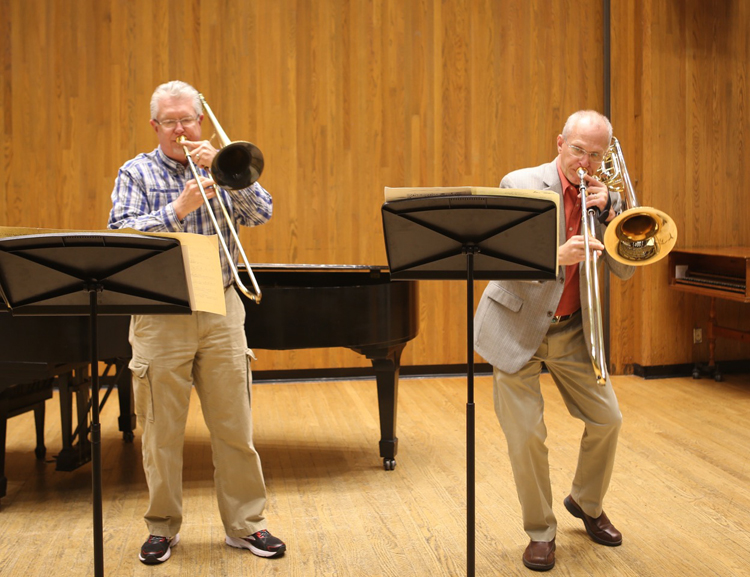
From the Sousa Archives I went to the University of Illinois School of Music where I gave a trombone masterclass. I worked with three talented students and also enjoyed getting together with my friend, Jim Pugh, who teaches jazz trombone and composition at University of Illinois. That was fun.

yeo_pugh

I have known Jim for decades and have the utmost respect for him as a player and a person. Several years ago I reviewed his superb CD, X Over Trombone, and I consider him to be one of the most creative players – and composers – on the scene today. Despite our long friendship, we had never played together, so we started the masterclass with a performance of Charles Small’s duet Conversation.

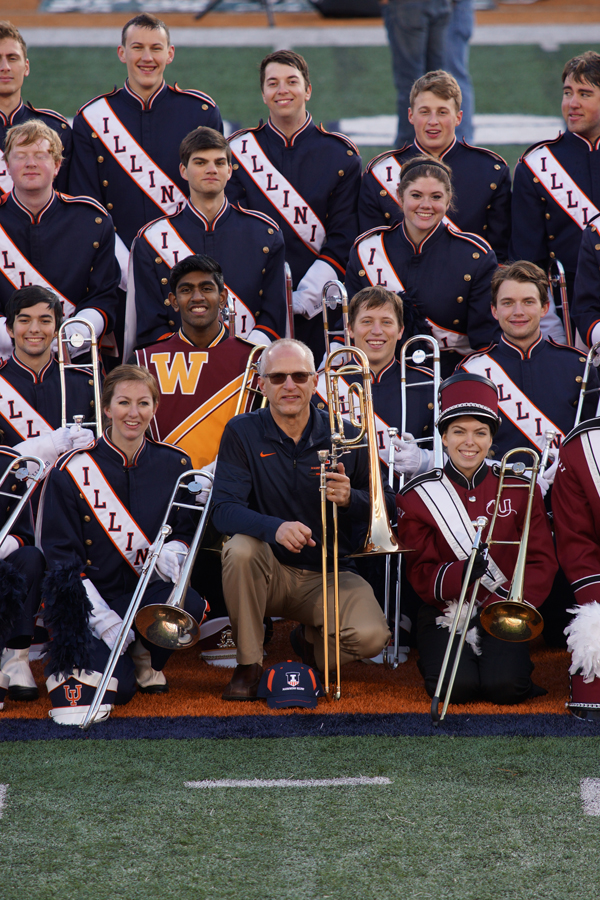
The third piece of my University of Illinois trip was a performance with the Marching Illini Band under the direction of Barry Houser. As an event with another connection to my trombone lecture and masterclass, I led a group of 75 trombone players – both members of the Marching Illini Band and students from local high schools – in a performance of Meredith Wilson’s 76 Trombones to start the halftime show of the Illinois/Michigan State football game. 75 + me = 76 Trombones. That doesn’t happen every day. Click the video image below to see the whole halftime show; it begins with 76 Trombones, and continues with a tribute to the Chicago Cubs and much more.

Now, when you put 76 trombones on a football field accompanied by a marching band, that is one impressive sight and sound. My hat is off to the Marching Illini for inviting local high school trombone players to join with the 40 trombonists of the Illini Band to get us up to 76 trombone players. This is one fine band, and I was caught up in many of their great traditions. School spirit was alive and well; it was a great day of interaction for all of us and, hey, Illinois won the game. It must have been the trombones.

yeo_halftime_03

I want to send a big THANK YOU to Scott Schwartz for making all of this happen, to Jim Pugh for his setting up the trombone masterclass and for playing Conversation with me, and to Barry Houser and all of the members of the Marching Illini Band for a great few days where we all came together in Illini orange and blue and celebrated the trombone. This was a memorable and very satisfying trip. Go Illini! I – L – L – – I – N -I !

yeo_newspaper

[And thanks to Scott Schwartz and Grace Talusan for the photos.]