I have previously written about my time working at Duke Divinity School, and Duke Initiatives for Theology and the Arts. Led by Dr. Jeremy Begbie, the weeks I have spent in Durham, North Carolina working with DITA have been exceptionally rewarding. The photos and commentary I have previously shared gives you a glimpse into what we did with an orchestra of musicians all of whom are Christians — including several of my former colleagues from the Boston Symphony Orchestra as well as trombonists Megumi Kanda (Milwaukee Symphony) and Jim Kraft (National Symphony, retired) and how we were able to impact audiences with important, interesting messages of the intersection of music with faith.
Duke Initiatives for Theology and the Arts has just put together a short video that shows more of what this special weekend last fall was about. I invite you to have a look (the video includes a short interview segment with me), and catch some of the excitement of that moment. Plans are already underway for more events. Have a look at this video, below, and lear more about Duke Initiatives for Theology and the Arts (to view this video in YouTube, click HERE).
Last night’s American football AFC Championship game between the Jacksonville Jaguars and the New England Patriots was full of high drama. Full disclosure: I lived in Boston for nearly 30 years and attended more Patriots games than I can count. Before their astounding period of success began in 2001, I went to plenty of games when the team was, frankly, terrible. Today, the Patriots are heading to another Super Bowl. Their eighth since 2002. This is remarkable. My wife and I now live in Arizona, and we hold season tickets to Arizona Cardinals football. We love the Cardinals. But we still love the Patriots. There you have it.
I’ve written about the Patriots before on The Last Trombone, particularly about quarterback Tom Brady and how he was the 199th pick in the 2000 NFL draft. Brady has used that fact – that teams passed him over repeatedly until the Patriots drafted him in the sixth round – to fuel his engine of excellence. The result: he has gone on to be what most football observers consider to be the greatest football player of all time – the G.O.A. T.
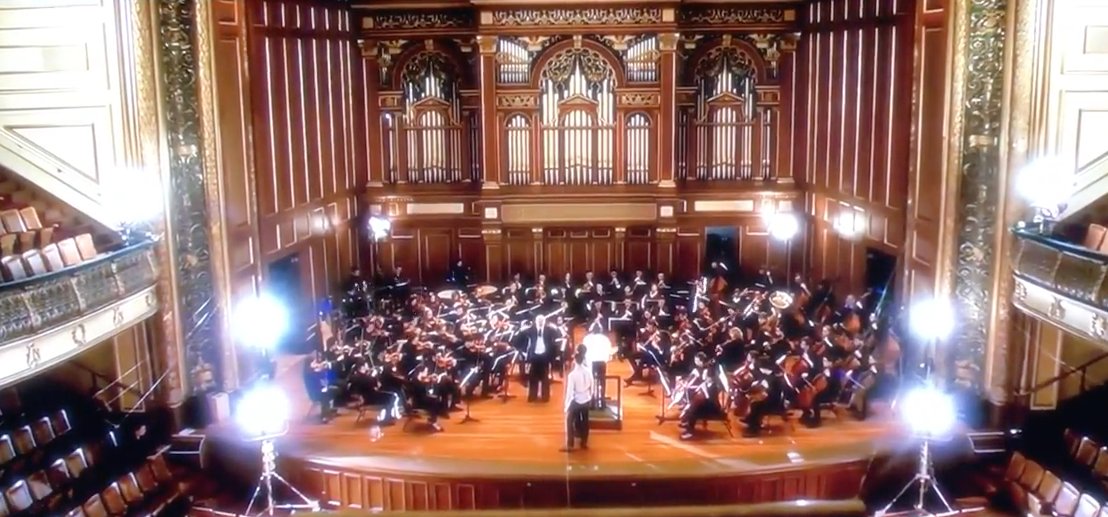
We spent yesterday afternoon with some friends who had invited us to their home to watch the AFC and NFC Championship games. When I watch TV, I rarely watch commercials. And I’m not particularly interested in pre-game commentary from talking heads. I like to watch the game. So when, before the game started, there was a segment with an actor I had never seen before, I didn’t pay much attention. Until I realized the piece was filmed in Jordan Hall at New England Conservatory of Music. STOP. Rewind the DVR. I taught at New England Conservatory for 27 years. I played countless concerts and recitals in Jordan Hall. What is this?
“This” was a “teaser” for the game featuring actor John Malkovich. It is long by television standards, three and one-half minutes long. Have a look (if you can’t see the video below, click HERE to see it on YouTube):
The story about how this video came about is terrific. Recorded just a few days before yesterday’s game, students at NEC were featured in this short film. You can read how this all came together in a story in Sports Illustrated by Richard Deitsch. Click HERE to read his story.
I think the video is brilliant. It takes a little time to get going but it’s very, very clever. And bravo to the NEC students who were a part of it. I’m sure it was a thrill for them. Seeing this teaser for the game on TV reminded me of the thrill I had playing the National Anthem at Super Bowl XXXVI in 2002 as a member of the Boston Pops Orchestra, something I wrote about on my website, in my article: The New England Patriots and the Boston Pops: A Super Bowl XXXVI Diary (click here to read it). Because of that experience – and many more like it where I played the National Anthem before sporting events as a member of the Boston Symphony Orchestra – I wanted to bring that opportunity to my students at Arizona State University. On two occasions, we played the Star Spangled Banner at an Arizona Diamondbacks baseball game. To see my students on the big stage and catch their excitement and sense of wonder as it unfolded was one of the most satisfying things I did during my years as ASU’s Professor of Trombone. Have a look at this video (below) of their performance at Chase Field in Phoenix in 2014 (if you can’t see the video below, click HERE to see it on YouTube):
Sports and music. Sometimes they come together in a way that adds something to our joy of living, and when I see students benefitting from this, as the students at New England Conservatory of Music did when they were part of an exciting football game yesterday, I smile and remember the thrills I’ve had doing the same kind of thing. It’s amazing where life can lead when you have a trombone – or any musical instrument – in your hand.
As a reader of The Last Trombone, you know that I enjoy seeing how the trombone intersects with popular culture. At this time of year, it’s time to bring out some of my favorite images and a great recording about that famous man in red and white, Santa Claus. Who, as we all know, plays the trombone. Right?
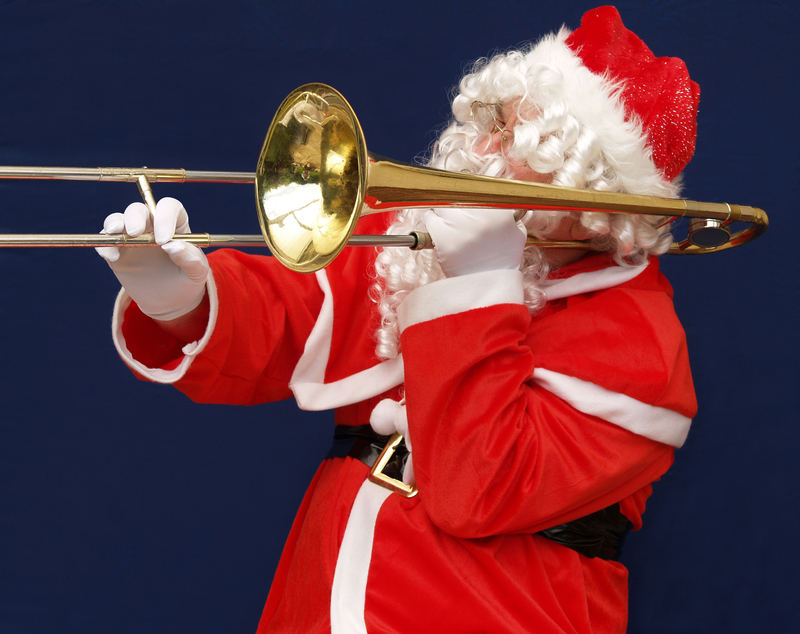
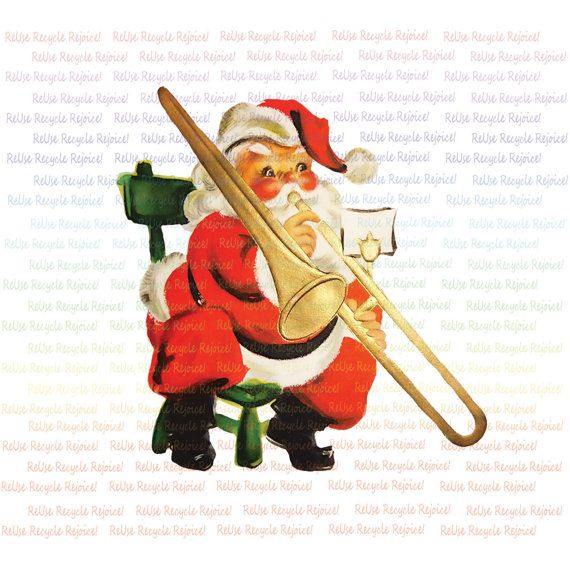
I’m writing a book about the trombone right now and have just finished the chapter on the history and evolution of the instrument. One thing that we always have to keep in mind when looking at images of the trombone throughout history is that iconography is not always a reliable indicator of how an instrument actually looked. Santa is no exception. Sometimes we see him holding the trombone just right, like the image at the top of this article, and this one (Santa not only plays the trombone, but he think’s he’s really cool, too):
It’s hard to see his embouchure but apart from a posture that’s going to give him trouble when he’s 3000 yeas old, he seems to have the trombone under control.
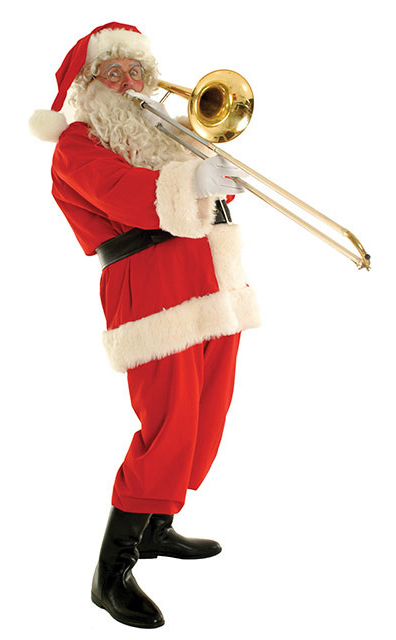
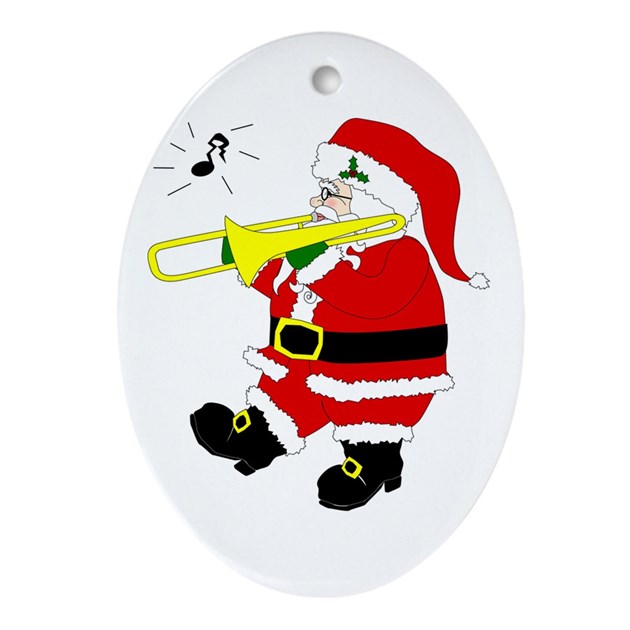
Then again, sometimes Santa puts the trombone together backwards. But he still thinks he’s cool. Time to get your glasses checked, Santa. Here we go again: iconography as a poor indicator of what and instrument looks like or how it works:
Then there is Santa with the music to “Jingle Bells” on his lyre (seriously, Santa, do you really need to use the music after all these years?). And the trombone put together backwards? Again?
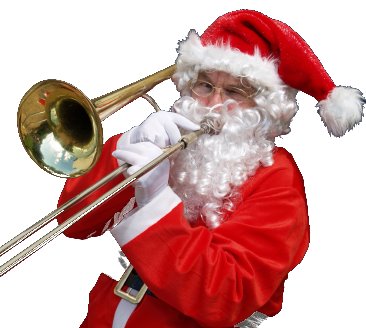
Well, when he puts his glasses back on, evidently Santa can remember how to put the trombone together correctly, but from the look of things, he isn’t exactly making beautiful music – what note IS that?
Actually, Santa’s trombone doesn’t always play music. Sometimes he uses it as a present delivery system. Pretty great, don’t you think?
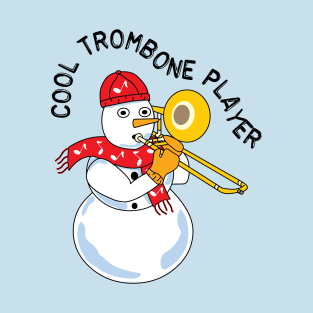
It’s clear that Santa is a really cool trombone player. But when you see a trombone playing snowman, well, that is a REALLY cool trombone player. Cool as in temperature cool. I hope he’s using a mouthpiece with a plastic rim.
If you want to HEAR Santa play the trombone, then here you go. Poppa John Gordy and his Dixielanders recorded Santa’s favorite song, “Santa Plays the Trombone (In the North Pole Band),” with Clint Garvin, vocalist. The trombone player isn’t identified on the record label so, of course, is HAS to be Santa himself. Right? Have a listen by clicking the video below, or view/listen to it on YouTube by clicking here.
If this doesn’t jump to the top of your Christmas music play list, then you’ll probably get coal in your stocking.
I’ll close this little popular culture tour of Santa and the trombone with a poem I wrote that’s made the rounds over the years. It first appeared in December 2012 when I was in my first year as Professor of Trombone at Arizona State University. Santa plays the trombone. He really does.
A Visit From Santa Claus To A College Trombone Player
T’was the night before Christmas and all through my home,
All the horns were in cases, including trombones.
For after the finals and juries and tests,
It was time for some shut-eye; I needed some rest.
I was dreaming of straight mutes and pBones and more,
When I woke to a sound that I’d not heard before.
And what should I see on my roof up on high?
A Moravian choir, with trombones playing fine.
Alessi and Lindberg, Kleinhammer and Yeo,
Were all playing their horns, their heads covered with snow.
And who should be leading this heavenly band?
But old Santa himself, a trombone in his hand!
“On JJ! On Jörgen! On Tommy and George!”
This band was so sweet, I sure did thank the Lord!
“On Norman and Pryor, Ron, Urbie and Frank!”
Some others played, too, but my mind drew a blank.
I grabbed my trombone and I lubed up the slide,
With no time for a warm-up, I hurried outside.
The gang was all playing some mighty nice tunes,
And we jammed some cool charts by light of the moon.
I invited them in just to warm up their chops,
But they just kept on playing, man, this sure was tops!
Saint Nick put his horn down to fill up my stocking,
With valve oil, and slide cream, CDs – so inspiring!
In time, things wound down and they packed up their horns,
And the sleigh got revved up and was heavenly borne.
But Santa looked back, and he said with a smile,
“Merry Christmas to all, and don’t forget to keep practicing even though you’re on vacation!”
— Douglas Yeo (with apologies to Clement Clarke Moore)
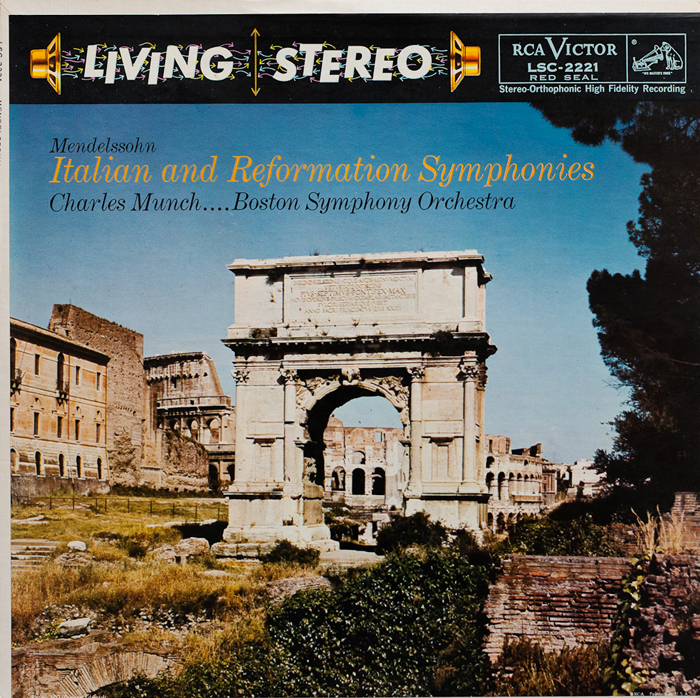
I don’t own many things that date from my childhood. I moved many times, collected other things, have lived a long life, and things that seemed so important when I was a kid mostly got lost along the way. I do wish I still had those baseball cards, though. . . But one of the few things I do have from that time in my life is a Boston Symphony recording of Mendelssohn’s “Reformation” Symphony, conducted by Charles Munch. I bought it in 1970 when I was 15 years old.
[As an aside, this album cover shows the Arch of Titus in Rome, with the Colosseum in the background. During my wife’s and my recent trip to Italy, we stood in this very place, and noted the significant connection the Arch has with our trip last year to Israel. More on this in an upcoming article on The Last Trombone.]
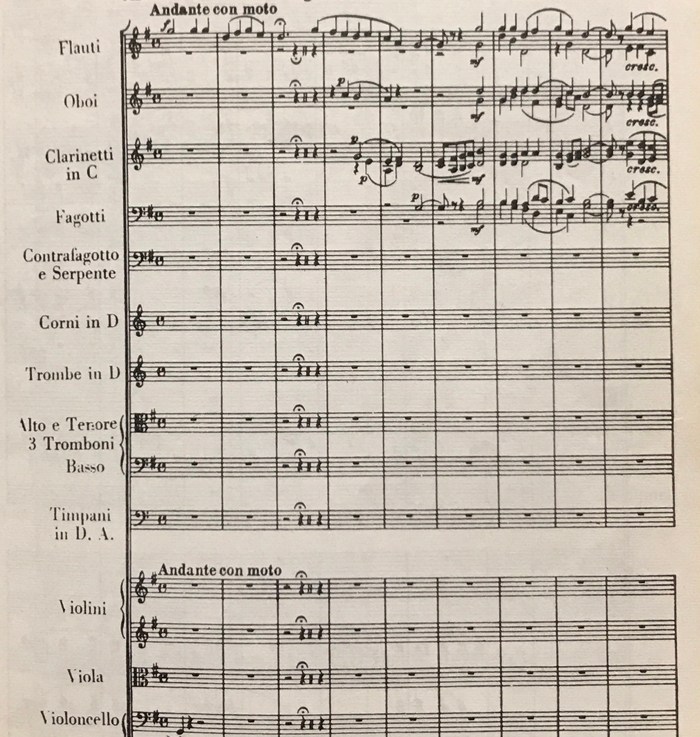
That I ended up being a member of the Boston Symphony for 27 years (1985-2012) is one of the great joys of my life, and in a sense that was the fulfillment of a long held dream since I was in high school. Several Boston Symphony recordings were very influential on me at an early age when I was just beginning to understand the trombone, and this Mendelssohn recording stands tall in my record collection. In fact, one of the first orchestra scores I ever purchased was of this symphony; I purchased it a few days after I heard Munch’s recording for the first time (the first page of the final movement of my score is shown at the top of this article). Click below to hear that recording that influenced me so deeply so long ago (to hear this recording in YouTube, click here):
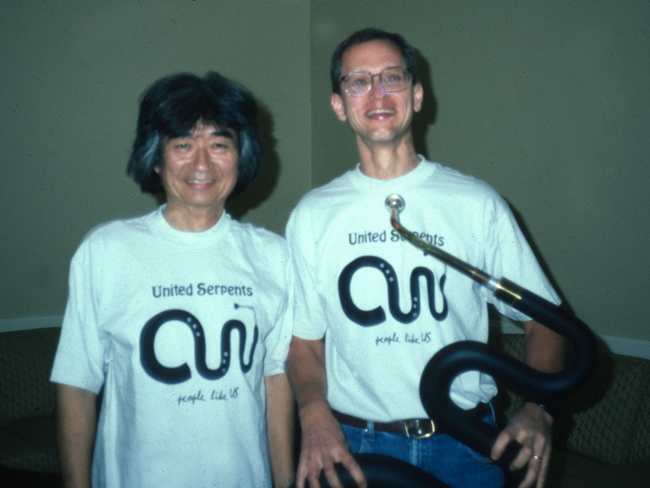
I have always loved this piece. It has a terrific part for bass trombone; just a few measures in the beginning of the symphony and then much to do in its finale. I first played the symphony on bass trombone with the BSO conducted by then-music director, Seiji Ozawa; the photo below shows Seiji and me in 1994 before a rehearsal for Hector Berlioz’s Messe solennelle; you’ll see I have my serpent in my hand. For more on that, keep reading.
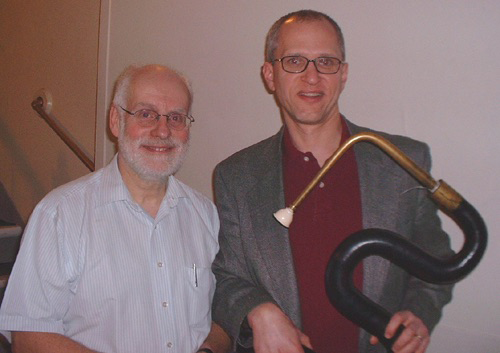
After I took up the serpent, I played the serpent part for Mendelssohn’s symphony in performances with the BSO conducted by the great early music conductor, Ton Koopman; the photo below shows us backstage at Boston’s Symphony Hall before a rehearsal in 2004.
Mendelssohn’s “Reformation” symphony – it usually bears the number 5 in the numbering of his symphonies but it was not his fifth in order of composition – was composed in 1830 to commemorate the 300th anniversary of the Augsburg Confession, one of the great confessional documents of the Christian faith. The theme of the symphony’s fourth movement is none other than Martin Luther’s famous hymn, Ein feste Burg est unser Gott — A Mighty Fortress is Our God. I wrote about this hymn last year on The Last Trombone, where I took the opportunity to discuss the importance of its text, especially the its fourth, final verse. I invite readers to look at that article again; click here.
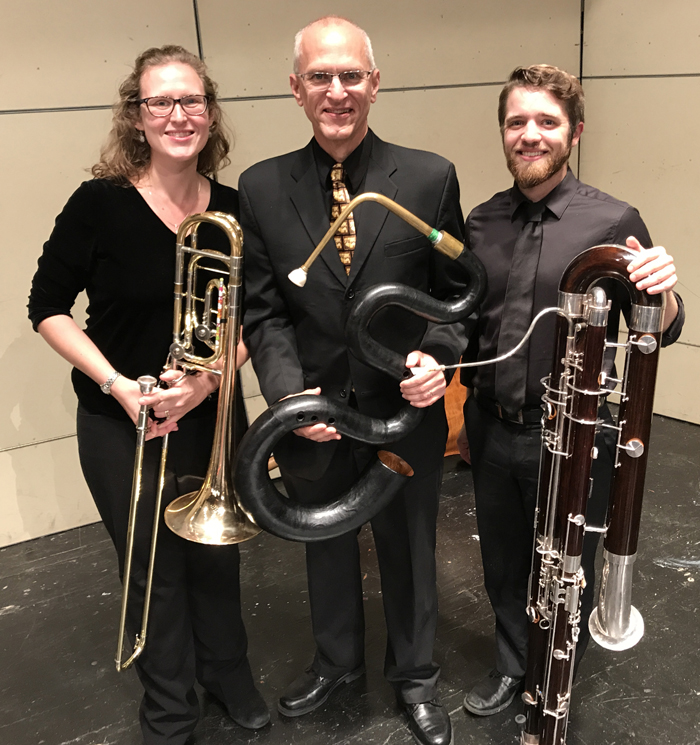
Last week, I played serpent in a performance of the “Reformation” Symphony by the Northbrook Symphony near Chicago. My oldest daughter, Linda Yeo Leonard, plays bass trombone in the Northbrook Symphony, and my wife and I have heard many concerts played by the orchestra. When the orchestra’s conductor, Lawrence Rapchak, asked me if I would be available to play serpent in their performance of Mendelssohn’s symphony – performed on a concert with other symphonies in the key of D but also in recognition of the 500th anniversary of the beginning of the Protestant Reformation – it was easy to say yes.
The photo above shows Linda and me along with the Northbrook Symphony’s fine contrabassoon player, Nicholas Ritter; Nick and I sat next to each other on stage with Linda seated just behind me. Mendelssohn’s part for the serpent doubles the contrabassoon at the octave and the result is a new kind of bass sound, caused by the acoustical blending of the two instruments. Murray Campbell wrote an article several years ago about this unique sound in an article for the International Tuba Euphonium Association Journal; you can read it by clicking here. The performance was a great success in every way, and it was a special joy to sit on stage with Linda.
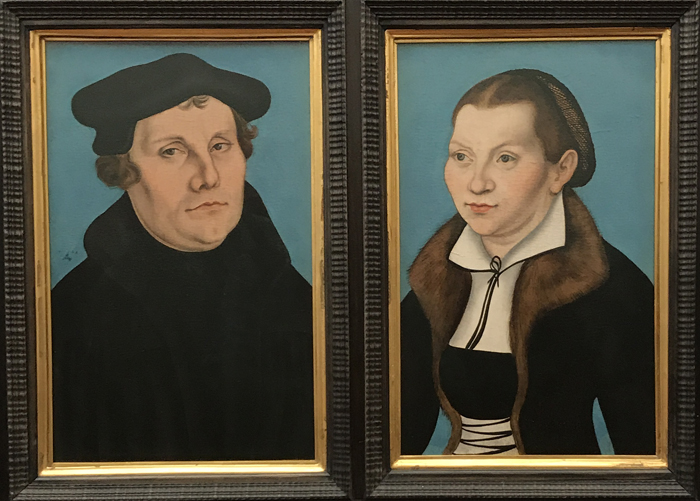
There have been other recent connections to Luther that have recently gotten my attention. As mentioned earlier, my wife and I were in Italy last month, enjoying the glories of Renaissance art and their connections to the Christian faith. Among the places we visited was the Ufizzi Gallery in Florence, one of the world’s great art museums. As we were going through various galleries, we came across a painting of Martin Luther and his wife, Katharina von Bora, painted by the workshop of Lukas Cranach the Elder in 1529. The portrait was made when Luther was still alive (1483-1546) and is considered to be a true likeness.
As I enjoyed this iconic painting – it is the most famous portrait of Luther – I noticed that the museum’s display card had a curious final sentence:
In Medici collection since 1567/1570.
Of course the Medici family was one of the most famous and influential families of the Italian Renaissance, and they were strong patrons of the arts. But this sentence got my attention. “Why,” I wondered, “did the Medici family, who were Roman Catholics and whose family produced three Popes (Leo X, Clement VII, and Leo XI), own this portrait of the most famous Protestant reformer?” I can’t answer that question, but I’ve been wondering about this.
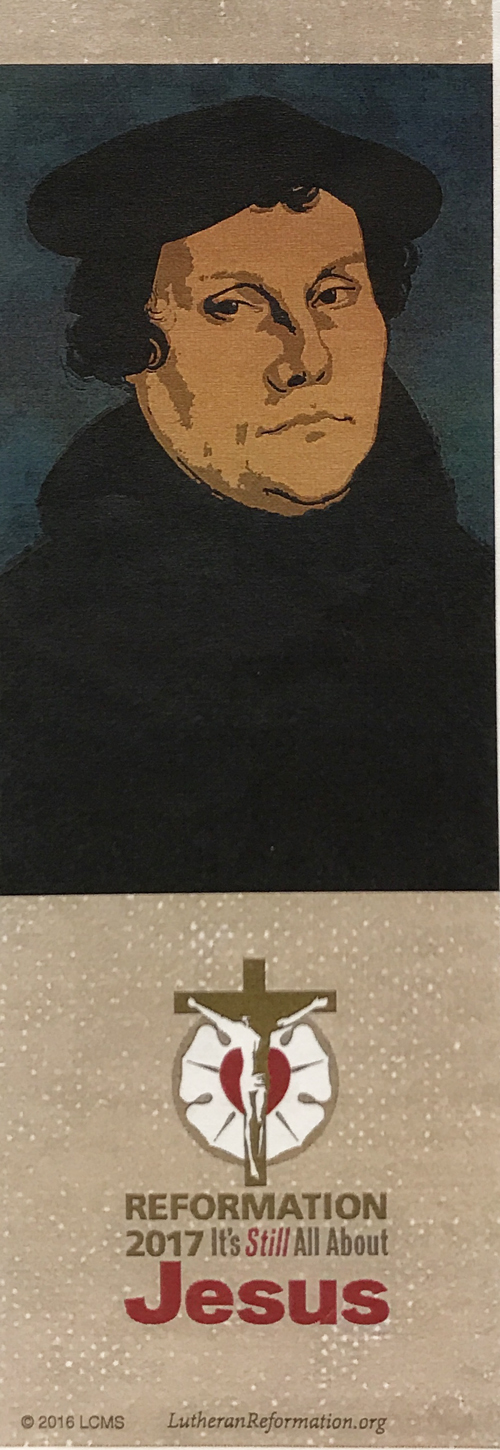
Last Sunday, I worshiped at Trinity Lutheran (LCMS) Church in Lisle, Illinois, where Linda’s family are members and her husband, Chad, a Lutheran pastor and hospice chaplain, coordinates the church’s care ministries. This year, the Lutheran Church – and Protestant churches of all denominations – is celebrating this 500th anniversary of the beginning of the Protestant Reformation – dated to October 31, 1517 when Luther attached his famous Ninety-Five Theses on the door of All Saints’ Church in Wittenburg, Germany, and set off a reform movement in Christianity that is still with us. When I sat down in our pew on Sunday and opened my bulletin, what did I see but an insert about Luther and the Reformation with a stylized version of the very same portrait of Luther we had seen in Florence. It was a nice, serendipitous moment.
The Protestant Reformation changed history, and this convergence of events – Mendelssohn’s symphony, our trip to Italy, seeing a famous portrait of Martin Luther in Florence, and worship in a Lutheran church – brought many aspects of its importance together for me.
When I was a student at Wheaton College (Illinois), I memorized Luther’s great hymn. It got me extra credit on an exam in the class, “Christ in Culture,” and I needed all the extra credit I could get. I don’t remember how I did on that test, but I still call A Mighty Fortress to mind every day. It is a hymn of great strength and comfort, and Luther’s words are just as relevant and important today as they were nearly 500 years ago when he wrote the text. Here is its second verse; to read the whole text and my commentary on Luther’s original words, click HERE.
Did we in our own strength confide, our striving would be losing,
Were not the right Man on our side, the Man of God’s own choosing.




 The Last Trombone – Douglas Yeo