
Category: research projects

A new book and a special offer: An Illustrated Dictionary for the Modern Trombone, Tuba, and Euphonium Player

A new book and a special offer: An Illustrated Dictionary for the Modern Trombone, Tuba, and Euphonium Player

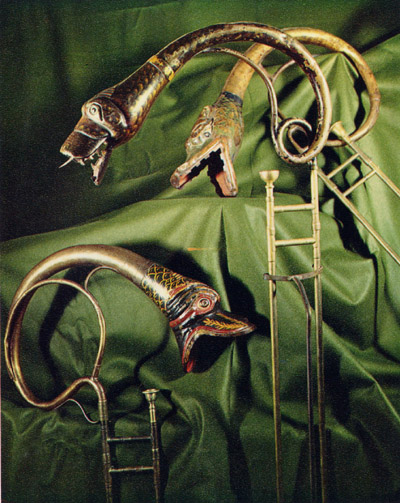
I’ve been fascinated with musical instruments for as long as I can remember. One of my earliest childhood memories is of going to the Metropolitan Museum of Art in New York City and standing in front of a display case that displayed three dragon bell trombones. These instruments, made in Belgium and France in the early nineteenth century, went by the name buccin, and I still have the postcard I bought on that afternoon, shown below. It is the oldest artifact that I have from my childhood and I wrote an article about the buccin on The Last Trombone. You can read it by clicking HERE.
met_buccin_02

My fascination with musical instruments continued and grew from that time long ago, and over the years, I learned to play many of them. I started with the trombone, then bass trombone, bass trumpet, contrabass trombone, serpent, bass sackbut, ophicleide, didgeridoo, conch shell, and many more. That exploration of musical instruments continues today and I’m pleased to announce the upcoming publication of my newest book, one which is devoted to many of the instruments that I and many others have come to love so much, An Illustrated Dictionary for the Modern Trombone, Tuba, and Euphonium Player.
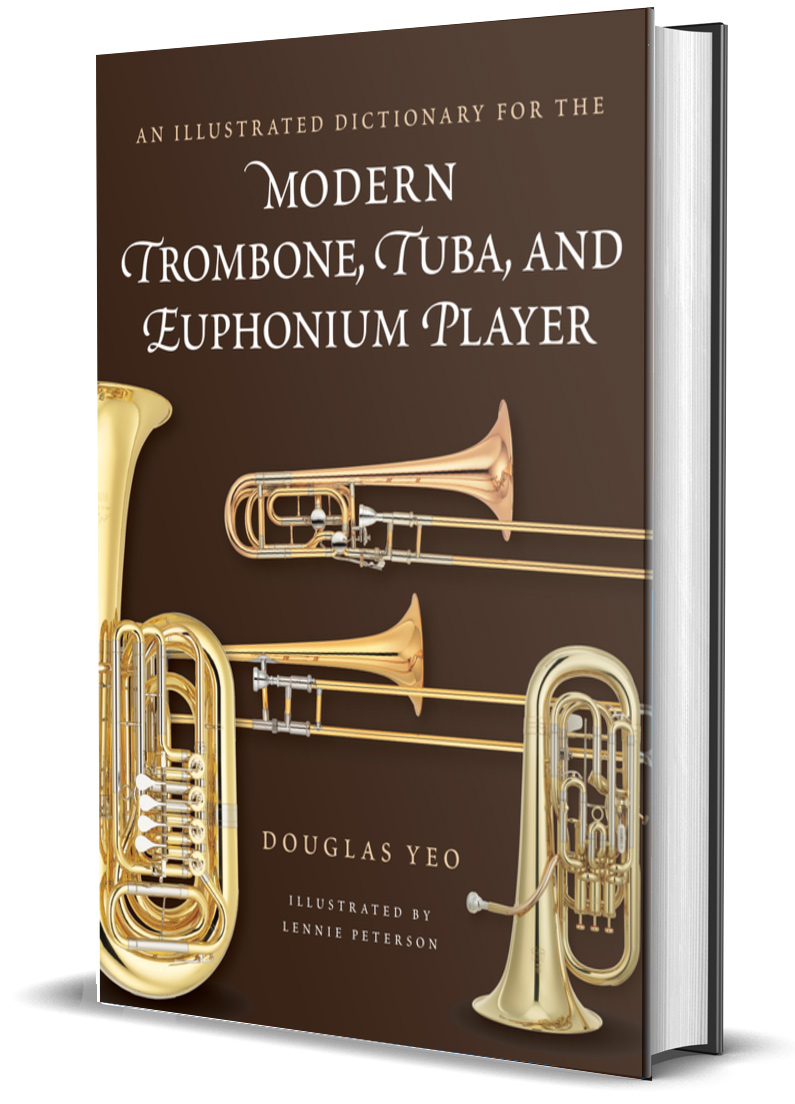
Yeo_Dictionary_cover_full_book

In a sense, this new book is the culmination of a lifetime of interest in and exploration of low brass instruments. The publisher, Rowman & Littlefield, contacted me in 2016 and asked if I would be interested in writing a book on low brass instruments for their series of Dictionaries for the Modern Musician. At that time, there were dictionaries for conductors, clarinet, trumpet, and strings, and since then, the series has grown to include dictionaries for singers, piano, percussion, and flute. One for trombone, tuba, and euphonium was needed, and I was pleased to set about working to add a new volume to the series.

This was quite a project. I had the opportunity to create a dictionary with hundreds of entries about instruments I love and which have intersected with my life on a daily basis for decades. I could include anything I thought was important for players, teachers, conductors, and audiences to know about these instruments. What is that part called? Why was it invented? Where does it fit on the evolutionary chain of the instrument’s family? Who played it? Who wrote great pieces for it? Questions, questions, questions. So I set about looking for answers.

The process was an enlightening one. I started by making up an initial working list of entries: instruments, instrument makers, parts of instruments, composers, performers, teachers, musical compositions, and more. I then asked several friends who are professors of trombone, tuba, and euphonium at several colleges, universities, and conservatories of music to ask their students to make a list of 50 words they would like to see included in the book. The lists that they sent to me were fascinating. Of course there was some commonality between the lists, and they included many words that I had already decided should be a part of the book. But there were other words that I didn’t know. Why did someone think that term would be important?  I set about researching, and reading and reaching out to friends, colleagues, and scholars to get answers.

But before I got too far along in the process, I needed to make a big decision. The old phrase “a picture is worth a thousand words” is self-evidently true. The book needed illustrations to bring my text alive, and when I asked myself the question, “Who should make the illustrations?”, there was only one possible answer that came to my mind: Lennie Peterson. I’ve written previously about Lennie Peterson here on The Last Trombone and you can read that article by clicking HERE. He’s a remarkable artist and a close friend (and a superb trombonist), equally conversant as an illustrator, fine artist (oil and other media), and cartoonist. If you only know Lennie from one of his most famous cartoons from his comic strip, The Big Picture (not a week passes by without someone sending me this cartoon, “Have you seen this? It’s fantastic!” Yes, I’ve seen it, and I bought the original from Lennie many years ago and it hangs in my home office), then you don’t know the true scope of what he can do.
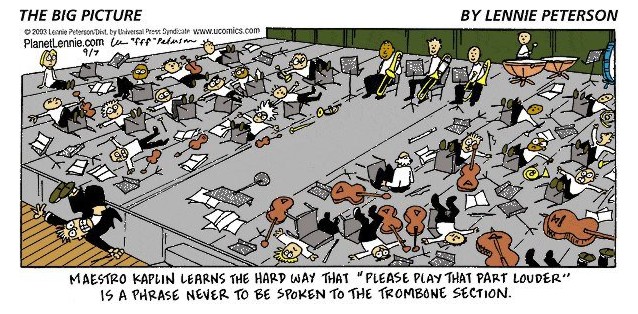
Lennie_Peterson_trombone_Kaplin

For instance, when I asked Lennie to make an illustration of the stays (or braces) on a Renaissance-era trombone, he could have made a great illustration of the handiwork of one of the great Nuremberg masters of the sixteenth century. But instead, Lennie made an illustration with his own creative twist that shows how HE would have made stays on a Renaissance-era trombone:

Peterson_Renaissance_trombone_stays

Sometimes Lennie took an existing work of art, such as a fresco of a Roman-era cornu in Pompeii (Don’t know what a cornu is? Look in the book!), and he gave it a personal touch:
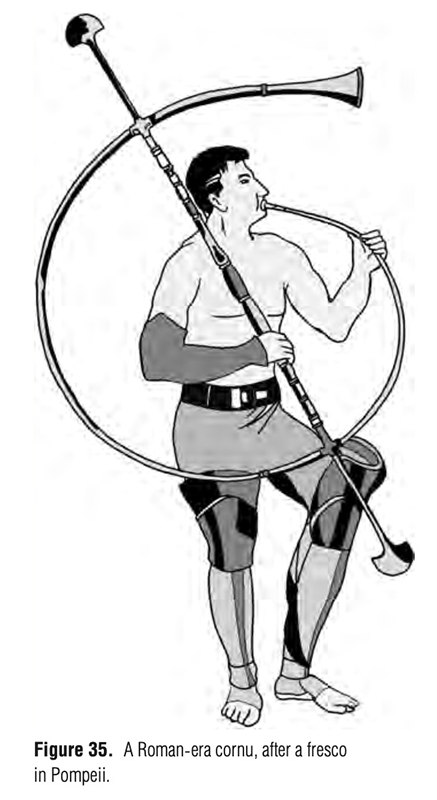
Peterson_cornu

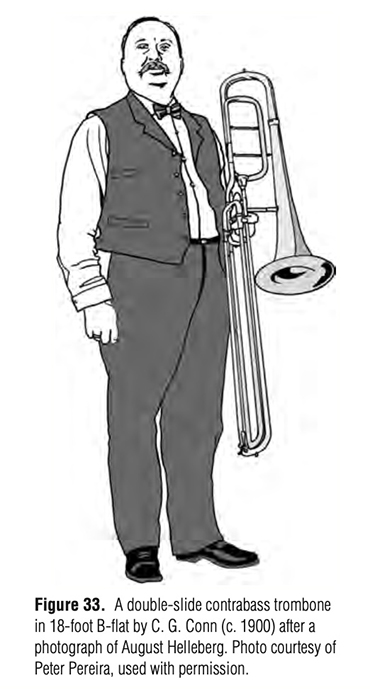
On other occasions, Lennie based his illustration on a photograph that was generously provided to us by the owner of the image, such as his illustration of tubist Franz Schultz using an ærophor that was provided to us by the late Jacob B. Polak (Don’t know what an ærophor is? Look in the book!), or his illustration of August Helleberg (Don’t know who August Helleberg was? Look in the book!) with his Conn double-slide contrabass trombone that was provided to us by Peter Pereira. Showing instruments in the hands of individuals sometimes helps readers understand their size and scale:
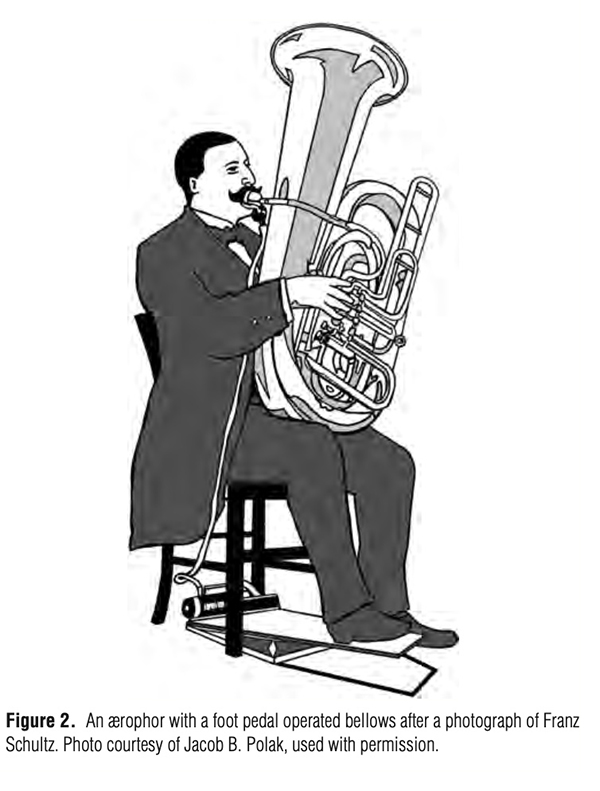
Peterson_aerophor

Peterson_Helleberg_contrabass_trombone

Still other images were based on photographs what were generously provided to us by the rights holder of the image, such as Lennie’s illustration of Andrew Van der Beek playing the contrabass serpent, The “Anaconda” (Don’t know that The “Anaconda” is? Look in the book!), based on a photo from Edinburgh University, provided to us by my good friend, Arnold Myers:

Peterson_Anaconda

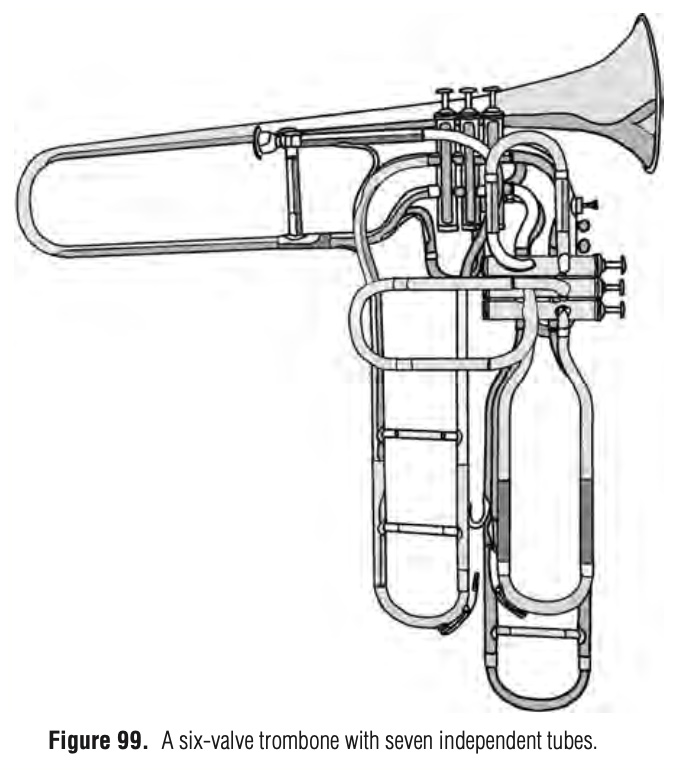
Lennie also based illustrations on photographs I took of instruments in my own and other collections, and his attention to detail allows the reader to follow the intricacies of instrument tubing and other details, such as his illustration of a six-valve trombone with seven independent tubes:
Peterson_six_valve_trombone

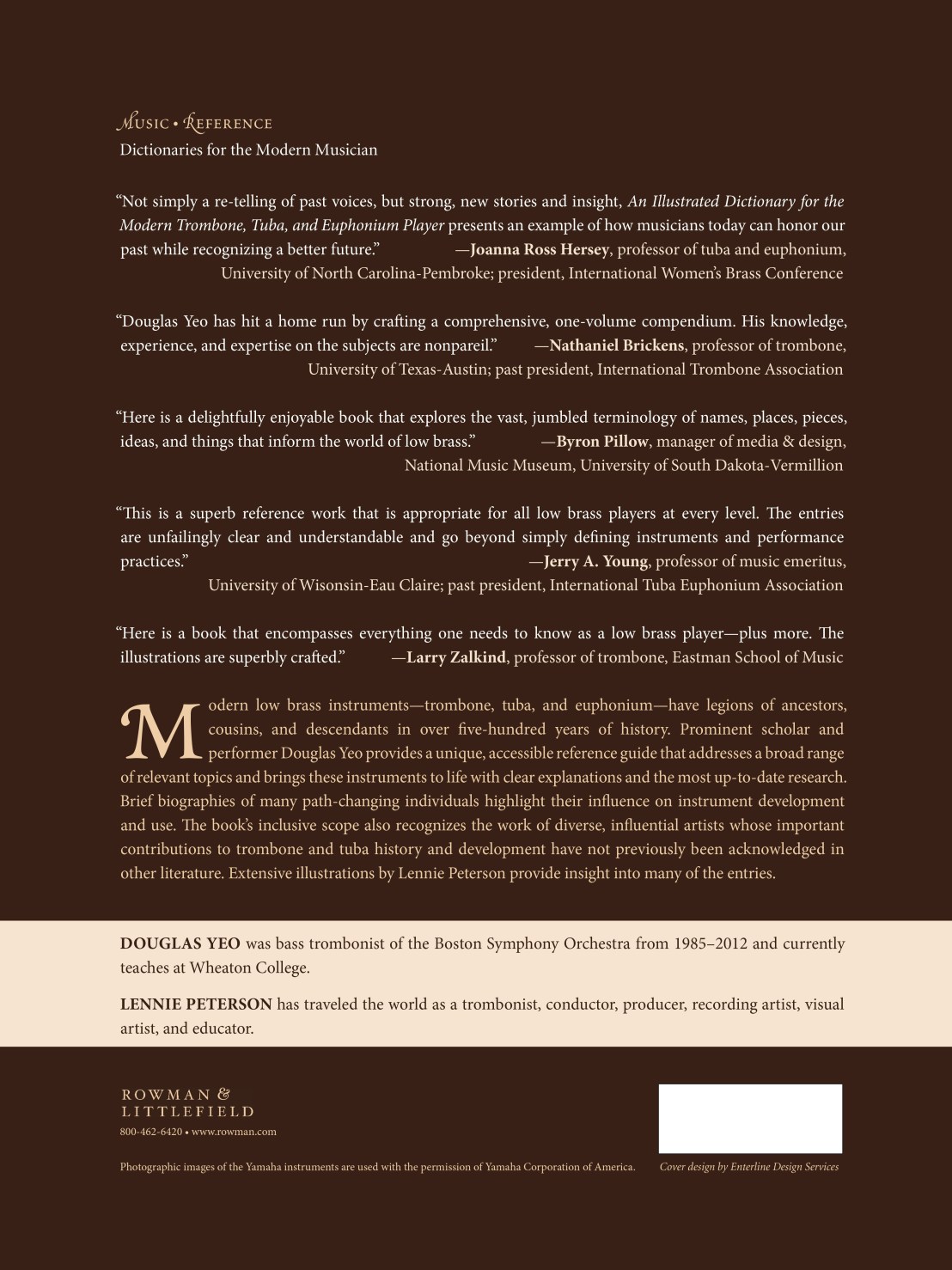
As I began writing, Lennie began illustrating, and when we were done, I had written 675 entries and Lennie had made 125 illustrations. Back and forth we went, with me refining words and Lennie refining lines and shadows.  When we were done, the book went out for peer review and at the end of that process, we were more than happy that the reviewers pronounced  that the book was both engaging and factually accurate. Several respected members of the low brass community added their endorsement to the book—see some of their words on the back cover below (the white rectangle on the back cover will be filled by the book’s ISBN number and bar code). A long period of editing, correcting, adding, copyediting, proofreading, and layout ensued, and recently, the book went to the printer. It will be available around November 1 but it can be ordered now. More on that below.
Yeo_Dictionary_back_cover

Readers will find entries about a host of subjects, from ærophor to Antoniophone, to articulation, back pressure, ball joint, baritone horn, bass horn, bass trombone, bass tuba, Bellophone, Hector Berlioz, Clifford Bevan, bombardon, Giulio Marco Bordogni, Brian Bowman, braze, breathing, Lillian Briggs, “Bydlo” tuba, carnyx, chops, cimbasso, circular breathing, compensating valve system, double-bell euphonium, well, you get the idea. The book is all about instruments, parts of instruments, “path changers” who changed the course of an instrument in some way, manufacturers, playing techniques, and much more. The book’s page on amazon.com has a few “look inside” pages so you can get a closer look at the book.

An important element of the book has been the effort to recognize voices that have not been widely or adequately recognized in other literature. Hence, readers will find entries on many women (and also an entry on the word “gender”) including Cora Youngblood Corson, Dorothy Ziegler, Betty Glover, Maisie Ringham-Wiggins, Constance Weldon, Melba Liston, Lillian Briggs, Abbie Conant, and others, as well as entries on many people of color (and also an entry the word “race” and one on “regional music”) including  James Reese Europe, Nathaniel Davis, Edward “Kid” Ory and Joseph “Tricky Sam” Nanton, Howard Johnson, John M. Kuhn, Russell Moore, Juan Tizol, and others.

If what you’ve read so far has piqued your interest, Rowman & Littlefield has a special offer for you. For a limited time, the publisher is offering a 30% discount on the book, in both the hard cover and ebook editions. Of course, if you want to pay full price, you can order the book on amazon.com. On the other hand, if you’d like to save 30%, you can order it on the book’s page on the Rowman & Littlefield website and enter this promo code:

RLFANDF30

(Note: This discount code has been corrected. If you tried to order the book with a different code, try again with this one. It works!)

Yeo_Dicitonary_promo_discount_card

You can also download an order form for the book with the the discount by clicking HERE. The order form has complete information on all of the ways you can order the book with the discount: online, by phone, by email, by fax, or by mail. Orders placed directly with the publisher will be shipped as soon as the book arrives in the warehouse.

It is my hope that An Illustrated Dictionary for the Modern Trombone, Tuba, and Euphonium Player will find its place on the bookshelves of libraries, and in the hands of teachers, players, composers, and lovers of these instruments as we, together, work to better understand the “what,” “when,” “where,” “how,” and “why” of the trombone, tuba, and euphonium and their ancestors and descendants. Please feel free to share and link this blog post with your friends, students, and others via email, reblogging, or social media.

A new book and a special offer: Homer Rodeheaver and the Rise of the Gospel Music Industry

A new book and a special offer: Homer Rodeheaver and the Rise of the Gospel Music Industry

In January 2014, I decided to write an article about Homer Rodeheaver, the trombone-playing song leader for evangelist William “Billy” Sunday in the first third of the twentieth century. I first learned of Rodeheaver a few years earlier when I visited the Billy Graham Museum on the campus of Wheaton College, Illinois, and saw a near life-size cardboard cutout of him with a trombone in one hand and a songbook in the other. The cutout was of the image of Rodeheaver below. What? Who was this? I had never heard of him and I needed to know more. It wasn’t long before I learned that Rodeheaver (one of the first things I learned was that he pronounced his name “ROW-duh-hay-vehr”) played the trombone for over 100 million people in his lifetime. That’s a lot of people. Did anyone play  trombone for more people? Maybe Arthur Pryor? Maybe? I thought his story might be interesting. It didn’t take long for Rodeheaver’s interesting story to change my life.

Fig 02-5 rodeheaver-trombone-postcard

Above: Homer Rodeheaver promotional postcard.

Several things flowed from what became an obsession to learn more about Homer Rodeheaver. The first was that I met Kevin Mungons, a Chicago-area editor and writer who had also been researching Rodeheaver. We were introduced by Margaret Banks, a curator at the National Music Museum in Vermillion, South Dakota, when I reached out to her with some questions about Rodeheaver’s endorsements for Conn trombones. Peggy told me that Kevin had been asking her some of the same questions a few years earlier. So it was natural for me to contact him and ask him some questions. We immediately became good friends (it didn’t hurt that Kevin also plays trombone).

Secondly, Kevin was very happy to help me as I worked on my article about Rodeheaver which, once completed, was published in the 2015 Historic Brass Society Journal. Click HERE to read and download that article.

Fig 01-1 rodeheaver-and-sunday

Above: Billy Sunday and Homer Rodeheaver, 1917. Courtesy of Morgan Library, Grace College, Winona Lake, Indiana.
And, thirdly, as Kevin and I continued talking about Rodeheaver, we decided that two heads were better than one, and that it might be a good idea—and fun—for us to collaborate and, together, write a book about Rodeheaver. Once we had committed to the idea, we did a deep dive into Rodeheaver’s life and work. Because Kevin was living in the Chicago area and I was living in Arizona at the time (my wife and I moved to the Chicago area in 2018 so we could live closer to our grandchildren), we collaborated mostly through phone and email. But we did meet up a few times, both in the Billy Graham Center Archives at Wheaton College, and in Winona Lake Indiana, where Grace College and the Winona History Center have a remarkable archive of documents, photographs, and ephemera relating to Billy Sunday and Homer Rodeheaver. During our research trip to Winona Lake, I played Rodeheaver’s Conn trombone (below). Of course, I played “Brighten the Corner Where You Are,” which was one of Rodeheaver’s signature tunes (he also owned the copyright to the song, and the big money was, as Rodeheaver knew, in copyrights).

Douglas_Yeo_Rodeheaver_trombone_2014_sm

Above: Douglas Yeo playing Homer Rodeheaver’s Conn trombone, 2014, Winona History Center, Winona Lake, Indiana.

Homer Rodeheaver was not only a trombonist, and not only the song leader for Billy Sunday for 20 years, but he established the first gospel music record label (Rainbow Records), established what was, for many decades, the largest publisher of Christian hymnals, songbooks, and other music (Rodeheaver Music Co., later Rodeheaver-Hall Mack Co.), was a driving force behind the popularization of African American spirituals, and had an influence on church and community singing that is still felt today. The subject of daily front page news and feature stories and celebrity gossip, nobody during his lifetime (1880–1955) had to ask, “Who is Homer Rodeheaver?” But for people today, Homer Rodeheaver is the most famous person you never heard of. Until now. 

Rodeheaver 3D Book Cover

Last week, after seven years of writing and research (not including the many years before we met when Kevin was also researching Rodeheaver), the submission of our book manuscript to University of Illinois Press, several rounds of peer review, even more rounds of rewriting and editing, our book, Homer Rodeheaver and the Rise of the Gospel Music Industry came to market. It is published as part of UIP’s Music in American Life series of books. On Saturday, I held it in my hands for the first time.

Rodeheaver’s story is a rich story about music, publishing, Chicago, the Civil War, Jim Crow, race, the Ku Klux Klan, the perks and perils of being a celebrity, churches, money, religious devotion, Christian evangelism, community singing, marketing, airplanes, speedboats, philanthropy, Billy Graham and Cliff Barrows and George Beverly Shea, and the trombone. Lots of trombones. And that’s just the tip of Rodeheaver’s very large iceberg. 

The back cover of the book features two reviews. Here’s what Robert Marovich, author of A City Called Heaven: Chicago and the Birth of Gospel Music, says:

Kevin Mungons and Douglas Yeo’s biography of Homer Rodeheaver brightens an important corner of gospel music history that has gone unexplored for far too long. What they reveal in their remarkable portrait of “Reverend Trombone” is a man both of his time and ahead of his time. It’s more than a tale of the emergence of gospel singing and revivalism, it’s a quintessentially American story about a quintessential American.

And Harold Best, emeritus professor of music and Dean emeritus of Wheaton College Conservatory of Music, past president of the National Association of Schools of Music, and author of Music Through the Eyes of Faith, wrote:

I am truly taken by the book. It is good, informative, comprehensive, and free of the usual assortment of clichés, academic hems and haws, and over-spiritualization. It takes the often over-simplified view of music and revivalism and exposes it to a fascinating cross-weave of thought, content, and context which, to my embarrassment, I thought I had already had a handle on. I recommend it without reservation. There is no doubt in my mind that general readers and specialists alike will benefit from reading this book.

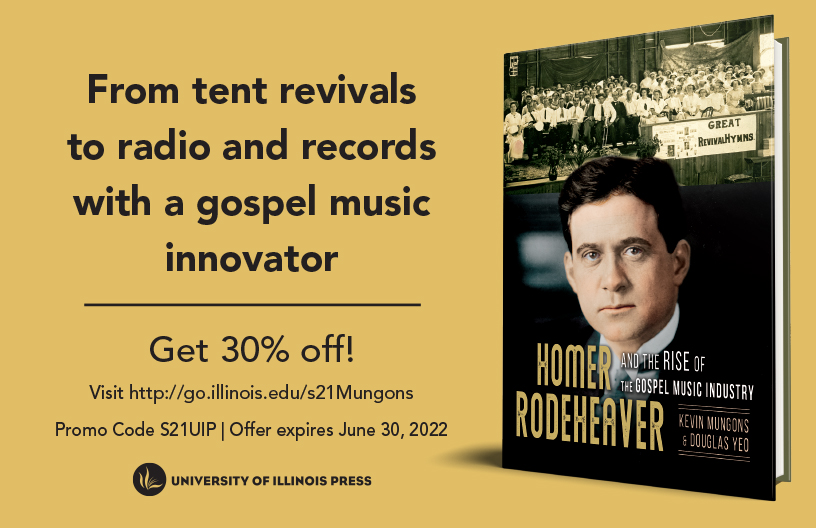
If what you’ve read so far piques your interest, then, as the late night television pitchman says, “Do I have a deal for you!” Right now, University of Illinois Press is offering a 30% discount on the book, both the softcover and the hardcover editions. If course, you can pay full price if you’d like; just go to the book’s page on amazon.com. But if you’d be interested in paying less, click HERE go to the book’s page on the University of Illinois Press website and enter this promo code:

S21UIP

Mungons Yeo social media graphic with discount

If you’d like to tell your friends about the book, click HERE to view and download a one page promotional PDF that has full information about the book and the same 30% off discount code.

After seven years of delving into every aspect of Homer Rodeheaver’s life, I still find his story to be interesting, informative, inspirational, challenging, and thought-provoking. I hope you, too, will enjoy the story of the man who called himself, “Reverend Trombone.”

Fig 11-1 rodeheaver-conducting

Above: Homer Rodeheaver leading singing, 1950s.

Reflections on a year: COVID-19 and more

Reflections on a year: COVID-19 and more

The coronavirus pandemic has upended everything. Everything. Everyone has a story. It is true that “we are all in this together”—it effects everyone. But it is not true that “we are all in the same boat.” Some boats are doing better than others. Some are sinking. Some have sunk. The virus is real and it’s bad. In the words of a good friend of mine who is a Dean at a major medical school and research hospital in New York City, “this virus is scary and sneaky.” Yes, it is.

Global_COVID_cases_2021_02_04

The COVID-19 dashboard at Johns Hopkins University, Baltimore, February 4, 2021.

We in our extended family consider ourselves very fortunate: none of us has contracted COVID-19. We are all exceptionally cautious. We wear masks and take other protective measures. But over the last couple of weeks, I’ve received email messages from a number of friends who have noticed that I haven’t posted anything on The Last Trombone since October. “Are you OK?”, they’ve asked.  I appreciate the concern, and it’s a reminder how we all are on edge, uncertain what lack of contact with someone might mean. I’m well—thank you for asking!—but as I have been reflecting on a number of things, I find it remarkable that in a season of life where I have done almost no traveling and I have been at home since mid-March, 2020, I am so busy in so many ways.

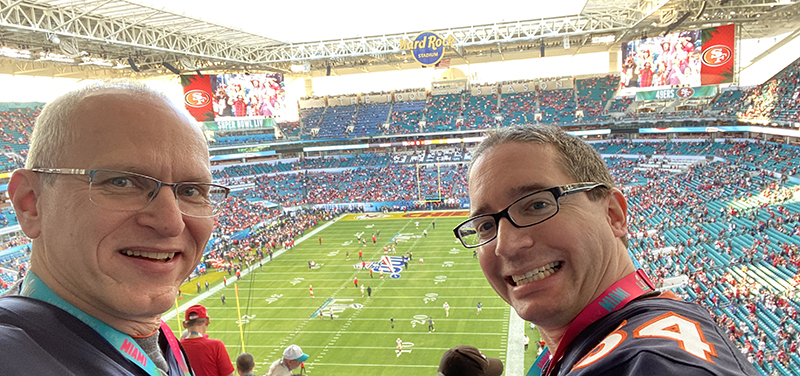
Doug_Chad_Super_Bowl_LIV_sm

It has been nearly a year since the coronavirus has been part of our every day vocabulary. On February 2, 2020, my son-in-law, Chad, and I went to Super Bowl LIV in Miami. I won a contest sponsored by the Chicago Bears (you can read about how I won the contest HERE and our experience at Super Bowl LIV HERE) and we had an amazing trip. Chad and I were in the midst of 65,000 other fans. We gave high-fives and hugs to total strangers, stood in crowed lines for food and to use the rest room, we screamed our lungs out during the game, we flew on planes, traveled on buses, and we did this without even thinking. We didn’t know that in a few weeks, that would all change.

Doug_Megumi_edited_01_sm

Megumi Kanda and Douglas Yeo in recital in St. Louis, February 16, 2020.

A few days  later, I was in St. Louis, playing a recital and giving a masterclass along with my good friend, Megumi Kanda who is principal trombonist of the Milwaukee Symphony.  The recital was sponsored by the St. Louis Low Brass Collective. In addition to my trombone activities, I went up the St. Louis Arch in a small elevator that seated seven people, all jammed in like sardines. I didn’t even think twice about doing it.

St_Louis_Arch_elevator

The elevators at the St. Louis Arch, February 15, 2020.

Coronavirus? It was “one of those viruses” we hear about from time to time that affected people in lands far away. It had no impact on us. Yet.

Sloan_Park_2020_03_12

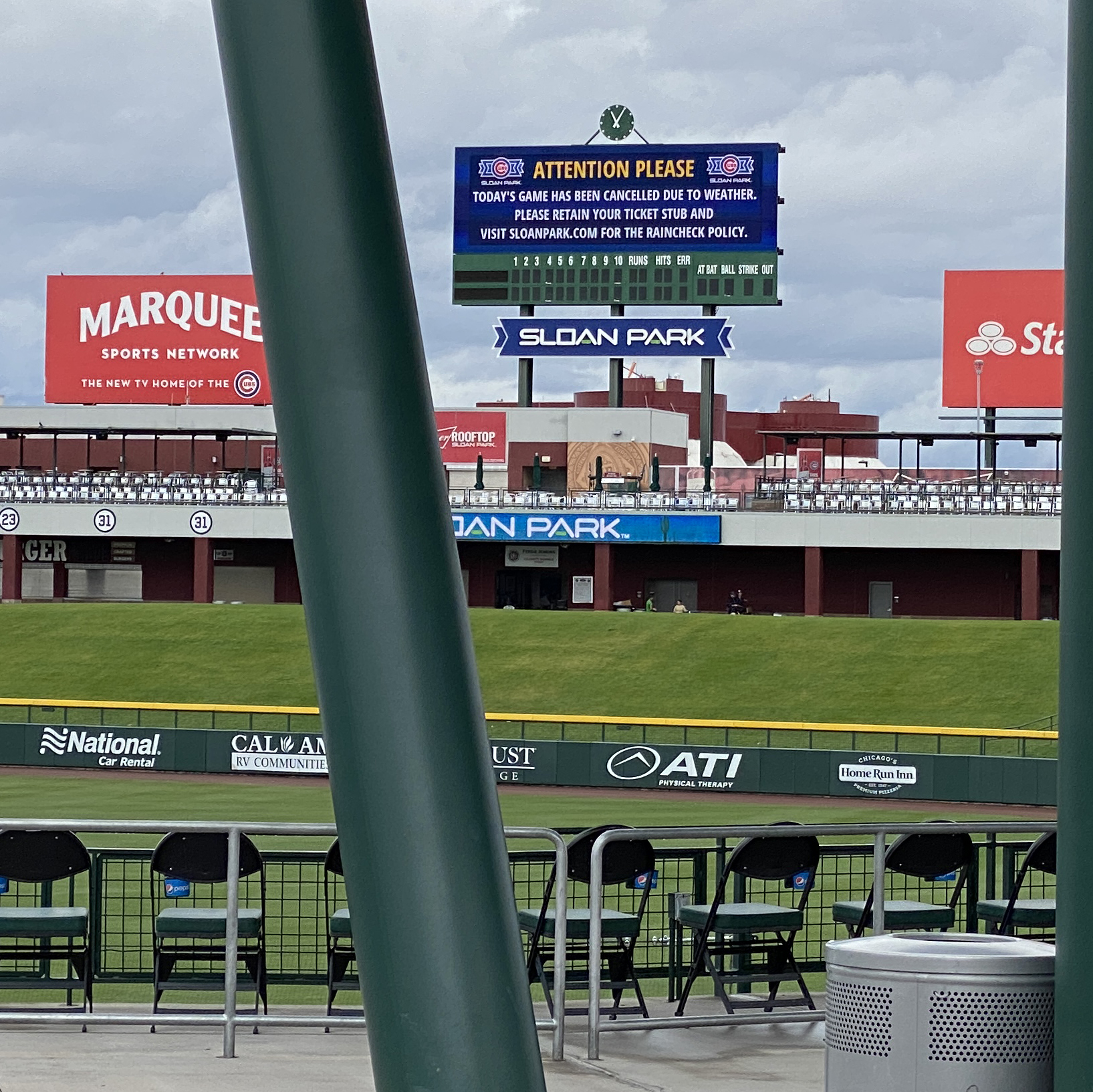
Sloan Park, spring training home of the Chicago Cubs. March 12, 2012.

Then in March, we went to Arizona for a week. Our plan was to go to some Chicago Cubs spring training games, do some hiking, enjoy restaurants, and all of the nice things you do on vacation. On March 12, we arrived at the Cubs spring training facility, Sloan Park, ready to watch a game. We found that the gates were locked and the scoreboard said that the game had been cancelled due to weather. But it wasn’t raining, and the forecast was for sun as the clouds were moving away. Nobody at the ballpark gave us more information. We went to have lunch at Portillos to assuage our disappointment and then went hiking. When we got back to our rented house, we heard that all Major League Baseball games had been cancelled. Coronavirus became real.

Wheaton_College_COVID_dashboard

Wheaton College’s COVID-19 dashboard, February 5, 2021. Students start returning to campus tomorrow for the spring semester under strict virus mitigation protocols. The entire student body will be tested for COVID-19 when students arrive on campus this weekend and they will all be tested regularly throughout the semester.

Later that day, I received an email from the President of Wheaton College. I am Wheaton College’s trombone professor and I was anticipating getting back to teaching when we got home from our spring break vacation. But our President said that spring break was being extended for another week and that all faculty needed to get prepared for several days of training: Wheaton College was going to a combination of remote and greatly modified in-person learning. Everything was changing.

Event_Cancelled

We all know the kinds of things that happened after that. No in-person concerts or theater performances, restaurants and movie theaters were closed, church doors were shuttered, life moved from personal engagement to a computer screen. We all learned that Zoom was not just a word little kids say when they’re pretending to pilot a rocket ship to Mars. Trombone lessons with Zoom and Cleanfeed. Recitals without an audience. Symphony orchestras making mashed up videos with players recording in their living rooms. Cancel. Cancel. Cancel. Masks. Social distancing. Hand sanitizer. Wash your hands. Wash your hands again. CAN’T TOUCH THIS!

So, here we are, nearly a year later. Nobody saw this coming, nobody imagined it would last this long. But we are starting to see hopeful signs for deliverance from the pandemic. Vaccines are now being distributed. I had my first jab of the Moderna vaccine yesterday morning—it was a truly joyful, emotional experience, the fruition of something I had been praying for over many months. We continue to pray that the rest of our family will receive the vaccine soon. So much will change for the better when that happens.

Moderna_COVID_vaccine

The first dose of the Moderna COVID-19 vaccine I received yesterday, February 4, 2021, at Central DuPage Hospital.

We are hopeful that with continued vigilance in following guidance on protective measures (wear your mask—keep apart from others—wash your hands—get the vaccine), we will slowly come out of this long tunnel. And when we do, and when we go to the first sporting event, the first church service, the first concert, play, or musical, the first restaurant after not doing those things for over a year, we will have a new sense of appreciation for all of those things that we always seemed to take for granted. That is one of the important lessons we have learned over these long months.

Still, the pandemic has provided us with opportunities to do other things. Like everyone else, I had to cancel a host of performing and teaching trips over the last year. Soloing at a brass band festival in Seattle. Cancelled. Playing with the Finnish National Radio Orchestra in concerts in Finland and Japan. Cancelled. Teaching at Gene Pokorny’s low brass seminar, at Interlochen Arts Academy, at the Wheaton College summer music camp, at the Csehy summer school of music. All cancelled. Planned vacations to Glacier National Park, Zion National Park, to Arizona. All cancelled. You’ve had things cancelled, too.

But we’ve spent more time with our grandkids, took more walks in forest preserves when the weather was good, and we go sledding down a four foot high berm next to our home (we don’t do “mountains” here in the Chicago area)—the most exhilarating five second ride on a sled that our grandkids have ever had. And in the midst of the storm, and without traveling regularly, that’s freed up time to do a lot of other things. No, I would not have chosen to be at home day after day. But that’s what we have. So I’ve been busy. Here’s some of what I’ve been doing lately.

Yeo_Kanda_ITA_article_sm

  • I wrote an article about my friend, Megumi Kanda, for the International Trombone Association Journal. that published in January of this year. Megumi was the 2020 recipient of the ITA’s highest honor, the ITA Award. Click HERE to read the article.

Yeo_teaching_workstation

Part of my teaching workstation at my home.

  • I’ve continued teaching my students at Wheaton College each week, both weekly lessons and trombone studio class. And, last semester, trombone literature class. Due to the pandemic, all wind, brass, and voice lessons are done online. I set up a new work station in our basement where I do all of my online remotely. We all know the limitations of Zoom and Cleanfeed, but we’re grateful that the technology allows us to continue to work together and make good progress. We all look forward to the day when we can sit side by side and play duets together once again. Everything just takes so much more time when it’s done virtually. For instance: If a student has a noisy F-attachment valve linkage, at an ordinary in-person lesson, I can say, “OK, hand me your horn,” and in a few minutes, I can usually solve the problem. But now, I have to hold my trombone up to the camera and try to help the student run through a number of diagnostic steps so I can identify the problem. “OK, put your thumb on top of the ball joint—no, the ball joint, not the stop rod arm—then with the other hand, move the F-attachment paddle. Where is that clicking sound coming from? No, I don’t think it’s from THERE— I see the movement in the linkage THERE. . .” And so on. But I salute my students who are dealing with so much as they are in school, both remotely and on campus with very strict virus mitigation protocols. Wear your mask and get the vaccine. Help students and teachers everywhere return to 100% in-person learning as soon as possible.

TromboneFamilyFillmore_Ed

Advertisement for Henry Fillmore’s The Trombone Family, c. 1920.

  • In June, I wrote two articles about Henry Fillmore’s iconic collection of trombone ragtime pieces, The Trombone Family, which includes Lassus Trombone. You can read those articles HERE and HERE. To say the articles aroused a lot of interest is a profound understatement. In the first two days after posting my articles, over 100,000 people read them on The Last Trombone. A vigorous discussion about music, race, and racism ensued. Since then, I’ve answered hundreds of emails from people who have written to  me about the subject, my articles have been reprinted in several journals and newsletters, and I have been asked to speak about the subject before several groups. This engagement continues, and a day doesn’t go by when I am not engaging with people about this important issue. This takes a lot of time. A LOT of time. But it matters.

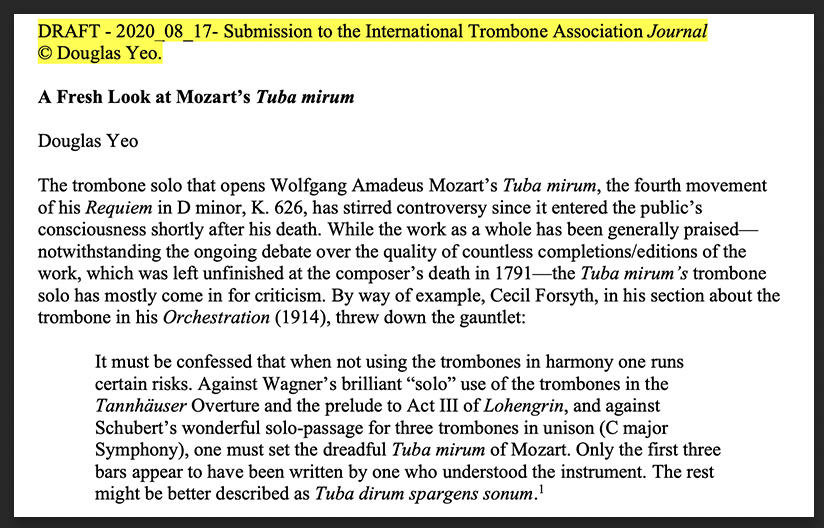
Yeo_draft_Tuba_mirum_article_incipit

  • I wrote a long article about the Mozart Requiem Tuba mirum that will be published in the International Trombone Association Journal sometime next year.

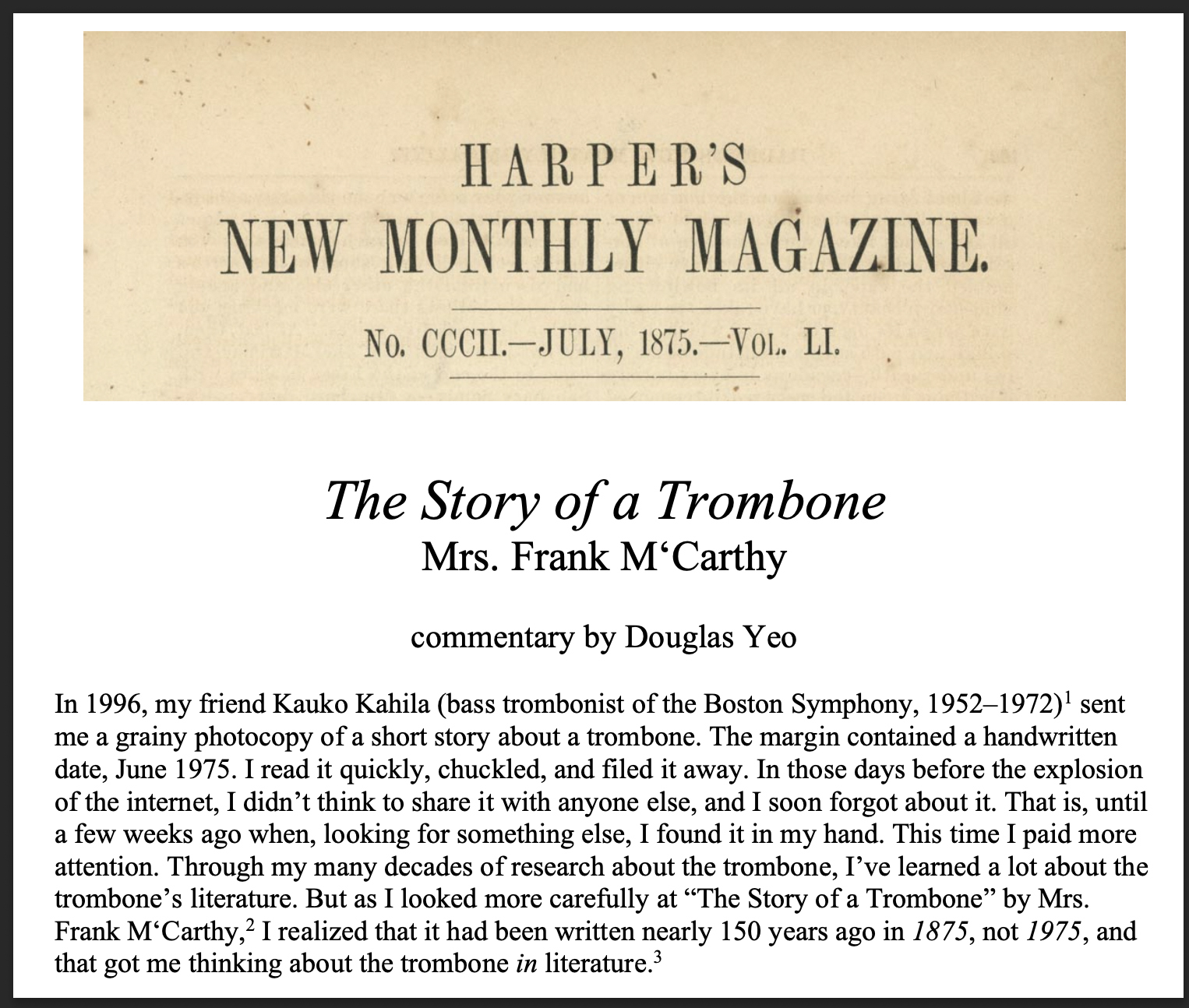
Yeo_Story_of_Trombone_article_incipit

  • I wrote a commentary and glossary to accompany the republication (in the International Trombone Association Journal) of a short story, The Story of A Trombone, that was first published in Harper’s New Monthly Magazine in 1875. It may have been the first short story ever written about the trombone. This will publish in the ITA Journal later this year.

Yeo_Tubby_Tuba_article_incipit

  • I continued working on my eight part series of articles about the piece for tuba, narrator, and orchestra, Tubby the Tuba. The articles have been published in the International Tuba Euphonium Association Journal through all of 2020 and 2021.

Small_Sliding_Stringing_incipit

  • My Boston Symphony Orchestra colleague Ronald Barron (retired principal trombonists) and I have just finished making an edition of Sliding and Stringing Along, a duet for tenor trombone or bass trombone and violin by the late Charlie Small. This was one the last pieces Charlie wrote before his death in 2017 and he had given both Ron and me handwritten copies of the piece. Trombone players know Charlie Small for his superb playing and also for his fantastic duet for tenor and bass trombone, Conversation. Ron premiered Sliding and Stringing Along in 2015 and he and I put our heads together to sort out Charlie’s many manuscripts. It will be published by Ensemble Publications later this year.

Mungons_Yeo_Rodeheaver_book_cover_sm

The cover to Homer Rodeheaver and the Rise of the Gospel Music Industry, by Kevin Mungons and Douglas Yeo.

  • For the last six years, my friend, Kevin Mungons, and I have been working together on a book about the trombone-playing song leader for evangelist Billy Sunday, Homer Rodeheaver. I had previously published an article about Rodeheaver in the Historic Brass Society Journal (to read the article, click HERE), and it’s been a real joy to work with Kevin to write the first full length biography of Rodeheaver. We completed the manuscript—the book is titled Homer Rodeheaver and the Rise of the Gospel Music Industry—last year, it then went out for peer review, we then engaged in a rewrite, and the book went through various editorial processes with our publisher, University of Illinois Press. We have just finished working through proofing the page proofs and the last thing for us to do before publication of the book this spring is to write the index. The pandemic has provided time for extended work on the book  and we are now in the home stretch. For advance information about the book on the University of Illinois Press website, click HERE.

Peterson_buccin_illustration

Illustration of a buccin (dragon bell trombone) by Lennie Peterson, for my new book, An Illustrated Dictionary for the Modern Trombone, Euphonium, and Tuba Player (Rowman & Littlefield).

Lennie_Peterson_trombone_Kaplin

Another side of Lennie Peterson’s artistic persona, a cartoon from his syndicated comic strip, The Big Picture.

  • For the last five years, I have been working on another book, An Illustrated Dictionary for the Modern Trombone, Euphonium, and Tuba Player. Since being contracted to write the book by Rowman & Littlefield, I’ve been at work putting it together. Last month, I finished my manuscript—over 650 entries about instruments, individuals, composers, manufacturers, and parts of low brass instruments—and submitted it to my publisher. It has now been sent out for peer review and once those comments come back later this month, I’ll engage in a rewrite and the other editorial processes. Hopefully the book will then head toward being published, sometime in late 2021 or early 2022. One of the great joys of working on this book has been working with my illustrator, Lennie Peterson. A sample of his work for the Dictionary is above. Lennie (who is a successful trombonist in addition to his other artistic pursuits) is well known to trombonists for his famous cartoon about trombone players and their band director, Mr. Kaplin (above). Lennie is the rare artist who is expert in a host of styles and I am very happy that we have been partners in putting this book together.

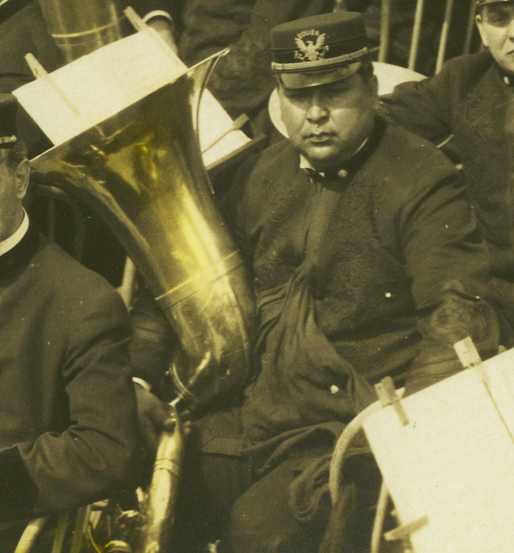
Kuhn_Sousa_Band_1915_crop

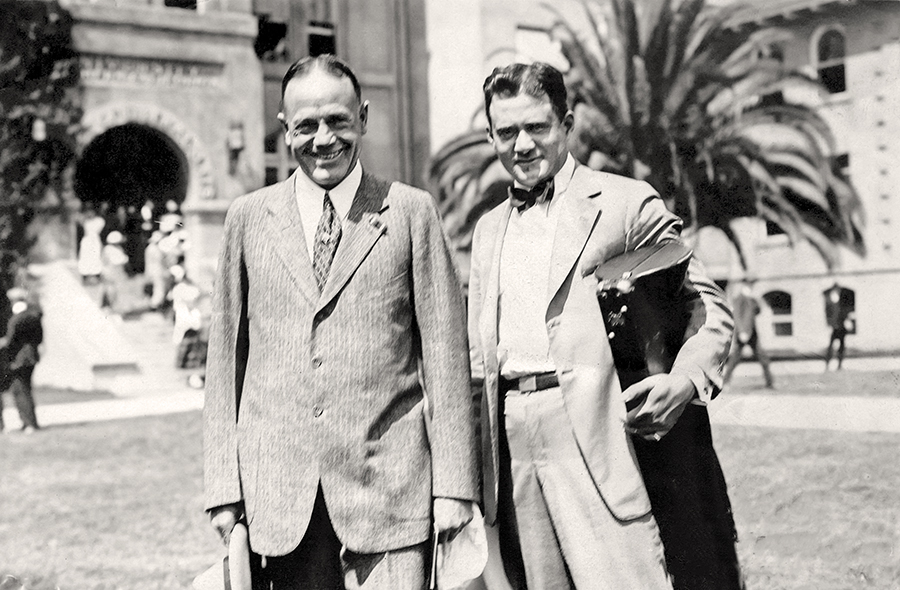
John Kuhn, a member of John Philip Sousa’s Band, at the 1915 San Francisco Panama-American Exhibition.

  • I’ve started researching the legendary Sousaphone player, John Kuhn, and I hope to publish a major article about him in the International Tuba Euphonium Association Journal sometime in 2022. Kuhn is a fascinating subject and as I was researching him for an entry in my Dictionary, I realized that a lot of the information that is known about him is in need of an adjustment. I find this all the time: historical figures have stories associated with them that are “too good not to be true,” but when one actually digs deep to find the root of the story, the narrative needs to be changed. Here’s a photo of Kuhn playing with a massed band (including John Philip Sousa’s band, of which Kuhn was a member) at the 1915 San Francisco Panama-Pacific Exhibition; that’s him looking over his shoulder at the camera. Stay tuned for more about this member of the Sioux nation who was a true force on the Sousaphone for much of the twentieth century.

Yeo_2020_Christmas_ornament_sm

Our family’s 2020 annual Christmas ornament.

  • Every year since we were married 45 years ago, my wife and I have made an ornament for our Christmas tree that reflects some of what our family did in the last year. It’s a nice time capsule that allows us to remember things we might have otherwise forgotten, and to celebrate some of our family’s milestones. It was challenging to find things to put on the 2020 ornament. Here’s what we came up with. A pin from Super Bowl LIV when the world seemed normal, a pin from 2020 baseball spring training when the world changed, and a NO COVID pin. That seemed to summarize the year.

COVID-vaccine_sign_Central_DuPage_Hospital

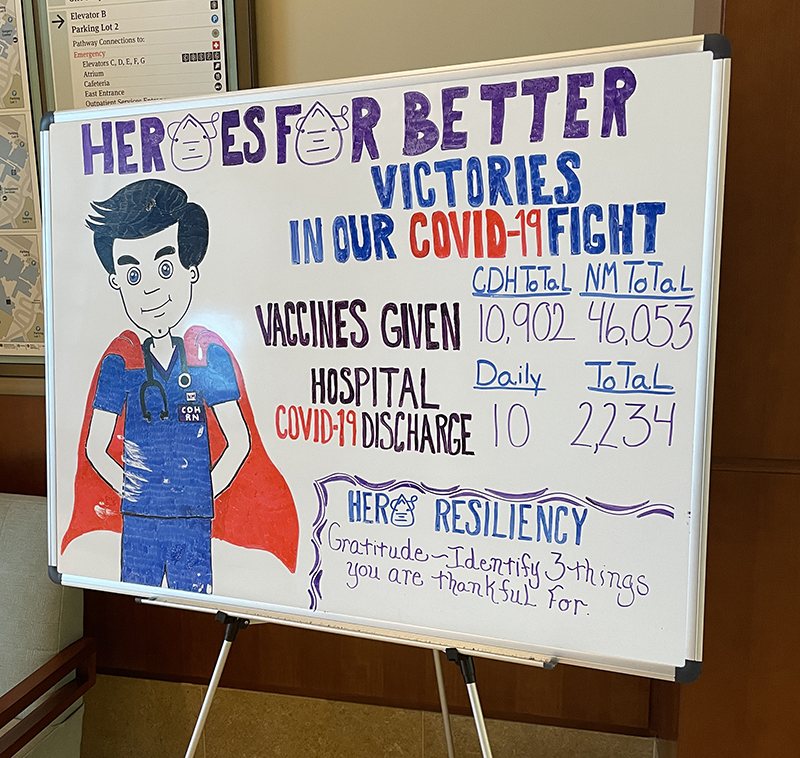
Sign in the lobby of Central DuPage Hospital, Winfield, Illinois, February 4, 2021.

  • As mentioned above, I received my first COVID-19 vaccination yesterday, with another dose coming in a few weeks. And, straight up, I want to say that I had no side effects apart from a slightly sore arm yesterday, no more than what I experience every year when I get a flu shot. By saying that I received the vaccine, I guess I’m giving away my age since here in Illinois, the vaccine is only available at this time to front line essential workers like doctors, nurses, and emergency personnel, teachers, and individuals over 65 years old (and I’m not a front line worker). My son-in-law, Chad, who is a hospice chaplain who is in contact with people all day long in homes and care facilities, has had both of his vaccination doses over the last few weeks. My getting it yesterday means 25% of our immediate family has been vaccinated, and we see this as tangible progress toward all of us getting vaccinated—a key element to returning to a more normal life. I received my vaccine at Central DuPage Hospital in Winfield, Illinois—part of the Northwestern Medicine health network—and I was so impressed by the efficiency of their distribution system and the care of its staff. The process went smoothly from start to finish, and I want to add my voice of thanks to all those who have been working so hard to help get the vaccine into people’s arms, and to those who have been caring for those who have contracted the coronavirus. We all know that this virus is bad—really bad—and we rejoice that deliverance from the pandemic seems to be in reach thanks to the vaccines. Thank you, God. In a world that is upside down, during a time where so many people have lost so much, it’s comforting to finally see the light at the end of the tunnel. And we’ll get there sooner if everyone follows health care directives including wearing a mask, maintaining appropriate distance from one another, and getting the vaccine. It matters.

So, that’s some of what’s been keeping me busy over the last year. Thanks to those who reached out and expressed concern, who wondered why I haven’t been posting more often on my blog. I’ll try to get to it more regularly. I’ve just been busy—like you’ve probably been busy, too.

[Header image: The daily United States coronavirus map from The New York Times, February 5, 2021.]

Joannès Rochut, the Boston Symphony, and his trombone

Joannès Rochut, the Boston Symphony, and his trombone

by Douglas Yeo

When we look at the long history of the trombone, many notable trombonists come to mind. It’s not possible to say who was the most famous. A case can be made for Arthur Pryor, the celebrated trombone soloist in John Philip Sousa’s band and his own band, who made many recordings, and dazzled audiences around the world. While his name is not so well known today, Homer Rodeheaver, the trombone-playing song leader for evangelist Billy Sunday in the first third of the twentieth century, played trombone for over 100 million people during his lifetime, although his trombone playing skills paled next to the great soloists of his time including Pryor, Simone Mantia, and Gardell Simons.

However, there is one trombonist whose name is known to trombonists all over, although most are probably not aware of many details of his life. But this we know: Joannès Rochut (1881-1952) edited three volumes of vocalises, what he called Melodious Etudes, from the works of Marco Bordogni. These books, published in 1928 by Carl Fischer (New York), have become a standard part of trombone teaching and practicing since they were first issued. For sheer name recognition, it would be hard to argue that Rochut is not one of the most famous trombonists of all time. His contribution to trombone pedagogy is incalculable. What trombonist does not have a copy of at least Volume 1 of “The Rochut Book” (even though there is not a note by Rochut in the books)? [NB: I wrote an article about exercise No. 1 in Volume 1 of Rochut’s Melodious Etudes, an etude that does not appear in Bordogni’s oeuvre and which some people have postulated was written by Rochut himself. It was not. You can read that article HERE.] 

Rochut_Bordogni_book_1_cover

Cover of the first edition of Joannès Rochut’s Melodious Etudes for Trombone Selected from the Vocalises of Marco Bordogni (New York: Carl Fischer, 1928)

This article is a brief introduction to Joannès Rochut with a special emphasis on one of the trombones he played. I intend to write a more in-depth article about Rochut for the International Trombone Association Journal, drawing from my own research and the extensive archive of Rochut related materials collected and recently given to me by my friend, David Fetter (long time trombonist with the Cleveland Orchestra and Baltimore Symphony; we were colleagues together when I played in the Baltimore Symphony from 1981-1985).

Born in Paris, Rochut’s father died when he was seven years old and he was placed in an orphanage where he learned to play the trombone. After volunteering for the French military when he was eighteen—he served as a bandsman for three years—Joannès Rochut enrolled in the Paris Conservatoire in 1902 where he studied trombone with Louis Allard (1852-1940).

Le Temps (Paris. 1861)

Announcement of brass instrument prize winners in the 1905 Paris Conservatoire Concours. Rochut received Premier prix (first prize) in the trombone class; his name appears near the bottom of the clipping. Le Temps, Paris, July 30, 1905.

Stojowski_Fantaisie_trombone_incipit

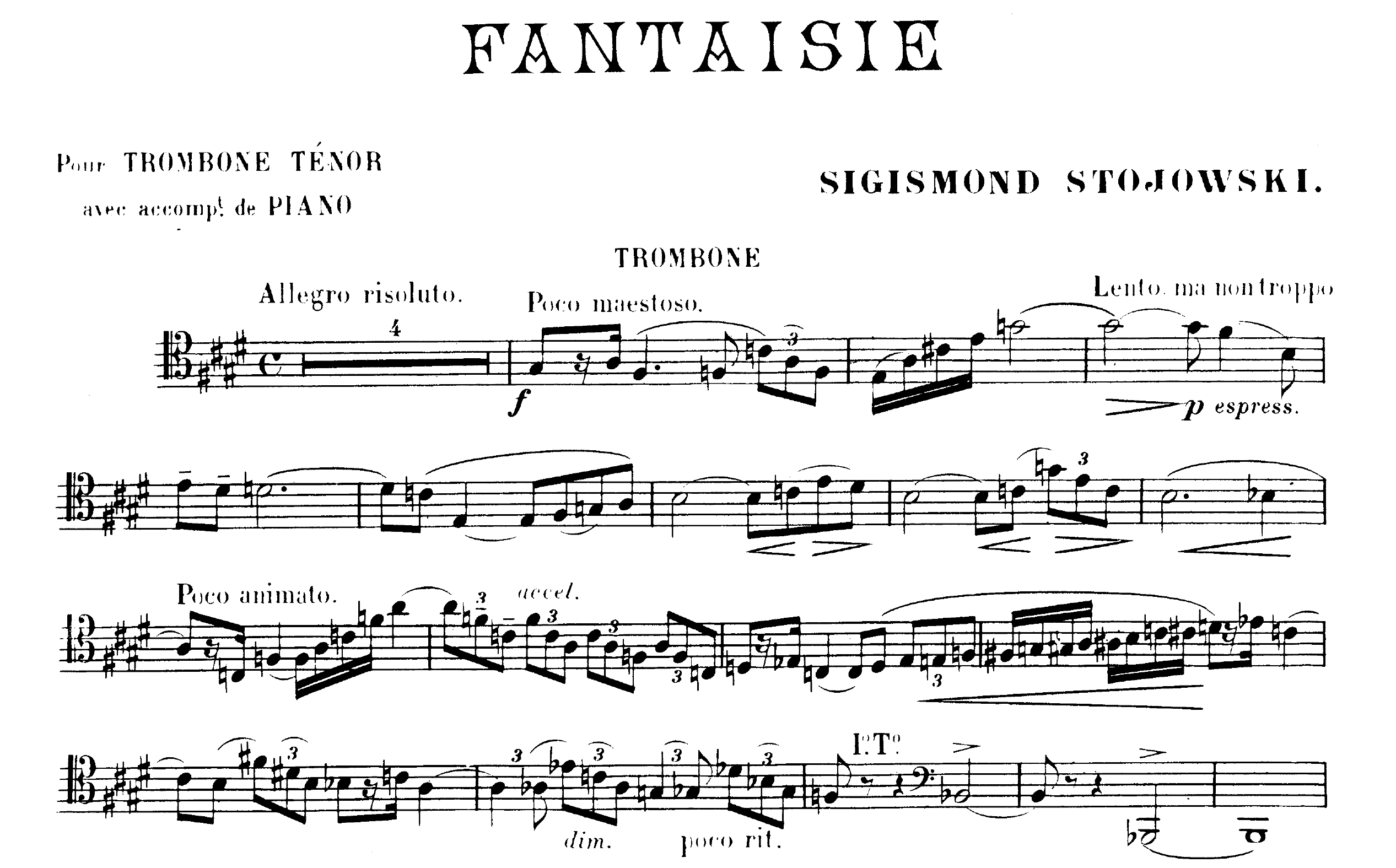
Sigismond Stojowski, Fantasie (incipit). 1905.

Joannès Rochut won second prize at the Conservatoire in 1903, playing Bernard Croce-Spinelli’s Solo de concours (that contest was won by Eugene Adam, whose name we shall see again later in this article), and second prize again in 1904, playing Morceau de concours of Edmond J. Missa. Rochut graduated from the Conservatoire in 1905 with first prize in its annual Concours; the required solo was Zygmunt Denis Antoni Jordan “Sigismond” de Stojowski’s Fantasie. [NB: Stojowski was born in Strzelce, Poland, in 1870. He entered the Paris Conservatoire at age 17 and also studied at Sorbonne University. He was a friend of Peter Tchaikovsky (Tchaikovsky’s Symphony No. 4 was dedicated to Stojowski), and Stojowski came to the United States in 1905 where he wrote his Fantasie for trombone. For a more detailed biography of Stojowski, see: Paul Krzywicki, From Paderewski to Penderecki: The Polish Musician in Philadelphia (Paul Krzywicki, 2016).] 

Holton_1920_Rochut_Sordillo

Holton Trombone catalog, c. 1920. Endorsements by Joannès Rochut and Fortunato Sordillo.

While a member of the Orchestre de la Garde républicaine (French Republican Guard Band) during World War I, Rochut toured the United States in 1918; the band played concerts in 208 cities in 37 states. It was probably at that time that Rochut tried and later endorsed Holton trombones (Rochut’s Holton endorsement is pictured above) but there is no record of Rochut taking a Holton trombone back to Paris.

Following his service in the Republican Guard Band, Rochut performed with numerous orchestras in France including the Société des Nouveaux-Concerts (Orchestre Lamoureux) and l’Opera Comique (Paris); among his many students at that time was Andre Lafosse (1890-1975), who later served as professor of trombone at the Paris Conservatoire (1948-1960). Rochut also helped organize the first of the Concerts Koussevitzky (1921, Paris) which were instrumental in establishing the reputation of Russian conductor Serge Koussevitzky (1897-1951). Koussevitzky was appointed music director of the Boston Symphony Orchestra in 1924, and in October 1925, he engaged Rochut as the orchestra’s principal trombonist, a position he held for five seasons. Rochut joined the faculty of New England Conservatory of Music in 1926; among his students in Boston was John Coffey (bass trombonist of the Cleveland Orchestra 1937-1941, and bass trombonist of the Boston Symphony, 1941-1952).

Rochut_Boston_clipping_1925

Photo of Joannès Rochut in Paris with his children, part of an article in the Boston Sunday Post, October 11, 1925. The photo inset on top right shows Ferdinand Gillet, who was hired as the Boston Symphony’s principal oboist at the same time Rochut was hired as principal trombonist. Courtesy of Boston Symphony Archives.

Rochut was one of 14 French musicians to join the Boston Symphony in the fall of 1925; he played principal trombone in the BSO through the 1929-1930 season. The addition of Jacob Raichman to the trombone section in 1927—Koussevitzky knew Raichman in Russia where Raichman played alongside Vladislav Blazhevich in the Bolshoi Theater Orchestra in Moscow before leaving for Cuba and then the United States—probably hastened Rochut’s departure from Boston. The Frenchman and the Russian famously did not get along well, and when Rochut returned to France in 1930, Raichman, who had been named co-principal trombone around 1928, assumed the principal trombone position in the BSO. In 1955, Raichman was succeeded as principal trombone by William Gibson who was succeeded by Ronald Barron in 1975 who was succeeded by Toby Oft in 2008.

Rochut_1925_Boston_Post

“New Symphony Virtuosos,” Boston Post, October 6, 1925. Joannès Rochut (third from left) is pictured with three other newly hired principal players of the Boston Symphony Orchestra: Edmond Allegra, principal clarinet, Ferdinand Gillet, principal oboe, and Jean Lefranc, principal viola. Courtesy of Boston Symphony Orchestra Archives.

The earliest known photo of Joannès Rochut as a member of the Boston Symphony was printed in in the Boston Post on October 6, 1925 (above).

Boston_Symphony_brass_section_Rochut_1925

Boston Symphony Orchestra brass section, 1925. Courtesy of Boston Symphony Orchestra Archives.

Boston_Symphony_brass_section_Rochut_1925_detail

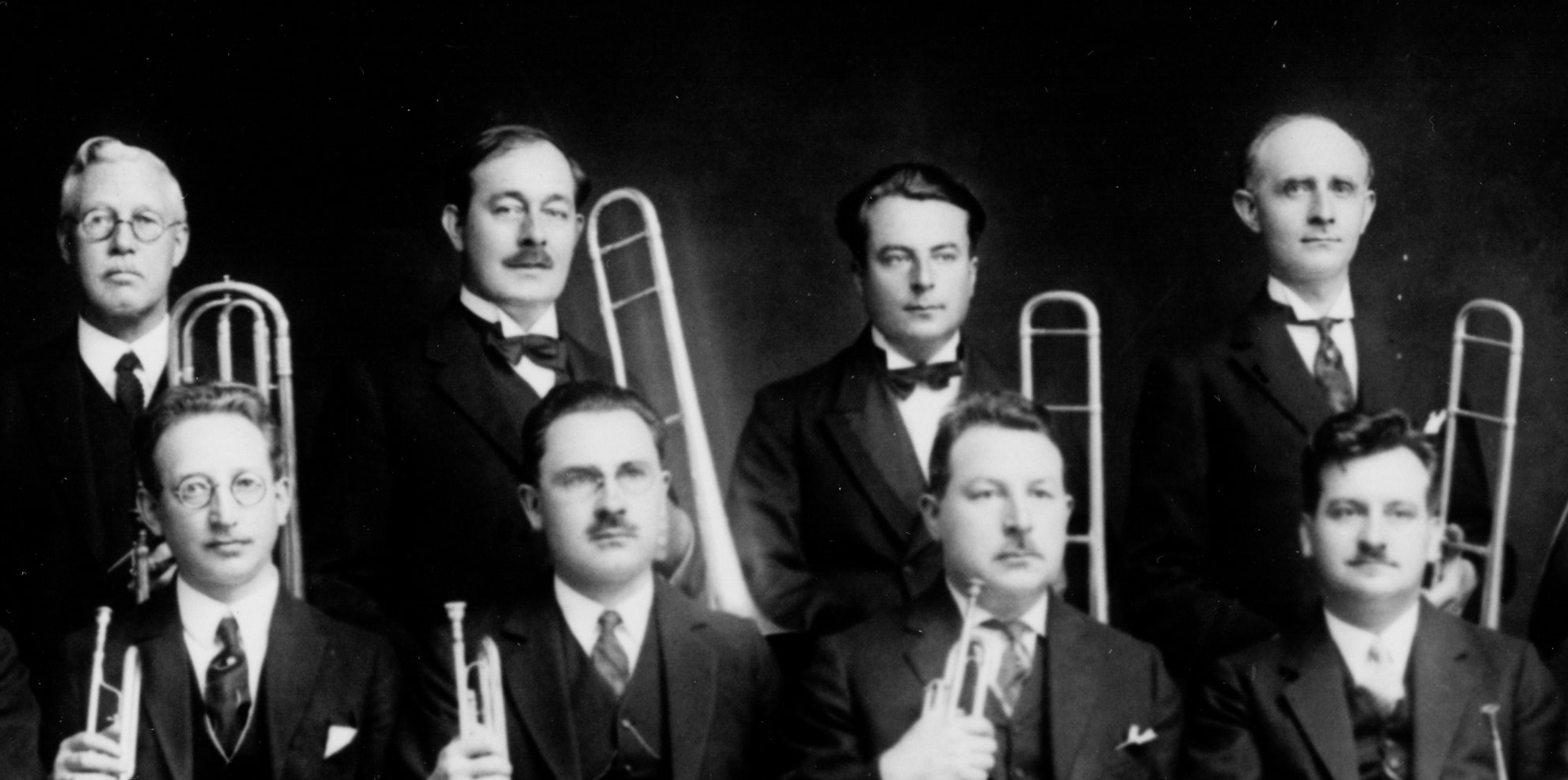
Later in 1925, the Boston Symphony brass section posed for a group photo (above). Rochut is standing in the center; the other trombone players are (back row, left to right) Leroy Kenfield (bass trombone), Eugene Adam (assistant principal trombone), and Lucien Hansotte (second trombone). The tubist, far right, is Paul Sidow. Seated in front of Rochut is Georg Wendler, principal horn (Wendler was the son-in-law of Eduard Kruspe, the celebrated German maker of brass instruments); in front of Hansotte is George Mager, principal trumpet. Mager, who also taught at New England Conservatory of Music, was the teacher of Adolph Herseth (1921-2013), who played principal trumpet in the Chicago Symphony Orchestra from 1948 to 2001.

BSO_1925_Rochut_ed

This grainy photo, above, from an undated newspaper clipping from a Boston Symphony press scrapbook, probably dates from 1925-1926. Back row (left to right): Joannès Rochut, Eugene Adam (assistant principal trombone), Lucien Hansotte (second trombone), Leroy Kenfield (bass trombone), Paul Sidow (tuba).

BSO_1927_Beethoven_9_Rochut

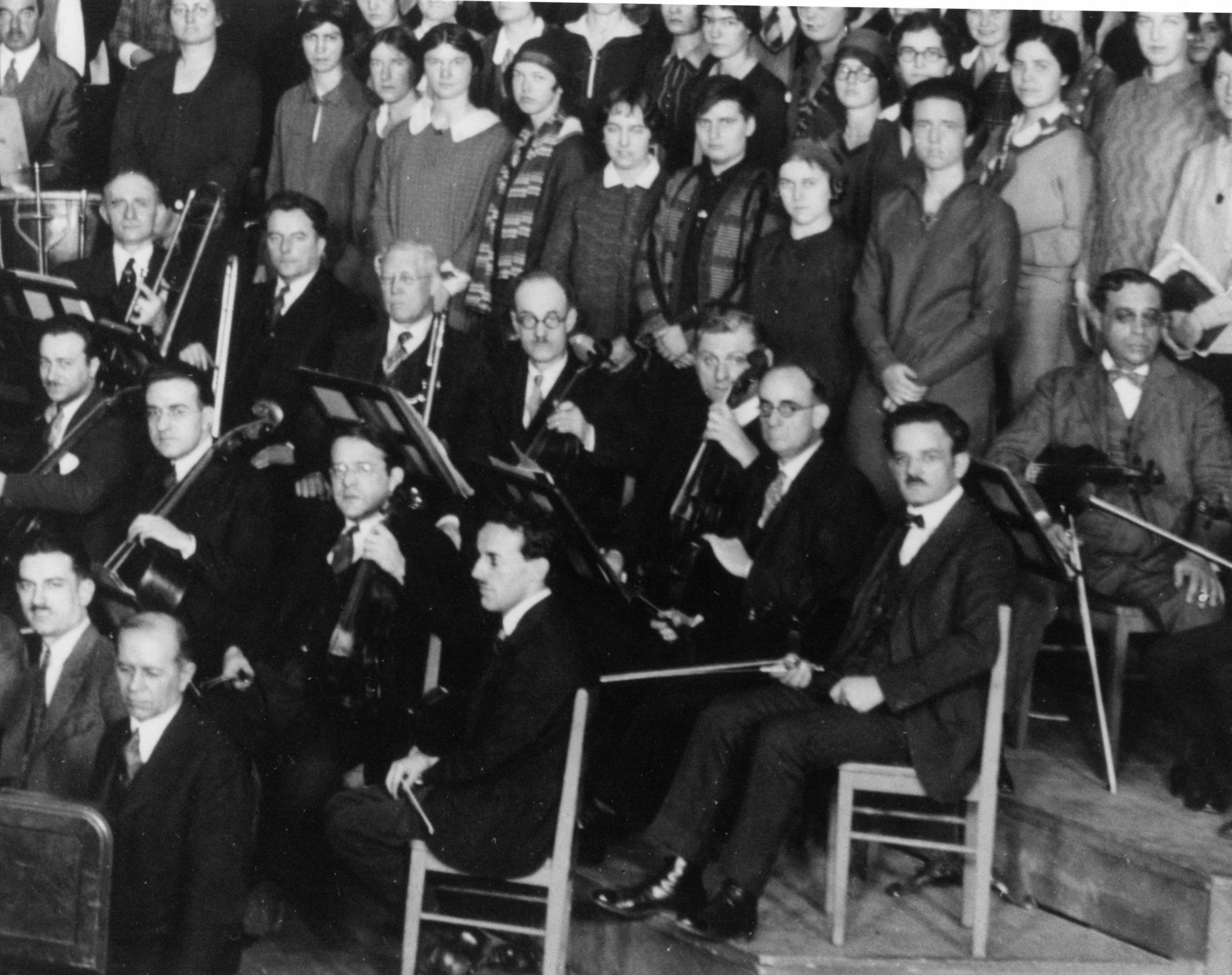
[Above] Boston Symphony Orchestra, performance of Beethoven Symphony No. 9, Serge Koussevitzky, conductor. March 29, 1927. Courtesy of Boston Symphony Orchestra Archives.

BSO_1927_Beethoven_9_Rochut_detail

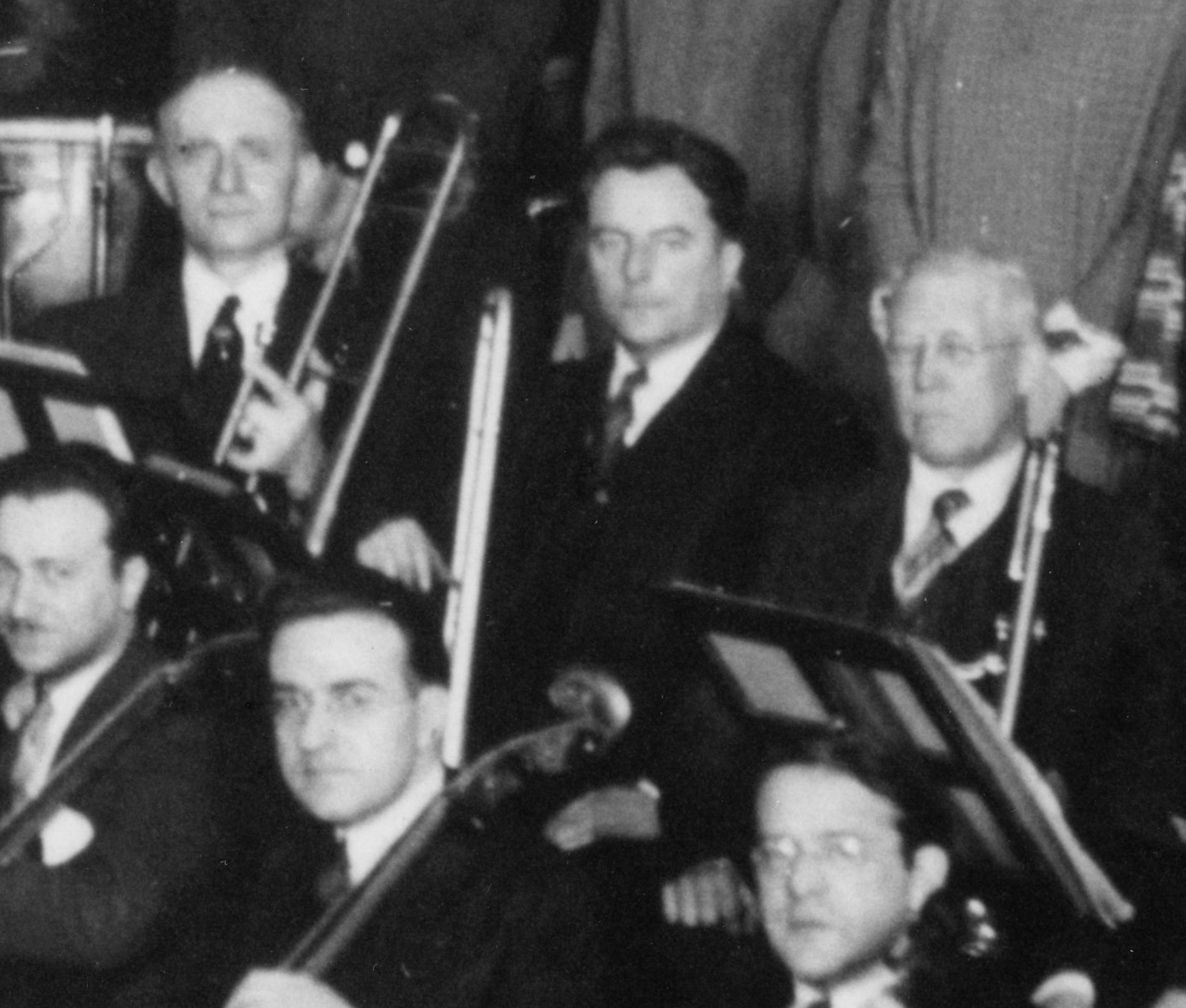
This photo of Rochut on stage in Boston’s Symphony Hall (above) was taken at the time of a performance of Beethoven’s Symphony No. 9 in 1927. The Boston Symphony’s trombone section for that performance consisted of (above, left to right) Rochut, Lucian Hansotte (second trombone), and Leroy Kenfield (bass trombone). 


Boston_Symphony_players_Rochut_1928._detail

[Above] Members of the Boston Symphony Orchestra, 1928. Courtesy of Boston Symphony Orchestra Archives.

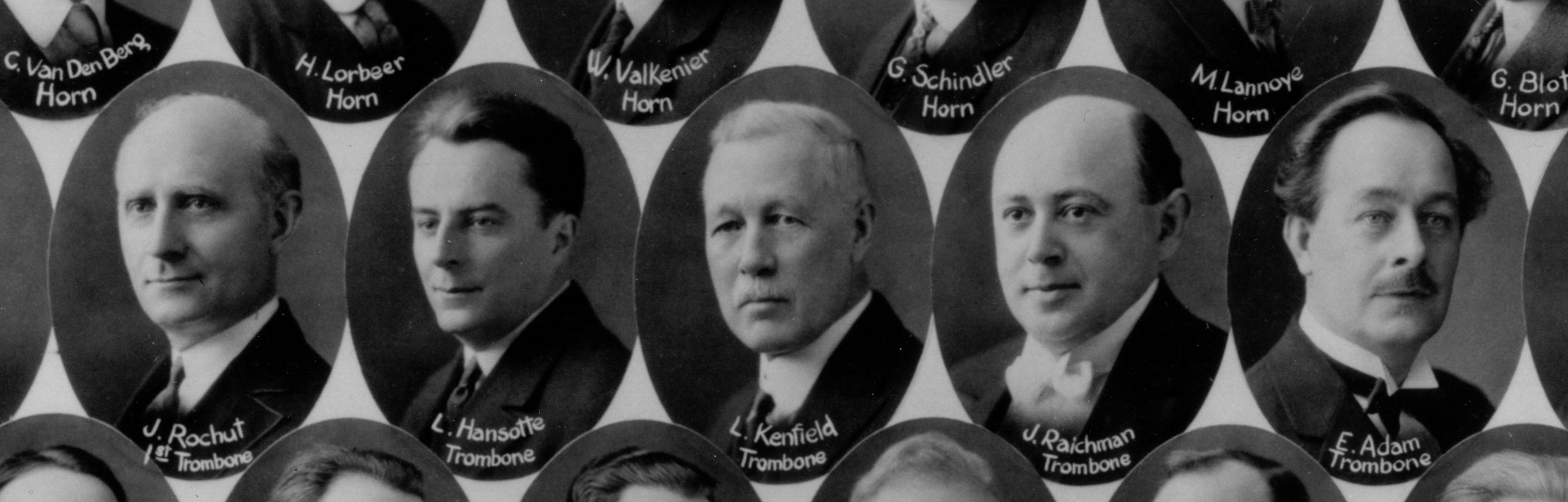
At the beginning of the 1928-1929 season, the members of the Boston Symphony Orchestra sat for individual photos that were collected into a collage. When Jacob Raichman joined the orchestra in 1927, the trombone section expanded to five players. Shown in the photo are (left to right), Rochut, Lucien Hansotte (second trombone), Leroy Kenfield (bass trombone), Jacob Raichman (co-principal trombone), and Eugene Adam (assistant principal trombone).

Fiedler_Sinfonietta_Rochut_1929

[Above] Arthur Fiedler (standing, center) with the Arthur Fiedler Sinfonietta (Boston Sinfonietta), c. 1929. Courtesy of Boston Symphony Archives.

Fiedler_Sinfonietta_Rochut_1929_detailMembers of the Arthur Fiedler Sinfonietta. Back row (left to right): Abdon Laus, principal bassoon, Joannès Rochut, Marcel LaFosse, trumpet, Georges Mager, principal trumpet.
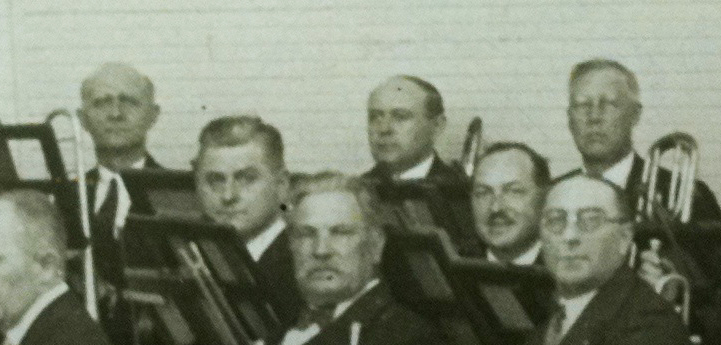
Conductor Arthur Fielder (1894-1979) is well-known for his long tenure as the conductor of the Boston Pops from 1930 to 1979. But what is lesser known is that before he achieved fame with the Pops, he founded the Boston Sinfonietta—also known as the Arthur Fiedler Sinfonietta—in 1924. The orchestra was made up mostly of Boston Symphony players and it played concerts and made recordings for RCA Victor. Rochut played in Fiedler’s Sinfonietta along with many other Boston Symphony principal players including Georges Mager.

BSO_Rochut_Raichman_Hatch_Shell_1929_crop

[Above] Boston Symphony Orchestra (Boston Pops Orchestra) on the Charles River Esplanade, July 4, 1929. Courtesy of Boston Symphony Orchestra Archives.

BSO_Rochut_Raichman_Hatch_Shell_1929_detail

[Above] Members of the Boston Symphony Orchestra (Boston Pops Orchestra). Back row (left to right): Joannès Rochut, Jacob Raichman (playing second trombone), Leroy Kenfield (bass trombone).

On July 4, 1929, the Boston Pops played a concert on the Charles River Esplanade in Boston. A temporary shell had been constructed for the concert and Rochut, Raichman, and Kenfield played trombone. [NB: A second temporary bandshell was built in 1934, and a permanent structure was built in 1940.  The Edward A. Hatch Memorial Shell—Bostonians refer to it as “The Hatch Shell”—underwent a major renovation in 2018.]

Rochut_Lefevre_trombones

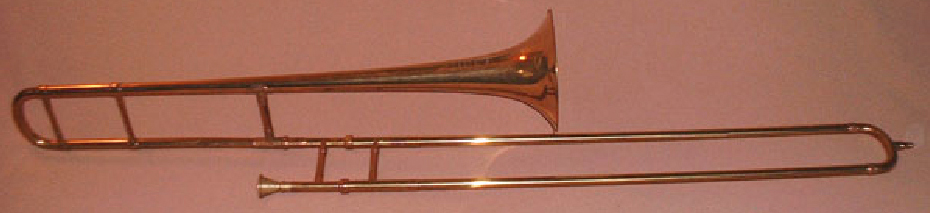
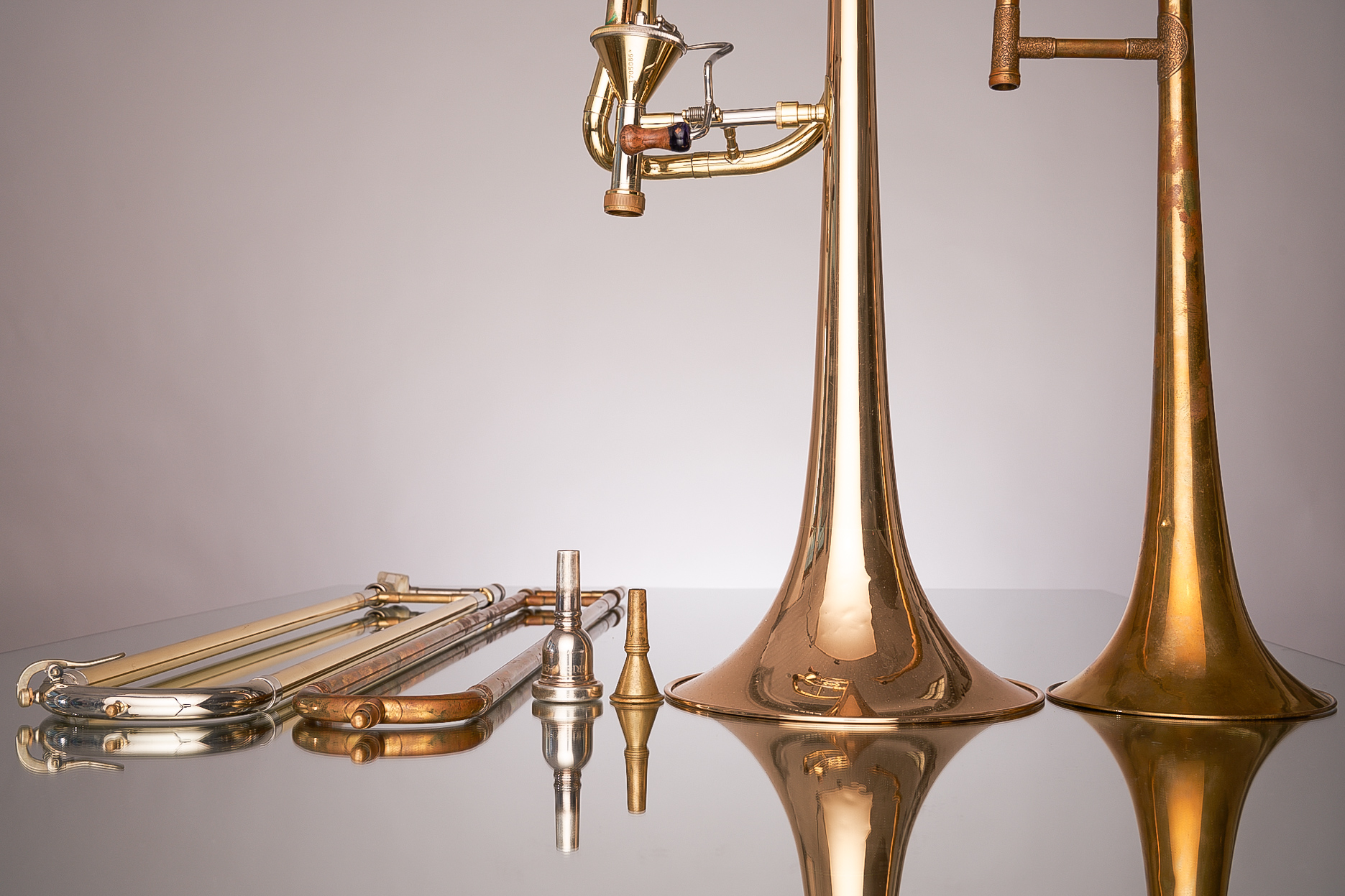
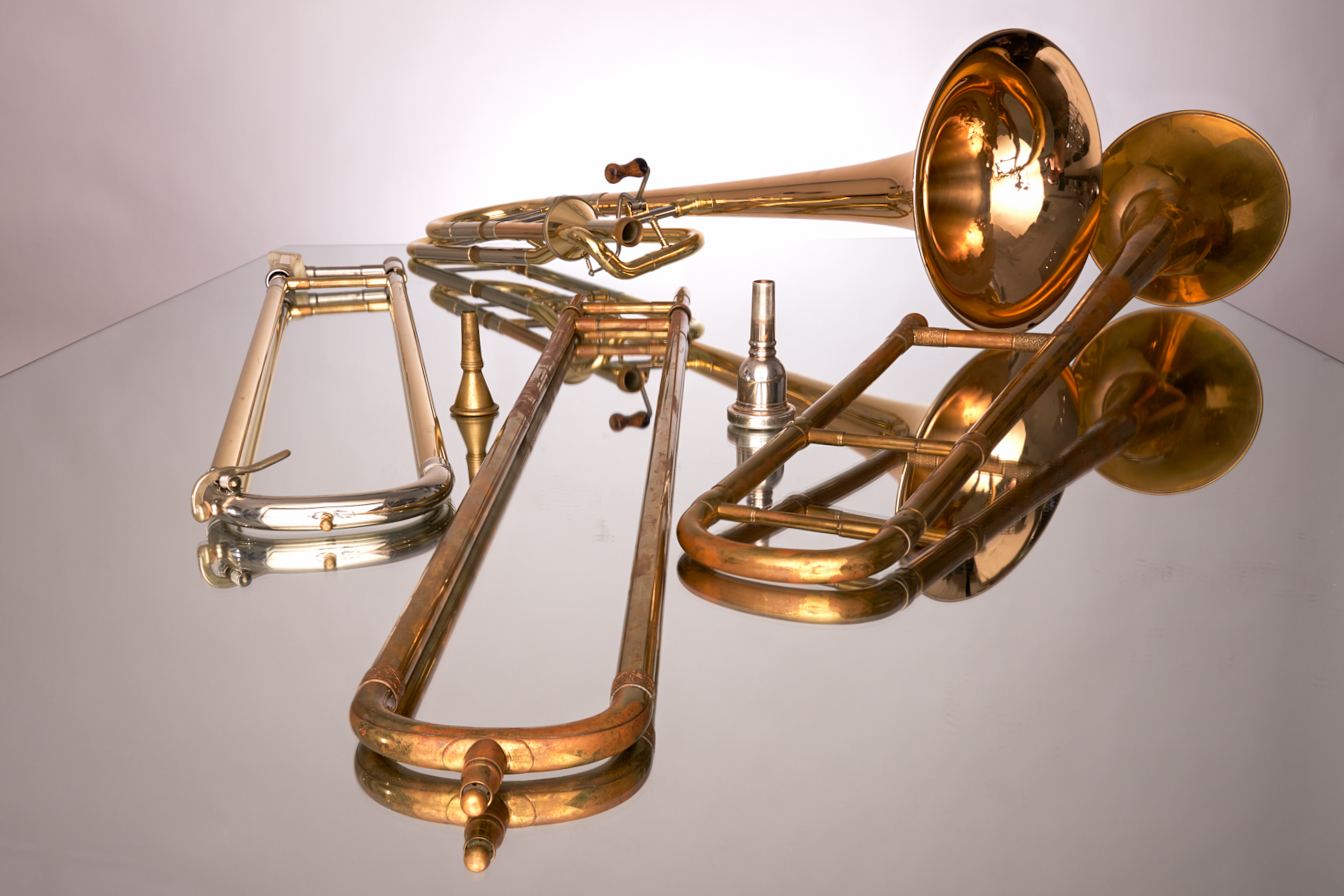
When Joannès Rochut joined the Boston Symphony, he brought with him two trombones by the Parisian maker Lefevre. Founded in 1812 by François Lefevre, the workshop was particularly known for its woodwind instruments. Extant trombones by Lefevre are few, and the shop went out of business by 1911. Rochut’s Lefevre trombones are both narrow bore (.455″). The straight trombone has a six-inch diameter bell, and the trombone with a piston valve activated  F-attachment (which also has a Stillventil or static rotary valve that can be turned by hand to put the attachment in E) has a 6 1/2 inch diameter bell. 

When Rochut left Boston to return to Paris in 1930, he left his Lefevre trombones behind in Symphony Hall. In the 1970s, they were discovered in a storeroom and put up for auction by the BSO as part of a fundraising program, “Salute to Symphony.” The trombones sold at auction but the buyer did not want to take them. William Moyer, the orchestra’s personnel manager who had played second trombone in the BSO from 1952-1966, took the trombones home for safekeeping. When I joined the BSO in 1985 and told Bill Moyer of my interest in knowing more about Rochut, he gave me the trombones. 

Rochut_trombone_Oft_2009

I never considered Rochut’s trombones to be “mine.” I always felt they had been entrusted to me to care for them. They are a part of the Boston Symphony’s history, priceless artificats from one of the most important trombonists to have ever played the instrument. When Toby Oft received tenure as principal trombonist of the Boston Symphony in July 2009, I decided to entrust Rochut’s straight trombone to him. Then, when Steve Lange received tenure as second trombonist of the Boston Symphony in 2011, I entrusted the F-attachment trombone to him. I had small plaques made that I put in the case for each instrument that documented the exchange. Toby and Steve both understood that the instruments were not “theirs,” rather, they were to care for them until they left the BSO at which time they would entrust the instruments to their successors. In this, Rochut’s trombones will always be in the care of Boston Symphony trombonists.

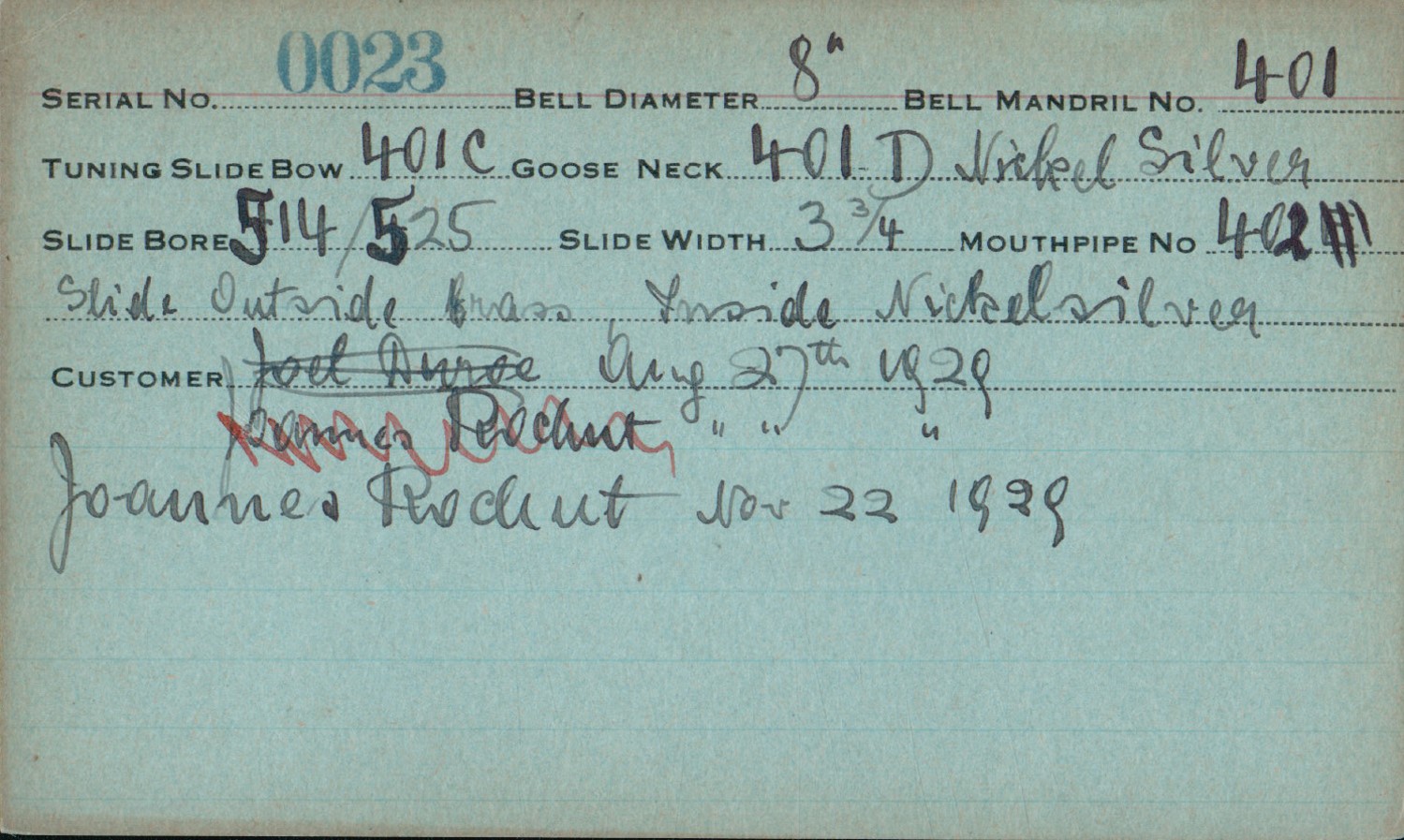
Rochut played his Lefevre trombone in Paris before he came to Boston and during his years he was a member of the BSO; it can be seen in photos throughout this article. Rochut used a Besson trombone for a time in 1927-28 but returned to his Lefevre. Then, on November 22, 1929, Rochut purchased one of the first trombones made by Vincent Bach, serial number 0023 (.514/.525″ dual slide bore, eight-inch diameter bell). How much Rochut used his Bach trombone in Boston and whereabouts of Rochut’s Besson and Bach trombones are not known to me.

Bach shop card Rochut Nr. 23

Vincent Bach’s shop card for trombone serial number 0023, purchased by Joannès Rochut on November 22, 1929. Courtesy of Roy Hempley.

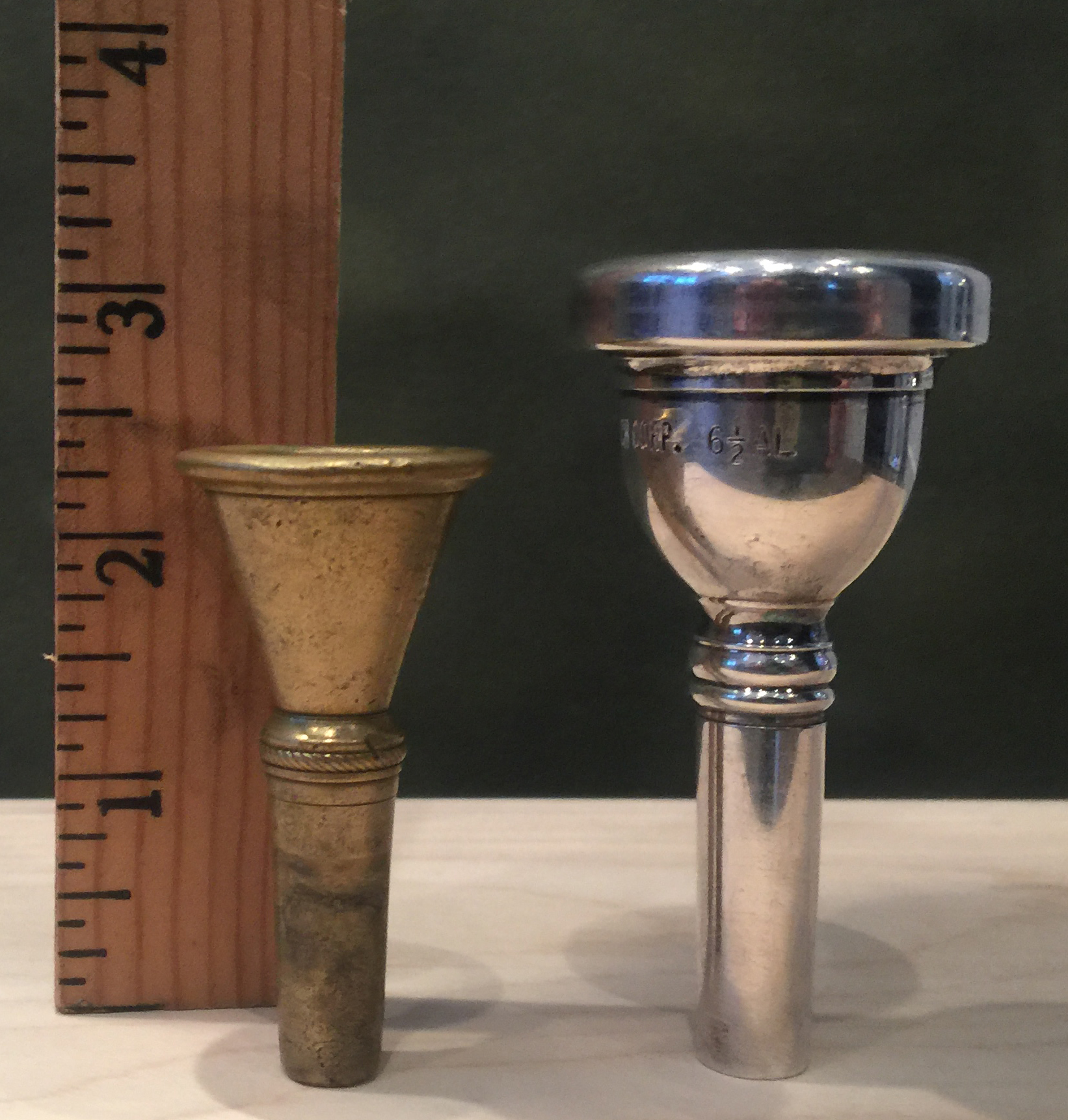
In addition to leaving his Lefevre trombones behind in Boston, Rochut also left his mouthpiece. It is exceptionally small, with a 21.6 mm interior rim diameter. It is funnel shaped, in the style of French trombone mouthpieces of the time. A comparison of Rochut’s mouthpiece that he used with his Lefevre trombone with a Bach 6 1/2 AL graphically shows how small Rochut’s mouthpiece actually was. 

Rochut_trombone_mouthpieceMouthpiece (left) used by Joannès Rochut with his Lefevre trombone, compared with a Bach 6 1/2 AL mouthpiece (right). Photo by Mike Oft.

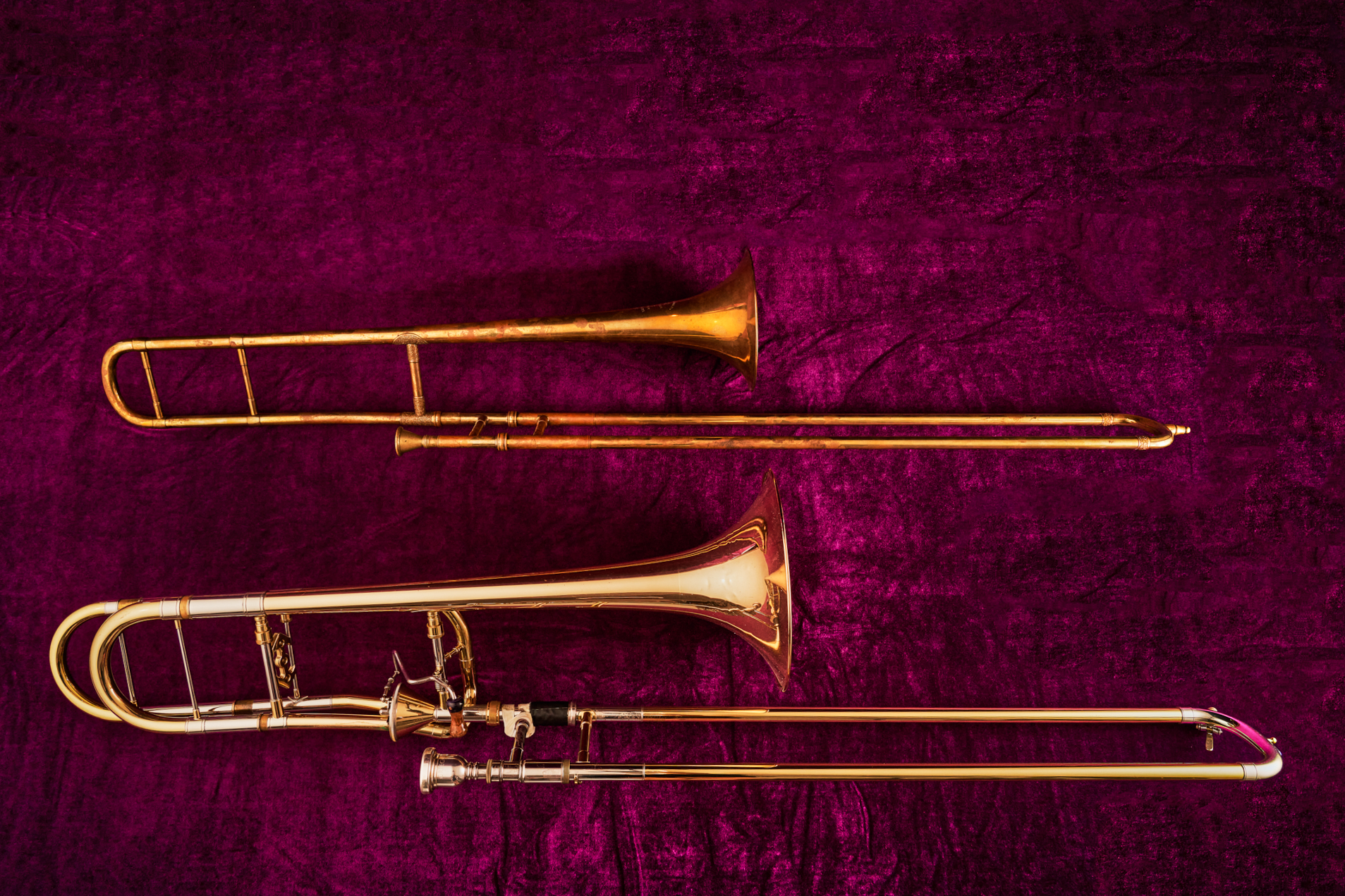
I recently asked Toby Oft to take some photographs of Rochut’s Lefevre trombone as well as some photos that would show the difference in size between the Lefevre and Toby’s Edwards trombone. I want to thank Toby for taking these superb photos which are not only informative, but display the trombones as works of art, which they are.

Rochut_Trombone_©Toby_Oft

Joannès Rochut’s Lefevre trombone. Photo by and © Toby Oft. Note the siphon valve on the bottom bow of the hand slide. Pressing the bottom of the hand slide to the floor activates a spring and allows condensation to drain  out.

Rochut_Trombone2_©Toby_Oft

The bell engraving of Joannès Rochut’s Lefevre trombone. Photo by and © Toby Oft.

Rochut_Edwards_Trombone_©Toby_Oft

Comparison of Joannès Rochut’s Lefevre trombone with Toby Oft’s Edwards trombone. Photo by and © Toby Oft.

Edwards_Rochut_Comparison_©Toby_Oft

Comparison of Joannès Rochut’s Lefevre trombone with Toby Oft’s Edwards trombone. Photo by and © Toby Oft.

Edwards_Oft_Trombone_vs_Rochut_©Toby_Oft

Comparison of Joannès Rochut’s Lefevre trombone with Toby Oft’s Edwards trombone. Photo by and © Toby Oft.

Rochut_Trombone_on_stand_©Toby_Oft

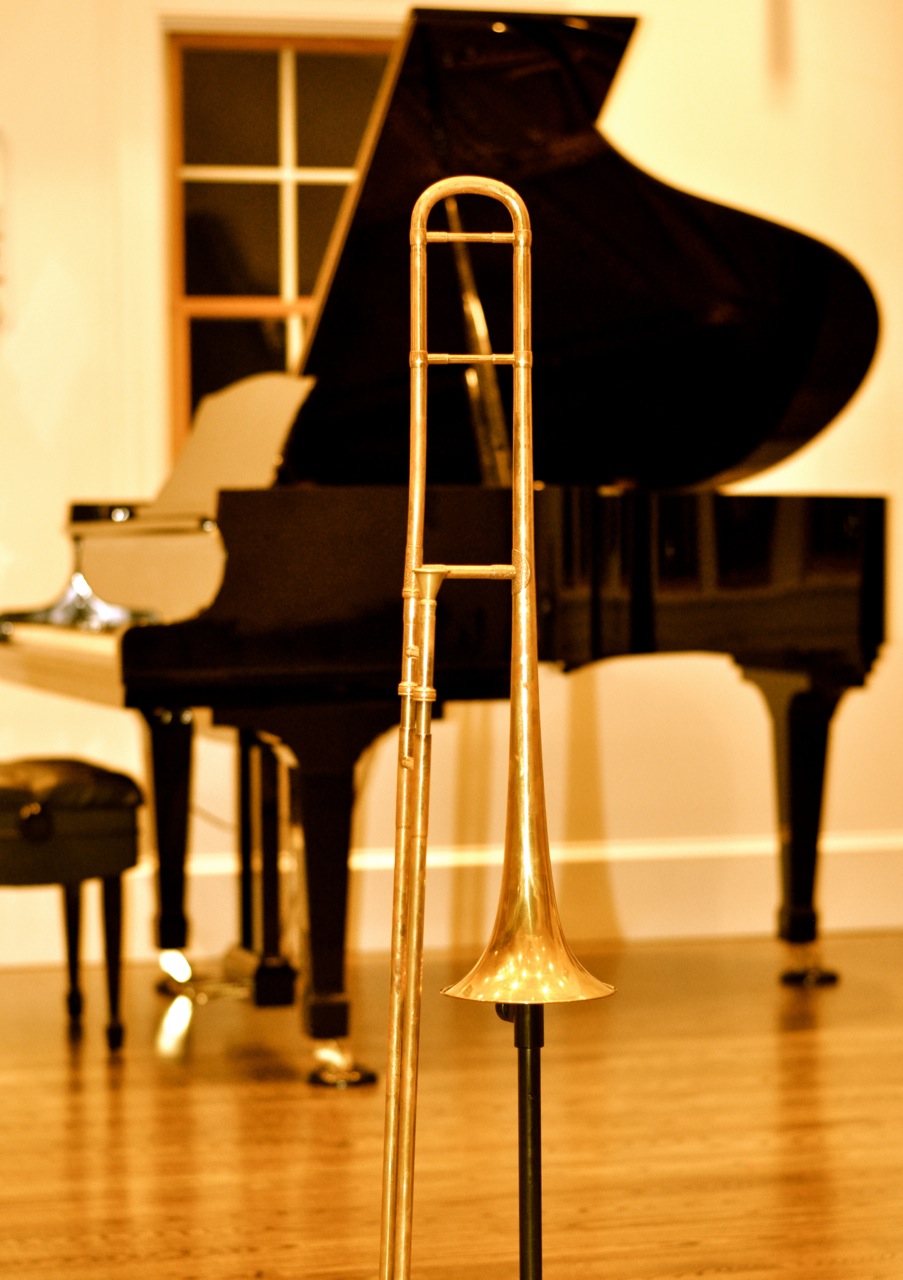
Joannès Rochut’s Lefevre trombone. Photo by and © Toby Oft.

There is much more to the story of the life and work of Joannès Rochut. That will unfold in my article in progress for the International Trombone Association Journal. His is a name that trombonists around the world have known for nearly a century. My hope is that this article has added to our understanding about Rochut, his Lefevre trombone, and his years as principal trombonist of the Boston Symphony Orchestra. 

[Special thanks to the Boston Symphony Orchestra Archives, Bridget Carr, Archivist, and Toby and Mike Oft for their photos.]