Category: National Parks

Three trips: music, friends, and faith

Three trips: music, friends, and faith

The last few months have been full of travel, as I’ve criss-crossed the United States several times to play and speak at a number of events. It is times like this that are very refreshing and invigorating to me, as I get to be with other fine musicians and make music at a high level. At the same time, my conversations with others are always very rich, and when I come home, I find myself energized and grateful for the blessing of a life lived with music.

The first of these three tripe was to the International Trombone Festival (June 27-July 1), which was held at University of Redlands, California. As I mentioned earlier in this blog, I played duets with three friends: Jim Markey (bass trombonist of the Boston Symphony), Megumi Kanda (principal trombonist of the Milwaukee Symphony), and Gerry Pagano (bass trombonist of the Saint Louis Symphony). In addition, Megumi and I gave a class titled The One Hundred: Effective Strategies for Successful Audition Preparation.

[From top left, clockwise: Douglas Yeo with Megumi Kanda, Gerry Pagano, Bill Watrous, Jennifer Wharton]

Part of the fun of being at these kinds of events is meeting up with old friends. I ran into jazz great, Bill Watrous, while walking through the vendor area at the ITF. Bill was tremendously influential on me – and countless other players – when I first hear him on his Manhattan Wildlife Refuge recording in 1975; have a listen to his iconic and influential performance of Fourth Floor Walk-Up. Years later, we began a friendship that, interestingly enough, does not center around jazz. Rather, when we speak on the phone, Bill always wants to talk about classical music, especially Edward Elgar. Bill is expertly conversant in classical music, something that may come as a surprise to many who know him as a jazz trombone icon. I recall hearing him give a clinic at Lexington High School in Massachusetts (the town in which my wife and I lived from 1985-2012 when I was a member of the Boston Symphony) where he played Samuel Barber’s Adagio for Strings on trombone using multiphonics. To say his performance was stunning is a profound understatement.

I also got to meet up with my former student, Jennifer Wharton, who was at the ITF to play in the XO All Stars jazz trombone quartet. Jen is a remarkable person and player, living in New York City with her husband, John Fedchock, playing a Broadway show, teaching, and freelancing. Jen is one of the most positive and engaging people I’ve ever met, and having time to meet up with her, have some conversation and a meal together, and play duets was a real joy.
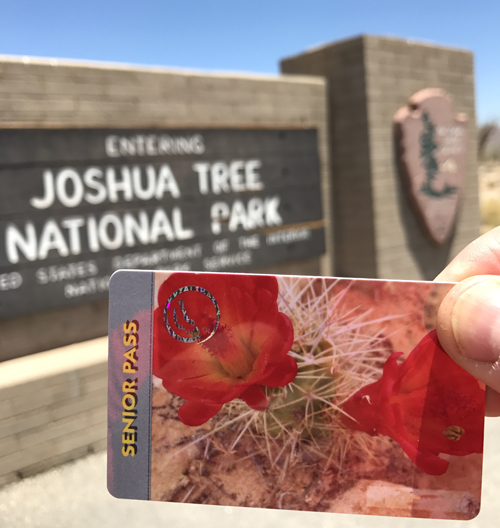
Natl_parks_pass

While on my way to Redlands, I stopped off at Joshua Tree National Park in California to purchase my National Parks Lifetime Senior Pass. Getting older bring with it some challenges, for sure, but my first “senior discount” after turning 62 this past May was this Pass, a real deal for $10.00; I got mine just before the fee changed to $80.00. Going to National Parks is a real passion for my wife and me, and to hold this lifetime pass in my hand was a moment that made me smile. More on our recent trip to five National Parks in a future post on The Last Trombone.
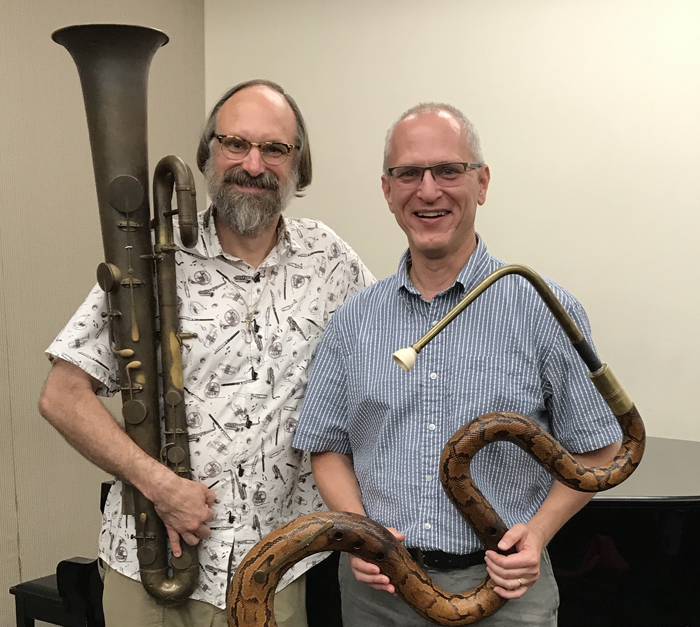
Scott_Doug_posed

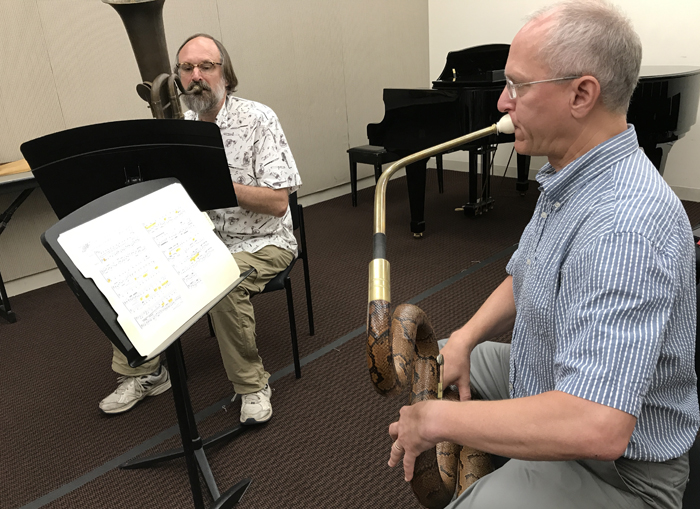
[Scott Robinson, ophicleide; Douglas Yeo with serpent by Keith Rogers]

Just a few days after the ITF in California, I flew to New York City for the Third Historic Brass Symposium (July 12-14). This time I didn’t have a trombone in my hand. Rather, I brought along a serpent, for I was at the Symposium to premiere a new duet for serpent and ophicleide commissioned by the Historic Brass Society, Caduceus Mixtus, by Jaron Lanier. My partner for the duet was Scott Robinson, known mostly for his superb playing on saxophone, but he also plays ophicleide. The piece was difficult, interesting, and rewarding to play, and our performance at New York University happened to be in the same recital hall where I gave my two graduate recitals when I was a student at NYU for my master’s degree back in 1979. For this performance I used a serpent made by the late Keith Rogers that was entrusted to me by his wife, Kathryn, after Keith’s death in 2008. It is made of plum wood and covered with a (pre-ban) python skin. It seemed to be the right instrument to use for a piece that had as part of its inspiration, the caduceus, with its intertwined snakes.

Scott_Doug_performance

In addition to hearing scholars present exceptionally interesting papers at the Symposium, we enjoyed a day of papers and concerts at the Metropolitan Museum of Art. The Museum is one of my favorite places in the world, having grown up in and around New York City and then returning there after I graduated from Wheaton College, from 1976-1979. The musical instrument gallery of the Museum is closed for a complete renovation, but we were given a preview of the construction and also saw some of the Museum’s new acquisitions, including a Baudouin serpent and the Bellophone, a combination tuba and euphonium that was made for the legendary tuba player, Bill Bell, by the H.N. White company.

We also got an up close look at a stunning new installation on the balcony between the two rooms of musical instruments, Fanfare, that features about 60 brasswind instruments. It is an exceptional installation and to have the opportunity to be among the first to see it up close was a real privilege.

MET_Fanfare

I also had time to view some of my favorite works of art at the Museum, including Rembrandt’s Aristotle With a Bust of Homer, a beautiful stained glass window, Autumn Landscape, by Tiffany Studios, and several sculptures by one of my favorite artists, Daniel Chester French. His Angel of Death and the Sculptor and Mourning Victory are displayed in the Museum as marble copies made by French of his bronze cemetery monuments that I discuss in my website resource, Daniel Chester French: Sculpture in Situ.

[From top, clockwise from left: Rembrandt, Aristotle With a Bust of Homer; Tiffany Studios Autumn Landscape; Daniel Chester French, Mourning Victory and The Angel of Death and the Sculptor]

While in New York, there was one thing I wanted to see that was not connected to the Symposium: the 9/11 Memorial and Museum. Anyone alive on September 11, 2001, remembers that horrific, difficult day; the world has never been the same since. Having been up the World Trade Center tower many times, its destruction hit me, as it did many others, very hard. Going to the 9/11 Memorial and Museum was a very strong, powerful experience. To see wreckage of the Twin Towers and a crushed fire truck up close is something I will always carry with me, even as I admired the new building, 1 World Trade Center (originally nicknamed the “Freedom Tower”), that has arisen to the height of 1,776 feet and now is a new icon in the New York Skyline. The fountains that form the memorial, covering the original footprints of the World Trade Center towers, are a powerful and moving thing to behold.

But there was an unexpected surprise. As I came out of the subway to go to the Memorial and Museum, there was a new shopping center, Oculus, that featured a remarkable display of images from the Sistine Chapel at the Vatican in Rome. In nearly life size, enormous photographs of the ceiling and altar wall were on display. I found this to be serendipitous, since my wife and I will be soon be traveling to Rome and we will see the Sistine Chapel with our own eyes. To walk around this installation and see Michaelangelo’s  frescos of the ceiling of the Chapel up close was a delightful surprise.
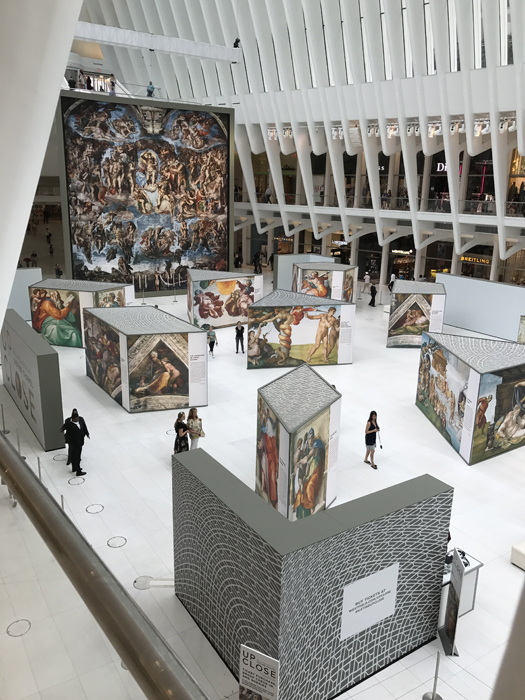
WTC_Sistine_Chapel

On to the third trip.

Just last week, I was back on the east coast, at Duke Divinity School in Durham, North Carolina, to perform at two programs that focused on theology and music (August 30-September 2).

DITA_poster_2017

These were led by Dr. Jeremy Begbie, professor of theology at Duke Divinity School. Last year, about a dozen musicians took part in the first of these kinds of events, sponsored by Duke Initiatives in Theology and the Arts. After the success of that event, a much large scale offering was planned for this year, with over 30 musicians invited to take part in the events.

A concert at Duke’s Nasher Museum of Art was in conjunction with a new exhibition, The Medici’s Painter: Carlo Dolci and 17th-Century Florence. The exhibition was revelatory, and at the evening’s program that included two fascinating lectures about Dolci and his work, our group of eight brass players performed two Italian Renaissance works while a chamber music group played as part of two lectures and also performed the first movement of Bach’s Brandenburg Concerto 2. If you find yourself in the Durham area soon, I urge you to visit this superb exhibit at the Nasher.

[Carlo Dolci, Virgin and Child, late 1640s. Collection of The Bob Jones University Museum & Gallery, Greenville, South Carolina, installed at The Nasher Museum, Duke University]

The players at these DITA events are all Christians and come from symphony orchestras and universities from around the United States. Working with these like-minded colleagues was pure joy, and our playing, meals together, and conversations were invigorating. After the program at the Nasher, we took a photo of current and former members of the Baltimore Symphony Orchestra who were participating in the program. Here you can see me (I played bass trombone in the Baltimore Symphony from 1981-1985), Rebekah Edewards (now a violist with the Boston Symphony), and current principal trumpeter Andrew Ballio and second trumpeter, Nate Hepler.
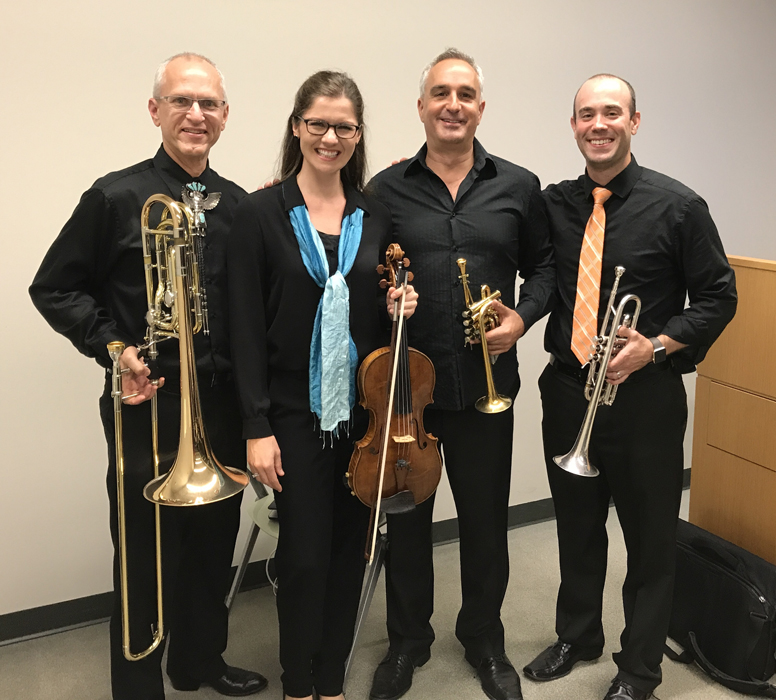
DITA_Baltimore_Sym_players

[Left to right: Douglas Yeo, Rebekah Edewards, Andrew Ballio, Nate Hepler]

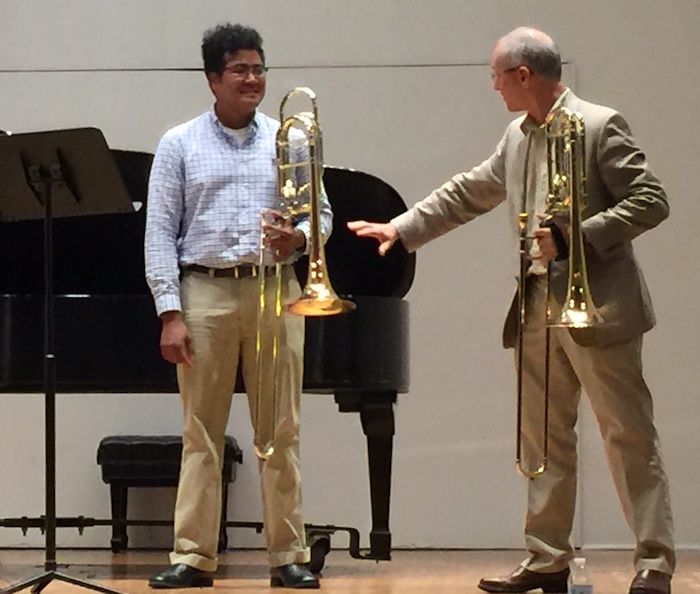
As to the trombone section for the events, I was reunited with Megumi Kanda and Jim Kraft, who for many years played trombone in the National Symphony in Washington, D.C. A concert with what was named The New Caritas Orchestra was titled, Home, Away, & Home Again: The Rhythm of the Gospel in Music. Led by Jeremy Begbie – who made insightful and powerful comments throughout the evening and also was a superb piano soloist in works by Rachmaninoff and Shostakovich – the concert was a benefit for The Corner House in Durham, a house where disabled and non-disabled people live together in community. The House is supported by Reality Ministries, and it was truly beautiful to see residents of the house at the concert, and hear some of them speak and others play percussion instruments with us on the final piece on the program. It was a moving, joyful time.

DITA_Doug_Megumi_Jim

[Left to right: Douglas Yeo, Megumi Kanda, Jim Kraft]

At the request of those of us who played the DITA event in 2016, a seminar was given for the orchestra members on Saturday morning, led by Jeremy Begbie (whose book Resounding Truth: Christian Wisdom in the World of Music is one of the finest I’ve ever read about the intersection of music with the Christian faith) and Alan Torrance. I confess that the three hours spent in this seminar were revelatory. Alan’s presentation on God’s covenant relationship with His people – especially his unpacking of Hebrew words and how they, over time, were poorly translated into Latin and then to English, something that has had an important effect on our understanding of God’s covenant-– and Jeremy’s discussion on the Holy Trinity have given me much to think about and meditate on. God was at work at Duke Divinity School last week and I left there refreshed and challenged.

Three trips in just a few weeks (and another, much longer trip in the middle of these trips about which I will write soon), back and forth over our great country, from sea to shining sea. Music, friends, and faith.

It is still Grand.

It is still Grand.

The Last Trombone has been quiet for a few weeks, with my being very busy with a number of things. But I’m back on the grid to share a few things with readers.

I love the Grand Canyon. Arizona’s nickname is The Grand Canyon State. And why not? The Grand Canyon is one of the natural wonders of the world, the product of the extraordinary artistic hand of our Sovereign God. It is there, in all of its vast, quiet majesty, for our pleasure, for our wonder, for our imaginations.

My wife and I had a chance to get away from the Phoenix area’s summer heat last week and spend a few days at the Grand Canyon where it was about 20 degrees cooler. I cannot count how many times we’ve been there. No matter: each time it is new.

CG_02

We didn’t have time to go down in the Canyon on this trip so we spent our time with a leisurely hike along the South Rim’s trail, from the El Tovar hotel out to Hermit’s Rest. With every step we were aware of the sense of awe that Charles Higgins felt when he penned these words that appear over an entrance to the El Tovar hotel:

Dreams of mountains, as in their sleep they brood on things eternal.

Indeed. Things eternal. That is what we think of as we gaze over the landscape. The Grand Canyon has shaped us.

A few years ago, when I was Arizona State University’s trombone professor, The ASU Desert Bones Trombone Choir recorded its first CD, Of Grandeur, Grace, and Glory. I chose as the cover image a photo I took of the Grand Canyon. Is there a better subject in the world to illustrate the idea of grandeur?

GC_05

And in 2014, when the International Trombone Association conferred on my its highest honor, the ITA AWARD, the ITA Journal wanted to run a story about me. The editor asked me for some photos and I chose the one below for the cover. It had to be the Grand Canyon.

GC_06

I’ve taken thousands of photos of the Grand Canyon. I can’t restrain myself. Yet not one can adequately capture the majesty of this remarkable place. But I keep trying.

GC_04

I also enjoy seeing how artists have looked at the Grand Canyon through their own, unique eyes. One of my favorite paintings of the Grand Canyon is by Charles H. Pabst. Titled Mystic River, it hangs in the lobby of the El Tovar Hotel. Its Art Deco style, the dramatic use of the yellow/orange color palate, and the stillness of the water gives much to think on.

GC_07

Of course, the most important thing about the Grand Canyon is summarized by a plaque at on the Lookout Studio that overhangs the South Rim, a reminder of what all that my eyes see is all about:

GC_08

It’s always difficult to get a good photo of this important reminder; the light never seems to be right when I’m there. So here is the text with its important Truths:

O Lord, how manifold are thy works!

In wisdom hast thou made them all: the earth is full of Thy riches.

  • Psalm 104:24

And below, a prayer:

Father almighty, wonderful Lord, Wondrous Creator, be ever adored;

Wonders of nature sing praises to You, Wonder of wonders –

I may praise, too!

Another of these plaques, types of which I have seen all around the world in England, Greece, Israel and throughout the United States, is found at Hermit’s Rest, with a mighty hymn of praise:

GC_03

Sing to God, sing praises to His name;

Lift up a song to Him who rides upon the clouds;

His name is the Lord, exult before Him.

  • Psalm 68:4

Back home in Phoenix, my attention has turned to other tasks, but the memory of this short trip to the Grand Canyon remains with me. If you’ve never been to the Grand Canyon, I hope you will come someday. I’m sure it will change you, too.

Location. Location. Location.

Location. Location. Location.

It has often been said that there are three rules about buying real estate:

  1. Location
  2. Location
  3. Location

OK, it’s an old joke. But it happens to be true.

Recently we’ve been traveling and have visited two places that are in spectacular locations. And they have the hallmarks of important, memorable buildings that stay in our minds in the midst of the chaotic, frenetic pace of life. One is simple and rough hewn. The other is modern and sleek. Both speak to timeless things. Both are reminders  for us to take moments in our busy lives to find places where we can stop, think, reflect and, after renewal and a deep breath, push on.

The Chapel of the Transfiguration in Grand Teton National Park, Wyoming, shown above. Location. Location. Location. This simple Chapel was built in 1925; it is a survivor made of lodge pole pine. Through decades of ice, wind, sun and snow, through the cycle of the seasons – death and new life – it has stood as a place of worship and contemplation in the midst of the exceptional beauty of the Grand Teton mountain range. The altar frames this spectacular view:

chapel_transfig_altar

I’m sure every visitor to the Chapel of the Transfiguration takes this photograph. And why not. With the Grand Teton centered above the altar cross, our eyes go up. Up. It reminds us of the words of Psalm 121 (KJV):

I will lift mine eyes unto the hills, from whence cometh my help.

My help cometh from the LORD, which made heaven and earth.

He will not suffer thy foot to be moved; he that keepeth thee will not slumber.

Behold, he that keepeth Israel shall neither slumber nor sleep.

The LORD is thy keeper: the LORD is thy shade upon thy right hand.

The sun shall not smite thee by day, nor the moon by night.

The LORD shall preserve thee from all evil: he shall preserve thy soul.

The LORD shall preserve thy going out and thy coming in from this time forth, and even for evermore.

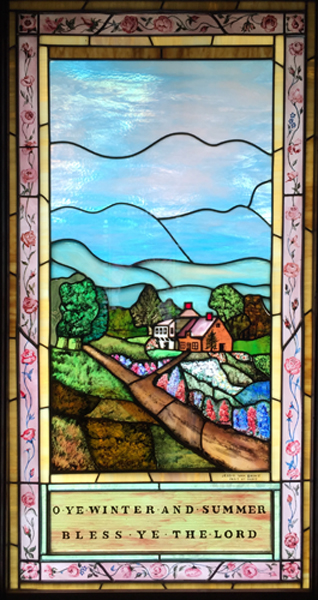
As soon as you enter the Chapel you are aware of two stained glass windows – one on the left and one on the right – beautiful, artistic reminders of the natural beauty you see ahead through the window behind the altar:

chapel_transfig_winter_summerchapel_transfig_ice_snow


The Chapel of the Transfiguration in the Grand Tetons of Wyoming. Stop, think, reflect, renew, push on.

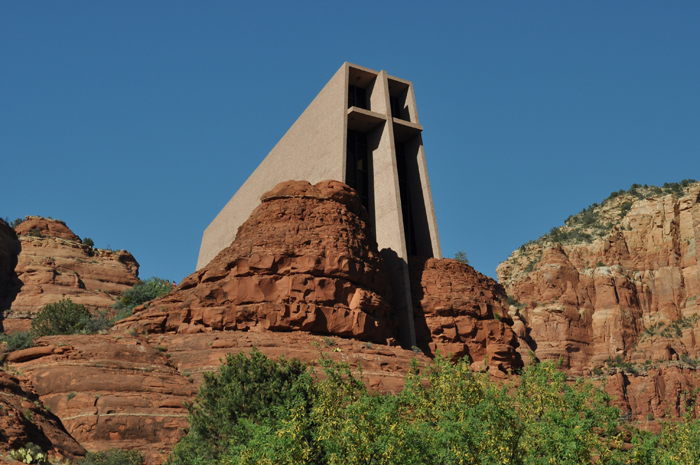
Closer to home is a very different kind of Chapel in a very different kind of location.

holy_cross_02

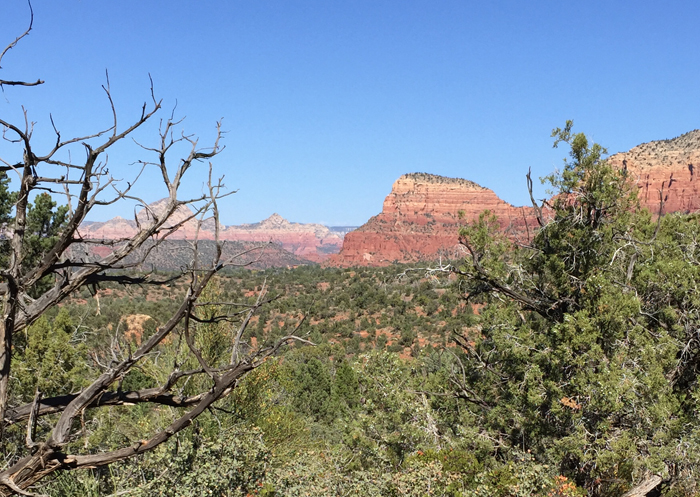
The Chapel of the Holy Cross in Sedona, Arizona, shown above. Location. Location. Location. The Chapel was built in 1956, perched high on a promontory of rock. It appears to be emerging out of its surroundings and in fact, until you get right up to it, you’re not even aware that it is there, so well does it integrate with all that is around. Here is a view of the Chapel from the Bell Rock/Courthouse Butte trail, below; the Chapel is in the exact center of the photograph:

holy_cross_04

Can you see it? Just a tiny speck of tan colored rock, but it is the Chapel of the Holy Cross, disguised as part of nature’s landscape. Inside, its altar frames a dramatic scene:

holy_cross_03

Secure on the rocks, the Chapel stands as a sentinel, looking out at the massive red rock formations of Sedona, not far from the Grand Canyon, majestic, solid, immovable. We are reminded of the words of the Psalmist (Psalm 93:1-2, NIV):

 The LORD reigns, he is robed in majesty; the LORD is robed in majesty and armed with strength; indeed, the world is established, firm and secure.

Your throne was established long ago; you are from all eternity.

holy_cross_01

Stop, think, reflect, renew, push on.

Paul Hindemith had it right with the closing words of his poem, The Posthorn:

Your task it is, amid confusion, rush and noise,

To find the lasting, calm and meaningful and, finding it anew,

To hold and treasure it.

The land of the free. Yes. The free.

The land of the free. Yes. The free.

I’ve recently returned from a week in Baltimore, Maryland, a trip that had many facets and which returned me to the place where my professional orchestral career started. Before joining the Boston Symphony Orchestra in 1985, I was bass trombonist of the Baltimore Symphony Orchestra from 1981-1985. In those four years, I was part of a great low brass section along with Jim Olin, David Fetter, Eric Carlson and David Federley (tuba); the photo below was taken in the fall of 1981.

baltimore_section_1981

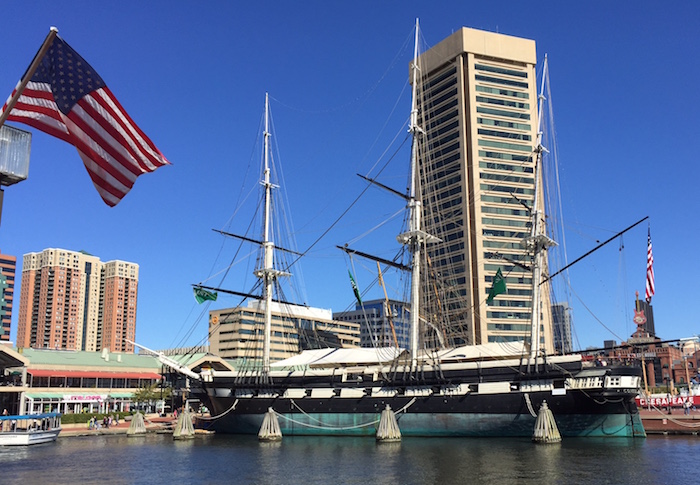
Returning to Baltimore brought me down to the city’s Inner Harbor, a superb urban development project that began just before we came to Baltimore more than 35 years ago. It was nice to see the changes to the area over the years, particularly the new stadiums for the Baltimore Orioles and Baltimore Ravens, both very much tied to the fabric of downtown Baltimore. The U.S.S. Constellation, the 1854 “tall ship” that served as part of the US Navy for over 100 years and seen in the background in the photo above is still there.

constellation

I also gave a master class at the Peabody Institute where I was on the faculty during my time in the Baltimore Symphony. It was quite nice to be back in that venerable place, with so much that was familiar but so much that was new. I very much enjoyed working with several talented Peabody students, including Jahi Alexander, shown below, who is a student of the Baltimore Symphony’s current bass trombonist and my former student, Randy Campora.

jahi

We also visited Fort McHenry (photos at the top and bottom of this post), particularly known as the site of a ferocious battle during the War of 1812. I had never been there before but I as very happy to finally get there. Our visit was a very strong moment, even emotional, as we learned the history not only of the battle but of its lasting consequence: the writing, by Francis Scott Key, of the words to our National Anthem, “The Star Spangled Banner.”

Our National Anthem is in the news these days, in particular because a small number of athletes have decided not to stand when it is played before the start of a game. They are doing this, they say, to protest the the anthem’s final words, “The land of the free and the home of the brave,” which they feel do not apply to all people in our country.

Everyone, it seems, has an opinion about this, although some writers have seen evidence that people  overwhelmingly see the gesture as being, in the words of Supreme Court Justice Ruth Bader Ginsburg, “dumb and disrespectful.”

Yes, our country has problems. Injustice exists. But I have been to 30 countries in the world on five continents and have seen how governments work. There are many good things about many countries in the world. But my late father had it right when he often said, “The American system of government is the worst in the world. Except for all the others.” The glory of the United States is the freedoms we have. Freedoms like those in no other place in the world. Our National Anthem is a symbol of our hopes and aspirations. In the face of injustice, we turn to that hope and work in meaningful ways to make positive change. Choosing to not stand at the playing of the National Anthem does not protest against injustice; to many, it is a selfish, narcissistic gesture that accomplishes nothing but draw attention to an individual. When we stand for our National Anthem – even while we are fully aware of the imperfections of our country – we honor those who have served our country to ensure our freedoms, we express gratitude for all that is good and right in our land, and we resolve to do better to improve the lot of everyone in our country. Standing while our National Anthem is played or sung is a rare gesture of unity in a country that is deeply divided over many issues.

Yes: athletes and others have the freedom to not stand for the National Anthem. That freedom is enshrined in our Constitution and Bill of Rights. And that freedom is celebrated in the words of the National Anthem itself. But those freedoms also include the right of others to call out those who do so as being selfish and “dumb and disrespectful.” See injustice? Work for justice. The battle of Fort McHenry and our National Anthem remind us of this.

O say, does that star spangled banner yet wave,

O’er the land of the free, and the home of the brave!

mchenry_inside