Category: musical instruments

Reformation: Luther, Mendelssohn, and the serpent

Reformation: Luther, Mendelssohn, and the serpent

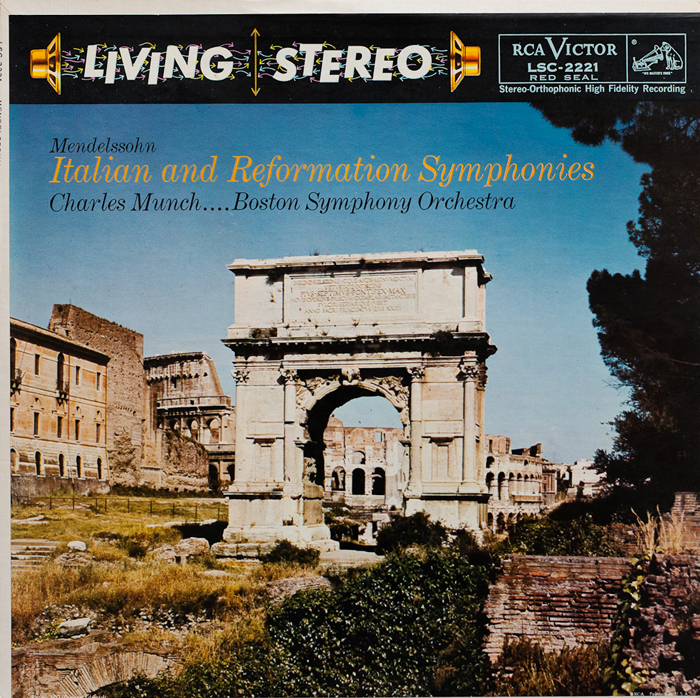
I don’t own many things that date from my childhood. I moved many times, collected other things, have lived a long life, and things that seemed so important when I was a kid mostly got lost along the way. I do wish I still had those baseball cards, though. . . But one of the few things I do have from that time in my life is a Boston Symphony recording of Mendelssohn’s “Reformation” Symphony, conducted by Charles Munch. I bought it in 1970 when I was 15 years old.
Mendelssohn_Reformation_Sym_BSO

[As an aside, this album cover shows the Arch of Titus in Rome, with the Colosseum in the background. During my wife’s and my recent trip to Italy, we stood in this very place, and noted the significant connection the Arch has with our trip last year to Israel. More on this in an upcoming article on The Last Trombone.]

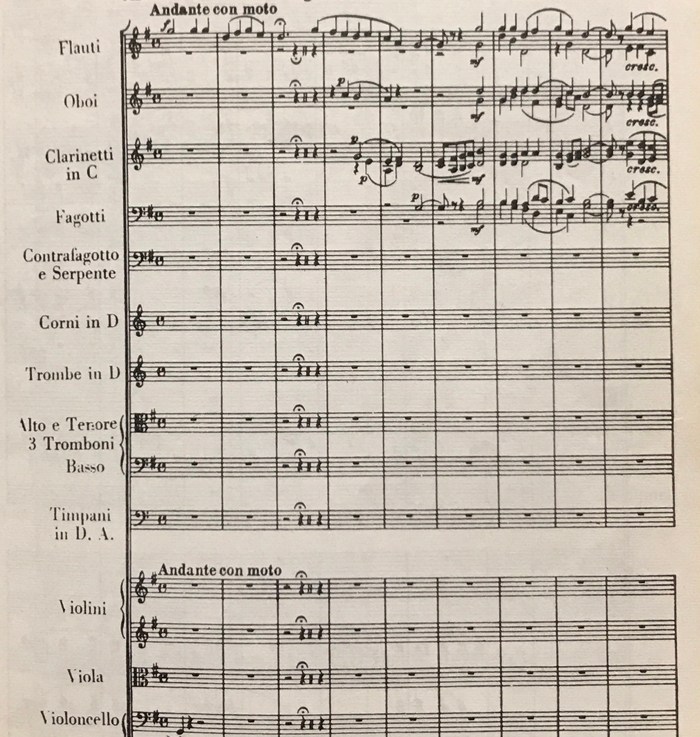
That I ended up being a member of the Boston Symphony for 27 years (1985-2012) is one of the great joys of my life, and in a sense that was the fulfillment of a long held dream since I was in high school. Several Boston Symphony recordings were very influential on me at an early age when I was just beginning to understand the trombone, and this Mendelssohn recording stands tall in my record collection. In fact, one of the first orchestra scores I ever purchased was of this symphony; I purchased it a few days after I heard Munch’s recording for the first time (the first page of the final movement of my score is shown at the top of this article).  Click below to hear that recording that influenced me so deeply so long ago (to hear this recording in YouTube, click here):

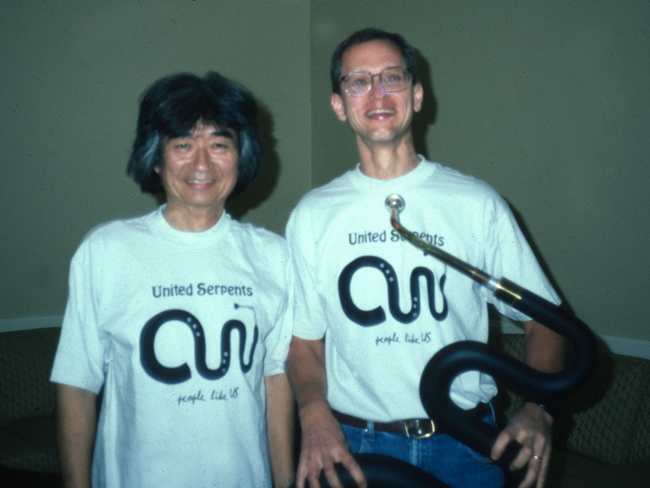
I have always loved this piece. It has a terrific part for bass trombone; just a few measures in the beginning of the symphony and then much to do in its finale. I first played the symphony on bass trombone with the BSO conducted by then-music director, Seiji Ozawa; the photo below shows Seiji and me in 1994 before a rehearsal for Hector Berlioz’s Messe solennelle; you’ll see I have my serpent in my handFor more on that, keep reading.

Ozawa_Yeo_serpent_1994_small

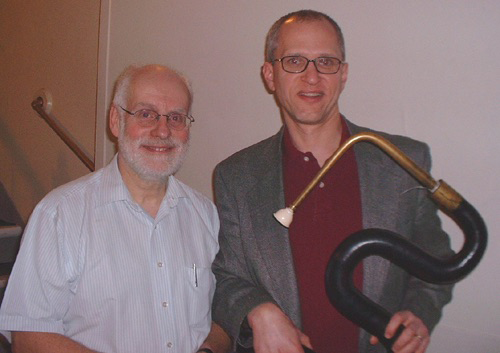
After I took up the serpent, I played the serpent part for Mendelssohn’s symphony in performances with the BSO conducted by the great early music conductor, Ton Koopman; the photo below shows us backstage at Boston’s Symphony Hall before a rehearsal in 2004.
koopman_yeo_02

Mendelssohn’s “Reformation” symphony – it usually bears the number 5 in the numbering of his symphonies but it was not his fifth in order of composition – was composed in 1830 to commemorate the 300th anniversary of the Augsburg Confession, one of the great confessional documents of the Christian faith. The theme of the symphony’s fourth movement is none other than Martin Luther’s famous hymn, Ein feste Burg est unser Gott — A Mighty Fortress is Our God. I wrote about this hymn last year on The Last Trombone, where I took the opportunity to discuss the importance of its text, especially the its fourth, final verse. I invite readers to look at that article again; click here.

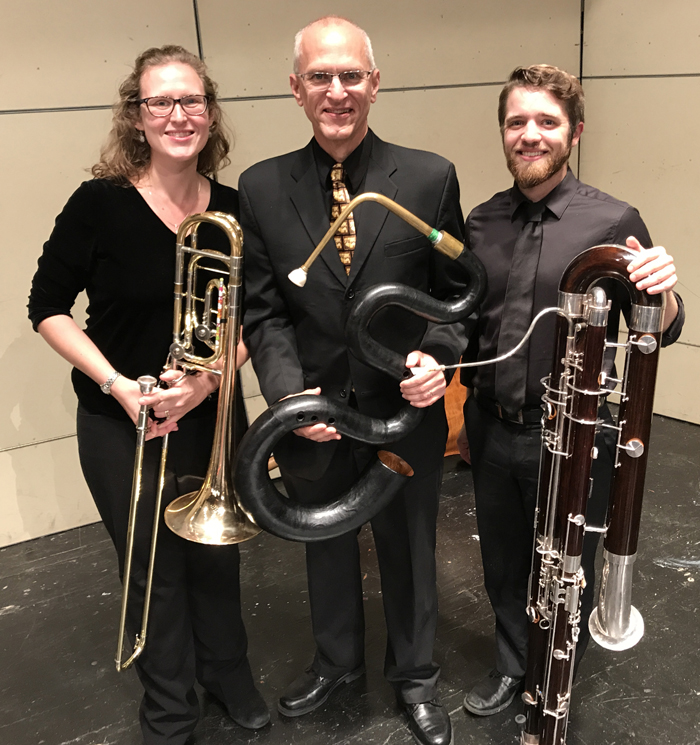
Last week, I played serpent in a performance of the “Reformation” Symphony by the Northbrook Symphony near Chicago. My oldest daughter, Linda Yeo Leonard, plays bass trombone in the Northbrook Symphony, and my wife and I have heard many concerts played by the orchestra. When the orchestra’s conductor, Lawrence Rapchak, asked me if I would be available to play serpent in their performance of Mendelssohn’s symphony – performed on a concert with other symphonies in the key of D but also in recognition of the 500th anniversary of the beginning of the Protestant Reformation – it was easy to say yes.
Northbrook_Sym_11_2017_small

The photo above shows Linda and me along with the Northbrook Symphony’s fine contrabassoon player, Nicholas Ritter; Nick and I sat next to each other on stage with Linda seated just behind me. Mendelssohn’s part for the serpent doubles the contrabassoon at the octave and the result is a new kind of bass sound, caused by the acoustical blending of the two instruments. Murray Campbell wrote an article several years ago about this unique sound in an article for the International Tuba Euphonium Association Journal; you can read it by clicking here. The performance was a great success in every way, and it was a special joy to sit on stage with Linda.

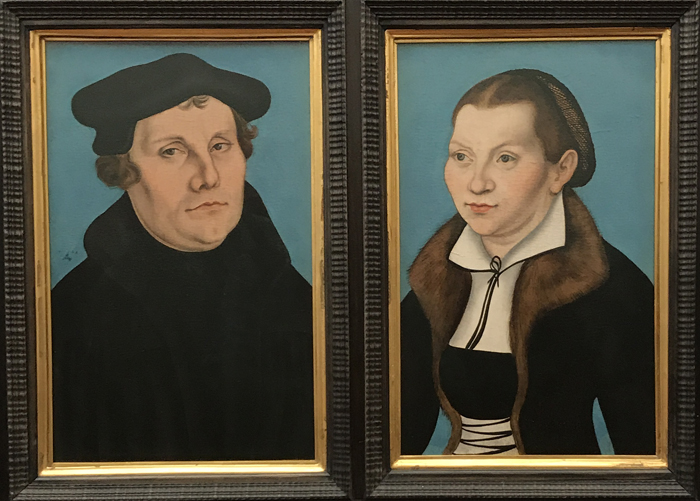
There have been other recent connections to Luther that have recently gotten my attention. As mentioned earlier, my wife and I were in Italy last month, enjoying the glories of Renaissance art and their connections to the Christian faith. Among the places we visited was the Ufizzi Gallery in Florence, one of the world’s great art museums. As we were going through various galleries, we came across a painting of Martin Luther and his wife, Katharina von Bora, painted by the workshop of Lukas Cranach the Elder in 1529. The portrait was made when Luther was still alive (1483-1546) and is considered to be a true likeness.
Luther_Uffizi

As I enjoyed this iconic painting – it is the most famous portrait of Luther – I noticed that the museum’s display card had a curious final sentence:

In Medici collection since 1567/1570.

Of course the Medici family was one of the most famous and influential families of the Italian Renaissance, and they were strong patrons of the arts. But this sentence got my attention. “Why,” I wondered, “did the Medici family, who were Roman Catholics and whose family produced three Popes (Leo X, Clement VII, and Leo XI), own this portrait of the most famous Protestant reformer?” I can’t answer that question, but I’ve been wondering about this.

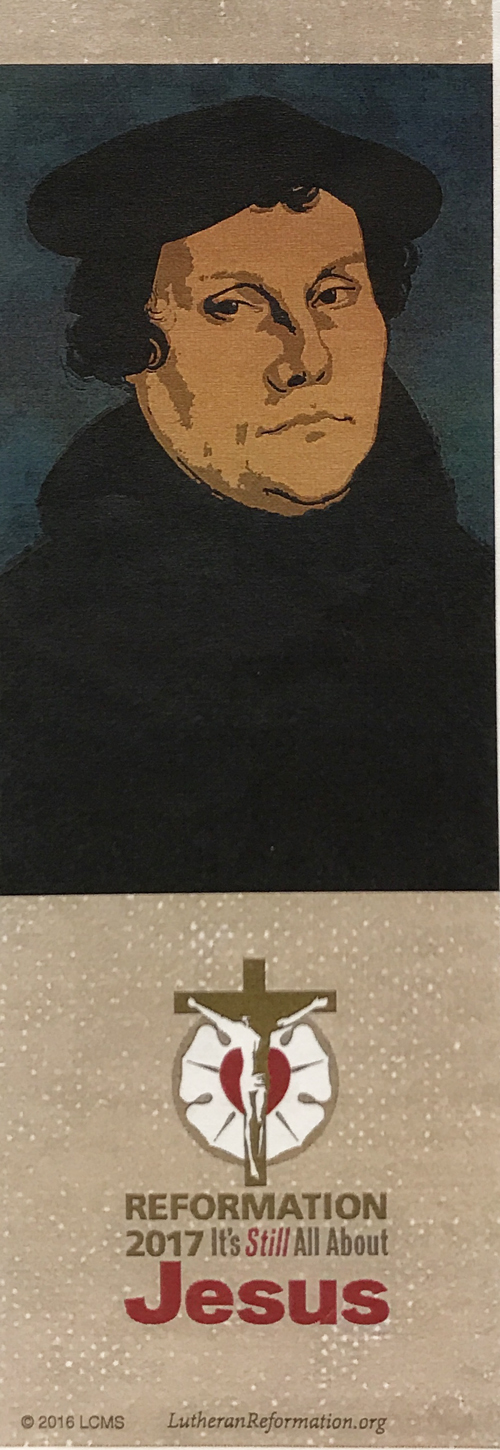
Last Sunday, I worshiped at Trinity Lutheran (LCMS) Church in Lisle, Illinois, where Linda’s family are members and her husband, Chad, a Lutheran pastor and hospice chaplain, coordinates the church’s care ministries. This year, the Lutheran Church – and Protestant churches of all denominations – is celebrating this 500th anniversary of the beginning of the Protestant Reformation – dated to October 31, 1517 when Luther attached his famous Ninety-Five Theses on the door of All Saints’ Church in Wittenburg, Germany, and set off a reform movement in Christianity that is still with us. When I sat down in our pew on Sunday and opened my bulletin, what did I see but an insert about Luther and the Reformation with a stylized version of the very same portrait of Luther we had seen in Florence. It was a nice, serendipitous moment.
Luther_LCMS_image

The Protestant Reformation changed history, and this convergence of events – Mendelssohn’s symphony, our trip to Italy, seeing a famous portrait of Martin Luther in Florence, and worship in a Lutheran church – brought many aspects of its importance together for me.

When I was a student at Wheaton College (Illinois), I memorized Luther’s great hymn. It got me extra credit on an exam in the class, “Christ in Culture,” and I needed all the extra credit I could get. I don’t remember how I did on that test, but I still call A Mighty Fortress to mind every day. It is a hymn of great strength and comfort, and Luther’s words are just as relevant and important today as they were nearly 500 years ago when he wrote the text. Here is its second verse; to read the whole text and my commentary on Luther’s original words, click HERE.

Did we in our own strength confide, our striving would be losing,

Were not the right Man on our side, the Man of God’s own choosing.

Dost ask who that may be? Christ Jesus, it is he;

Lord Sabaoth his name, from age to age the same;

And he must win the battle.


Two upcoming concerts in the Midwest: playing serpent, and a bass trombone solo with orchestras in Illinois and Iowa

Two upcoming concerts in the Midwest: playing serpent, and a bass trombone solo with orchestras in Illinois and Iowa

Over the next two weekends, I will find myself in the Midwest, playing concerts with two symphony orchestras. If you happen to live near Chicago or Sioux Center, Iowa, I invite you to come to these performances.

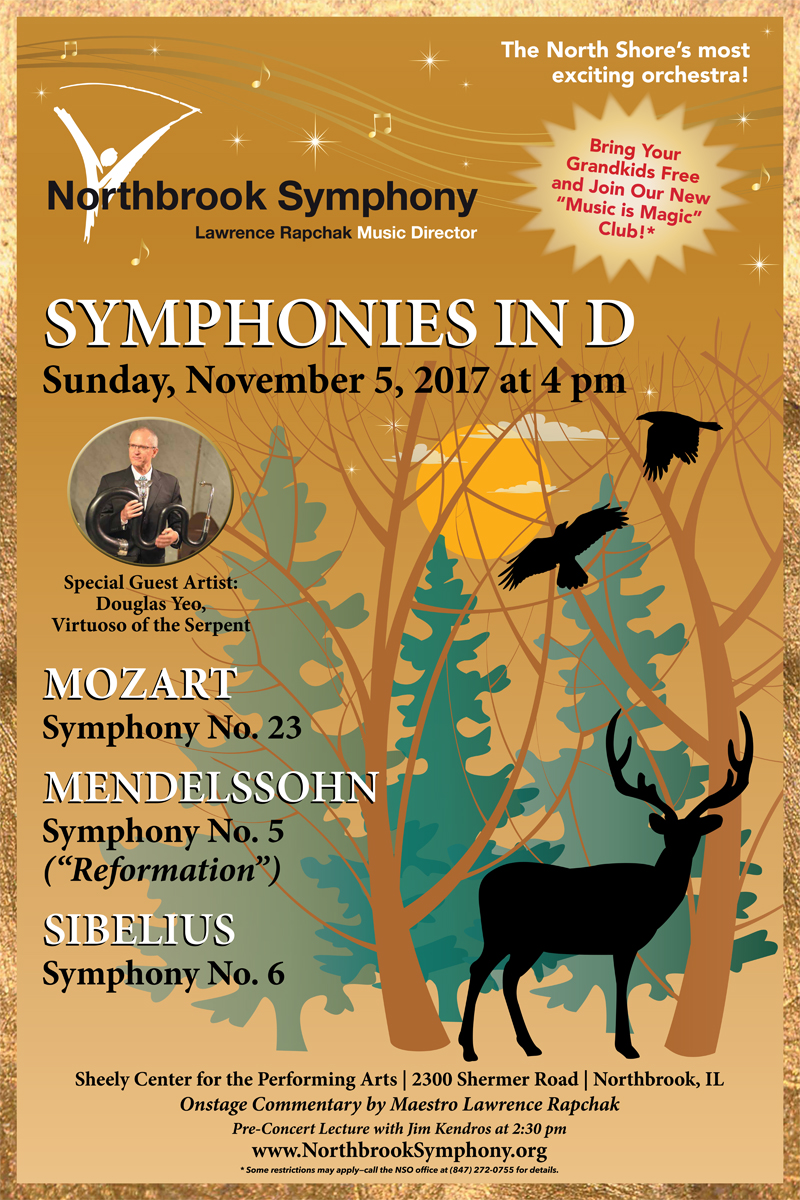
On Sunday, November 5, I will be playing serpent in the Northbrook Symphony in Illinois, in a performance of Felix Mendelssohn’s “Reformation” Symphony. With today being the 500th anniversary of the Protestant Reformation, the inclusion of Mendelssohn’s Symphony on this program – a piece that uses Martin Luther’s composition, A Mighty Fortress Is Our God, in its finale – is certainly timely. Mendelssohn used the serpent in a number of his works and it is always a pleasure to enter into the woodwind section of an orchestra where I will be sitting next to the contrabassoonist. Mendelssohn understood the unique blending qualities of the serpent and contrabassoon, something that is explained in an article about serpent and contrabassoon acoustics by Dr. Murray Campbell (click this link to read the article).

What makes this concert particularly nice for me is that my oldest daughter, Linda Leonard, is the bass trombonist of the Northbrook Symphony. To share the stage with her, and to play the serpent in Mendelssohn’s great piece, combine to make this concert very special. Visit the Northbrook Symphony website for ticket information.

Northbrook_Symphony_serpent_Mendelssohn_poster_2017_small

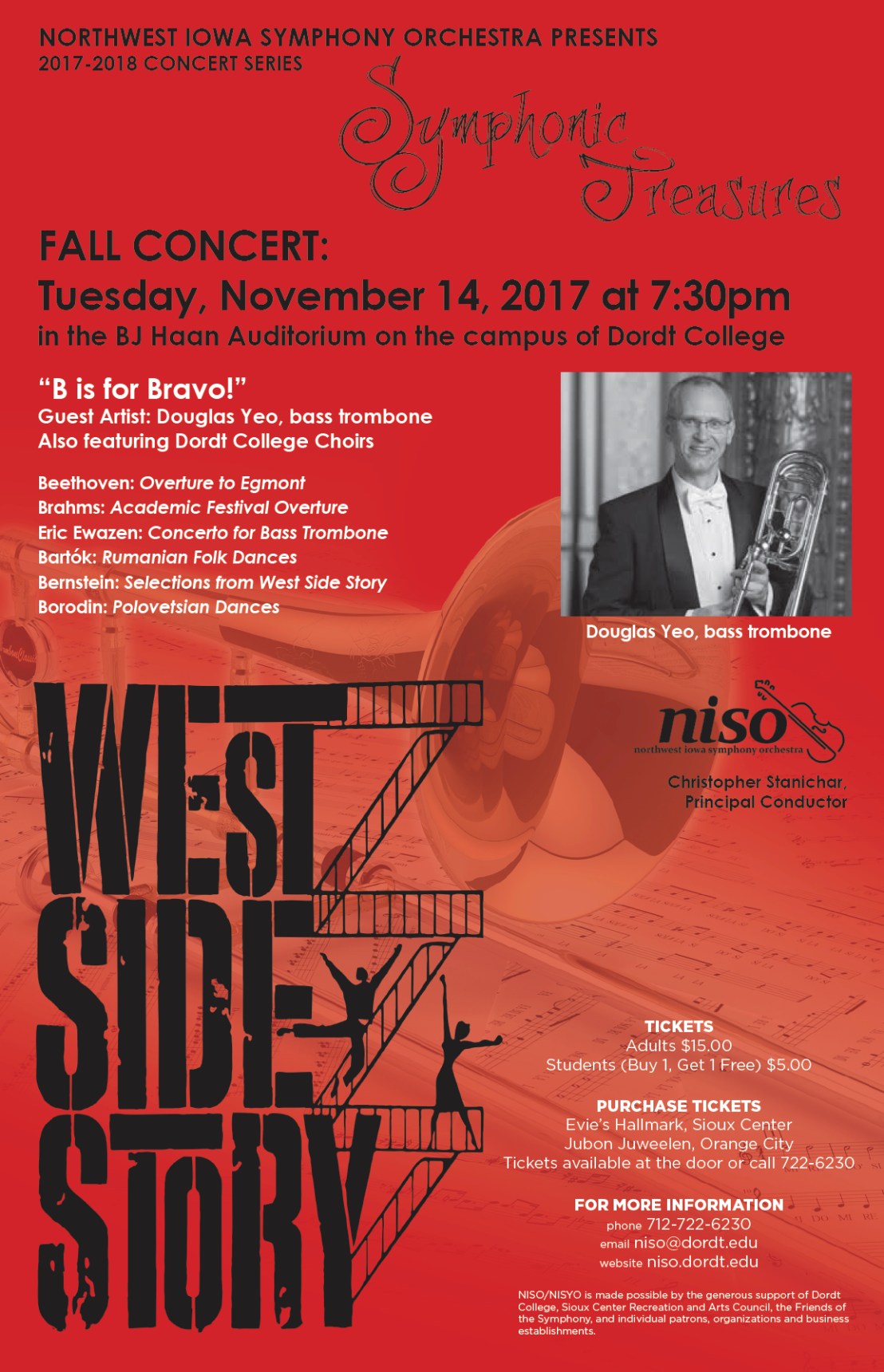
Then, on Tuesday, November 14, I will be soloist with the Northwest Iowa Symphony Orchestra in Eric Ewazen’s Concerto for Bass Trombone. In fact, I will be playing the Concerto twice on that day, first at a NISO Youth Concert and then at their evening concert. I have enjoyed playing Eric’s Concerto on many occasions, both with piano and with symphony orchestra accompaniment. It is a piece that, to me, speaks deeply to the optimistic, American spirit, something about which I wrote about recently on The Last Trombone. Visit the Northwest Iowa Symphony Orchestra website for ticket information and details about both concerts.

Dordt_Fall-Concert-poster-2017-web-copy

FRATRES progress report: Cover image and video

FRATRES progress report: Cover image and video

The process of bringing the new CD, FRATRES, to completion continues at a rapid pace. This new recording, by Gerry Pagano (bass trombonist of the St. Louis Symphony) and me, along with Michael Lake, will be mastered tomorrow by Nathan James at Vault Mastering in Phoenix. I’m very much looking forward to spending the day with Nathan as we create the master disc for replication. I am also at work today arranging for mechanical licenses for the album, so the copyright holders of the compositions we recorded are recognized with a well-deserved royalty payment.

In the meantime, Ben Krueger, our designer, has been at work on the CD packaging. The gratifying level of support we have been getting on our Kickstarter program means we are able to develop enhanced packaging, including an eight page booklet of information about the  recording, its music, and performances. Ben is doing an outstanding job with this and I’m very happy to share his evocative cover below:

FRATRES_pages

We’ve titled Ben’s cover image, The West and Its Gateway: The St. Louis Gateway Arch and the East and West Mittens of Monument Valley Navajo Tribal Park, Arizona. This recording, that features Gerry – who lives in St. Louis but also lived in Phoenix for several years early in his career – and me – who lives in the foothills of the Sierra Estrella, west of Phoenix, beautifully brings together several important elements and messages in the recording. Ben’s superb work carries through the rest of the CD packaging. More on that soon.

Michael Lake has also put together another video about the project that includes an interview with me about Tommy Pederson – we recorded seven of Tommy’s great duets for bass trombones on the album – as well as some surprises. Have a look at Mike’s newest video about FRATRES (click the video below or click HERE to view the video on YouTube). (You can see Mike’s first video about the project by clicking HERE.

Gerry and I want to say THANK YOU once again to all who have generously supported our vision with FRATRES. If you’re interested in adding your voice to that of many others who are on board with this project, and if you’d like to open your mailbox in a few weeks and find not only a copy of the CD (or a download card) but some “swag” as well, have a look at our Kickstarter page by clicking HERE. There are 13 days left on our campaign. Thank you for partnering with us in this innovative new recording project.


Kickstarter-button

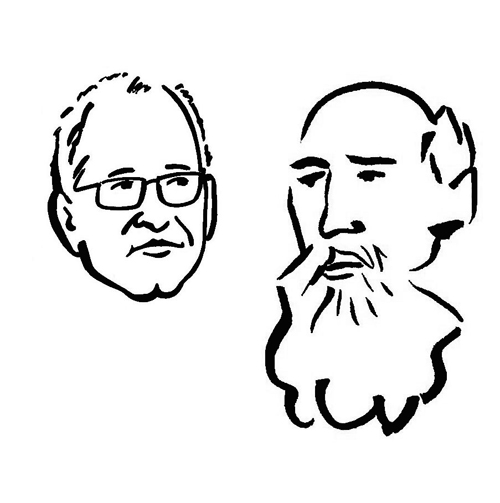
DY_GP_black_medium

[Drawing of Douglas Yeo by Lennie Peterson. Drawing of Gerry Pagano by an unknown waiter at a New York City restaurant.]

Counting down to FRATRES: The Yeo/Pagano Project

Counting down to FRATRES: The Yeo/Pagano Project

As I mentioned in a previous post on The Last Trombone, my friend, Gerry Pagano (Bass Trombonist of the St. Louis Symphony), and I have recently recorded a compact disc of music for two bass trombones. In this we were assisted by Michael Lake, who not only was the recording engineer for the project, but also contributed superb accompaniments and enhancements to many of the tracks. And he also wrote a piece for the album. And he played alto trombone along with us on three tracks. And a partridge in a pear tree. You get the idea. This new album is a true collaboration between Gerry, Mike, and me, and we believe we have some very interesting, unusual, special, challenging, and inspiring music and performances to bring to life in the coming weeks.

Doug_Gerry_Desert_03

Gerry and I recorded the project in Michael Lake’s studio in Phoenix, Arizona, a place where we could do things that just couldn’t be achieved in a large, live acoustic space. I wrote about this previously so there’s no need to repeat myself here. But we are now moving ahead with the final phases of production of the album that include mastering, design, licensing, manufacturing and distribution. We hope to have the finished product in our hands by the end of this calendar year.

Gerry_Doug_recording_01

At this time, Gerry and I are reaching out to people who we hope will be interested in supporting our project. FRATRES – Latin for “brothers” – is an album that we hope will inspire others to look at the bass trombone differently. We’ve recorded a wide range of repertoire that spans nearly 600 years. Over his career, Gerry has released four solo albums and I’ve released five. This kind of duet collaboration is something new for us, and something that, in a sense, was 31 years in the making, with the seed of it planted long ago in 1986 when Gerry and I first met and played duets together.

So we have launched a Kickstarter program to invite people who are interested in what we are doing to stand alongside and support our vision for FRATRES. As much as we value your investment in our project – and as you will see when you visit our Kickstarter page, we are offering a number of “thank you” gifts for your support including a digital download of the album, a physical CD copy of the recording, pencils, t-shirt, beer/iced tea glass, and a coffee mug – we are most of all interested in your partnership in our vision.

Michael Lake has also made a video about the project that includes some interviews with Gerry and me, and photos from the session. Gerry and I really appreciate Mike’s many contributions to the project and I think you will catch his excitement about it if you view his video (click below or see it on YouTube by clicking here):

While we were making our recording, we also took some time out of our schedule to record a music video in the desert. Michael Lake’s drone was able to capture both the grandeur of the Arizona landscape and also the fun Gerry and I had in working together. The soundtrack to this video is one of the pieces we recorded for inclusion on our album, Tommy Pederson’s Below 10th Street, with rhythm and Hammond B-3 organ added by Mike (click below or see it on YouTube by clicking here):

Michael Lake has also posted the recording of his new piece, Devils & Angels, that he composed for our album. It’s a compositional tour de force that includes a sophisticated accompaniment to Gerry (left channel) and me (right channel), as well as Mike’s alto trombone improvisation, a section where the three of us are overdubbed in five parts, and some improvisation by me on serpent at the end. Have a listen by clicking here.

With all of this, we hope you are getting a picture of what we’ve been doing and why we’re so excited about getting this project released.

FRATRES. Friends – brothers – working together to make music to share with others. On behalf of Gerry and me, we thank you for your support.

Kickstarter-button

DY_GP_black_medium

[Drawing of Douglas Yeo by Lennie Peterson. Drawing of Gerry Pagano by an unknown waiter at a New York City restaurant.]