
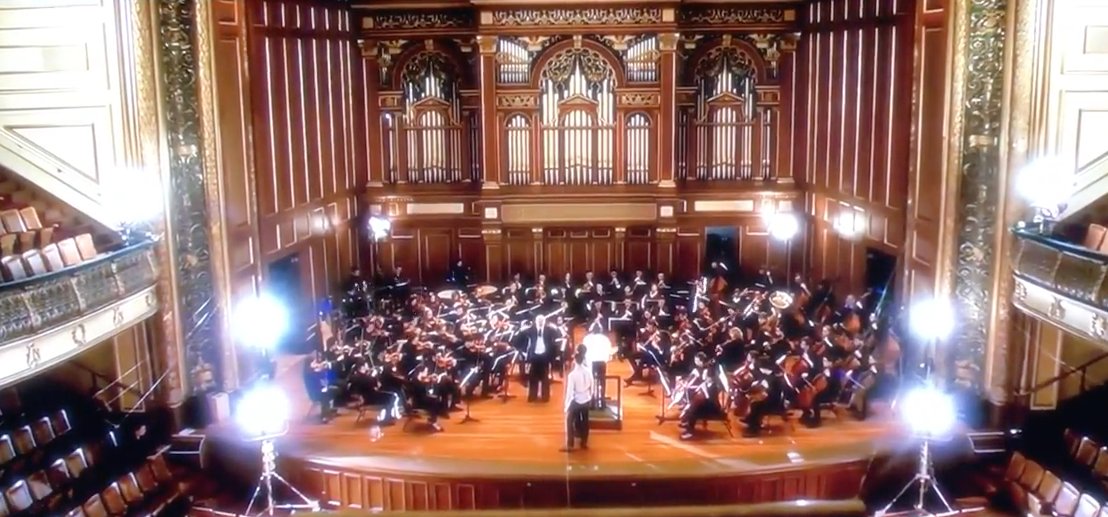
From 1985-2012, I was bass trombonist of the Boston Symphony Orchestra. The orchestra’s home is Symphony Hall, on the corner of Huntington and Massachusetts Avenues in Boston’s Back Bay section (301 Massachusetts Avenue). Opened in 1900 after the orchestra left the Boston Music Hall where it had played concerts since it was founded in 1881, Symphony Hall is considered to be one of the three finest concert halls in the world, with its acclaimed acoustics putting it in the company of the Musikvereinsaal (Vienna) and Concertgebouw (Amsterdam). Before it was destroyed in World War II, the old (alte) Gewandhaus in Leipzig was also similarly acclaimed. Having played concerts in the halls in Vienna and Amsterdam, I can say that in my view, Symphony Hall is simply the finest concert hall in which I have ever performed.
When I joined the Boston Symphony, I was aware of the rich history of both the orchestra itself and its storied home. I’ve read everything I could find about the BSO and Symphony Hall, spent countless hours in the orchestra’s archives (with which I had a hand in formally establishing in 1987), and have been fascinated at all I have found and learned.
Two important books have informed my quest for information about Symphony Hall.

Published in 1950 on the occasion of the 50th anniversary of the opening of Symphony Hall, H. Earle Johnson’s Symphony Hall, Boston (Boston: Little, Brown and Co., 1950) surveys the orchestra’s first 50 years, discusses programming and personnel, and features commentary on the building and opening of Symphony Hall. Now out of print (but copies can be found on through used book outlets such a abebooks.com), it unfortunately has no illustrations.

Richard Poate Stebbins’ book, The Making of Symphony Hall: A History with Documents (Boston: Boston Symphony Orchestra, 2000) is a superb volume that documents, in fascinating detail, the planning, construction, and opening of Symphony Hall. It was published on Symphony Hall’s centennial, a year I remember with great fondness for the many historical exhibits in the Hall’s corridors and the many celebrations of the Hall throughout the year. The cover of the book features an early, color rendering of the original design of the hall, with many statues, inscriptions, and decorative cornices. Ultimately, none of these items were incorporated in hall when it was finished. Money ran out, and to this day, even there is no external decoration to the hall. Even the Hall’s name is not found on its exterior. Yet it is this austerity that is part of Symphony Hall’s charm; somehow it fits in with the Boston way.
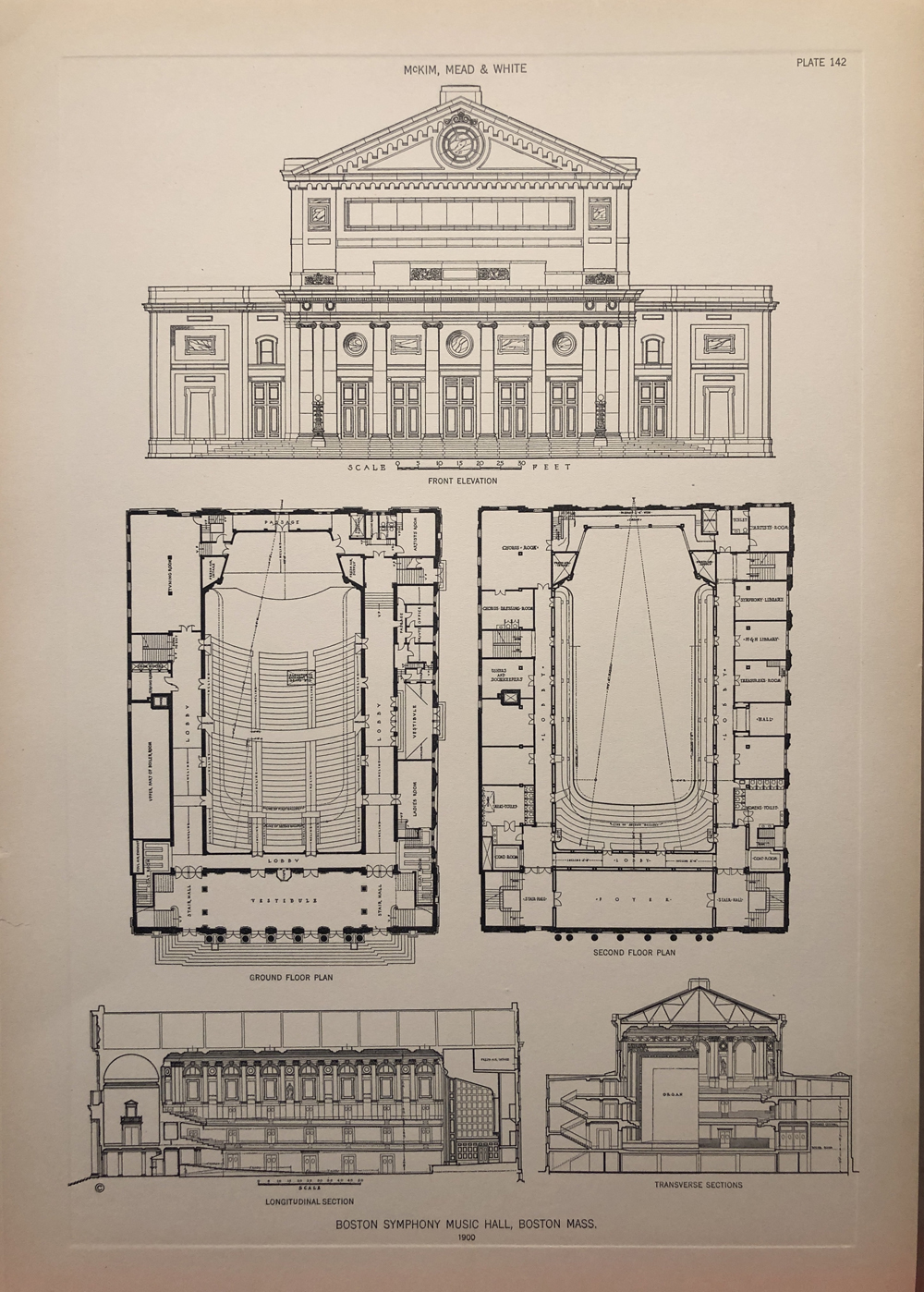
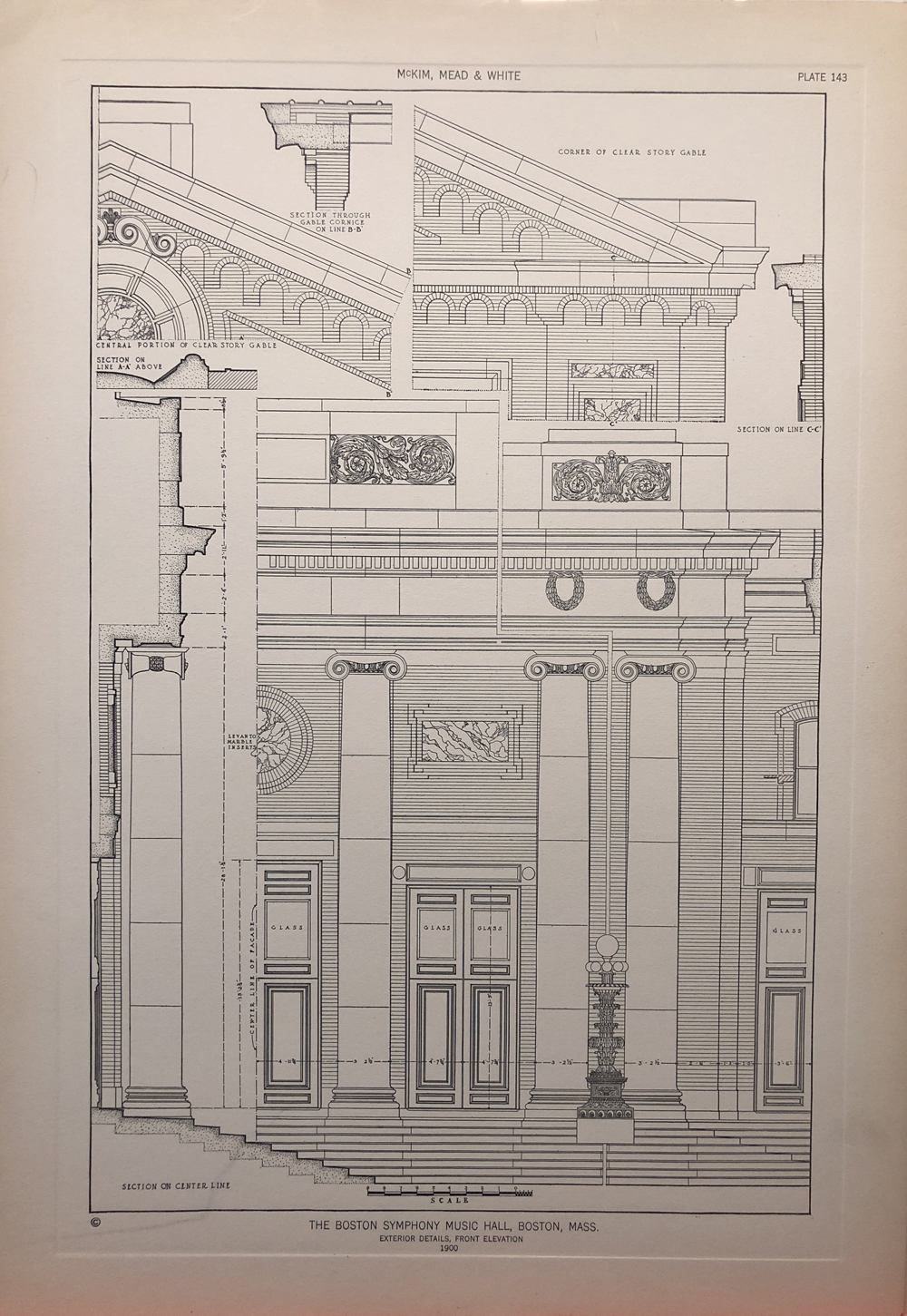
Symphony Hall was designed by the architectural firm of McKim, Mead & White and an early photo of the completed Hall appeared in A Monograph of the Work of McKim, Mead & White, 1879-1915 (New York: Architectural Book Publishing Co, 1915), below. The publication was a massive four volume set with nearly 400 photographs; each had a simple caption without commentary. It details the breadth of the buildings designed by McKim, Mead & White and it includes three plates that feature Symphony Hall, plates 141, 142, and 143. Several years ago, I was able to obtain original copies of these plates, which are also contained in a modern reproduction of the original four volume set that is still readily and affordably available (McKim, Mead & White, The Architecture of McKim, Mead & White in Photographs, Plans and Elevations (New York: Dover Publications, 1990). While McKim, Mead & White’s portfolio was published in 1915, the caption reflects the original name for Symphony Hall, The Boston Symphony Music Hall, which was changed to Symphony Hall just before its opening in October, 1900.

The other two plates feature some interior and exterior cross sections of Symphony Hall (the aisles on the main floor were changed to a different configuration in the final design), plate 142:
And plate 143, that features details of exterior design for the Hall:
Over the years, I have collected many postcards of Symphony Hall; I usually paid only one or two dollars apiece for a piece of Boston Symphony history. I was fascinated at how many different images of the facade of the Hall had been made over nearly 100 years. In all, I found dozens of different postcards with nearly 30 images of the exterior of the hall. Many were crisp and clean, but the ones that were most interesting were the ones that had been used, with writing, stamps, and postmarks. It is these postcards that helped to document the approximate time when the photo or image of Symphony Hall was made. Early postcards were black and white; later ones were hand tinted before reproduction, and later ones are faithful photographic reproductions. Most postcards do not have copyright dates; I am not an expert at automobile models which could help further pinpoint years photos were taken. Still, these cards tell the story of Symphony Hall in a unique way. I’m presenting them here in rough chronological order with only light commentary; captions appear beneath each card. The images speak for themselves and are a reminder of a very important part of my life and the lives of thousands upon thousands of lovers of music who have walked through the doors of Symphony Hall, Boston’s proud Temple of Music.
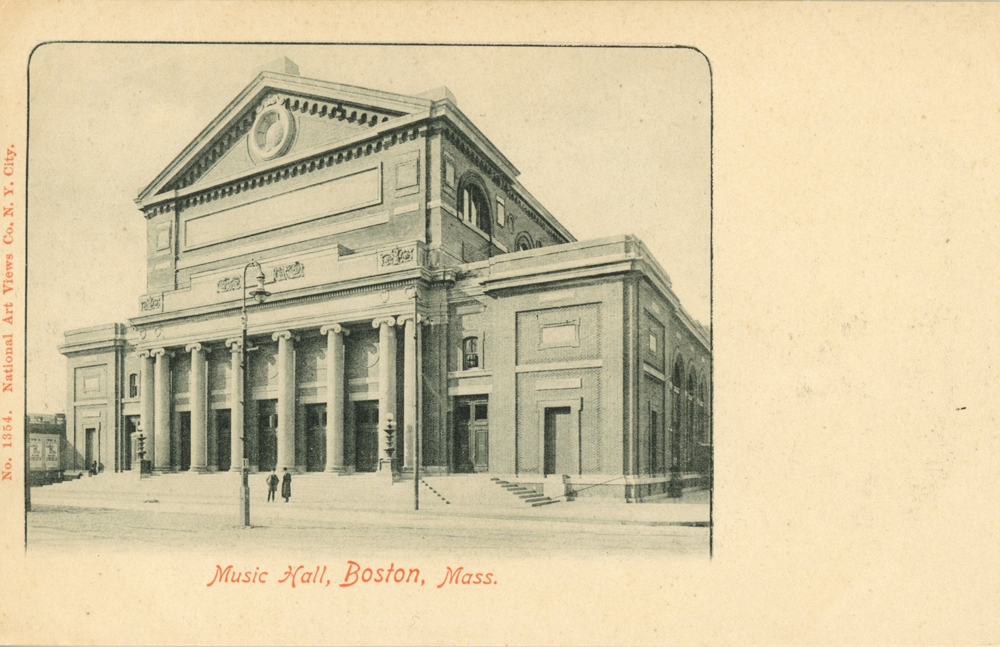
01. Music Hall, Boston, Mass. c. 1900. Card produced by National Art Views Co., N. Y. City. One of the earliest photos of the exterior of Symphony Hall, the view is of the original front entrance of Symphony Hall on Huntington Avenue; the Huntington Avenue trolly line power lines have been removed from this image. The Hall’s original name, Music Hall, which was changed to Symphony Hall before the first Boston Symphony concert was performed there on October 15, 1900, is featured in the caption.
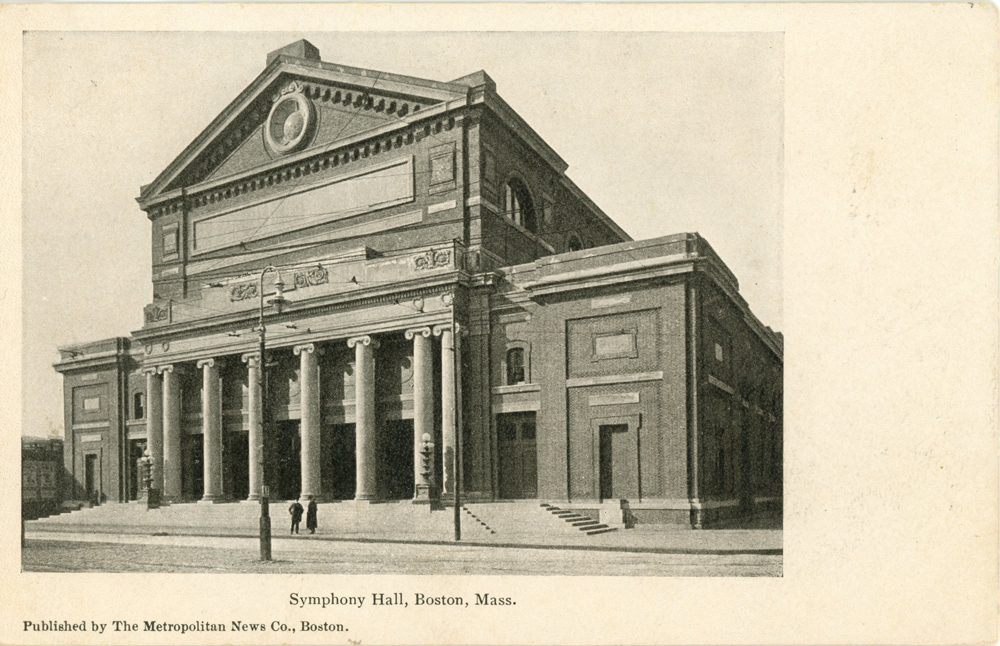
02. Symphony Hall, Boston, Mass. c. 1900. Card produced by The Metropolitan News Co., Boston. This is the identical photo seen in the previous card except the trolley power lines have not been removed. Note the name of the Hall has now been changed from Music Hall to Symphony Hall.

03. Symphony Hall. c. 1902. This collage of buildings are from Boston’s Back Bay area, including the Horticultural Hall, which is across the street from Symphony Hall on Massachusetts Avenue. The Art Museum on the card is the Museum of Fine Arts, Boston, which moved from its original location in Copley Square (shown on the card) to its present location on Huntington Avenue in 1907.

03a. Symphony Hall, Boston, Mass. c. 1904. Card produced by Detroit Photographic Co. The card is used and is postmarked October 7, 1908, addressed to Miss Mary Merkins, Winsted, Connecticut. The copyright date of the image is given as 1904. Note the woman in the bottom right corner who is holding on to her hat in the gusting wind.

04. Symphony Hall, Boston, Mass. c. 1905. Produced by F. von Bardelben, New York & Germany. Made in Germany. Note the presence of a single horse-drawn carriage.

05. Symphony Hall, c. 1905. Card produced by Chisholm Bros., Portland, Maine. The card is used and is postmarked September 4, 1905, addressed to Miss Myrtle Kiefer, Homer, Michigan. The view is similar to the card above but several pedestrians are seen standing against the building.
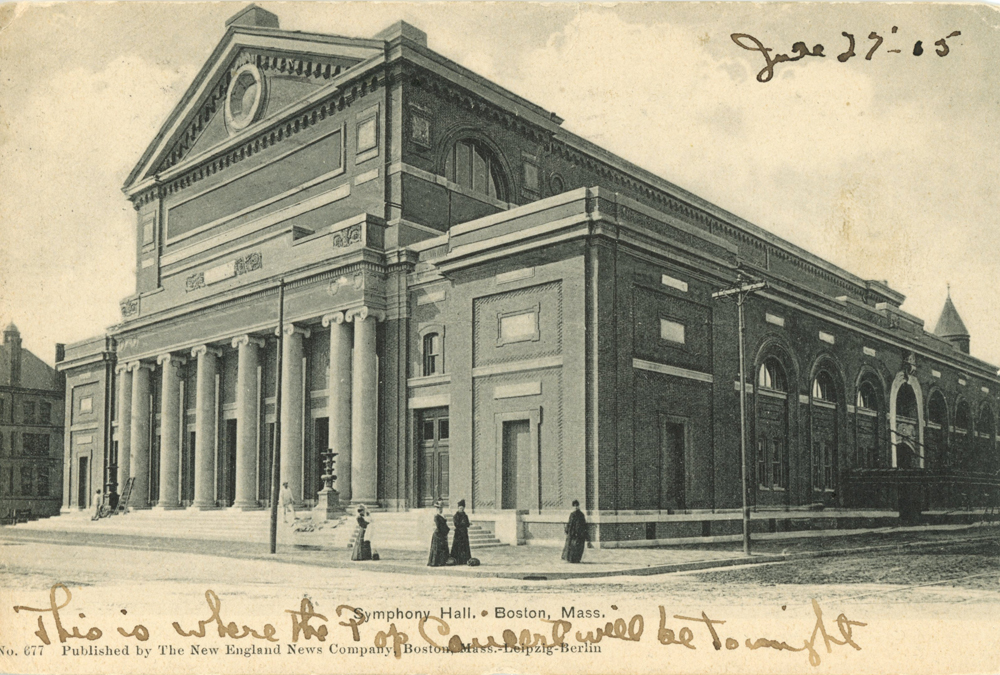
06. Symphony Hall, Boston, Mass. c. 1905. Card produced by The New England News Company, Boston, Mass. – Leipzig — Berlin. The card is used and is postmarked June 29, 1905, addressed to Mrs. K. B. Keene of Washington, D.C. In this view, one can see one of the rising-sun shaped windows in the clerestory; these were boarded up during World War II (a blackout precaution) and were only reopened in the early 2000s at which time natural light once again could shine into the Hall.
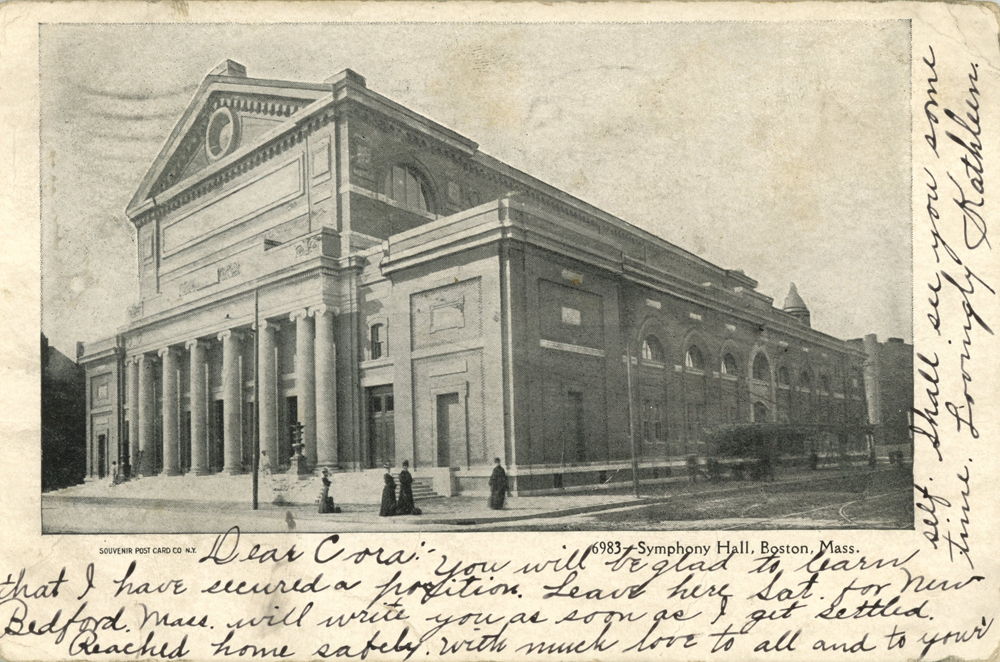
07. Symphony Hall, Boston, Mass. c. 1905. Card produced by Souvenir Post Card Co., New York. The card is used and is postmarked November 11, 1906, addressed to Mrs. A. L. Turner of Atlantic, Massachusetts. The photo is identical to the one in the card above although it is cropped differently and you can see many people along the Massachusetts Avenue side of Symphony Hall who had been removed in the previous card. I own a second copy of this card that was also used, postmarked March 7, 1907, addressed to Mr. George A. Ohlmsted, Barre, Vermont (c/o Ladd’s Grocery).

07a. Symphony Hall, Boston, Mass. c. 1907. Card produced by Reichner Bros., Boston, München, Prag., Leipzig. Made in Austria. This curious card appears in version with no text on the image side and also as shown here, with the imprint of an event – Welcome to Boston, Old Home Week, July 28-Aug. 3, 1907 – that was probably held in Symphony Hall that had nothing to do with the Boston Symphony. Organizations sometimes issued commemorative cards with their own imprint to celebrate their events. Note the Boston bean pots in the four corners. The photo of Symphony Hall is centered in an artist’s palate.
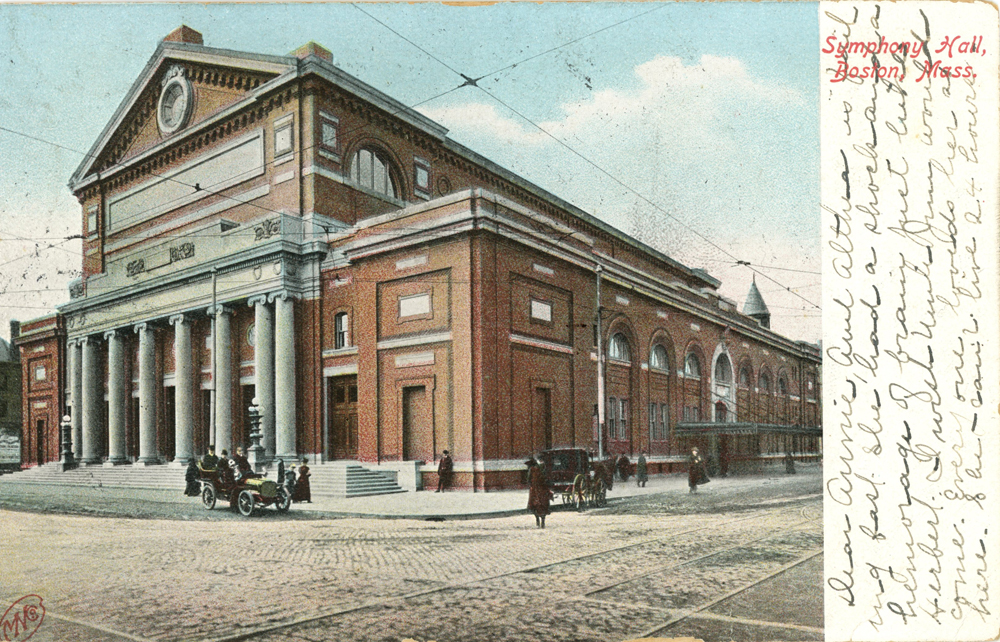
08. Symphony Hall, Boston, Mass. c. 1908. Card produced by Robbins Bros., Boston, Mass. Made in Germany. The card is used and is postmarked April 6, 1908, addressed to Mrs. Robert Skillings, Danville, Quebec. This card is the earliest I have seen that shows an automobile – on Huntington Avenue around the corner from a horse drawn carriage on Massachusetts Avenue.

09. Boston, Mass., Symphony Hall. c. 1911. Card produced by The Hugh C. Leighton Co., Portland, ME, USA. Made in Germany. The card is used and is postmarked November 10, 1911, addressed to Mr. Georgie Worren, Wilton, New Hampshire. Two things are notable: The card was sold by Poole Piano Company (established in Boston in 1893) which inserted its company name and the hot air balloon with a piano hovering above the hall. This was a common advertising tool in the late nineteenth and early twentieth centuries. Also, note the sign that says “POPS” above the right pair of columns. This sign indicates that the photo was taken during the Boston Pops season. Pops concerts – originally “Promenade concerts” – began in 1885 and continue to this day. Today, this lighted sign is installed each year over the Massachusetts Avenue side of Symphony Hall (see card 24, below).

10. Symphony Hall and Horticultural Society Building, Huntington Ave., Boston, Mass. c. 1912. The card is used and is postmarked December 10, 1912, addressed to Mrs. C. E. Palmer, Bath, Maine. This card looks down Huntington Avenue and shows the proximity of Symphony Hall and the Horticultural Hall (built in 1901); note, too, the three modes of transportation: horse-drawn carriage, automobile, and trolley.

11. Boston, Mass., Symphony Hall. c. 1913. Card produced by Raphael Tuck & Sons, Art Publishers to Their Majesties the King & Queen. Printed in Holland. The card’s caption on the back reads, “SYMPHONY HALL, successor of the old Music Hall, is the home of the Symphony Orchestra, and here the oratorios of Handel and Hayden Society are even. The Hall has a seating capacity of 2,500, and the interior decorations, lighting, etc., are up-to-date as it was erected recently.”

12. Symphony Hall, Boston, Mass. c. 1914. Card produced by The Leighton & Valentine Co., N. Y. City. Printed in United States. The card is used, postmarked 1914, addressed to Mrs. C. H. Gateo, Petersham, Massachusetts. The lighted POPS sign is seen again in this card, as are two trollies and a horse-drawn carriage. Notice, too, the large three-sheet advertisements for Boston Pops concerts in the niches on the corners of the building as well as one standing against the Huntington Avenue columns.

13. Symphony Hall, Boston, Mass. c. 1914. Published by Tichnor Bros., Inc., Cambridge, Mass. Huntington Avenue is bustling with activity; many signs lean up against the Huntington Avenue columns to advertise upcoming concerts and events. Two styles of automobiles are seen as well as the wheel of a horse-drawn carriage on the far left. Crossing Massachusetts Avenue on the right side of the card is someone with a long case or parcel. Could it be a member of the Boston Symphony heading to a rehearsal?

14. Symphony Hall, Boston, Mass. c. 1915. Card produced by E. H. & F. A. Rugg, Medford, Mass. Visible in this card is one of the shutters — standing open — that could be raised to cover the rising-sun clerestory windows.

14a. Symphony Hall and Horticultural Hall, Massachusetts Avenue, Boston, Mass. c. 1927. Card produced by Tichnor Bros., Inc., at Cambridge, Mass, USA. The postcard is used and is postmarked 1927, addressed to Mrs. Wilber Tasker, Etna, Maine. This view shows Symphony Hall and the Horticultural Hall, with the dome of the mother church of First Church, Christ Scientist (built in 1906) rising in the background. The caption on the back of the postcard refers to Symphony Hall as “Boston’s Temple of Music.”

15. Symphony Hall, Boston, Mass. c. 1930s? Card produced by C. T. American Art.

16. Symphony Hall, Boston, Mass. c. 1930s? Card produced by The New England News Company, Boston, Mass.

17. Symphony Hall, Boston, Mass. c. 1930s? Card produced by The Process Photo Studios, Troy at 21st St., Chicago, Ill. The presence of a kiosk in the intersection of Huntington and Massachusetts Avenues with an traffic officer from the Boston Police Department adds a certain kind of frightening charm to this image. I would not have wanted to be in his position.
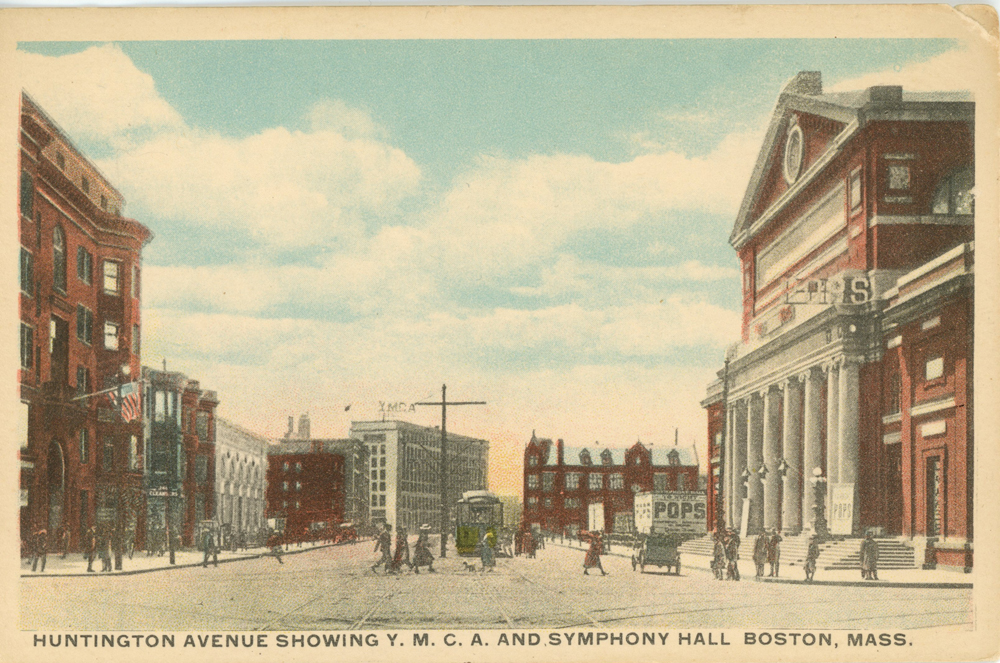
18. Huntington Avenue Showing Y.M.C.A. and Symphony Hall, Boston, Mass. Before 1941. Card produced by M. Abrams, Roxbury, Massachusetts. This view is down Huntington Avenue and shows Symphony Hall on the right (with the POPS lighted sign in place), and the Boston Y.M.C.A. building in the center. To the left of the Y.M.C.A. is New England Conservatory of Music where I taught from 1985-2012; many Boston Symphony musicians teach at NEC owing to its close proximity to Symphony Hall.

19. Symphony Hall, Y.M.C.A. and Junction, Mass. Ave. and Huntington Ave., Boston, Mass. Before 1941. Card produced by The New England News Company, Boston, Mass. Similar to the view above, this postcard features later style automobiles, the absence of the POPS advertising, and large American flags on top of the Y.M.C.A.

20. Symphony Hall, Boston, Mass. c. 1941. Card produced by United Art Co., Boston, Mass. I do not know if the large American flag on the roof of Symphony Hall was actually a feature of the hall for a time or if it is an artistic addition from around the time of World War II. I have been on the roof of Symphony Hall and do not recall seeing a stand for a flag of that size although it’s quite possible it was there at one time.

21. Huntington Avenue at Massachusetts Avenue Showing Symphony Hall, Horticultural Hall and Dome of Christian Science Church. Boston, Mass. c. 1949. Card produced by “COLOURPICTURE” Publications, Cambridge, Mass. USA. The card is used and is postmarked September 7, 1949, addressed to Mrs. Harry Monroe, Fitchburg, Massachusetts. In 1941, the Tremont Street Subway (now the Green Line E spur) was moved from surface level to underground to avoid traffic on Massachusetts Avenue. This made using the original Huntington Avenue entrance of Symphony Hall more difficult since the road was necessarily more narrow. The main entrance of the Hall was switched to the Massachusetts Avenue side. This was a practical decision but it has disrupted the original flow of concert goers into the Hall; they now enter the auditorium from the side rather than from the rear.

22. Symphony Hall, Massachusetts and Huntington Avenue, Boston, Mass. c. 1954. Card Produced by United Art Co., 89 Bedford St., Boston, Mass. The postcard is used and is postmarked July 21, 1954, addressed to Mr. & Mrs. Harry Davidson, Lakewood, Ohio. This interesting view shows a long building to the left of Symphony Hall (a sign for a bowling alley is visible). This building, which stretches for the whole block, is now owned by the Boston Symphony which has plans to redevelop the block with a new building. Currently it houses the Orchestra’s Cohen Wing which includes the Symphony Hall gift shop, BSO archives, management offices, the Casadesus Collection of Musical Instruments, and various other businesses that rent space from the Boston Symphony.

23. Symphony Hall. c. 1990. Card photo by Lincoln Russell, Stockbridge, MA. Symphony Hall at dusk, in a time-lapse photograph.

24. Symphony Hall. c. 1995. Card photo by Helen Eddy, Cambridge, Massachusetts. This view is of the canopy over the Massachusetts avenue entrance to Symphony Hall, showing decorative bunting and the lighted POPS sign celebrating the spring season of the Boston Pops Orchestra.

25. Seiji Ozawa and the Boston Symphony Orchestra, Symphony Hall. c. 2000. Card photo by Christian Steiner, New York, New York. This photo shows a view of the stage of Symphony Hall near the end of the tenure of Music Director Seiji Ozawa (music director 1973-2002). The trumpets and trombones are seated in the back row of the orchestra in front of librarians and personnel mangers and stage managers who are standing in the center: Thomas Rolfs, Peter Chapman and Charles Schlueter, trumpets; Ronald Barron, Norman Bolter, Douglas Yeo, trombones; Chester Schmitz, tuba. The story of the interior of Symphony Hall is one for another time!





 The Last Trombone – Douglas Yeo