Category: Arizona and the Southwest

For the benefit and enjoyment of the people

For the benefit and enjoyment of the people

It has often been called “America’s best idea.” There is no country in the world with anything like it. I speak of our National Park system, founded in 1872 with the establishment of Yellowstone National Park. This week, the National Park Service – the federal agency charged with care of the Parks – celebrated its 100th birthday. We all do well to stop for a moment and consider, with gratitude, this tremendous gift in our midst.

My wife and I first began exploring our National Parks in 1978 when we took a six-week camping vacation from New York City to California and back. Since that time, we have enjoyed dozens of trips to National Parks and National Monuments, as well as to National Historic Places. It is one of the primary reasons that we moved from Boston to Arizona, so we could be in close proximity to the great national parks of the west. As the inscription atop the great arch that spans the northern entrance to Yellowstone National Park says (photo, above), the parks were established “For the benefit and enjoyment of the people.” Every time I come up to the Yellowstone Arch a deep wave of emotion comes over me. Because I have been one who has benefitted from and enjoyed these parks – places of exceptional beauty and tranquility, wonder and excitement. I can say with great certainty that I would not be the artist/musician I am today were it not for the many hours spent in our National Parks, hiking, gazing upon and engaging the tremendously diverse landscape of this piece of land the world calls the United States of America.

I have always encouraged my students to get out of the practice room and get outside so their playing would be informed by more than what was on the music stand. Appreciating the natural, created order of the universe does more than release positive endorphins into the blood stream. It changes us; it gives us a sense of perspective and certainly it inspires us. The words of Psalm 8 often come to mind as I gaze on a remarkable landscape:

O Lord, our Lord, how majestic is your name in all the earth!

When I look at your heavens, the world of your fingers, the moon and the stars, which you have set in place, what is man that you are mindful of him, and the son of man that you care for him? (Psalm 8:1, 3-4, English Standard Version)

So here, in celebration of the anniversary of the National Park Service, is a little gallery of photos I have taken in a just a few our National Parks. We all are in debt to President Ulysses Grant who established the National Park system in 1872, to President Theodore Roosevelt who championed it, and to all those who have worked so hard to balance preservation and access so these remarkable places can continue to be enjoyed by people from around the world.

Grand_Prismatic

Grand Prismatic Spring, Yellowstone National Park, Wyoming

Observation_Point_small

View from Observation Point, Zion National Park, Utah
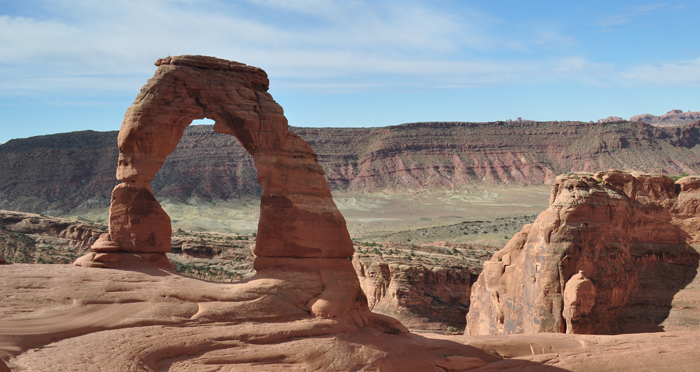
Delicate_arch_small

Delicate Arch, Arches National Park, Utah
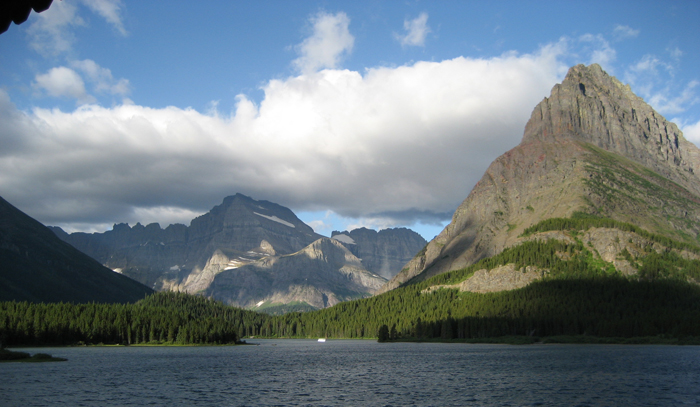
Glacier_Swiftcurrent_lake_small

Swiftcurrent Lake, Glacier National Park, Montana
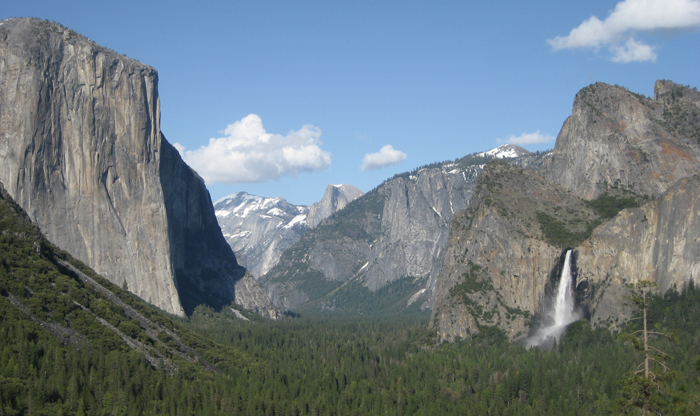
Yosemite_Valley_small

El Capitan, Half Dome and Bridal Veil Falls, Yosemite National Park, California

acadia_national_park_small

Jordan Pond and the Bubbles, Acadia National Park, Maine
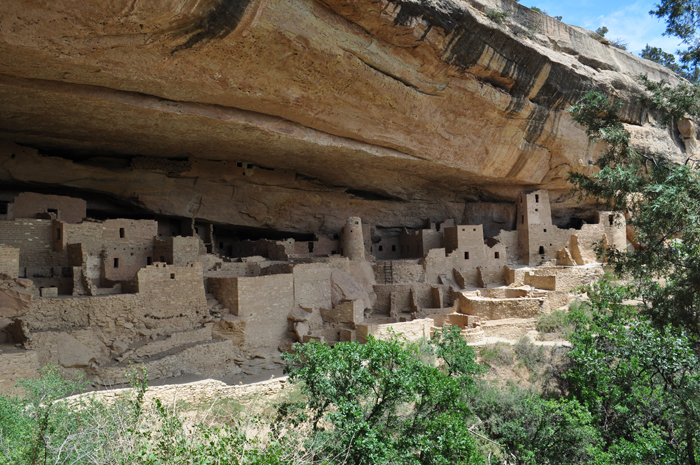
Mesa_Verde_cliff_dwelling_small

Cliff dwelling, Mesa Verde National Park, Colorado

Petrified_Forest_small

Petrified Forest National Park, Arizona

Grand_Canyon_Douglas_Yeo_2012small

Grand Canyon National Park, South Rim, Arizona
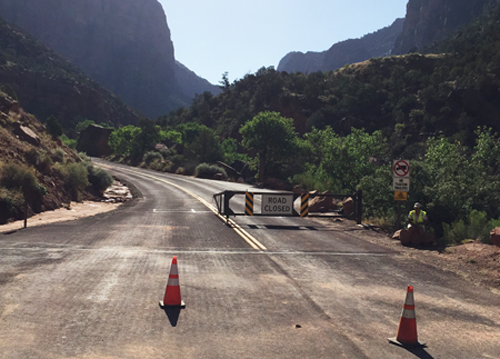
Road closed

Road closed

I’ve been off the grid – truly – for the last two weeks while on vacation with my wife. One of the reasons we decided to move to Arizona was to be in proximity of the great National Parks of the West. We first explored these parks in 1978 when we took a six week camping vacation from New York City to California and back, staying in 11 National Parks. That we were able to accomplish that epic trip for the sum total of $500 – that included gas (which was, at the time, $0.53 a gallon), campground fees and food – is only an interesting aside. The trip fundamentally instilled in us a love for our National Parks which are truly, “America’s best idea.”

This road trip took us up to Zion, Yellowstone and Grand Teton National Parks. We have been to these parks before, particularly to Zion which we have visited on 10 separate occasions. We never tire of visiting again and again, and since Zion was a good enough drive for our first day as we headed up to Yellowstone, we decided to stay there for two days and do some warm-up hiking.

But things don’t always turn out as planned.

We had experienced a little rain on the trip but nothing significant. But as we drove to Zion National Park’s east entrance, coming from Mount Carmel Junction, Utah, we were confronted by confounding words – ROAD CLOSED. It turns out that earlier in the day, there had been an epic microburst of a storm that caused dramatic flash floods in Zion Canyon. The main street of the town of Springdale – our destination and the gateway to Zion National Park – had turned to a raging torrent of water. And the Virgin River that runs through Zion Canyon had been running at 80,000 cubic feet/second; normal is about 450 cfs.The road was closed because large boulders had crashed onto the Zion/Mount Carmel highway, making passage to Springdale through the east entrance of the park impossible.

Zion_rock_slide_01

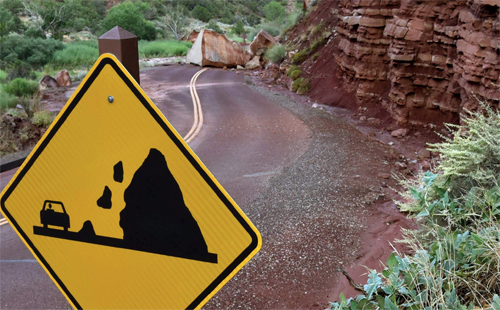
The photos above and below (courtesy the National Park Service) show the problem. And they give new meaning to the “DANGER – falling rocks” sign that was just a few feet away.

Zion_rock_slide_02.jpg

Passage was impossible, so we had to retrace our path back to Mt. Carmel Junction and then around the south of Zion, and approach Springdale from the West side. This was a two hour detour – an unwelcome event after about eight hours already in the car that day. By the time we rolled into Springdale, the rain had abated, the flood had receded and apart from a lot of mud on Main Street, we safely got to our hotel.

Zion_altar

The next day the sun was out, and we enjoyed a peaceful and fulfilling day of hiking at Zion, one of our favorite places in the world. The photo above will show you why, if you haven’t been there. Such beauty and majesty. As we hiked on several trails that day, our minds kept coming back to the words of the Bible:

Let the heavens be glad, and let the earth rejoice; let the sea roar, and all that fills it; let the field exult, and everything in it! Then shall all the trees of the forest sing for joy before the LORD, for he comes. (Psalm 96:11-12)

Indeed. Our trip to Zion was delayed, but when we arrived, we were all the more grateful for our safety (and that of others in the –thankfully no lives were lost in the storm) and the beauty of the Park seemed even richer. I will be posting more about our trip in the coming days. It was good to get to a place in the world where my cell phone did not have any coverage. More time to think, to talk with people I loved, slow down and consider my place in God’s great world.

A memorable day out

A memorable day out

It’s hot in Phoenix in the summer. Sure, we know the old joke, found on the postcards in the airport:

dry_heat.jpg

And to an extent it’s true. I’d much rather be in the middle of 110 degrees with 12% humidity than 90 degrees with 90% humidity. No doubt about that from where I sit. This is the tradeoff we get here: five months of hot followed by seven months of amazing weather. And, as I like to say, I don’t have to shovel heat  (like I used to have to shovel snow).  But, still, it’s hot, and in the summer, we look for things to do to get out of the house and out of the heat. Sometimes we travel to cooler places–more on that in future posts–but sometimes there are things nearby that are just waiting to be explored.

Even before we moved to Arizona in 2012 we were fascinated by many aspects of the state. Its geography, arts culture, the Native American story, the flora and fauna and so much more. We moved here for specific reasons, and one of those big reasons was our interest in continuing to learn more about this place that is so very different than the east coast where we spent most of our lives.

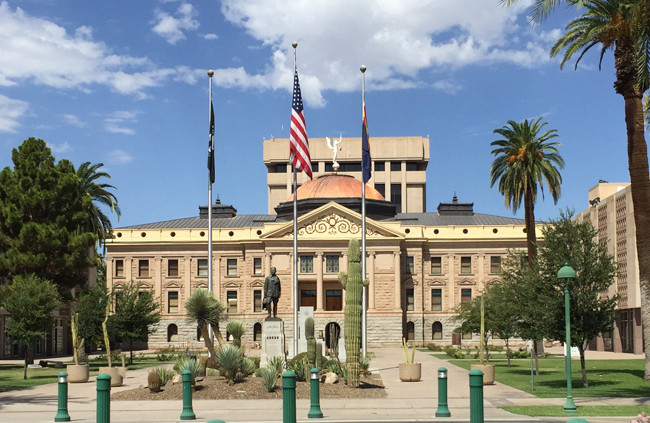
Earlier this week, my wife and I went to visit the Arizona State Capitol in Phoenix. “Big deal,” you might say. Well, it actually IS a big deal here. Arizona’s capitol building was built in 1901 when Arizona was still aTerritory, before it became a State in 1912. State  government has outgrown the old Capitol building so, instead of tearing it down, it is now a museum that pays tribute to the state’s history. It was a nice way to spend a few hours out of the heat.

But there was a bonus. Before going into the Capitol with its copper-toned dome (and if you don’t know why copper is important to Arizona, click this link to find out), we took advantage of the moderate morning temperatures (it was a balmy 91 degrees when we stepped out of the car and a few high clouds helped keep the sun from heating things up) to walk around the  Wesley Bolin Memorial Plaza that adjoins the Capitol building. The Plaza has 30 memorial monuments dedicated to a host of topics including a memorial to the victims of the 9/11 attacks, veterans and fallen heroes from many wars and conflicts and, as its centerpiece, a memorial to the USS Arizona, sunk in Pearl Harbor on December 7, 1941 with the loss of 1,777 lives.

USS_Arizona_anchor_small

The USS Arizona’s anchor has pride of place in the memorial and it is a powerful reminder of the sacrifices that the men and women in our armed forces make every day to ensure our freedoms. Inside the Capitol building, there were more tributes to the USS Arizona, including a large piece of the ship’s hull.

USS_Arizona_hull_small

It’s one thing to read history in a book. It is another to see it right before your eyes. You can touch this twisted piece of metal, look around the room at photos that show where it was before the ship sank. Our trip to the Capitol was full of powerful moments, a welcome distraction from the heat, and an opportunity to celebrate many of the things that make our state such a fascinating place.

Arizona_promised_land_small

As we were leaving the Capital, we went through a room that featured articles about Arizona’s early tourism industry. I smiled when I saw the old postcard, pictured above, with its old spelling of “canyon” as “canon” and its iconic association of the great saguaro cactus with the State. We continue to enjoy exploring Arizona, and days like we had earlier this week are serendipitous reminders of the joys and wonders to discover when you get out of the house. Even on a hot day.

On the air

On the air

Over the years, I’ve given many interviews for radio programs. I’m still a big believer in radio; the format allows for imagination and a relaxed pace of conversation. Frankly, I’d rather listen to audio than watch television most of the time.

On occasion, interviews have had to do with particular events, such as my retirement from the Boston Symphony Orchestra in 2012; you can hear that interview, where I reflected on my long career in the Orchestra as well as my many collaborations with composer/conductor John Williams here:

Interview of Douglas Yeo by Brian Bell, WGBH Radio, Boston – 2012

Another interview from 2012 found me talking with Peter Stover of Classics Radio in Fredericksburg and Lynchburg, Virginia, where I talked about my Boston Symphony career and the intersection of my life in music with my Christian faith:

Interview of Douglas Yeo by Peter Stover, Classics Radio – 2012

More recently, I was interview by Central Sound at Arizona PBS for broadcast on Classical Arizona PBS (KBAQ), Arizona’s public radio station. I only just learned that part of the interview was broadcast recently along with my performance of Jan Sandström’s Song Till Lotta (Song for Lotta), accompanied by pianist Aimee Fincher. This was a little divertissement in the middle of a broadcast of a concert by Arizona State University bands that also included a performance of Sandström’s Zephyr. In the interview, I talked about how I came to develop the trombone that I use and why I often say, “Trombone is something I do, it’s not who I am.”

This and a host of fine classical music radio programming is available for free and on demand with the Classical Arizona PBS app for iOS and Android. You can more information and download the app by clicking this link and once you load it, touch Music at the bottom navigation bar and scroll through the options to ASU in Concert – Feb 18, 2016 – Douglas Yeo and ASU Bands. While there, have a look at the other excellent offerings available. Happy listening!