Category: Uncategorized

And then, suddenly, the room was quiet.

And then, suddenly, the room was quiet.

Time, like an ever rolling stream, bears all its sons away…

So begins the seventh stanza of Isaac Watts’ 1719 hymn, Our God, Our Help in Ages Past.

Last week, I received word that my father, Alan Yeo, who was 85 years old, had been ill for some time, and who struggled with a number of medical issues, had taken a turn for the worse. I immediately flew to Baltimore to be at his bedside at a hospice facility.

Surrounded by family members, he was lovingly cared for by the hospice staff. The sound of his breathing filled the room and it had a rhythm that both told us he was still with us and also that his end was near.

And then, suddenly, the room was quiet.

My father breathed his last and passed from this world to the next. He was no longer in a broken, fallen world; he had gone to his heavenly home where his suffering was no more.

If you are reading this and have experienced the death of a parent you know that no matter how prepared you think you are for this moment, when it comes, it brings with it a sense of finality that cannot be explained. It can only be experienced. While we rejoice that my father knew and loved God and we have assurance of his place in his new home “over Jordan,” I am very aware I will not speak with him again on this earth. I will not hear his voice greet me with, as he always did, “What’s happening, Douglas?” I won’t hold his hand or kiss his cheek. Time has borne him away, as it does each of us.

So, now, we move on. There are details to attend to and emotions to process. But most of all, this moment reminds me of the precious nature of each day. All of us are good at wasting time; each has his own way to wile away hours in trivial pursuits. But when one you loves breathes his or her last, you are aware in a new way that your days, too, are numbered. I don’t feel much like wasting time right now.

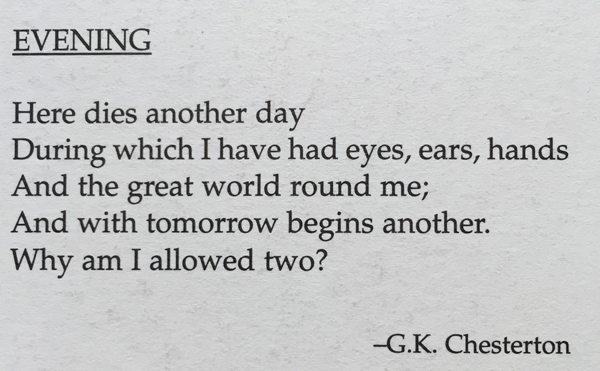
The British writer G. K. Chesterton reminds us of the remarkable gift of each day in his poem, EVENING. I keep this poem in my Bible and read it every day:
chesterton_evening

Why, indeed, am I allowed two? Because God, in his Sovereign will, has work for me to do in another day for the cause of His Kingdom. With renewed purpose, I push ahead to be a good steward of the talents and gifts God has given me until He decides my work here is done and, like my father, He bears me home.

The Lord gave, and the LORD hath taken away; blessed be the name of the LORD. (Job 1:21)

+ + + + +

Alan Deane Yeo passed from this world to his heavenly home on September 4, 2016 in Columbia, Maryland; he was 85 years old. Born in Brooklyn, he graduated from Westminster College (New Wilmington, Pennsylvania) in 1953 and married Jeannine Spangler (d. 1985). He served in the United States Army’s 6th Infantry Division immediately following the Korean conflict and worked as Vice-President and Secretary of S. P. Skinner Co. in New York City before answering the call to become a United Methodist minister in 1971. He earned his Master of Divinity and Doctor of Ministry degrees from Drew Theological School (Madison, New Jersey) and pastored churches in Milton (1971-1975), Hopatcong (1978-1983), Roselle Park (1983-1987) and Washington, New Jersey (1988-1993) as well as Matamoras, Pennsylvania (1975-1978).

After his retirement from full time ministry work, Alan continued in the service of the Gospel, preaching in churches, assisting in hospice, and as chaplain and teacher of New Testament at Randolph Macon Academy (Front Royal, Virginia). He will be missed by all who knew and were influenced by him and is survived by his wife of 30 years, Annemarie Andersen Yeo, his three sons, six grandchildren, two great-grandchildren and Annemarie’s daughter and grand-daughter.

Words matter

Words matter

By Douglas Yeo (August 29, 2016; updated December 27, 2023)

I love to read and write. My father was Chairman of our local public library when I was a young boy and I cannot recall a time in my life when a book was fewer than a few feet away from me. Over the years, I have published many articles and book chapters, and am at work at this time on three books for major publishers – Oxford University Press, University of Illinois Press, and Encore Music Publishers. I am a stickler for grammar and punctuation and I take care to craft sentences that clearly express my thoughts.

One of my favorite quotations (note: it is not a quote, it is a quotation) about the importance of words is from Duke Ellington, from a 1944 article about him in The New Yorker magazine. Ellington said:

You can say anything you want on the trombone, but you gotta be careful with words.

Indeed. Words matter. Words can express the most tender emotions of the human soul and words can also start wars. We need to be careful with words.

I have long been familiar with a quotation by Joseph Pulitzer, the newspaper magnate whose name is associated with the Pulitzer Prizes for excellent writing. The quotation is in the image above, taken from the Pulitzer Prize website. It’s a superb quotation that is a real inspiration to writers.  But this quotation has a problem. A big problem.

Pulitzer didn’t say it.

I wanted to use this quotation in a book that I’m writing so I decided to track down its source (note: that’s its, not it’s). This proved difficult to do. If you Google the quotation, you will find it reproduced on countless websites. But never with a citation. And every author knows you need a citation if you’re going to quote something.

After a long search, a good friend of mine located the source. It is in Alleyne Ireland’s 1915 book, Joseph Pulitzer: Reminiscences of a Secretary. It is here that Pulitzer’s famous quotation is found, on pages 68-69:

Screen Shot 2016-08-27 at 10.18.14 AM

And when you read it, you see a very big problem.

Compare the popularized version of the quotation with the actual quotation:

Put it before them briefly so they will read it, clearly so they will appreciate it, picturesquely so they will remember it and, above all, accurately so they will be guided by its light. [Popularized version]

…put it before them briefly so that they will read it, clearly so that they will understand it, forcibly so that they will appreciate it, picturesquely so that they will remember it, and, above all, accurately so that they may be wisely guided by its light. [Original version]

What happened? Two phrases of the original got conflated into one phrase; what originally was “clearly so that they will understand it, forcibly so that they will appreciate it” became “clearly so they will appreciate it.” “That” and “so” got removed from all phrases. But there is more. “Wisely guided by its light” became “guided by its light.” And what is IT, the subject of the whole quotation? IT is not identified in the popularized version. But in the original, IT is identified. IT is “the truth.” Here’s the full quotation with its important subject now in place:

…it’s my duty to see that they get the truth; but that’s not enough, I’ve got to put it before them briefly so that they will read it, clearly so that they will understand it, forcibly so that they will appreciate it, picturesquely so that they will remember it, and, above all, accurately so that they may be wisely guided by its light.

The irony of the mangling of this quotation is obvious. Here are the words of a man that have been twisted to to give meaning that he didn’t intend and to NOT give meaning that he DID intend. And the whole point of the quotation, “above all” as Pulitzer said, is that the truth is given to people “accurately.” In this popularized version of Pulitzer’s words, accuracy has been thrown out the window. Even the Pulitzer Prize website can’t get the words of its famous benefactor right. What a shame.

Words have meaning. Words matter.

Here is an update to this article (December 27, 2023)

I wrote the above article about the mangling of Joseph Pulitzer’s words on the Pulitzer Prize website in 2016. For several months after I wrote my article, I checked in on the Pulitzer Prize website to see if they happened to update Pulitzer’s words. They had not. I wrote to the Pulitzer Prize committee about this error and I never heard back from them. So I went on to other things. Then, this morning, this all came to my mind again, I had another look and, lo and behold, the Pulitzer Prize website has the quotation reproduced correctly. Good on them! I don’t know when they made the change and I’m not going to take credit for the change but. . .

Screenshot 2023-12-27 at 10.45.28 AM

For the benefit and enjoyment of the people

For the benefit and enjoyment of the people

It has often been called “America’s best idea.” There is no country in the world with anything like it. I speak of our National Park system, founded in 1872 with the establishment of Yellowstone National Park. This week, the National Park Service – the federal agency charged with care of the Parks – celebrated its 100th birthday. We all do well to stop for a moment and consider, with gratitude, this tremendous gift in our midst.

My wife and I first began exploring our National Parks in 1978 when we took a six-week camping vacation from New York City to California and back. Since that time, we have enjoyed dozens of trips to National Parks and National Monuments, as well as to National Historic Places. It is one of the primary reasons that we moved from Boston to Arizona, so we could be in close proximity to the great national parks of the west. As the inscription atop the great arch that spans the northern entrance to Yellowstone National Park says (photo, above), the parks were established “For the benefit and enjoyment of the people.” Every time I come up to the Yellowstone Arch a deep wave of emotion comes over me. Because I have been one who has benefitted from and enjoyed these parks – places of exceptional beauty and tranquility, wonder and excitement. I can say with great certainty that I would not be the artist/musician I am today were it not for the many hours spent in our National Parks, hiking, gazing upon and engaging the tremendously diverse landscape of this piece of land the world calls the United States of America.

I have always encouraged my students to get out of the practice room and get outside so their playing would be informed by more than what was on the music stand. Appreciating the natural, created order of the universe does more than release positive endorphins into the blood stream. It changes us; it gives us a sense of perspective and certainly it inspires us. The words of Psalm 8 often come to mind as I gaze on a remarkable landscape:

O Lord, our Lord, how majestic is your name in all the earth!

When I look at your heavens, the world of your fingers, the moon and the stars, which you have set in place, what is man that you are mindful of him, and the son of man that you care for him? (Psalm 8:1, 3-4, English Standard Version)

So here, in celebration of the anniversary of the National Park Service, is a little gallery of photos I have taken in a just a few our National Parks. We all are in debt to President Ulysses Grant who established the National Park system in 1872, to President Theodore Roosevelt who championed it, and to all those who have worked so hard to balance preservation and access so these remarkable places can continue to be enjoyed by people from around the world.

Grand_Prismatic

Grand Prismatic Spring, Yellowstone National Park, Wyoming

Observation_Point_small

View from Observation Point, Zion National Park, Utah

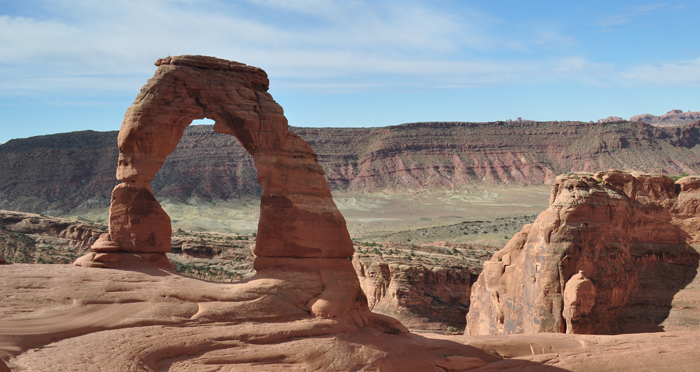
Delicate_arch_small

Delicate Arch, Arches National Park, Utah

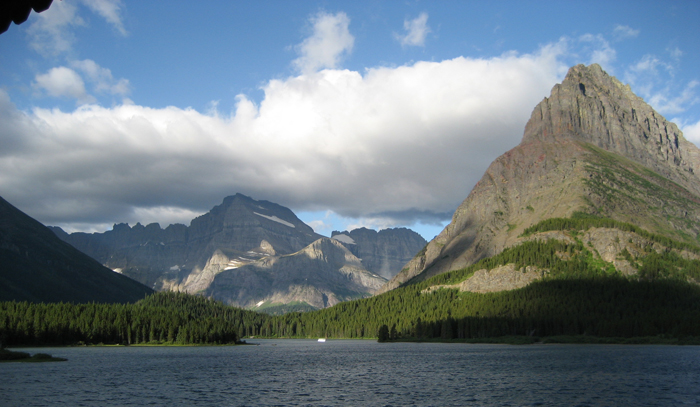
Glacier_Swiftcurrent_lake_small

Swiftcurrent Lake, Glacier National Park, Montana

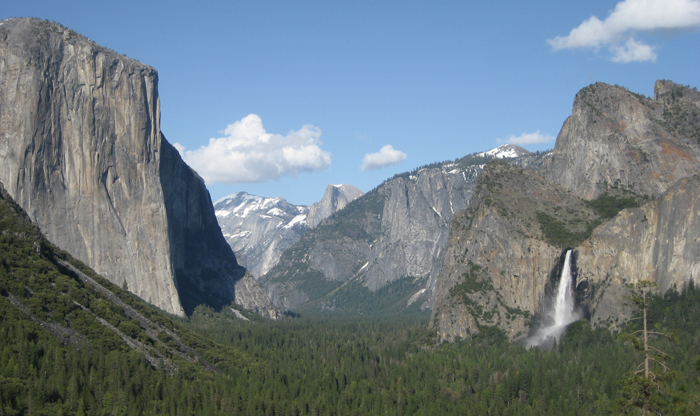
Yosemite_Valley_small

El Capitan, Half Dome and Bridal Veil Falls, Yosemite National Park, California

acadia_national_park_small

Jordan Pond and the Bubbles, Acadia National Park, Maine

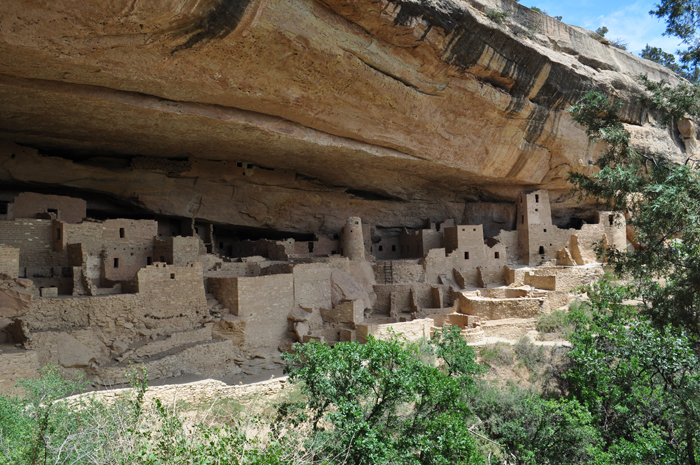
Mesa_Verde_cliff_dwelling_small

Cliff dwelling, Mesa Verde National Park, Colorado

Petrified_Forest_small

Petrified Forest National Park, Arizona

Grand_Canyon_Douglas_Yeo_2012small

Grand Canyon National Park, South Rim, Arizona

Celebrating the bass trombone

Celebrating the bass trombone

I’ve been playing the trombone since I was a young boy, and the bass trombone in particular since I was 18 years old. I’ve been fortunate to have made several solo recordings that are now in the hands of thousands of people around the world – you can see a list of my recordings by clicking here. Many other fine bass trombonists have also made superb solo recordings of diverse repertoire and recently, my good friend Gerry Pagano, bass trombonist of the Saint Louis Symphony, has released a new recording.

I met Gerry in 1987, early in my tenure as a member of the Boston Symphony Orchestra. He was a Fellow at the Tanglewood Music Center that summer and we spent a lot of time together playing and talking. A few months after the Tanglewood season ended, Gerry won the St. Louis Symphony position. Gerry is not only an excellent player but a great person – vivacious, creative, positive. I count it a real privilege to call him my friend.

Gerry’s new recording features works for bass trombone that are accessible to talented players. It doesn’t include works that are only playable by just a handful of super professionals. As always, Gerry’s new album, Horizon, features his beautiful sound and impressive technique. Most of all, his musical artistry comes through.

I’m particularly pleased that Gerry has recorded, along with tenor trombonist Bradley Palmer, my arrangement of Eric Ewazen’s Pastorale, which I made with Eric’s permission for inclusion on my own CD, Two of a Mind, with tenor trombonist Nick Hudson. Gerry and Brad’s performance is quite beautiful and I’m very grateful for the inclusion of this lovely piece on the album.

You can obtain Gerry’s album for free. Yes. For free. Here is the link to download the tracks:

Download Gerry Pagano’s new album, Horizon.

Of course this album wasn’t free on Gerry’s end. He had to record and produce it, and has to pay royalties to composers. So if you download the album and feel like it’s worthwhile, please take the opportunity to click the link at the bottom of the download page and send a few dollars Gerry’s way to help defray his expenses. He made this album of music that he loves and his playing is truly inspirational.

In 2014, I asked Gerry to come to Arizona State University to give a master class. The class was terrific; he is such a natural communicator and his time was extremely helpful to my students. After the class, we sat down in my office and made a video of our playing Tommy Pederson’s great duet for two bass trombones, The Crimson Collop. I posted our recording – done in one take –  on YouTube and much to my surprise, it’s had over 15,000 views. Seriously? Well, we’re just happy that people have enjoyed it. Perhaps you’ll enjoy it too. Watch the video below to see two friends having a nice time together making music, celebrating the bass trombone. Enjoy.