Category: Uncategorized

Tubby the Tuba

Tubby the Tuba

Among my many projects that are happily occupying my time is my work on several book projects. One of them is An Illustrated Dictionary for the Modern Trombone, Euphonium, and Tuba Player, to be published by Rowman & Littlefield. This is a very interesting project for me: to come up with about 600 terms (instruments, instrument parts, accessories, composers, companies, players, etc.) that low brass players might want to know more about. It is a dictionary, not an encyclopedia, so my entries are necessarily brief, but an extensive bibliography will help readers know where to go to get more information.

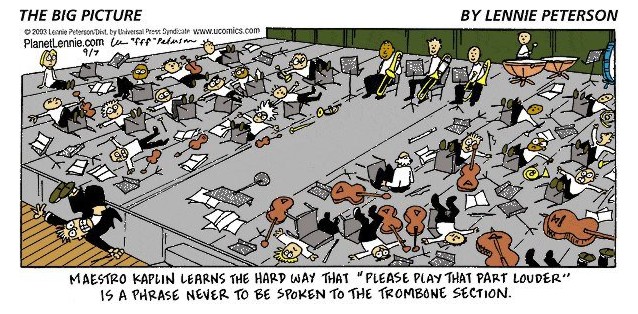
The book will be illustrated by my friend, Lennie Peterson, a trombonist and artist living in Boston but who works around the world. Many readers of The Last Trombone already know Lennie even if they don’t know him: I’d venture to say that any readers who are trombone players have seen Lennie’s most famous cartoon from the many years when his syndicated daily cartoon, “The Big Picture,” was part of newspapers around the country.

Lennie_Peterson_trombone_Kaplin

But Lennie is also a superb fine artist, and his illustrations for my new book will add measurably to help readers understand my words even better.

Over the last few days, I’ve been researching an entry for my book, about the piece,  Tubby the Tuba. Many readers probably know about this charming work for orchestra, narrator, and tuba. But it wasn’t until I actually sat down to research it that I found some very interesting things that I’d like to share with readers.

Tubby the Tuba was written by George Kleinsinger (music) and Paul Tripp (story). Tubist Herbert Jenkel asked Kleinsinger to write him a concerto for tuba and Tubby was the result. Kleinsinger and Tripp began their collaboration for Tubby in 1941 but World War II interrupted their work. They finally finished it in 1945 and it was premiered the following year in a concert by the American Youth Orchestra conducted by Dean Dixon with tubist Herbert Wekselblatt (who went on to be tubist with the Metropolitan Opera Orchestra for many years). The first performance of Tubby by a professional orchestra was given by the Philadelphia Orchestra conducted by Alexander Hilsberg. The concert, on October 19, 1946, was part of the Worcester (Massachusetts) Festival and featured the orchestra’s tubist, Philip A. Donatelli, as soloist. Tubby the Tuba became the first major piece for tuba solo with orchestra, predating Ralph Vaughan Williams’ Tuba Concerto by 10 years.

Tubby_Barzin

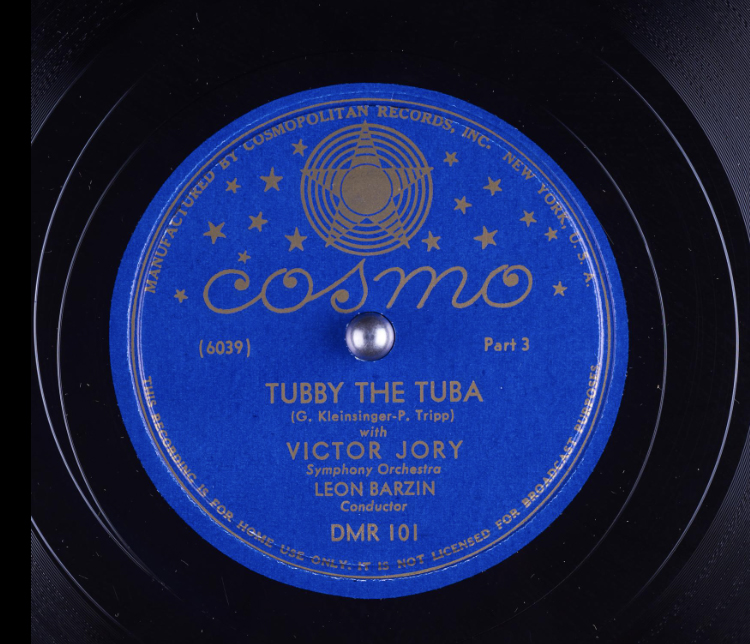
Tubby was first recorded in 1945 (The recording, on Cosmo Records, was released in December of that year) with Herbert Jenkel, tuba. This recording, with an orchestra conducted by Leo Barzin and Victor Jory narrating, may be heard HERE. Unfortunately, Jenkel was not credited on the album.

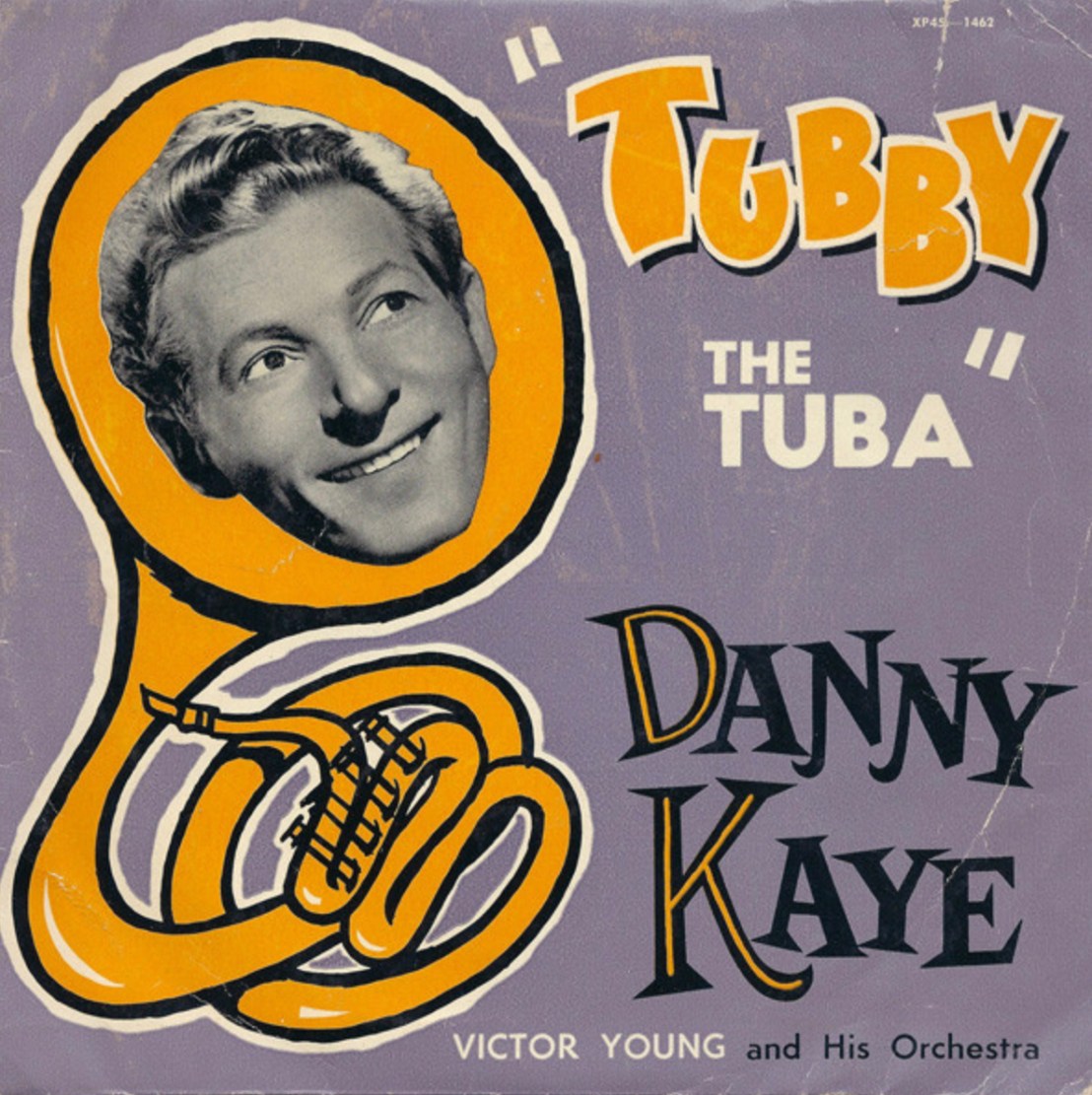
Tubby_Kaye

Tubby was then recorded in 1946 by Victor Young and his Concert Orchestra; Danny Kaye was the narrator with an uncredited tuba soloist. That recording may be heard HERE.

That same year, 1946, Tubby the Tuba made it to the big screen, as an animated short. It’s a charming film which received an Oscar nomination for best animated short. The film, a stop-action creation of George Pal and released as one of his Puppetoons productions, is absolutely delightful; unfortunately the tuba soloist is uncredited. If you cannot view the video embedded in this article, you can view it on YouTube by clicking HERE.

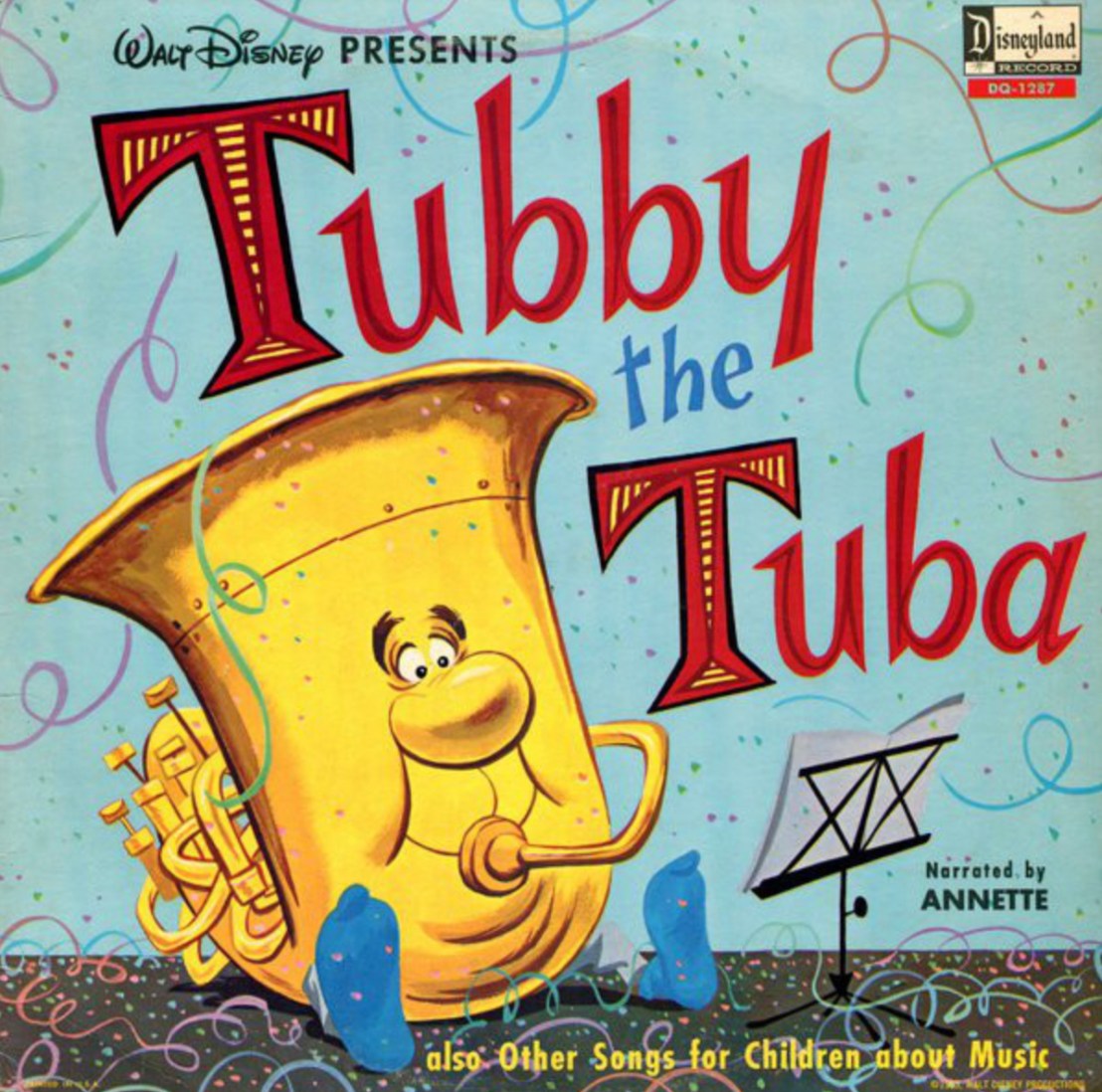
In 1963, Disney released another recording of Tubby the Tuba, with Annette Funicello (she of Mickey Mouse Musketeer fame) narrating with, yet again, an uncredited tuba soloist. That recording may be heard HERE.

Tubby_Annette

Tubby the Tuba found its way to the big screen again in 1975 (not 1977, as the video below indicates), as a full length motion picture starring Dick van Dyke as the voice of Tubby. It was a commercial failure; turning a ten minute piece into a  one hour, twenty minute film simply resulted in a bloated production that lost a lot of its original charm. Here is the familiar refrain: the tuba soloist is uncredited. If you cannot view the video embedded in this article, you may view it on YouTube by clicking HERE.

Tubby_Child_Schmitz

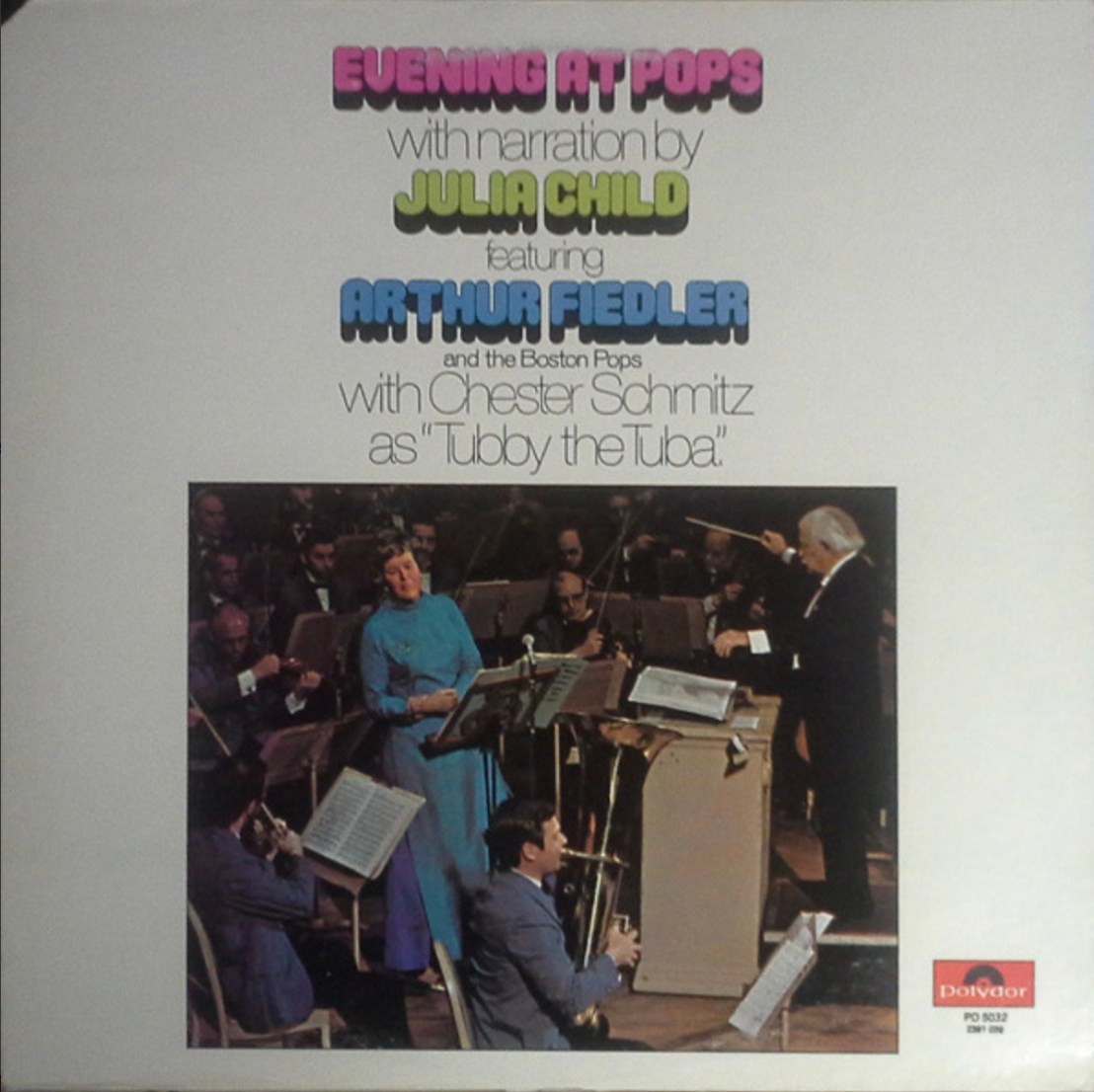
But of all of the versions of Tubby the Tuba, my favorite dates from 1971. Julia Child recorded the piece with the Boston Pops Orchestra conducted by Arthur Fiedler. Not only was this performance issued on LP, but it was recorded live for television broadcast on the PBS show, “Evening at Pops.” The tuba soloist was my Boston Symphony tuba colleague, Chester Schmitz (Chester played in the Boston Symphony from 1966-2001; we sat next to each other from 1985-2001). I have sung Chester’s praises many times before but I never tire of singing them again: he was, to my mind, the finest player of ANY wind instrument that I have ever heard. Chester had a remarkably natural ease to his playing, and his performance of Tubby, recorded in his fifth year with the Boston Symphony Orchestra is absolutely superb. His playing, combined with Julia Child’s wit, make this a performance for the ages. If you cannot view the video embedded in this article, you can see it on YouTube by clicking HERE. Enjoy!

For more information about Tubby the Tuba, read Cary O’Dell’s fine essay that was created for the Library of Congress when Tubby the Tuba was added to the National Registry in 2006. Tubby the Tuba: a delightful, unpretentious little piece with a very big history.


Surprises

Surprises

Life is full of surprises, unexpected things that intersect our lives. Sometimes a surprise is shocking, such as a car accident, or the sudden death of a friend or loved one. Sometimes surprises are joyful, like getting accepted to a college you thought was out of reach. No matter how they come, surprises always get our attention. A recent surprise got me thinking of how interesting this theme of surprises (good ones!) has been in my life recently.

Among my many ongoing projects, I have been doing a study of the Stephanovsky 20 Etudes for Bass Trombone. As my friend, Peter Ellefson (Professor of Trombone at Indiana University) pointed out to me a few weeks ago, Keith Brown’s 1964 edition of the Stephanovsky 20 Etudes contains a great deal of common material with Brown’s edition of Fritz Werner’s 38 Studies for Trombone. What? Two composers whose books contain much music that is identical? Keith Brown died last year so he isn’t here to explain what happened. So I’ve been trying to figure out this little puzzle.

In my research, I learned that the 20 Etudes were first published under Stephanovsky’s name in the Soviet Union, first around 1950 and then again in 1961 (Werner’s book was first published in 1927). I hunted around for copies of Stephanovsky’s Russian editions to obtain via Inter Library Loan and finally located a copy of the 1961 edition (I did locate a copy of the c. 1950 edition but the library that owns it is in Europe and does not participate in ILL) in the library at University of Texas, Austin. In a few days, it was heading to me for examination.

SURPRISE! When I opened it, the title page revealed that this copy had been previously owned by Donald S. Knaub, former professor of trombone at Eastman School of Music and University of Texas. Knaub is one of the most respected trombone teachers of the twentieth century; I was very privileged to meet him a few years ago when I gave a masterclass at University of Houston. A book from his personal library? Nice.
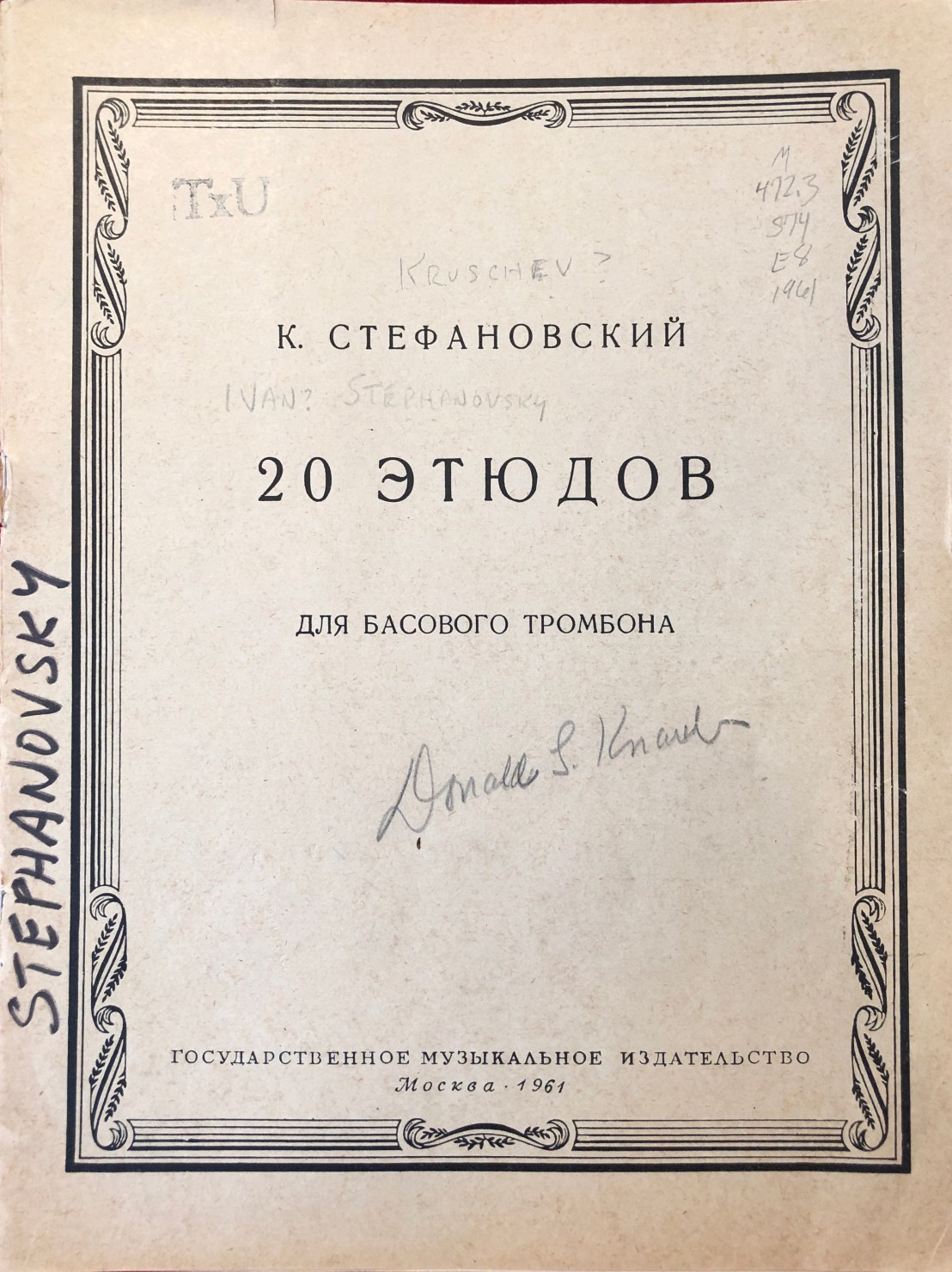
stephanovksy_cover_knaub_copy_1961

SURPRISE! Someone (it was probably Knaub since the handwriting looks like his) made some assumptions about the name of the composer of this music. No, it was not Kruschev, nor Ivan. Stephanovsky’s first name was Karl. The University of Texas librarians got the name right when they entered the music into their catalog.

Whenever I hold music that was owned by someone else, I have great anticipation when I open it up since there are often hand-written markings that prove to be as interesting to me as the music itself. Knaub’s music didn’t disappoint.
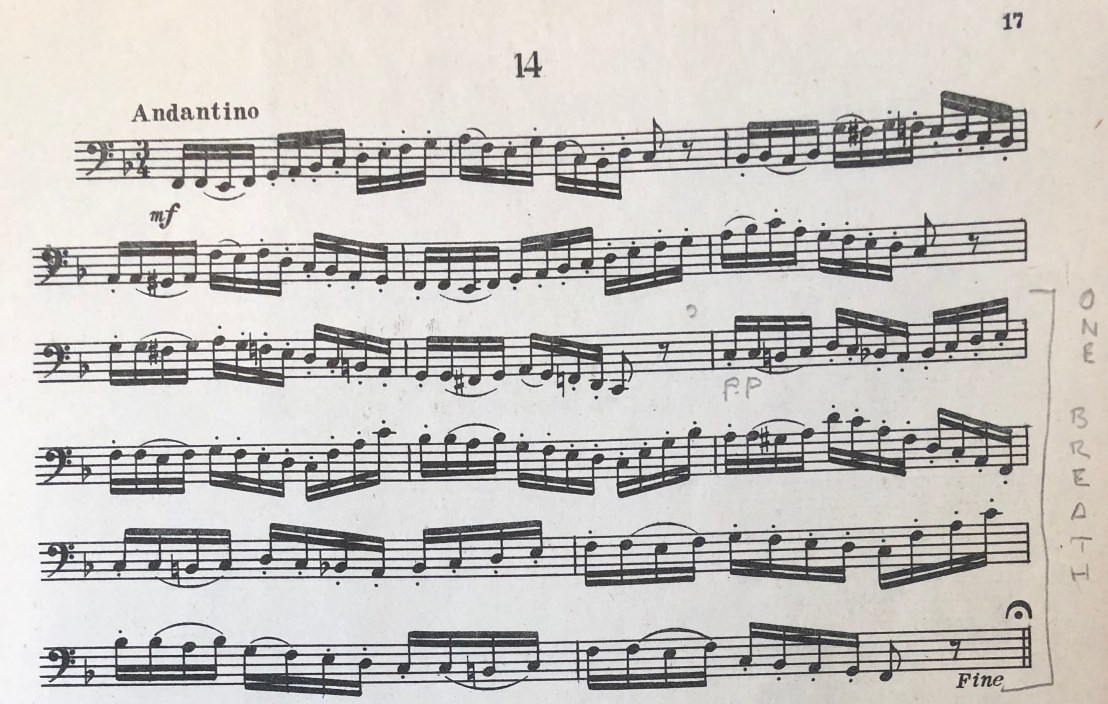
stephanovsky_14_detail_knaub_copy

SURPRISE! When I turned to Etude 14 I saw Knaub’s handwriting that marked out several bracketed staves where he had written “ONE BREATH” next to them, after having changed the dynamic of mezzoforte to pianissimo. I had to smile. I have made the same indications in many copies of this book when I have assigned that same etude to students over my many decades of teaching. Pushing ourselves to play long phrases is an essential part of learning good breath control. It was nice to see that Knaub asked the same thing of himself – and he probably asked it of his students as well.
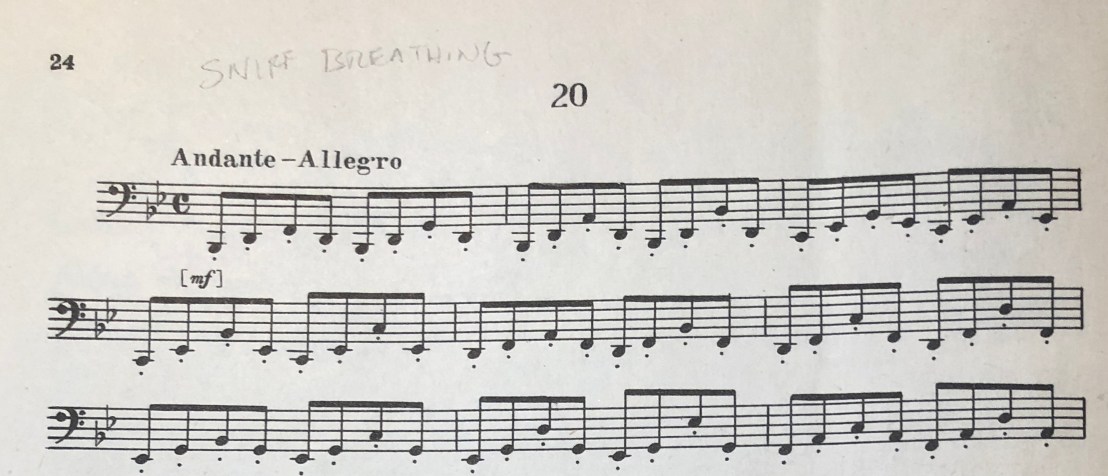
stephanovsky_20_detail_knaub_copy

SURPRISE! When I turned to the final page of the book, Knaub had written “SNIFF BREATHING” at the top of Etude 20. Another big smile from me. I have been extolling the virtues of sniff breathing – that is, taking quick breaths through the nose rather than breathing through the mouth while playing – as a way to deal with playing music like this where there just isn’t a good place to take a breath. I was taught this technique by my former Boston Symphony tuba colleague, Chester Schmitz, and it has served me (and my students) well ever since then. To see that Knaub suggested using sniff breathing on this etude was a great verification to me, since this is the very kind of etude I assign to my students to practice this useful breathing technique.

In 2010, I was in Rouen, France, doing some teaching and performing en route to a conference in Paris that was devoted to the musical instrument called the serpent. Whenever I go to Europe, I always seek out cathedrals and large churches. I have a great interest in Gothic-era church architecture. Rouen, of course, has one of the most famous cathedrals in the world, made all the more famous by the more than thirty paintings of its west front by Claude Monet (below).
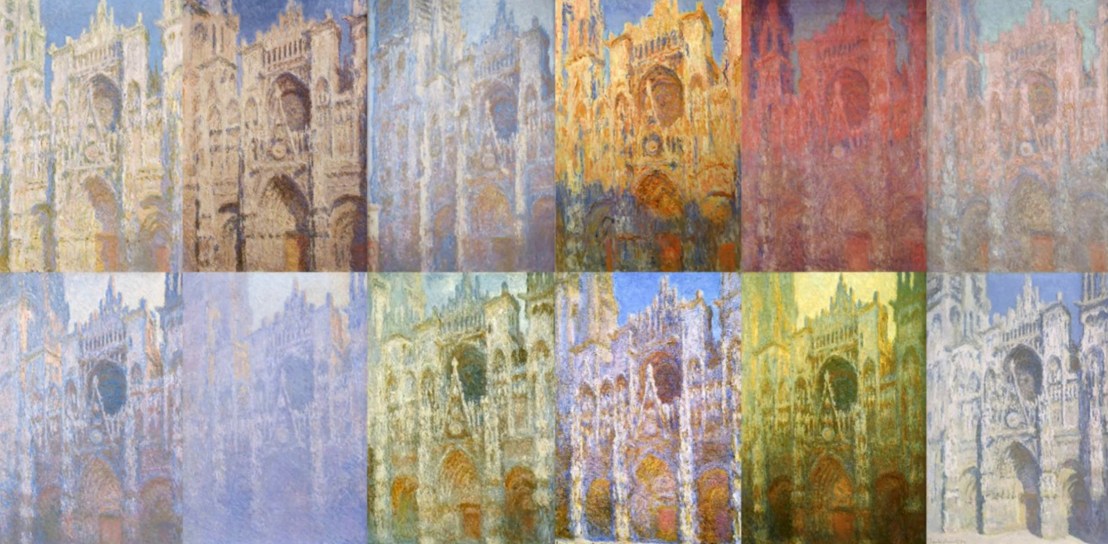
rouen_cathedral_monet

My oldest daughter, Linda (who was accompanying me on the trip), and I spent some time inside and outside this magnificent church, but my host and friend, Volny Hostiou, told us of another interesting church in Rouen that is much less known. And it had a surprise.

SURPRISE! Actually, when Volny told me about the Abbey Church of St. Ouen, he was surprised it was not the first time I had heard of it. I’ve been aware of its architecture ever since a set of twelve aquatints by the English artist, Charles Wild, came into my possession many years ago. Wild’s “Twelve Selected Examples of the Ecclesiastical Architecture of the Middle Ages, Chiefly in France.” In 2001, I wrote an article about one of these prints, “The Choir of the Cathedral of Amiens,” where I discussed the serpent players depicted in the print (you can view and download my article about this in the Historic Brass Society Journal by clicking this link). Among the prints in Wild’s set are two of the Abbey Church of St. Ouen in Rouen. One is of the outside of the church:
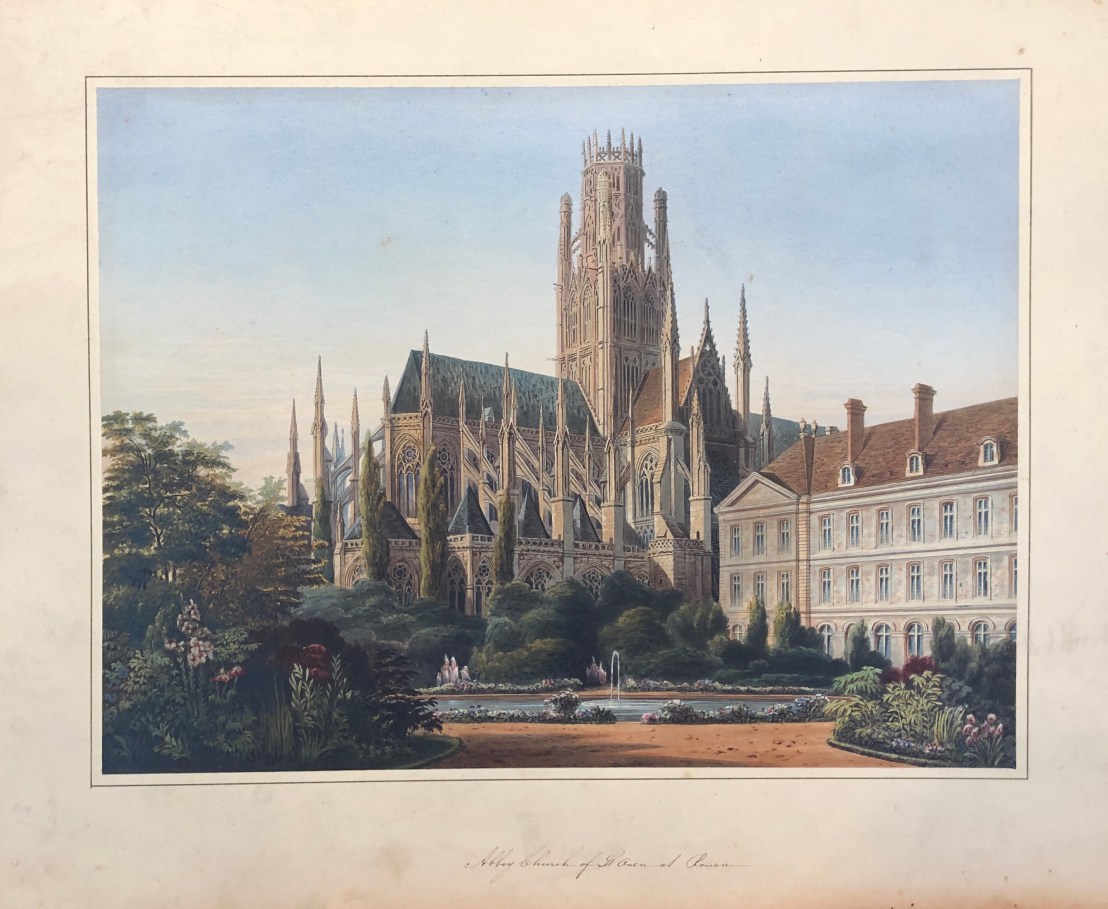
wild_abbey_church_rouen_01

And the other is of the church’s transept:
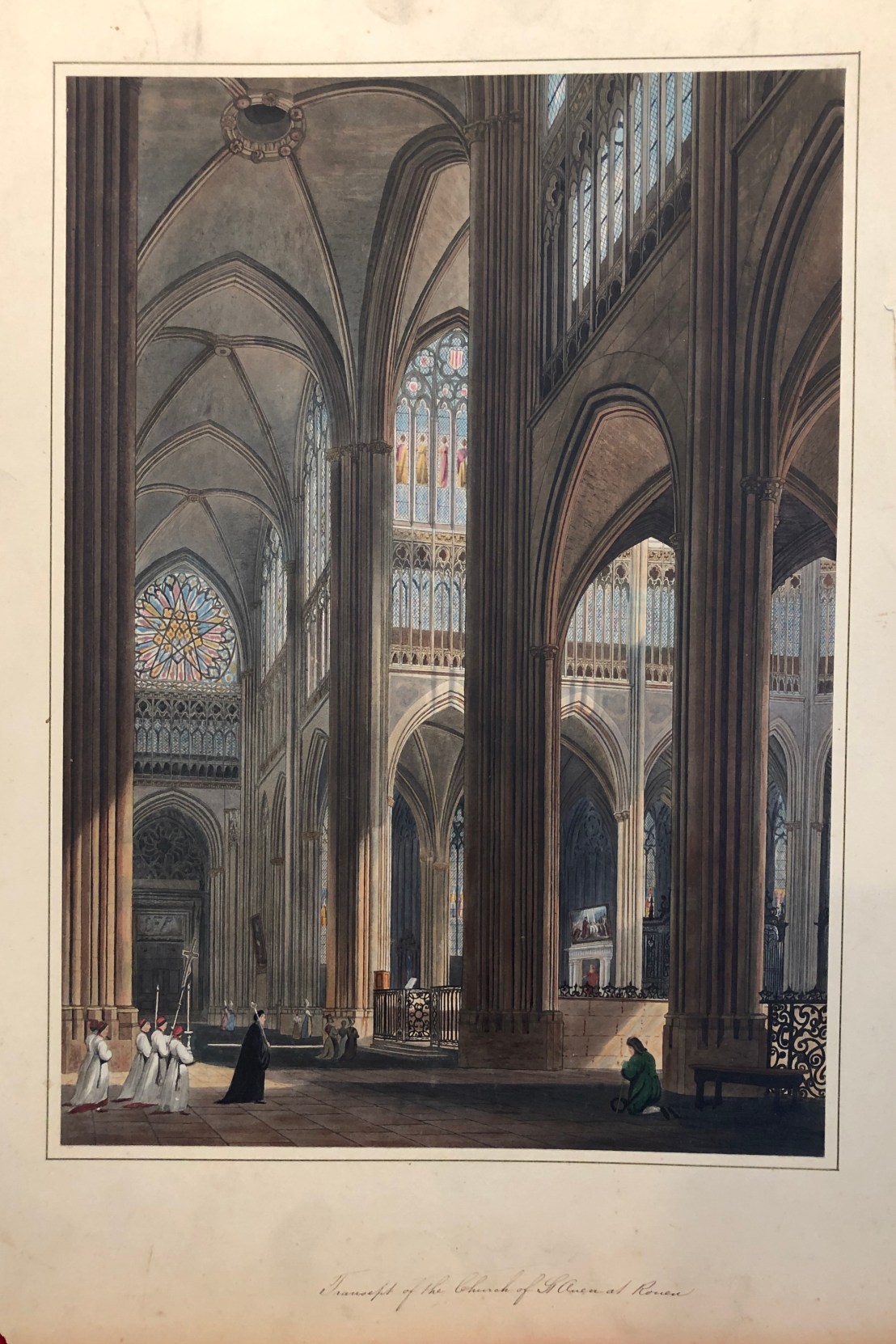
wild_abbey_church_rouen_02

These are beautiful images, ones that have taught me a great deal about Gothic architecture and cathedral/church life. But now Volny had a surprise for me. “When you go inside,” he said, “look up. You will find a serpent player.” Linda and I made a trip to the Abbey Church to find out what Volny was talking about.

st_ouen_serpent_angel_01

SURPRISE! We looked all through the church for the serpent player and finally we found him. High up on the ceiling in a side chapel, there it was, a remarkable painting of an angel playing the serpent. Nothing there about harps in heaven!

st_ouen_serpent

The serpent, which had been invented sometime in the late fifteenth or early sixteenth century and then evolved to be an instrument to accompany the singing of chant in the Church in France, would have been well known to every person who had worshipped in St. Ouen in the sixteenth through nineteenth centuries. The painting is heavily damaged but it is still remarkable nonetheless. Who painted it? When? Questions. . .

st_ouen_serpent_angel_04

SURPRISE! But there was more. As we looked more carefully at the painting, we realized that the serpent player was not alone. Look at the image, above. Just to the right of the serpent-playing angel’s left wing you see another face. It’s very faint and hard to find. (Maybe this will help: look at the chin of the serpent-playing angel, then move your eyes to the right until the stonework of the ceiling appears. The second angel’s face is there, just to the side of the larger angel’s wing.) You can clearly make out the face of another angel who is looking at the serpent-playing angel. An unexpected surprise on top of a surprise. Did this other angel originally have an instrument in hand? What did the rest of the ceiling look like when the paint was all intact? Questions. . .

Some of my biggest surprises come in books. Because of the nature of the research I do, I purchase a lot of used books, and mostly books that are out of print. I get all of my used books through abebooks.com, a website that serves as a massive catalog of the holdings of thousands of bookstores around the world. I can usually find any book I want there, and usually for only a few dollars. And sometimes when I open up a used book, I find a surprise.

halas_by_halas_cover

SURPRISE! My wife and I enjoy football and one of the first things we did when we moved to the Chicago area last fall was to become season ticket holders for the Chicago Bears. We’re all in with the Bears and since we want get to know the team better, I’ve been acquiring several books and DVDs about its history. Last week, I ordered a used copy of Halas by Halas (New York: McGraw-Hill Co., 1979), the autobiography of George S. Halas who was not only the first coach, then player, then owner of the Chicago Bears, but was the driving force behind the creation of the National Football League in 1919.

halas_by_halas_autographs

You can imagine my surprise when I opened this book – which I purchased for under $20 – and I found several autographs inside the front cover. There is Doug Atkins, defensive end for the Chicago Bears from 1955-1966 and a member of the Pro Football Hall of Fame. And Mike Pyle, center for the Bears from 1961-1969. And George Connor, another member of the Pro Football Hall of Fame who played linebacker/tackle for the Bears from 1948-1955. There is also the signature of Jeanne Morris, a pioneering female television sports broadcaster, and two members of the short-lived Chicago Bears cheerleading squad, the Honey Bears. Also of interest is the book plate that celebrates the event where books were distributed and the autographs were probably inscribed. I wonder who else was there at that Chicago Bears Reunion Dinner? Who was “Charlie,” to whom some of the autographs are signed? Questions. . .
rodeheaver_20_years_billy_sunday_cover

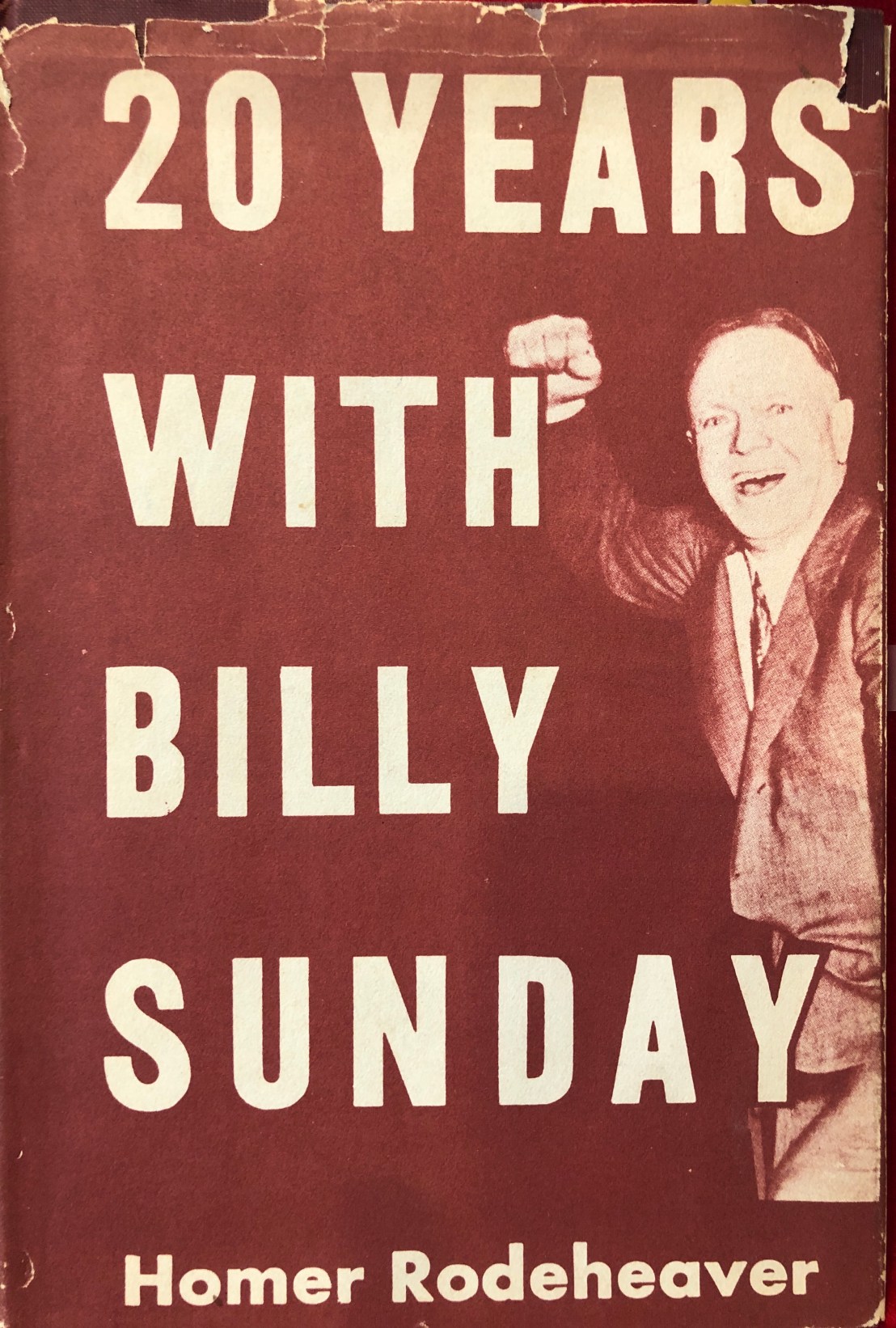
Among the several books I am writing at the moment is a biography of Homer Rodeheaver, the trombone-playing song leader for evangelist William Ashley “Billy” Sunday in the first third of the twentieth century. Rodeheaver is a fascinating character who was a driving force in the promotion of gospel music in the twentieth century through his publishing company, record company, and evangelistic work. With my friend and co-author, Kevin Mungons, we are moving along in the process of bringing this book to publication with University of Illinois Press.

In the course of our research, both Kevin and I have acquired many (hundreds, for sure, maybe thousands?) of books that inform our understanding of Rodeheaver, his life, times, and work. Among them is Rodeheaver’s own book, 20 Years With Billy Sunday (Winona Lake, Indiana: Rodeheaver Hall-Mack Co., 1936), the story of his years as songleader for evangelist Billy Sunday. While long out of print, copies of the book are not especially rare. But. . .

rodeheaver_20_years_billy_sunday_autograph

SURPRISE! When I opened my used copy of Rodeheaver’s book, I found his inscription inside the front cover, with a reference from the Bible, Colossians 3:16, “Let the word of Christ dwell in you richly, teaching and admonishing one another in all wisdom, singing psalms and hymns and spiritual songs with thankfulness in your hearts to God.” I’m not an autograph collector, but to hold and own a copy of Rodeheaver’s book in my hands that he had held in his own hands was a very nice surprise. As to Watts Franklin (or Franklin Watts?) of Elizabethtown, Kentucky, a previous owner of this book – his (her?) return address label appears on the page with Rodeheaver’s signature – I have not been able to learn anything. Did Watts meet Rodeheaver and ask him to sign the book? Was it a gift to him/her? Questions. . .

Unlike Homer Rodeheaver whose life has never been chronicled in a biography, Billy Sunday is the subject of many books. Some were written during his lifetime (he died in 1935) and others are more contemporary. Books about Sunday – whether authorized by the evangelist or not – provide a fascinating window into his life and ministry as seen through the lens of the time in which he lived.

brown_sunday_cover

One of these books is by Elijah P. Brown, The Real Billy Sunday (New York: Fleming H. Revell Co., 1914). My used copy has a stamp in the back that says it was owned by Sarah A. Kemmerer of Allentown, Pennsylvania. Who she was I do not know. More questions. . .
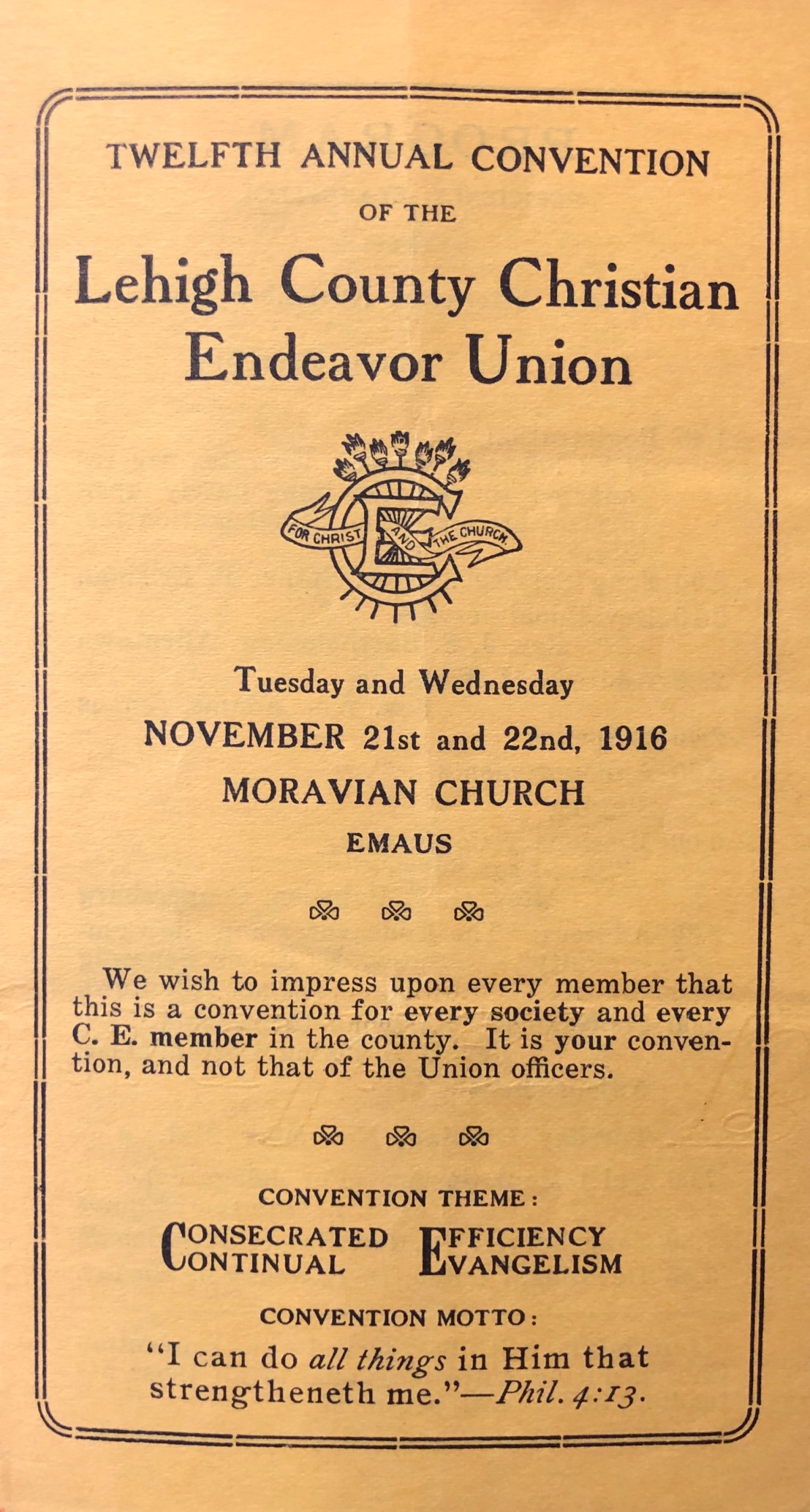
lehigh_christian_endeavor_pamphlet_1916

SURPRISE! When I opened my used copy of Brown’s book, a small, six page pamphlet fluttered to the floor. It was a program for the 1916 convention of the Lehigh (Pennsylvania) County Christian Endeavor Union, November 1916. Held at the Moravian church in Emaus, Pennsylvania (this spelling was used for the borough from 1830-1938; before and after that time it was/is spelled Emmaus), the convention featured sermons, singing, devotionals, and other activities for youth and adults. It provides a fascinating glimpse into the schedule of one of these meetings which were common occurrences at the time.

ellis_billy_sunday_cover

SURPRISE! Another among my many biographies of Billy Sunday is “Billy Sunday” The Man and His Message by William T. Ellis (Philadelphia: John C. Winston Co., 1914). This used copy contained a remarkable surprise: an original copy of the brochure that Billy Sunday put into the hands of tens of thousands of people who attended his tabernacle meetings and “walked the sawdust trail” up the aisle to shake hands with the evangelist as they made a public profession to trust Jesus Christ as Savior. The fact that this tract was kept in the book made me wonder if a previous owner bought the book at one of Sunday’s meetings and then put the pamphlet inside that very night for safekeeping. Names of two previous owners of the book are inscribed inside the front cover: a signature of Arthur S. Beale, and a label with the name L. Wilkins of Watertown, Massachusetts. Who were they? When and how did they come to own this book? Questions. . .

The pamphlet is a remarkable historical document and one that is as fresh today as when it was first used by Sunday in the early twentieth century. There are many things I find interesting about this pamphlet, including the fact that it bears the imprint of a union publishing house, Allied Printing of Paterson, New Jersey. Could this brochure have been printed for the 1917 Billy Sunday meetings in New York City? Questions. . .

Sunday asks some important questions and gives some important advice. Have a look.

sunday_tract_01sunday_tract_02sunday_tract_03sunday_tract_04

Life is full of surprises. Sometimes they cause you to ask questions. Sometimes they can change your life.



Christmas 2018

Christmas 2018

Tomorrow is Christmas.

We believe the story of Christmas is true. Santa Claus, reindeer, candy canes, packages and bows are all very nice and great fun. But the reason we celebrate Christmas —CHRISTmas — is because it recognizes the historical event that changed the course of human history. And the eternal future of every human being.

In 2016, my wife and I went to Israel on a tour sponsored by the Wheaton College Alumni Association. The trip was tremendous, emotional, exhilarating; I run out of adjectives to describe the impact it made on us. Yes, I understand that we cannot be certain that this or that holy site is exactly the place where this or that particular event in history took place. It is enough for me to know that this or that site has been considered to be an important place to commemorate significant events in the Bible, that pilgrims have worshipped there for centuries, and I am in the neighborhood where the events took place. Taking in the sights and sounds (and tastes!) of the land of the Bible changed us. I now view Christmas through the new lens of having been in the land “where Jesus walked.” Here is that story, taken from the Gospel of Luke (English Standard Version), with photos from our trip. This is a true story.

016_Marys_Well

Entrance to the Orthodox Church of the Annunciation and Mary’s Well, Nazareth

In the sixth month the angel Gabriel was sent from God to a city of Galilee named Nazareth, to a virgin betrothed to a man whose name was Joseph, of the house of David. And the virgin’s name was Mary. And he came to her and said, “Greetings, O favored one, the Lord is with you!” But she was greatly troubled at the saying, and tried to discern what sort of greeting this might be. And the angel said to her, “Do not be afraid, Mary, for you have found favor with God. And behold, you will conceive in your womb and bear a son, and you shall call his name Jesus. he will be great and will be called the Son of the Most High. And the Lord God will give to him the throne of his father David, and he will reign over the house of Jacob forever, and of his kingdom there will be no end.”

021_Marys_Well

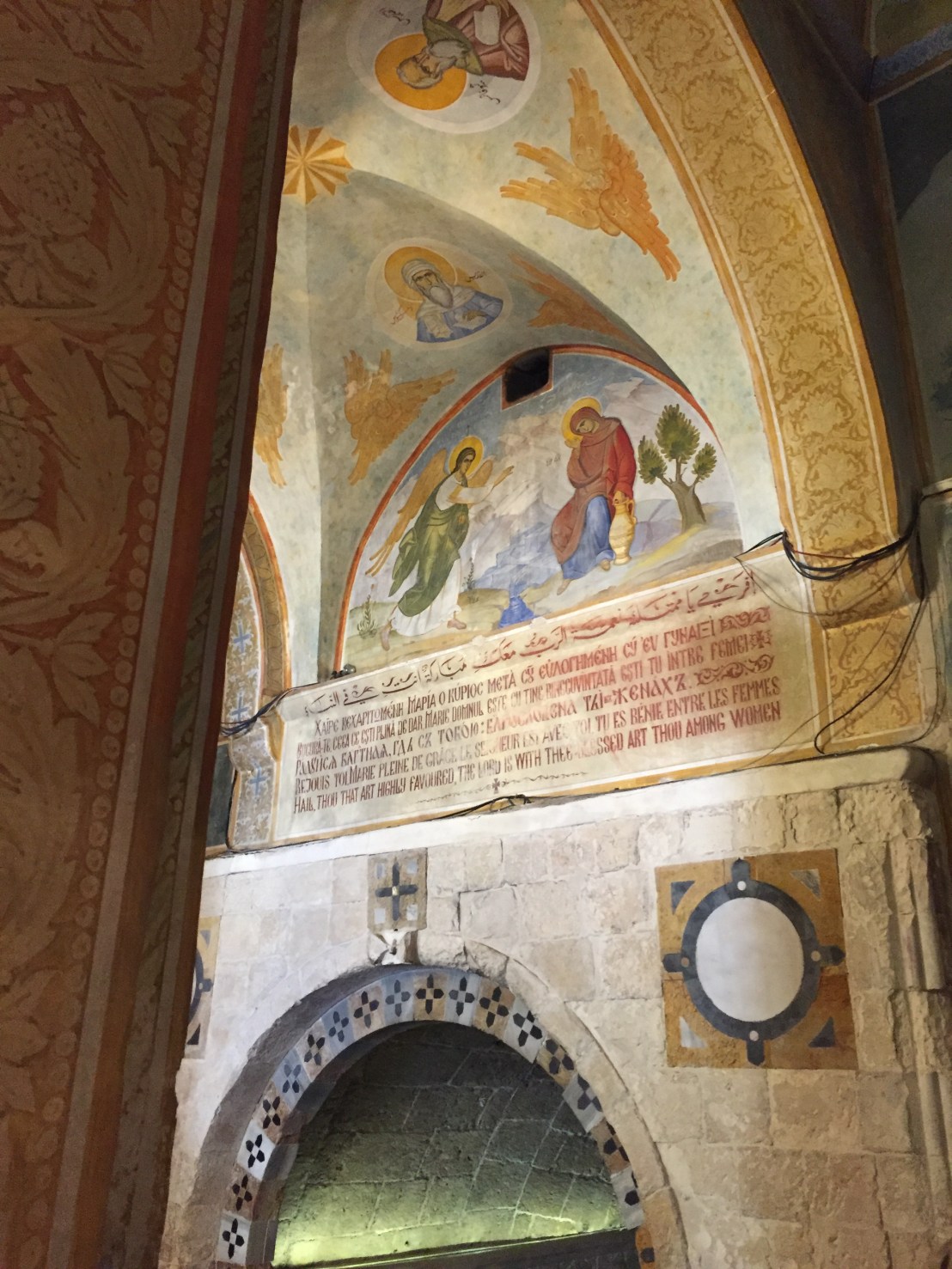
Fresco depicting the Angel Gabriel and Mary,                                 Orthodox Church of the Annunciation, Nazareth

And Mary said to the angel, “How will this be, since I am a virgin?”

And the angel answered her, “The Holy Spirit will come upon you, and the power of the Most High will overshadow you; therefore the child to be born will be called holy—the Son of God. And behold, your relative Elizabeth [the mother of John the Baptist] in her old age has also conceived a son, and this is the sixth month with her who was called barren. For nothing will be impossible with God.

017_Marys_Well

Mary’s well, the traditional site of the Annunciation,                 Orthodox Church of the Annunciation, Nazareth

And Mary said “Behold, I am the servant of the Lord; let it be to me according to your word.” And the angel departed from her.

047_Bethlehem_Church_of_Nativity

Entrance to the Church of the Nativity, Bethlehem, the “Humility door,” so named because one must bow down to crawl through the opening.

In these days a decree went out from Caesar Augustus that all the world should be registered. This was the first registration when Quirinius was governor of Syria. And all went to be registered, each to his own town. And Joseph also went up from Galilee, from the town of Nazareth, to Judea, to the City of David, which is called Bethlehem, because he was of the house and lineage of David, to be registered with Mary, his betrothed, who was with child.

051_Bethlehem_Church_of_Nativity

054_crop_Nativity

The traditional site of the birth of Jesus. The silver star has a hole in the middle through which  pilgrims can reach down to touch the bedrock. Grotto, Church of the Nativity, Bethlehem.

And while they were there, the time came for her to give birth. And she gave birth to her firstborn son and wrapped him in swaddling cloths and laid him in a manger, because there was no place for them in the inn.

055_manger_cropped

The traditional site of the manger where Jesus was laid after his birth. Grotto, Church of the Nativity, Bethlehem.

064_shepherds_fields_sign_cropped

Sign to the traditional site of the Shepherds Fields. The sign is in Arabic; Bethlehem is located on the West Bank where many Arab Christians live.

And in the same region there were shepherds out in the field, keeping watch over their flock by night.

067_shepherds_cave_crop

Entrance to a shepherd’s cave, Bethlehem.

074_shepherds_cave_crop

Altar inside the shepherd’s cave, Bethlehem. Note the star mosaic inlaid on the floor in front of the altar.

075_door_shepherds_cave

Bronze door to the shepherd’s cave, Bethlehem.

And an angel of the Lord appeared to them, and the glory of the Lord shone around them, and they were filled with great fear.

077_Chapel_of_Shepherds_crop

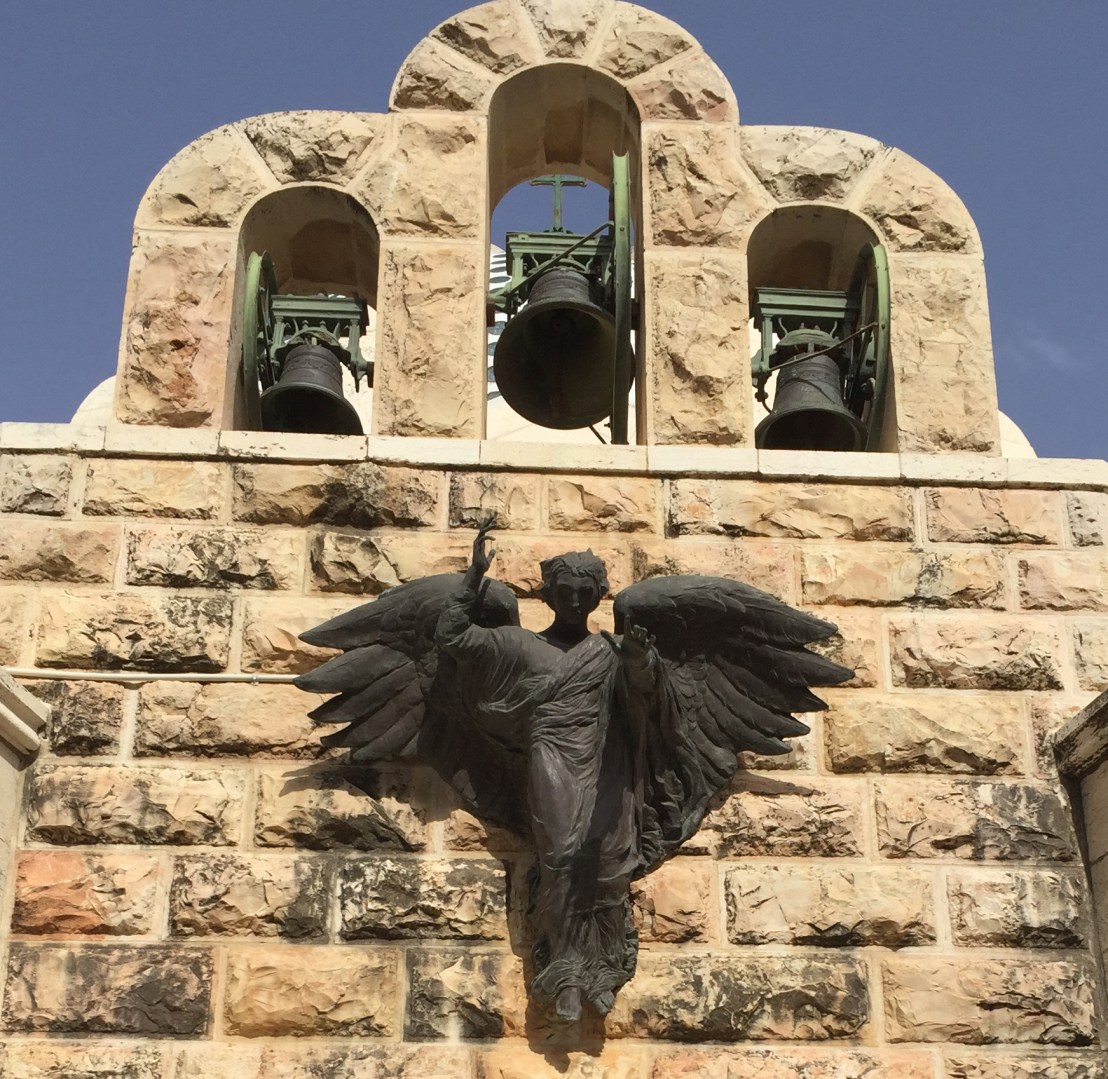
Bronze statue of an angel, above the entrance to the Franciscan Chapel of the Shepherds, Bethlehem.

080_Bethlehem_Chapel_of_Shepherds_Fields

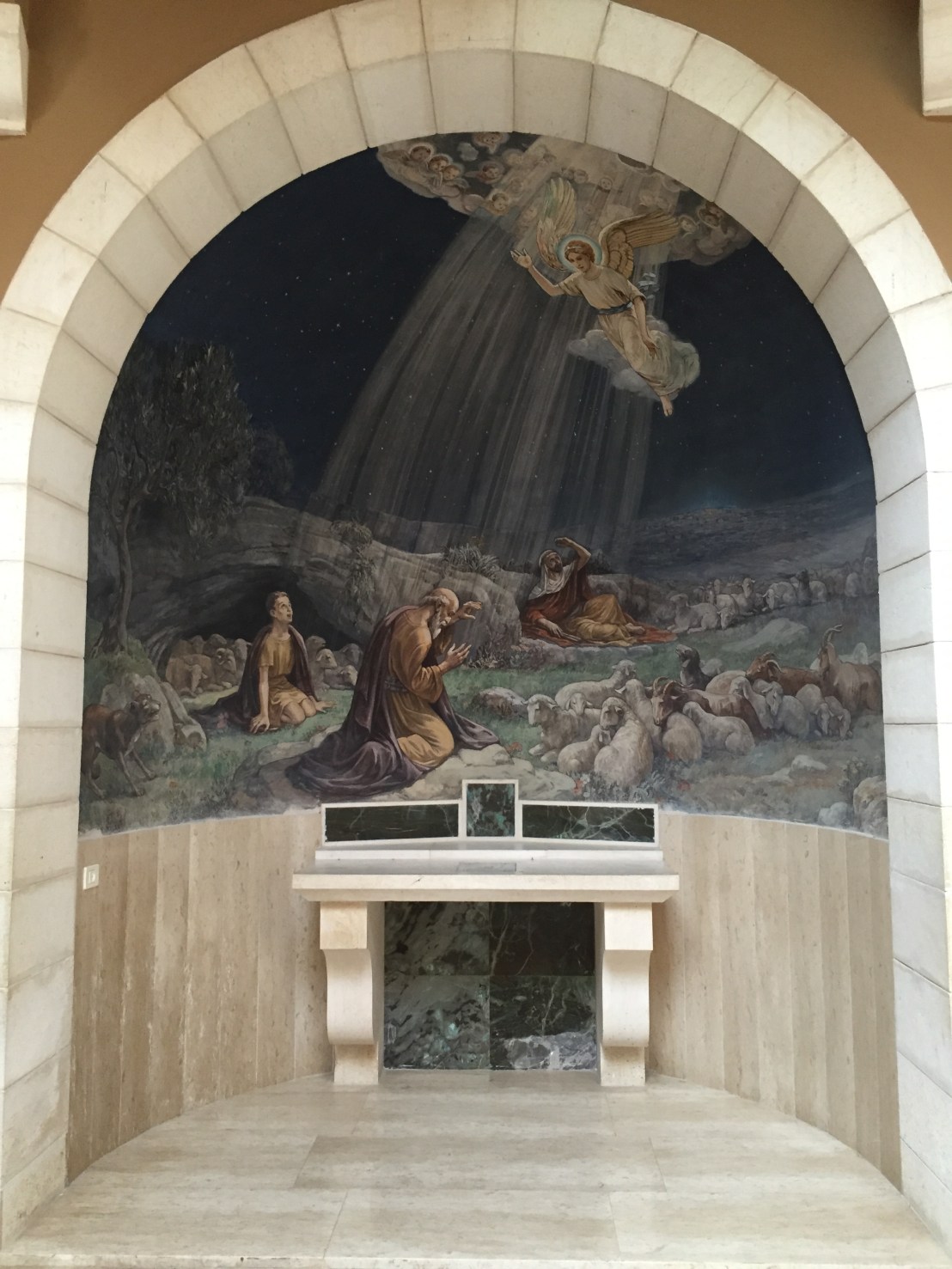
A painting of the greeting of the angel to shepherds, Franciscan Chapel of the Shepherds, Bethlehem.

And the angel said to them, “Fear not, for behold, I bring you good news of great joy that will be for all the people. For unto you is born this day in the city of David, a Savior, who is Christ the Lord. And this will be a sign for you: you will find a baby wrapped in swaddling cloths and lying in a manger. And suddenly there was with the angel a multitude of the heavenly host praising god and saying,

“Glory to God in the highest, and on earth peace among those with whom he is pleased!”

079_Bethlehem_Chapel_of_Shepherds_Fields

A painting of the shepherds worshiping Jesus at his birth, Franciscan Chapel of the Shepherds, Bethlehem.

When the angels went away from them into heaven, the shepherds said to one another, “Let us go over to Bethlehem and see this thing that has happened, which the Lord has made known to us.” And they went with haste and found Mary and Joseph, and the baby lying in a manger. And when they saw it, they made known the saying that had been told them concerning this child. and all who heard it wondered at what the shepherds told them.

062_crop

Sign at the Church of the Nativity, Bethlehem. I have seen similar signs that quote verses from the Bible in many languages around the world.

There is much more to this story. This child, Jesus, changed the world. Our calendar revolves around his birth. He, the Son of God, begotten, not made, came to redeem sinful and fallen men and women. Like you and me. Christmas is about this: life, death, redemption, repentance, forgiveness. And Light. Are there any greater themes in history? I think not. It is my prayer that you know this Jesus, this one whom we celebrate in this season.

But who was this Jesus? C. S. Lewis, in his superb book Mere Christianity, starkly laid out the options, what we may think of Jesus Christ:

I am trying here to prevent anyone saying the really foolish thing that people often say about [Jesus]: “I’m ready to accept Jesus as a great moral teacher, but I don’t accept his claim to be God.”

That is the one thing we must not say. A man who was merely a man and said the sort of things Jesus said would not be a great moral teacher. He would either be a lunatic — on the level with the man who says he is a poached egg — or else he would be the Devil of Hell. You must make your choice.

Either this man was, and is, the Son of God, or else a madman or something worse. You can shut him up for a fool, you can spit at him and kill him as a demon or you can fall at his feet and call him Lord and God, but let us not come with any patronizing nonsense about his being a great human teacher. He has not left that open to us. He did not intend to.

I will have more to say about this, the next great climax of this story, around Easter. To be continued.

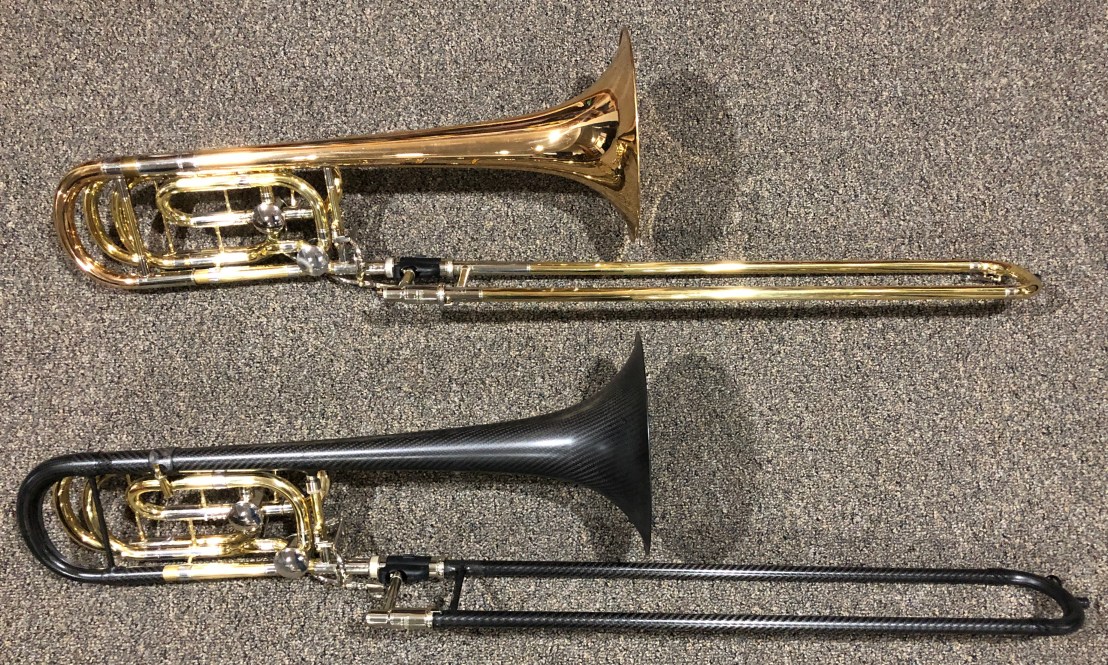
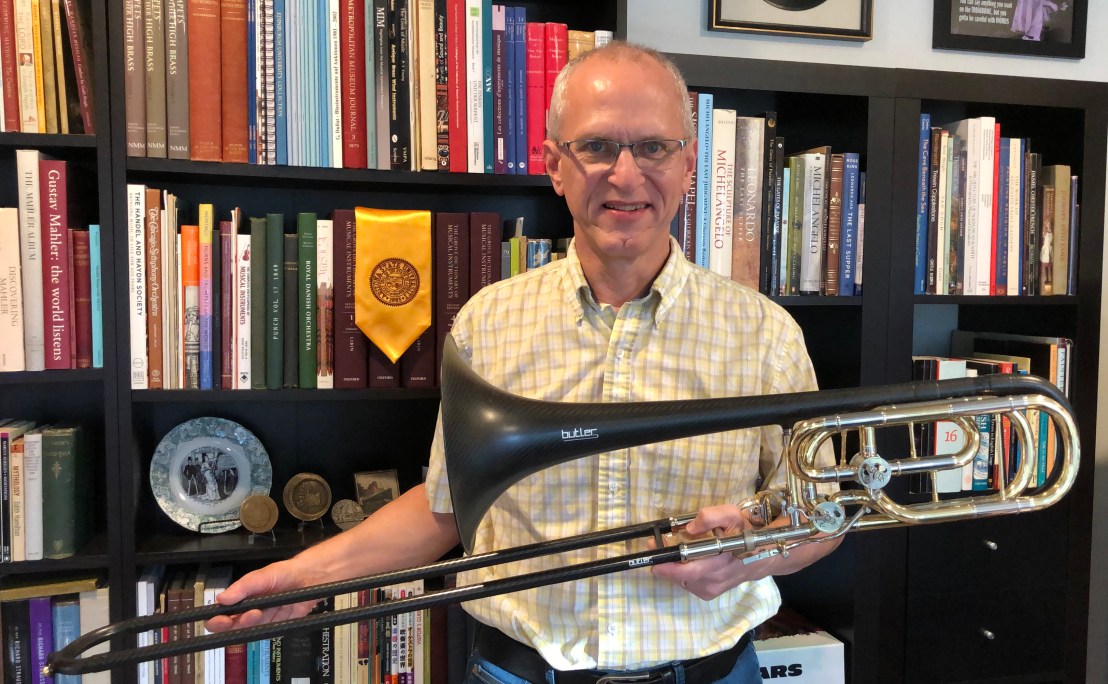
My new carbon fiber bass trombone by Butler Trombones. This is not a toy.

My new carbon fiber bass trombone by Butler Trombones. This is not a toy.

This is not a toy. I have many plastic trombones, pBones to be precise. I purchased them six years ago when I began teaching at Arizona State University and they made nice props in my office.

asu_pbones_3

pBones come in red, yellow, and black (among other colors) and those colors were close enough to ASU’s maroon and gold. School spirit and all that. They are toys, fun to mess around with, fun to put in the hands of my two and four year old grandchildren. But they don’t have a great sound, are fragile, the slides are not very smooth, and they are mere stepping stones to a “real trombone.”

But yesterday, I received a package from Dave Butler at Butler Trombones in Dallas. This was a package that contained something I’ve been anticipating for nearly one-and-a-half years: my new carbon fiber bass trombone. This is not a toy. This is not a plastic trombone; it’s not a high-tech pBone. This is a major development in the evolution of the trombone and something that is changing how we think about trombone development and manufacturing.

IMG_1356

How this remarkable instrument came to be in my hands today requires a bit of backstory. Here goes.

Since 1986, I have worked with YAMAHA – YAMAHA Corporation of Japan (YCJ) and YAMAHA Corporation of America (YCA) – on the development of the bass trombone I have played regularly since 1991, the YAMAHA Xeno YBL-822G (formerly the YBL-622). My relationship with YAMAHA has been one of the greatest professional relationships of my long career in music. This is a company that has been truly interested in making a superb bass trombone, an instrument that would work for me, that would be my “voice” on the trombone. I love this instrument. My YAMAHA bass trombone represents the highest level of research and development in a bass trombone, and I have played it dozens of genres of music over the years, including the last 22 years of my long career as bass trombonist of the Boston Symphony Orchestra. I cannot thank YAMAHA enough for their ongoing work as we continue to improve the instrument for the benefit of myriad players around the world who find that it is their “voice,” too.

At the same time, I’m aware that what we musicians do on a daily basis is not a natural act. Watch any musician play his or her instrument and it doesn’t take long to see that despite a player’s best efforts to sit or stand comfortably, or the ergonomic developments that a maker brings to instruments, playing any musical instrument puts us in a difficult place. Hold a violin between your chin and left shoulder. Splay your hands and hold a bassoon. Support the weight of a tuba on your lap. Stand behind a double bass. Lift up and crash together a pair of cymbals. Hold up a trombone.

In all of these instances – and many more – I do not know a single professional musician who does not suffer from some kind of physical consequence of playing his/her instrument. As I often say, musicians bear the stigmata of performing. Most of my colleagues in the Boston Symphony were under the regular care of some kind of medical provider. A physical therapist, massage therapist, chiropractor, physician, surgeon. Tendinitis, tendinosis, torn rotator cuff, hearing loss, neck problems, hand problems, knee problems, back problems. Therapy, medication, surgery. It’s part of the life of a musician. The literature on this is extensive, including a journal devoted to the subject, Medical Problems of Performing Artists.

I’ve had my share of physical issues over the years due to a lifetime of lifting and holding up six pounds of bass trombone for hours a day. I’ve had a torn tendon repaired in both elbows, and nine fingers have had surgery for the condition commonly known as “trigger finger,” a condition where, because of gripping, a finger will lock down when one makes a fist and will only come back up with an uncomfortable “snap.” I’m looking at an eighth finger surgery in the coming months. As a result of these procedures, I no longer have the same strength in my hands that I once had.

Several years ago I began using a left hand brace on my trombone made by Neotech. This has been a great help to me since it transfers the weight of the instrument to the back of my left hand and I no longer have to grip the trombone in order to keep it from falling out of my hand. On the photo of my trombones in the header of this article, you can see a small black appliance attached to the outer hand slide’s lower ferrule to which the Neotech brace conveniently attaches. But the weight of my bass trombone – six pounds – remains considerable. I am grateful for the gifted physicians, surgeons, and physical therapists who have helped me get through these rough patches so I can continue to play the trombone. But I’m not getting any younger, and I would love to play the trombone for many more years. I have long wondered if, someday, I could have a bass trombone that weighed less and therefore put less stress on my body to hold it up. But it would not be enough that it was light. It would also have to sound great.

IMG_1365

At the International Trombone Festival in 2017, I came across the booth of Butler Trombones. They had a display of small bore jazz trombones made out of carbon fiber. Always interested in new things, I pulled a small shank mouthpiece out of my bag and gave it a try. I was stunned. It sounded like a trombone. I fully expected it to sound like a glorified pBone, a high tech plastic trombone. I thought to myself, “This is not a toy.” What shocked me was that it sounded like – well – a trombone. And then this: the weight of the instrument was miniscule. I realized right away that the hand slide weighed virtually nothing and that the inertia caused by moving my normal brass slide was nearly eliminated. This was not a usual “lightweight slide” of nickel that often sounds cheap and thin. This trombone sounded great, holding it was virtually effortless, and moving the slide was something completely new. Completely new. My mind was reeling. And then my thoughts began to race and wonder, “If this small bore trombone sounds so great, could a bass trombone be made that sounds great, too?”

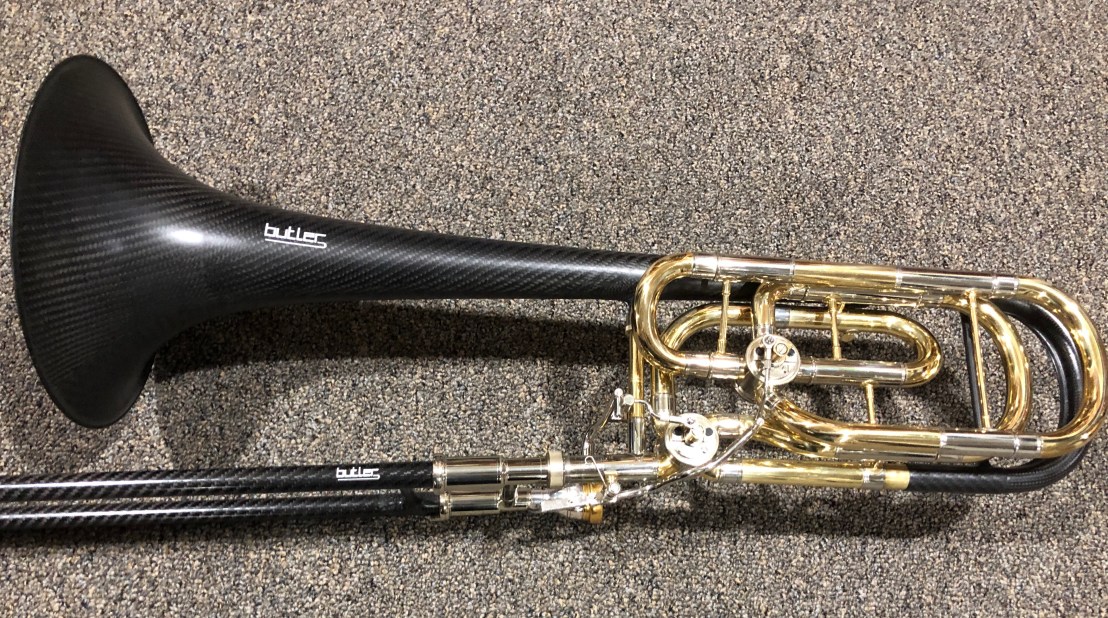
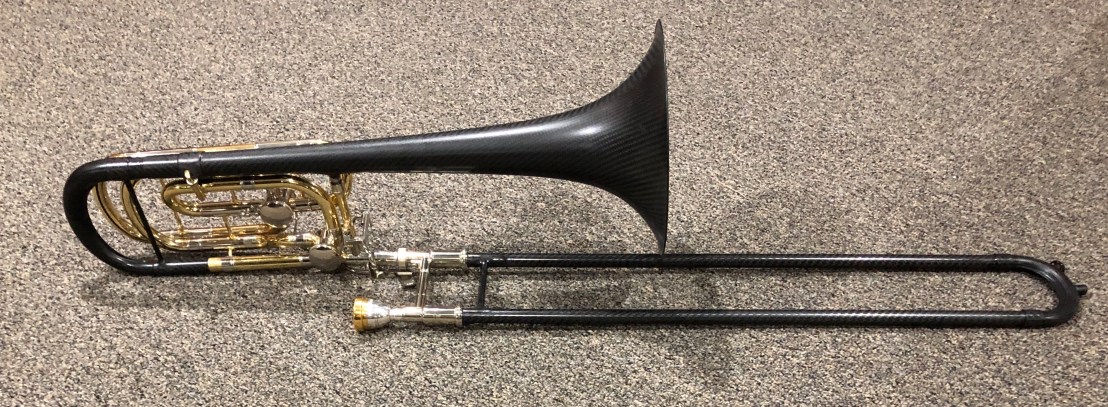
I spoke with Dave Butler about this. No, he had not yet made a bass trombone and one was probably some time away in research and development. But my enthusiasm caught his attention and with the blessing of YAMAHA, Dave has been working to retrofit one of my YBL-822G bass trombones with a carbon fiber bell, main tuning slide, and outer hand slide.

Yeo_Butler_bass_trombone_03

Now, I would not have started going down this road if I was not persuaded that the instrument that would eventually fit in my hand would be of the highest quality. I wanted to sound like me, and like most people, I was initially a little suspicious that a carbon fiber trombone could sound anything like a standard brass and nickel trombone. Intuitively it just seemed that brass would sound better. But after working with Dave Butler, I realized that I initially approached the idea of a carbon fiber trombone with a predetermined prejudice: I was hearing with my eyes. The carbon fiber parts are black. They look different than brass. Dave Butler’s website prominently features a quotation by John Maynard Keynes:

The difficulty lies not so much in developing new ideas as in escaping from old ones.

I needed to give this an honest chance.

IMG_1361

So I asked Dave Butler to make these carbon fiber parts for me. I took delivery of the outer hand slide last April when I was performing at the Texas Christian University (TCU) Trombone Summit. When Dave handed it to me, I immediately put it on my bass trombone and walked out on stage to perform with it. I figured that would be a good test. It passed with flying colors. I was just knocked out with how great it sounded. And felt.

Yesterday, my new carbon fiber bell and main tuning slide arrived. Think about this: the weight of my double-valve bass trombone has been reduced from six pounds to four. A one-third reduction in weight. The instrument is so light that I no longer need to use my Neotech brace to support the weight of the trombone in my left hand. That’s because there’s so much less weight to support. And the sound? It sounds like me. It sounds great. This is not a toy.

IMG_1363

Recently, I’ve learned WHY a carbon fiber trombone sounds so good. That’s because acoustically, a carbon fiber bell has very similar qualities to a brass bell. This has been scientifically determined. I commend two recent resources to those interested in more about the scientific basis for understanding the similarity between carbon fiber and brass. The first is an article by Hannes Vereecke and Wilfried Kausel, “Carbon Reinforced Polymer: An Alternative to Brass?” International Trumpet Guild Journal, Vol. 37, No. 1 (October 2012), 41-43. This is an excellent description of the acoustical properties of brass and carbon fiber as applied to brass instrument bells. The second may sound a bit surprising: Hannes Vereecke, The Sixteenth-Century Trombone: Dimensions, Materials and Techniques (Turnhout, Belgium: Brepols, 2016), 41-44. Vereecke is an acoustician who has studied musical instruments, particularly trumpets and trombones. His book on the sixteenth-century trombone is, to my mind, the best single volume devoted to construction and the playing properties of the Renaissance trombone, the instrument we popularly call the sackbut. In his discussion about the acoustics of brasswind instruments, he devotes several pages to a comparison of brass and carbon fiber. He concludes that:

“Playing tests revealed that the listeners were not able to distinguish between the sounds of the two instruments [brass and carbon fiber]. Therefore, it can be concluded that while the bell material affects primarily the playability of the instrument, in this case the difference in sound may be beneath the threshold of detection. CFRP [carbon fiber reinforced composite] has found a place in contemporary trombone design, and the same improvement in responsiveness is also confirmed there.”

UPDATE: Since I wrote this blog post, I have given performances on my Butler/YAMAHA carbon fiber bass trombone. A video of a performance I gave of James M. David’s “Southern Gothic” from Three Imaginary Landscapes at Del Mar College in Corpus Christi, Texas on March 2, 2019, has been posted to YouTube. You can see and hear me play this instrument for yourself. I speak a little at the beginning of the video and the performance begins at around 1:20. Click the video below or, to view the video in YouTube, click HERE.

To say that I am enthusiastic about what Dave Butler has done would be a profound understatement. My new carbon fiber parts as installed on my YAMAHA YBL-822G bass trombone have given me an instrument that is highly responsive and lightweight but has a sound I would expect to be produced by my fully brass and nickel bass trombone. Dave Butler’s work with carbon fiber will allow me to continue playing the trombone for many more years as a result of the instrument’s reduced weight and great responsiveness. And I am just at the beginning of this process; I expect I will learn even more about how this instrument as I continue practicing in the days and weeks ahead. Dave has also told me that he has plans to make an entire bass trombone out of carbon fiber, and that someday it might even have titanium valve rotors. A two pound bass trombone that sounds great? It is not outside the realm of possibility. For all of this I am very grateful, and I urge any reader who finds this to be intriguing to reach out to Butler Trombones (www.butlertrombones.com) and find out for yourself. This is not a toy. We are witnessing one of the most significant developments in trombone design and manufacturing since the invention of the F-attachment in 1839. This is not an exaggeration; of this I am quite serious. The future is now.

Yeo_Butler_bass_trombone_02