Category: trombone

The Olympic Games

The Olympic Games

The games of the XXXI Olympiad get underway today with the opening ceremony in Rio de Janeiro, Brazil.  As a young boy, I was thrilled by the games – the spectacle, the competition, and as ABC television aptly put it, “the thrill of victory and the agony of defeat.” In recent years the Olympics have suffered a bit with world-wide scandals involving the use of performance enhancing drugs. But, still, there is something about the big stage of the Olympics, the celebration of success and what one hopes is a healthy kind of nationalism as we are proud of our country being represented by excellent athletes.

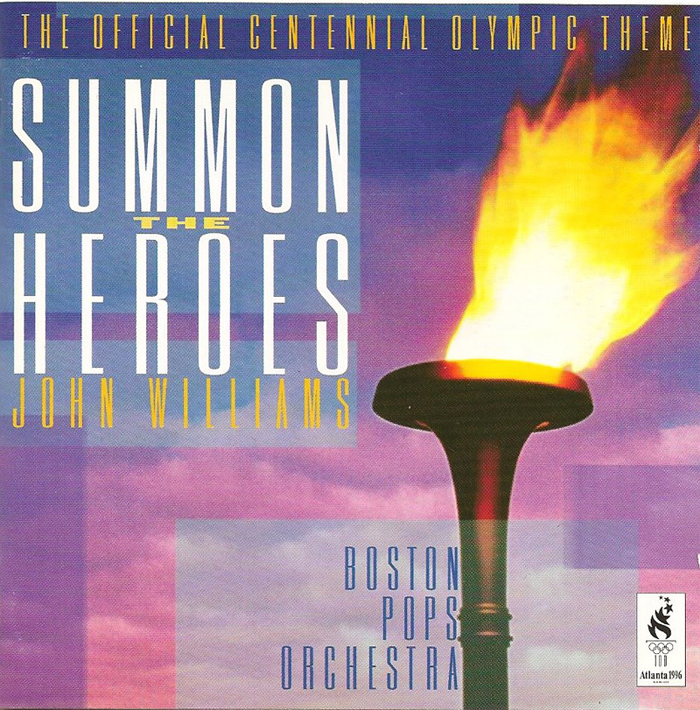
I’ve never been to an Olympic event but I got close. Musically. In 1996, the Olympics were held in Atlanta, Georgia, USA. As a member of the Boston Symphony Orchestra at the time – and membership in the BSO brought with it membership in the Boston Pops Orchestra – I played on the official soundtrack album of the Atlanta 1996 Olympic games, “Summon the Heroes.” Conducted by John Williams, the Boston Pops Orchestra had recording sessions on January  6, 10 and 13, 1996 of a playlist that included well known Olympic game themes (by John Williams) and other heroic, brass-centric, noble works that are often associated with the Olympics. Here is the tray card with the full track list:
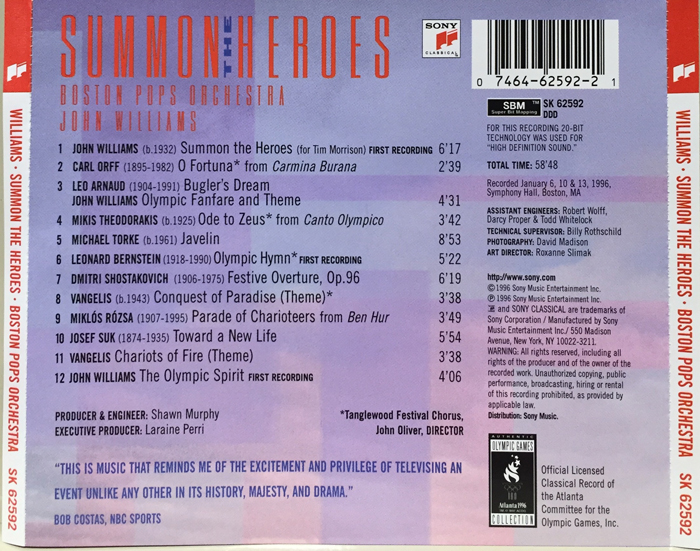
Summon_Heroes_playlistThe recording sessions came in the midst of a grueling week of Boston Symphony Orchestra rehearsals and concerts that included Richard Strauss “Eine Alpensinfonie” and we brass players were stretched to our limits. Still, it remains a memorable moment in time for me, my closest personal association with the Olympic games, and “Summon the Heroes” remains one of my favorite recordings from my nearly three decades as a member of the Boston Symphony/Boston Pops Orchestra. “Summon the Heroes” is still available, as a CD or mp3 download.   And you can see a performance of that great fanfare with John Williams conducting the Boston Pops Orchestra on the YouTUBE link, below. The low brass section consists of Norman Bolter, Darren Acosta, Phil Swanson and myself on trombone, Chester Schmitz on tuba, and trumpets Tim Morrison, Tom Rolfs, Peter Chapman and Bruce Hall.  There are offstage trumpets and trombones as well. Enjoy. To our Olympians: Citius – Altius – Fortius – the motto of the modern Olympic games, swifter – higher – stronger.

What’s the count?

What’s the count?

I’ve spent the last few days doing some organizing of materials in my several filing cabinets. It’s a good project to do every few years – things get misfiled, too many things get filed that don’t need to be kept, and you never know what you’ll find. In addition to filling up my recycling bin with things I no longer need need, I came across a few surprises.

The little item above will resonate with anyone who remembers the 2000 US Presidential election. George W. Bush, Al Gore and Ralph Nader were running for President. You know the rest of the story – and if you don’t, you can look it up.

This image made the rounds of the Internet that year, the work of some clever trombonist. When I found it deep inside in a filing cabinet the other day, I laughed out loud. In a political season that is sometimes lacking in humor, perhaps this might make you smile, no matter who you voted for in 2000 or will vote for in 2016.

Heed rashness and use perseverance

Heed rashness and use perseverance

Last week I was in San Francisco, and took the opportunity to visit the Asian Art Museum. In my travels I have been to Japan, Taiwan and mainland China and have come to appreciate the cultures and art of these fascinating places. The Asian Art Museum has a special exhibition of items from the National Palace Museum in Taipei and it was quite something to behold. Included in the exhibition is one of the most popular and important pieces of Chinese art, the so-called “meat shaped stone” or “priceless porkbelly”, carved from a piece of jasper during the Qing Dynasty and appearing in the United States now for the first time.

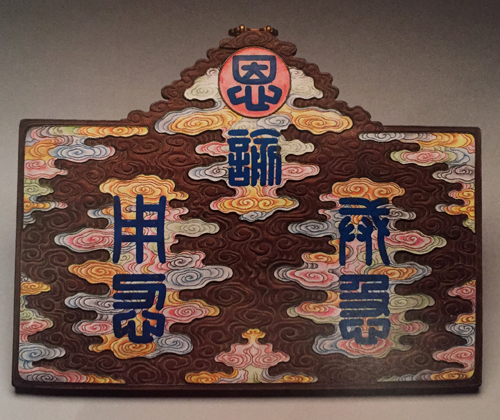
But something else caught my eye and I kept returning to it. It is a sign in lacquer on wood, created for the Emperor Yongzheng who reigned from 1723-1735. Apparently the emperor, when he was a prince, was prone to some habits that displeased his father, Emperor Kongxi. The son took his father’s advice to heart, and had signs made that he put around the palace to remind him of his shortcomings. The photo above shows one of these signs and the message is:

Heed rashness and use perseverance.

In other words, pay attention to your tendency to act rashly and take your time to carefully persevere in tasks.

This is a phrase that has been around since the beginning of time. But this father’s words of wisdom – beautifully portrayed in this sign – are a reminder of the importance of carefully considering what we say and do. We live in an age where it is too easy to “shoot from the hip” – or lip – without thinking through an action. Of course any successful musician has learned the value of the disciplined life, of not acting rashly or looking for quick fixes, but persevering through difficult tasks in order to find success.

When I need advice on how to proceed in a situation, I often turn to the book of Proverbs in the Bible. It has a tremendous amount of wisdom that speaks to every situation you may encounter. On the subjects of rashness, perseverance and heeding advice, it has a great deal to say:

There is one whose rash words are like sword thrusts, but the tongue of the wise brings healing. (Proverbs 12:18)

A wise son hears his father’s instruction, but a scoffer does not listen to rebuke. (Proverbs 13:1)

Whoever loves discipline loves knowledge, but he who hates reproof is stupid. (Proverbs 12:1)

The way of a fool is right in his own eyes, but a wise man listens to advice. (Proverbs 12:15)

And this passage that speaks to the value of perseverance, with a model taken from one of the smallest animals on earth:

Go to the ant, O sluggard; consider her ways, and be wise. Without having any chief, officer, or ruler, she prepares her bread in summer and gathers her food in harvest. How long will you lie there, O sluggard? When will you arise from your sleep? A little sleep, a little slumber, a little folding of the hands to rest, and poverty will come upon you like a robber, and want like an armed man. (Proverbs 6:6-11)

My trombone teacher, Edward Kleinhammer (bass trombonist of the Chicago Symphony Orchestra, 1940-1985) taught me important lessons about perseverance. In the book we wrote together, Mastering the Trombone, Mr. Kleinhammer wrote these important and challenging words:

World class trombone players do not just happen. Their talents are forged by the dual furnaces of determination and diligence.

In this, Edward Kleinhammer was acting like the loving Emperor Kongxi, reminding his son, Emperor Yongzheng, of the importance to “Heed rashness and use perseverance.”

I think I need to go practice now…

On the air

On the air

Over the years, I’ve given many interviews for radio programs. I’m still a big believer in radio; the format allows for imagination and a relaxed pace of conversation. Frankly, I’d rather listen to audio than watch television most of the time.

On occasion, interviews have had to do with particular events, such as my retirement from the Boston Symphony Orchestra in 2012; you can hear that interview, where I reflected on my long career in the Orchestra as well as my many collaborations with composer/conductor John Williams here:

Interview of Douglas Yeo by Brian Bell, WGBH Radio, Boston – 2012

Another interview from 2012 found me talking with Peter Stover of Classics Radio in Fredericksburg and Lynchburg, Virginia, where I talked about my Boston Symphony career and the intersection of my life in music with my Christian faith:

Interview of Douglas Yeo by Peter Stover, Classics Radio – 2012

More recently, I was interview by Central Sound at Arizona PBS for broadcast on Classical Arizona PBS (KBAQ), Arizona’s public radio station. I only just learned that part of the interview was broadcast recently along with my performance of Jan Sandström’s Song Till Lotta (Song for Lotta), accompanied by pianist Aimee Fincher. This was a little divertissement in the middle of a broadcast of a concert by Arizona State University bands that also included a performance of Sandström’s Zephyr. In the interview, I talked about how I came to develop the trombone that I use and why I often say, “Trombone is something I do, it’s not who I am.”

This and a host of fine classical music radio programming is available for free and on demand with the Classical Arizona PBS app for iOS and Android. You can more information and download the app by clicking this link and once you load it, touch Music at the bottom navigation bar and scroll through the options to ASU in Concert – Feb 18, 2016 – Douglas Yeo and ASU Bands. While there, have a look at the other excellent offerings available. Happy listening!