Category: sports

100 words – Super Bowl LIV

100 words – Super Bowl LIV

by Douglas Yeo (December 2, 2019)

During my lifetime, I have penned hundreds of thousands of words. Books, book chapters, articles, dictionary entries, reviews—these have all been a part of my creative activity for five decades. I love words; I love putting them together, crafting sentences full of evocative meaning. Sometimes this means I use a lot of them. My wife, Patricia, when I begin a conversation with an extensive backstory, often (but lovingly) invokes the words Abigail Adams apparently said to her husband, “John. Do you always have to start at Genesis?”

So, when I recently entered a contest that required a 100 (or fewer) word  essay and those 100 words won the contest, I shook my head in amazement. 100 words? For the biggest contest prize I have ever received? I often say that I have trouble saying “hello” in fewer than five thousand words. But 100 words? And I won? How did this happen? Well, to start at Genesis. . .

Pat and I love football. We had season tickets to Arizona State University Sun Devil Football when I was ASU’s trombone professor from 2012-2016. School spirit was a big thing and we loved those years when we followed college football. But our primary football interest is the National Football League. From our years living in Boston where we attended many New England Patriots games (although we were not season ticket holders—I attended many games when the Boston Symphony brass section played the national anthem) to our six years in Arizona where we had season tickets to see the Arizona Cardinals, we have always felt that we should be “all in” with the teams that play near where we live.

Chad_Doug_Oct_2018_Bears_Jets

Photo above: Chad and Doug at Soldier Field, Chicago Bears vs. New York Jets, October 28, 2018.

When we moved to Illinois in 2018 (to live closer to our two grandchildren), I knew I wanted to take my son-in-law, Chad, to a Chicago Bears game. The NFL season had already started by the time we moved to Illinois and we were immersed in unpacking and getting our life together. Season tickets to the Chicago Bears were not in the front of my mind at that moment in time. But I knew that Chad had loved the Bears since he was a young boy and I wanted to go to a game with him. So I purchased tickets to a Chicago Bears/New York Jets game last October at Soldier Field in Chicago and as you can see from the look on Chad’s face above, we had a great time.

Doug_Pat_Bears_2019_09_29

Photo above: Doug and Pat at Soldier Field, Chicago Bears vs. Minnesota Vikings, September 29, 2019.

Actually, we had a REALLY great time. So much so that the next week, Pat and I decided to  purchase Chicago Bears football season tickets. We have great seats on the 50 yard line, and going to Bears games (we share the tickets with Chad and our daughter Linda—grandma and grandpa stay at home to watch the game with our grandkids) has become a big part of the life of the part of our family that lives in the Chicago area. Doug and Pat; Linda and Chad; Doug and Chad all going to games—fun times.

Doug_and_Chad_Bears_02

Photo above: Chad and Doug at Soldier Field, Chicago Bears vs. Los Angeles Rams, December 9, 2018.

When Chad and I go to a Chicago Bears game, we want to experience everything. Every moment of our time there is meaningful. Watching pregame warmups, having food in the United Club, walking through Soldier Field’s historic colonnade, singing the national anthem, singing “Bear Down, Chicago Bears” when the team scores, watching the players congratulate each other at midfield after the game. We are never in a hurry to leave Soldier Field. It’s a special place where special things happen for our family.
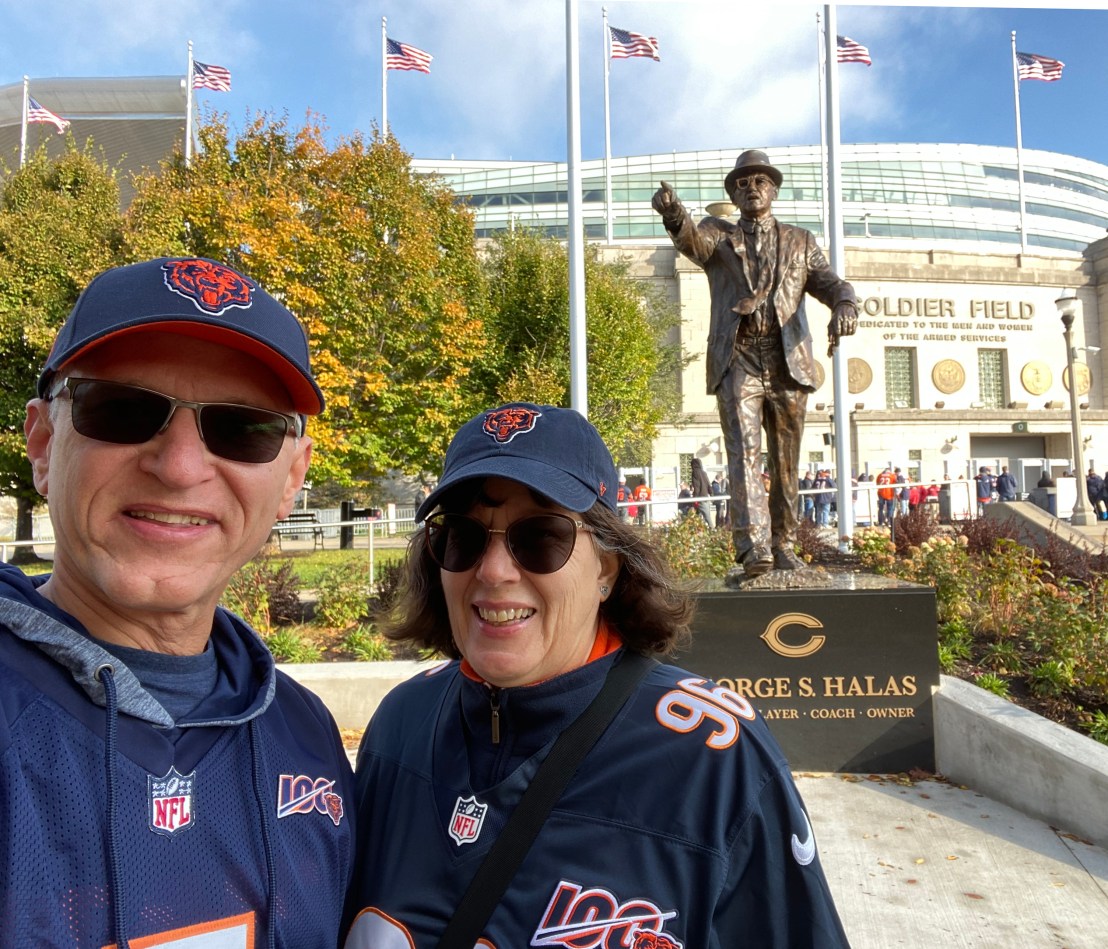
Doug_Pat_Halas_statue_Bears_2019

Photo above: Doug and Pat in front of the newly unveiled statue of Bears founder George S. Halas at Soldier Field, October 27, 2019.

Flowing from going to Chicago Bears games are all manner of other activities that bring us closer to what the team is all about. The Bears are a founding franchise of the NFL; the team’s first coach and owner, George Halas, is considered to be the driving force in the founding of the league in 1920.
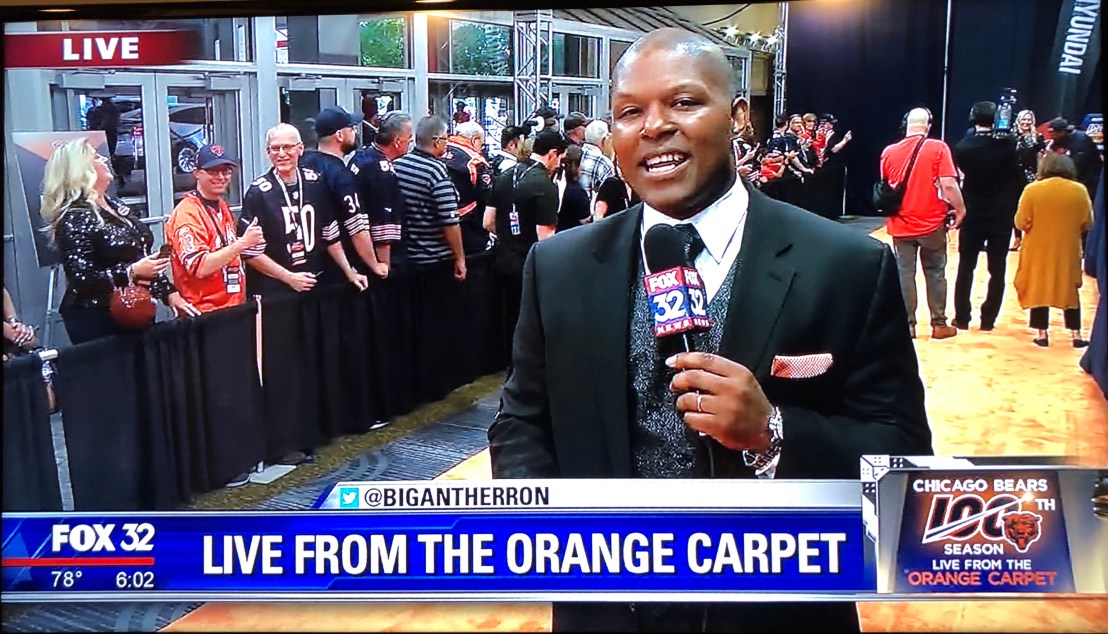
Chad_Doug_orange_carpet_Bears_2029

Photo above: Chad (in orange # 23 Devin Hester Jersey) and Doug (in blue #50 Mike Singletary jersey) at the orange carpet at the Bears100 celebration, June 7, 2019. 

This year, the NFL and the Bears are both celebrating their 100th anniversary, and Chad and I went to the Bears100 celebration in June of this year. What a weekend it was! We even were able to be part of a select group of fans to be there when team members past and present—including many Hall of Fame Players—”walked the orange carpet” before the Bears100 opening ceremony. Yup, we’re Superfans.

Bears_Super_Bowl_contest_2019

As a season ticket holder, I receive emails with team news from the Bears every week. This fall, I received an email from the Bears announcing a contest. The Bears would send two people to Super Bowl LIV in Miami all expenses paid. Two tickets to the game on February 2, 2020, round trip plane fare, three nights in a Miami area hotel, and more. How to win? You had to write a 100 word essay.

Chad_1989_cropped

Photo above: Chad repping the Bears in 1989, age 9.

If you don’t enter you can’t win. But of course, when you enter a contest with a big prize, you know the odds of winning are very, very slim. However, this contest was more than just a random drawing for a winner. There was a task to do, an essay to write. There was no question that I would write the essay about Chad. His love for the Bears and football is passionate. And I thought that HIS story might be interesting to the Bears. Here’s what I wrote; who I would like to take to Super Bowl LIV:

My son-in-law, Chad, a Chaplain for Seasons Hospice, Pastor of Care Ministries at Trinity Lutheran Church in Lisle, and a passionate Bears fan since childhood. Chad could not play sports as a child; a rare medical condition kept him off playing fields. But he loved the game, and the Bears were a lifeline for him when life threw hard knocks his way. For Chad, the NFL exemplifies perseverance, excellence, the ability to pick oneself up when down, sportsmanship, teamwork. To go to Miami wearing Bears jerseys to celebrate the best of the NFL with Chad would be an unmeasurable joy.

And I sent in my entry. 100 words.

Doug_and_Chad_Bears_04

Photo above: Doug and Chad at Soldier Field, Chicago Bears vs. Detroit Lions, November 10, 2019.

In the meantime, the Bears season rolled on. Football parties with family and friends when the Bears were playing teams away from home. More games at Soldier Field. Then, last week, my phone rang. On the other end of the line was George McCaskey, Chairman of the Bears. He’s a son of Bears owner Virginia Halas McCaskey—she is the daughter of George Halas—and the McCaskey family are spectacular stewards of the Chicago Bears. After a little small talk, Mr. McCaskey asked me what I was doing on February 2. I went to my calendar on my phone and it showed two events. Groundhog Day. And Super Bowl LIV. And then he said words I would never forget, “The Bears would like to send you and Chad to the Super Bowl.”

What!?

I wrote 100 words and Chad and I were going to the Super Bowl. The Bears liked my entry and Mr. McCaskey told me that they noted that my essay was exactly 100 words long. Gotta follow the rules! The Bears received thousands of entries to the contest. The odds of winning were very small. But here we are, going to the Super Bowl thanks to the Chicago Bears. Wow.

Yeo_Leonard_Bears_SBLIV_contest reveal_02_crop

So, we got together at Linda and Chad’s house to tell them the good news. Standing in front of a wall in Chad’s office which is decked out in Bears colors (photo above), we surprised him. When I handed Chad the Super Bowl LIV ticket invitations the Bears had sent to me, well, it was a very special moment for all of us.

I don’t have adequate words to express our thanks to the Chicago Bears organization, to the McCaskey family, and to all of those at the Bears who do so much to make our game day and year-round Chicago Bears experience so meaningful (including our season ticket representative, Dillon Knight, who has helped us in ways large and small and who is always attentive to our thoughts, suggestions, and so much more). Here in the 100th anniversary season of the National Football League, Chad and I will be going to the big game. While we would love to see our Bears on the field in Miami (the Bears have had a challenging season this year but there is still hope!), we look forward to celebrating this game that will feature the very best teams in the NFL in what will be an unforgettable experience.

100 words. Sometimes you don’t have to start at Genesis.

Thank you, Chicago Bears! And, Go Bears!

Bears_bobbleheads_2019.jpg

Photo above: Limited edition bobbleheads given away free to fans who attend Chicago Bears home games at Soldier Field during the 2019 season, to celebrate the Bears’ 100th anniversary season. Left to right: George S. Halas (only given to season ticket holders), Red Grange, Bronko Nagurski, Sid Luckman, Bill George, Gale Sayers and Dick Butkas, Walter Payton, Mike Ditka, Brian Urlacher, Khalil Mack (only given to season ticket holders). Mike Singletary and Devin Hester will be given to fans at the last two home games later this month).
Surprises

Surprises

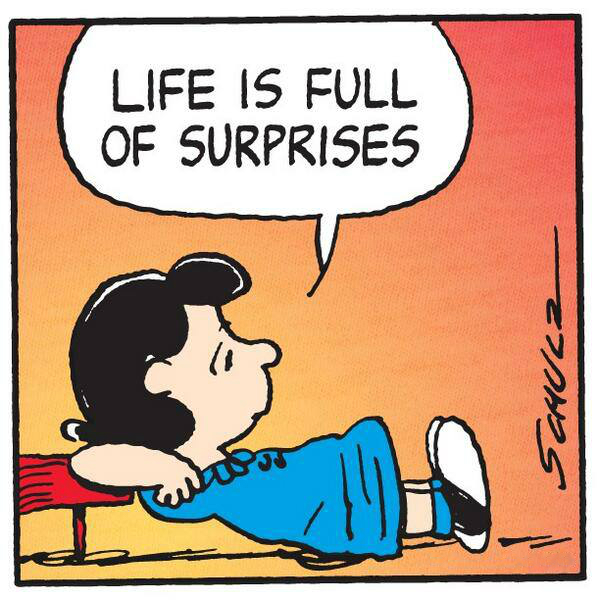
Life is full of surprises, unexpected things that intersect our lives. Sometimes a surprise is shocking, such as a car accident, or the sudden death of a friend or loved one. Sometimes surprises are joyful, like getting accepted to a college you thought was out of reach. No matter how they come, surprises always get our attention. A recent surprise got me thinking of how interesting this theme of surprises (good ones!) has been in my life recently.

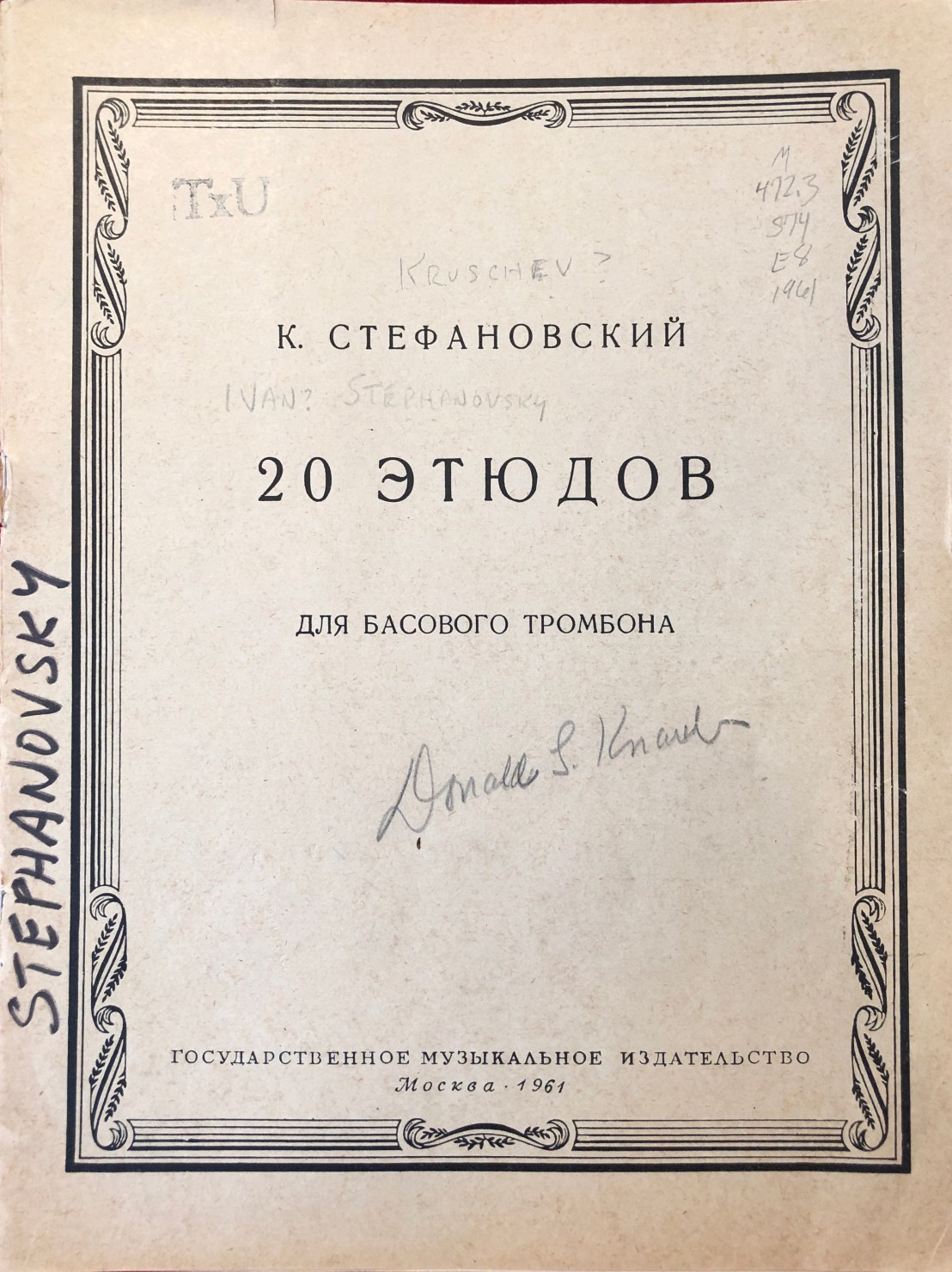
Among my many ongoing projects, I have been doing a study of the Stephanovsky 20 Etudes for Bass Trombone. As my friend, Peter Ellefson (Professor of Trombone at Indiana University) pointed out to me a few weeks ago, Keith Brown’s 1964 edition of the Stephanovsky 20 Etudes contains a great deal of common material with Brown’s edition of Fritz Werner’s 38 Studies for Trombone. What? Two composers whose books contain much music that is identical? Keith Brown died last year so he isn’t here to explain what happened. So I’ve been trying to figure out this little puzzle.

In my research, I learned that the 20 Etudes were first published under Stephanovsky’s name in the Soviet Union, first around 1950 and then again in 1961 (Werner’s book was first published in 1927). I hunted around for copies of Stephanovsky’s Russian editions to obtain via Inter Library Loan and finally located a copy of the 1961 edition (I did locate a copy of the c. 1950 edition but the library that owns it is in Europe and does not participate in ILL) in the library at University of Texas, Austin. In a few days, it was heading to me for examination.

SURPRISE! When I opened it, the title page revealed that this copy had been previously owned by Donald S. Knaub, former professor of trombone at Eastman School of Music and University of Texas. Knaub is one of the most respected trombone teachers of the twentieth century; I was very privileged to meet him a few years ago when I gave a masterclass at University of Houston. A book from his personal library? Nice.

stephanovksy_cover_knaub_copy_1961

SURPRISE! Someone (it was probably Knaub since the handwriting looks like his) made some assumptions about the name of the composer of this music. No, it was not Kruschev, nor Ivan. Stephanovsky’s first name was Karl. The University of Texas librarians got the name right when they entered the music into their catalog.

Whenever I hold music that was owned by someone else, I have great anticipation when I open it up since there are often hand-written markings that prove to be as interesting to me as the music itself. Knaub’s music didn’t disappoint.

stephanovsky_14_detail_knaub_copy

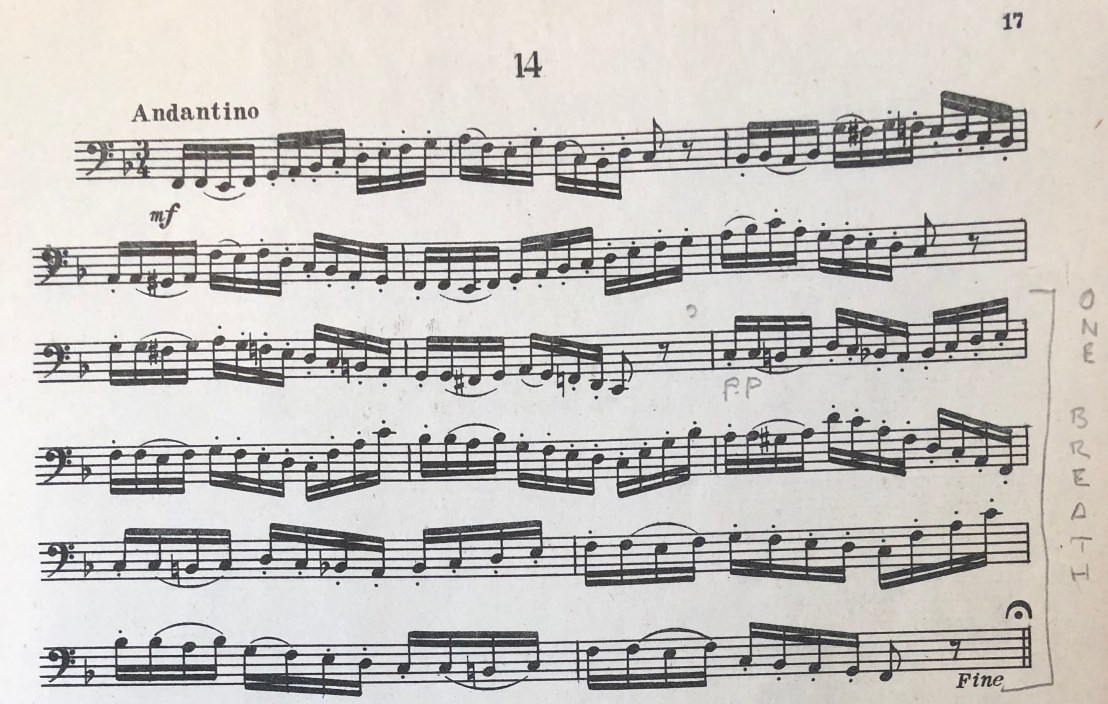
SURPRISE! When I turned to Etude 14 I saw Knaub’s handwriting that marked out several bracketed staves where he had written “ONE BREATH” next to them, after having changed the dynamic of mezzoforte to pianissimo. I had to smile. I have made the same indications in many copies of this book when I have assigned that same etude to students over my many decades of teaching. Pushing ourselves to play long phrases is an essential part of learning good breath control. It was nice to see that Knaub asked the same thing of himself – and he probably asked it of his students as well.

stephanovsky_20_detail_knaub_copy

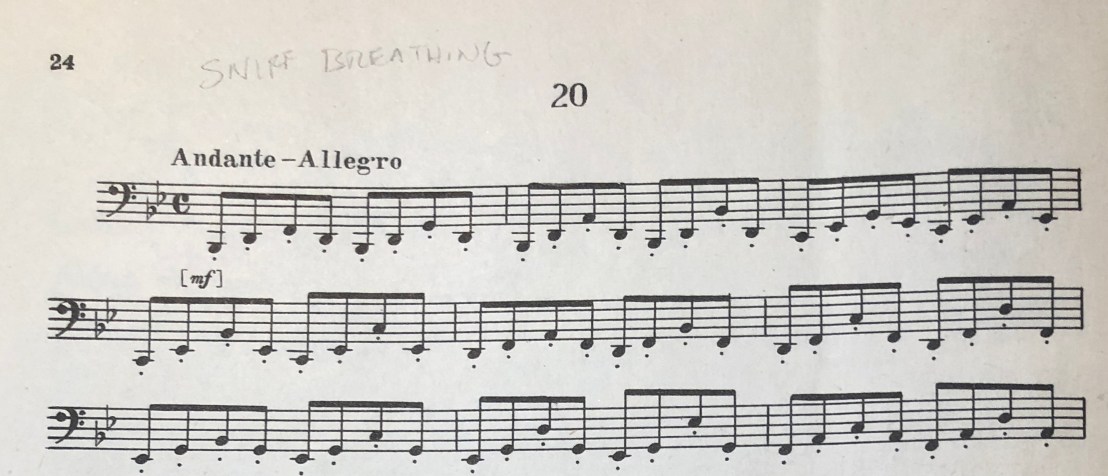
SURPRISE! When I turned to the final page of the book, Knaub had written “SNIFF BREATHING” at the top of Etude 20. Another big smile from me. I have been extolling the virtues of sniff breathing – that is, taking quick breaths through the nose rather than breathing through the mouth while playing – as a way to deal with playing music like this where there just isn’t a good place to take a breath. I was taught this technique by my former Boston Symphony tuba colleague, Chester Schmitz, and it has served me (and my students) well ever since then. To see that Knaub suggested using sniff breathing on this etude was a great verification to me, since this is the very kind of etude I assign to my students to practice this useful breathing technique.

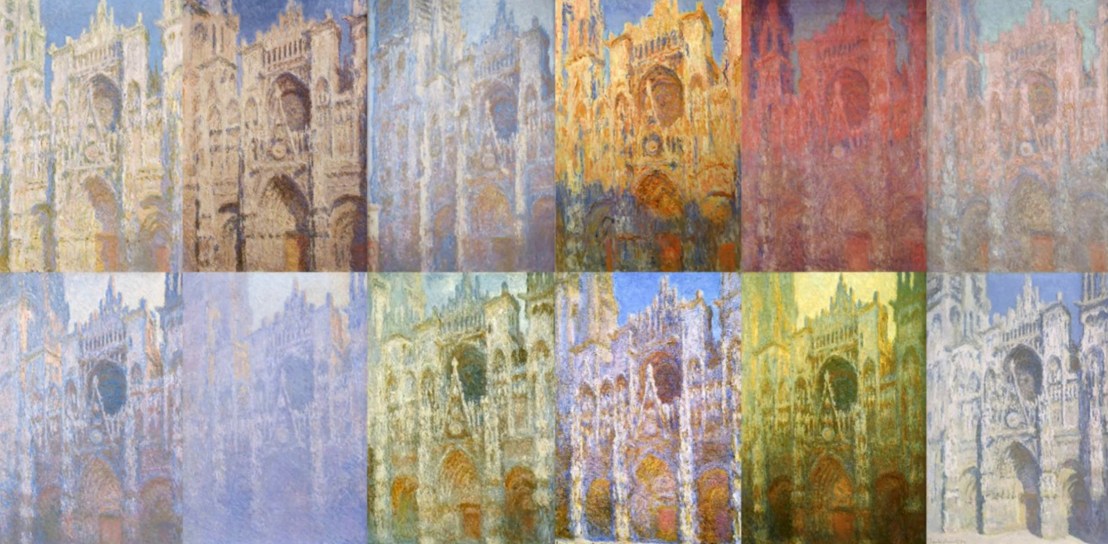
In 2010, I was in Rouen, France, doing some teaching and performing en route to a conference in Paris that was devoted to the musical instrument called the serpent. Whenever I go to Europe, I always seek out cathedrals and large churches. I have a great interest in Gothic-era church architecture. Rouen, of course, has one of the most famous cathedrals in the world, made all the more famous by the more than thirty paintings of its west front by Claude Monet (below).

rouen_cathedral_monet

My oldest daughter, Linda (who was accompanying me on the trip), and I spent some time inside and outside this magnificent church, but my host and friend, Volny Hostiou, told us of another interesting church in Rouen that is much less known. And it had a surprise.

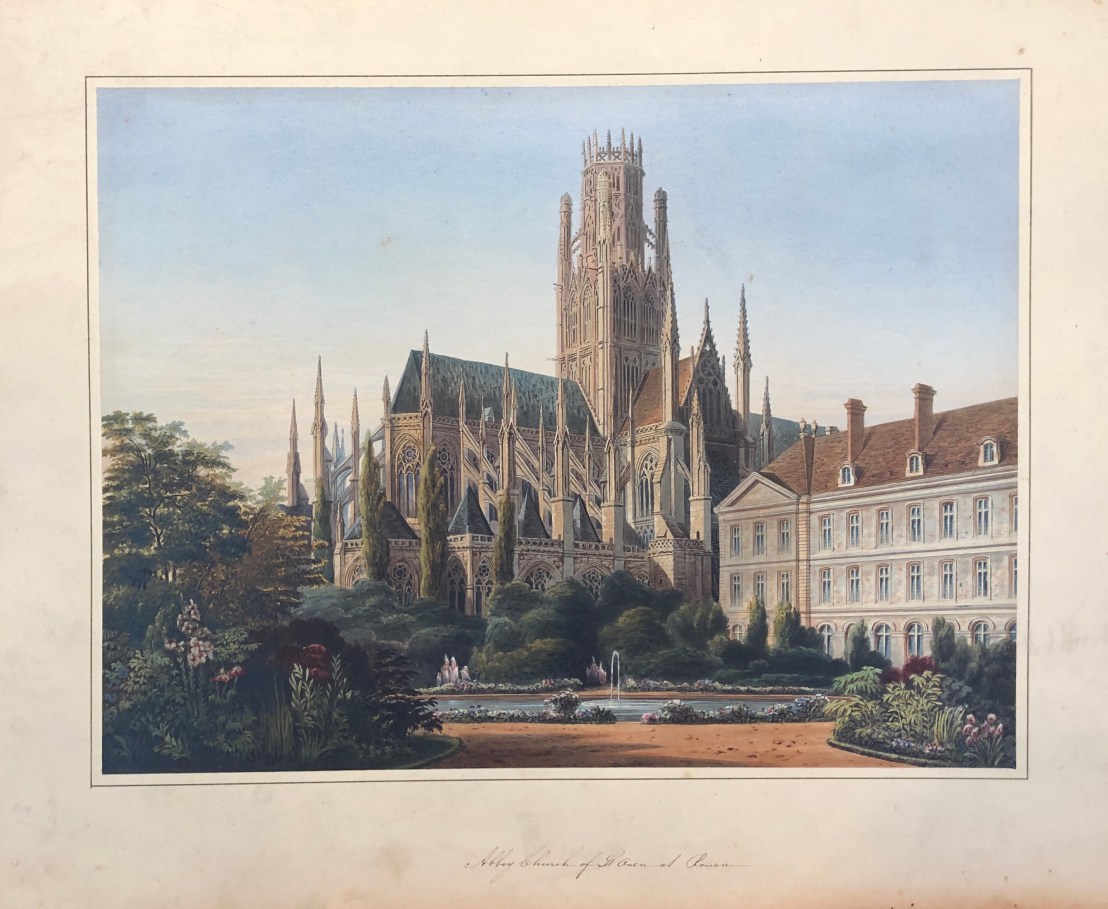
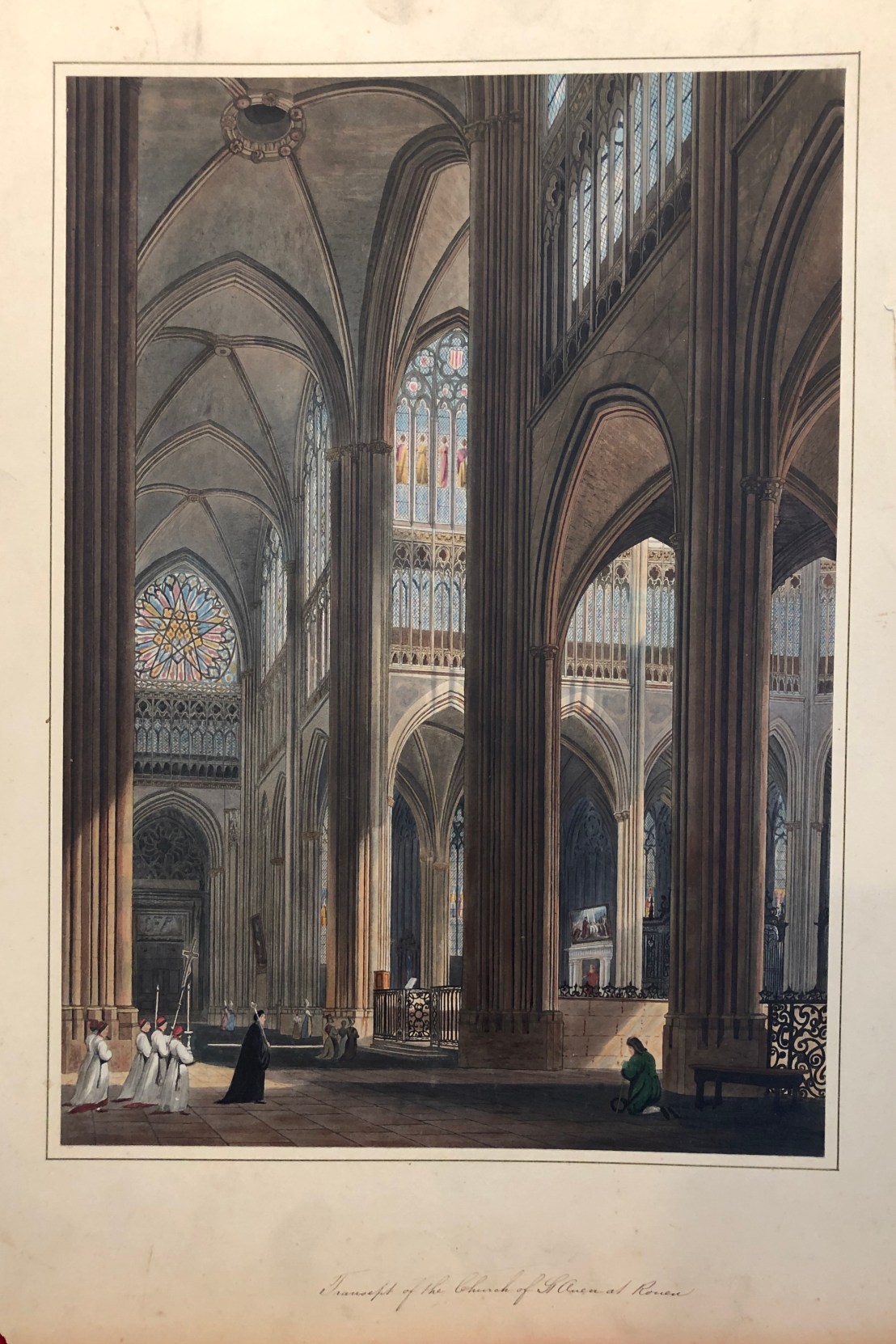
SURPRISE! Actually, when Volny told me about the Abbey Church of St. Ouen, he was surprised it was not the first time I had heard of it. I’ve been aware of its architecture ever since a set of twelve aquatints by the English artist, Charles Wild, came into my possession many years ago. Wild’s “Twelve Selected Examples of the Ecclesiastical Architecture of the Middle Ages, Chiefly in France.” In 2001, I wrote an article about one of these prints, “The Choir of the Cathedral of Amiens,” where I discussed the serpent players depicted in the print (you can view and download my article about this in the Historic Brass Society Journal by clicking this link). Among the prints in Wild’s set are two of the Abbey Church of St. Ouen in Rouen. One is of the outside of the church:

wild_abbey_church_rouen_01

And the other is of the church’s transept:

wild_abbey_church_rouen_02

These are beautiful images, ones that have taught me a great deal about Gothic architecture and cathedral/church life. But now Volny had a surprise for me. “When you go inside,” he said, “look up. You will find a serpent player.” Linda and I made a trip to the Abbey Church to find out what Volny was talking about.

st_ouen_serpent_angel_01

SURPRISE! We looked all through the church for the serpent player and finally we found him. High up on the ceiling in a side chapel, there it was, a remarkable painting of an angel playing the serpent. Nothing there about harps in heaven!

st_ouen_serpent

The serpent, which had been invented sometime in the late fifteenth or early sixteenth century and then evolved to be an instrument to accompany the singing of chant in the Church in France, would have been well known to every person who had worshipped in St. Ouen in the sixteenth through nineteenth centuries. The painting is heavily damaged but it is still remarkable nonetheless. Who painted it? When? Questions. . .

st_ouen_serpent_angel_04

SURPRISE! But there was more. As we looked more carefully at the painting, we realized that the serpent player was not alone. Look at the image, above. Just to the right of the serpent-playing angel’s left wing you see another face. It’s very faint and hard to find. (Maybe this will help: look at the chin of the serpent-playing angel, then move your eyes to the right until the stonework of the ceiling appears. The second angel’s face is there, just to the side of the larger angel’s wing.) You can clearly make out the face of another angel who is looking at the serpent-playing angel. An unexpected surprise on top of a surprise. Did this other angel originally have an instrument in hand? What did the rest of the ceiling look like when the paint was all intact? Questions. . .

Some of my biggest surprises come in books. Because of the nature of the research I do, I purchase a lot of used books, and mostly books that are out of print. I get all of my used books through abebooks.com, a website that serves as a massive catalog of the holdings of thousands of bookstores around the world. I can usually find any book I want there, and usually for only a few dollars. And sometimes when I open up a used book, I find a surprise.

halas_by_halas_cover

SURPRISE! My wife and I enjoy football and one of the first things we did when we moved to the Chicago area last fall was to become season ticket holders for the Chicago Bears. We’re all in with the Bears and since we want get to know the team better, I’ve been acquiring several books and DVDs about its history. Last week, I ordered a used copy of Halas by Halas (New York: McGraw-Hill Co., 1979), the autobiography of George S. Halas who was not only the first coach, then player, then owner of the Chicago Bears, but was the driving force behind the creation of the National Football League in 1919.

halas_by_halas_autographs

You can imagine my surprise when I opened this book – which I purchased for under $20 – and I found several autographs inside the front cover. There is Doug Atkins, defensive end for the Chicago Bears from 1955-1966 and a member of the Pro Football Hall of Fame. And Mike Pyle, center for the Bears from 1961-1969. And George Connor, another member of the Pro Football Hall of Fame who played linebacker/tackle for the Bears from 1948-1955. There is also the signature of Jeanne Morris, a pioneering female television sports broadcaster, and two members of the short-lived Chicago Bears cheerleading squad, the Honey Bears. Also of interest is the book plate that celebrates the event where books were distributed and the autographs were probably inscribed. I wonder who else was there at that Chicago Bears Reunion Dinner? Who was “Charlie,” to whom some of the autographs are signed? Questions. . .

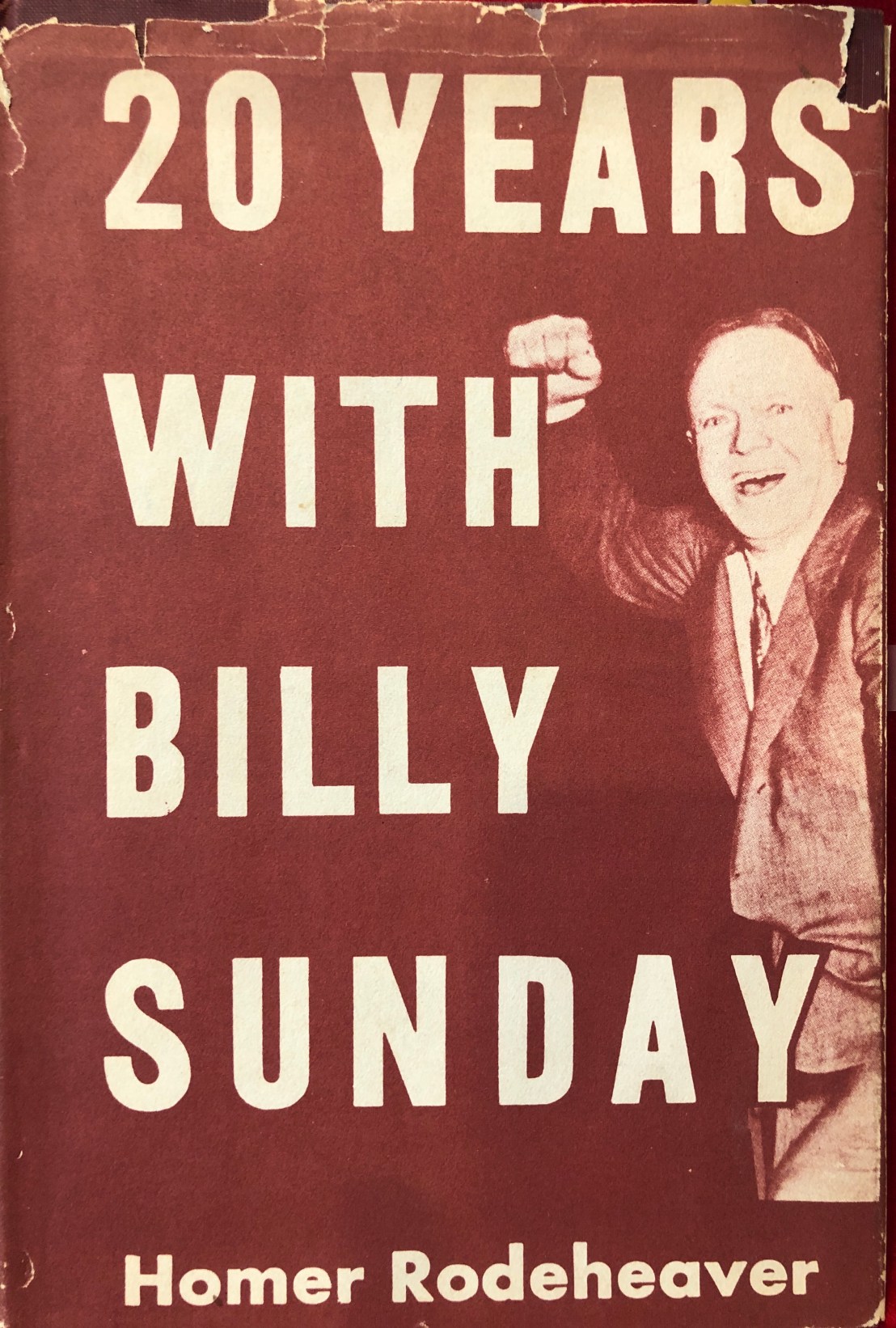
rodeheaver_20_years_billy_sunday_cover

Among the several books I am writing at the moment is a biography of Homer Rodeheaver, the trombone-playing song leader for evangelist William Ashley “Billy” Sunday in the first third of the twentieth century. Rodeheaver is a fascinating character who was a driving force in the promotion of gospel music in the twentieth century through his publishing company, record company, and evangelistic work. With my friend and co-author, Kevin Mungons, we are moving along in the process of bringing this book to publication with University of Illinois Press.

In the course of our research, both Kevin and I have acquired many (hundreds, for sure, maybe thousands?) of books that inform our understanding of Rodeheaver, his life, times, and work. Among them is Rodeheaver’s own book, 20 Years With Billy Sunday (Winona Lake, Indiana: Rodeheaver Hall-Mack Co., 1936), the story of his years as songleader for evangelist Billy Sunday. While long out of print, copies of the book are not especially rare. But. . .

rodeheaver_20_years_billy_sunday_autograph

SURPRISE! When I opened my used copy of Rodeheaver’s book, I found his inscription inside the front cover, with a reference from the Bible, Colossians 3:16, “Let the word of Christ dwell in you richly, teaching and admonishing one another in all wisdom, singing psalms and hymns and spiritual songs with thankfulness in your hearts to God.” I’m not an autograph collector, but to hold and own a copy of Rodeheaver’s book in my hands that he had held in his own hands was a very nice surprise. As to Watts Franklin (or Franklin Watts?) of Elizabethtown, Kentucky, a previous owner of this book – his (her?) return address label appears on the page with Rodeheaver’s signature – I have not been able to learn anything. Did Watts meet Rodeheaver and ask him to sign the book? Was it a gift to him/her? Questions. . .

Unlike Homer Rodeheaver whose life has never been chronicled in a biography, Billy Sunday is the subject of many books. Some were written during his lifetime (he died in 1935) and others are more contemporary. Books about Sunday – whether authorized by the evangelist or not – provide a fascinating window into his life and ministry as seen through the lens of the time in which he lived.

brown_sunday_cover

One of these books is by Elijah P. Brown, The Real Billy Sunday (New York: Fleming H. Revell Co., 1914). My used copy has a stamp in the back that says it was owned by Sarah A. Kemmerer of Allentown, Pennsylvania. Who she was I do not know. More questions. . .

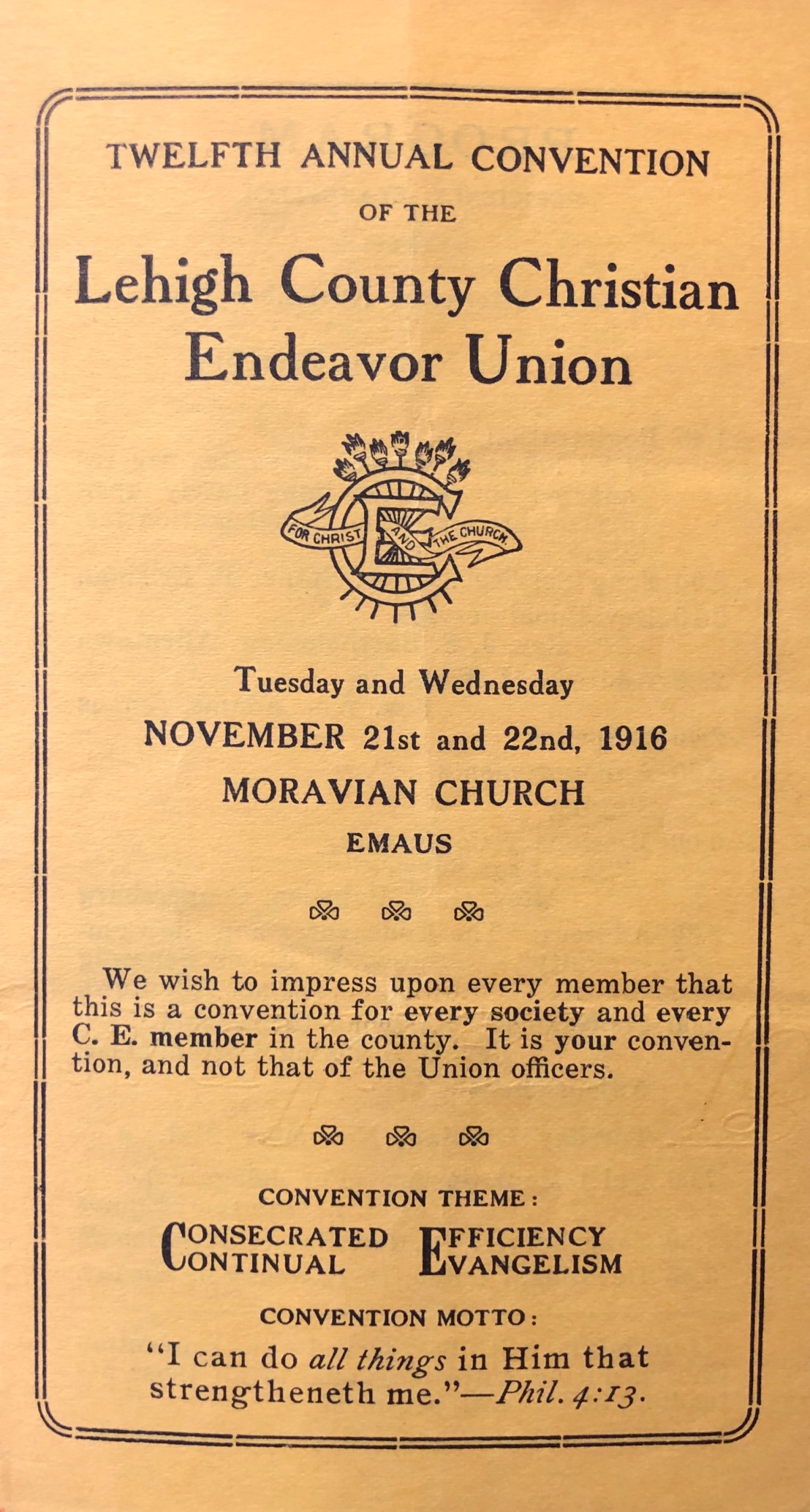
lehigh_christian_endeavor_pamphlet_1916

SURPRISE! When I opened my used copy of Brown’s book, a small, six page pamphlet fluttered to the floor. It was a program for the 1916 convention of the Lehigh (Pennsylvania) County Christian Endeavor Union, November 1916. Held at the Moravian church in Emaus, Pennsylvania (this spelling was used for the borough from 1830-1938; before and after that time it was/is spelled Emmaus), the convention featured sermons, singing, devotionals, and other activities for youth and adults. It provides a fascinating glimpse into the schedule of one of these meetings which were common occurrences at the time.

ellis_billy_sunday_cover

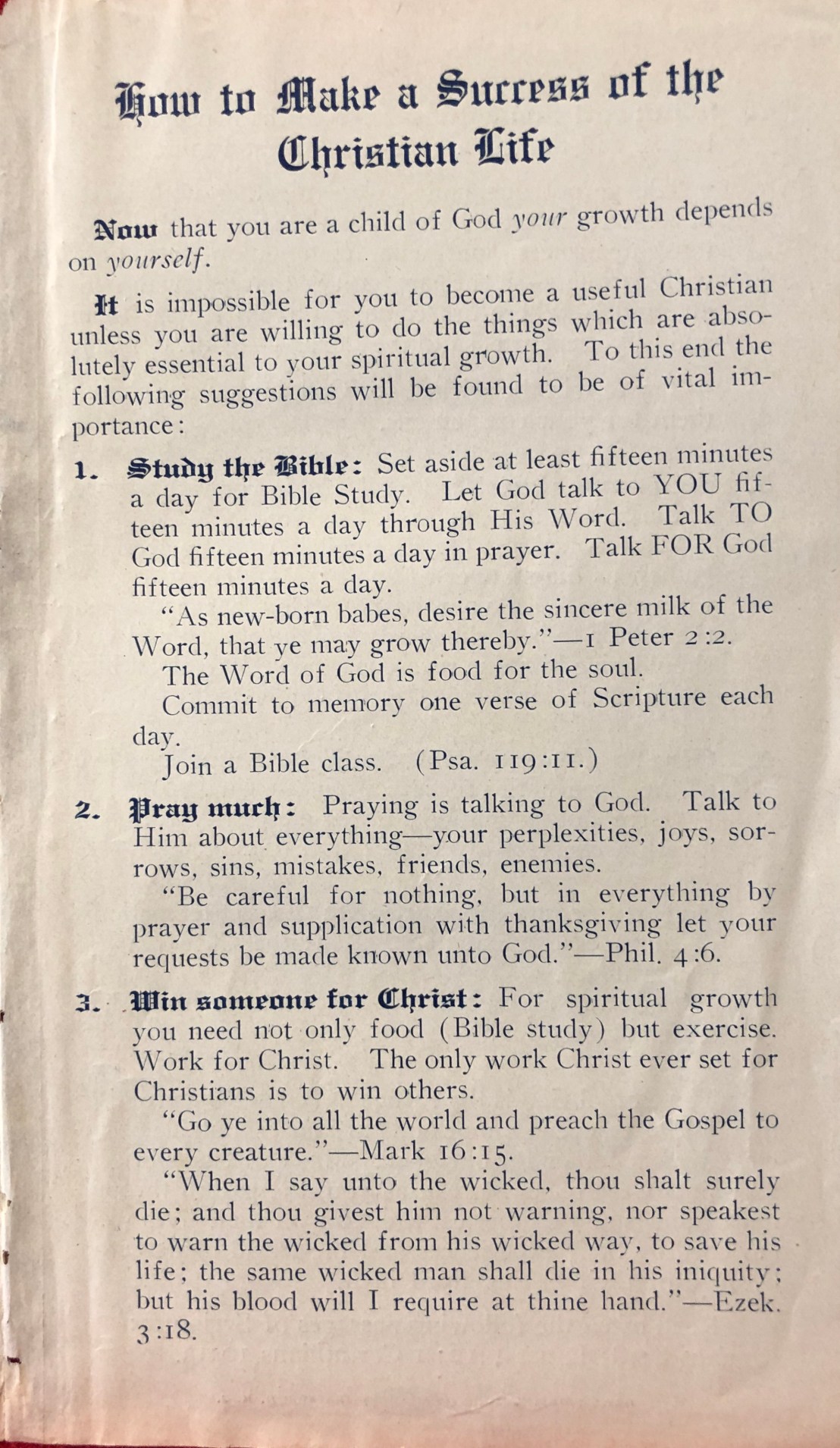
SURPRISE! Another among my many biographies of Billy Sunday is “Billy Sunday” The Man and His Message by William T. Ellis (Philadelphia: John C. Winston Co., 1914). This used copy contained a remarkable surprise: an original copy of the brochure that Billy Sunday put into the hands of tens of thousands of people who attended his tabernacle meetings and “walked the sawdust trail” up the aisle to shake hands with the evangelist as they made a public profession to trust Jesus Christ as Savior. The fact that this tract was kept in the book made me wonder if a previous owner bought the book at one of Sunday’s meetings and then put the pamphlet inside that very night for safekeeping. Names of two previous owners of the book are inscribed inside the front cover: a signature of Arthur S. Beale, and a label with the name L. Wilkins of Watertown, Massachusetts. Who were they? When and how did they come to own this book? Questions. . .

The pamphlet is a remarkable historical document and one that is as fresh today as when it was first used by Sunday in the early twentieth century. There are many things I find interesting about this pamphlet, including the fact that it bears the imprint of a union publishing house, Allied Printing of Paterson, New Jersey. Could this brochure have been printed for the 1917 Billy Sunday meetings in New York City? Questions. . .

Sunday asks some important questions and gives some important advice. Have a look.

sunday_tract_01sunday_tract_02sunday_tract_03sunday_tract_04

Life is full of surprises. Sometimes they cause you to ask questions. Sometimes they can change your life.


When classical music meets sports

When classical music meets sports

Last night’s American football AFC Championship game between the Jacksonville Jaguars and the New England Patriots was full of high drama. Full disclosure: I lived in Boston for nearly 30 years and attended more Patriots games than I can count. Before their astounding period of success began in 2001, I went to plenty of games when the team was, frankly, terrible. Today, the Patriots are heading to another Super Bowl. Their eighth since 2002. This is remarkable. My wife and I now live in Arizona, and we hold season tickets to Arizona Cardinals football. We love the Cardinals. But we still love the Patriots. There you have it.

I’ve written about the Patriots before on The Last Trombone, particularly about quarterback Tom Brady and how he was the 199th pick in the 2000 NFL draft. Brady has used that fact – that teams passed him over repeatedly until the Patriots drafted him in the sixth round – to fuel his engine of excellence. The result: he has gone on to be what most football observers consider to be the greatest football player of all time – the G.O.A. T.

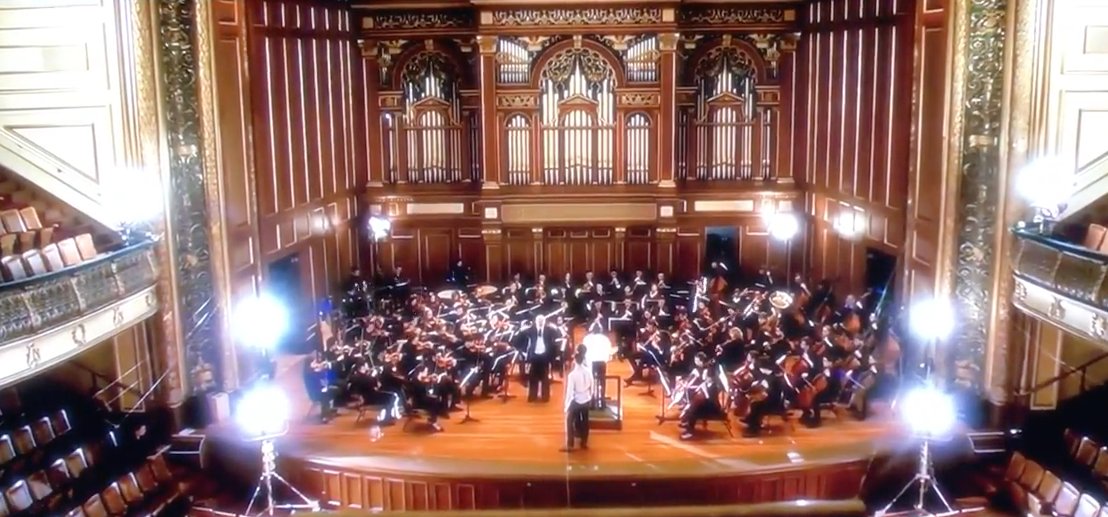
We spent yesterday afternoon with some friends who had invited us to their home to watch the AFC and NFC Championship games. When I watch TV, I rarely watch commercials. And I’m not particularly interested in pre-game commentary from talking heads. I like to watch the game. So when, before the game started, there was a segment with an actor I had never seen before, I didn’t pay much attention. Until I realized the piece was filmed in Jordan Hall at New England Conservatory of Music. STOP. Rewind the DVR. I taught at New England Conservatory for 27 years. I played countless concerts and recitals in Jordan Hall. What is this?

“This” was a “teaser” for the game featuring actor John Malkovich. It is long by television standards, three and one-half minutes long. Have a look (if you can’t see the video below, click HERE to see it on YouTube):

The story about how this video came about is terrific. Recorded just a few days before yesterday’s game, students at NEC were featured in this short film. You can read how this all came together in a story in Sports Illustrated by Richard Deitsch. Click HERE to read his story.

I think the video is brilliant. It takes a little time to get going but it’s very, very clever. And bravo to the NEC students who were a part of it. I’m sure it was a thrill for them. Seeing this teaser for the game on TV reminded me of the thrill I had playing the National Anthem at Super Bowl XXXVI in 2002 as a member of the Boston Pops Orchestra, something I wrote about on my website, in my article: The New England Patriots and the Boston Pops: A Super Bowl XXXVI Diary (click here to read it). Because of that experience – and many more like it where I played the National Anthem before sporting events as a member of the Boston Symphony Orchestra – I wanted to bring that opportunity to my students at Arizona State University. On two occasions, we played the Star Spangled Banner at an Arizona Diamondbacks baseball game. To see my students on the big stage and catch their excitement and sense of wonder as it unfolded was one of the most satisfying things I did during my years as ASU’s Professor of Trombone. Have a look at this video (below) of their performance at Chase Field in Phoenix in 2014 (if you can’t see the video below, click HERE to see it on YouTube):

Sports and music. Sometimes they come together in a way that adds something to our joy of living, and when I see students benefitting from this, as the students at New England Conservatory of Music did when they were part of an exciting football game yesterday, I smile and remember the thrills I’ve had doing the same kind of thing. It’s amazing where life can lead when you have a trombone – or any musical instrument – in your hand.


199: Perseverance and excellence

199: Perseverance and excellence

This article starts with football but even if you’re not interested in that sport, if you stick with it, you’ll see how football flows to music after a few paragraphs.

My students know that I often turn to sports – usually football – for metaphors about excellence, motivation and perseverance. My wife and I have been football fans for many years. We have season tickets to the Arizona Cardinals and we attended many New England Patriots games when we lived in Boston. I attended Super Bowl XXXVI (Patriots defeated the St. Louis Rams) where I played the National Anthem and pregame show as a member of the Boston Pops Orchestra, and my wife and I attended Super Bowl XLIX (Patriots defeated the Seattle Seahawks) here in Arizona just two years ago. Fun times. Great memories.

But there things in football that I turn to over and over as I work with students to help them develop the engine that drives their pursuit of excellence. One of them is the number 199.

When I would attend college football games, I often remarked that very, very few college football players ever end up in the National Football League. The NFL draft has seven rounds; there are 32 teams. That means there are 224 players chosen in the regular draft; several others are chosen as “compensatory picks” and some undrafted players are also signed by teams. The hard reality is that most college football players never play in the NFL. It’s an elite group. Like being a member of a great symphony orchestra.

In the 2000 NFL draft, there were 254 college players chosen in the draft. Number 199, chosen with a compensatory pick in the sixth round, was Tom Brady, from University of Michigan. Six other quarterbacks were drafted before him.

Brady, of course, went on to be arguably the best quarterback in NFL history; some analysts consider him to be the best PLAYER in NFL history. He has led the New England Patriots to five Super Bowl victories; he is a four time Super Bowl Most Valuable Player.

But when the Patriots drafted him at 199 in the 2000 NFL draft, he was a long shot to make the Patriots’ roster. The Patriots had no idea if he would make the team. But Brady had ideas of his own. Brady knew he had what it takes to make a difference on a team. All he needed was a chance.

Tom Brady used the fact that he wasn’t picked until 199 in the sixth round as fuel for his engine. He wanted to prove everyone wrong. When he first met Robert Kraft, owner of the Patriots, Brady said, “Mr. Kraft, drafting me was the best decision you ever made.” I’m sure Kraft’s eyebrows raised a little. But Brady knew he had something. And in his second year with the Patriots, thrust into the starting quarterback role when quarterback Drew Bledsoe was injured, Tom Brady led the Patriots to their first Super Bowl championship.

tb_199_shirt

One of my favorite t-shirts is one  by Under Armour that simply says “199.” It’s a reminder that sometimes you know you have something to offer but you just need a chance to prove it. The chip that Tom Brady carries on his shoulder, the chip that says, “You thought I was only good enough to be 199 but I will show you that you are wrong,” is a reminder that motivation to pursue excellence comes in many shapes and sizes, and from many places.

Tom Brady also has one of the most disciplined work ethics of any person I have known. He absolutely is the embodiment of a phrase I often use: “Success comes from delaying present pleasures for future rewards.” Brady is fanatical about caring for his body, his diet, his physical regimen, for getting the sleep he wants/needs, for engaging in mental stimulation. These things keep him from other recreational pursuits or dietary desires that would throw him off his disciplined routine. There will be time, when he retires someday, for those other things. For now, he remains disciplined to achieve his goals.

A few weeks ago, I was interviewed by the website careersinmusic.com. The interview focused on what is required for a musician to win a position as a section member in a symphony orchestra. The result was a straight-shooting dialogue that I want to share with readers. In the interview, I talk about perseverance, the sacrifices needed to succeed, and the importance of two words that most people don’t really understand at all: Work. Hard.

Click HERE to read my interview on careersinmusic.com

Everyone has a ceiling. Not everyone will succeed at the highest level. Some people with tremendous talent don’t have the discipline needed to succeed at the highest level. Some people with a tremendous work ethic don’t have the talent needed to succeed at the highest level. But everyone CAN succeed at SOME level. The idea that you only need to work at something for 10,000 hours to succeed is foolishness. Practice doesn’t make perfect: practice makes permanent. If you don’t know how to practice something CORRECTLY, then you will get excellent at playing it poorly. And unless you understand the real meaning of the word “perseverance,”  you will never know where your talent and work ethic can take you.

Tom Brady found out. Number 199 became number 1. Not by accident. Not by getting “lucky.” He got there by combining his God-given talent with perseverance and hard work. He had what it took even when others didn’t see it. As my teacher, Edward Kleinhammer (bass trombonist of the Chicago Symphony, 1940-1985) said:

World class trombone players do not just happen. Their talents are forged in the dual furnaces of determination and diligence.


199.