Over the years, I’ve used different marketing strategies to promote my ideas, recordings, and books. Print advertising, internet advertising, word of mouth, release parties, signings, you name it. I’ve always said that the world is engaged in a battle of ideas and whether it’s an article on my website or blog or a new recording or book, I have ideas that I love to share with others.
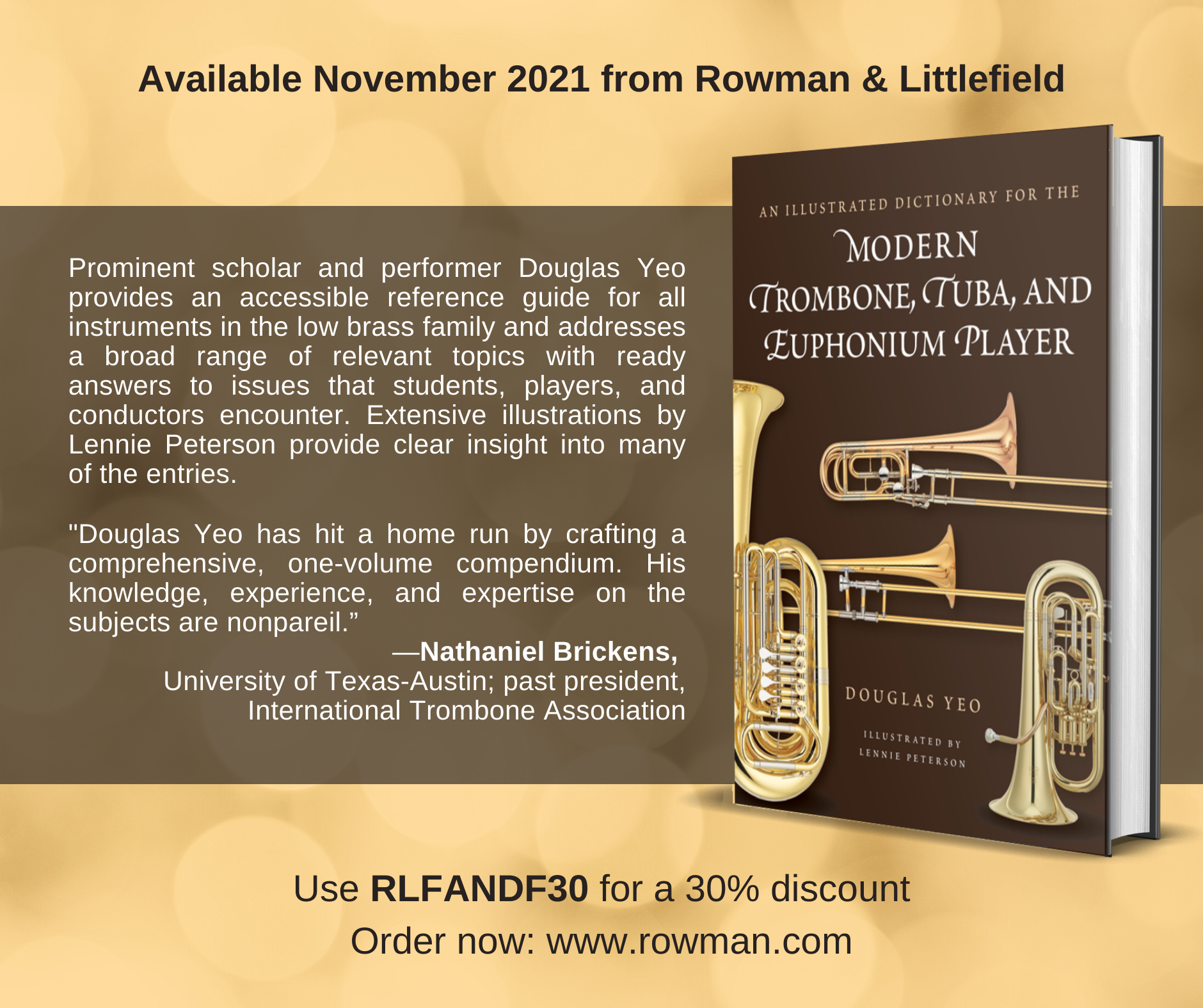
By now, readers of The Last Trombone know about my newly published book, An Illustrated Dictionary for the Modern Trombone, Tuba, and Euphonium Player. My publisher, Rowman & Littlefield, has sent out review copies to various publications and I’ve been getting the word out in diverse ways. But a few days ago, my friend and illustrator for the book, Lennie Peterson, told me he had a different idea, an unconventional marketing strategy.
Lennie is not only a superb illustrator and fine artist, but he’s also a superb cartoonist. In fact, I first met Lennie through his comic strip, The Big Picture, which was syndicated for many years and now can be read daily at gocomics.com. Lennie’s comics tell stories of real life and they often revolve around the trombone (he is a really great player) and his girlfriend (or ex-girlfriend). In 2003, Lennie sent me a copy of his book, The Big Picture: A Comic Strip Collection by Lennie Peterson. It’s a fun read, with over 300 comic strips drawn over a four year period. Get a copy: you’ll be glad you did!
With the freedom of using gocomics.com as the primary platform for his cartoons, Lennie can make new cartoons whenever he wants, and revert to reruns when he’s doing other things. He has a large, loyal following which includes me. Lennie understands life and he has a way of representing it that hits my funny bone.
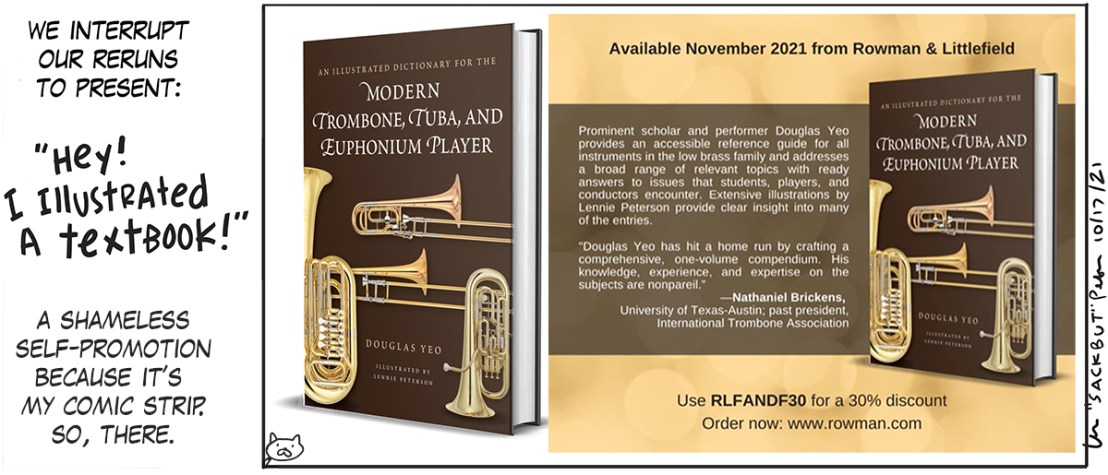
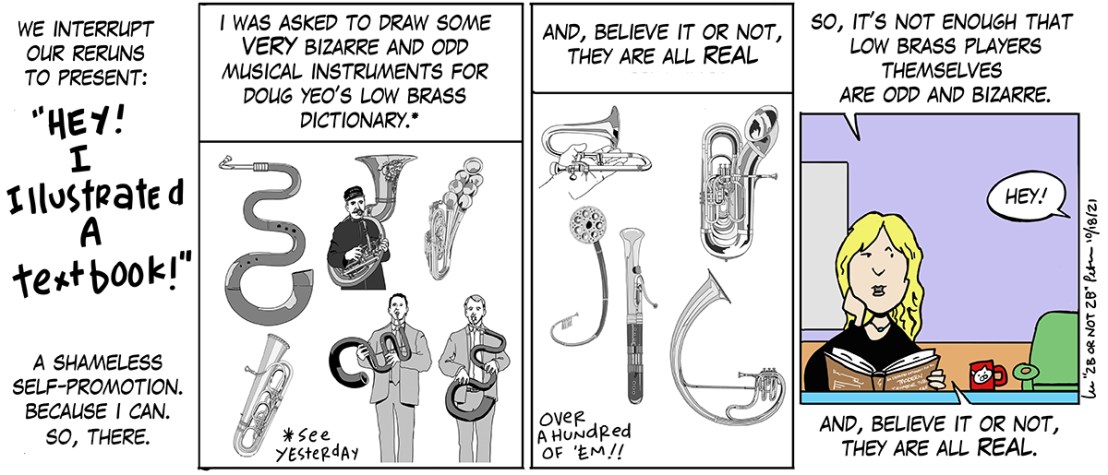
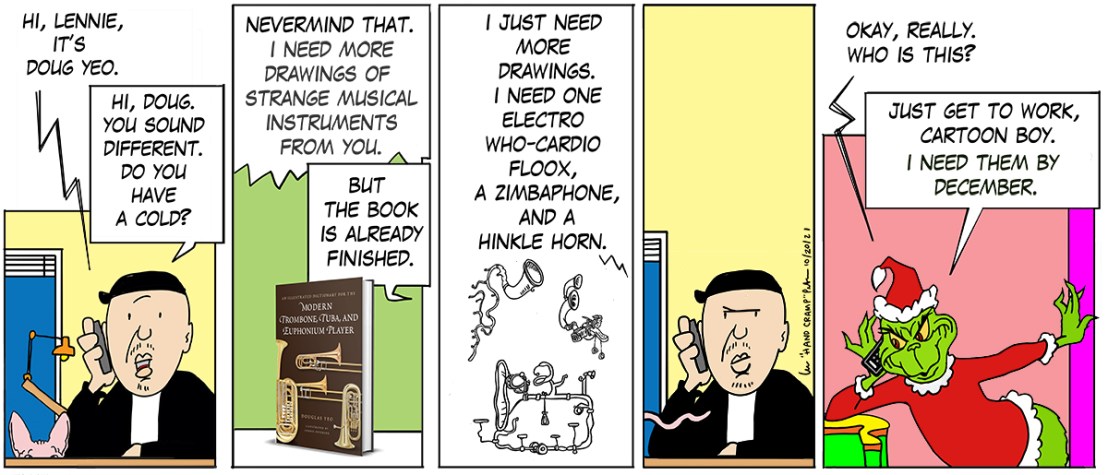
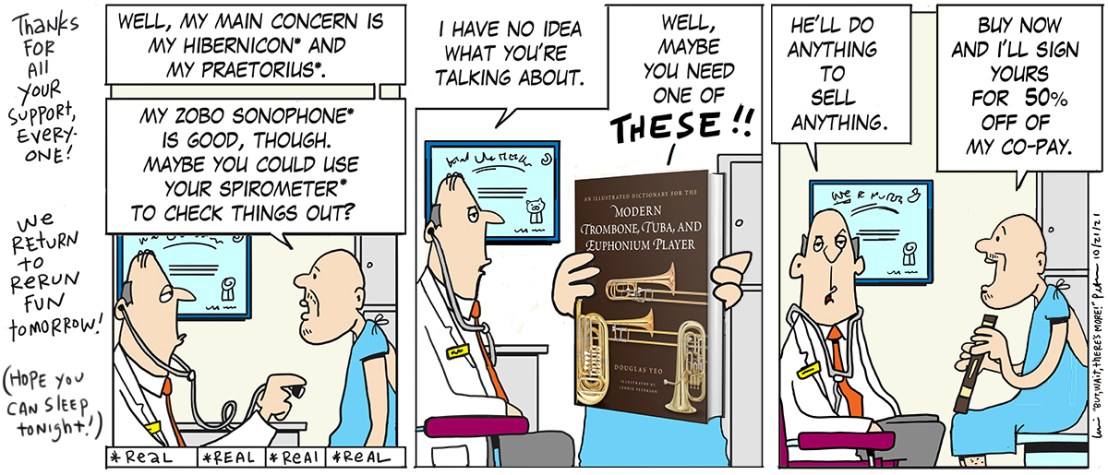
So, when Lennie told me that he was going to make four comic strips to promote our new book, I had no idea where he was going to go with the idea. I found out soon enough. Last week, Lennie released four new strips, on October 17, 19, 20, and 21. Here they are. My editor is thrilled about this, and he told me that he can’t recall a book ever being promoted in a comic strip. I can’t either. Thank you Lennie. You never cease to amaze me. Enjoy!
Two days ago, on October 21, 2021, conductor Bernard Haitink died. He was 92 years old.
I have been fortunate—even blessed—to have played under the baton of many of the greatest conductors of the late twentieth and early twenty-first centuries. For instance, a few weeks ago, I wrote about Leonard Bernstein, a childhood hero of mine with whom I played many concerts. He was a Titan of western musical life. And I worked with many others, many who were great, others who were merely good, and some who were forgettable. But there was only one Bernard Haitink. And now he will conduct no more.
I first learned of Bernard Haitink in my youth by listening to recordings made during his long tenures as music director of the Royal Concertgebouw Orchestra in Amsterdam (1959–1988), and principal conductor of the London Philharmonic (1967–1979). His recordings always struck me as “just right.” I knew nothing about him as a person, but I held a thought, “I hope that someday, I can play in an orchestra with him conducting.”
That opportunity came in November 1985 during my first season as a member of the Boston Symphony Orchestra. Bernard Haitink was scheduled to conduct two weeks of concerts, starting with performances of Gustav Mahler’s Symphony No. 7. I was thrilled at the prospect of playing Mahler 7—one of my favorite pieces—under Haitink’s baton, but when my mother died on October 30, I was giving a eulogy at her funeral at the moment when Haitink’s downbeat was delivered for Mahler’s great symphony. But the next week, I was back at Symphony Hall for performances of Dmitri Shostakovich’s Symphony No. 8 with Haitink. The concerts were memorable, and they confirmed what I had known for so long: Bernard Haitink was a musician’s musician, a musician’s conductor, a person who could truly bring out the very best in me—and so many others—as a player.
The Boston Symphony’s musicians all knew that playing for Bernard Haitink was something very special, and after those two weeks of concerts in 1985, we petitioned the management to have him appointed as our principal guest conductor. For reasons I never understood, it took 10 years for that to happen, but it finally did happen, and from 1995 to 2004, he was the orchestra’s principal guest conductor, and after 2004, he was given the title of laureate conductor of the BSO. No matter his title, he was a frequent guest with the orchestra, and we played dozens of memorable concerts with him, including performances of Anton Bruckner’s Symphony No. 8 (1998) and No. 9 (1989), Maurice Ravel’s Daphnis et Chloé (1989), Igor Stravinsky’s Pétrouchka (1990) and The Rite of Spring (1997), Franz Schubert’s “Unfinished” (1994) and “Great C Major (2007) symphonies, the four symphonies of Johannes Brahms (many times over the years), and acts from Richard Wagner’s Die Walküre (1992) and Götterdämmerung (1994). With Haitink conducting, we performed Mahler Symphony No. 9 (1995), Richard Strauss’ Death and Transfiguration (1996), Ein Heldenleben (1998), and Le Bourgeois Gentilhomme (2010), Shostakovich’s Symphony 10 (1996), Gustav Holst’s The Planets (1998), the Violin Concerto of Alban Berg (2000), Mozart’s Requiem (2002), Mahler Symphonies No. 7 (it came back with him conducting again in 2000), 9 (1995), 6 (2006), 1 (2006), and 2 (2008), Béla Bartók’s Concerto for Orchestra (2010), and many more pieces on many more concerts. The last concert I played with him was Beethoven Symphony No. 9 (2012). In August and September 2001, he led the Boston Symphony on a tour of Europe, and our final concert of the tour was in his beloved Concertgebouw where we played Symphony No. 2 of Brahms. Three days later, one day after we returned home to Boston, the world changed forever on 9/11/2001.
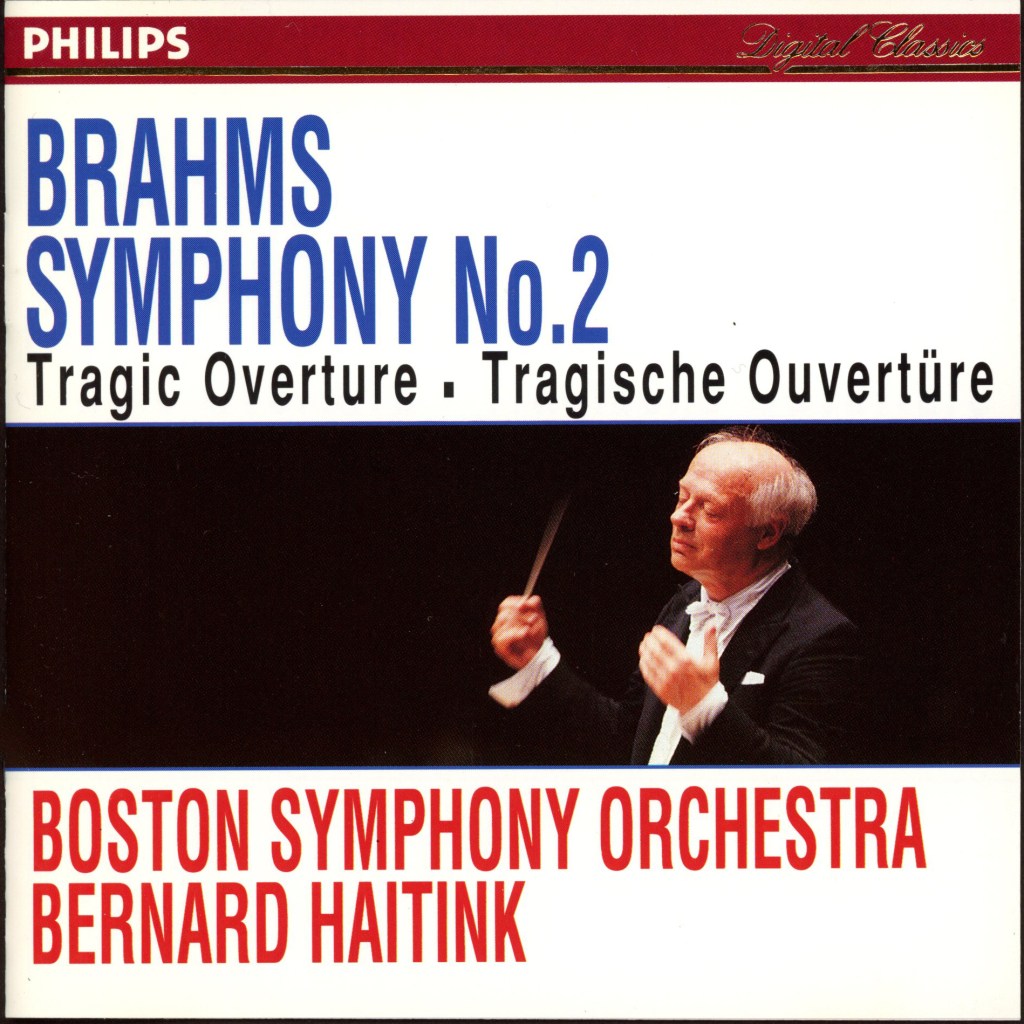
Cover of the recording of Brahms Symphony No. 2 and Tragic Overture with Bernard Haitink conducting the Boston Symphony Orchestra, recorded in March 1990 in Symphony Hall, Boston. Philips 432 094-2.
In all, I played over 200 concerts with Bernard Haitink on the podium. In addition to concerts, Bernard Haitink and the Boston Symphony made many recordings together, most memorably many works of Maurice Ravel, and especially the four symphonies of Brahms on the Philips label. There was something about Haitink and Brahms. Something very special, something he brought to that music that no other conductor managed to convey. What was it?
I don’t know. I have struggled for years to put into words the qualities that made working with Bernard Haitink so special, important, and memorable. I’ve never found the words. There were so many things, intangibles and tangibles alike. He always came prepared; he knew the music exquisitely well. He always showed that he genuinely cared for the members of the orchestra. He always spoke in a quiet, polite, tone; he never shouted. He knew exactly how to balance the orchestra. And he always appreciated our playing. I recall on many occasions, after I had played something that he noticed—and he noticed everything— he would look my way and give me a gentle smile. Not a big grin, just a gentle smile. He wanted me to know that he knew what I had done, and that he had appreciated it. He did this for everyone in the orchestra. We appreciated that. But more than all of this was his presence. When he conducted, everything just seemed right. There’s no other way to explain it. You had to be there to understand it. We all felt it, and the audience did, too.
Bernard Haitink was also a gracious man. I have told this story often, about one of the biggest mistakes of my career:
The Boston Symphony was playing Act III of Richard Wagner’s Götterdämmerung in April 1994 and I was playing bass trumpet, a part that has many solos. From my vantage point on stage in a concert where I sat between our principal trombonist, Ronald Barron, and principal trumpeter, Charles Schlueter, and behind our principal hornist, Charles Kavalovski, I was thoroughly enjoying the music. Everything was right with the world: the soloists were great, the orchestra was great, Haitink was pleased. Then, suddenly, I heard Ron humming. “What is he doing, humming during a concert?”, I thought. I gave him a funny look and then glanced up at Maestro Haitink. He was staring at me, frantically shaking his left index finger with a panicked look on his face. I instantly knew why Ron was humming—he was humming my part: I was supposed to be playing a solo! I quickly jammed the bass trumpet up to my face and finished the last measures of my solo. I was terribly embarrassed, and after the concert, I went up to Haitink’s dressing room to apologize for my faux pas. When he opened the door, I said, “Maestro, I am so sorry for my lapse. I was just lost in the music but it was inexcusable. That will not happen tomorrow.” He put an arm on my shoulder and smiled, and said, quietly, “There is no need to apologize. You looked so happy. And what you did play was wonderful. Rest well.”
That is how I remember Bernard Haitink. He was gracious and graceful, a classy person who cared about those around him. He was not a prima donna or one who was overly impressed with himself. He served the music, and he enlisted his musicians in that service. Many of my most memorable performances were under his baton.
Pages from the commentary that accompanies the facsimile edition of Gustav Mahler’s Symphony No. 7 (Rosebeek Publishers, Amsterdam, 1995).
Bernard Haitink and I also enjoyed many conversations off the podium. I would often meet with him in his dressing room along with his wife, Patricia, before a rehearsal, and he always wanted to know of my most recent exploits in the early music world with the serpent and ophicleide. He was fascinated by those instruments. We also talked a lot about Gustav Mahler. I have a large collection of composer facsimile scores, reproductions of the scores of great works written in a composer’s handwriting. Haitink was instrumental in the publication of the facsimile of Mahler Symphony No. 7 and the edition was a revelation because it contained a companion volume that contained many reproductions of early drafts of the score as well as long articles about the piece. The role of the tenor horn in the symphony was often a topic of discussion among us, and when, in 1995, I purchased a copy of the Mahler Symphony No. 7 facsimile, I asked Haitink to sign it, which he graciously did.
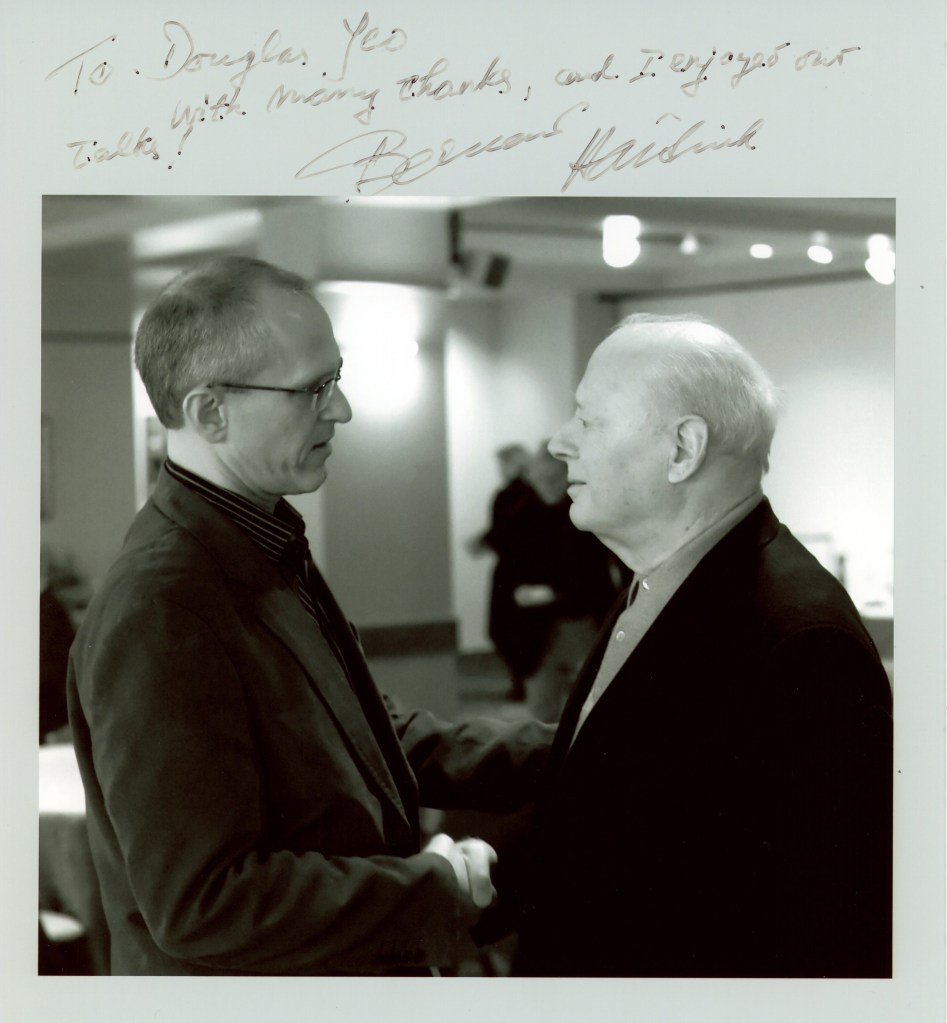
Bernard Haitink and me, Symphony Hall Boston, November 2009. Photo by John Ferrillo.
In 2009 the Boston Symphony gave Bernard Haitink a party in celebration of his 80th birthday. He was in Boston to conduct the orchestra in Brahms Symphony No. 1 and we had a long conversation about Brahms at the party, a moment that was captured in a photograph taken by my colleague, principal oboist John Ferrillo. Later, Maestro Haitink inscribed the photo, with fond memories of our many conversations.
My final bow in Symphony Hall, Boston, following a Boston Symphony Orchestra performance of Beethoven Symphony No. 9 on May 5, 2012.
When I retired from the Boston Symphony in 2012, my final concert in Symphony Hall was conducted by Bernard Haitink, Beethoven’s Symphony No. 9. It was an emotional time for me, with Beethoven’s great symphony, Maestro Haitink conducting, and my being called to the podium after the performance to take my final bow at Symphony Hall. Concertmaster Malcolm Lowe and Haitink called me up to the front of the stage from my seat in the back row and we exchanged a few words before I faced the audience in Symphony for the last time. The fact that Bernard Haitink was conducting my final concert in Symphony Hall was very, very meaningful to me, and it remains very meaningful to this day.
Behind me are concertmaster Malcolm Lowe and Bernard Haitink.
That was the last time I saw him but I have recalled him in my mind on many occasions since then. Bernard Haitink profoundly shaped my life as a musician, and his death on Thursday represents the closing of the era of the “great old world” conductors. There is no one conducting today who is like him, and I consider myself to be a blessed man to have played so many concerts under his inspired leadership. I miss him already.
Bernard Haitink conducting the Boston Symphony Orchestra in rehearsal in Beethoven Symphony No. 9, May 2012. I took this photo from my seat on stage.
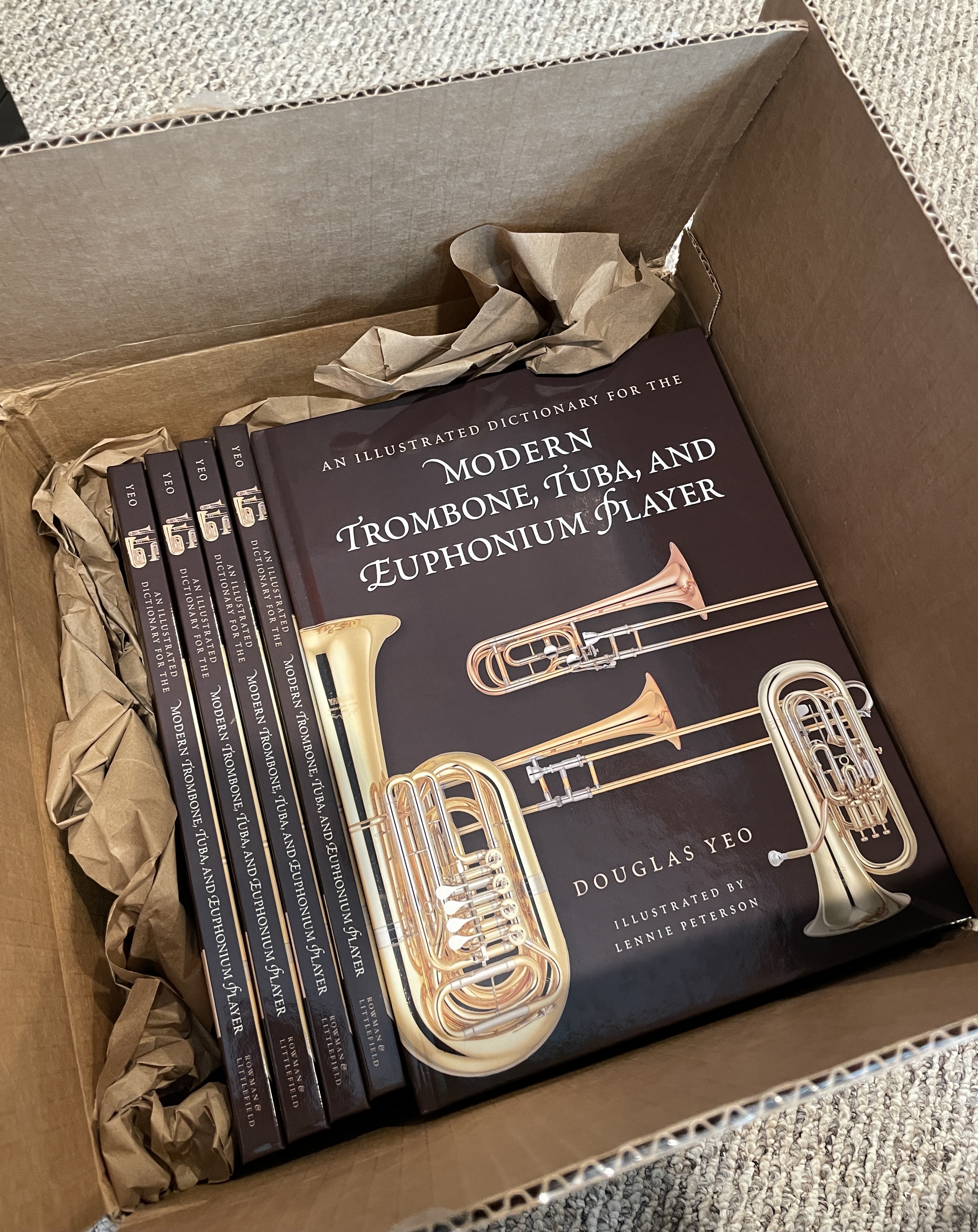
Today, copies of the book that I had ordered from my publisher, Rowman & Littlefield, arrived on my doorstep, a full month before the official release. The warehouse is shipping. For once in my life, something arrived early!
Anyone who has written a book knows this unspeakable feeling—to open a box and see the product of many years of work.
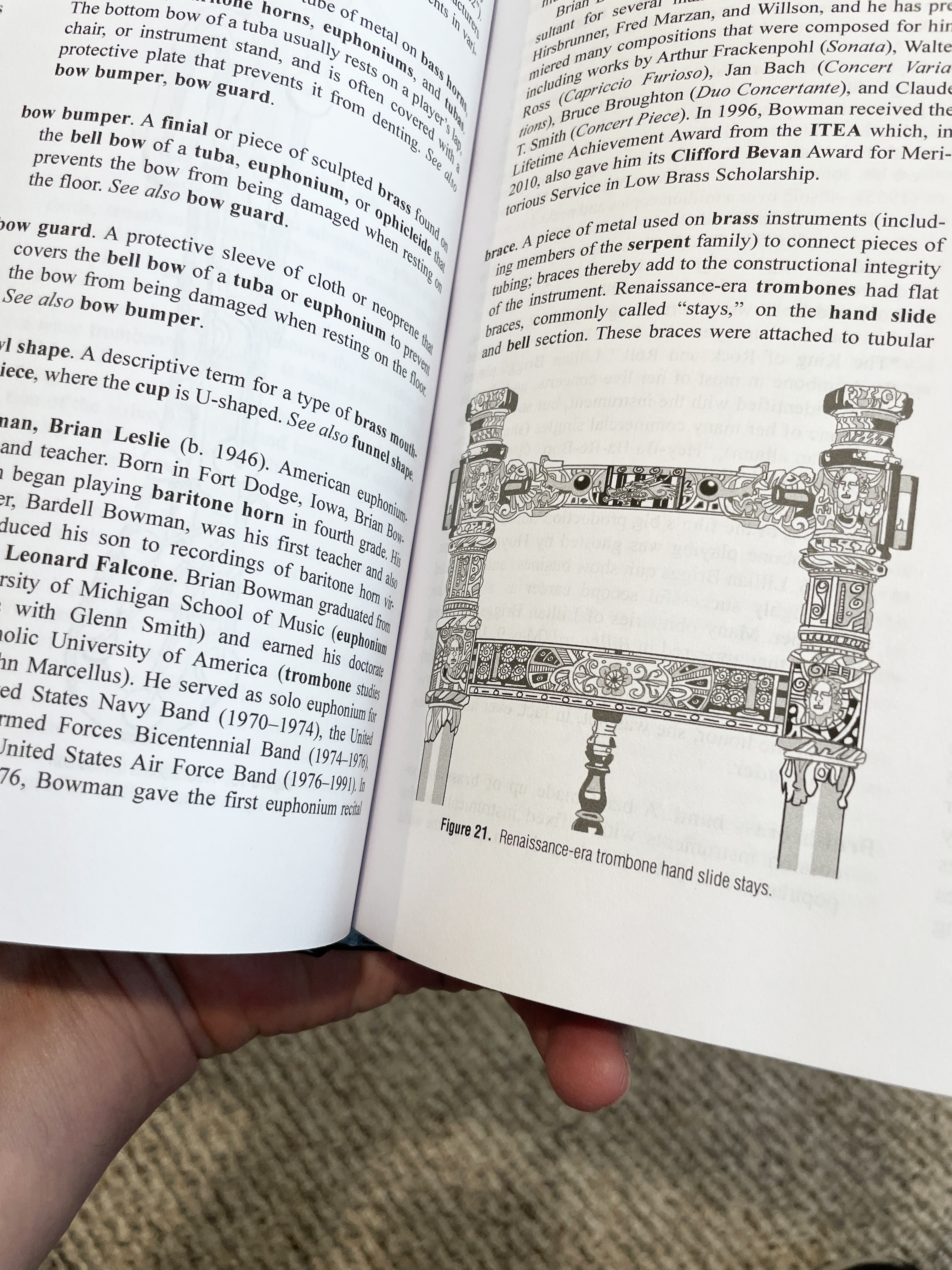
And then I picked up a book and held it in my hand. After working for so many years with Word docs and PDF proofs, it was a shock—a happy shock— to see the crispness and vitality of Lennie Peterson‘s illustrations in print.
For those who have ordered a copy directly from the publisher, you should have your book soon. While the book is still announced on amazon.com as a November 1 release (and, hey, it’s the “#1 New Release in Trombones”!), ordering directly from the publisher not only gets the book to you faster, but you can get it at a 30% discount. See the discount code in the graphic below.
Tomorrow I will put a copy of the book in the hands of my Dean at Wheaton College, Michael Wilder, with thanks for his ongoing support of my many artistic exploits, and another in the hand of the acquisitions librarian at Buswell Library on the Wheaton College campus. It is my hope and prayer that this book will prove helpful to many trombone, tuba, and euphonium players, and others who enjoy hearing them and want to learn more about them.
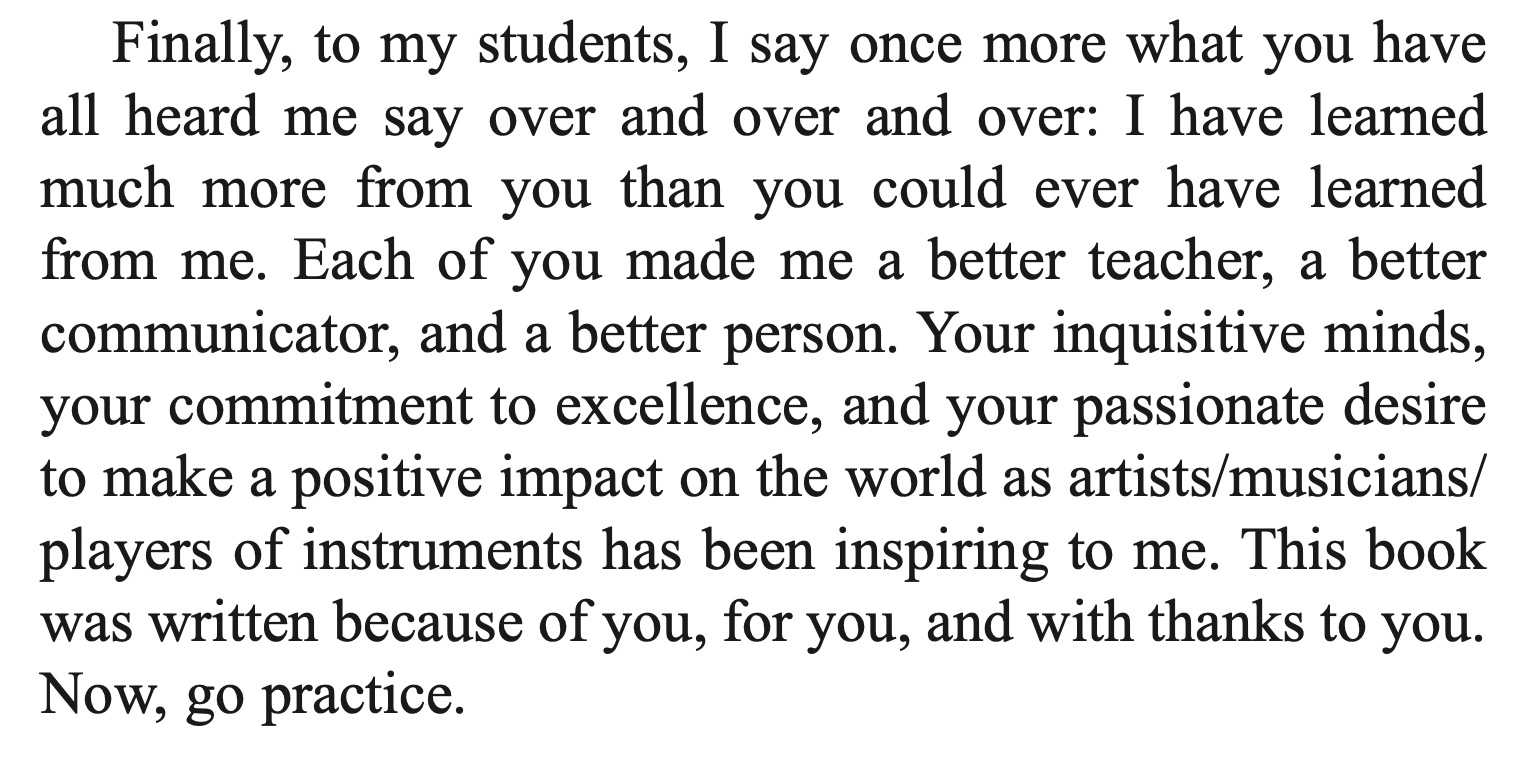
Finally, while you will read this on page xvi, this is a good time to thank the people who really made the book possible: My students. The book is dedicated to them—all of my students from over 50 years of teaching. Here’s how I thanked them in the acknowledgements section:
Last week, one of my heroes died. Henry Charles Smith was 90 years old, and his influence on me was profound. For those who have never heard his name, and for those who share my love of this exceptional man, here are a few words from me about one who changed my life.
I began playing the trombone at the age of nine, in the fourth grade. I took group trombone lessons with my elementary school band director, Mr. Greenwald, and in fifth grade, with the year-long substitute band director, Mr. Berv. He was one of the famous Berv brothers—Arthur, Jack, and Harry, all French horn players—who had played together in the NBC Symphony under Arturo Toscanini. I forget who told me that my band director was a very famous musician. It was probably my father, who had several Toscanini/NBC Symphony LPs stacked up next to the old RCA Victrola that was on the floor in a corner of our living room. Which Berv brother was my band director? I don’t know, although a very faint memory tells me it was Jack. He was just Mr. Berv to me. It was he who noticed that under Mr. Greenwald’s watch, I had assembled the trombone backwards, and had played it backwards for a whole year. So it was Mr. Berv who got me straightened out. The only trombone lessons I had through high school (with the exception of two lessons with Allen Ostrander—who was bass trombonist of the new York Philharmonic—in 1972) were group lessons during band period. As it turned out, it was not until 1969 when I entered high school, that I encountered my first trombone hero.
I was at the home of a friend, a cello player, and she had just purchased a new record. Recorded by the Philadelphia Orchestra in 1965, it was called First-Chair Encores, and it included solos featuring members of the orchestra. The playing of Gabriel Fauré’s Elegy for cello by the orchestra’s principal cellist, Lorne Monroe, moved me deeply, but as I looked at the record jacket, I noticed that the disc also included a trombone solo. A trombone solo? What was this? The solo was Alexander Guilmant’s Morceau Symphonique, composed for the 1902 Paris Conservatory annual Concours. When Elegy concluded, we flipped the record over and played the trombone track. I was speechless. I had never heard trombone playing like it before. In fact, I had never heard music making like it before. Sound, technique, vibrato, ease of playing, musicality—it was all there.
I was listening to Henry Charles Smith.
And I needed to get that record for myself.
The Philadelphia Orchestra with Music Director Eugene Ormandy, 1962. Photo courtesy of the family of Keith Brown.
Detail from the above photo of the Philadelphia Orchestra, 1962, showing the low brass section. Left to right: Keith Brown, associate principal trombone; Henry Charles Smith, principal trombone; Howard Cole, second trombone; Robert Harper, bass trombone; Abe Torchinsky, tuba.
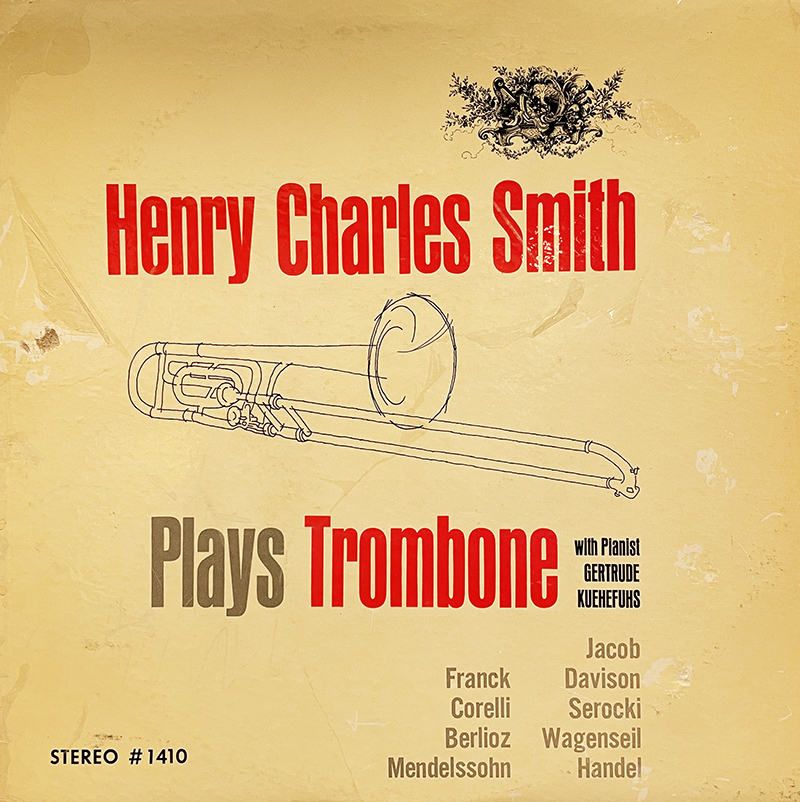
My mother took me to the Green Acres Mall near our home in Valley Stream, New York. We lived just across the Queens border on Long Island (I grew up in Queens until I was five years old; we then moved to Valley Stream, and in 1970, my father changed jobs and we moved to Oak Ridge, New Jersey). Green Acres had a record store, Sam Goody, and with a few dollars in my hand, I wandered through the stacks, looking for First-Chair Encores. Then I saw it. I pulled it out of the bin and then I froze. There was another record behind it. The record jacket was white with red lettering. The title screamed, HENRY CHARLES SMITH PLAYS TROMBONE, and a drawing of a trombone completed the cover. I held it, then turned it over. It was him, Henry Charles Smith! A photo of a balding, blonde haired man stared at me from the back cover. The music on the disc was unfamiliar to me: a Prelude by Arcangelo Corelli, a movement of a trombone Concerto by Gordon Jacob, a Sonata by John Davison (“What’s a sonata?, I thought), pieces by Hector Berlioz, Felix Mendelssohn, George Frideric Handel and others. What WAS this? A trombone SOLO record? I happily parted with my allowance money and waited for my mother to finish her shopping. We headed home with my two new records and the ritual began.
Readers who remember the long playing record era will find this story familiar. Whenever I got a new LP, the first thing I did was read every word on the front and back cover. Then memorize every word on the front and back cover. Study the artwork, the photos. Then, and only then, did I head to the kitchen for a paring knife. Carefully, I slit the shrink wrap plastic that entombed the disc. Slowly, the knife made its way from top to bottom, and when the edge of the record jacket was finally exposed, I slightly squeezed the jacket with both hands and put my nose to the new opening. That smell of virgin vinyl. It was part of my childhood and the ritual continued into my adult years. There was something about the process of opening a new LP that cannot really be explained except to one who has experienced it as well. Then, carefully, I pulled the record—which was in a paper dust sleeve—out of the jacket and placed it on the turntable.
And Henry Charles Smith sang to me.
As I listened to HENRY CHARLES SMITH PLAYS TROMBONE, I was once again transfixed by his playing. His sound was pure and clear. His legato was seamless, his upper register effortless. Everything he played had a vocal, singing quality to it. I could not do what he did when I put the trombone to my lips. But I had to try. I talked to my band director about my discovery of Henry Charles Smith. “I knew you would find him,” he said. “Do you have his book?” His book? He wrote a BOOK? Yes. It was not long before I purchased a copy of his Solos for the Trombone Player (G. Schirmer, 1963). It was one of the first books of trombone solos with piano that I ever purchased. And this was the best book of all, because many of the pieces inside its covers were recorded on HENRY CHARLES SMITH PLAYS TROMBONE. And also the music to Morceau Symphonique.
With the music in hand, I could follow along; I could PLAY along. I played the solos in church with my mother, who was a fine pianist and church organist. Later, I played them with my girlfriend—now my wife of 46 years—accompanying me on piano.
In time, I obtained another of Henry Charles Smith’s trombone solo LPs, a volume 2 of HENRY CHARLES SMITH PLAYS TROMBONE which also included a performance of the Haydn Trumpet Concerto—played on BASS trumpet.
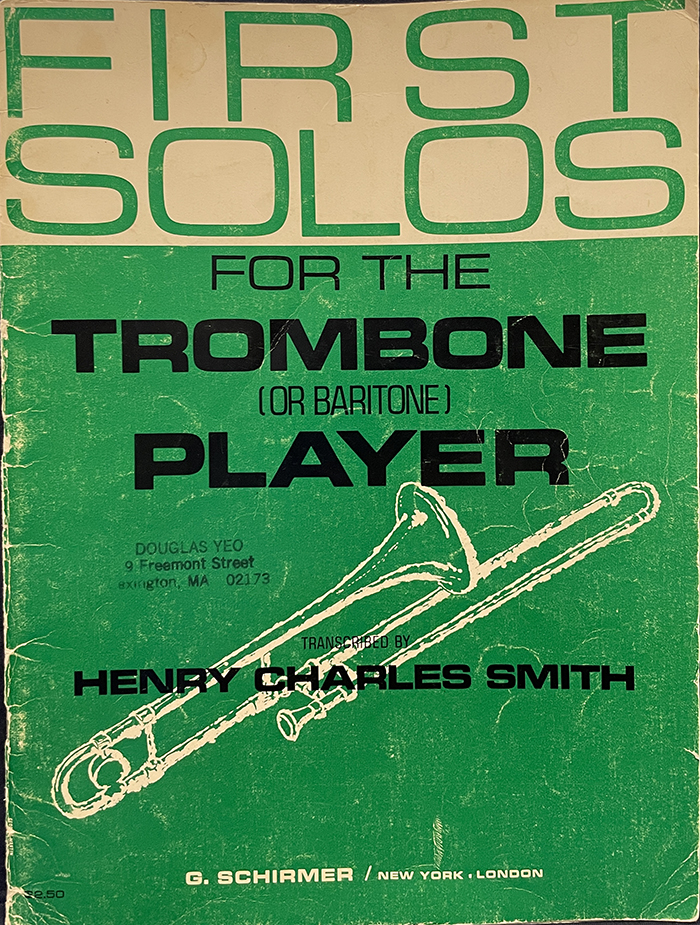
Later, I added a third LP, HENRY CHARLES SMITH PLAYS BARITONE. That disc had several pieces that appeared in another of Henry’s books, First Solos for the Trombone (or Baritone) Player (G. Schirmer, 1973). I played many of those pieces in churches over the years, especially his beautiful arrangement of If With All Your Hearts from Felix Mendelssohn’s oratorio, Elijah, which he also recorded on his baritone horn album. His playing was stunning and I imitated all of it. All of it.
In 1968, Columbia Records released The Virtuoso Brass of Three Great Orchestras Performing the Antiphonal Music of Gabrieli (Columbia Masterworks MS7209). The disc contained 13 tracks of arrangements by Robert King of music of Giovanni Gabrieli. Members of the Philadelphia Orchestra, Cleveland Orchestra, and Chicago Symphony took part in the recording, and there was my hero, Henry Charles Smith, playing on seven of the tracks. When I obtained that recording in 1971, my eyes (and ears) were opened. Little did I know that in a few years, I would be a student at Wheaton College (I graduated from Wheaton in 1976), hearing the Chicago Symphony every week, and studying trombone with its bass trombonist, Edward Kleinhammer.
Later, the LP was reissued on compact disc, paired with recordings with organist E. Power Biggs and members of the Boston Symphony Orchestra. This is “American style” brass playing of that time at its best. Solid, brash, sonorous. And Henry Charles Smith was there. Standing right in the middle of the cover photo.
A few years later, in 1976, Columbia issued Hindemith: The Complete Sonatas for Brass and Piano (Columbia Masterworks M233971). Hindemith’s five brass sonatas (for trumpet, horn, alto horn, trombone, and tuba) have fiendishly difficult piano parts, and the project featured Glenn Gould on piano and brass players of the Philadelphia Brass Ensemble. Recorded in January, July, and September 1975, and February 1976, all four soloists had been or were principal players of the Philadelphia Orchestra: Gilbert Johnson was principal trumpet from 1958-1975, Mason Jones was principal horn from 1939-1941 and 1945-1978 (and a member of the horn section from 1938-1939), Henry Charles Smith had been principal trombonist from 1957-1967 (and associate principal trombonist from 1956-1957), and Abe Torchinsky had been tuba from 1949-1972. Henry Charles Smith was never a “muscles” player—his strong set was his lyrical playing—and Gould was clearly the driving and dominant force in the recordings. Despite Gould’s curious tempos for the TromboneSonata (the first movement is quite slow by normal standards), and Henry Charles Smith’s punchy approach to the Allegro movements (from reports, Gould controlled everything about these sessions, including the style in which the soloists played), the performance holds together, a non-traditional rendition that offers listeners a very different approach to the piece.
Over the years, I followed Henry Charles Smith and his career, and it was a joy when we finally made contact and we got to know each other. We enjoyed many phone calls and emails. I let him know how influential he was on my playing and trombone world-view. Like him, I never aspired to be “a monster” on the trombone. Yes, he and I could both lay waste to the land with our trombones when called for, but we both saw the trombone as an instrument that was unique in its ability to express the poetic beauty of the human voice. It was Henry’s recordings that led me down that path. And we used to laugh at how I kept missing him. I came to Indiana University as a freshman in 1973 (before I transferred to Wheaton College in 1974), shortly after Henry had left IU’s faculty. I was soloist with the South Dakota Symphony a few years after he had left as the orchestra’s music director. And I joined the faculty of Arizona State University after he had left, having been conductor of the University’s orchestra. But we talked about a lot about things, including our shared Christian faith. Henry’s faith was central to his being, and it was reflected in his caring, compassionate way with people, whether they were students or seasoned professionals.
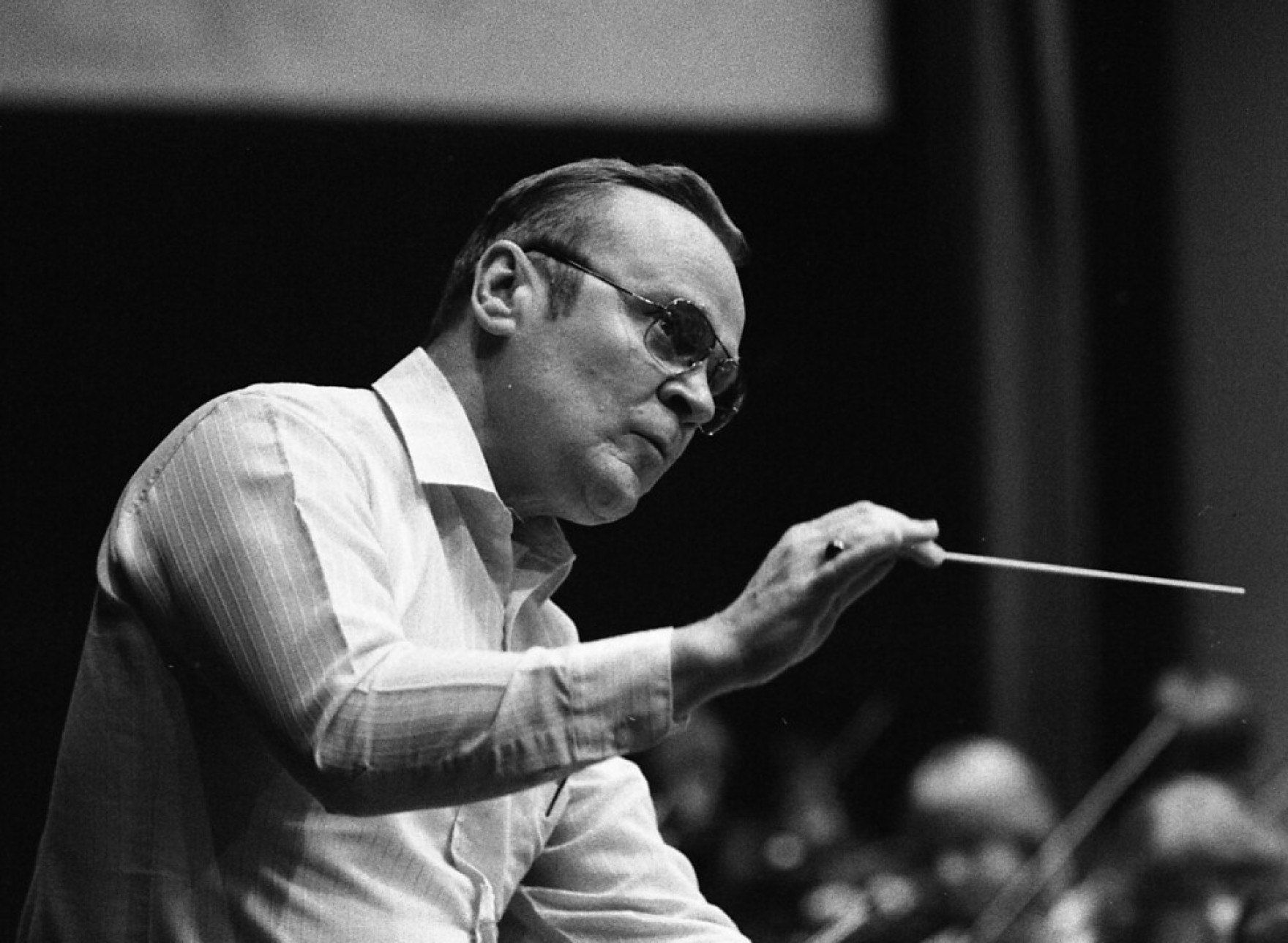
Henry Charles Smith conducting. Photo courtesy of Interlochen Center for the Arts.
Henry’s career was remarkable. Born in 1931, he joined the Philadelphia Orchestra in 1956 at the age of 23; he stayed until 1967 and played over 2000 concerts with the orchestra. He began his conducting career with the Rochester (Minnesota) Symphony Orchestra, Chorus, and Band from 1967-68 before going to Indiana University from 1968-1971 as professor of trombone. He always loved the trombone, but it was as a conductor that he reached even more people. He was Resident Conductor (and sometime trombonist) with the Minnesota Orchestra 1971-1988, conductor of the Boston University Tanglewood Institute (BUTI) orchestra from 1976-1978, conductor at University of Texas, Austin from 1987-1988, and at Arizona State University from 1989-1993. For 15 years, from 1981-1996, he was music director of the World Youth Symphony at the National Music Camp at Interlochen from 1981-1996, and music director of the South Dakota Symphony from 1989-2001. Think of the lives he touched.
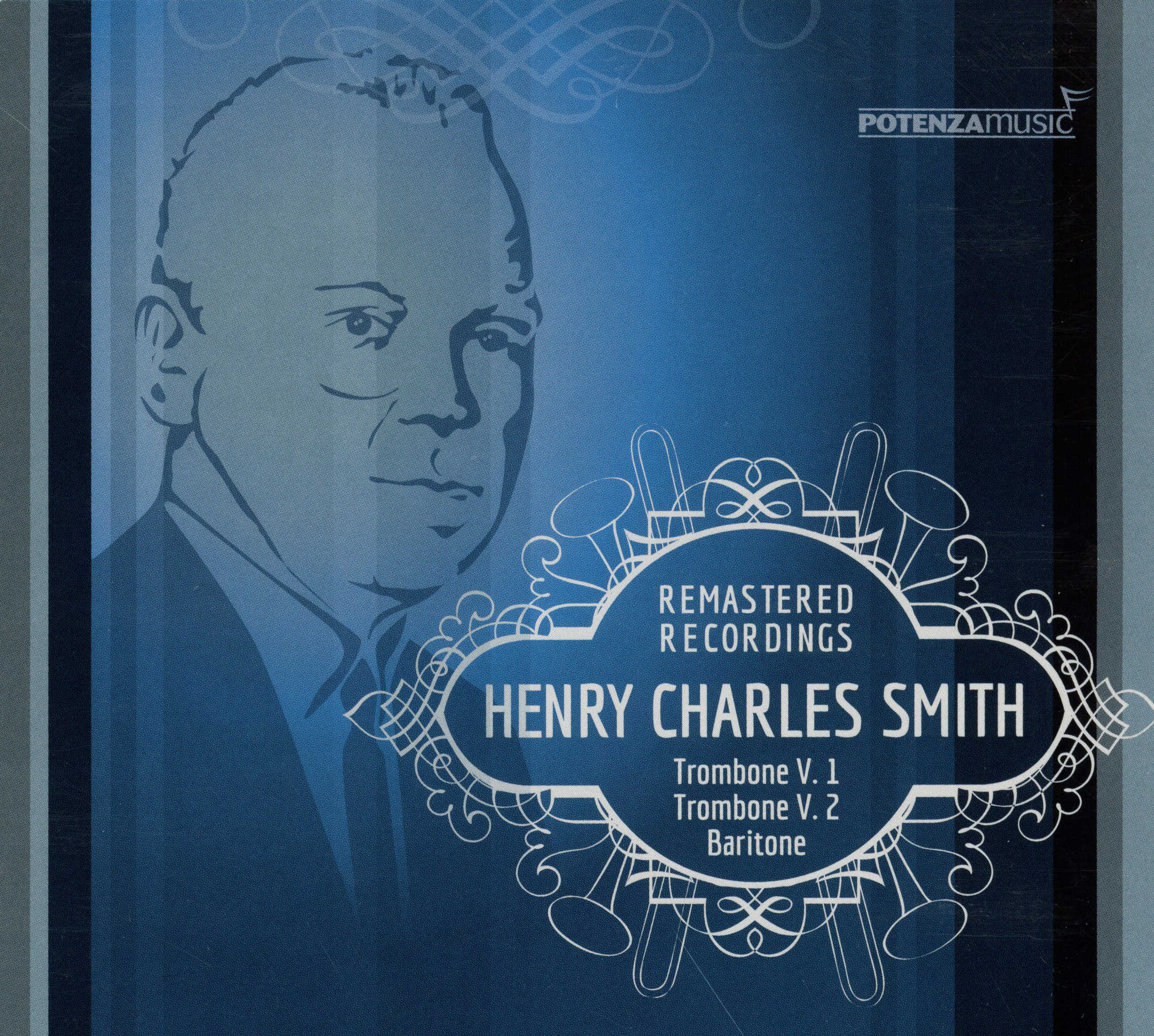
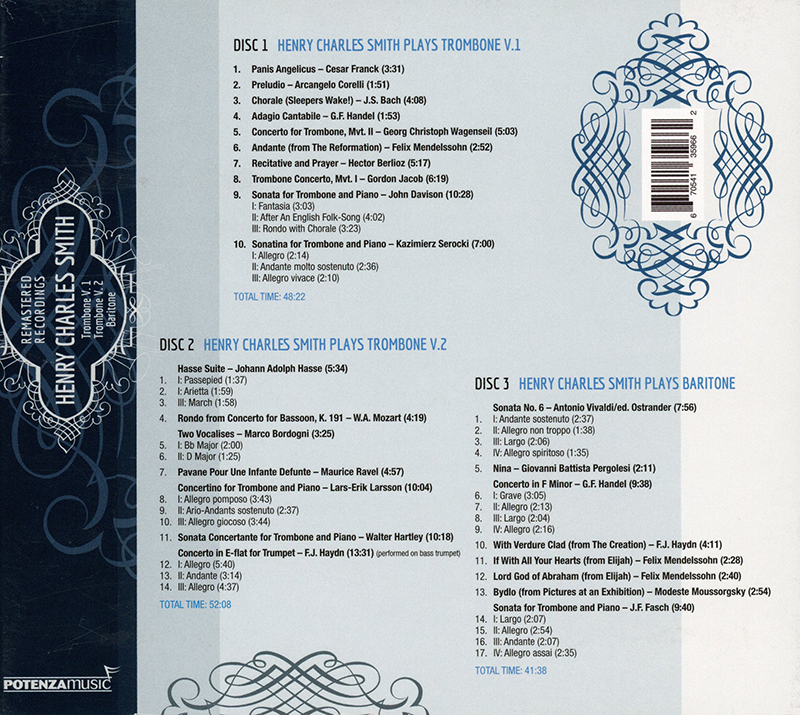
At that time, Potenza asked Henry who he would like to write a few words about him to include in the CD packaging. Henry suggested me. I was so honored by his request, and so grateful for the opportunity to write something not just about Henry Charles Smith the player, but Henry Charles Smith the man. Here’s what I wrote:
If you are a trombonist or euphonium player—heck, even if you’re NOT a trombone or euphonium player—please consider adding this exceptional recording to your collection. Potenza Music sells it for $18.95—for all three compact discs. For the cost of a few cups of coffee, you will have in your hands three outstanding recordings of one of the most remarkable artists to have ever played the trombone and baritone. And bass trumpet.
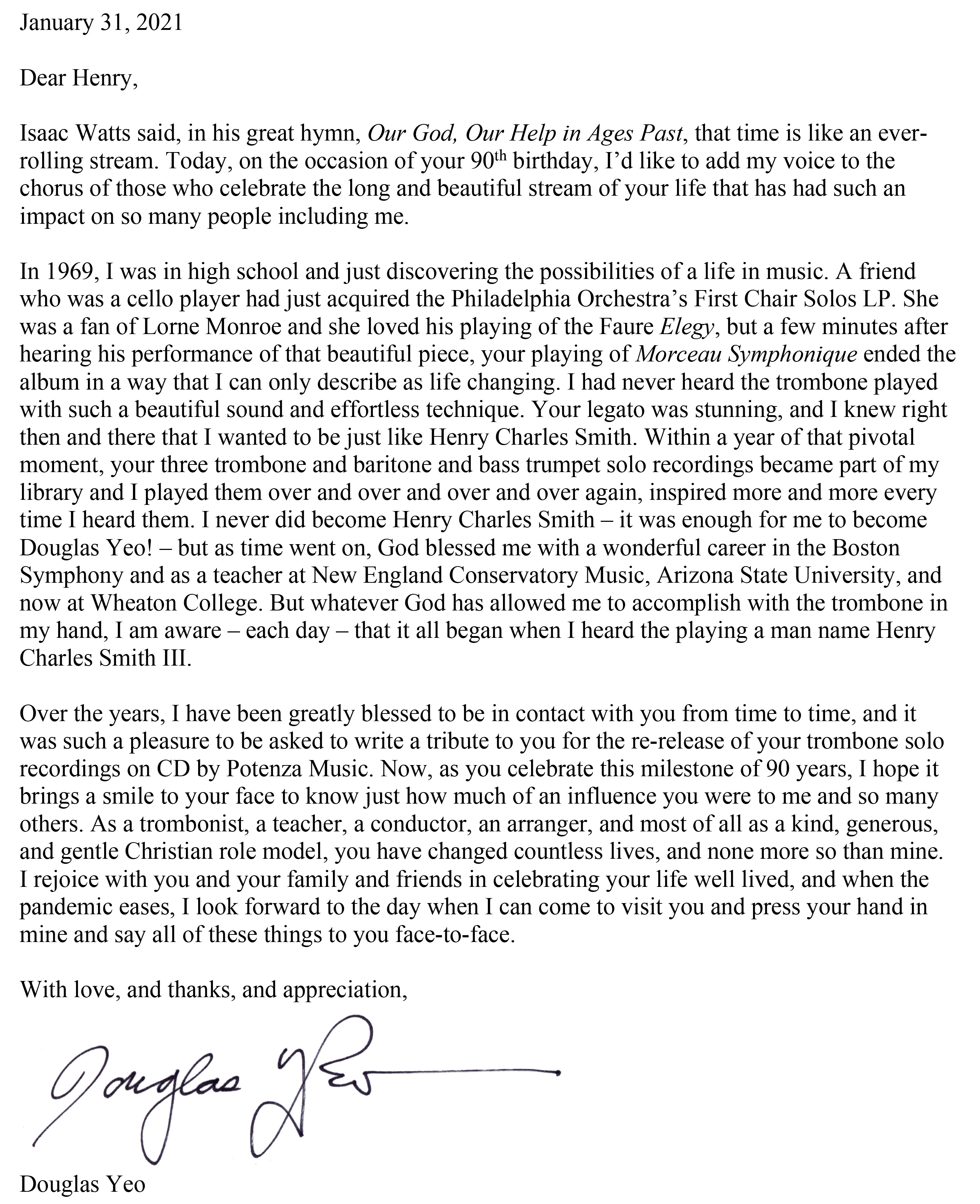
Earlier this year, Henry celebrated his 90th birthday. The coronavirus pandemic kept me from attending, but I sent him a congratulatory note, in which I reminded him (and those assembled at the party) of his influence on me. Here’s what I wrote:
At a time when brass players had a reputation for being the tough guys of the orchestra, Henry eschewed bravado. He was always a very gentle gentleman. In fact, he was a natural, both in life and as a musician.
McGlaughlin was right. Henry Charles Smith was a gentleman. Now that he has gone from this world to the next he is with the Savior he loved so dearly. Tomorrow, at our weekly trombone studio class at Wheaton College where I am the College’s trombone professor, we will spend the class listening to recordings by Henry. My students need to know about him, and we will pay tribute this remarkable man. We mourn the fact that Henry no longer walks among us, but his memory lives in the lives he touched, including mine. Thank you, Henry Charles Smith III.













 The Last Trombone – Douglas Yeo