Category: history

Trombone players: It’s time to bury Henry Fillmore’s “Lassus Trombone.”

Trombone players: It’s time to bury Henry Fillmore’s “Lassus Trombone.”

by Douglas Yeo (June 28, 2020)

NOTE: This article contains offensive material of an historical nature that is presented in an effort to inform the trombone community of a regrettable vestige of racism that continues to be a part of the trombone’s concert repertoire since it first came to light over 100 years ago. It is my hope that this article will lead trombonists around the world to make important, needed changes in the repertoire we choose for our recitals, and rid our concerts of music that is rooted in racial stereotyping and racist portrayals of African Americans.

UPDATE (July 6, 2020): Over 64,000 people have read this article since I wrote and published it a week ago. Today, I wrote a followup article, A path forward from Henry Fillmore’s “Lassus Trombone.” When you finish reading this article, please click HERE to read my response to the conversation that has been going on over the last week.

UPDATE (March 5, 2024): Since this article was posted on The Last Trombone, it has been viewed by over 1 million people, including those who have read it when it was reprinted in over a dozen music journals. The conversation continues.

In 1908, American composer Henry Fillmore (1881-1956) composed Miss Trombone for solo trombone and piano; it was published by his family’s company, Fillmore Music House of Cincinnati. Miss Trombone was a novelty piece in ragtime style and it featured slide glissandos, or what were also referred to at the time as “trombone smears.” The glissando is a signature feature of the trombone and Miss Trombone capitalized on the technique. By 1919, trombone glissandos were known by a new name: jazzes; the technique was called jazzing. Around that time, three method books were published that taught trombone players how to add  jazzing to their playing of popular music. These books were Mayhew L. Lake’s The Wizard Trombone Jazzer (Carl Fischer, 1919), Henry Fillmore’s Jazz Trombonist (Fillmore Music House, 1919), and Fortunato Sordillo’s Art of Jazzing for the Trombone (Oliver Ditson, 1920).

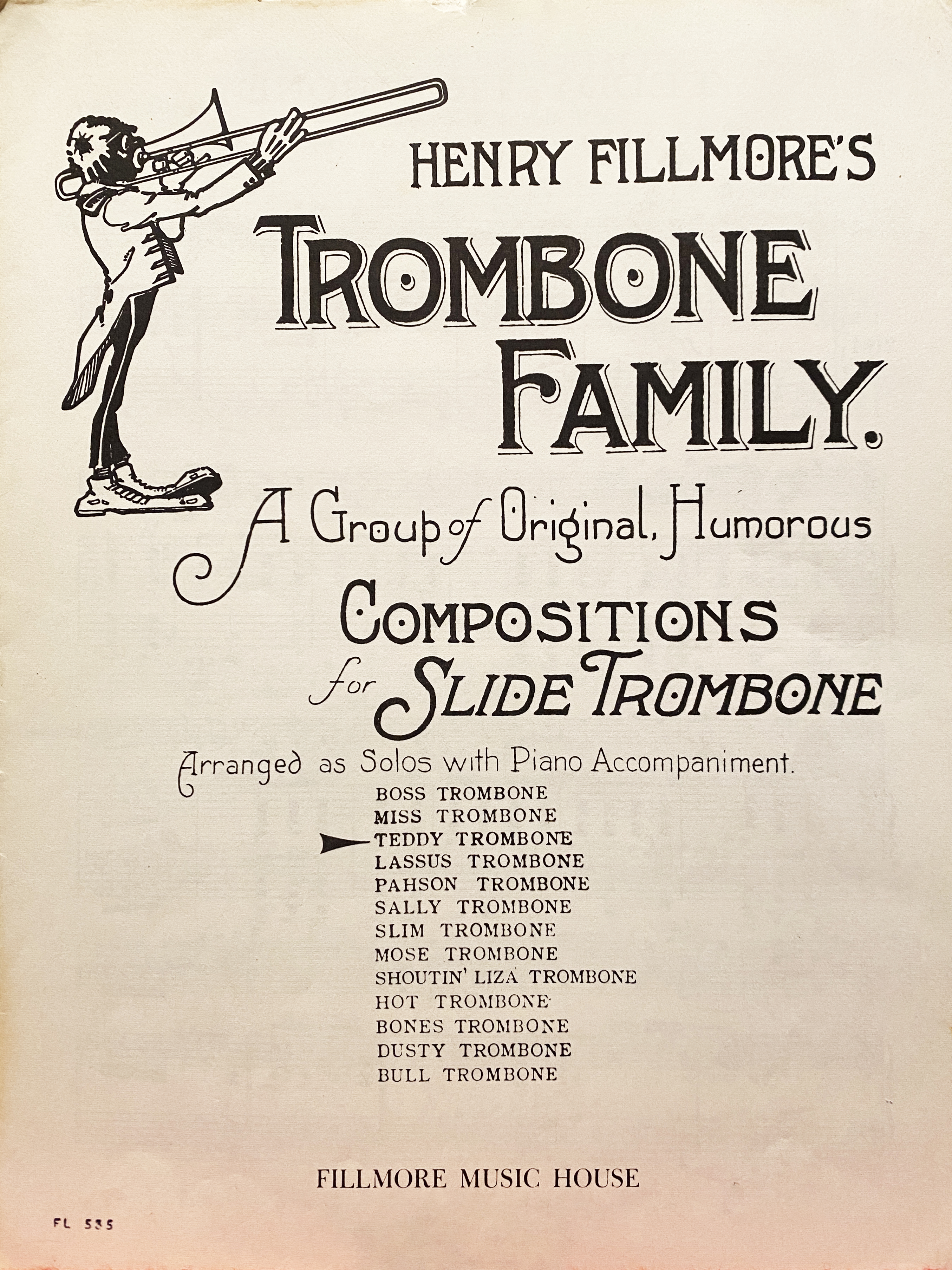
Miss Trombone was so successful that Fillmore followed it with more trombone solos in the same style, all with glissandos that ripped up and down the horn. The pieces had names that tied them together. Miss Trombone was followed by Teddy Trombone, and 13 others were added, and by 1929, the series was complete with the publication of Ham Trombone. Together, they were marketed as a set, The Trombone Family.

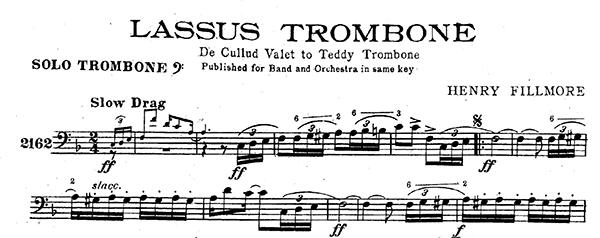
Trombone players have been playing these pieces for over 100 years. The most popular member of Fillmore’s Trombone Family has always been Lassus Trombone. It’s a piece that has appeared on countless trombone solo recitals, and trombone ensemble, band and orchestra concerts. YouTube features 8000 recordings of the piece.

But there is an uncomfortable truth about Henry Fillmore’s The Trombone Family. It was born and marketed in a crucible of racial stereotyping, minstrelsy, racism, and Jim Crow. It is time to put these pieces to rest, to bury them, to remove them from our concert programs, and do better when selecting music in the future. For those who are unaware of the racist background of Fillmore’s signature works, or who may respond by saying, “It’s not such a big deal,” here is the story. It matters.

The trombone glissando first appeared in classical music in Alexander Glazanov’s symphonic fantasy, The Sea, a work for orchestra that was composed in 1889. In time, it found its way into other classical works including Edward Elgar’s The Dream of Gerontius (1899) and Arnold Schoenberg’s Pelleas und Melisande (1902). For an excellent discussion of the trombone glissando in both classical and popular idioms, I refer readers to Trevor Herbert’s excellent article, “Trombone Glissando: A Case Study in Continuity and Change in Brass Instrument Performance Idioms” (Historic Brass Society Journal, Vol. 22, 2010, 1-18). The trombone glissando came into popular music by the turn of the century. Arthur Pryor recorded Trombone Sneeze: A Humoresque Cakewalk by Chris Sorensen Jr. with John Philip Sousa’s band in 1902 (Victor 1223); the piece is full of trombone smears. Have a listen below (to hear this piece on YouTube, click HERE):

It was not long before the trombone glissando began to be strongly associated with music that was a part of minstrel shows. These were entertainments that featured caricatures of African Americans, with both white performers in blackface and black performers made up to look like white performers in blackface. The shows were mostly presented for the benefit of white audiences, and the caricature of black culture that the shows embodied was a product of white, racist thought that saw African Americans as bumbling and unintelligent. Music that reinforced these stereotypes  was a a part of the Jim Crow era and it proved to be very popular among many whites. Arthur Pryor’s song (yes, THAT Arthur Pryor, the most famous trombone player in all history), A Coon Band Contest or The Tune That Won the Ham for That Coon Band, was published in 1899 and recorded by his band in 1906. It’s a typical example of the genre of music that used racial stereotyping as a marketing tool. The cover of A Coon Band Contest (see below) featured a caricature of a bulging-eyed African American trombonist with several stereotypical depictions of other blacks who were listening to and conducting the trombonist (including a large lipped conductor and a suspender clad man emptying the trombone’s water key onto another person who protects him/herself with an umbrella). The publisher of the song, The Bell Music Company, probably thought the cover was cute. It wasn’t. Racism is never cute.
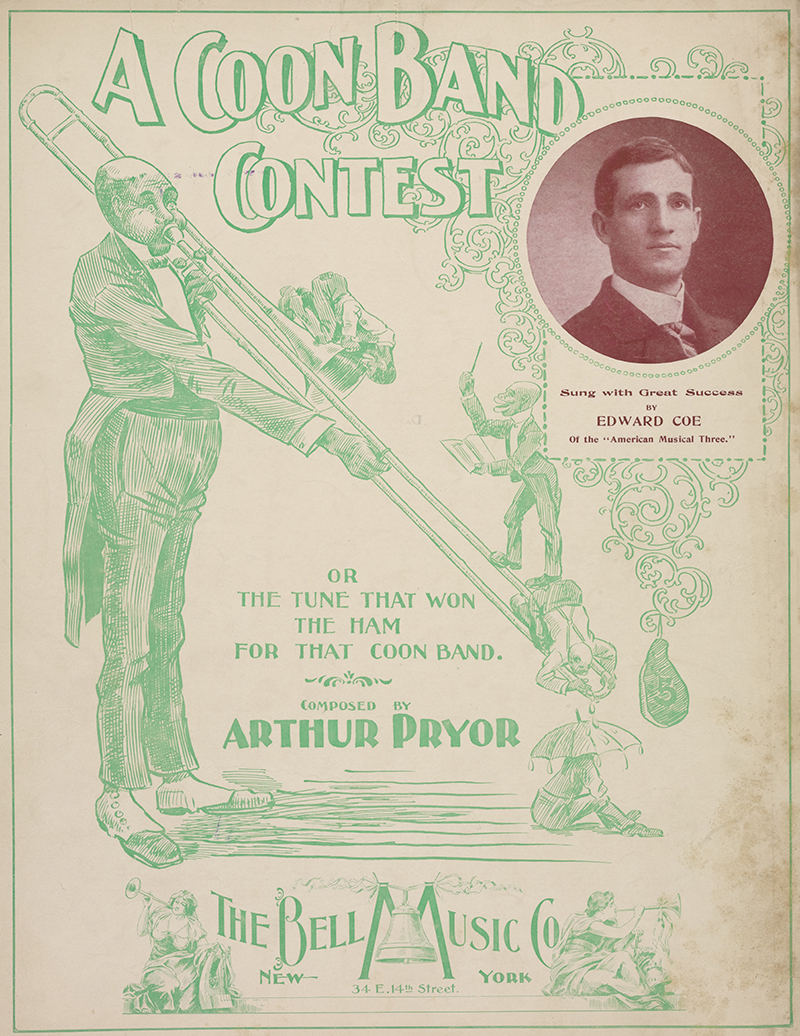
Pryor_A_Coon_Band_Contest_cover_sm

Into this environment of demeaning portrayals of African Americans walked Henry Fillmore. By the time Miss Trombone was published in 1908, the cakewalk had given way to ragtime which was beginning to morph to what was first referred to as “jass” and then jazz. There was no reason that Fillmore’s Trombone Family had to caricature an African American family except for one simple fact: placing Miss Trombone and her family members into the environment of minstrelsy and racial stereotyping sold music to whites and their audiences.

All of the pieces in Fillmore’s Trombone Family featured trombone smears and they were given subtitles to frame them in the context of his fictional black family, what he called a “cullu’d fambly.” A look at all of the titles takes us into uncomfortable territory.

Miss Trombone (1908): A Slippery Rag

Teddy Trombone (1911): A Brother to Miss Trombone

Lassus Trombone (1915): De Cullud Valet to Miss Trombone

Pahson [Parson] Trombone (1916): Lassus Trombone’s ‘Ole Man

Sally Trombone (1917): Pahson Trombone’s Eldest Gal – Some Crow!

Slim Trombone (1917): Sally Trombone’s City Cousin – the Jazzin’ One Step Kid

Mose Trombone (1919): He’s Slim Trombone’s Buddy

Shoutin’ Liza Trombone (1920): Mose Trombone’s Ah-finity

Hot Trombone (1921): He’s Jes a Fren’ ob Shoutin’ Liza Trombone

Bones Trombone (1922): He’s Jes as Warm as Hot Trombone

Dusty Trombone (1923): He’s de Next Door Neighbor to Bones Trombone

Bull Trombone (1924): A Cullud Toreador

Lucky Trombone (1926): He’s de Thirteenth Member uv de Fambly

Boss Trombone (1929): He’s de Head Man

Ham Trombone (1929): A Cullud Bahbaque

Many of the subtitles are given in a caricatured African American dialect, something that, when done by whites, has always been racist. Fillmore, when asked about the title, “Lassus Trombone,” had a standard answer: “Why, molasses, of course. I really don’t know why except I thought of molasses on bread for breakfast, dinner, and supper.” However, as J. Stanley Lemons pointed out in his important article, “Black Stereotypes as Reflected in Popular Culture, 1880-1920” (American Quarterly, Spring 1977, Vol. 29, No. 1), the minstrel-era character of Jim Crow “spent his time sleeping’, fishing’, hunting’ ‘possums, or shuffling’ along slower than molasses.” Molasses was one of many stereotypical tropes used to represent “the slow-thinking, slow-moving country and plantation darkey.”  It’s worth noting that Shoutin’ Liza Trombone was originally titled Hallelujah Trombone. But Fillmore’s father, James Henry Fillmore Sr. (1849-1936), a prolific composer of hymns and a publisher of hymnals, disapproved of the piece’s appropriation of the opening measures of Georg Frideric Handel’s Hallelujah Chorus from Messiah. In deference to his father, Henry Fillmore changed the piece’s title. Unfortunately, Henry’s father didn’t disapprove of his son’s racist portrayals in The Trombone Family—the pieces were all published during his lifetime. Offending Handel was off limits. But offending African Americans? It was par for the course.

Fillmore’s marketing of The Trombone Family with its stereotyping of blacks would be offensive enough. But it is for his advertising campaign for the music that Fillmore reserved his most outrageous insults.

The first ad reproduced below appeared in February 1919 in The Musical Messenger, “a monthly band and orchestra journal” published by Fillmore Music House. The second one was published in Jacobs Orchestra Monthly in September 1918. These racist ads were at the heart of Fillmore’s advertising for The Trombone Family. The cartoon of Slim Trombone in the Jacobs Orchestra Monthly ad is taken directly from advertising by Harvey’s Greater Minstrels for its trombonist, Slim Jim Austin. There can be no doubt that Fillmore’s Slim Trombone was given its title to capitalize on the popularity of Austin on the minstrel show circuit. And the image of the floppy shoed  trombone player in blackface in the ad from The Musical Messenger appeared on the cover of the sheet music for each of the pieces. The language of the ads needs no explanation. It is disgusting stuff.
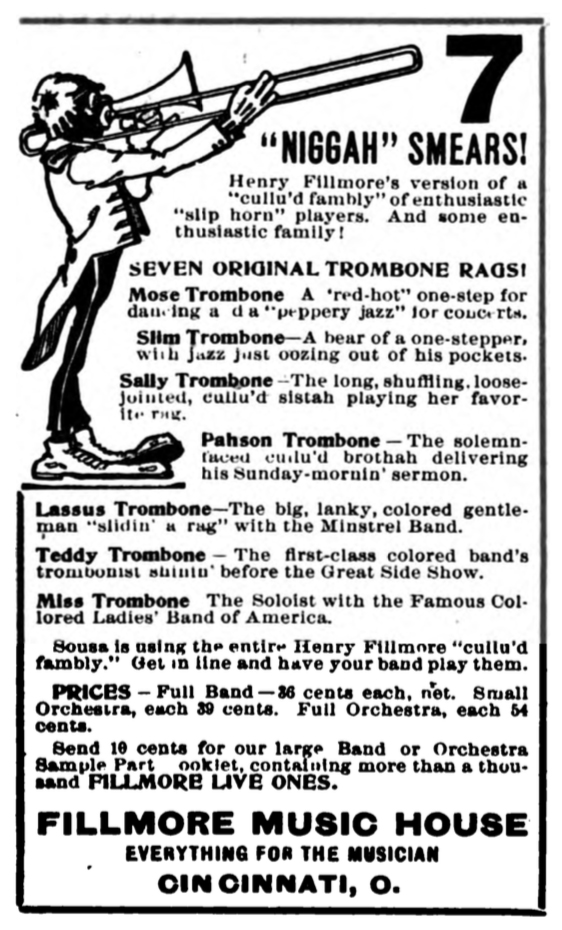
Fillmore_Trombone_Family_ad_1919.1

Fillmore_Trombone_Family_ad_1919.2

Fillmore_Trombone_Family_cover

Had enough? Yet in the face of all of this, some may protest. “But Fillmore was just a product of his time. Minstrelsy and blackface were socially acceptable and he was just playing to the market.” This kind of apology just won’t do. It is revisionist history, a fiction promulgated by white “scholars” and others who try to make a distinction between “good minstrelsy” and “bad minstrelsy,” between “good blackface” and “bad blackface.” The truth of the matter is that there never was good minstrelsy or good blackface. It has always been offensive. Always. And the use of the “n-word” by whites was always offensive. Always. It was offensive in the nineteenth century, it was offensive in the twentieth century, and it is offensive today. Minstrelsy did not originate in or reflect the true black experience and true black cultural practices. It was a racist caricature of black life that was based in racial ridicule. It was always offensive, it was always racist, and it was always wrong. Henry Fillmore’s The Trombone Family promoted the racial stereotypes promulgated by the minstrel show era,  promoted white domination of blacks, and reinforced harmful, hurtful stereotypes that are still, regrettably, with us today.

So, what to do about Lassus Trombone?

In his message to Congress on December 1, 1862, Abraham Lincoln said, “Fellow citizens, we cannot erase history.” That is true. History is history; it happened; we can’t change it. When we view history, we need clear eyes. And clear eyes lead me to only one conclusion: It is time to bury Henry Fillmore’s Lassus Trombone and The Trombone Family. They were born of racism and a racist culture. They padded the pockets of the Fillmore Music House and, later, Carl Fischer Co. which took over the copyright from The Trombone Family, and in recent years, since the works went out of copyright, a host of publishers around the world. Fillmore’s racist portrayals of African Americans sold. Racism was good business.

It is time for this to stop.

First, we need to inform our trombone community about the story behind these pieces that have been such a part of the fabric of the trombone’s performance history of the last 100 years. For instance, several years ago, I was invited to be guest artist at a major American university, to give a masterclass, solo with the university’s trombone choir, and conduct a massed trombone choir of high school and college students. The school’s trombone professor—a very good friend of mine—and I engaged in a conversation about what piece I might choose to conduct. He said he had a really nice arrangement of Lassus Trombone for trombone ensemble that he had used on many occasions; he thought it might be a good closer for the concert. I told him I would not conduct Lassus Trombone, and I shared with him the story behind the piece that I have laid out in this article. He was horrified; he didn’t know. He had no idea of the racist roots of Lassus Trombone. And he was so grateful that I told him. Lassus Trombone quickly disappeared from his trombone choir’s library. I conducted Simon Wills’ Tinguely’s Fountain instead.

Second, it is time for us to bury Lassus Trombone and the other members of Fillmore’s Trombone Family.  We don’t need them. We don’t need to play music that is rooted in racism and racial stereotypes. We don’t need to play music that makes fun of any person. There are other pieces in the trombone glissando “jazzing” tradition that would make for a fine substitute for Lassus Trombone on a recital program. Why not try Mayhew L. Lake’s Slidus Trombonus? Composed in 1915—the same year Lassus Trombone was written—it was written for Gardell Simons. He was the celebrated soloist with Patrick Conway’s Band who also played principal trombone with the Philadelphia Orchestra from 1915-1930, and the piece was recorded by Conway’s band in 1916. You can hear Conway’s recording of Slidus Trombonus on the Library of Congress website by clicking HERE. And I have scanned my copy of Slidus Trombonus (which is in the public domain) and made it available for free on my website. You can download the trombone and piano music to Lake’s humorous piece by clicking HERE.
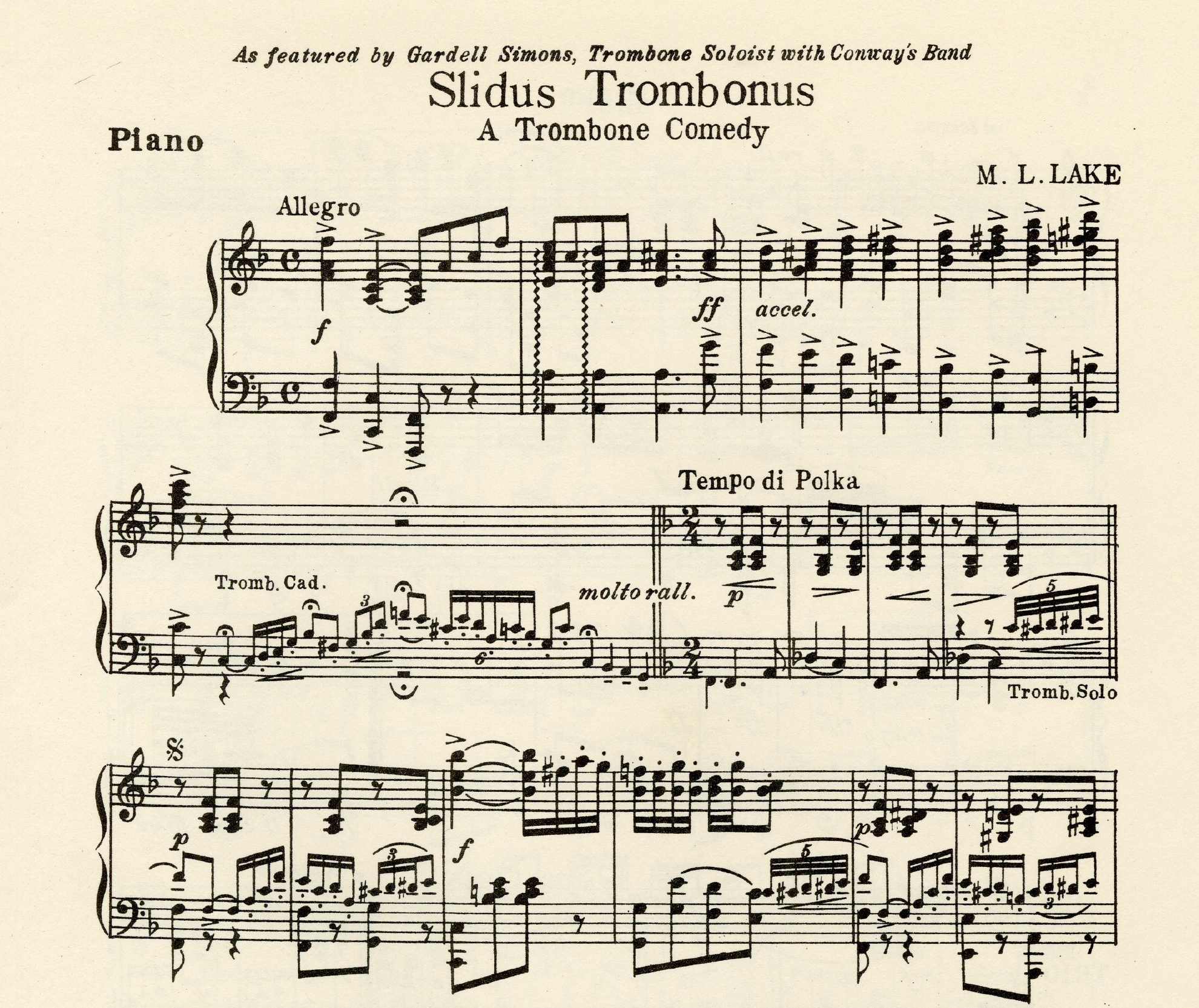
Lake Slidus Trombonus

“We cannot escape history.” But we can learn from it. We must learn from it. For over 100 years, trombone players have been complicit in continuing and fostering harmful racial stereotypes by performing Henry Fillmore’s Lassus Trombone and other pieces from The Trombone Family. We can do better. We must do better. And we will do better.

[UPDATE: One way to do better is to consider alternative programming. See my second article about this issue, “A Path Forward From Henry Fillmore’s ‘Lassus Trombone'”, where I discuss the trombone glissando rags of African-American composer Nathaniel Cleophas Davis, whose five rags were composed around the same time as Henry Fillmore’s The Trombone Family. These are excellent works that are available for band and have also been newly arranged for trombone and piano. And they do not carry the baggage of racial stereotyping.]

This is not a matter of political correctness or of censorship. This is a matter of righting a wrong and doing the right thing.

And here is something else. There is someone else who is doing the right thing with this. I began writing this article yesterday, June 27, 2020. I woke up very early this morning and went right to my computer to complete it. Between proofreading sessions, I went to look at my email “in” box and found a message from my friend, Gordon Cherry, founder and owner of Cherry Classics, one of the largest publishers of music for brass instruments in the world. Gordon is the retired principal trombonist of the Vancouver Symphony and his Cherry Classics catalog is very deep and wide. Gordon and I are in contact about various issues from time to time and he had something important he wanted to share with me. Gordon said that he had come to the realization—a realization that had been hiding in plain sight but that he just didn’t put all together until last week—that he was profiting by selling two arrangements of Lassus Trombone. Gordon told me that he plans to remove those arrangements from his catalog—something he will do tonight—and send a message to his email list of 6000 subscribers to tell them why he is removing this piece that has its origin in racial stereotyping. Gordon wanted to let me know about his thinking about this and he wanted to know what I thought about it. We just finished a FaceTime call where we both marveled that the two of us, friends separated by 2,000 miles, were thinking about the same issue in the very same way at the very same time, and that both of us had decided to do something about it. Thank you, Gordon, for doing the right thing. He has set a model for all publishers. Sometimes doing the right thing is more important than making another dollar. This is one of those times.

If you’d like to join me in removing Lassus Trombone and The Trombone Family from today’s trombone repertoire conversations, please feel free to share this article on social media and other types of platforms. Let’s get the message out. Ending racial stereotypes matters. Thank you for doing your part in this.

NOTE: Now that you have read this article, please click HERE to read my followup article, “A path forward from Henry Fillmore’s “Lassus Trombone.”

NOTE: I also welcome you to read my article, “Lassus Trombone: Now That You Know, What Do You Do? A conversation about music, marketing, hurt, and healing,” that appeared in Vol. 51, No. 3 (July 2023) issue of the International Trombone Association Journal. The article contains more historical perspective on the subject of music and minstrelsy and it answers the argument, “Well, it was acceptable at the time so. . .” You can read/download that article HERE.

© 2020, Douglas Yeo. All rights reserved.

Loud, Louder, Loudest: How Classical Music Started to Roar (New York Times)

Loud, Louder, Loudest: How Classical Music Started to Roar (New York Times)

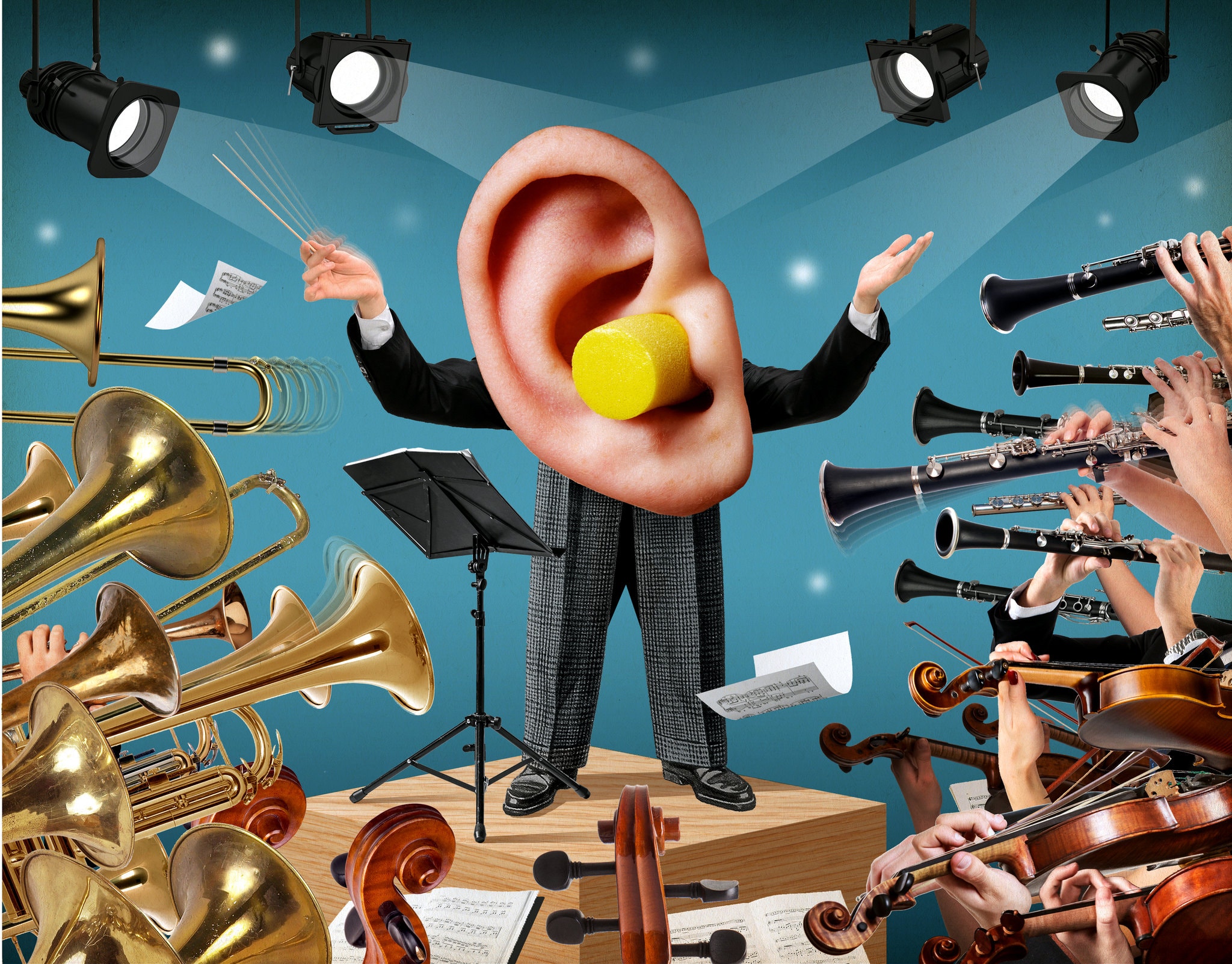
Last night, The New York Times published an article by Corinna da Fonseca-Wollheim, “Loud, Louder, Loudest: How Classical Music Started to Roar.” She reached out to me a little over a year ago, asking if she could interview me for a planned story about the trend toward excessively loud dynamics in symphony orchestras. You will find several quotations from me in her article.

The subject has interested me for many years and I was pleased to speak with Corinna; I think her article is insightful and thought provoking. And I must say that I think that Michael Waraska’s illustration that accompanies Corinna’s article is absolutely superb.

Loudness_NY_Times_Michael_Waraksa

[Above: illustration for The New York Times by Michael Waraksa, 2020.]

Waraksa’s image is in the spirit of a much earlier one that addressed the same issue of loud dynamic levels at classical music concerts. In 1845, Jean-Ignace-Isidore Gérard, who was known by the pseudonym Grandville, published a caricature of French composer Hector Berlioz. A year later, German caricaturist Anton Elfinger, known as Cajetan, adopted (and colorized) Grandville’s drawing; it was published in Allgemeine Theaterzeitzung (Jahrgang 39, No. 81, Vienna, April 4, 1846). This issue has been before us for a very long time, as Corinna da Fonseca-Wollheim describes in her superb article.

Berlioz_Grandville_1846

[Above: illustration for Allgemeine Theaterzeitzung, “Satirical Concert; a Concert in 1846!”, by Anton Elfinger after Grandville, 1846.]

To read Corinna da Fonseca-Wollheim’s article, click its title under Michael Waraska’s graphic below, or click HERE.

I have written several essays on this subject that appear on my website. The first, Me, Myself, and I: Are Brass Players Losing the Concept of Being Team Players?, was first published in the International Trombone Association Journal in 1997. It was subsequently reprinted in the T.U.B.A. Journal (now the Journal of the International Tuba Euphonium Association) later that year. My friend, Gene Pokorny, tubist of the Chicago Symphony, wrote an encouraging response to my article that also appeared in the T.U.B.A. Journal. You can read both my article and Gene Pokorny’s response by clicking HERE.

Then, later in 1997, I wrote another article which appears on the FAQ section of my website. I wrote an article that addressed this question:

I’ve been reading about problems with people complaining about excessive “noise” levels on stage in orchestras and bands, leading some players who sit near brass players to complain of hearing loss. What insights do you have on this situation?

The impetus to write this article came when a member of the Boston Symphony Orchestra—of which I was bass trombonist from 1985-2012—filed a complaint with the Unites States Occupational Safety and Health Administration (OSHA) about excessive noise levels on stage during rehearsals and concerts in Symphony Hall. That report and my commentary on the issue be viewed by clicking HERE.

My articles have generated a huge amount of discussion in the nearly 25 years since I first wrote them. They have been reprinted in dozens of blogs and they appear on many websites. I’m very happy that this important discussion is ongoing, and I salute Corinna da Fonseca-Wollheim for her superb contribution to the conversation.


A musical miscellany

A musical miscellany

I was trained as a classical musician although I am very grateful my musical life did not fit narrowly into that single stylistic box. I am a firm believer in the value of the pluralistic musical life, whether as a performer or listener. During my long career as bass trombonist of the Boston Symphony Orchestra (1985-2012), I was very fortunate to play much of the important canon of western orchestral music that contained trombones: Beethoven (Symphonies 5 and 9), Mozart (he didn’t score for trombones in his symphonies, but I played his Requiem and several operas), all of the symphonies of Brahms, Schumann, Mahler, Tchaikovsky, and Bruckner, the tone poems of Richard Strauss, and so much more. And this I was blessed to do with some of the finest conductors of the twentieth and twenty first centuries—including Leonard Bernstein, Bernard Haitink, Seiji Ozawa, James Levine, Simon Rattle, Sir Colin Davis, and many others—and great soloists—including Mstislav Rostropovich, Anne-Sophie Mutter, Yo-Yo Ma, Jesseye Norman, Evgeny Kissin, Thomas Quasthoff, Gil Shaham, and many others—who inspired me in countless ways.

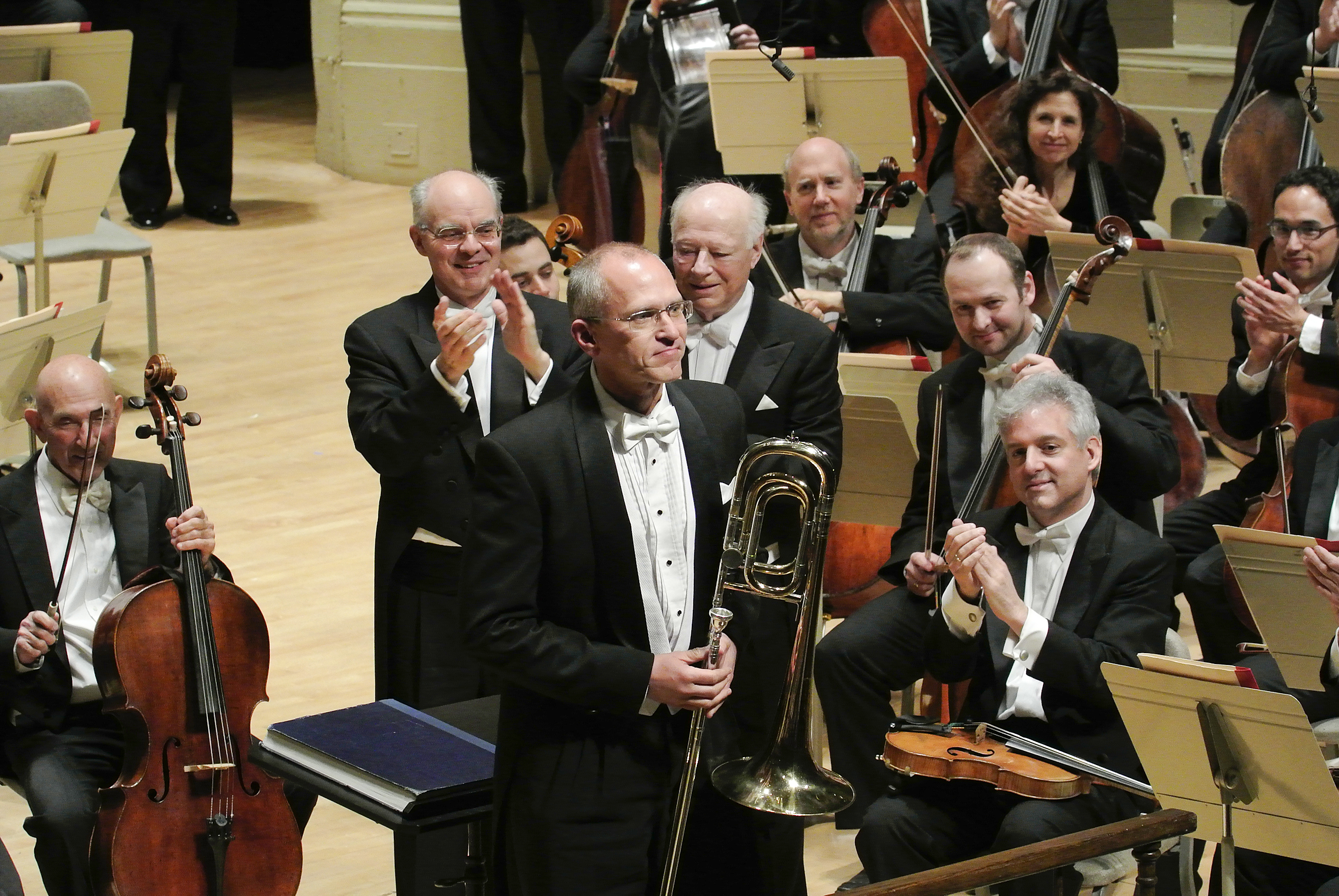
Yeo_Haitink_Sym_Hall_final_bow_2012

[Above: My final bow at Symphony Hall as a member of the Boston Symphony Orchestra, May 2012. Behind me, standing, are concertmaster Malcolm Lowe and conductor Bernard Haitink following a performance of Beethoven Symphony No. 9.]

After graduation from Wheaton College (IL) in 1976—where I studied trombone with Edward Kleinhammer (bass trombonist of the Chicago Symphony from 1940-1985) and I have now come full circle as the College’s trombone professor since fall 2019—my wife and I moved to New York City. There I had a remarkably diverse performing life, playing concerts with the Mostly Mozart Festival Orchestra and American Symphony, Broadway shows (many performance of “The King and I” starring Yul Brynner), studio jingles and record sessions, jazz bands (including the Gerry Mulligan Big Band, the Elgart Band, and the Dave Chesky Band), and the Goldman Band, with which I played many concerts under the batons of Richard Franko Goldman and Ainslee Cox.

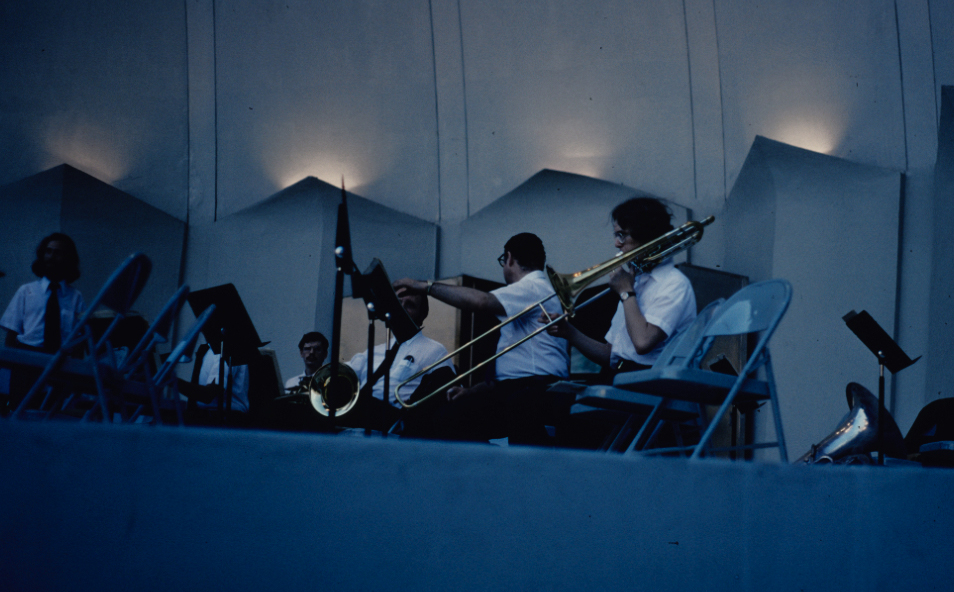
Douglas_Yeo_Goldman_Band_1977

[Photo above: That’s me, warming up before a concert by the Goldman Band, summer of 1977, at the Guggenheim Bandshell next to the Metropolitan Opera House, Lincoln Center. That summer, by the way, was when the New York City blackout of 1977 occurred on June 13, 1977. I was playing a concert with the Goldman Band at Lincoln Center at the moment the blackout struck. Seriously. But that’s another story. In this photo, sitting next to me, which his back to the camera, is trombonist Fred Braverman. Other members of the band at that time included William Arrowsmith, then principal oboist of the Metropolitan Opera, Abraham Perlstein, who had been the second trombonist of the NBC Symphony, and Bill Barber, tuba, who had played with Miles Davis in the seminal “Birth of the Cool” recording sessions and concerts. I learned a lot from my time playing in the Goldman Band. A. Lot.]

In all of this musical activity in New York City I was a free lancer, and a substitute in groups (apart from the Goldman band where I was a full member for four summer seasons, 1977-1980—six concerts a week for six weeks each summer). From day to day, I didn’t know what kind of music I might playing. The phone would ring, I would accept an engagement, gather up my trombone and bag of mutes, and head off to play. This plurality of musical styles served me well when I joined the Baltimore and then the Boston Symphony Orchestras, where “pops” concerts required me to play credibly in a host of styles.

Yeo_Brubeck_Concerto_Boston_Pops_Lockhart_2011

Some of the richest fruit of my early experience in the jazz and commercial worlds came when I performed the two Bass Trombone Concertos written by my friend, Chris Brubeck, with the Boston Pops Orchestra. Working with Chris was pure joy, as was meeting his father, Dave Brubeck. I played Chris’ first Bass Trombone Concerto several times with the Boston Pops, including a performance of the third movement, “James Brown in the Twilight Zone,” on national television as part of the “Evening at Pops” television show. The photo above shows me performing the Concerto with the Boston Pops in 2011, with Keith Lockhart, conductor (photo by Michael J. Lutch). Susan Stempleski reviewed the concert for classicalsource.com and wrote, in part:

Lockhart introduced Douglas Yeo, bass trombonist of the Boston Symphony and Boston Pops orchestras, who delivered a wonderful and lively rendition of “James Brown in the Twilight Zone”, a movement from Chris Brubeck’s jazz-flavored Concerto for Bass Trombone and Orchestra. Yeo’s virtuosic performance electrified the audience. Brubeck was in the audience.

Yeo_buccin_Hamamatsu_2015

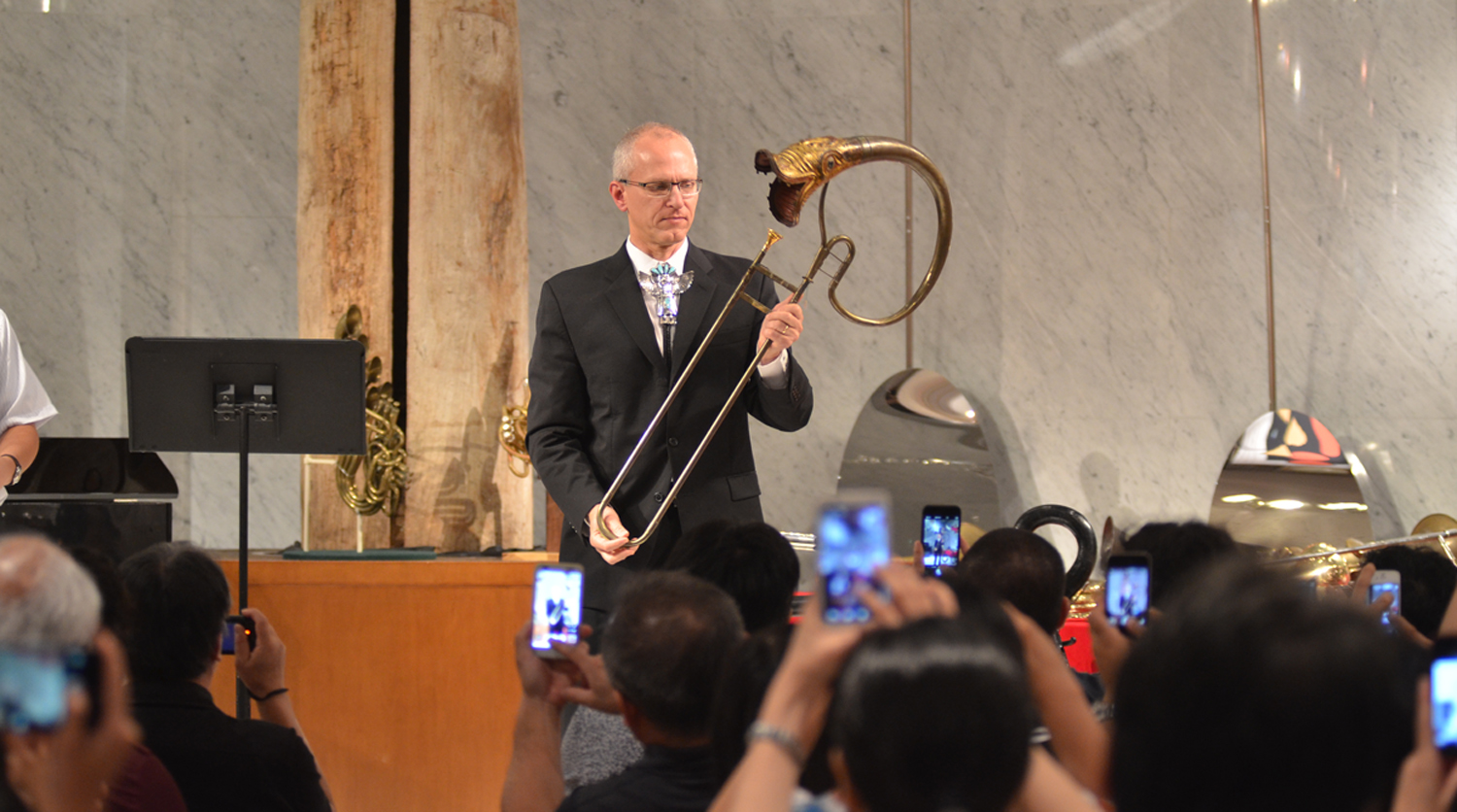
In 1996, I began my exploration into early music, first with serpent, then ophicleide, then the early trombone (often referred to as “sackbut”), buccin (dragon bell trombone), and six-valve trombone. This opened another musical world to me, where I have taken part in performances of music that I would not have ever played on bass trombone. I’ve played serpent on a host of pieces with orchestras (both modern orchestras and early music groups) including Hector Berlioz’s Messe solennelle and Symphonie fantastique, Mendelssohn’s Symphony No. 5 (Reformation) and Meerestille und glückliche Fahrt overture (Calm Seas and Prosperous Voyage), ophicleide on Berlioz’s Damnation of Faust and Mendelssohn’s A Midsummer Night’s Dream, and early trombone on Monteverdi’s Vespers of 1610 and L’Orfeo. And I’ve given many recitals that feature serpent, ophicleide, six-valve trombone, and buccin, such as when I gave a concert on nine different instruments in 2015 at the Hamamatsu Museum of Musical Instruments in Hamamatsu, Japan, shown in the photo above.

Today, in this season of life since I retired from the Boston Symphony in 2012, I feel exceptionally blessed to continue to explore playing music in a host of styles, genres, and types of ensembles. Recent months have brought a number of rewarding musical experiences into my orbit. I do not take this for granted, and I am grateful that I continue to get invitations to do interesting things with a trombone (or another instrument) in my hand.

Elijah_Austin_2019

In December 2019, I was in Austin, Texas, taking part in performances of Felix Mendelssohn’s oratorio, Elijah. The concerts were organized by George Dupere, Chief Musician of Redeemeer Presbyterian Church (PCA) in Austin. I have played this piece many times, both the bass trombone and ophicleide parts, and I never tire of it. Never. The piece is so masterfully composed, and it contains such tremendous drama. This time, I played ophicleide with a fine orchestra including some of our brass section, above (left to right): Jamey Van Zandt, Nathaniel Brickens, and Owen Homayoun, trombones, and Chris Carol and Shelby Lewis, natural trumpets.

Gordon_Pagliuca_Yeo_Midwest_2019

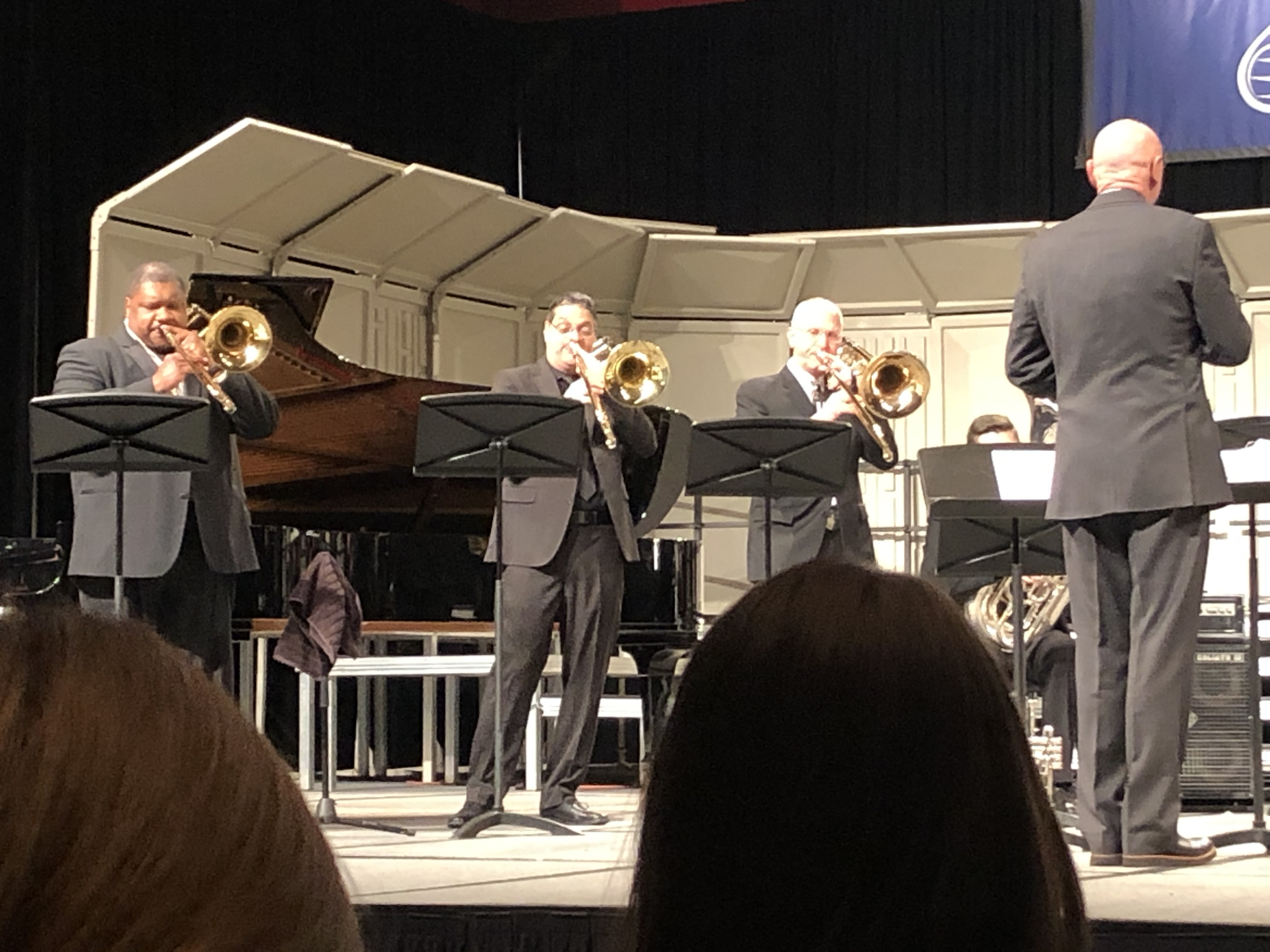
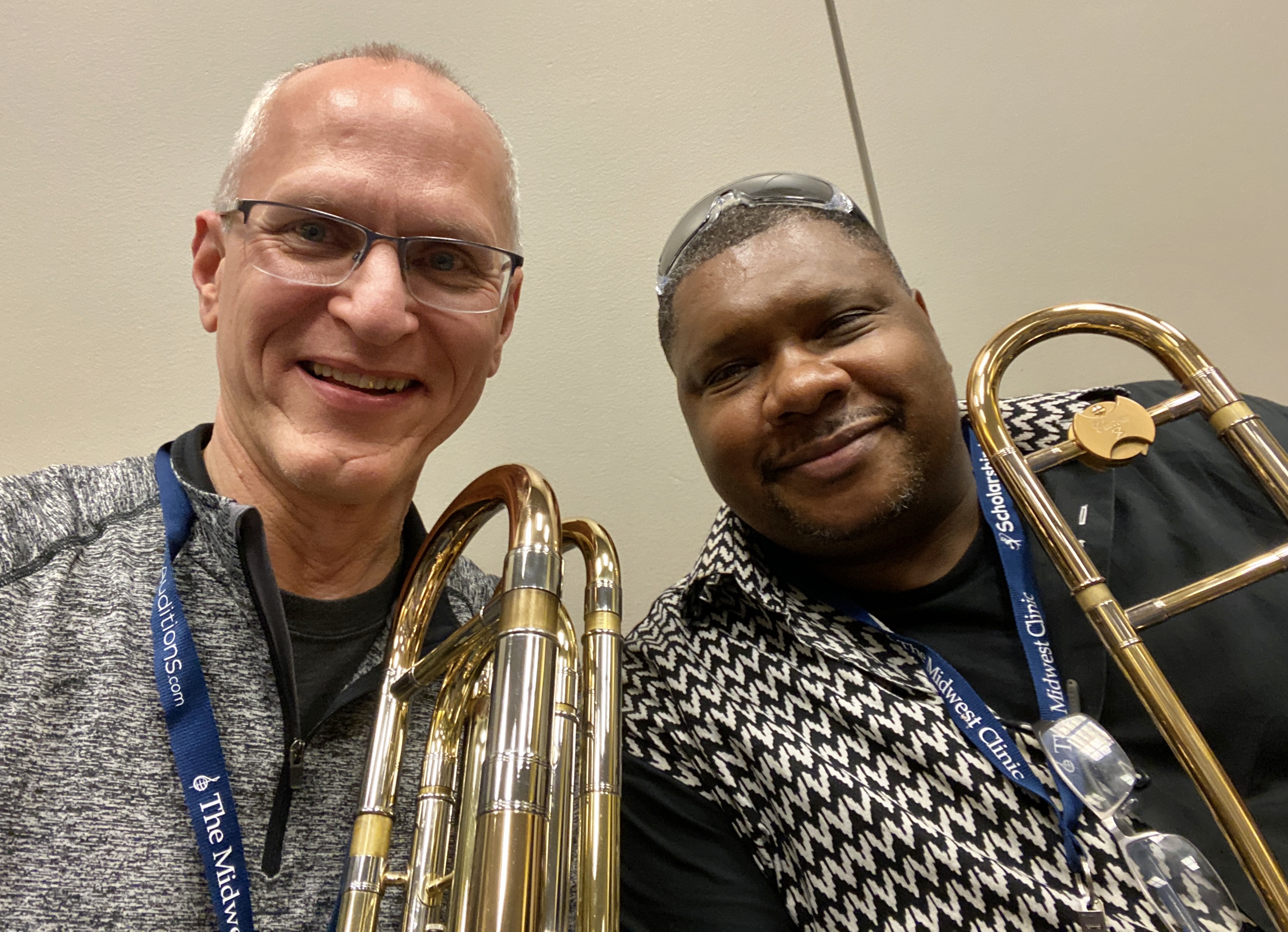
Just a few days later, I switched musical gears into the jazz world. I was delighted to be asked to be part of an “all star” brass jazz ensemble that was put together by YAMAHA for the Midwest Clinic, an annual convention held in Chicago. The Clinic features classes and performances over several days, and is one of the largest (the largest?) such events in the world. Our concert featured some terrific Christmas music, including carols arranged for trumpets, horns, trombones, tuba, and rhythm section by Stan Kenton, Ralph Carmichael, Sam Pilafian, JD Shaw, Jose Sibaja, and others. Boston Brass made up the core of the group and our trombone section (shown in performance above) consisted of Wycliffe Gordon, Domingo Pagliuca (of Boston Brass) and me. Great guys; great players. John Wittman conducted (shown in the photo on the right).

Yeo_trumpets_Midwest_2019

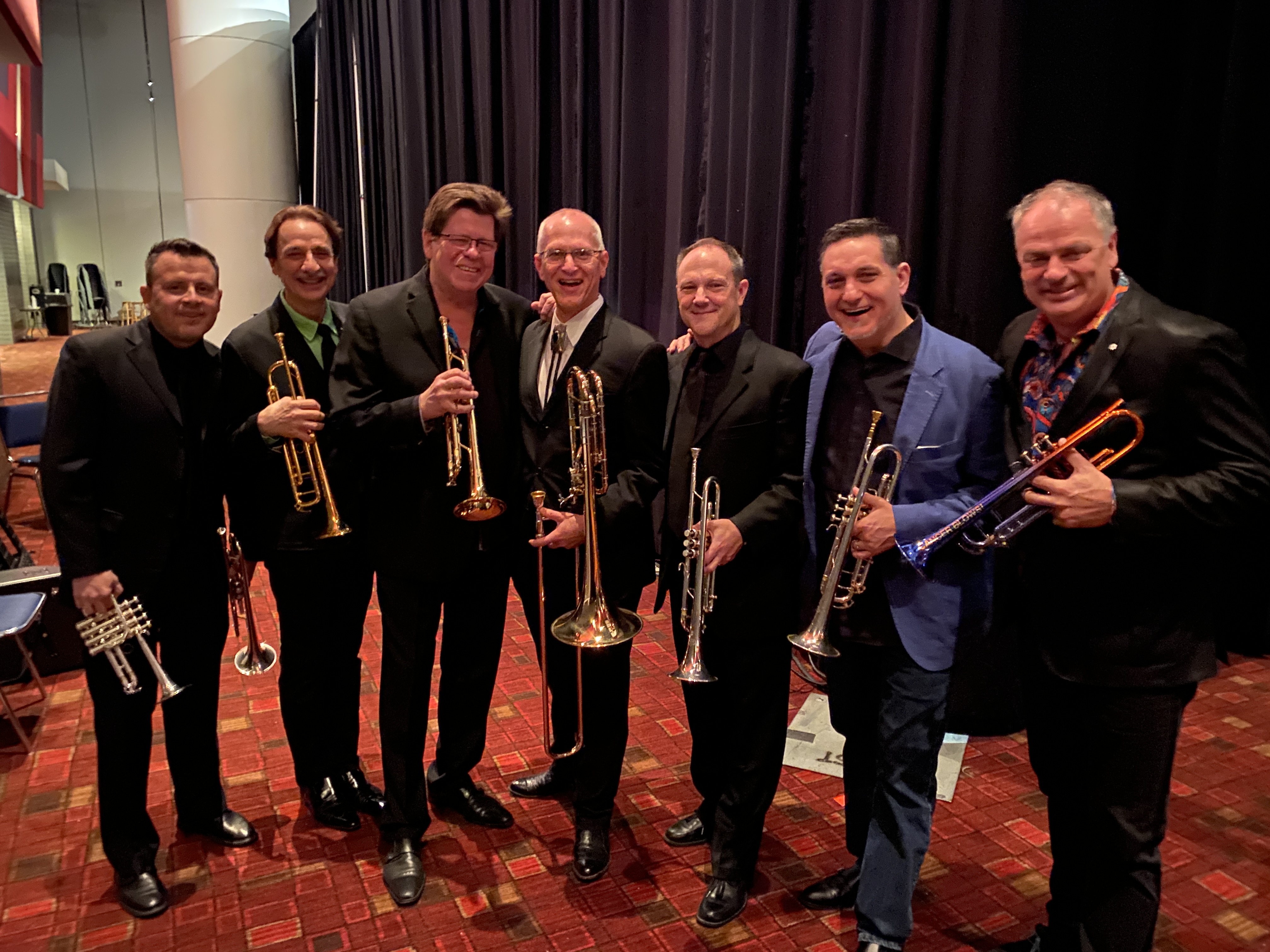
The trumpet section? Not a bad lineup, actually. Ha! Actually, this was a remarkable group of some of the greatest trumpet players in the world, shown backstage with me before the concert: Jose Sibaja (Boston Brass), Allen Vizzutti, Wayne Bergeron, (me), Jeff Conner (Boston Brass), Rex Richardson, and Jens Lindeman. Any questions?

Yeo_Gordon_Midwest_2019

It was such a pleasure to work with Wycliffe Gordon once again. He needs no introduction and it’s no secret to say he is one of the finest jazz trombonists of our time, for a long time member of the Lincoln Center Jazz Orchestra (I first met him at a joint concert between the LCJO and the Boston Symphony Orchestra), and now leader of his own combo. He has more albums out than I can count, and we are simpatico in so many ways. For years I’ve referred to Wycliffe as “my brother from another mother.”

In 2015, Arizona State University hosted Wycliffe for some masterclasses; this happened  while I was Professor of Trombone at ASU. I included his trombone ensemble piece, Dear Lord, I Love Thee on our April 2015 concert. Have a look and listen, above (to open this video in YouTube, click HERE). It was really, really great to see and work with Wycliffe again at the Midwest Clinic.

Kanda_Yeo_SLLBC_2020

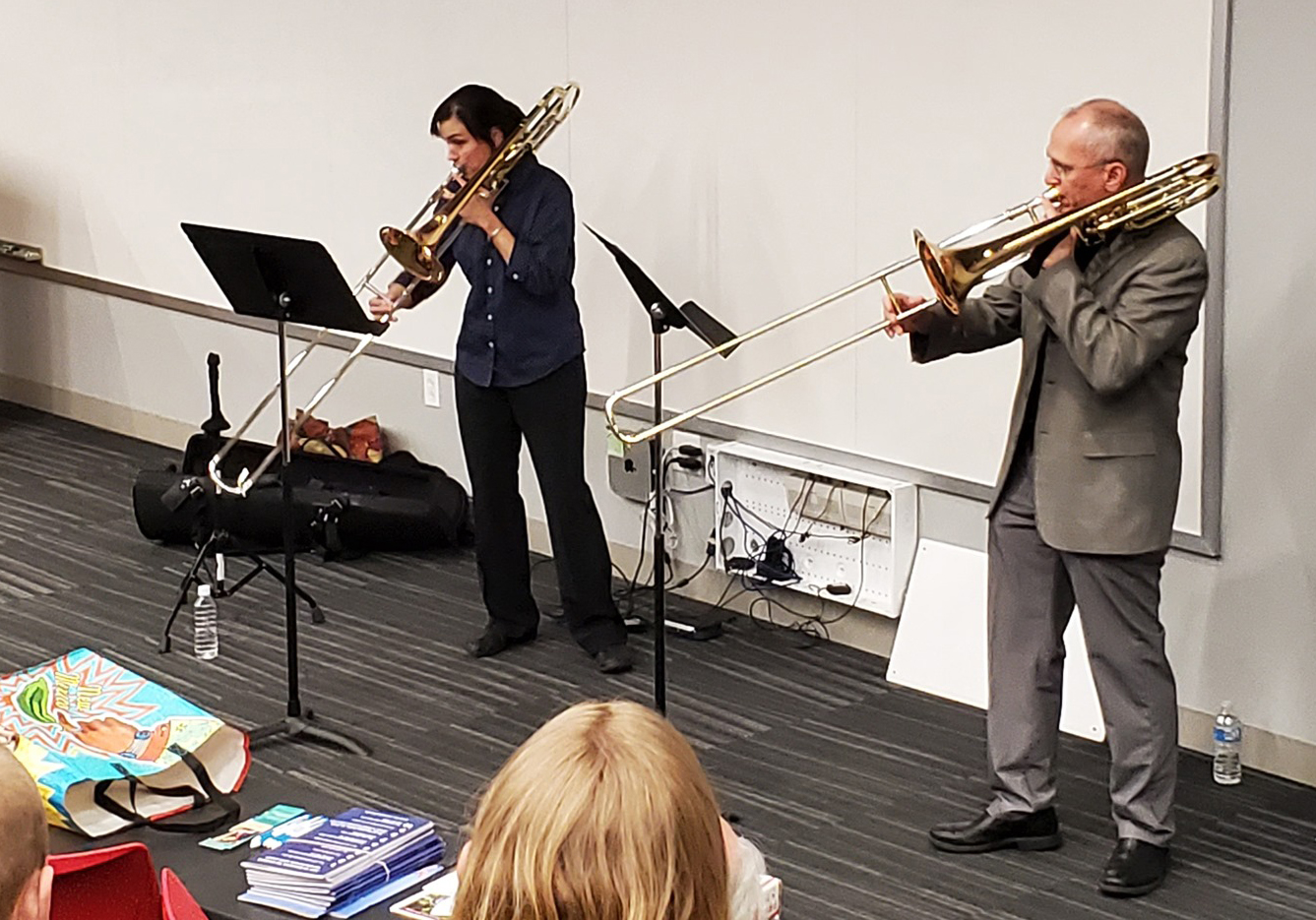
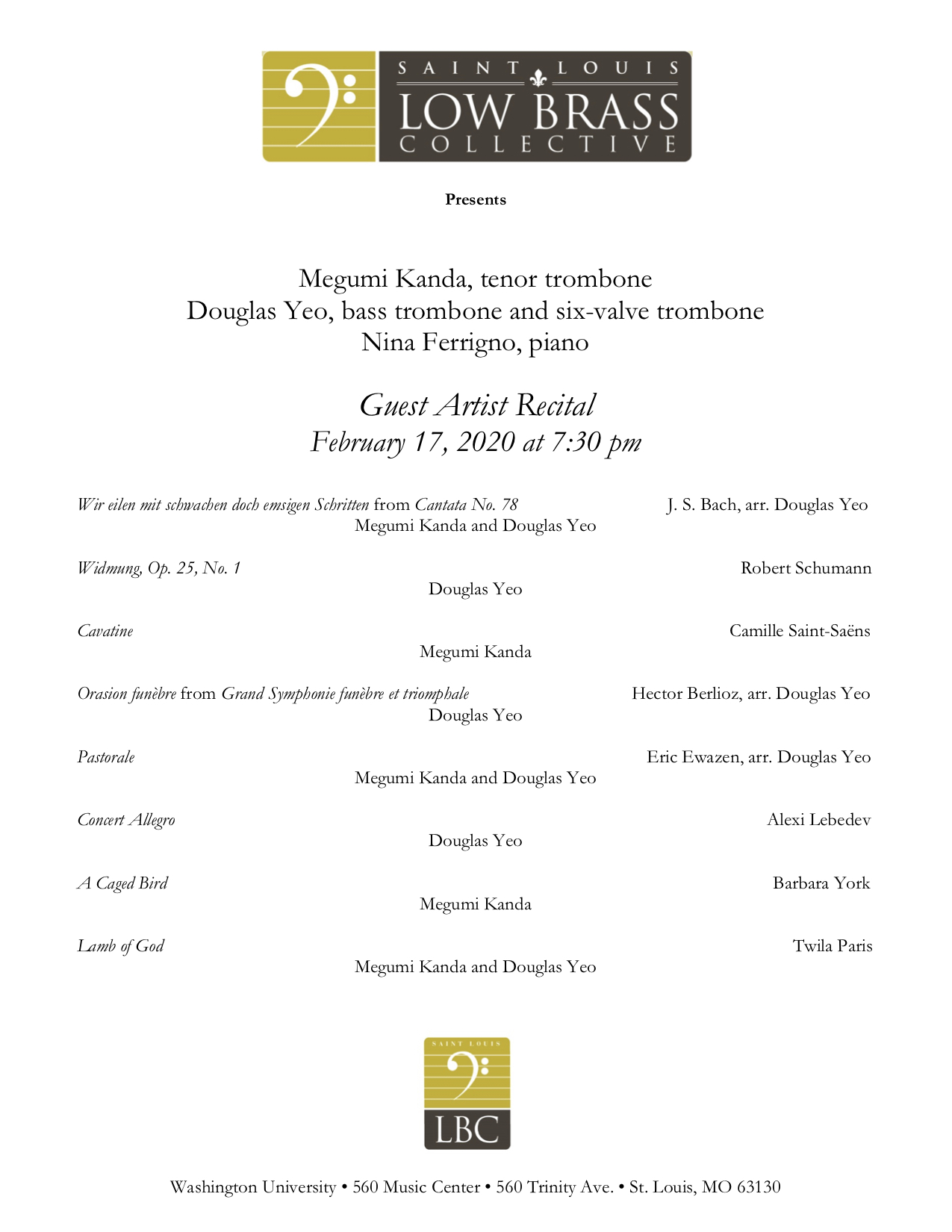
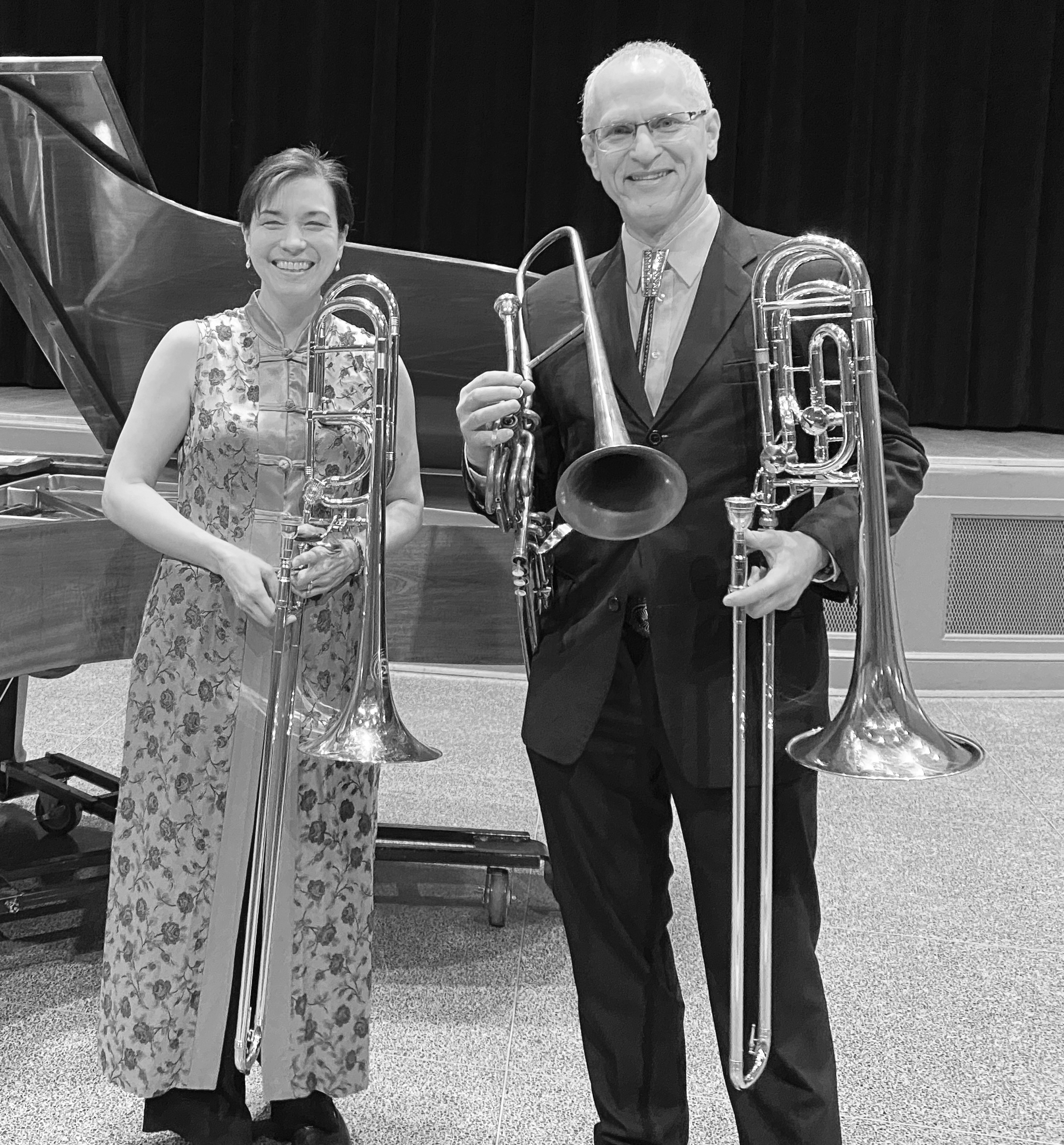
February 2020 brought more fun in a different musical world. My good friend Megumi Kanda—principal trombonist of the Milwaukee Symphony— and I travelled to St. Louis to give a joint recital and masterclass, sponsored by the St. Louis Low Brass Collective (STLLBC). Megumi is a superb player and wonderful person (I often refer to her as “my sister from another mother”), and we have done a number of joint events over the years. We also are authors of books about trombone orchestral excerpts and performance. Published by Encore Music Publishers, the annotated orchestral excerpt books, The One Hundred: Essential Works for the Symphonic Trombonist and The One Hundred: Essential Works for the Symphonic Bass Trombonist. To all of you who are reading this who have made our books part of your library: Thank you! And if you’re interested in the books, just click the links on the titles, above.

We began our masterclass with a duet, a movement of Philipp Telemann’s Canonic Sonata No. 3 that I arranged for inclusion in my book, Trombone Essentials, published by G. Schirmer.

Megumi_Kanda_SLLBC_2020

Yeo_SLLBC_2020

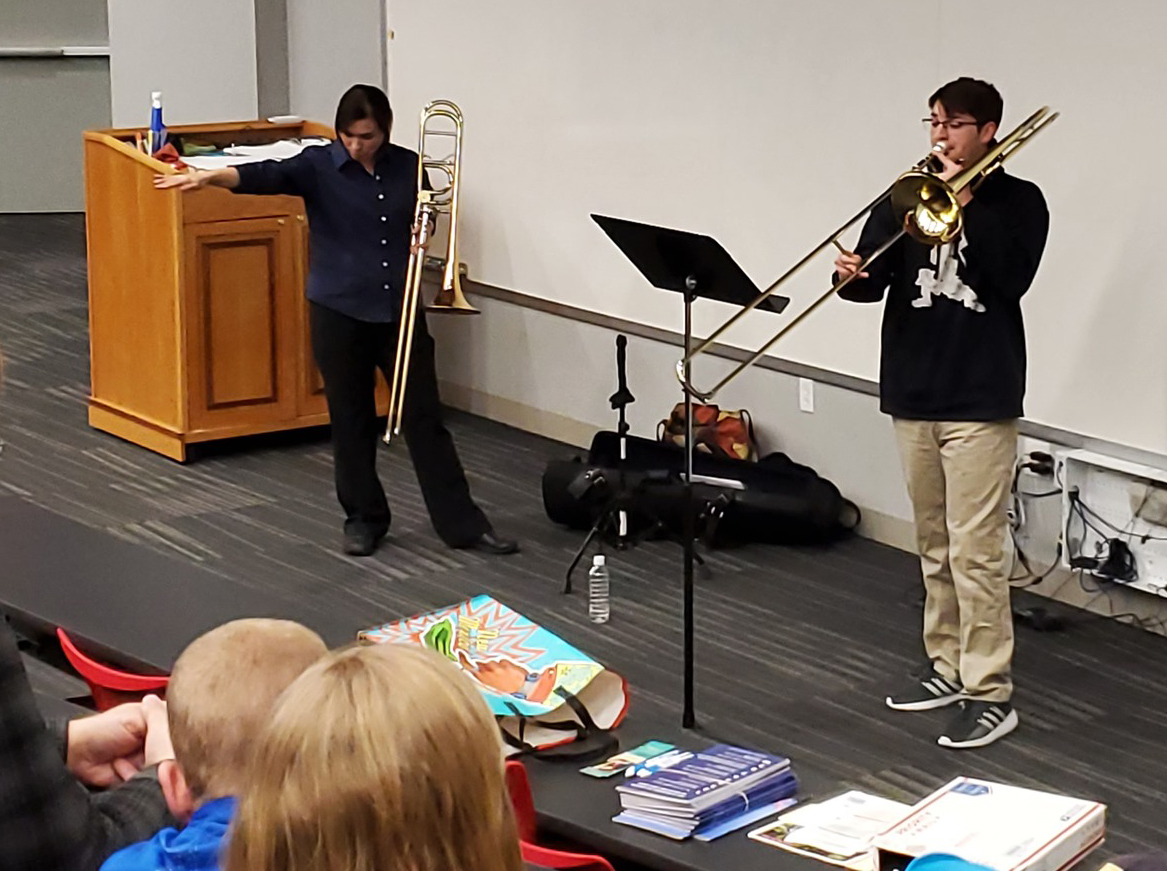
We continued the class by each speaking to the assembled audience and then working with several young players. As you can see from the photos above, Megumi and I tend to be  similarly demonstrative when we teach. How about a caption contest?! By the way, I should mention that Megumi is the recipient of the International Trombone Association’s 2020 ITA Award, the Association’s highest honor. She is so deserving of this honor, and it’s a pleasure for me—the 2014 recipient of the ITA Award—to welcome her into this special group of trombonists who have been so honored. I am at work on an article about her to be published later this year in the ITA Journal. Stay tuned; she has quite a story to tell!

Kanda_Yeo_Recital_program_St_Louis_2020

Kanda_Yeo_St_Louis_2020

Our recital on February 17 featured us playing solos and duets. I even used my six-valve trombone to perform Hector Berlioz’s Orasion funèbre from his Grand symphonie funèbre et triumphale. I want to send a shout out and big thank you to my good friend, Gerry Pagano (bass trombonist of the St. Louis Symphony) and all of those in the STLLBC who made this trip possible.

Gaudete_Yeo_Wheaton_College_selfie_2020

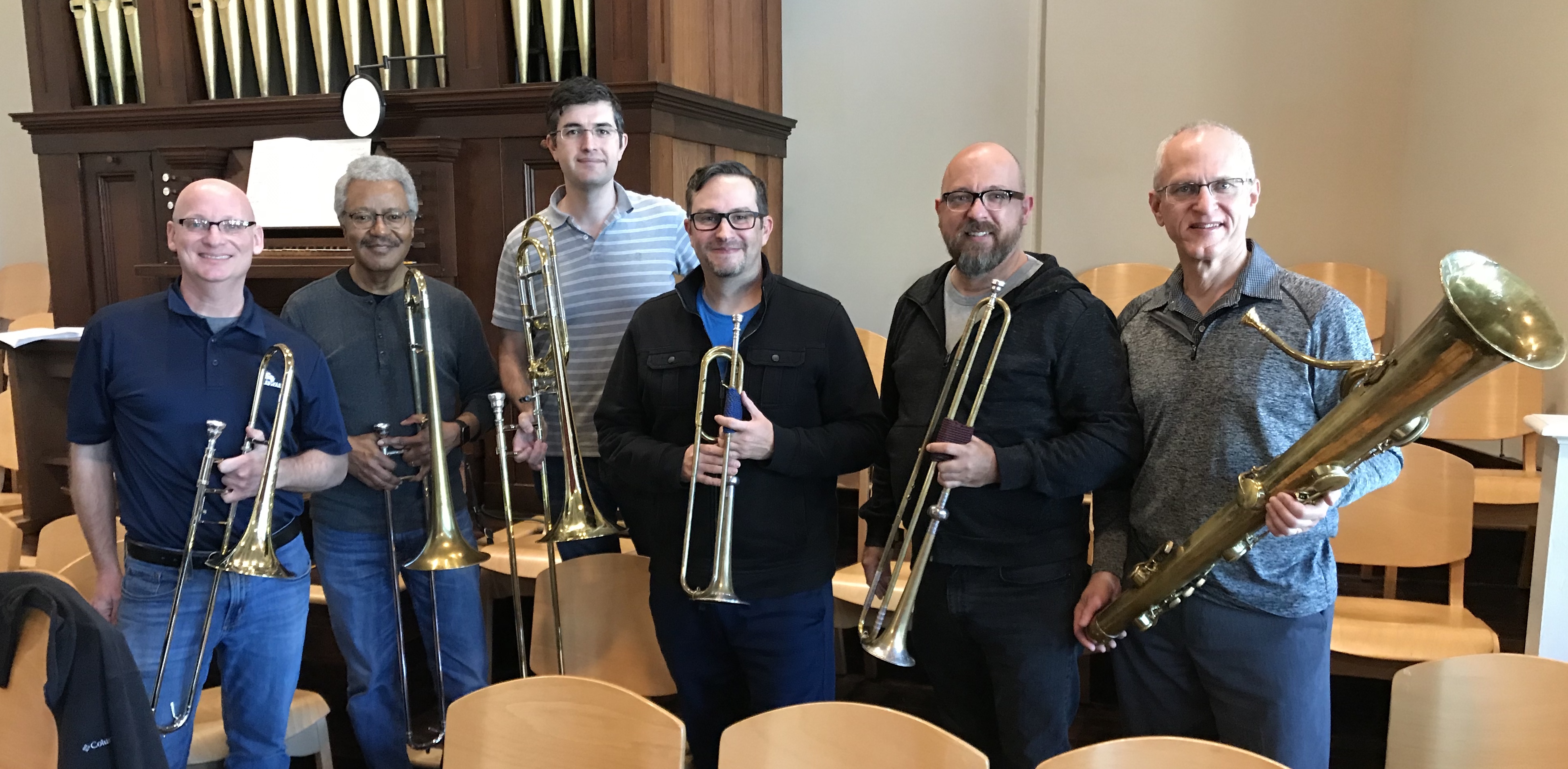
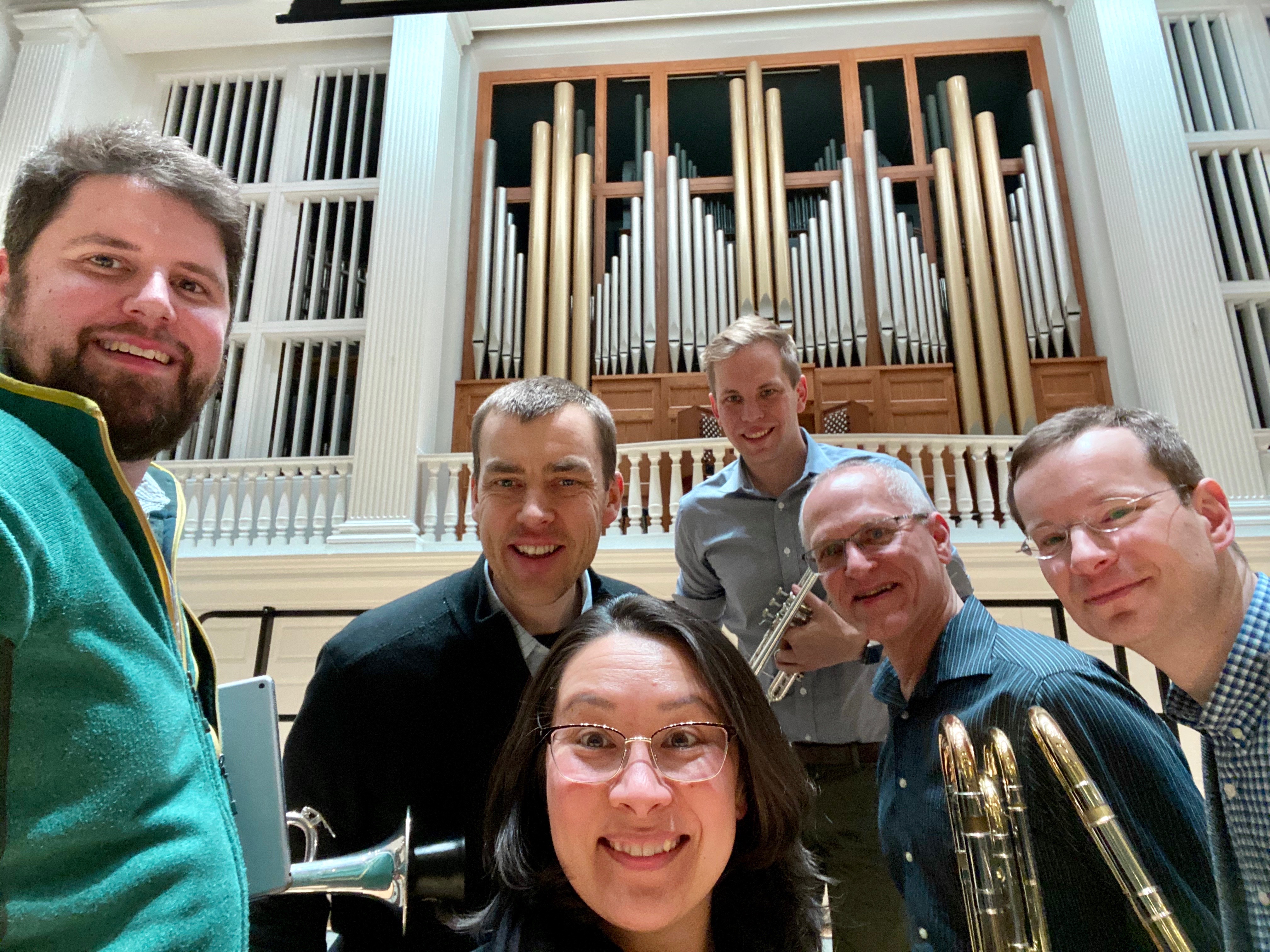
From a solo and duet recital in St. Louis I came back home to the Chicago area to play chamber music. On February 21, the Wheaton College Artist Series presented a concert that featured the Chicago-based brass quintet, Gaudete Brass, as well as organist Nicole Simental and the combined Wheaton College choral groups, conducted by Jerry Blackstone. The centerpiece of the concert was a performance of Morton Lauridsen’s Lux Aeterna. On the first half of the concert, Gaudete Brass performed Ingolf Dahl’s Music for Brass Instruments; Dahl was Lauridsen’s composition teacher at University of Southern California and the piece requires six players. I joined Gaudete Brass as its second trombonist (selfie of me with Gaudete Brass after a rehearsal in Edman Chapel, above).

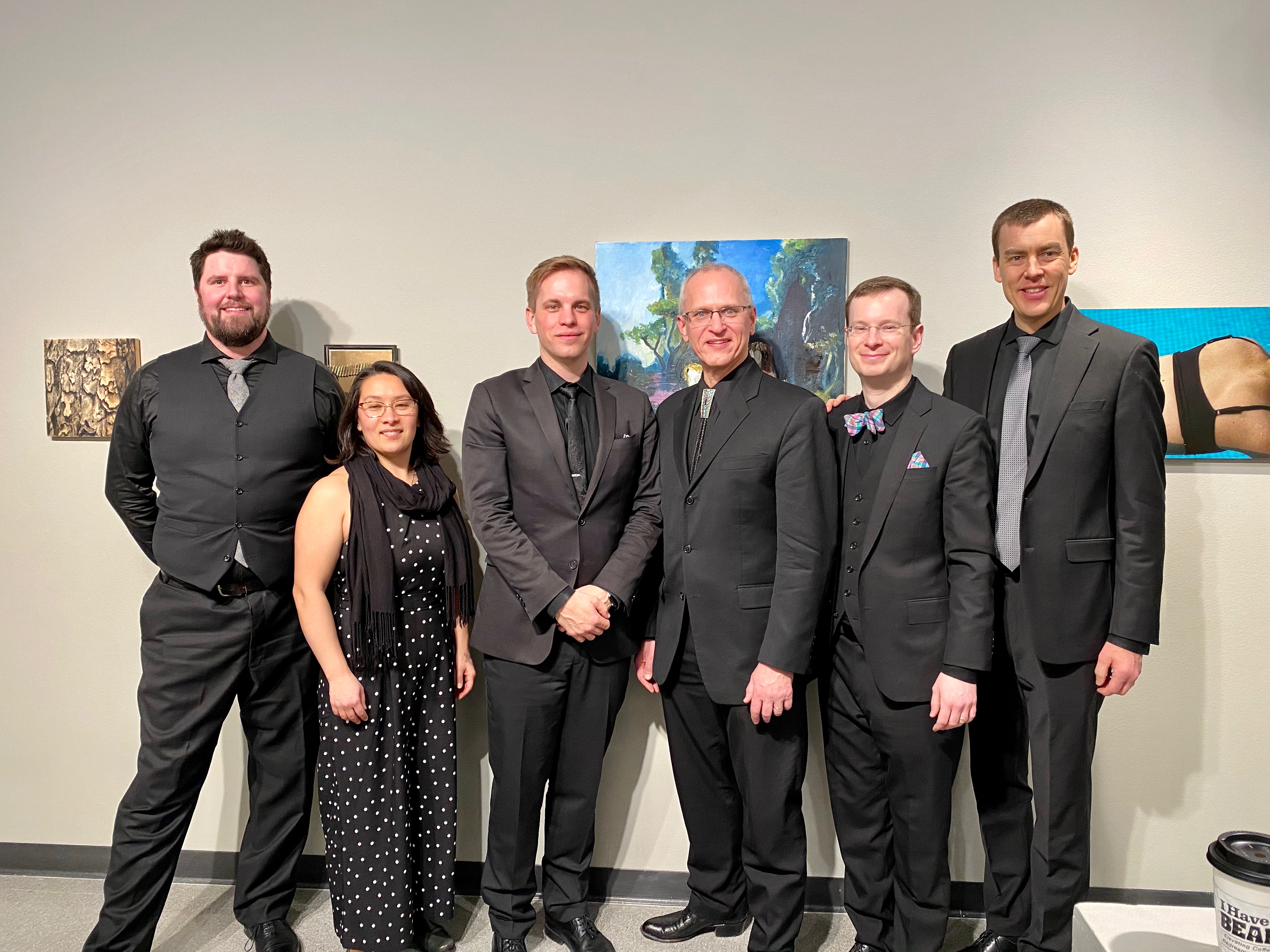
Gaudete_Yeo_Wheaton_College_2020

[Photo above: Gaudete Brass in Adams Art Gallery on the campus of Wheaton College after our performance. (Left to right) Bill Baxtresser (trumpet), Joanna Schulz (horn), Charles Russell Roberts (trumpet), me, Paul Von Hoff (trombone), and Scott Tegge (tuba)

I have played Dahl’s piece on numerous occasions with groups in performances around the world. But I have to say that this collaboration was, to me, particularly special. First, Gaudete Brass is a superb group of musicians. They play at the highest level and it was a joy to work with them; I hope we will do more things together. Nice people, too! Also, the concert was held in Edman Memorial Chapel at Wheaton College, where, as a student there from 1974-1976, I took part in many concerts on that stage. Many memories came flooding back as I played in Edman Chapel with Gaudete Brass. And there was this. . .

Fine_Arts_Building_Chicago

In December, Gaudete Brass and I had a rehearsal in the Fine Arts Building, on Michigan Avenue in downtown Chicago. That building has very special meaning for me: it was there, on the ninth floor, that I had my weekly trombone lesson with Edward Kleinhammer (bass trombonist of the Chicago Symphony Orchestra from 1940-1985) while I was a student at Wheaton College. I had not been in that building since my last lesson with him in May 1976. Walking through the front doors brought back a flood of memories.

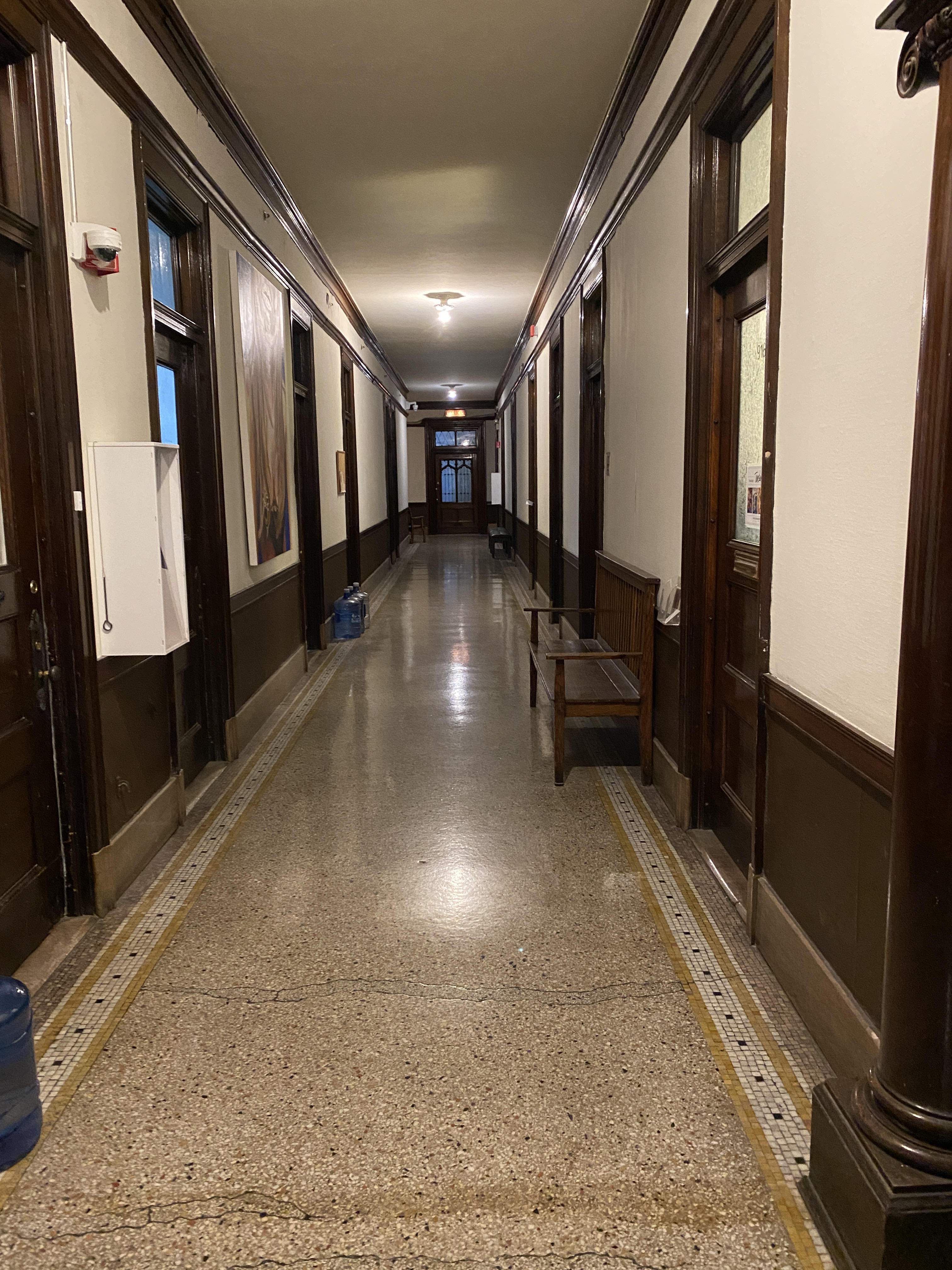
Hallway_ninth_floor_Fine_Arts_Building_Chicago

Kleinhammer_Studio_Fine_Arts_Building_2020

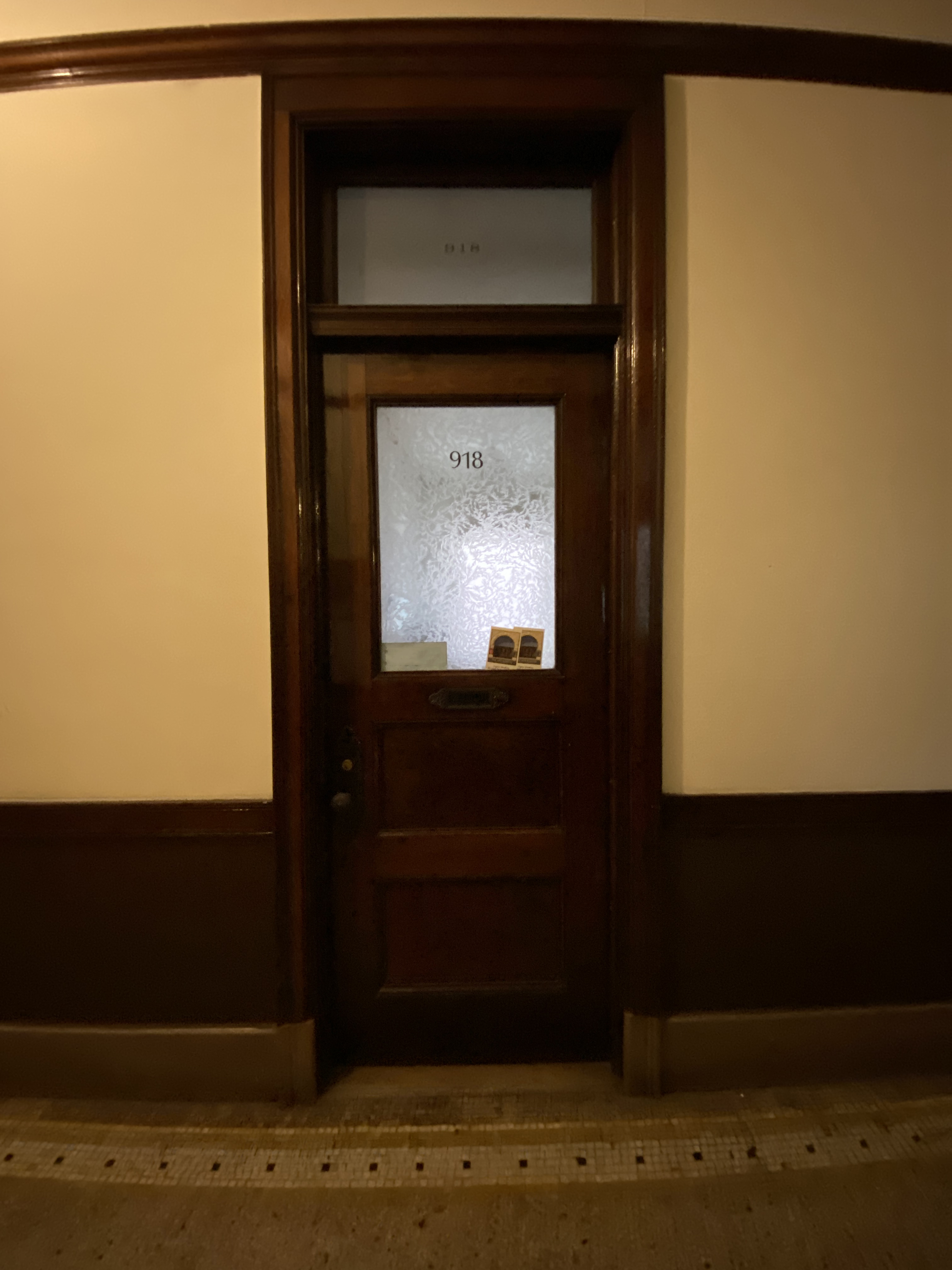
After the rehearsal with Gaudete Brass, I climbed the stairs up to the ninth floor, to once again walk down that long hallway (which has not changed a bit since 1976) and stand in front of room 918 where Mr. Kleinhammer had his studio. As I stood there, I reflected on how those lessons impacted me in so many ways. I could not go in the room this time, but I remember every detail of that small space: two chairs, two music stands, a table for music, and a sink (the bathroom is down the hall). This photo, below, shows the two of us after my last lesson in room 918 in 1976:

Kleinhammer_Yeo_1976

In that room my life was changed.  If you did not see it earlier, click HERE to read the photo essay/tribute I wrote about him last year on what would have been his 100th birthday. He was a remarkable man.

And there is more to come. While my planned trip to Seattle to be guest soloist this weekend at the Northwest Band Festival was cancelled due to the coronavirus outbreak in Seattle, my calendar is full of other events in the coming months, including masterclasses at Interlochen Arts Academy and the Csehy Summer School of Music, performances with the Finnish National Radio Orchestra in Helsinki and Japan (unless the coronavirus has something to say about that trip), teaching at the Pokorny Seminar—hosted by Chicago Symphony tubist, Gene Pokorny—and teaching at the Wheaton College Summer Music Camp. Details may be found on the schedule page on my website, yeodoug.com.

[Header photo: Boston Symphony Orchestra, Bernard Haitink, conductor. My final performance in Symphony Hall as a member of the Boston Symphony, May 9, 2012; Beethoven Symphony No. 9. Photo by Stu Rosner; courtesy the Boston Symphony Orchestra.]

Do good. Help a widow.

Do good. Help a widow.

As the page is turned to a new year, from 2019 to 2020, we all do well to reflect upon and remember those who helped us in the past. Sometimes that reflection leads to action, and I hope this blog post might encourage others to follow in the steps of many others who are working today to help a person in need.

Most trombonists are aware of the pioneering work of Orla Edward Thayer, who, in 1977, invented the Thayer axial-flow valve. Ed’s invention was hugely influential in the trombone marketplace and it set off a rush of innovative design of valves by a host of manufacturers which resulted in significant improvements to trombones.

Ed’s valve was first patented in 1978 with a cylindrical valve design. In 1985, he was issued another patent with the well-known cone valve design that is still in use today.

[Above: drawings from Ed Thayer’s 1978 and 1985 patents for his axial-flow valve.]

I was an early adopter of Ed Thayer’s valve. When I was a member of the Baltimore Symphony (1981-1985), I contacted Ed and asked him to add his valve to my Bach bass trombone. This he did, with bass trombone valve number B-6, from the very first group of bass trombone valves he ever made. I endorsed his valve for several years and it was on that single valve trombone with Ed Thayer’s valve that I won the bass trombone position in the Boston Symphony Orchestra in 1985.

Oliin_Carlson_Yeo_March_1985

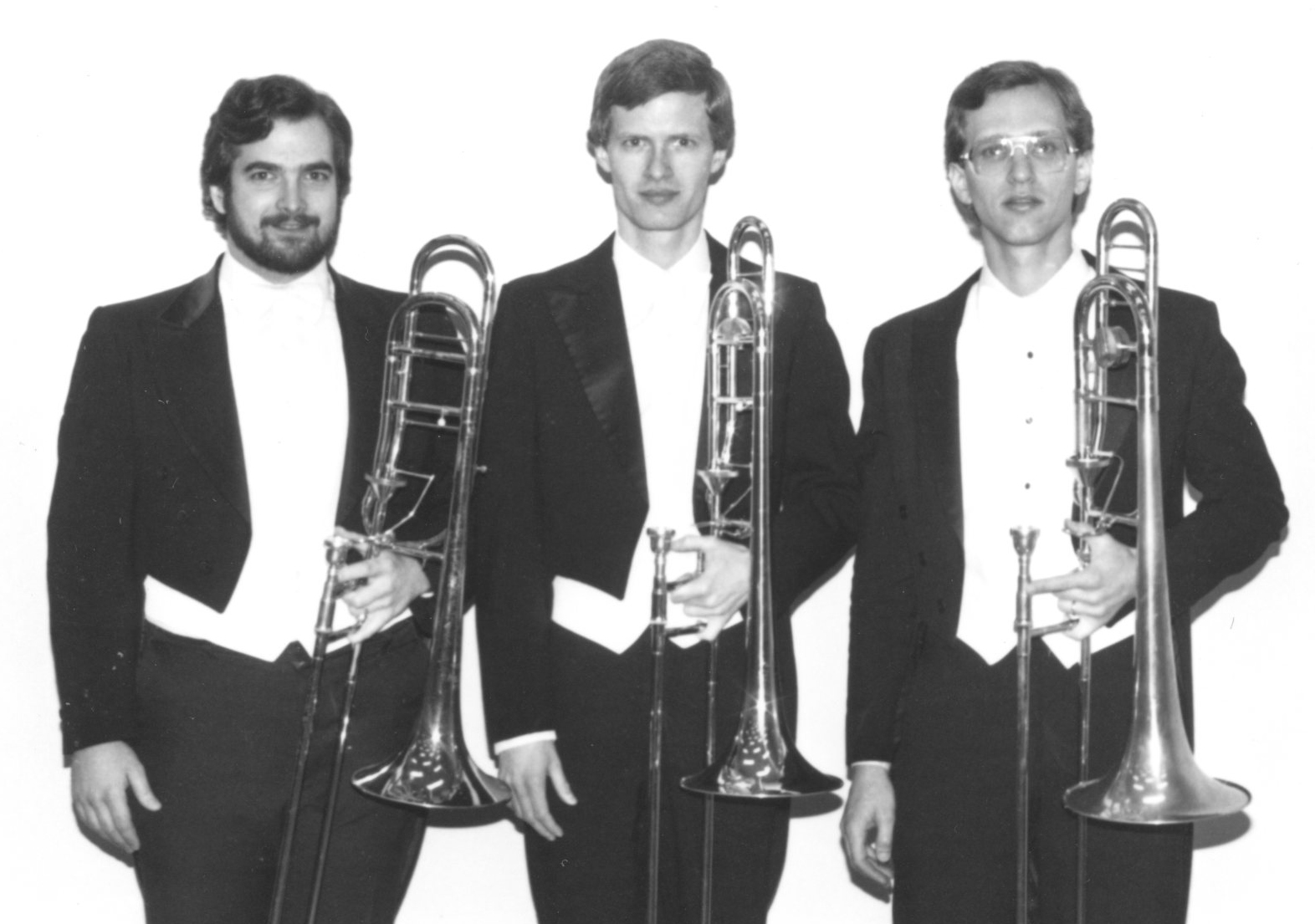
My colleagues in the Baltimore Symphony, Jim Olin (co-principal), Eric Carlson (second) and I all used axial-flow valve equipped trombones—we became one of the first trombone sections to use trombones with Ed’s valve. The photo above shows Jim, Eric, and me in March, 1985.

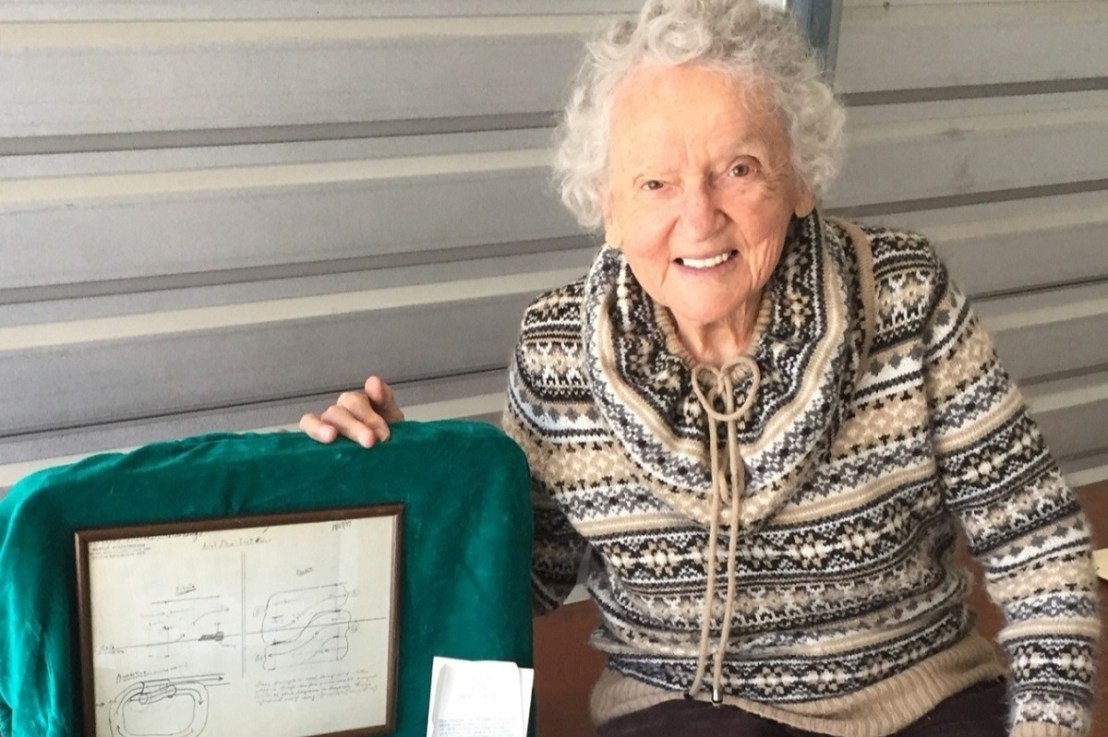
Ed Thayer was a superb inventor. More than that, he was a decent, honorable, kind person, and I and many others have always said the same about his wife, Barbara. I count it a privilege to have called them friends. Ed died in 2009, and while the valve he invented changed the face of trombone design, he was not the most savvy businessman. Several unfortunate circumstances surrounding the patent and production of the axial-flow valve drained Ed and Barbara of their financial resources and they were forced to live on Social Security alone. Barbara, now 94 years old, is living month to month.

Ken Novotny has established a gofundme page to help Barbara Thayer pay down her existing debt and help her with a long-term housing solution. This is an admirable project that has already generated many donations from generous donors. But there is a long way to go to the goal of $11,945.

As I was reading my Bible this morning, the following words jumped off the page:

Wash yourselves; make yourselves clean; remove the evil of your deeds from before my eyes; cease to do evil, learn to do good; seek justice, correct oppression; bring justice to the fatherless, plead the widow’s cause.

These words are from Isaiah 1:16-17. It was shortly after reading these words that I received an email from my friend, Marcel Schot, a trombonist in The Netherlands, letting me know about Barbara Thayer’s plight and this effort to help her. As a result, my wife and I have just made a donation to the Help Barbara Thayer gofundme page.

Would you consider doing the same? I don’t think there is any better way to start the new year than to help a widow. Barbara Thayer is deserving of our help, and doing so also honors the legacy of her late husband, Ed. Click the gofundme icon below to be directed to the “Help Barbara Thayer, Widow of Edward Thayer” page. Do a good thing, and “plead the widow’s cause.” Thank you for your consideration.

gofundme