Category: history

Climbing the mountain of life: some thoughts on the pursuit of excellence

Climbing the mountain of life: some thoughts on the pursuit of excellence

I don’t know anyone who doesn’t want to be great at something. I mean, how many people do you know who have, as their goal in life, to be mediocre? I don’t know anyone like that. We all want to excel, to be great at something – or some things – and the pursuit of excellence is high on just about everyone’s life list.

When I was at the International Trombone Festival at University of Redlands, California, a few weeks ago, I presented a class along with my friend, Megumi Kanda. Megumi is principal trombonist of the Milwaukee Symphony, and we have each authored books to help trombone players prepare better for auditions and concerts. In short, we are trying to help trombonists climb the mountain of life and achieve success through the pursuit of excellence.
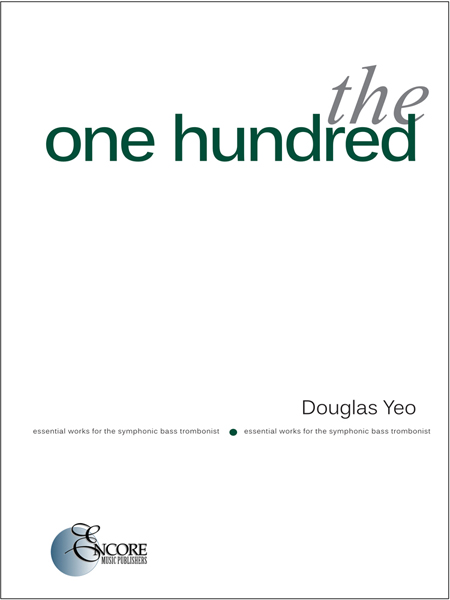
01_100_cover_web

Megumi’s book is The One Hundred: Essential Works for the Symphonic Tenor Trombonist, and my book is The One Hundred: Essential Works for the Symphonic Bass Trombonist. Our class at the International Trombone Festival was titled:

The One Hundred: Effective Strategies for Successful Audition Preparation

Here are the points that I emphasized in my part of the class along with a little commentary. Perhaps there is something here that might resonate with and help you.

Questions to ask yourself:

How good is good enough?

If you are in pursuit of a goal, you need to know what the standard is. You need to know how good you actually have to be in order to attain it. If you don’t know the answer to this question, then you’re not being serious about actually achieving a goal. I wrote an article on my website about this subject; you can read it by clicking here.

Where do you stack up locally? Can you read the signs?

Let’s suppose you want to win a position in the trombone section of the Chicago Symphony Orchestra. You would not be alone; that would be a highly coveted job for many people in the world. If you want this job, look around. Where do you stack up in your local universe of trombone players. In your college, in your local freelance area. If you’re not one of the best players in your local area, how is it that you think that you are really good enough to win a position that will be sought after by the top players in many areas, as well as people who already have jobs in other orchestras? If you’ve taken 50 auditions and you have never advanced past the first round, that is telling you something. Can you look around and read what the signs in your life are telling you?

Does your desire line up with your talent and work ethic?

Desire is important. But desire alone will not lead to success. You need desire, talent and a solid work ethic. I know many people who have a great desire to succeed but they’re lazy. I know highly motivated people who don’t have talent. I know talented people who don’t have desire. If you have a goal in mind, you need to be sure that your desire lines up with the your talent AND your work ethic. As my friend, Gene Pokorny, tubist with the Chicago Symphony Orchestra, says, :

No one can legislate curiosity, and “hope” is not a strategy for success.

Is your goal attainable?

When I was a young boy growing up in the early 1960s, I wanted to be an astronaut. All of my friends wanted to be one, too. But as I grew older, I realized that my goal of wanting to be an astronaut was not attainable. I got glasses in the second grade. End of story. I turned my sights to other goals. Be sure you are pursuing goals that are attainable.

The essentials:

Here are the things that are important for success in a symphony orchestra audition. I’ve developed this list after being on an audition committee for over 20 auditions at the Boston Symphony Orchestra, and hundreds and hundreds of auditions and jury exams at Peabody Conservatory of Music, New England Conservatory of Music and Arizona State University. These are the essentials you must possess if you are going to have a chance of succeeding at a symphony orchestra audition:

A beautiful sound. Without this, nothing else matters.

This speaks for itself.

Impeccable intonation.

Note that I did not say good intonation. Or great intonation. You need to have impeccable intonation. Playing in tune is fundamental to being able to work in a section of other players. Impeccable intonation is noticed very quickly. If you don’t have it, that’s noticed quickly, too.

Exceptional musicality, including a wide dynamic range, appropriate vibrato, seamless legato, and a clear differentiation between various kinds of articulations.

Does your playing exhibit all of these qualities? How wide is your dynamic range? Is it truly from ppppp to fffff? Tchaikovsky requires that in his Symphony No. 6. Do you know how to make every possible kind of articulation? Here’s an example, a short excerpt from the bass trombone part to the second movement, Scherzo, from Gustav Mahler’s Symphony No. 1:

Mahler_1_excerpt

Look at all of the different kind of articulations required on a single note, G-natural. You see sfp, then fp with a marcato, sf with a marcato, f with a marcato, and the note simply with marcato. That’s five different kinds of instructions about playing the same note. Can you make a difference? This matters.

An informed sense of style.

Style is different than musicality, mentioned above. Style is the “why” of music; musicality is the “what” of music. To learn the style of a piece, you have to know it inside and out, and understand what it means and why. Mahler is different than Mozart. Informed style comes through in a person’s playing.

A superb sense of rhythm, including exhibiting what Edward Kleinhammer often referred to as “the unwritten laws of rhythmic pulse.”

Edward Kleinhammer was bass trombonist of the Chicago Symphony Orchestra form 1940-1985; he was my trombone teacher when I was a student at Wheaton College. One of the things he emphasized was getting rhythmic pulse right. Composers can’t write everything that you need to do. There are “unwritten rules” about rhythmic pulse. Some people make this into a complex system, assigning syllables, letters or numbers to each note to show which notes have different weight or emphasis. Mr. Kleinhammer took a very simple approach. In every meter, there is generally an unwritten sense of pulse. For instance, in 4/4 time, the first beat is usually the strongest, the second beat is usually the weakest, the third beat is the second strongest beat, and the fourth beat usually leads to the subsequent first beat. This is true for 99.9% of all music in 4/4 time. Find the pulse and then demonstrate it with musicality and style. It is not complicated. It just needs to be done.

A confident, comfortable physical demeanor devoid of nervous, obsessive gestures or habits. You must pass “the weirdo test.”

When you are at an audition or a job interview, people on the audition committee are trying to decide if you will be a good fit in the group. You must make others around you feel comfortable. If you are obsessive about spraying your trombone slide with your water bottle, or you fidget while a colleague is playing the solo from Ravel’s Bolero, or you need to sit quietly for a few minutes to collect yourself before you play something, you’re probably not going to win the job. Your job – every colleague’s job – is to make the job of the people around you as easy and comfortable as possible. As to the weirdo test? Take a shower regularly. Use deodorant. Comb your hair. Think twice about tattoos and piercings. None of these things speak to who you ARE. But others will draw their own conclusions – fair or not – about what you PROJECT about yourself. Remember: the person hiring you might be your father’s age. Think about how you come across to others. All others.

Strategies to employ:

Question your assumptions.

By this I mean that you should always ask yourself if what you’re doing is the best way of doing it right now. For instance, if you’ve always taken a breath in a certain phrase at the same place, ask yourself, “Is this still the best place to take a breath?” Do the same with every aspect of playing: volume, slide position, type of articulation, tempo, etc. If you don’t ask yourself if the way you’re doing something is still the best way for you to do it, you will never allow for the fact that you are a different – and hopefully better – player today than you were yesterday. Or last week. Or last year when you first put that breath mark in your part. 95% of the time, you will probably answer, “Yup, that was a good idea when I first did it and it’s still a good idea.” But for that other 5% of the time, you just might make a change that is a result of your improvement as a player. You might not need that breath at all, and that new way of phrasing might just be what the audition committee is waiting to here. Don’t be fossilized doing things, “The way I’ve always done them.” Keep asking yourself questions and make changes based on the improvements you’ve made.

Try everything.

This is related to the point above. Try every possible way of solving every possible problem you are faced with. Sometimes you have two or three or four different slide positions where you could play a particular note. Try them all. Don’t be allergic to sixth and seventh positions. If you think you’re playing softly enough, try to the passage softer. Don’t assume you can’t do something. Don’t assume some way of solving a problem is too unconventional and therefore won’t work. Try everything. Only if you try every possible way to approach music will you know that you’ve found the best way for you to successfully play any passage.

Pay attention, ask questions, read, study the sources, leave no stone unturned.

Don’t just sit in a practice room and practice music. Learn more about what you’re playing in order to give your playing context. Study the orchestral score, find out if there are variant editions of a piece, read biographies of composers, read books about pieces you play, learn more about your instrument. Have an insatiable curiosity.

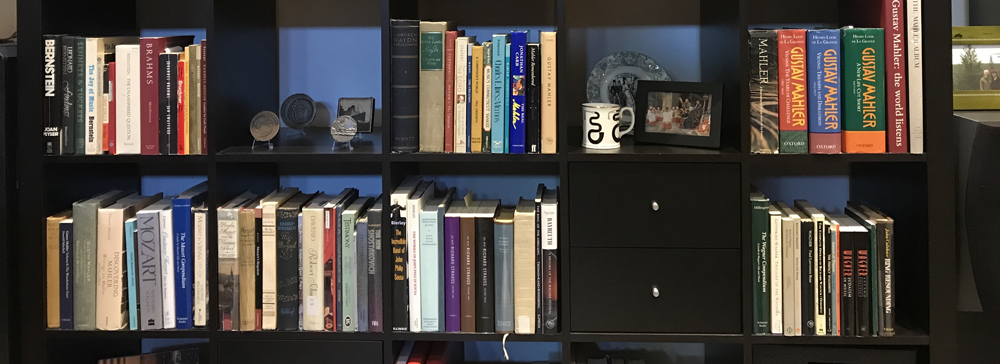
I have a lot of books. Hundreds. And a lot of full scores to music that I’ve played. Hundreds. Here’s a snapshot of two shelves of my books. Take a look at what you see:
FullSizeRender 32.jpg

There are six books about Haydn, 14 books about Gustav Mahler, eight books about Mozart, 15 books about Richard Wagner. I’ve read all of them. Multiple times. These books have been invaluable to me as I have prepared for auditions and concerts. They are also extremely helpful in my research as I write articles and books. Everything you read, everything you experience, brings something added to your performance. Talk to people around you – even if they’re not trombone players. Learn from every experience in life. If you pay attention, you will bring special qualities to your playing.

Every player’s lament: But I can do it in the practice room.

OK, then bring the practice room to the stage.

If you can do things just the way you want to in the practice room but can’t replicate that success on stage at an audition or performance, you need to ask yourself, “Why is this happening?” Nobody practices so they can play great in a practice room. We practice so we can play great on stage. But many people set up systems and routines for performance that have nothing at all to do with practicing. Some people need to eat a banana before going on stage, or eat a rare steak 90 minutes before, or be sure Jupiter is aligned with Mars, or any number of things. Why? Do you need to do those things in order to play great in the practice room? Of course not. Then why do you add this layer of process to performance so the performance becomes something completely different than the situation – practicing – where you had success? Bring the practice room to the stage. The reason you play a musical instrument is so you can play it in public in performance. So recreate on stage what you do in the practice room; don’t separate your playing into different kinds of routines for different environments.

Remember:

Practice does not make perfect. Practice makes permanent.

If you practice, you will get better at what you’re practicing. But if you’re practicing something the wrong way, or without understanding, you will get better at doing it wrong. Practice in and of itself will not lead to your playing your best. Practice makes permanent what it is that you’re practicing. So be sure you are practicing correctly. It is not HOW LONG you practice but HOW WELL you practice.

Do not believe the lie of 10,000 hours.

There is a popular school of thought that goes something like this: If you spend 10,000 hours working to develop a skill and are doing so with good guidance, you can do anything. This is nonsense. I could spend 10,000 hours in a gym in order to attain the goal of being a linebacker with the Arizona Cardinals football team but it will not happen. Because I need more than 10,000 hours to succeed in that quest. I need talent, and a particular body type. While people often say, “You can be anything you want to be,” that is not true. See above, my story about my wanting to be an astronaut. You need the right combination of talent, hard work and destiny. That’s the God card; it must be meant to be. That’s another subject all together, and a very important one. That’s a subject for another post. But keep this in mind: hard work – 10,000 hours – is not enough.

Your best may get you to the top. But it might not.

After all of your work, all of your study, all of your practice, you just might get to the top. See my first question: How good is good enough? When you put together all of the aspects of your performing person and persona, you just might get to the top. You just might win that job in the Chicago Symphony. And if you do, congratulations!

But you might not. Everyone has a ceiling. Everyone does not have an equal chance to succeed in a goal that has one winner. Your best might not be good enough to get you to the top of the mountain. That does not make you a failure or a bad person. It’s just the realization that the best you bring to the table might not be good enough to get you to a particular goal. But. . .

The top is not the only place where you may have a rewarding musical life.

Yes, we all want to be reach the top of the mountain. And we should always feel great when we know that we have produced the very best that we can at any task. But if you don’t reach the top, there is still a great view from wherever you are. The Chicago Symphony, for instance, is not the only place where you can have a very satisfying, rewarding musical life. I know freelance players who are very satisfied. I know players in second, or third, or tenth tier orchestras who have fulfilling musical lives. Wherever your combination of talent, hard work and destiny takes you, you can have an exceptionally rewarding life. Do not forget this!

If you would like to view or download a copy of the PDF handout that accompanied my presentation at the International Trombone Festival – it contains the bullet points on which this article is based – click HERE.

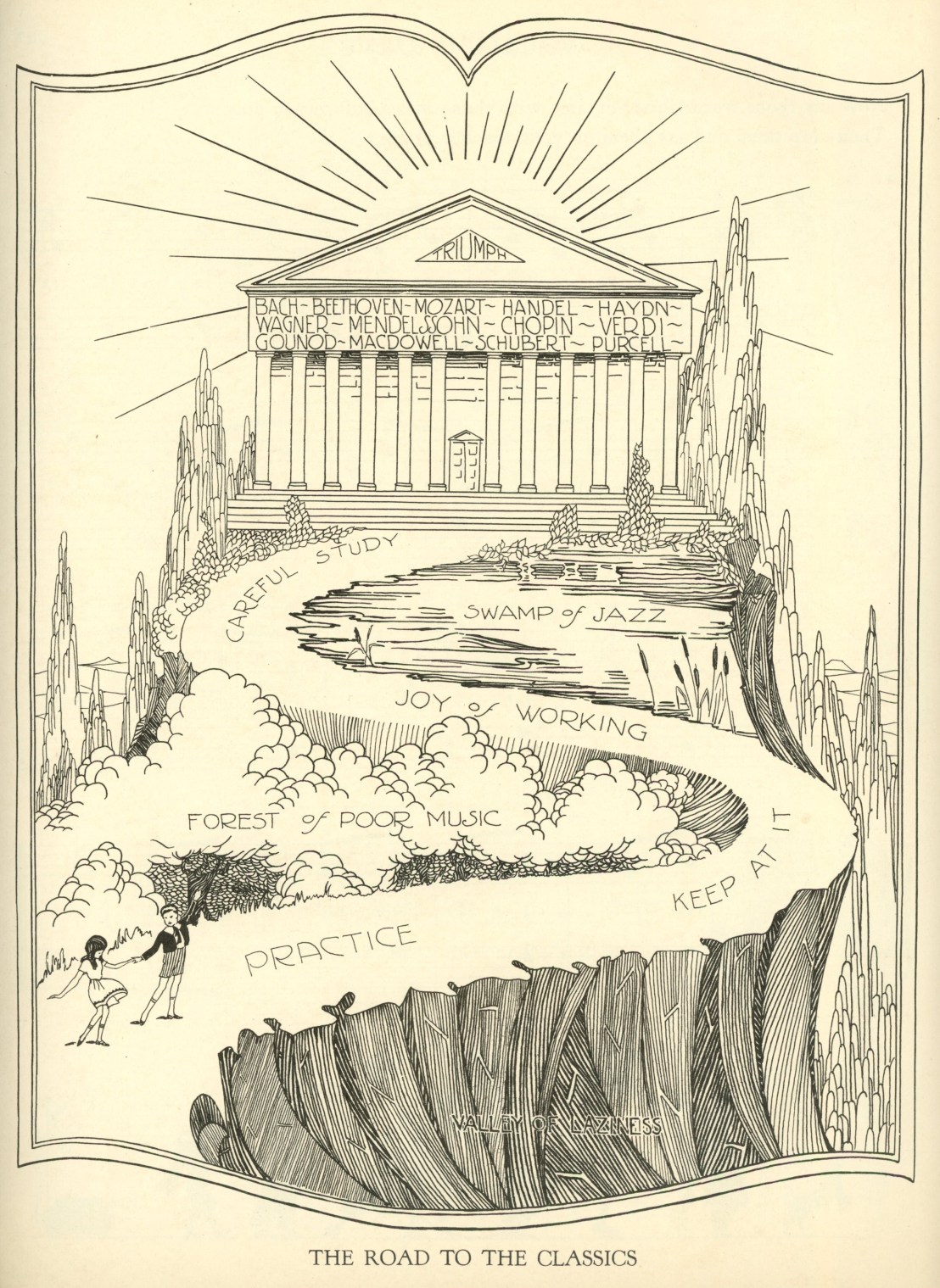
 

The Road to the Classics: a 1928 point of view

The Road to the Classics: a 1928 point of view

by Douglas Yeo

Nearly 90 years ago, in 1928, the Theodore Presser Company published a book to teach how to play piano, Music Play for Every Day: The Gateway to Piano Playing. It is one of a legion of such books published in the last century. Perhaps you had piano lessons with the Thompson or Schuam method. Or even this book. They all make it sound so easy.

Many years ago, a friend gave me a photocopy of a page of this method, a drawing titled The Road to the Classics.  I’ve recently obtained an original copy of this book and the drawing is found below.

Hand in hand, the young boy and girl start on the path toward TRIUMPH. How do they get there? PRACTICE. KEEP AT IT. THE JOY OF WORKING. And CAREFUL STUDY. What are the pitfalls? VALLEY OF LAZINESS. FOREST OF POOR MUSIC. And the SWAMP OF JAZZ. Yes, it actually says “swamp of jazz.” Wow.  And who lives in the pantheon of TRIUMPH? BACH, BEETHOVEN, MOZART and their friends. Even MACDOWELL. MacDowell? Between Gounod and Schubert?

Take a few minutes to look at this. If you were making up a drawing to inspire beginners to take up the study of music, what would you include? How would YOU tell the story of musical inspiration?

Road_to_the_Classics_Presser

What is “American Style” in music?

What is “American Style” in music?

Several months ago, my friend, Ronald Barron, with whom I shared 22 years as a member of the trombone section of the Boston Symphony Orchestra, posed a question to me:

What is “American Style” in music?

Ron had been thinking about this himself and gave a presentation on the subject at the International Trombone Festival in Valencia, Spain, in 2015. Since then, I’ve continued to think about his question, and the answer that I gave to Ron at that time.

Earlier this week, I was in the radio studios of Central Sound at Arizona PBS, where I regularly go to be the voice of the radio program, Arizona Encore! that is broadcast locally on KBAQ (KBACH) 89.5 and can also be heard anywhere in the world on the KBAQ website at 7:00 pm on Tuesdays and on demand with the Central Sound at Arizona PBS mobile app. In addition to voicing programs, I also write scripts for Arizona Encore! and another program that Central Sound produces, ASU in Concert.

While writing a script for an Arizona Encore! show that included Antonin Dvořák’s “American” String Quartet, Op. 12 in F major, Op. 96, Ron’s question came to mind again. I pulled out the comments I wrote when he first posed the question and thought that this would be a good time to turn them into a short article to provoke thought and discussion. I think anyone who lives in the United States would answer this question in their own way. But here’s what I think.

•   •   •

What is “American Style” in Music?

Douglas Yeo

The native people who settled and lived in what we call the United States of America have virtually no voice in today’s broad American cultural conversation. This is highly regrettable, because any discussion of an American Style – whether in music, painting, literature or any of those disciplines that we call “the arts” – has been influenced by them. When talking about American Style – and for the sake of this discussion, I am confining my comments to American Style in music – we must remember that their contributions were fundamental in shaping the great “melting pot” (to use the over-used word) of influences that came to shores to settle in the United States.

•  •  •

Old_Ship_of_Zion

The African American spiritual, “The Old Ship of Zion,” as published in Slave Songs of the United States, published in New York by A. Simpson & Co. in 1867.

•  •  •

The Puritans (from Boston, England, by way of the Netherlands and Plymouth, England), Roman Catholics (from Spain and Portugal), and traders (from the Netherlands and France) who were among the first European explorers of America brought their religious influences to what we today call the mid-Atlantic and New England states. English Psalm tunes and Italian-influenced Spanish plainchant was heard mixed with the folk music of the motherlands and rhythms and chants of America’s native people. In time, the new colonies – occupied by England, Holland and Spain and, to some extent, France – developed their own form of folk song born out of a newly found freedom of expression. America was a vast place even before its West was discovered anew by Europeans, and the rural, agrarian life brought with it a sense of space, and distance from forces that dictated “proper” style. This mélange of ethnic groups was broadened even more with the introduction of the horrific slave trade. Denominational and non-conformist/free church musical traditions from Europe were influenced by African and West Indian rhythmical expressions, and rather than exploding into the musical equivalent of the destruction of the Tower of Babel, they coalesced around a word that I believe most defines the American musical style:

Optimism.

Whether the music of spirituals, folk music of Appalachia, shaped note music of the South, honky-tonk and saloon music of the West, cakewalk and ragtime of Louisiana, hymnody of the Mormon trail, gospel songs of white churches or what became jazz, it all had one theme: despite its considerable challenges and many problems, America was a good place to live, it was good to be here, and there was more good ahead.

So while the classical and popular music of young, immigrant America was influenced both by the people who had roamed the land for centuries and those who had just arrived, the American sense of optimism – of “can do,” of the foray into the great unknown, of the pioneer spirit, of a gold rush that could (but would not but to a few) make any man rich, of “Happy Days are Here Again,” of the race to the moon – imprinted this place with a musical expression that was positive and looking forward. Even a great composer like Antonin Dvořák, who came to New York in 1892 and wrote music that was infused with an intangible, bright and optimistic quality, realized that he could not have written his “New World” Symphony or “American” String Quartet, in his own words, “‘just so’ if I hadn’t seen America.”

•  •  •

James_Reese_Europe_band

James Reese Europe leads the 369th Infantry Harlem Hellfighters Band in France, 1918.

•  •  •

Of course, by the end of the long nineteenth century – roughly the time from 1776 (the writing of the American Declaration of Independence and all that it brought to the colonial powers who had conquered the land) to 1918 (the end of the First World War, the “war to end all wars” which, of course, it was not), the optimism began to ebb. Post-war ebullience was tempered by the loss of more than of a generation of young men from England, France, and Germany, and many from the United States. The Native people who had once roamed the land had been rounded up and confined to reservations. The promise of true emancipation for the descendants of slaves gave way to Jim Crow. The economic boom of the 1920s paved the way to the Great Depression of the 1930s. A second World War consumed western civilization for nearly another decade, and all of the good intentions of the League of Nations and United Nations could not tame the greedy and selfish appetites of forces that were political, national and religious, whether the Ku Klux Klan, communism or radical Islamic-facism. The optimism gave way to cynicism, to forms of rebellion. The work of the second Viennese School – with its abandonment of 18th century tonal harmony that led music to more and more reflect the chaos and ugliness of the times – even found its way into popular music. American composers like Aaron Copland, who in the middle of the 20th century seemed very much to define the American Style’s sense of space and optimism, traveled the road of the European serialists, not wanting to be out of step with the relentless rush of modernity, seeing if they could find a new voice that was both relevant and honest. Some succeeded better than others, yet there always seemed to be a pull back to the center of the American thought ethos, a desire not to be wholly desperate but rather hopeful even in the midst of what Paul Hindemith called, “confusion, rush and noise” (The Posthorn).

• • •

Small_Moravians_Harpers_Weekly_1888_01

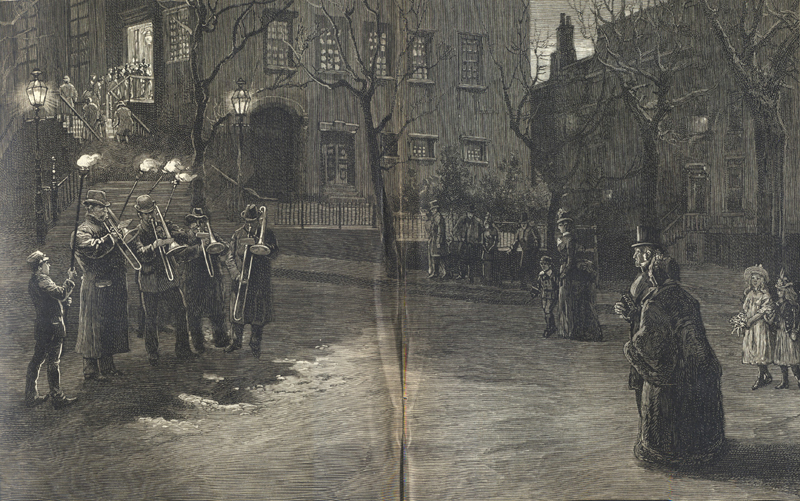
“The Moravian Easter at Bethlehem, Pennsylvania,” Harper’s Weekly, Vol. XXXII, No. 1632, March 31, 1888, pages 228-229.

• • •

For the trombone, the staid harmonies of Moravian chorales – by which the trombone was introduced to American shores – gave way to ragtime and jazz. The world found Arthur Pryor’s eye-popping trombone virtuosity to be nothing short of stunning, while rags full of trombone glissandos  – what came to be known as “trombone smears” – were found on band programs around the country. As jazz found its legs and kept growing out of the clothes of its African, West Indian, and European roots, styles like be-bop brought the joyful exuberance of Frank Rosolino and J.J. Johnson, whose creative and enthusiastic music and music making belied the dark demons that ultimately led them to point a barrel of a gun at their heads. And pull the trigger. For every trombone concerto by someone like Christopher Rouse – dark, brooding, introspective, even hopeless – there were two or three by composers like Eric Ewazen, who forsook his long exploration down the tunnel of serialism only to come out wholly embracing 18th century tonality and a new Romanticism with a renewed sense of joie de vivre, with a relentlessly syncopated, rhythmic drive, and expansive melodies that seemed to point one to the high peaks and majestic canyons of the great American west.

•  •  •

From_Komatke_Sierra_Estrella

Sierra Estrella (Komatk Doag), Arizona. View from Gila Crossing, the birthplace of Russell Moore. Photo by Douglas Yeo.

•  •   •

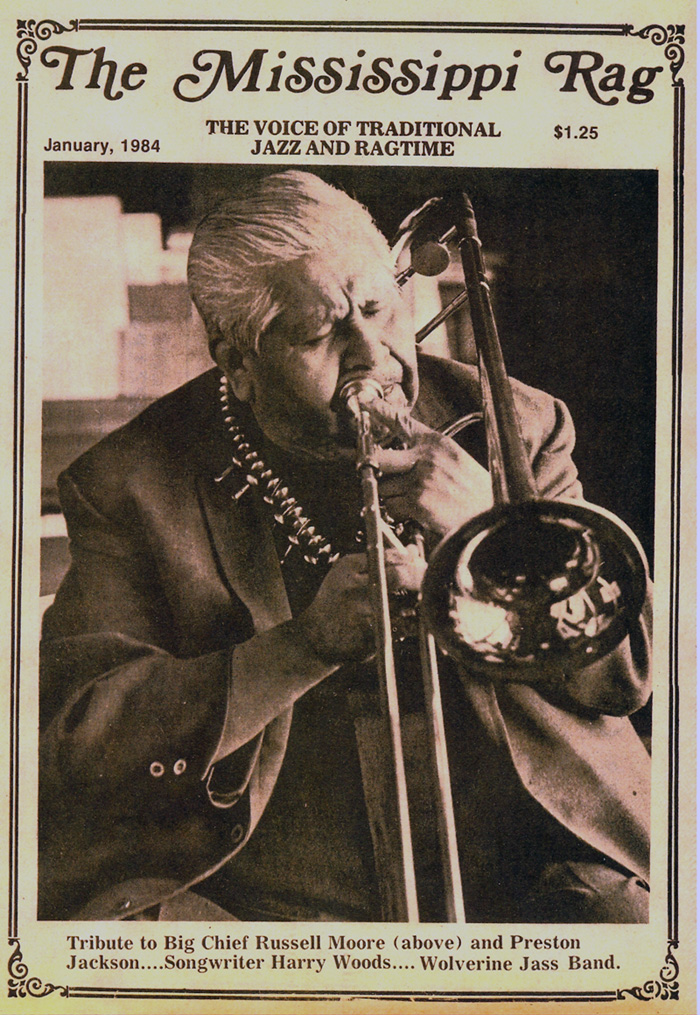
As an American who celebrates his 62nd year of life and 53rd year of playing the trombone in 2017, I find myself more and more attracted to – Hindemith, again – “the lasting, calm and meaningful.” Having grown up and worked in the great population centers of the East and Midwest – childhood in New York City, college in Chicago, more college in New York City, and orchestral careers in Baltimore and Boston – I have returned to the west. Having been born in California in the final days of my father’s service in the U.S. Army during the Korean Conflict – a still unresolved war that became emblematic of the conflicts of the second half of the 20th century and beyond – I now live in Arizona, where the natural beauty and sense of space has affected my artistic temperament in significant ways. From my front porch where at night it is so dark I can see the Milky Way with my naked eye – in the foothills of the Estrella Mountains (that is their Spanish name; the Native Americans who were here long before them called them Komatk Doag), with silhouettes of saguaro cacti on the horizon in every direction – I very much feel like the 19th century American explorers Lewis and Clark and their Corps of Discovery. Like them, I no longer know what to expect around every turn as I did while in my comfort zone in the East. Now, my artistic personality is informed by influences overlooked, forgotten, abandoned and tamped down in the mad rush to settle the continent – the voices of the Native peoples. Their pottery and basketry informs the artistic ethos of our home. I’ve recently been involved in a major research project on Russell “Big Chief” Moore, a member of the Akimel O’odham tribe who in 1912 – the year Arizona became the 48th state in the Union – was born just over the mountains from my home, and went on to be one of America’s great jazz trombonists. A bison skull, a reminder of what the clash of old and new societies nearly brought to extinction, overlooks our patio. Two racks of shed elk antlers on display in my living room and music studio remind me that contrary to the dominant thought that I found so easy to embrace in the fast-paced East, I am not the biggest and strongest thing around. Most of all, though, I am in a place where quiet is easy to find, where I can, within minutes, be where I cannot see another indication of modernity as far as my eyes can see.

•  •  •

Big_Chief_Russell_Moore_MS_Rag.jpg

“Tribute to “Big Chief” Russell Moore,” The Mississippi Rag, Vo. XI, No. 3. Photo by Kathy Gardner

•  •  •

This, for me, is America: bold, beautiful, ever changing, positive, optimistic, peaceful. These American values are ever before me, and remind me that even though these noble aspirations are not always to be found  easily – there is much work to do in this imperfect, fallen world – the challenges faced in desiring them cannot keep me from pursuing them relentlessly. It is these qualities, in a season of life where I no longer need to play any music I do not wish to play, where I choose to put aside the music that tries to reflect the confusion of our present age in favor of music that celebrates the purity of what I wish it to be. I stand with James Reese Europe and his 369th Infantry Harlem Hellfighters Band, Russell Moore and his Pima people, with Aaron Copland and his vision of  Appalachian Spring, Eric Ewazen and his Pastorale, and even Dvořák, whose “American” string quartet, composed in Iowa, reflects his understanding that American Style had to reflect something of the history and greatness of the land, its people, and their struggle.
In this, I am an American musician who embraces what I believe is the greatest informer of American Style in music: Optimism.

© 2017 Douglas Yeo. All rights reserved.

Rethinking Mozart’s Tuba mirum – part 2

Rethinking Mozart’s Tuba mirum – part 2

Last October, I wrote an article for The Last Trombone titled, Rethinking Mozart’s Tuba mirum. If you’re reading THIS article and haven’t read my earlier thoughts this subject, please take a minute to read my earlier article so you can have a fuller context for what follows.

For many years, I have puzzled over a question: Why does the trombone solo to the Tuba mirum movement in Mozart’s Requiem seem to be of a completely different character than the vocal text of the movement? In my previous article I raised the question and wondered if we could begin a conversation about this. What happened was quite unexpected: that article about Mozart’s Tuba mirum has received thousands of views. Clearly this question is something that is on the mind of many others.

To recap, the text of Tuba mirum of the Requiem mass speaks of the dead being raised from their graves as they are being summoned before the throne of God for judgment. Here is the text in Latin:

Tuba mirum spargens sonum

Per sepulchral regionum,

Coget omnes ante thronum.

And here is the “standard literal” translation in English:

The trumpet, scattering a wondrous sound

through all the sepulchers of the regions,

will summon all before the throne.

Here is a fuller, more accurate translation of the text in English:

The trumpet, blowing its amazing sound to all of the corners of the earth,
signals to all of the dead in the world
to rise from their tombs and come before the throne of God for judgment.

Surely this is a text that demands dramatic treatment. And many composers, like Berlioz, Verdi and even contemporaries of Mozart such as Antonio Salieri, Michael Haydn and Luigi Cherubini infused this movement with fast tempos and loud trumpets, trombones and timpani.

But not Mozart.

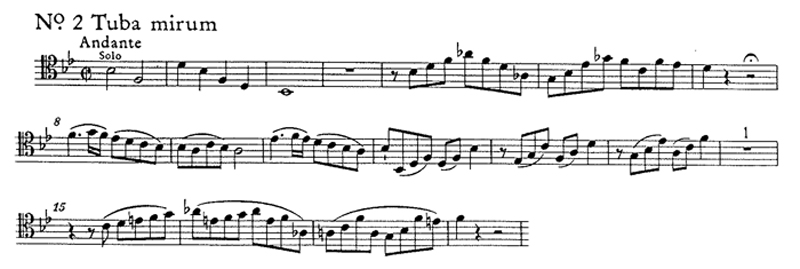
After the initial opening “fanfare” of the call of the last trumpet, Mozart wrote what is usually interpreted as a florid, legato passage to accompany the bass vocal soloist. Here is the trombone solo as printed in a commonly performed edition:

Tuba_mirum_part_Barenreiter_excerpt

It must first be said that apart from the three slurs that appear in measures 15, 16 and 17, none of the expressive markings are Mozart’s. He did not live to hear the Requiem performed and the Tuba mirum was left unfinished; he did not even indicate an opening dynamic for the trombone solo. Had he lived, he certainly would have gone back to this movement and edited it more clearly for performance. A look at the except from Mozart’s manuscript at the top of this article (if you are reading this article because you have subscribed to The Last Trombone by email, click on the title of this article to open this page in your web browser and you can see the header image) shows just how little Mozart gave us in terms of expressive guidance.

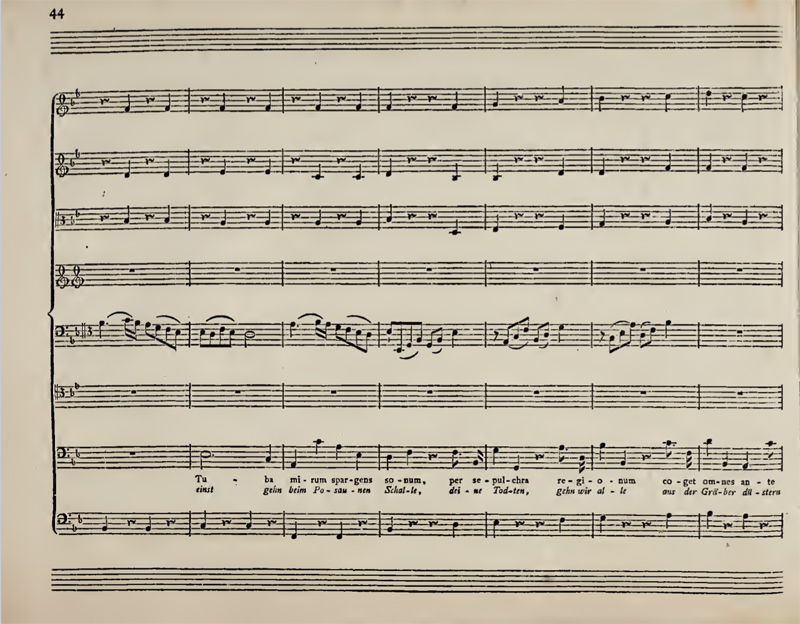
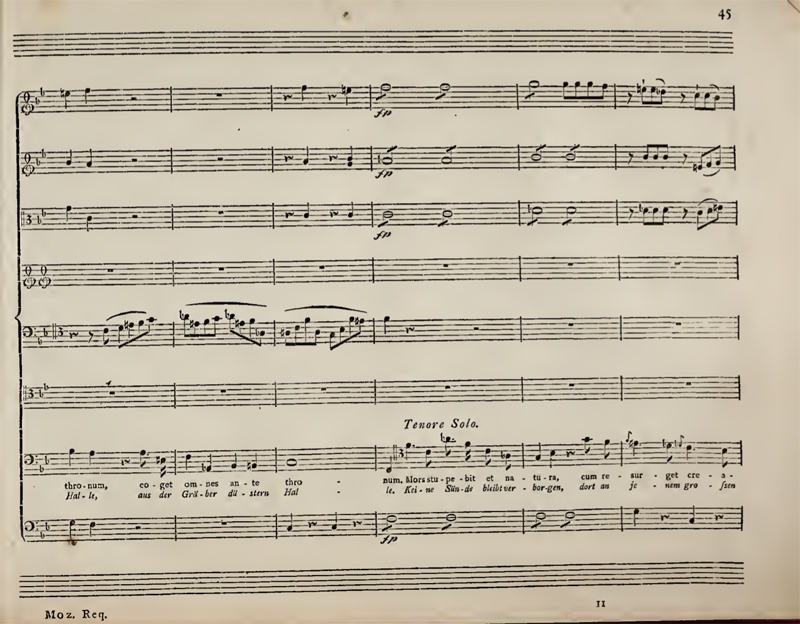
Still, the tradition that calls for this solo to be played legato dates back to the Requiem‘s first edition, published in Leipzig, Germany c1800 by Breitkopf & Härtel. Below are the first three pages of the Tuba mirum in this edition. The full score to this edition, which is owned by the Handel and Haydn Society of Boston and is on deposit at the Boston Public Library for safekeeping, is available online by clicking HERE. You will also notice something that seems a little shocking: after the opening notes of the trombone solo, this edition gives most of the Tuba mirum solo to a solo bassoon (Fagotto in German), not solo trombone. Seriously. But more on this in a minute. Have a look at these pages and you will see that from this first edition, the character of the trombone solo was legato:

Mozart_Tuba_mirum_1800_p1

Mozart_Tuba_mirum_1800_p2

Mozart_Tuba_mirum_1800_p3

Note: You will see that the trombone solo in measures 5-7 is not marked legato even though it is usually played that way by today’s players. I think a case can be made for a detached tenuto OR a legato approach to these measures. Part of this thinking is a consideration of what we are learning about 19th century trombone performance practice and part of it is based on a consideration that these measures might – might – actually depict the initial movement of the dead from their graves.

However, with the mostly legato character of the opening of this movement clearly established from its earliest performances, the question still remains: why does Mozart treat this dramatic text in this way?

After I published my earlier article in which I posed this question, I continued researching in hopes of answering my own question. I had conversations with my friend, Howard Weiner, one of the most respected scholars of the trombone who is also co-editor of the Historic Brass Society Journal, and consulted dozens of books about Mozart and the Requiem. As I looked more carefully at this, some important information came to light and  I think I am beginning to understand why Mozart called for the trombone solo to be played in a gentle rather than dramatic style.

As I was researching this, the Boston Symphony Orchestra contacted me. They were planning performances of the Requiem on April 20, 21 and 22 and asked if I would be interested in contributing an article about the Tuba mirum for the BSO program book. The timing was perfect. While I was planning to write a long article on the subject for a scholarly journal, the offer to write a shorter, 1000 word piece was very appealing to me. It allowed me to concisely present my argument to an audience that was preparing to hear the Requiem in performance. And so, last week, my article about the trombone solo in Mozart’s Tuba mirum was published in the Boston Symphony program book.

For the benefit of readers of The Last Trombone, I am reprinting my article below. What you see below is identical to what appeared in the article except the quotations from various authors are fully cited below. If you would like to read or download the article as it appeared in the Boston Symphony program (PDF file), click HERE.

As you will see, I think Mozart knew what he was doing. Of course, there is much room for discussion and further research, and I hope we will all keep asking questions. Still, I think this is a plausible theory to answer a question that has vexed not only trombonists, but, as you will read below, Mozart scholars for over two centuries. I close this article in a way that is similar to my conclusion to my earlier article on this subject:

I am posing an idea, a theory; I am not presenting this as a settled thought in need of adoption. Certainly more research and study needs to be done.  Let’s keep thinking.

•   •   •

Screen Shot 2017-04-25 at 3.45.31 PM

Reprinted from the Boston Symphony Orchestra Program Book, April 20, 21, 22, 2017.

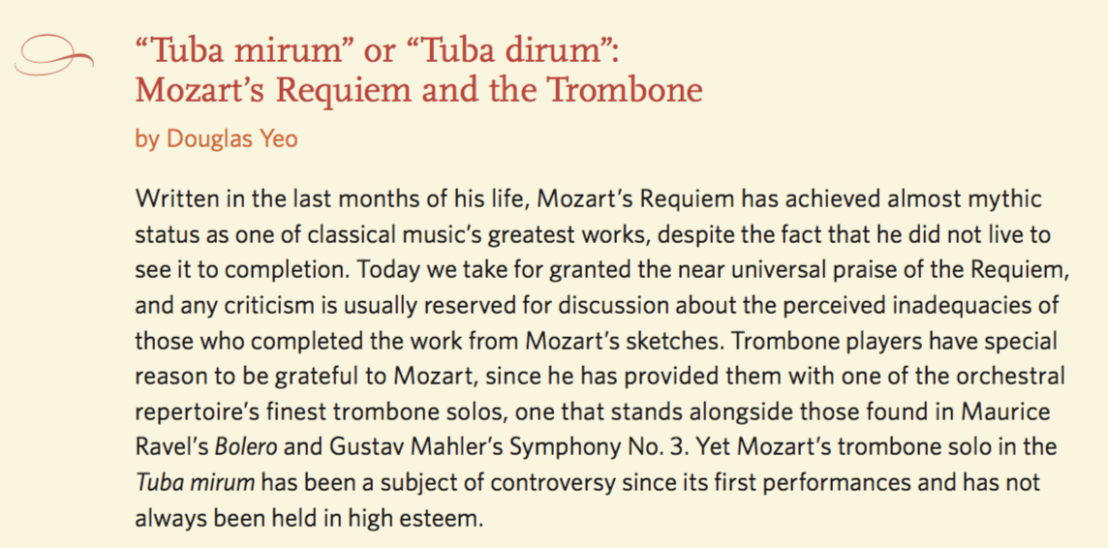
Tuba mirum” or “Tuba dirum”: Mozart’s Requiem and the Trombone

by Douglas Yeo (© 2017, Douglas Yeo. All rights reserved.)

Written in the last months of his life, Mozart’s Requiem has achieved almost mythic status as one of classical music’s greatest works, despite the fact that he did not live to see it to completion. Today we take for granted the near universal praise of the Requiem, and any criticism is usually reserved for discussion about the perceived inadequacies of those who completed the work from Mozart’s sketches. Trombone players have special reason to be grateful to Mozart, since he has provided them with one of the orchestral repertoire’s finest trombone solos, one that stands alongside those found in Maurice Ravel’s Bolero and Gustav Mahler’s Symphony No. 3. Yet Mozart’s trombone solo in the Tuba mirum has been a subject of controversy since its first performances and has not always been held in high esteem.

Mozart’s manuscript for the Tuba mirum contains only the most basic of outlines, containing parts for the vocal soloists, solo trombone, and cellos/basses. He wrote no dynamic marking for the opening solo, and he offered only scant articulation markings to guide performers stylistically. Mozart’s trombone solo extends to the end of the opening text that is sung by the bass soloist; the trombone’s music staff continues throughout the entire movement but those measures were never filled by the composer’s pen.

It is the trombone, rather than the trumpet, that introduces the sound of the Biblical “last trumpet,” a quite logical decision when one understands that the word “trombone” literally means “large trumpet.” Banish any thought that the Latin word “tuba” has anything to do with today’s large brass instrument of that name. Unlike the trombone, the natural (valveless) trumpet of Mozart’s time was not capable of playing fully chromatically. Mozart, at age eleven, had written an exceptional trombone solo in his Die Schuldigkeit des ersten Gebotes (The Obligation of the First Commandment), K.35, and was well acquainted with the instrument’s capabilities. After the Tuba mirum’s opening measures, the trombone writing changes character, and it accompanies the bass soloist with florid lines and arpeggios until the tenor soloist enters (Mors stupebit) with a minor-key version of the trombone’s opening motif. This is all well and good until one considers whether Mozart’s trombone writing actually reflects the character of the vocal text.

After the drama of the Dies irae, the Tuba mirum text continues with an evocative image of the dead rising from their graves to face the judgment of God. While Hector Berlioz (1834) famously complained that Mozart’s single trombone was inadequate to the task— “Why just one trombone to sound the terrible blast that should echo round the world and raise the dead from the grave? Why keep the other two trombones silent when not three, not thirty, not three hundred would be enough?” (1) —other commentators have objected to the character of the solo. Many have echoed Alfred Einstein’s assessment (1945) that “one cannot shake off the impression that the heavenly [trombone] player is exhibiting his prowess instead of announcing terribly the terrible moment of the Last Judgment.” (2) More recently, John Rosselli, in The Life of Mozart (1998), opines that the trombone solo “strains after majesty and fails.” (3) Perhaps the harshest cut came from Cecil Forsyth in his Orchestration (1914) where he wrote, sardonically, “Only the first three bars appear to have been written by one who understood the instrument. The rest might be better described as Tuba dirum spargens sonum.” The text’s reference to the amazing (“mirum”) sound of the last trumpet became, in Mozart’s allegedly inept hands, simply “awful” (“dirum”). (4)

Yet missing from all of this harsh commentary is an understanding of not only the use of the trombone in late-18th-century Vienna, but also how composers at that time and place addressed the subject of death. It is true that many of Mozart’s contemporaries, including Antonio Salieri, Michael Haydn, and Luigi Cherubini, treated the Tuba mirum in dramatic fashion with loud brass and timpani. But others, like Georg Reutter and Franz Joseph Aumann, wrote gentle trombone solos (and trombone duets) in the Tuba mirum movement of their Requiems. Why did some composers treat this text with dramatic effect while others, like Mozart, took a more gentle approach? We do well to note that in Vienna from the mid-18th century, the idea of “eine schöne Leich” (“a beautiful funeral”) was very much in play. Hermann Abert, in his early biography of Mozart (1855), explains “that Mozart pictures the Lord not as a strict and implacable judge but as a lenient, albeit just and serious, God.” (5)  Edward Young’s poem “Night Thoughts” (1742), which was translated and widely distributed in Austria, also encouraged this view of “a good death.” If one has led a life according to God’s commands, what, then, is there to fear when the trumpet of God calls one to account?

If we accept that Mozart was fully aware of the implications of using the trombone to reflect a more gentle view of the judgment of God, today’s musicians still need to address other important issues of performance practice. While Mozart’s manuscript clearly shows the meter of Tuba mirum as cut time (2/2), the first published edition (1800) changed that to common time (4/4). This confusion led to a host of conductors leading the movement at an exceptionally slow tempo despite the Andante tempo marking. Many editions, starting with the first edition, gave some or all of the trombone solo over to a bassoon, or even viola and cello, a concession to the lack of competent trombone players in many countries in the 19th century. But Mozart’s trombone solo in the Tuba mirum is a superb example of late 18th-century Viennese writing for the instrument. Its character is consistent with Mozart’s view of death, a view he shared with his father, Leopold, in a letter from 1787:

As death, when we come to consider it closely, is the true goal of our existence, I have formed during the last few years such close relations with this best and truest friend of mankind that his image is not only no longer terrifying to me, but it is indeed very soothing and consoling! And I thank my God for graciously granting me the opportunity…to learn that death is the key which unlocks the door to our happiness. (6)


Citations:

(1) Hugh MacDonald, Berlioz’s Orchestration Treatise: A Translation and Commentary. Cambridge: Cambridge University Press (2002), 220.

(2) Alfred Einstein, Mozart: His Character, His Work. New York: Oxford University Press (1945), 354.

(3) John Rosselli, The Life of Mozart. Cambridge: Cambridge University Press (1998), 160.

(4) Cecil Forsyth, Orchestration. London: Macmillan and Company (1914), 149.

(5) Hermann Abert, translated by Stewart Spencer, edited by Cliff Eisen, W. A. Mozart. New Haven: Yale University Press (2007), 1323-1324.

(6) Christoph Wolff, Mozart’s Requiem: Historical and Analytical Studies. Berkeley: University of California Press (1994), 84.

•   •   •

DOUGLAS YEO (www.thelasttrombone.com and www.yeodoug.com) was bass trombonist of the Boston Symphony Orchestra from 1985 to 2012 and was Professor of Trombone at Arizona State University from 2012 to 2016; his latest book is The One Hundred: Essential Works for the Symphonic Bass Trombonist (Encore Music Publishers). He lives in the foothills of Arizona’s Sierra Estrella and is currently writing The Trombone Book (Oxford University Press) and Homer Rodeheaver: Gospel Music’s ‘Reverend Trombone’ (University of Illinois Press).