by Douglas Yeo (February 5, 2026)
It was 1963—I was eight-years old. While visiting my grandparents, I picked up a copy of National Geographic Magazine, dated October 1963. Yes, I read National Geographic when I was eight-years old. When I held a copy of the magazine in my hands, I was always transfixed.
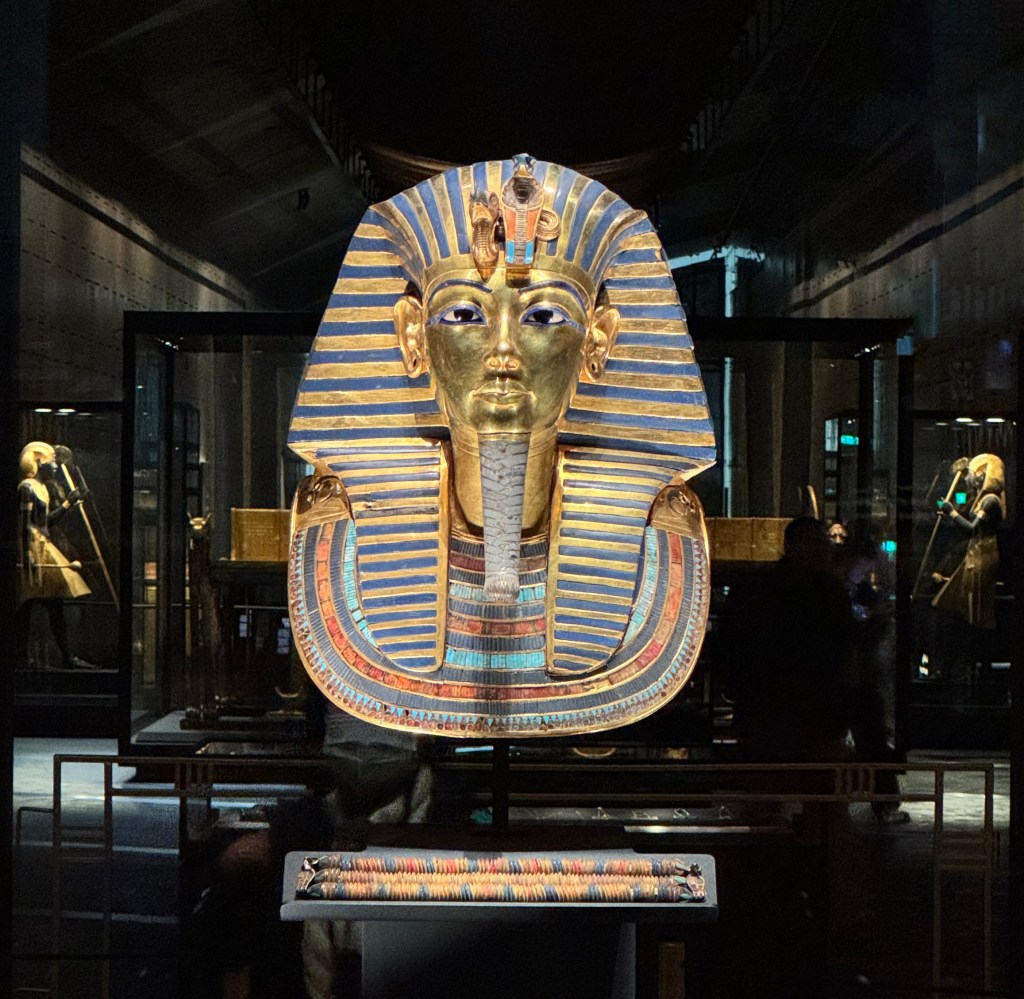
The cover of that issue had two photographs: a man ascending to the summit of Mount Everest, and the golden mask of Tutankhamun. I started reading. The article about Mount Everest was dramatic and thrilling. But Tutankhamun’s golden trove of treasures? I was entranced. The issue also had a map of “Countries of the Nile.” I studied it for hours. Egypt had me in its grasp.
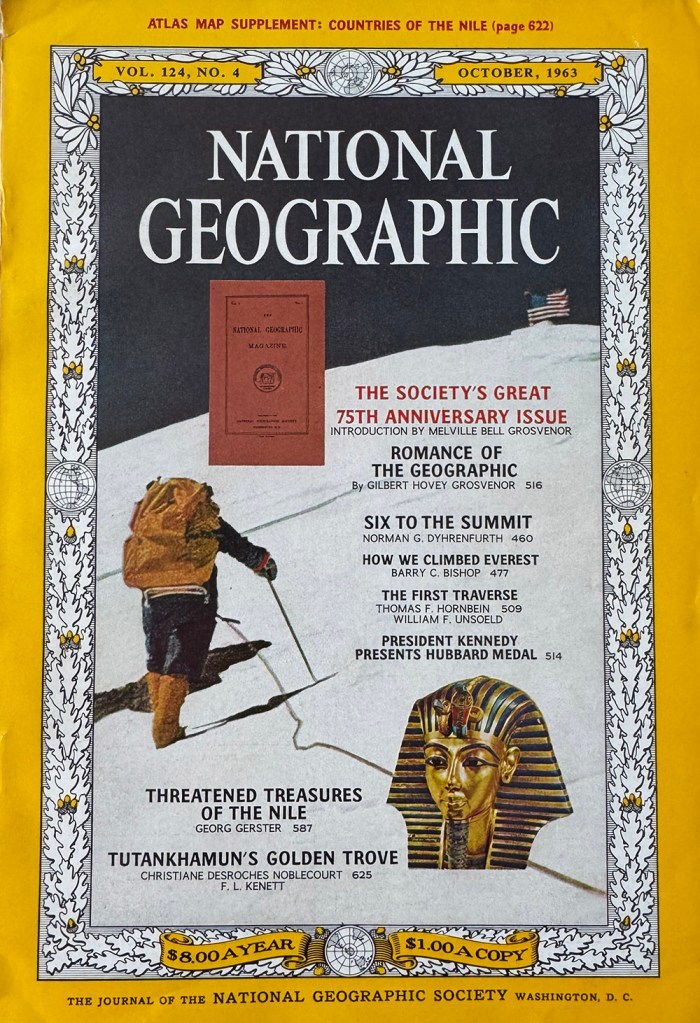
National Geographic, October 1963
A few years later, in May 1966, I read another issue of National Geographic. The article, “Saving the Ancient Temples at Abu Simbel” got my attention. Ancient monuments in Egypt that were soon to be under water with construction of the Aswan High Dam? And people were going to cut the monuments apart, build a new mountain, move the pieces to the new location – 100 feet higher so they would not be under water – and put them together again? It sounded impossible.
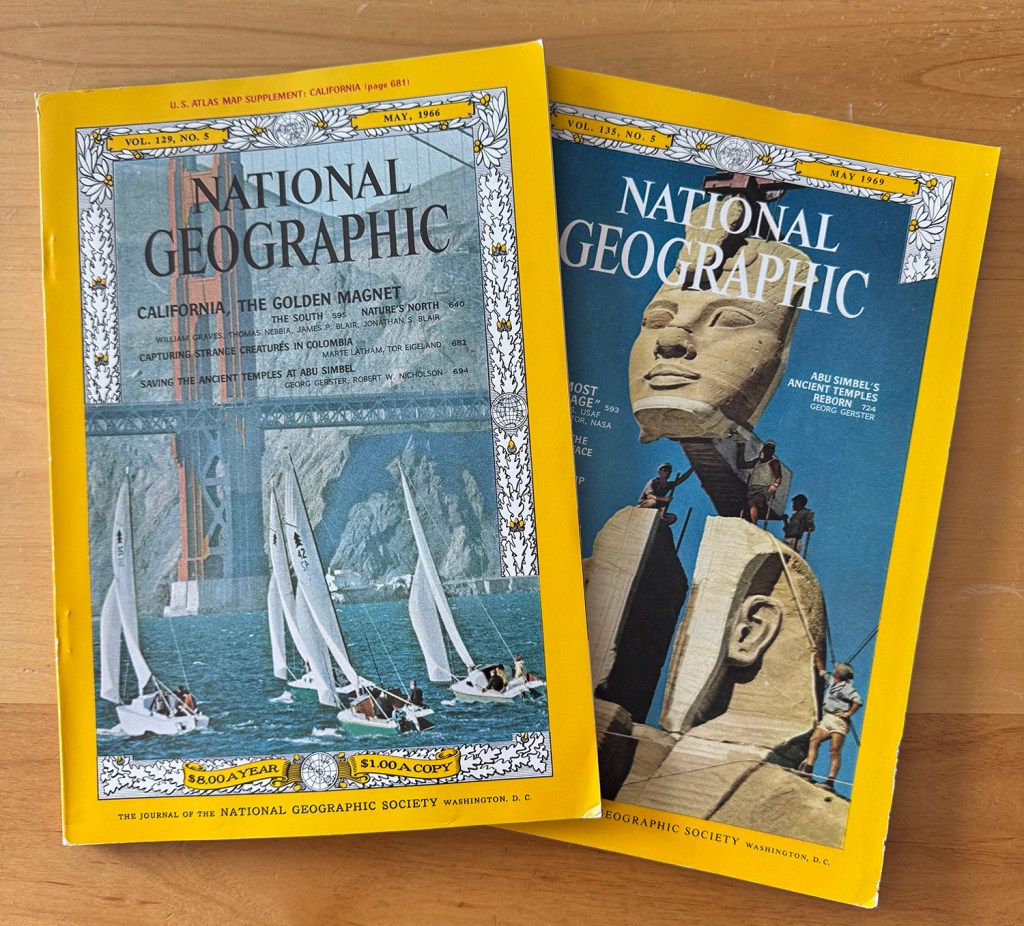
National Geographic, May 1966 and May 1969
But the May 1969 issue of National Geographic was triumphant: I read another article (you are getting the idea: I love to read), “Abu Simbel’s Ancient Temples Reborn.” I wanted to go to Egypt. I had to go to Egypt. I wanted to see this with my own eyes. As the years went on, my desire to visit Egypt increased, in part because in 1976, my grandmother – she with the National Geographic magazines – visited there.
It took over 60 years since Egypt first came to my mind in 1963, but last month my wife, Pat, and I went to Egypt. It was a remarkable, transformative trip.
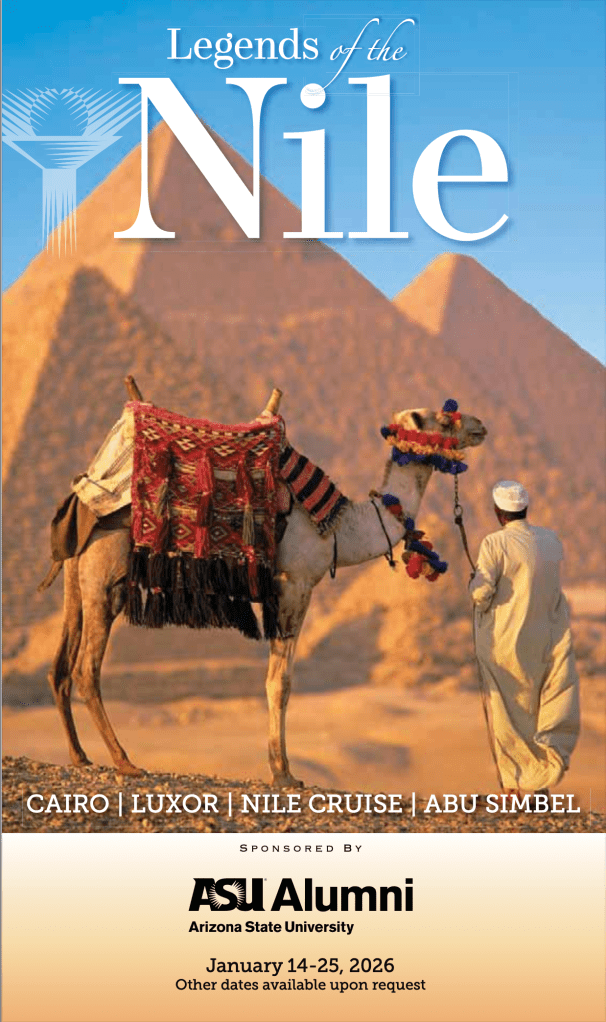
Arizona State University Alumni Travel/AHI Legends of the Nile brochure
In fall of 2025, I received a brochure from Arizona State University alumni travel. I didn’t graduate from ASU but from 2012–2016, I was ASU’s full-time Professor of Trombone. Those were wonderful years of teaching with engaged, talented students, and working with superb colleagues. I still have a courtesy affiliation with ASU and as a result, I receive mailings from the University from time to time. Like a brochure about a tour of Egypt, “Legends of the Nile,” with AHI Travel.
It took Pat and me fewer than 24 hours to decide to join the trip. The itinerary checked every box on my life-long imagined trip to Egypt. With a highly reputable tour operator, AHI, first-class accommodations, a superb Egyptologist, Raffat Khatab, and a truly remarkable tour director, Ashraf Masoud, the trip promised a memorable experience. But I was wrong. It wasn’t memorable: It was life-changing.
Here are a few of the highlights, many photos with commentary that just scratch the surface of our trip. Unless otherwise noted, all of the photographs were taken by me:
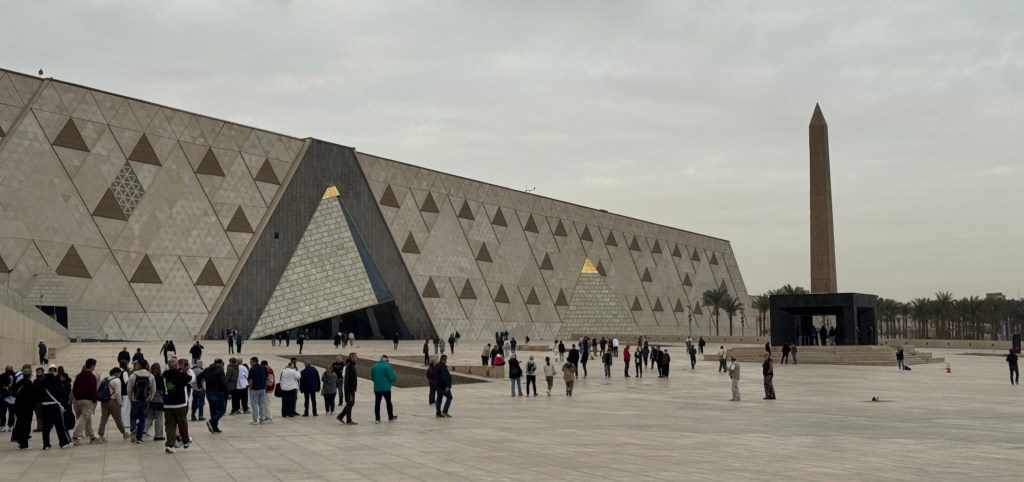
The Grand Egyptian Museum, Giza
Pat and I decided to go to Egypt a day earlier than the group so we could have an extra day to explore the Grand Egyptian Museum (GEM). We’re so glad we did. Years in the planning, the museum had a soft opening a few years ago but the most remarkable of its galleries – the ones with all 5,000+ treasures from the tomb of Pharaoh Tutankhamun, were not yet open. That had to wait for the grand opening of the museum that was delayed multiple times. Happily, the museum fully opened in November 2025, in time for us to visit.
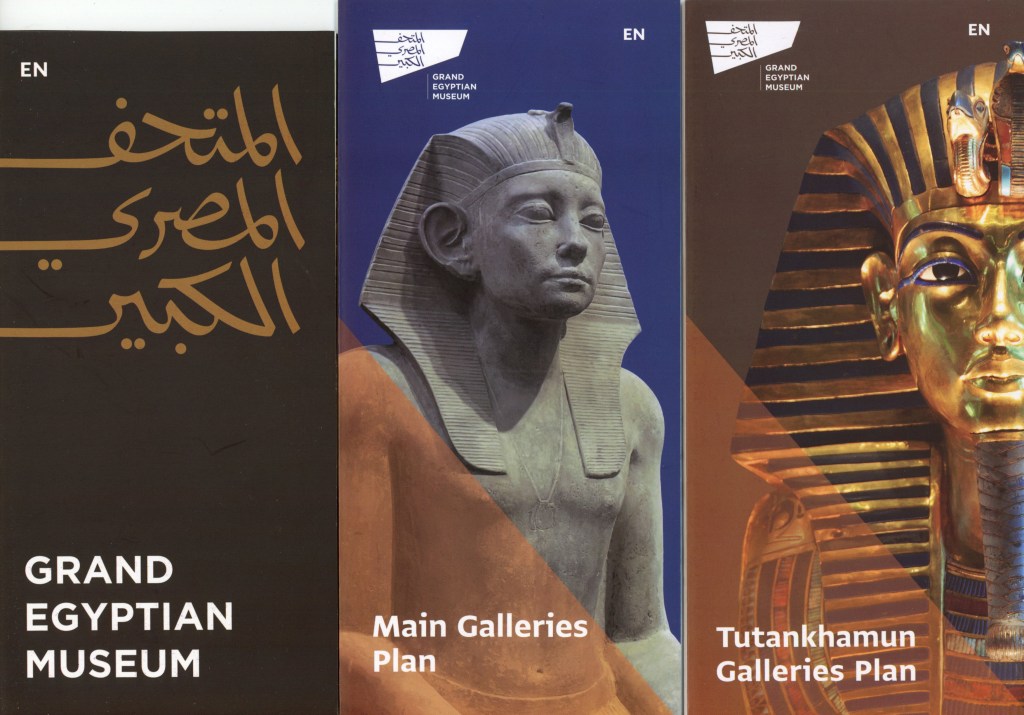
Gallery Guides for the Grand Egyptian Museum, Giza
Our day at the GEM was eye-opening. We had tickets to start our visit at 11:00 am. Thanks to Ashraf and his massive portfolio of connections – really and truly, I believe he knows everyone in Egypt – he arranged for us to enter the museum at 8:30 am, before the official opening time. We stood astonished at the huge statue of Pharaoh Ramesses II (carved from a single piece of red granite) in the museum’s courtyard:
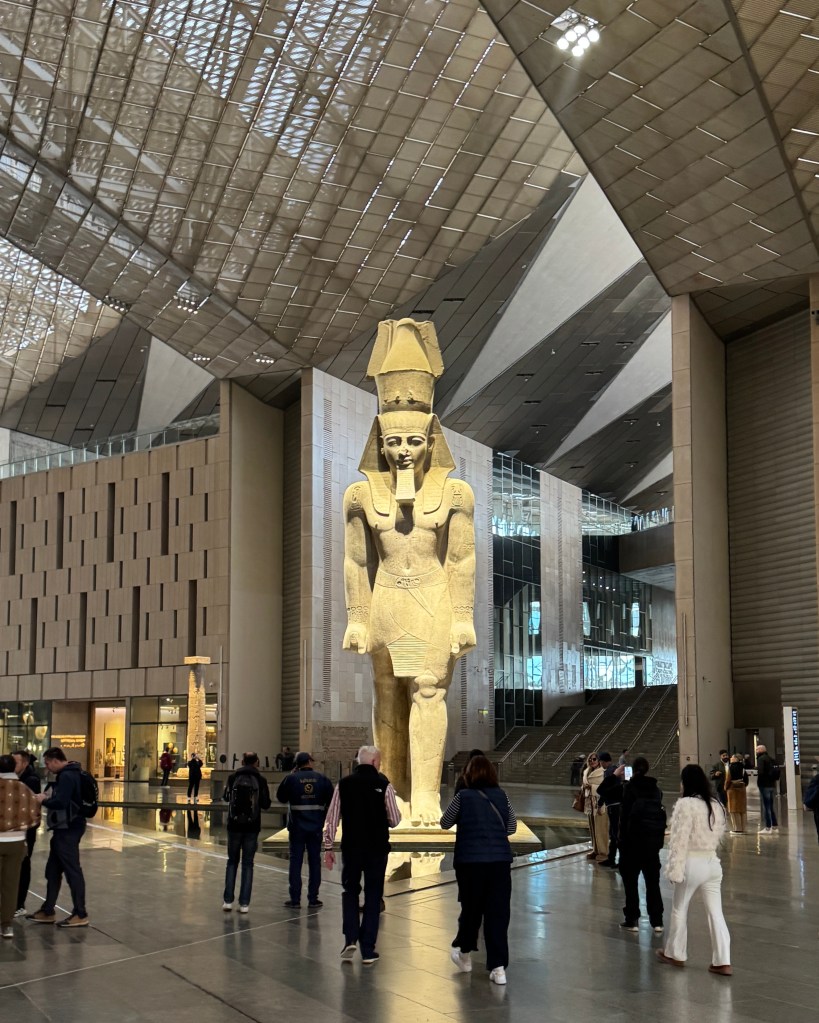
Statue of Ramesses II, Grand Egyptian Museum, Giza
We were ushered to the Tutankhamun galleries where we viewed the iconic golden mask – by ourselves. A private viewing. No crowds. Amazing.
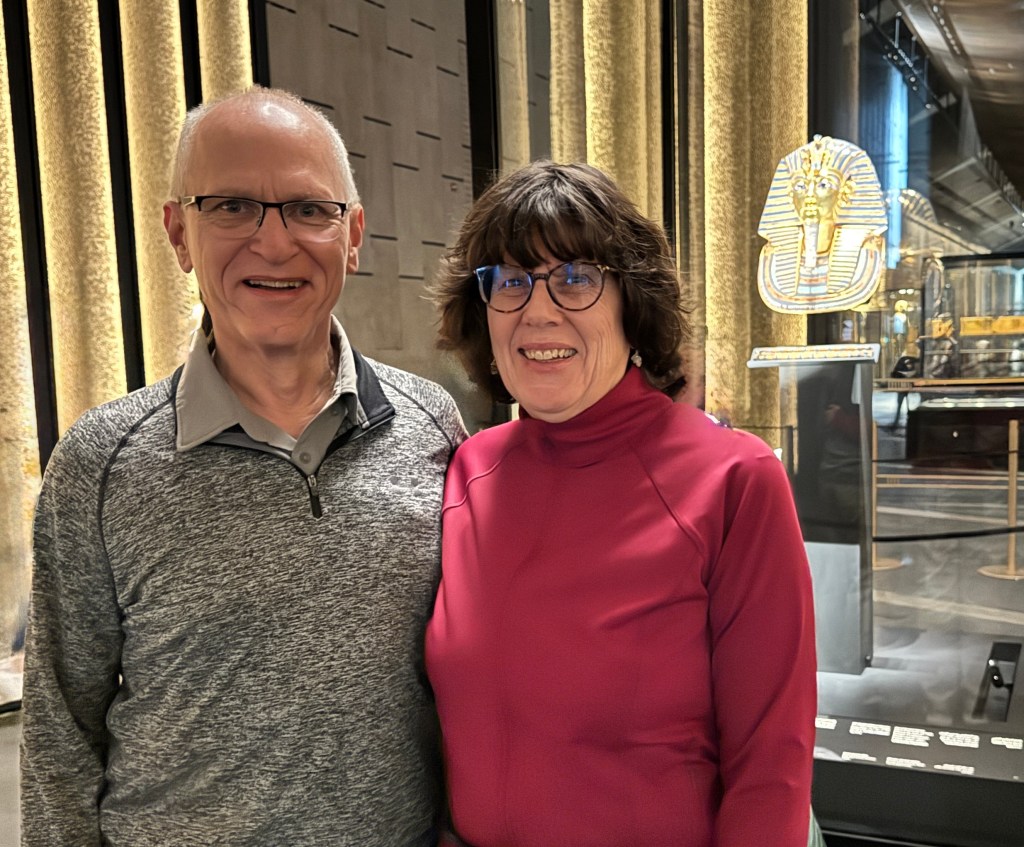
Douglas and Patricia Yeo with the mask of Tutankhamen, Grand Egyptian Museum, Giza
National Geographic magazine came alive:
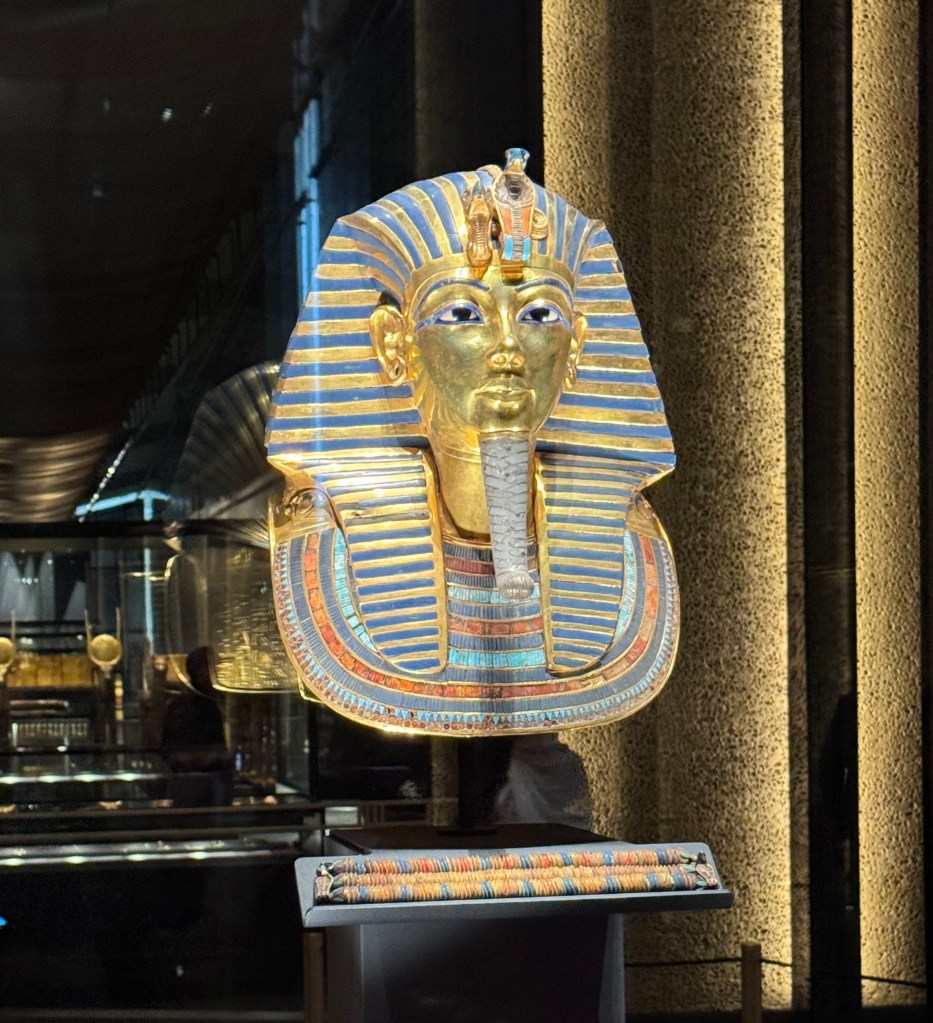
The mask of Tutankhamen, Grand Egyptian Museum, Giza
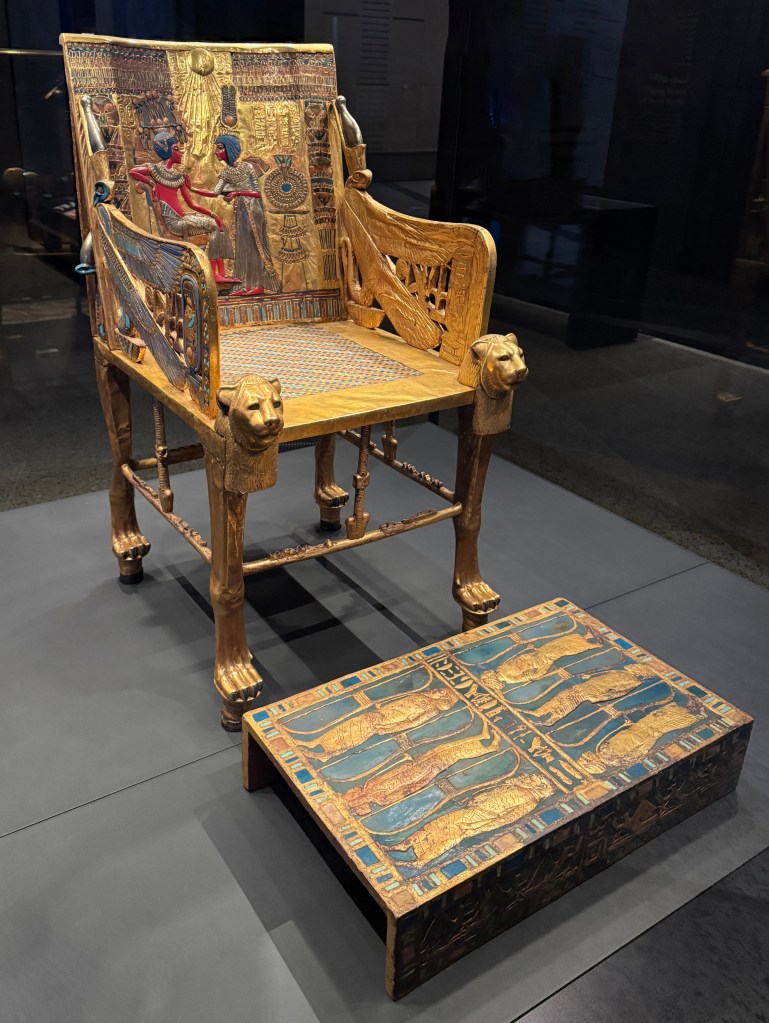
We spent two hours with “King Tut.” We marveled at his golden throne:
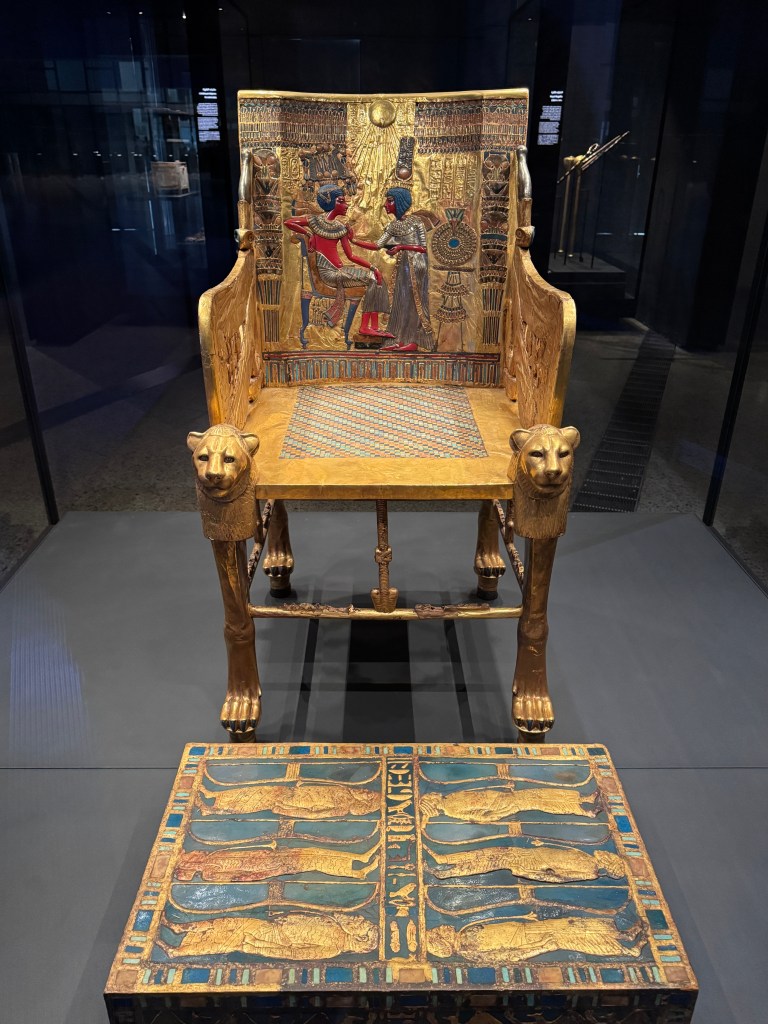
The throne of Tutankhamun, Grand Egyptian Museum, Giza
All three of his golden coffins:
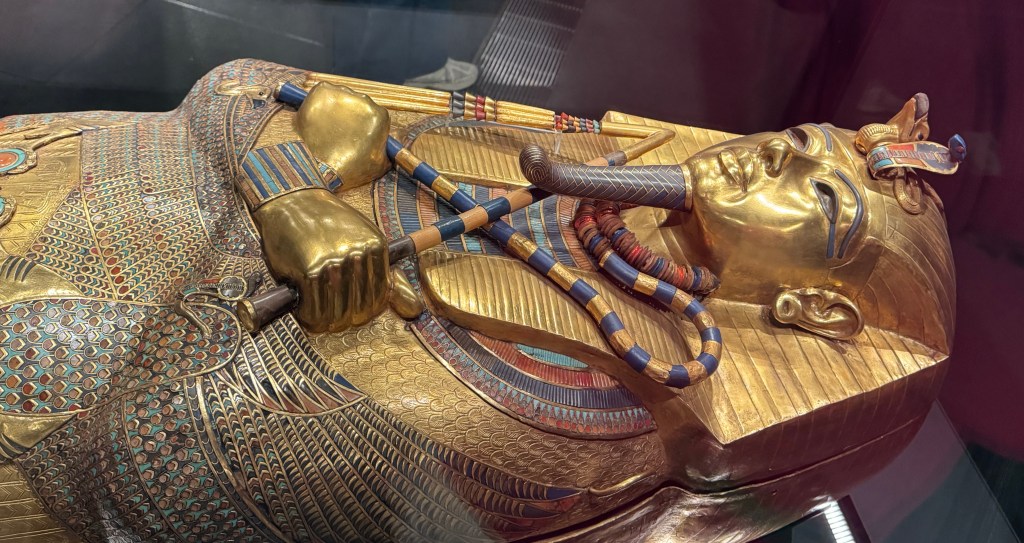
One of Tutankhamun’s three golden coffins, Grand Egyptian Museum, Giza
The golden four golden shrines that surrounded his sarcophagus:
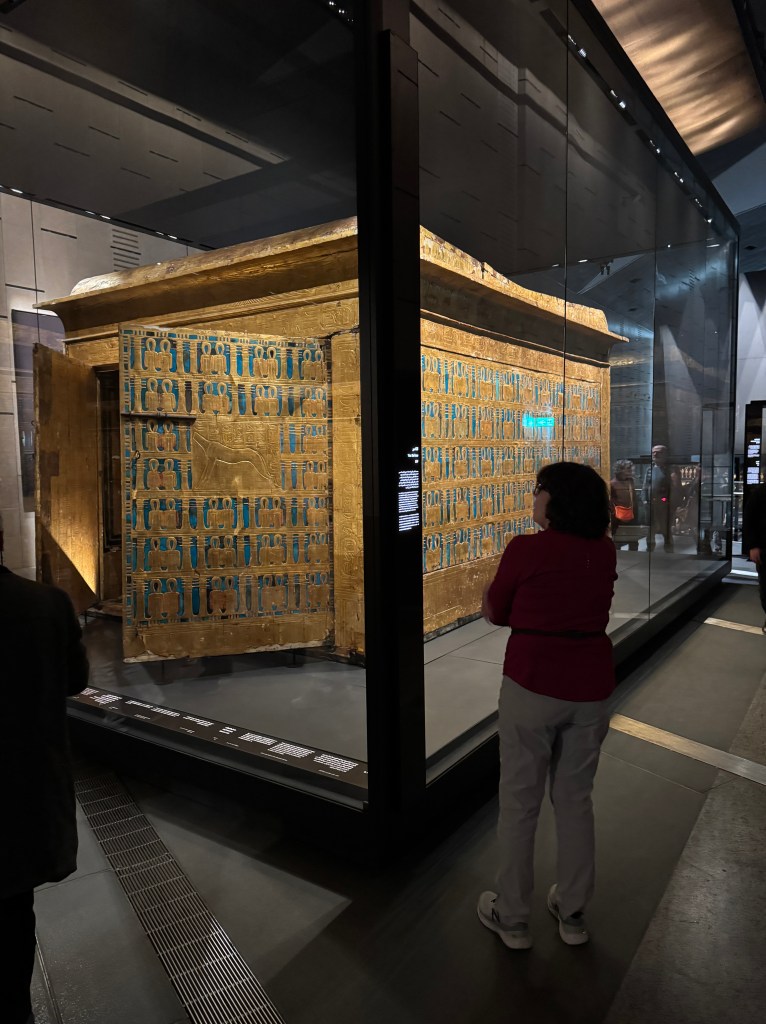
Patricia Yeo with the largest (outermost) of the four golden shrines that surrounded Tutankhamun’s sarcophagus and coffins, Grand Egyptian Museum, Giza
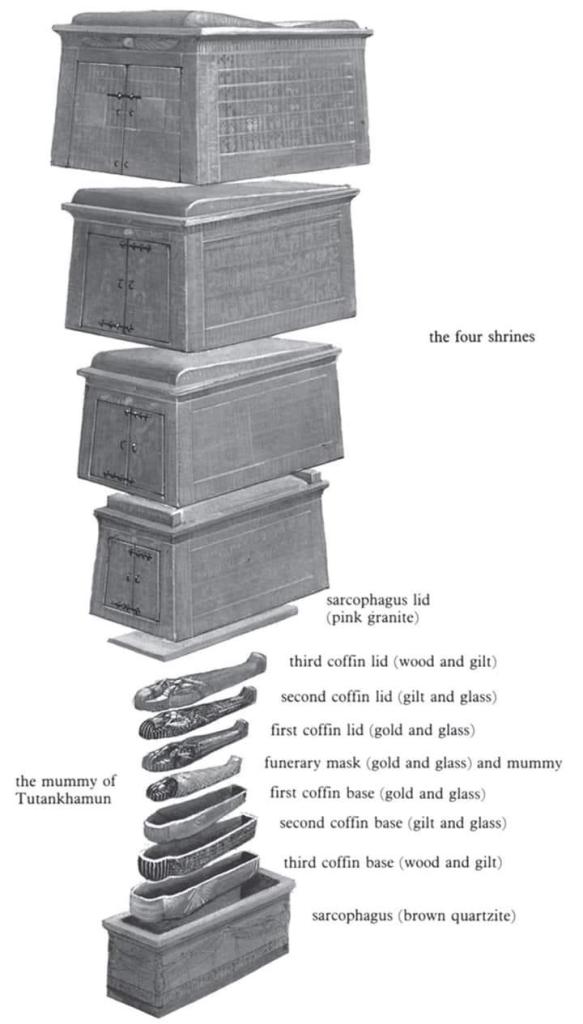
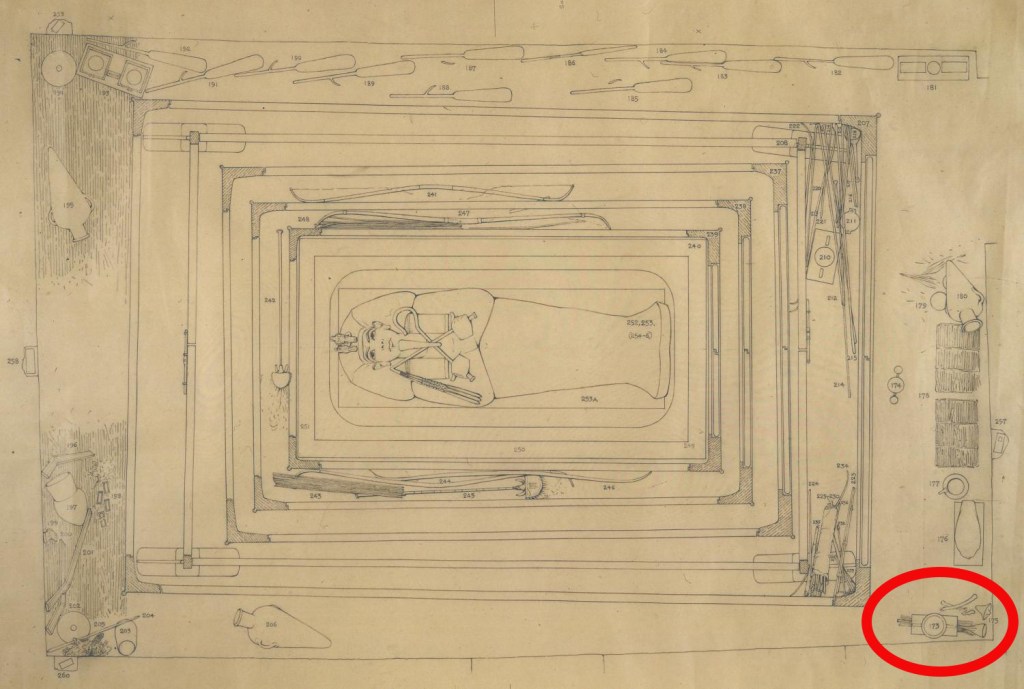
From Tutankhamun’s golden mask to the last of the four golden shrines, there were nine layers in his burial – the golden mask over his mummy, three coffins, the quartzite and granite sarcophagus, and four shrines. Here’s how they were put together (with thanks to Ashraf Masoud for sending our group this informative diagram):
We also saw Thtankhamun’s golden chariots:
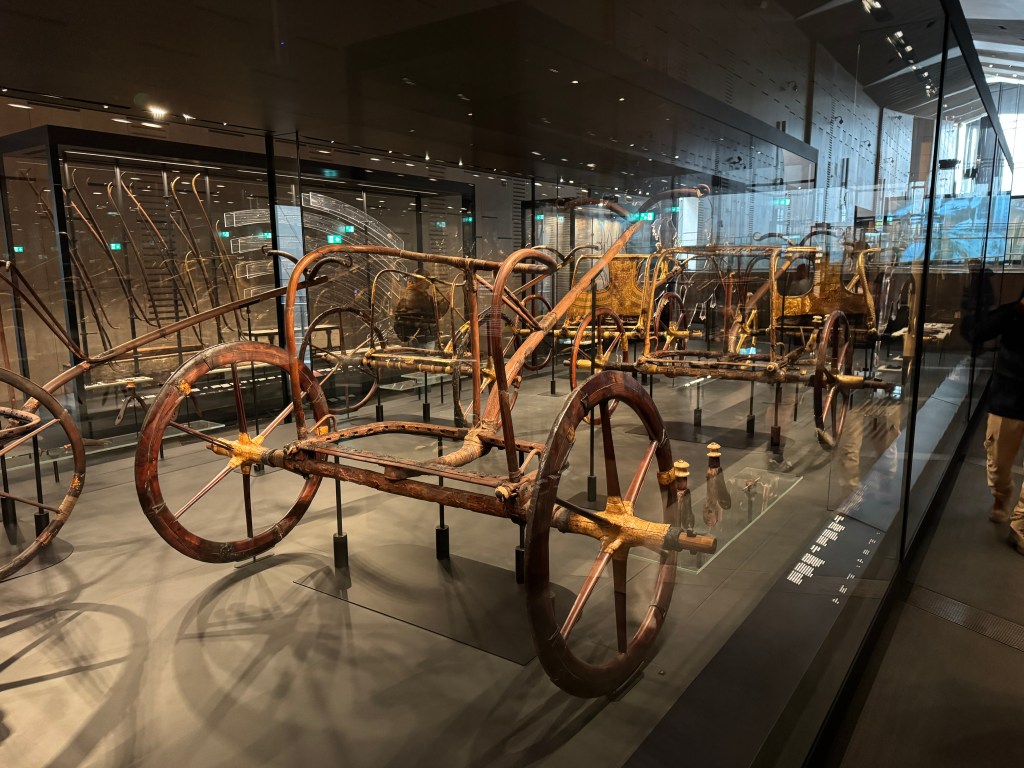
The golden chariots of Tutankhamun, Grand Egyptian Museum, Giza
Jewelry, jewelry, and more jewelry:
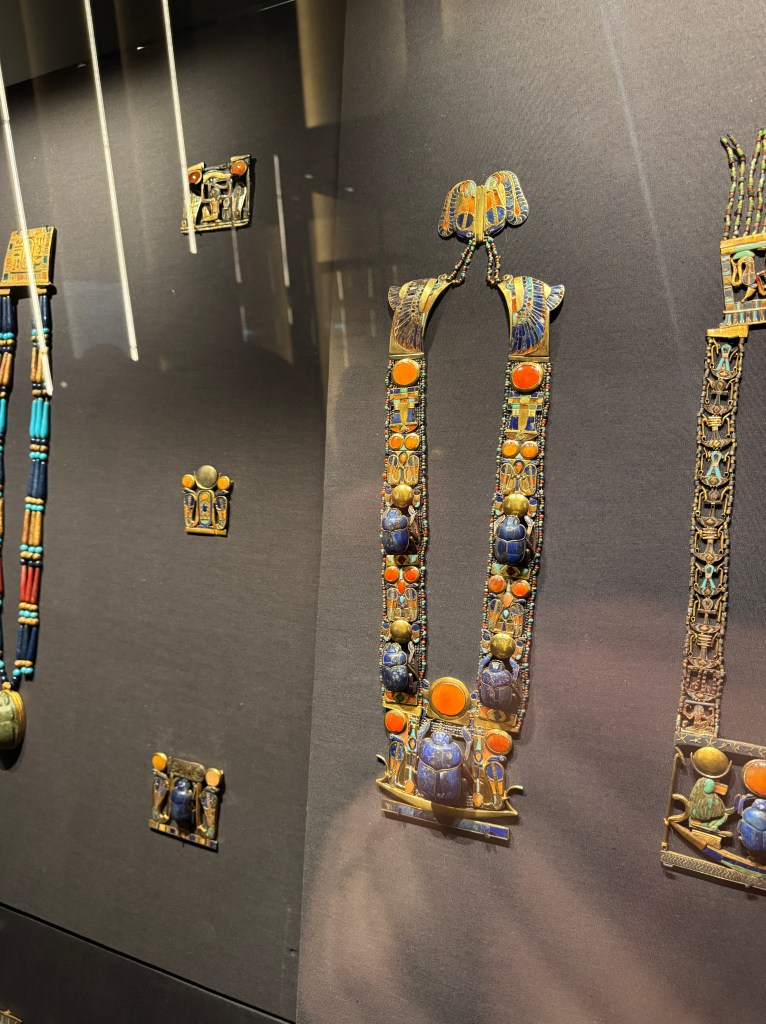
A few of the hundreds of pieces of jewelry of Tutankhamun, Grand Egyptian Museum, Giza
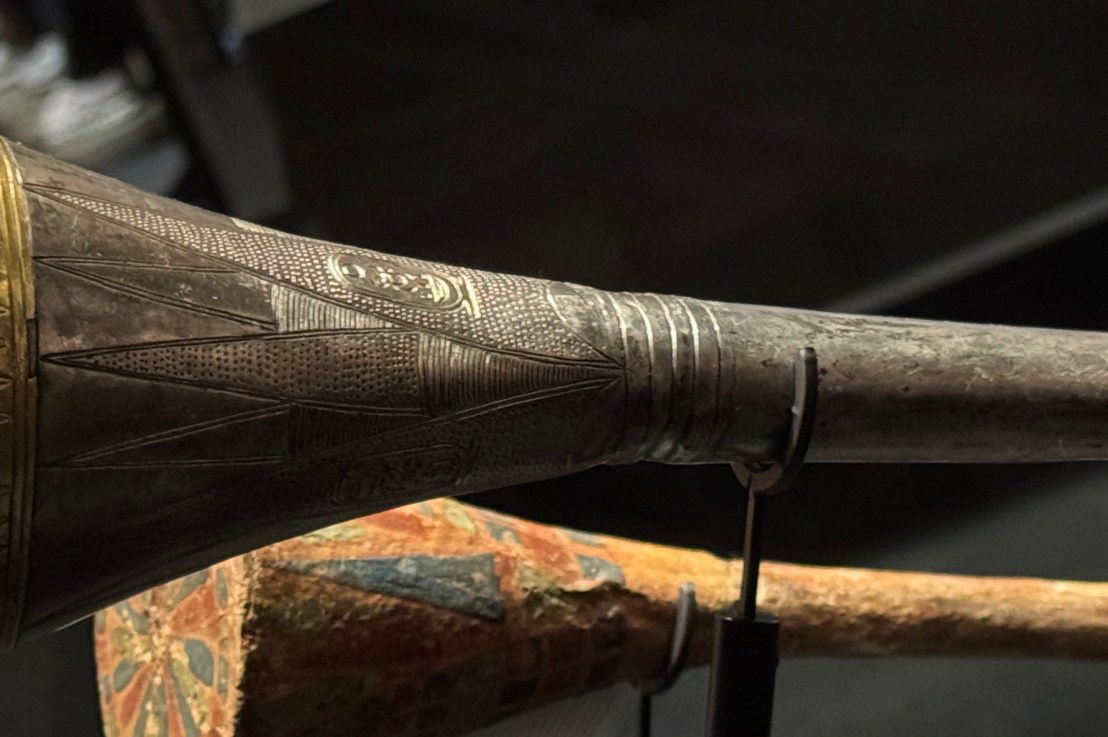
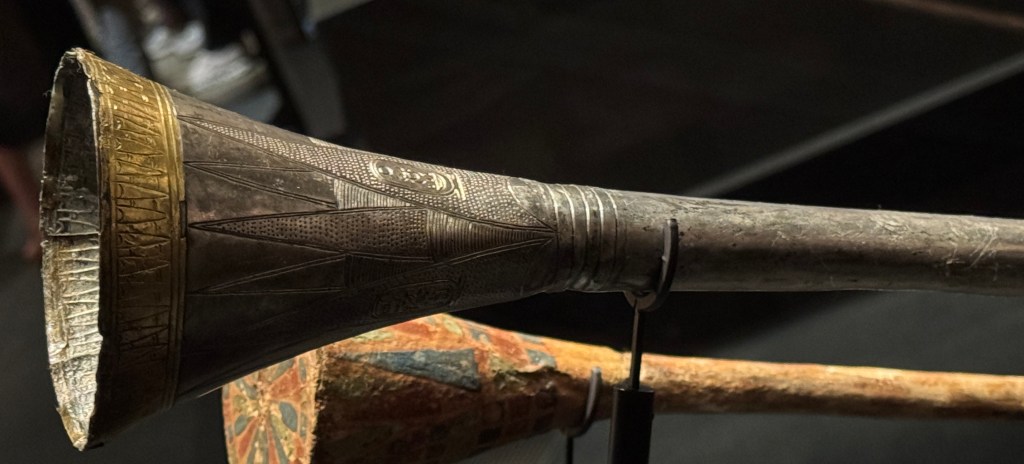
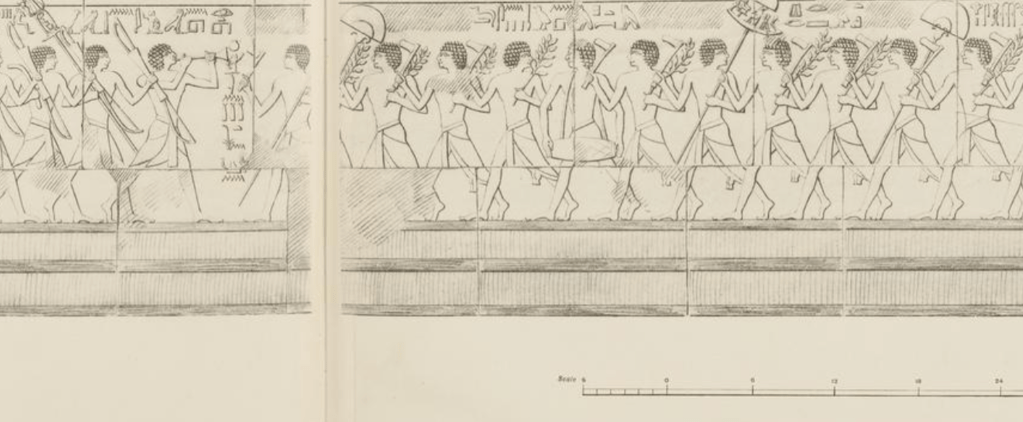
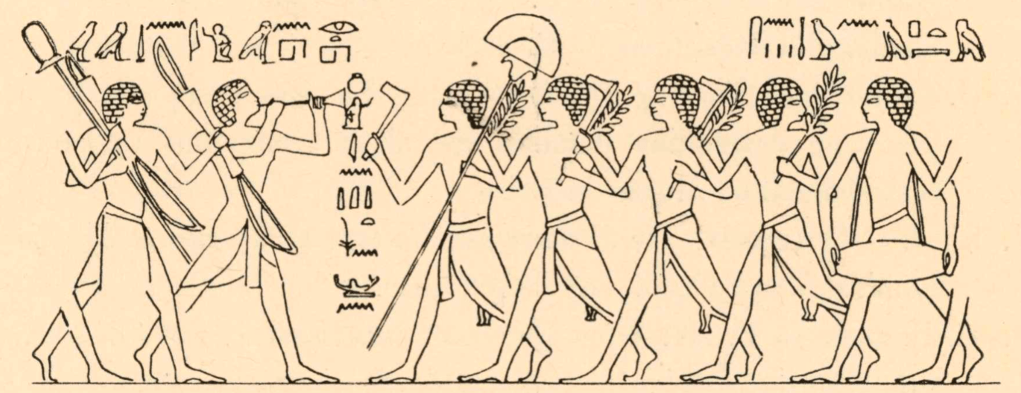
And something that was very, very important to me, the oldest surviving metal ancestors of the trombone, the two trumpets that were discovered in Tutankhamun’s tomb, along with the decorated wooden inserts that were kept inside the bells to keep them from being damaged when they were not in use:
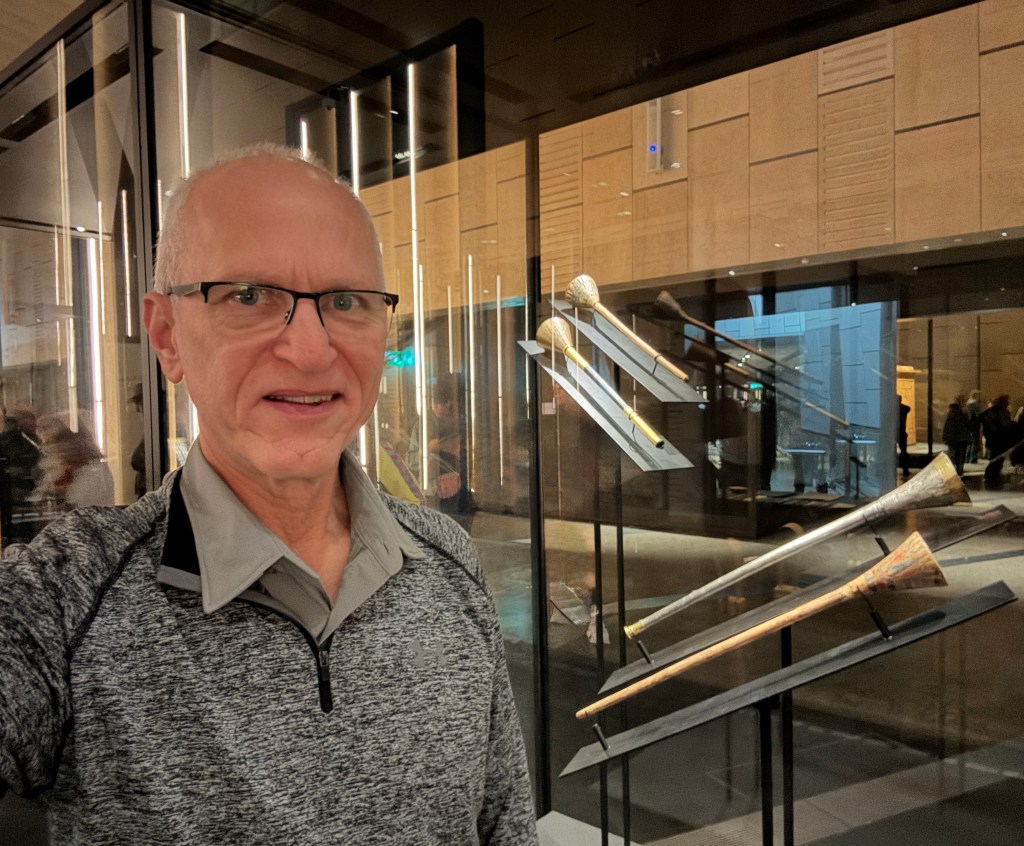
Douglas Yeo with the Tutankhamun trumpets, Grand Egyptian Museum, Giza
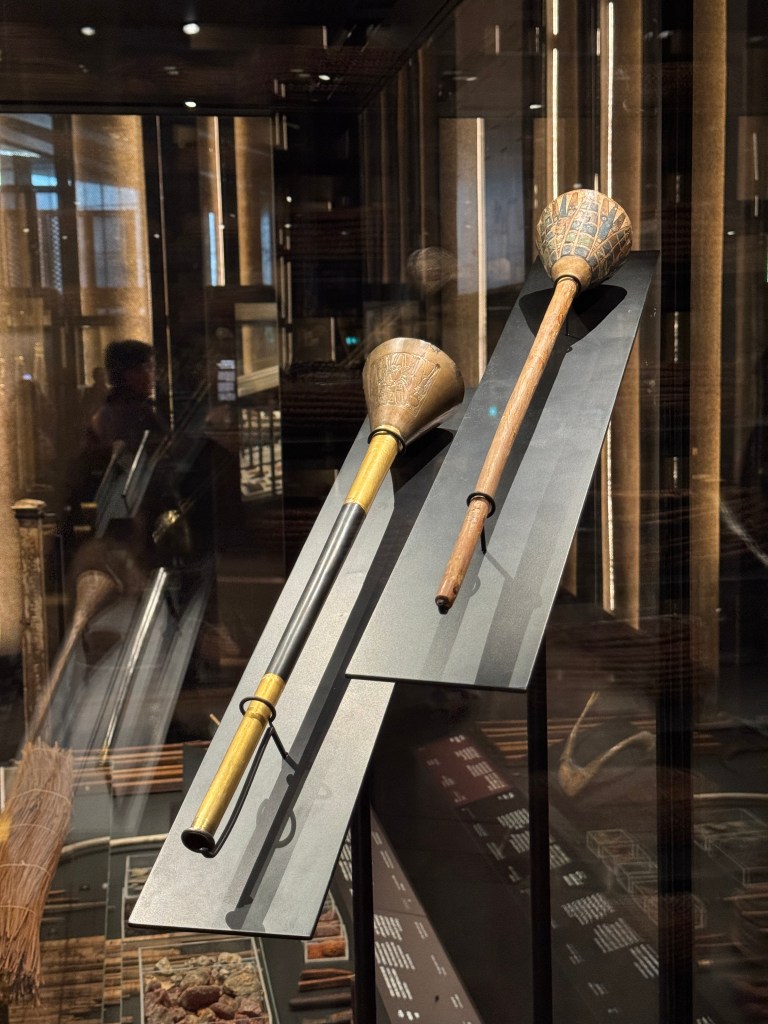
The bronze and gold trumpet of Tutankhamun, Grand Egyptian Museum, Giza
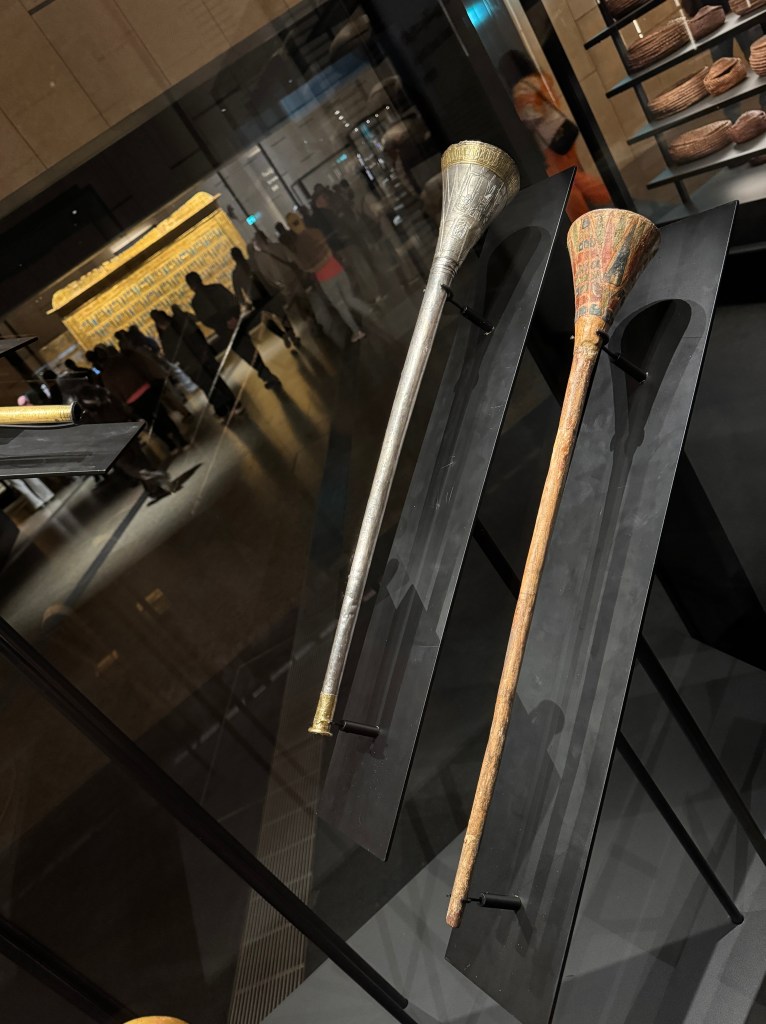
The silver and gold trumpet of Tutankhamun, Grand Egyptian Museum, Giza
The museum had more. Much more. The Grand Egyptian Museum was overwhelming in its scope of Egyptian history. Statuary abounds, and the descriptive labels were always informative.
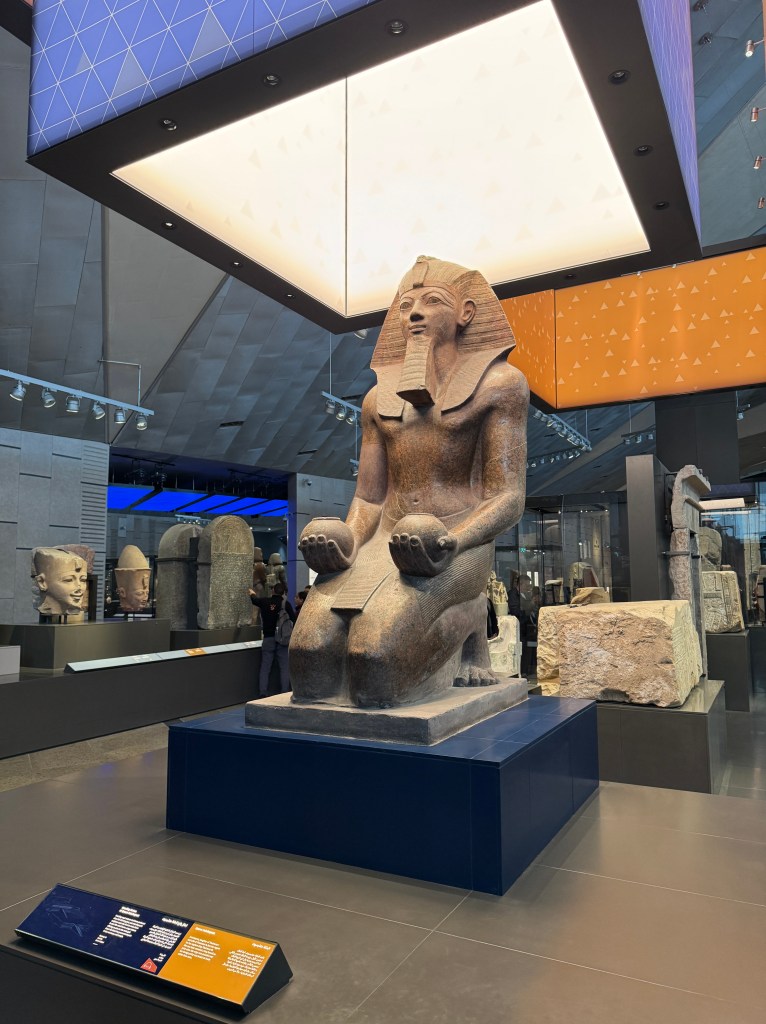
Statue of Queen Hatshepsut as Pharaoh, Grand Egyptian Museum, Giza. Six – seven!
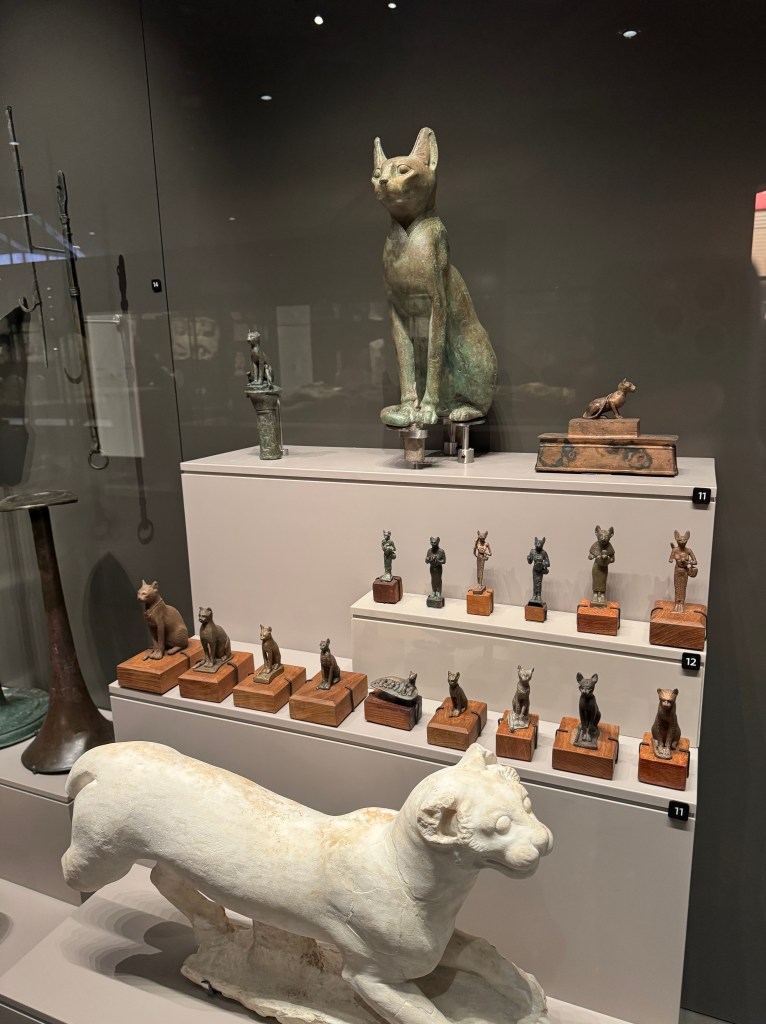
Statues of cats, Grand Egyptian Museum, Giza
We saw the “solar boat” of Pharaoh Khufu, found buried next to the Great Pyramid.
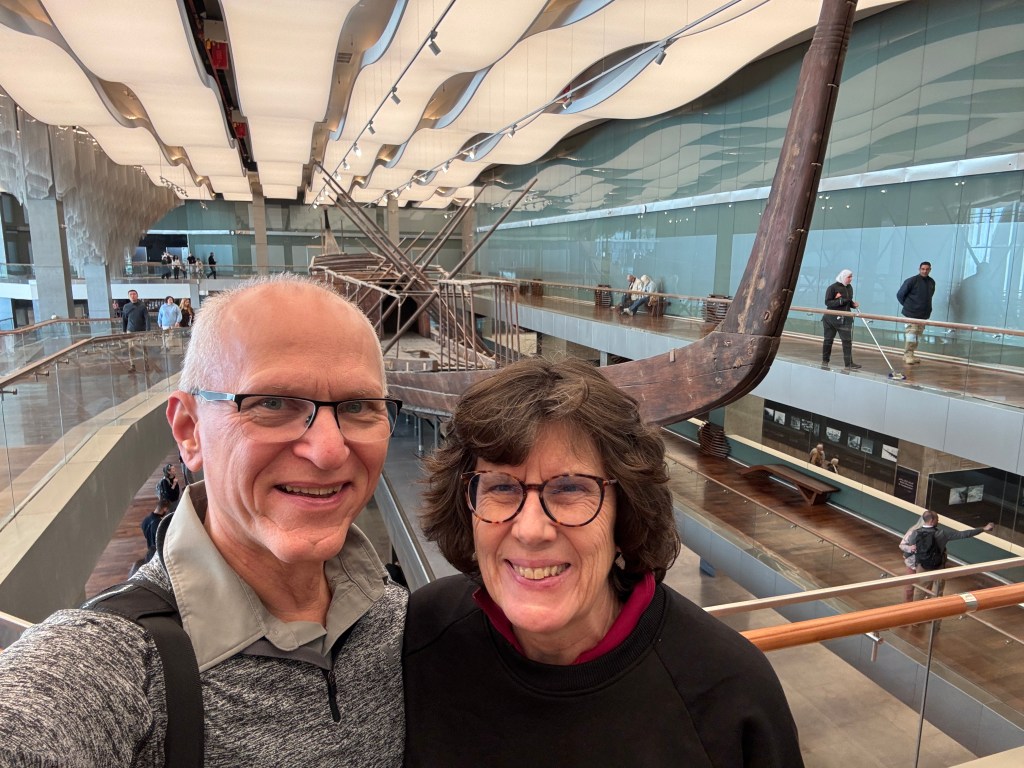
Douglas and Patricia Yeo with the 4,500 year old “solar boat” of Pharaoh Khufu, Grand Egyptian Museum, Giza
After our visit to the Grand Egyptian, we went to the Egyptian Museum. Built in 1901 at Tahir Square, Cairo, it still houses many important pieces of Egyptian history that have not been transferred to the new Grand Egyptian Museum.
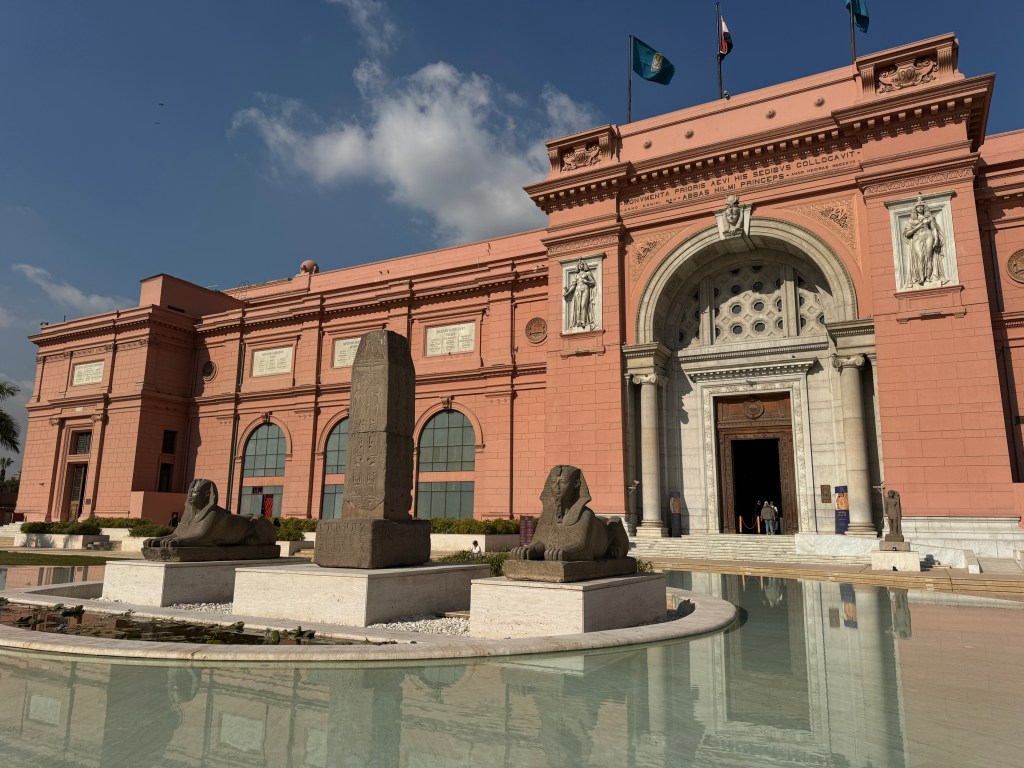
Egyptian Museum, Cairo
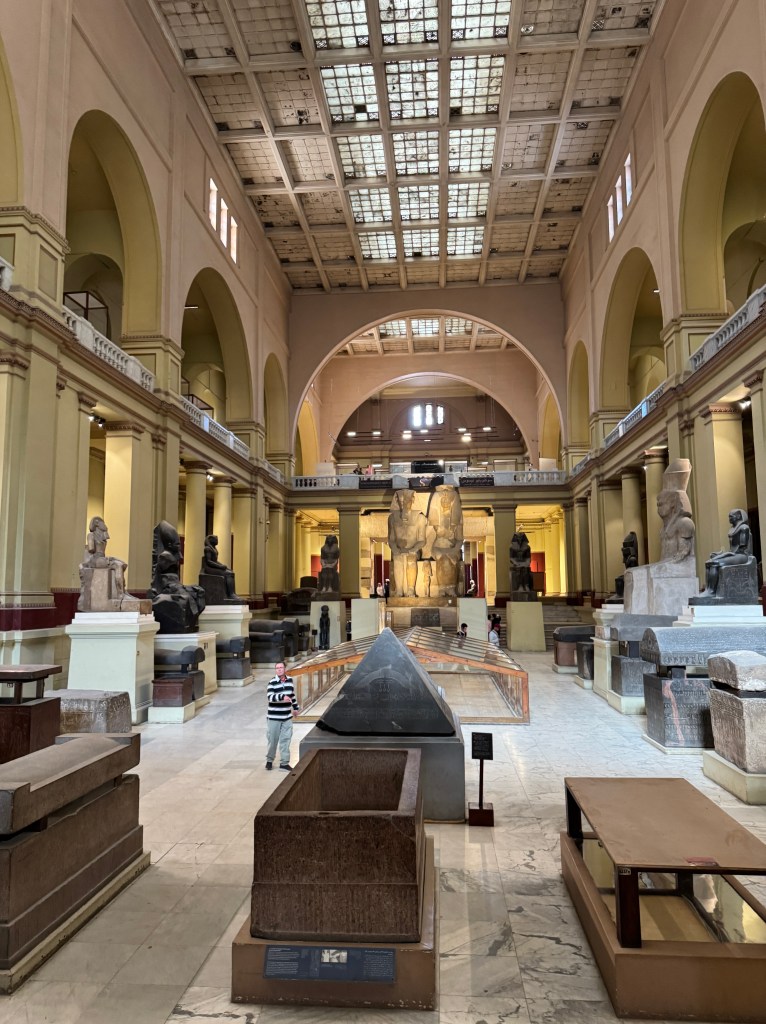
The Egyptian Museum’s main Gallery, Cairo
The museum’s collection included one of the most important part of Egypt’s history, the Narmer palette, showing Narmer, the first King of a united (upper and lower) Egypt, dating from about 3200 BC.
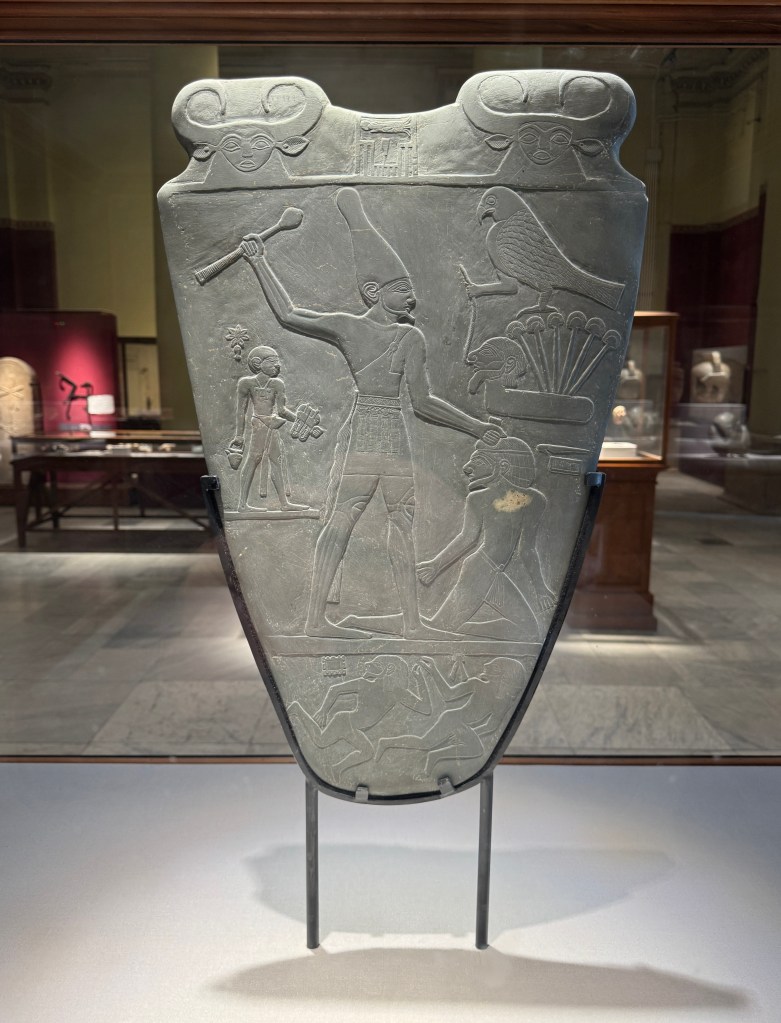
The Narmer Palette (front), Egyptian Museum, Cairo
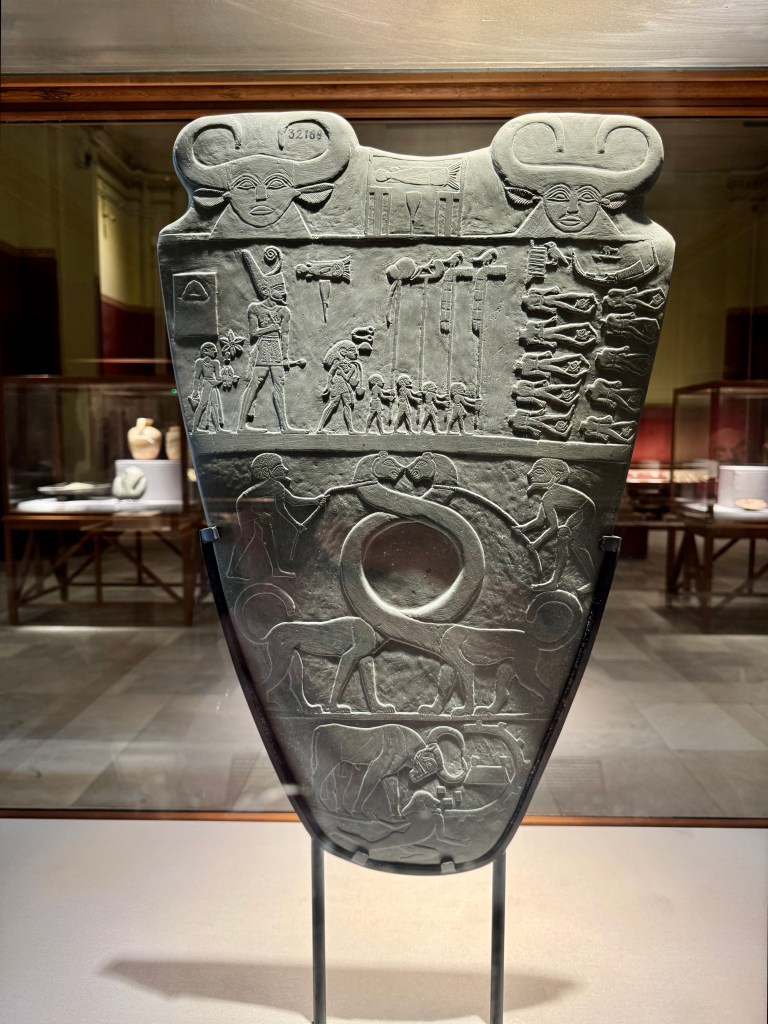
The Narmer Palette (back), Egyptian Museum, Cairo
We returned to the Grand Egyptian Museum again the following day with our whole tour group — we were so glad we had gotten to Egypt a day early so we could enjoy this remarkable museum twice.
The rest of the tour unfolded like a National Geographic television special, but in real life. We visited Saqqara, where the first pyramid (a step pyramid, build for the Pharaoh Djoser around 2650 BC) was constructed:
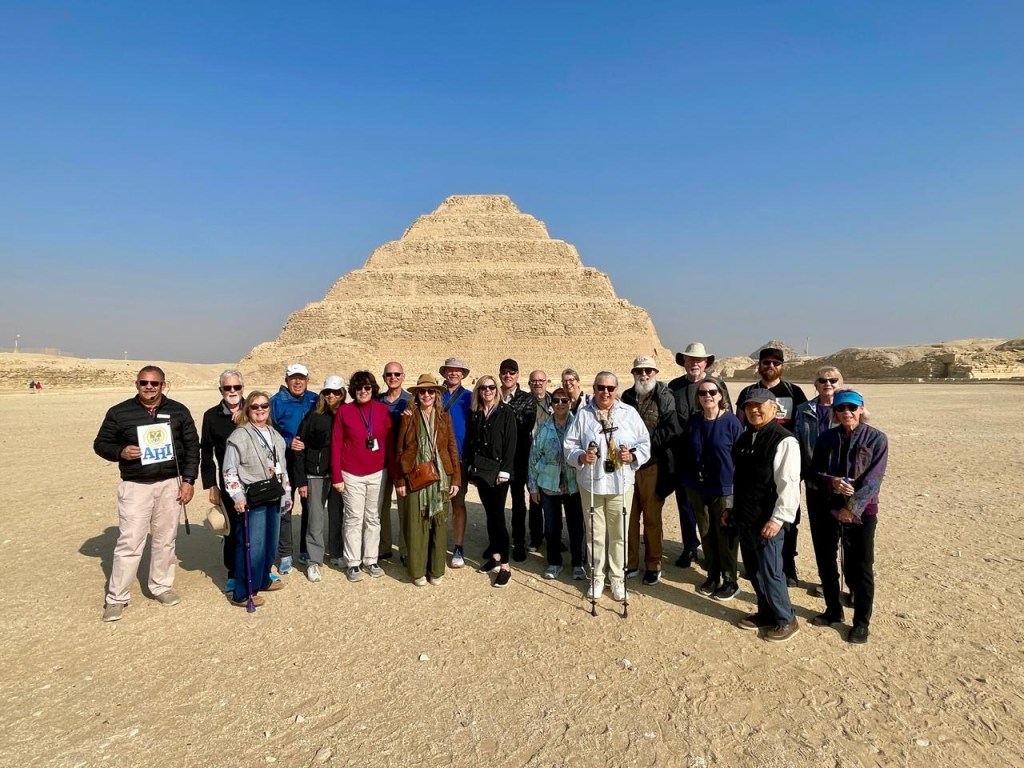
Legends of the Nile tour group at the Step Pyramid of Djoser, Saqqara (photo by Ashraf Masoud)
Then, we visited the Pyramids of Giza. I don’t know if there is anything in the world more iconic than the Giza Pyramids.
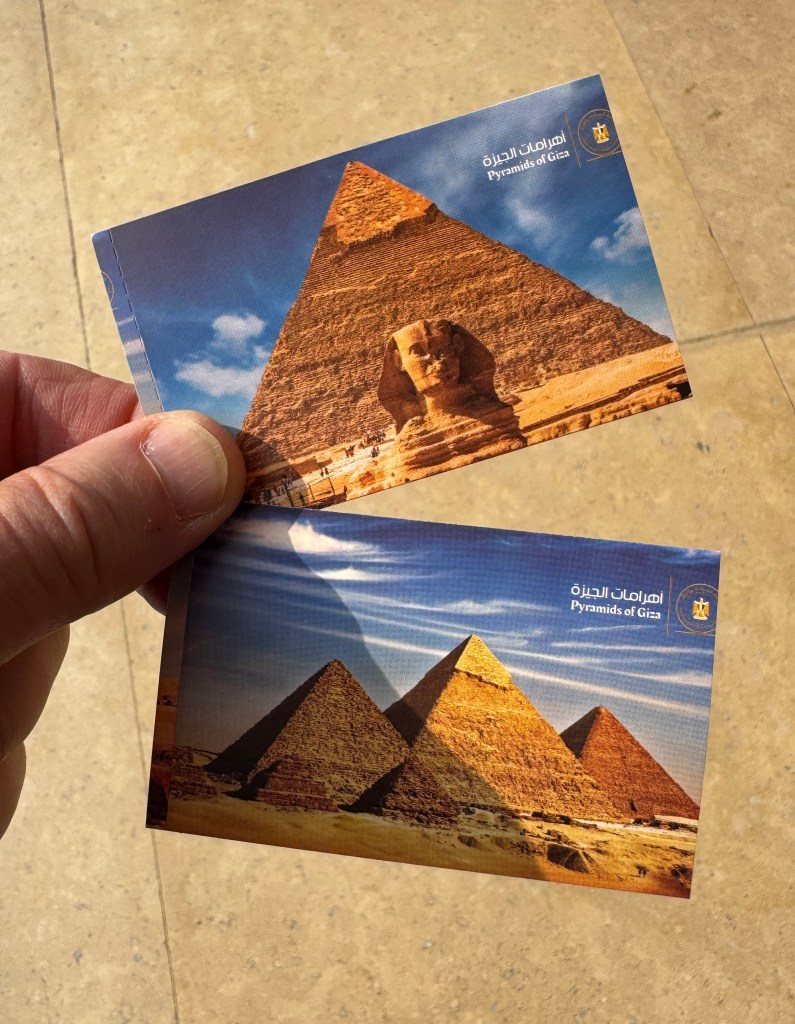
Our tickets to enter the Giza Pyramid area
We went inside the Great Pyramid of Khufu. There isn’t much inside – only the broken, empty sarcophagus of Khufu. Still, it was a thrill to be INSIDE the last surviving wonder of the ancient world. Getting to the burial chamber of the Pyramid was a real adventure through narrow tunnels.
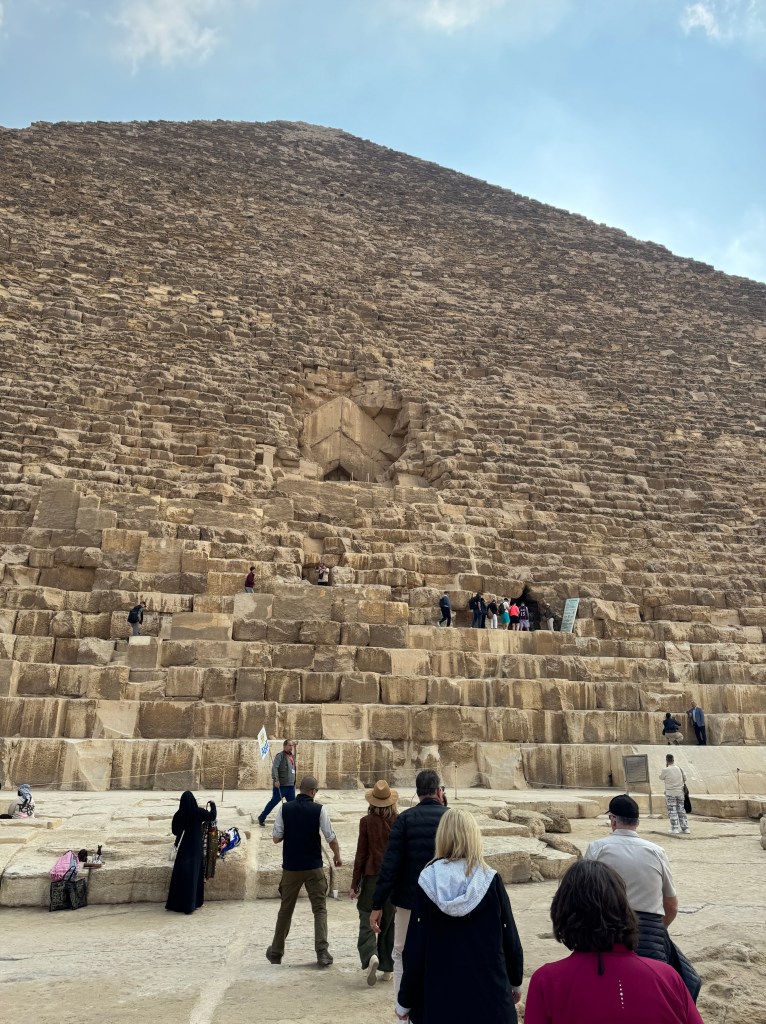
Entrance to the Great Pyramid of Khufu, Giza
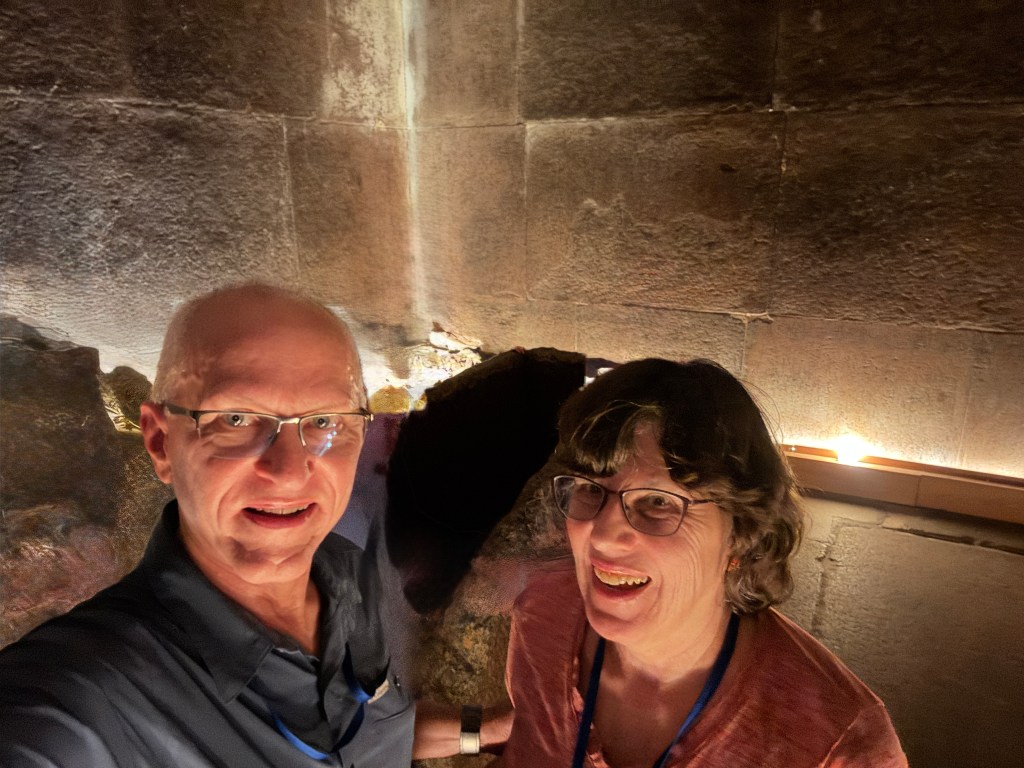
Douglas and Patricia Yeo inside the Great Pyramid of Khufu, Giza
No photograph in a book prepares you for the monumental size of the Great Pyramid. It is 480 feet tall, and each side is 756 feet long. Think about that. Each side is longer than two football fields. It truly boggles the mind – and we still don’t know exactly how they were constructed. Seeing these amazing structures was thrilling beyond words.
I’ve always loved “before and after” photographs. Many individuals in the nineteenth century captured some of the ancient monuments before they had been restored, or when they were partly – or mostly – covered with sand. Francis Frith took many photos in the 1850s and throughout this blog post, I’ll include some of his images next to my photos. The comparison is striking.
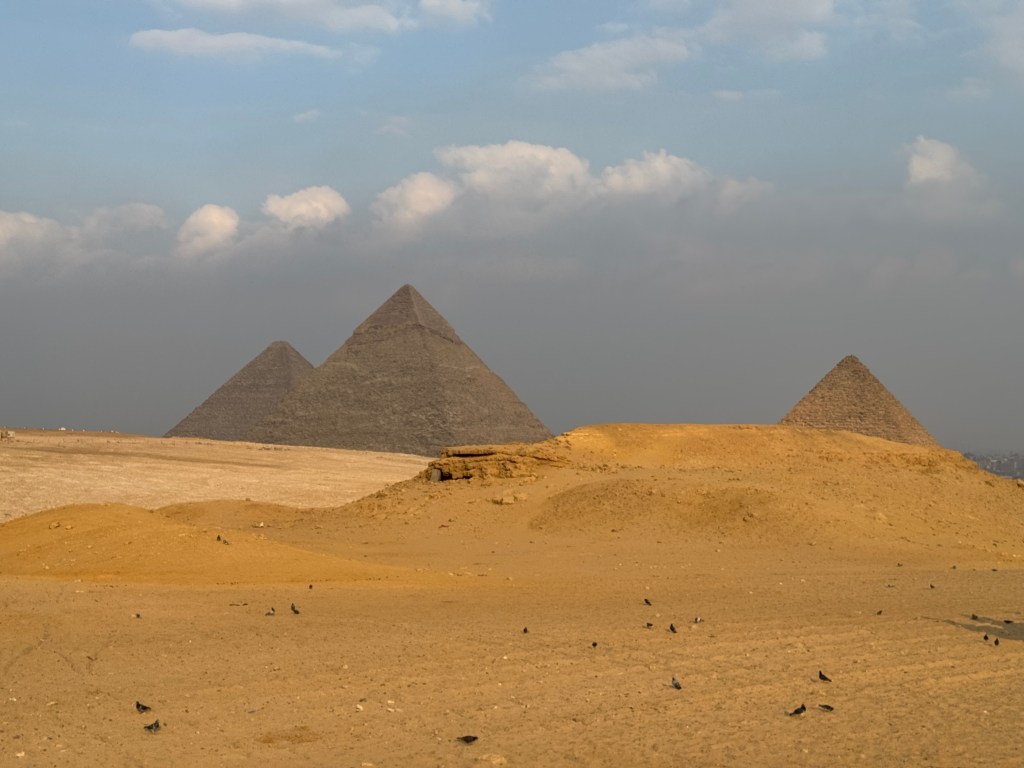
Pyramids at Giza
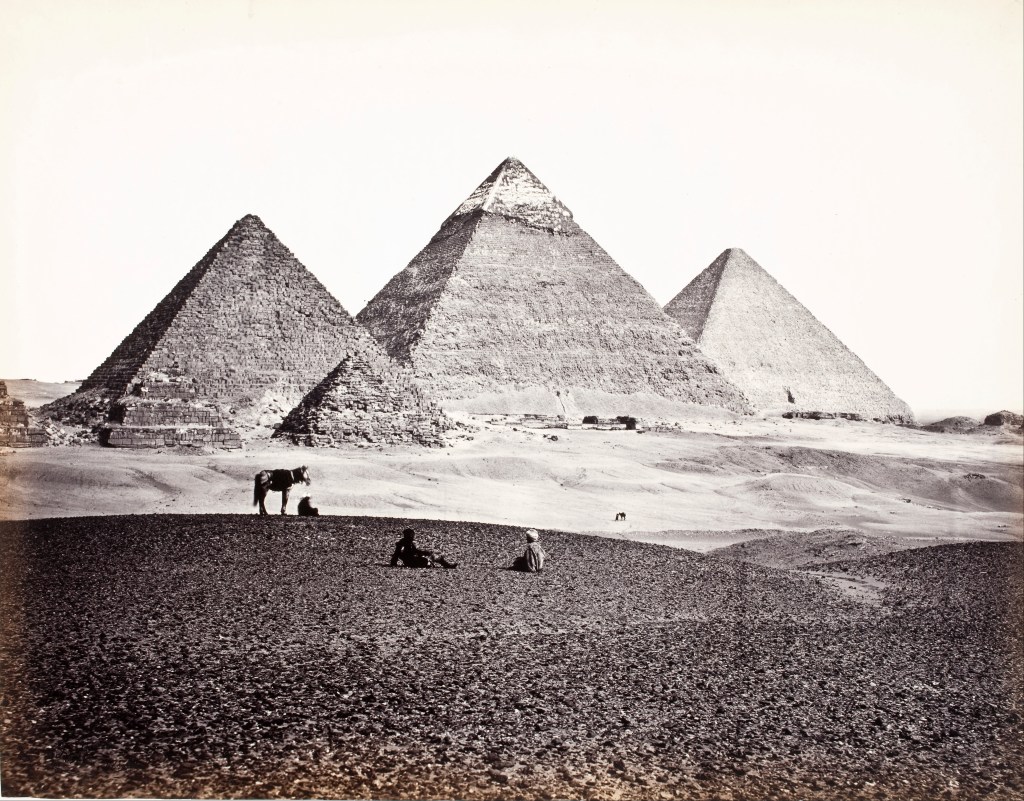
Pyramids of Giza by Francis Frith c. 1858
I have to say, though, seeing the Pyramids was even more thrilling when seen from the back of a camel. Seriously!
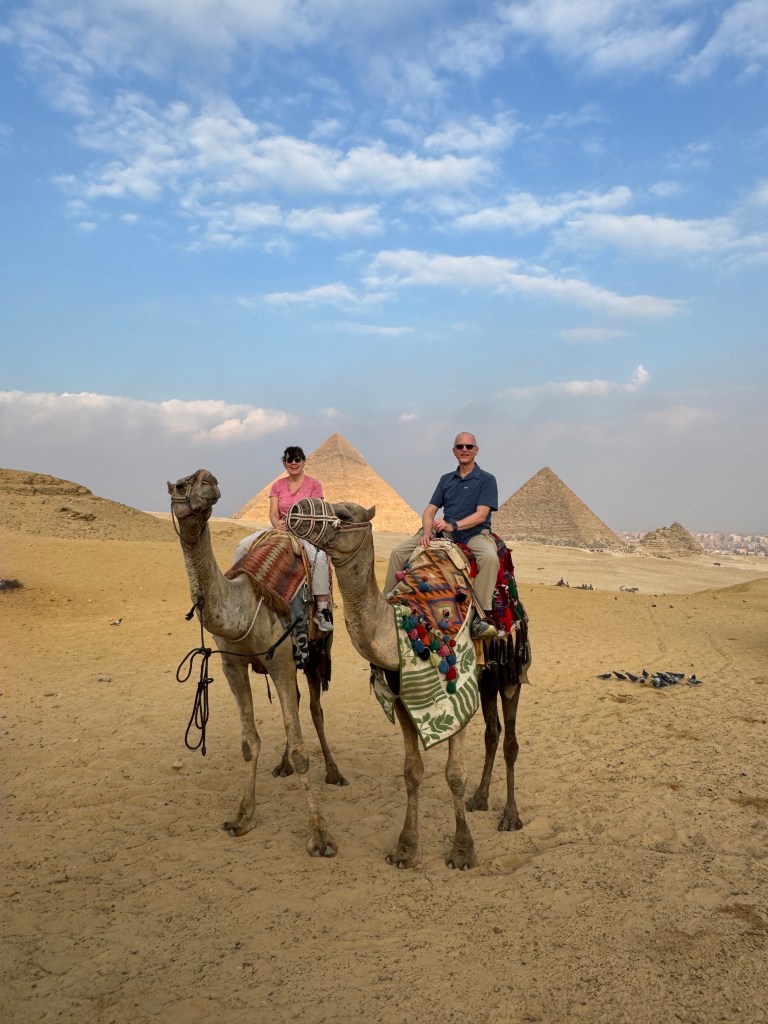
Patricia and Douglas Yeo on camels, Giza
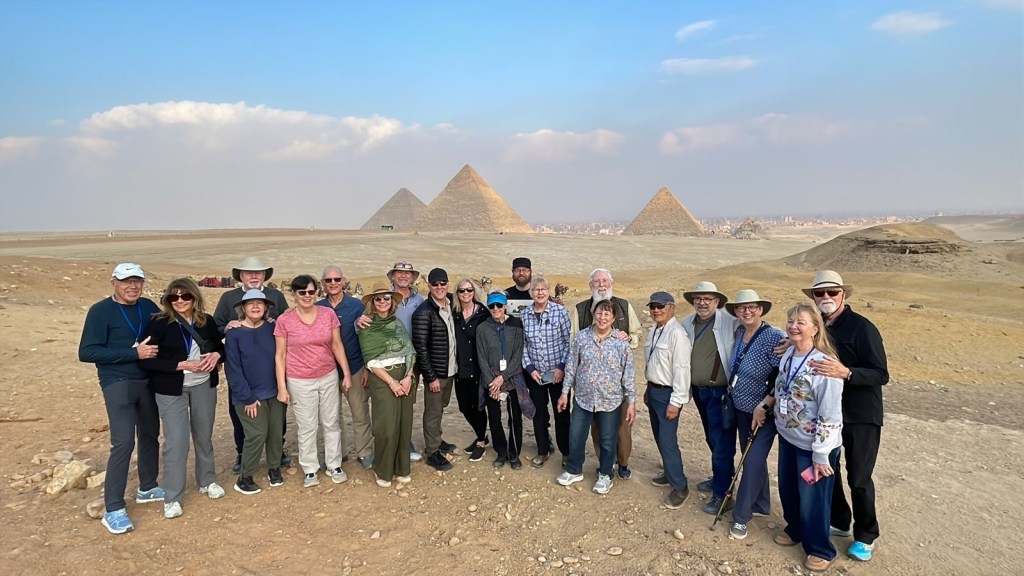
Legends of the Nile tour group at the Pyramids of Giza (photo by Ashraf Masoud)
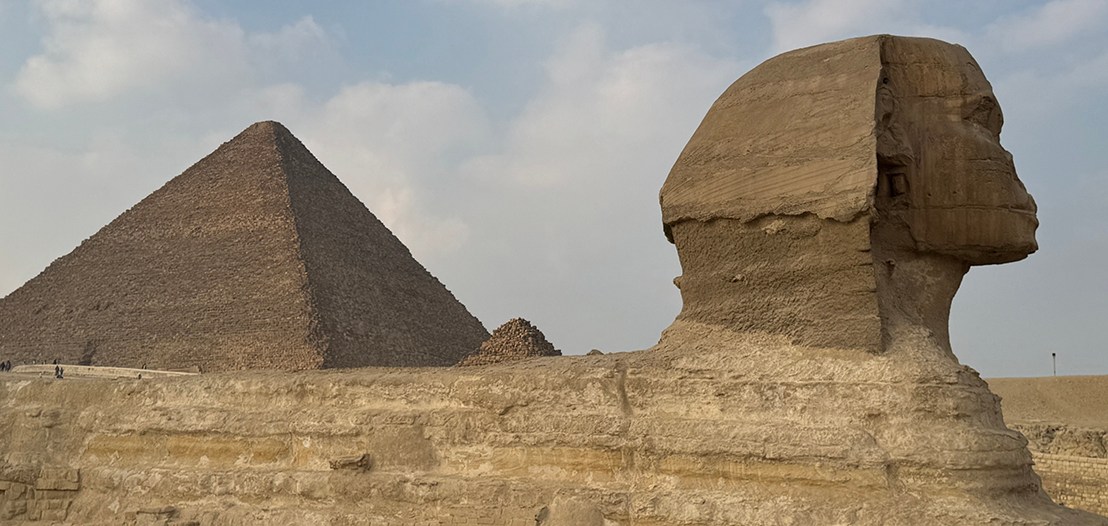
A visit to the iconic Sphinx was a thrill. The main body and head were carved from a single piece of rock that was already there at the site.
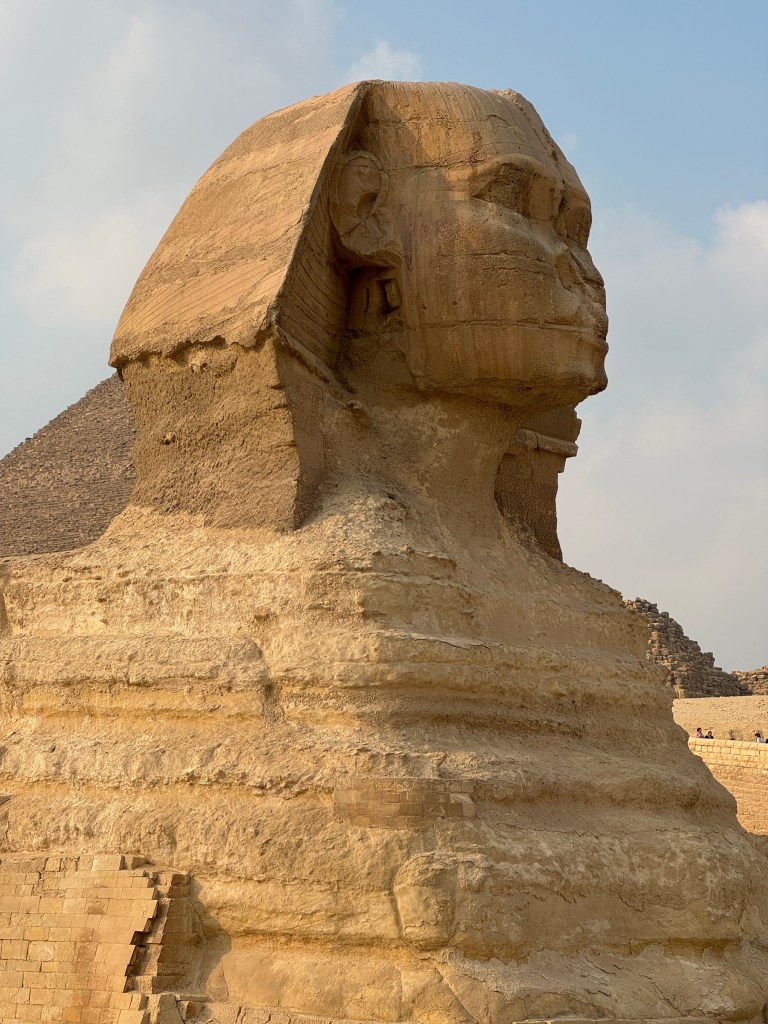
The Sphinx, Giza
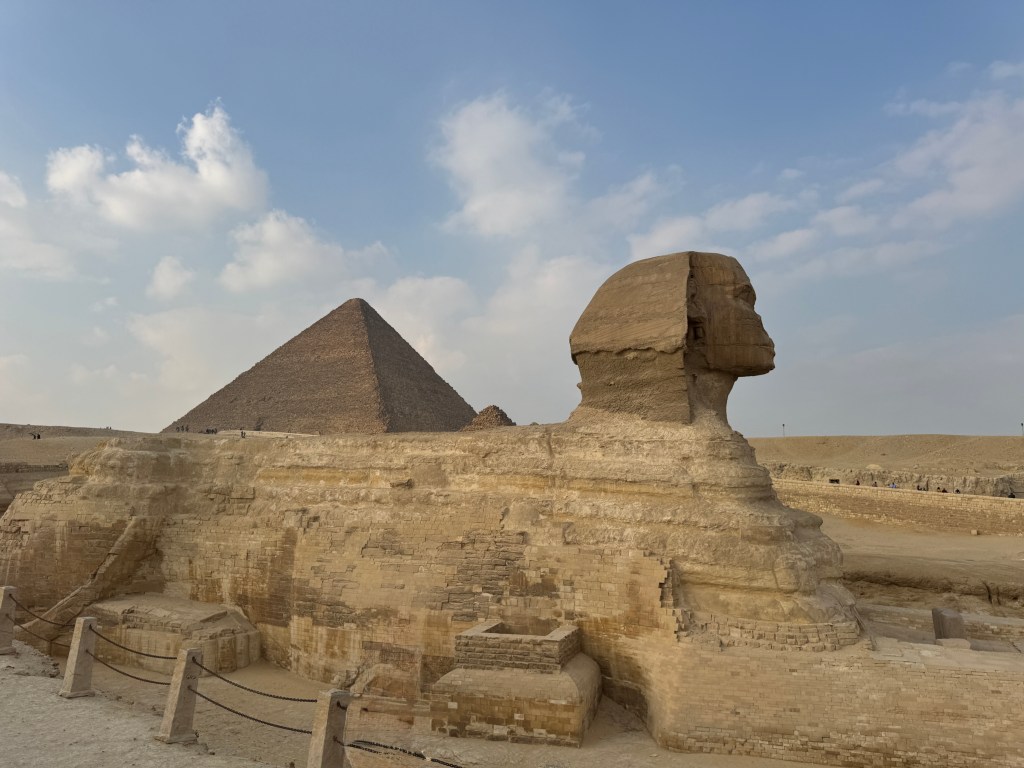
The Sphinx, Giza
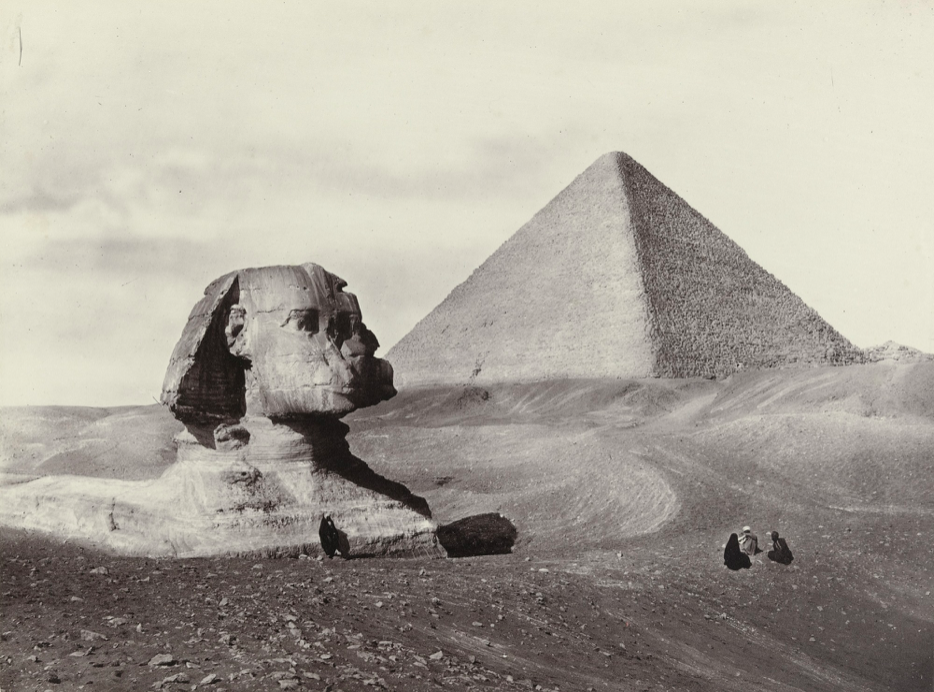
The Sphinx and the Great Pyramid by Francis Frith, c. 1858
After we visited the Sphinx, I sent some photos to our daughters, who have cats. One of them sent us this composite, below. I guess cats are cats, even if they have a human head!
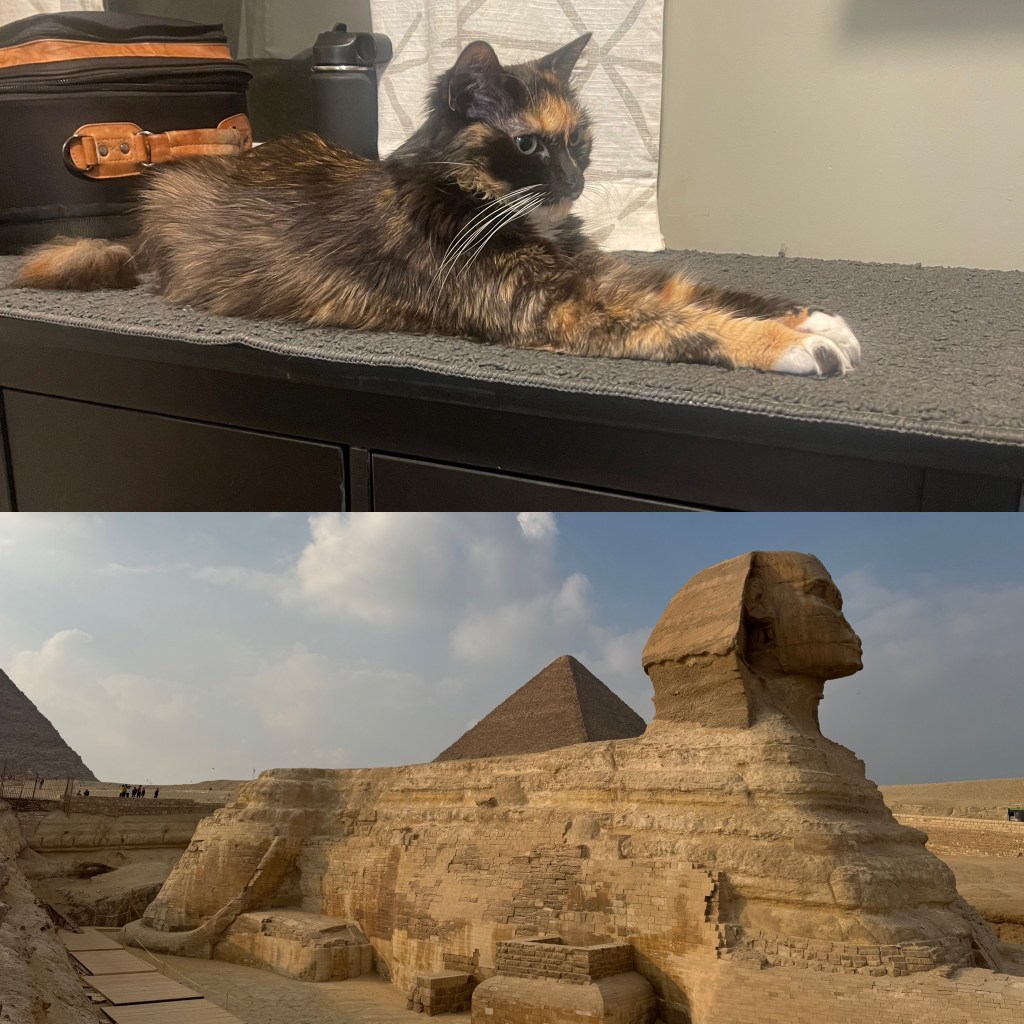
I think that one of the things about this trip is that when we saw Egypt up close – whether we saw huge monuments or items in museums – our sense of scale was enlightened. When you see photos in a book, everything looks the same size. When you see them up close in person, you see them as they really are.
While in Cairo, we spent a day visiting Coptic Christian churches and Muslim mosques, as well as the oldest synagogue in Cairo (photography was not permitted in the synagogue). Given the many references to Egypt in the Bible – Joseph and his family, Moses before and during the Exodus, Jesus, Mary, and Joseph on their flight from the slaughter of the innocents by King Herod – as well as the life of Saint Mark (who came to Egypt and wrote the Gospel of Mark), we found this day’s excursion to be fascinating.
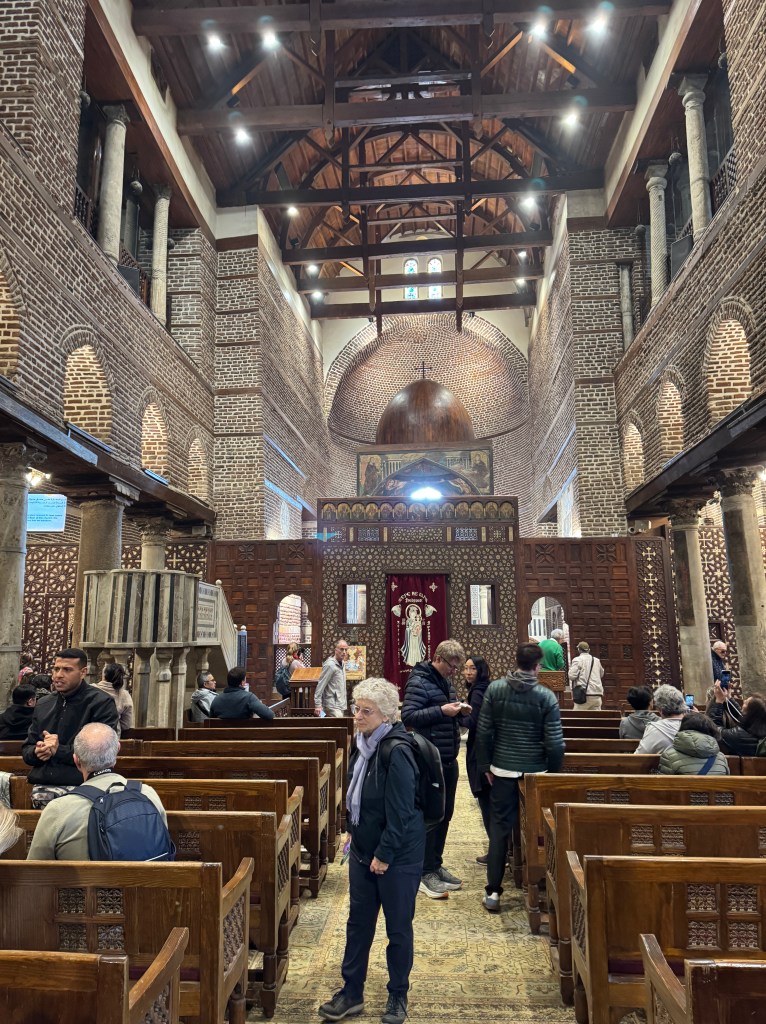
The (Coptic) Cavern Church of Saints Sergius and Bacchus (Abnu Serga), Cairo. This church was built on a traditional site where Jesus, Mary, and Joseph stayed while in Egypt.
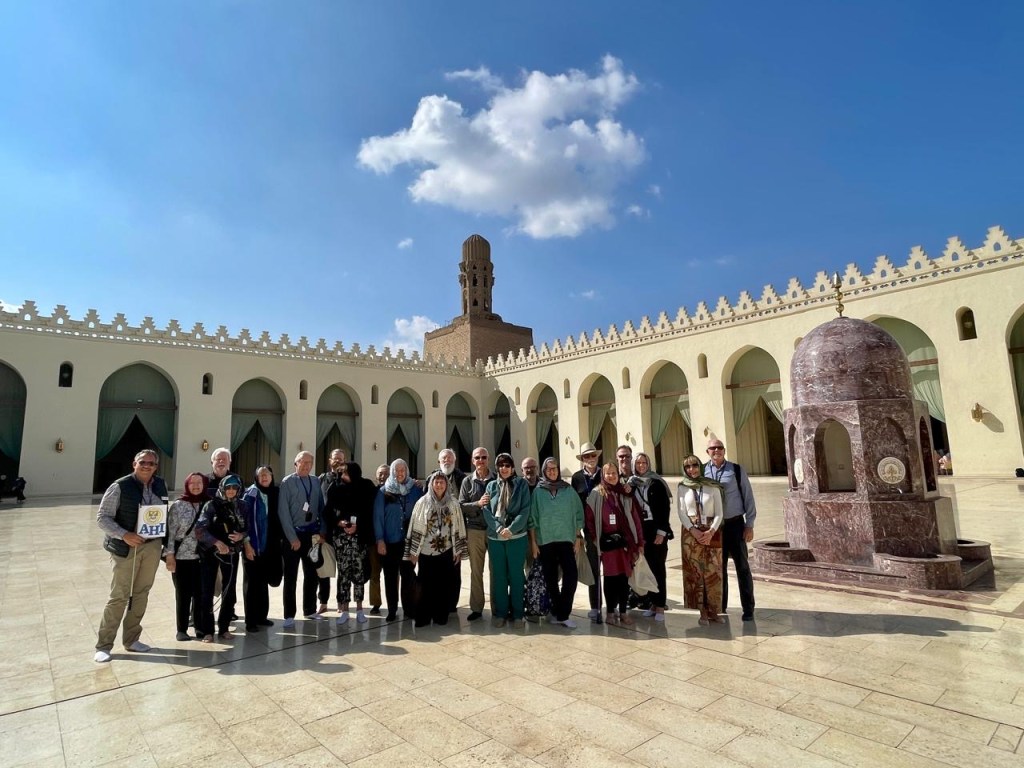
Legends of the Nile tour group at El-hakim Mosque, Cairo (photo by Ashraf Masoud)
From Cairo, we flew to Luxor to begin our cruise up the Nile River (remember that the Nile flows from south to north, so upper Egypt is in the south and lower Egypt is in the north). On our way to Cairo airport, Ashraf had a surprise for our us: we stopped by the grave of President Anwar Sadat and Egypt’s Tomb of the Unknown Soldier. This powerfully moving site is across the street from the place where Sadat was assassinated in 1981 while viewing a parade. Sadat was a courageous hero who, along with Prime Minister Menachem Begin of Israel and President Jimmy Carter of the United States, was a signatory to the Camp David Accords and the Egypt-Israel peace treaty in 1978. Sadat and Begin shared the 1978 Nobel Peace Prize.
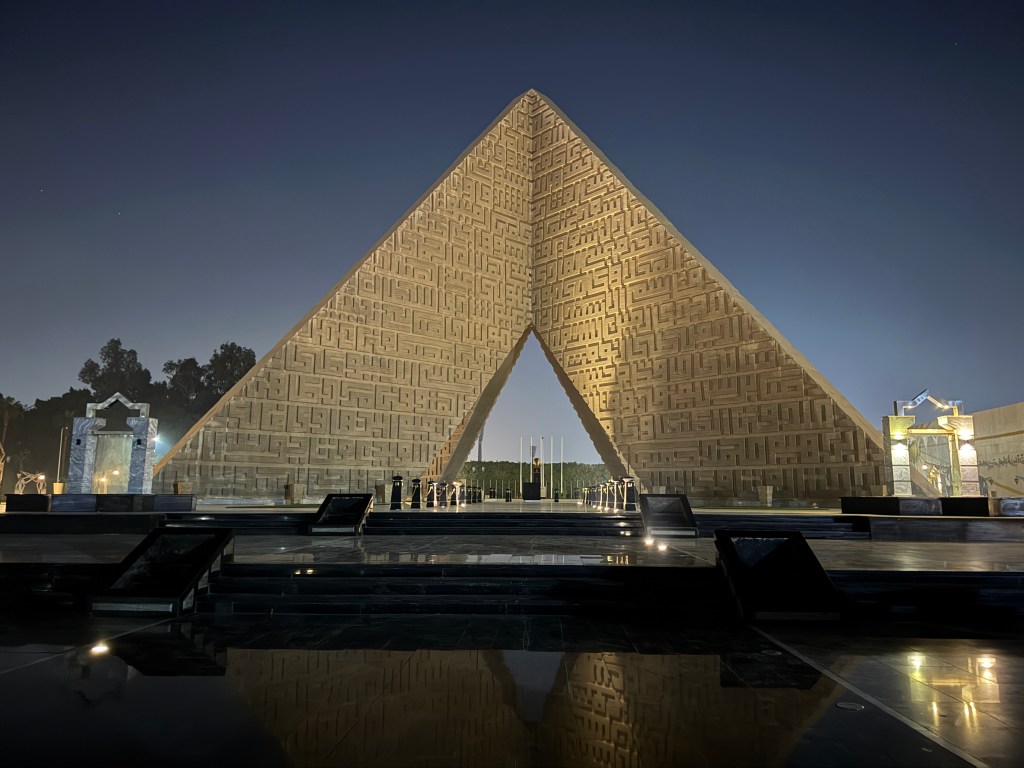
The Tomb of the Unknown Soldier and grave of Anwar Sadat, Cairo
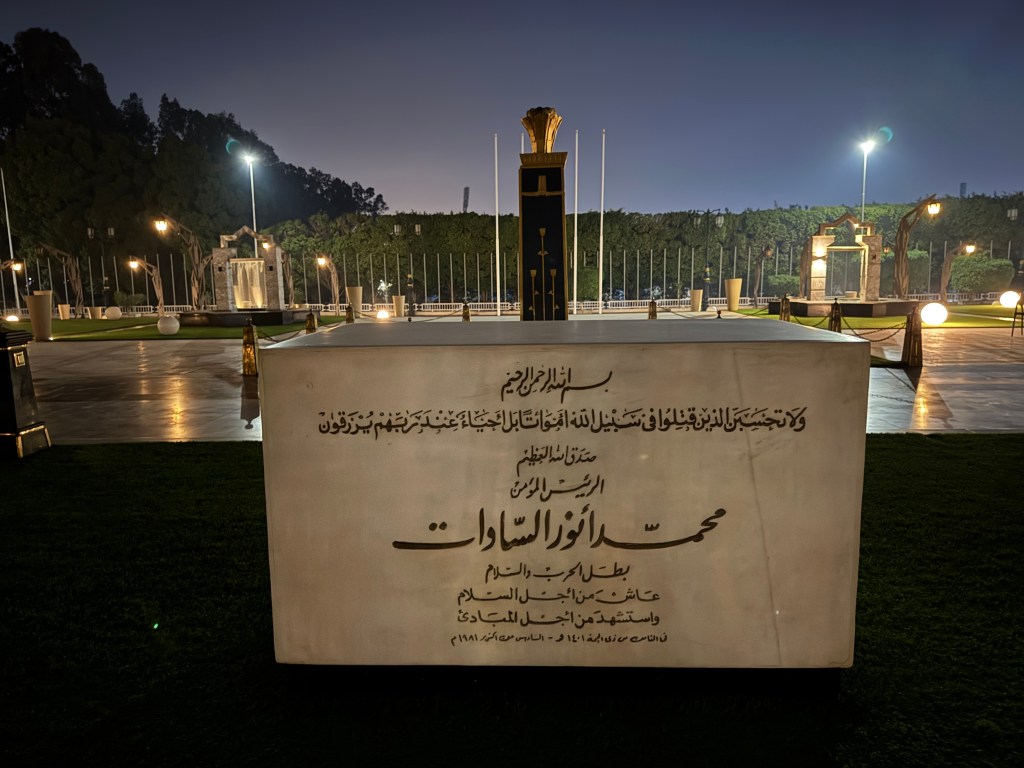
The grave of Anwar Sadat, Cairo. The inscription, in Arabic, reads:
In the name of God, the Most Gracious, the Most Merciful
“And do not think that those who were killed in the path of God are dead.
Rather, they are alive with their Lord, receiving provision.”
(Qur’an 3:169)
God Almighty has spoken the truth.
The Believing President
Muhammad Anwar al-Sadat
Hero of War and Peace
He lived for the sake of peace,
and was martyred for the sake of principles.
Born: 25 December 1918
Martyred: 6 October 1981
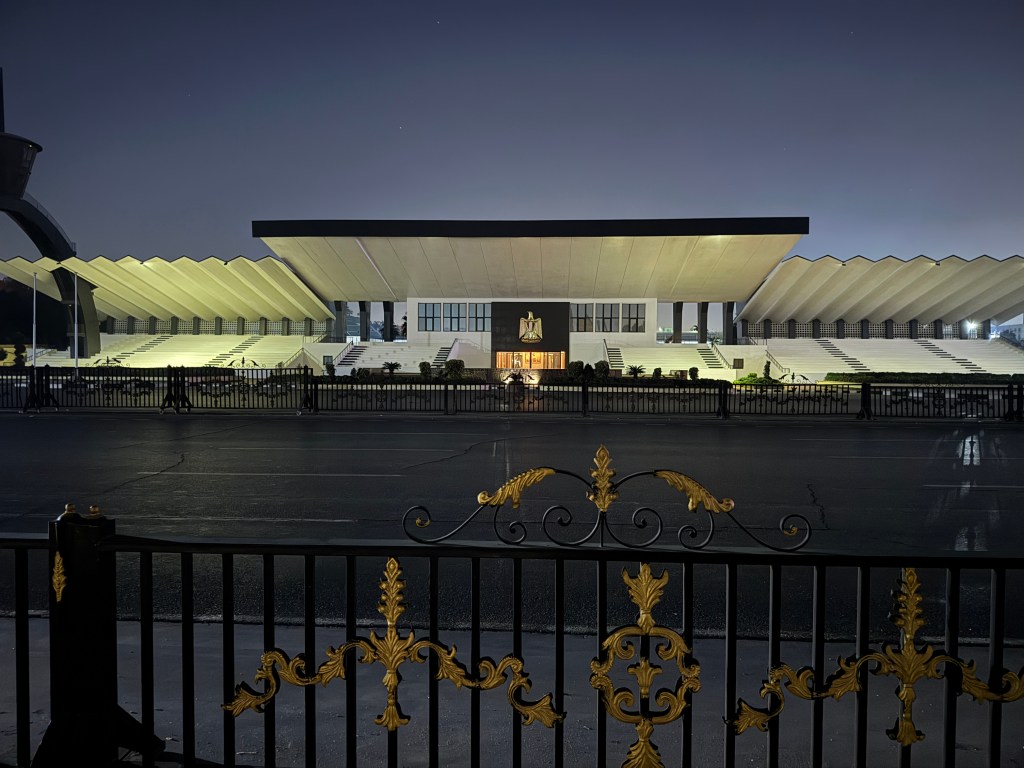
Looking across from Anwar Sadat’s grave to the site of his assassination in 1981.
Luxor is home to the Luxor Museum and many ancient Egyptian sites, including Luxor Temple. Once again, we were fascinated by the sculpture in the museum. We sailed by felucca (boat) to Luxor Temple, enjoying sunset along the way. Luxor Temple was our introduction to the many huge temple complexes in Egypt. The carving, the architecture, and the sheer scope and scale of the complex is tremendous.
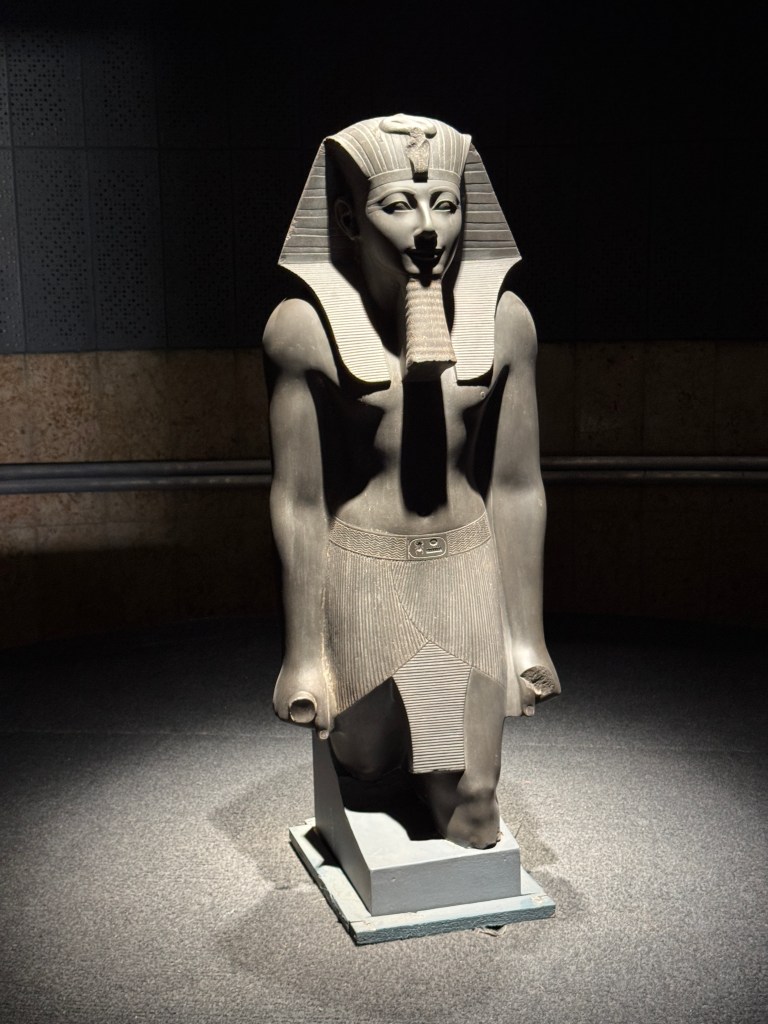
Statue of King Thutmose III, Luxor Museum
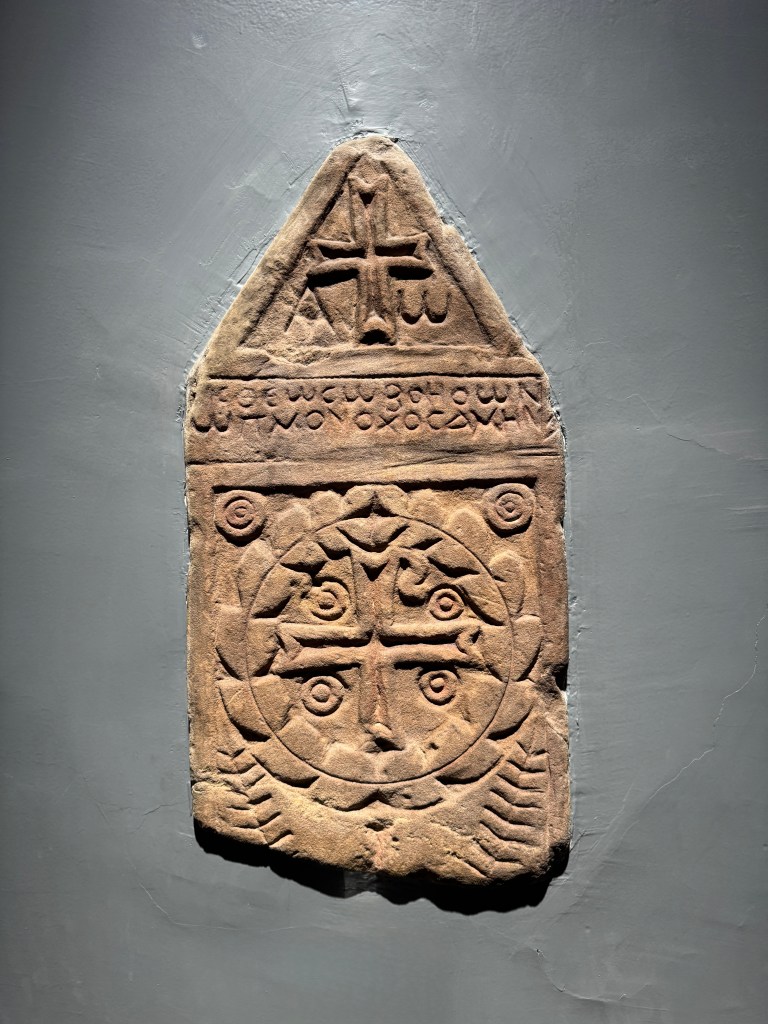
Coptic grave stone (6 – 7 century AD), Luxor Museum. The inscription, in Greek, reads, “O Lord, help your servant Taimios.”
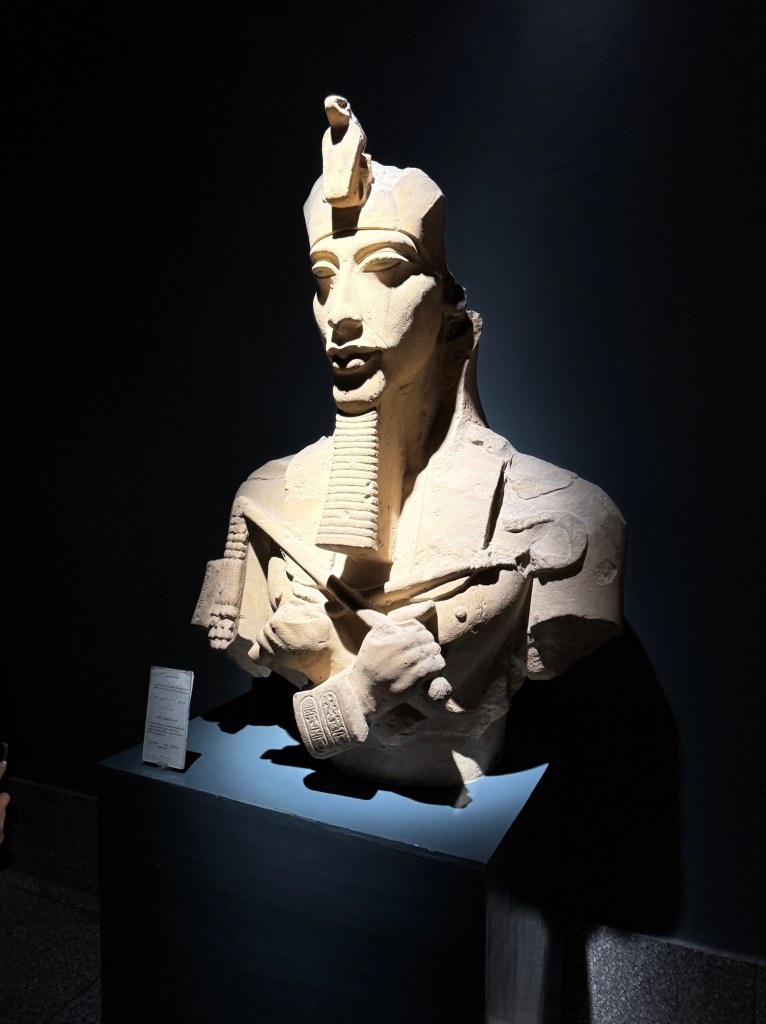
Statue of King Akhenaten, thought to be the father of Tutankhamun, Luxor Museum
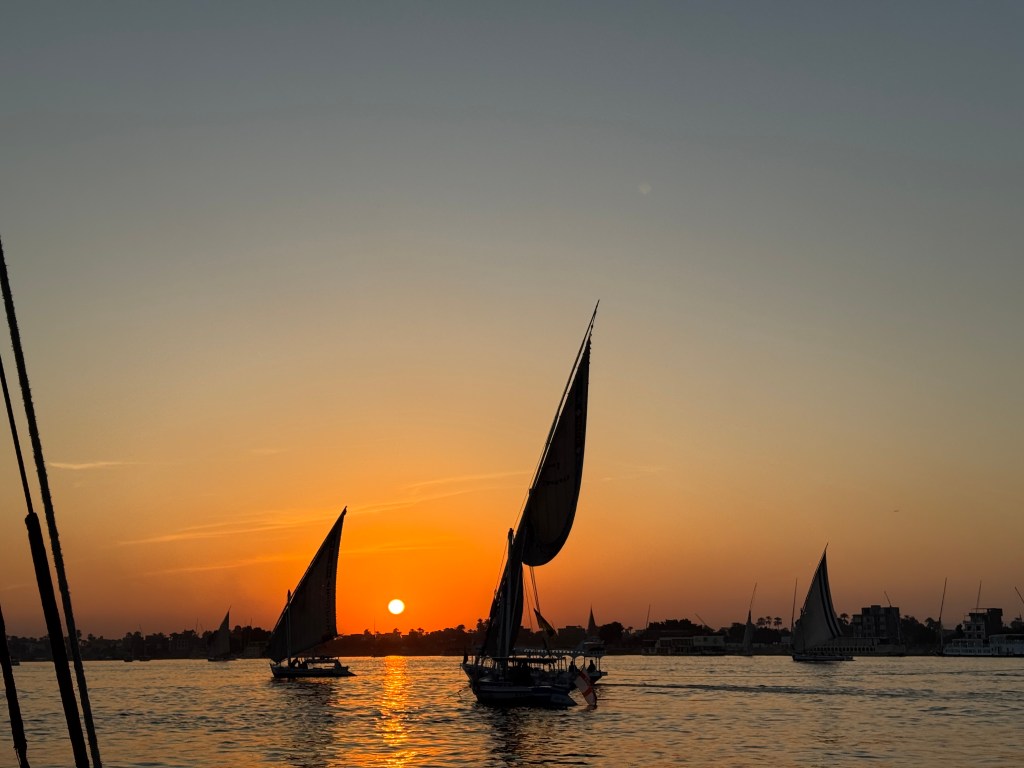
Sunset on the Nile River on the way to Luxor Temple, with felucca boats in view
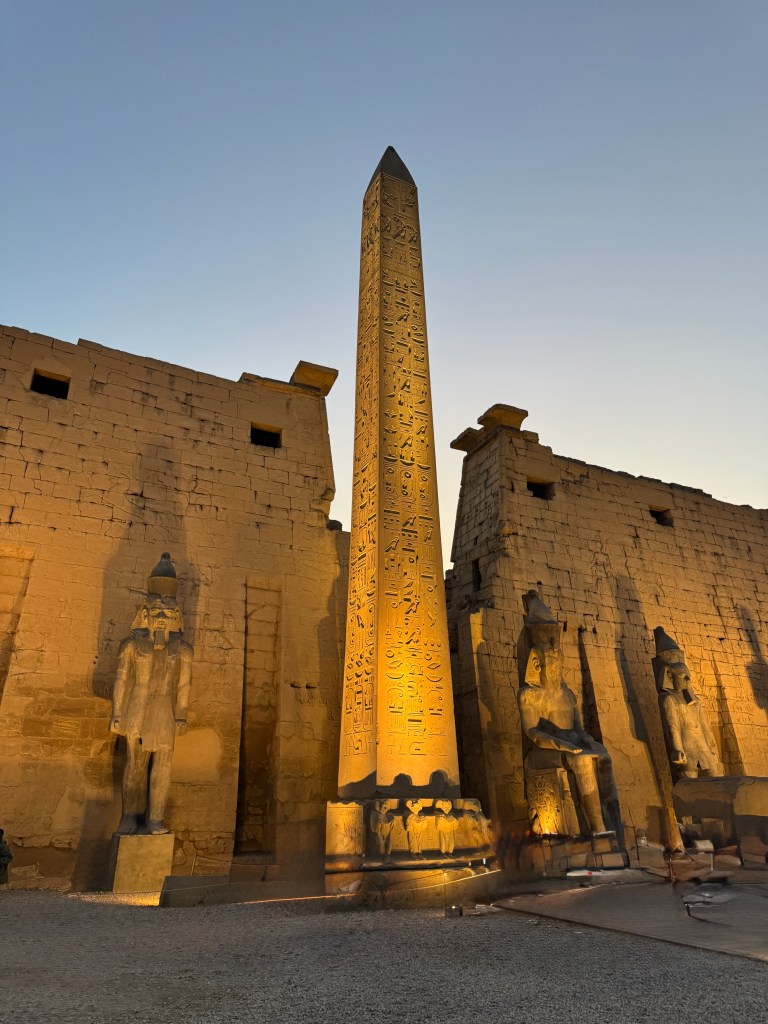
Luxor Temple, pylon and obelisk
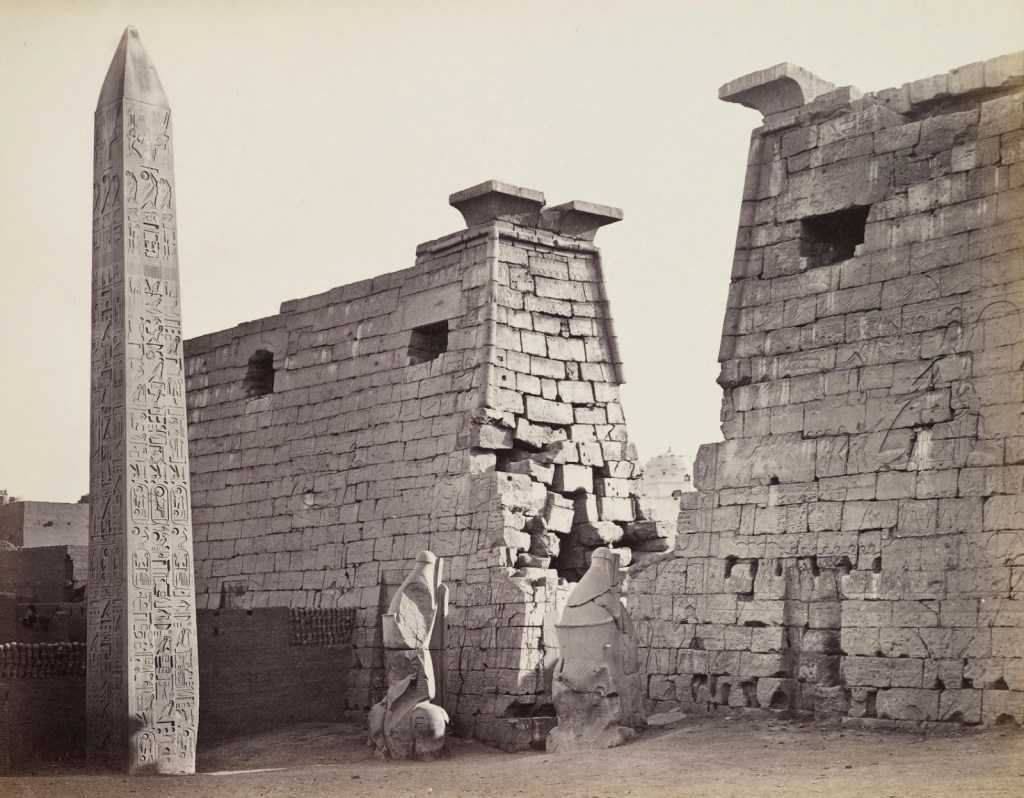
Luxor Temple entry pylon and obelisk by Francis Frith, c. 1858. Note how the sand has covered the statues at the gate up to their shoulders.
Luxor Temple used to have two obelisks, one on either side of the entrance to the temple. In August 2025, Pat and I traveled to Paris to celebrate our 50th wedding anniversary and saw the other Luxor obelisk, erected at Place de la Concorde, the site of the guillotine used during the French Revolution. It was given to France in 1830 by Muhammad Ali Pashar and installed in 1836.
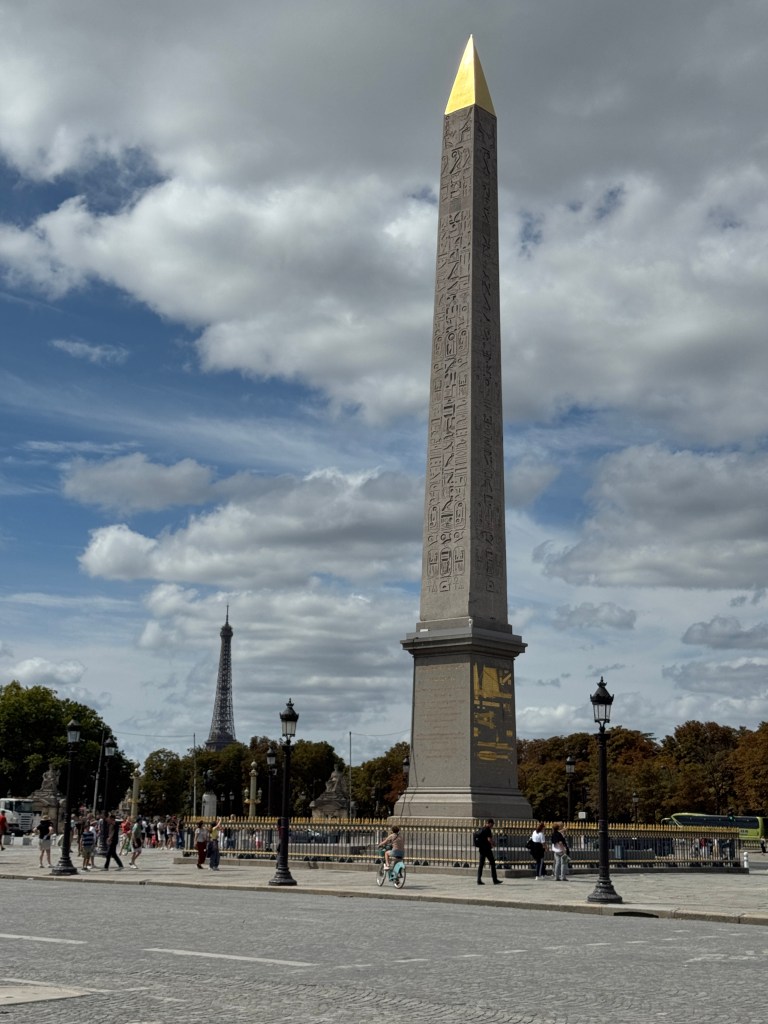
The second Luxor obelisk, now in Paris, Place de la Concorde, 2025
From Luxor, we traveled to the Valley of the Kings and Valley of the Queens. The highlight of this excursion was seeing the tomb of Tutankhamun. Having seen the treasures from his tomb at the Grand Egyptian Museum in Giza, seeing his tomb – and seeing how small it was – was enlightening. Tutankhamun’s mummy and his granite sarcophagus are still in the tomb, along with the brightly painted walls. Having read many books about Tutankhamun and his treasures, seeing his tomb in person gave us a memorable, unique perspective.
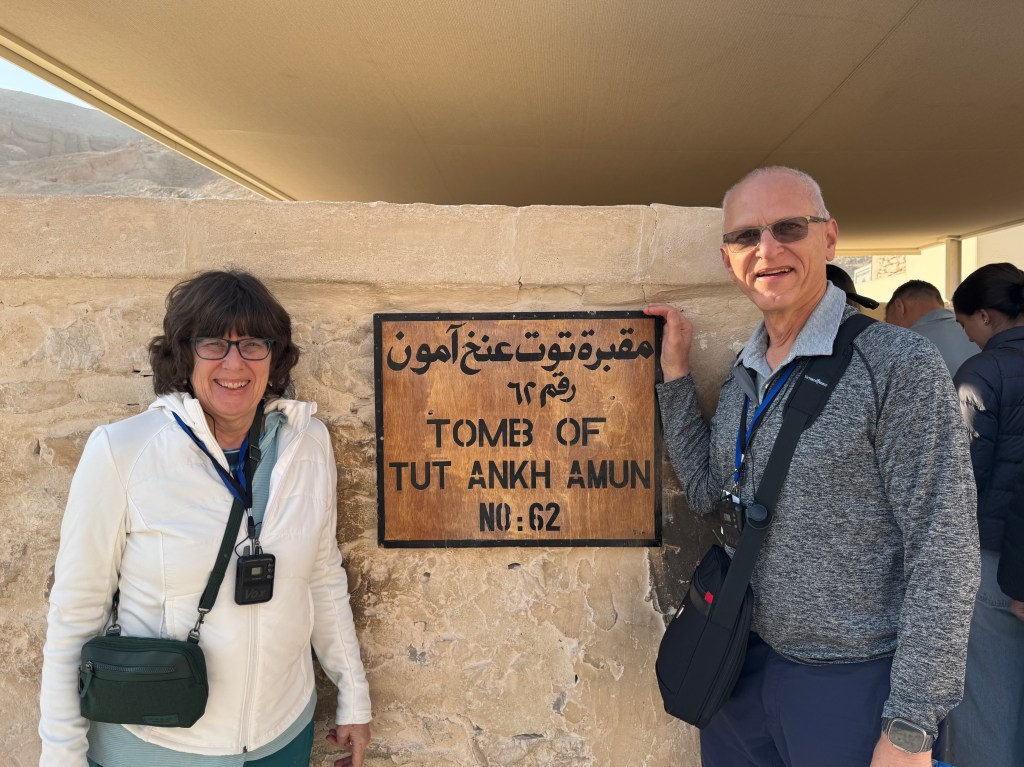
Patricia and Douglas Yeo at the entrance to the tomb of Tutankhamun, Valley of the Kings
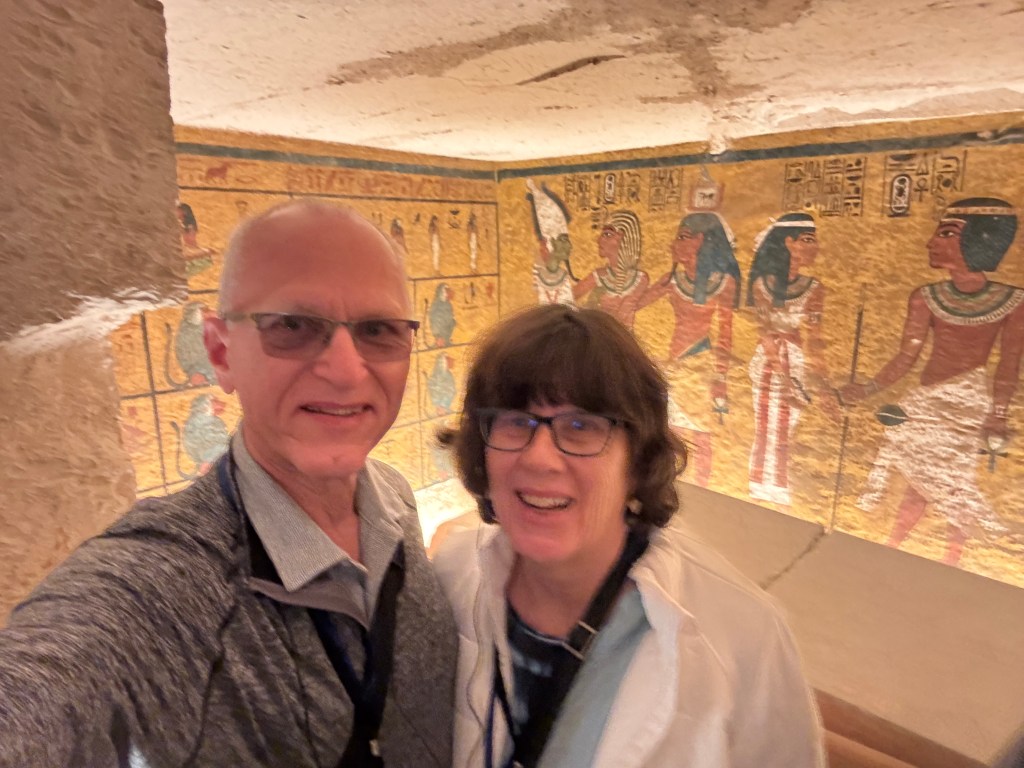
Douglas and Patricia Yeo inside the Tomb of Tutankhamun
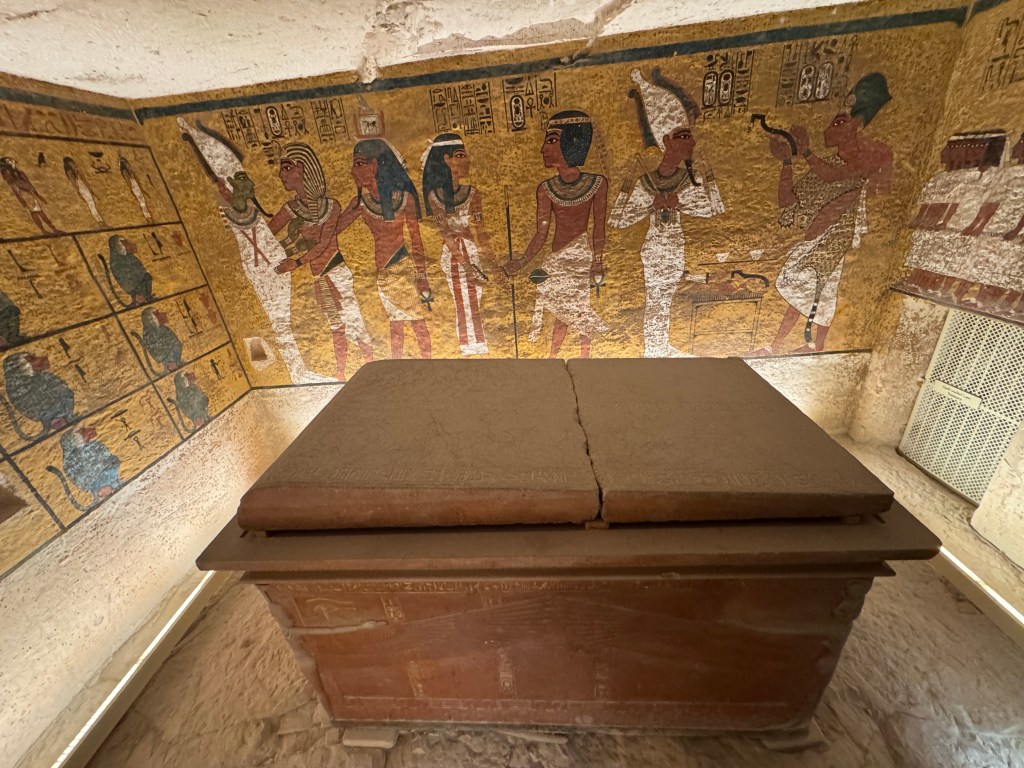
The granite sarcophagus of Tutankhamun
Who can forget the iconic “King Tut” routine by Steve Martin, from Saturday Night Live in May 1978. OK, it’s silly and irreverent, and it makes no sense (no, Tutankhamun was not “born in Arizona, moved to Babylonia”). But engaging with the REAL “King Tut” brought him from a comedy routine to a real person who lived and breathed.
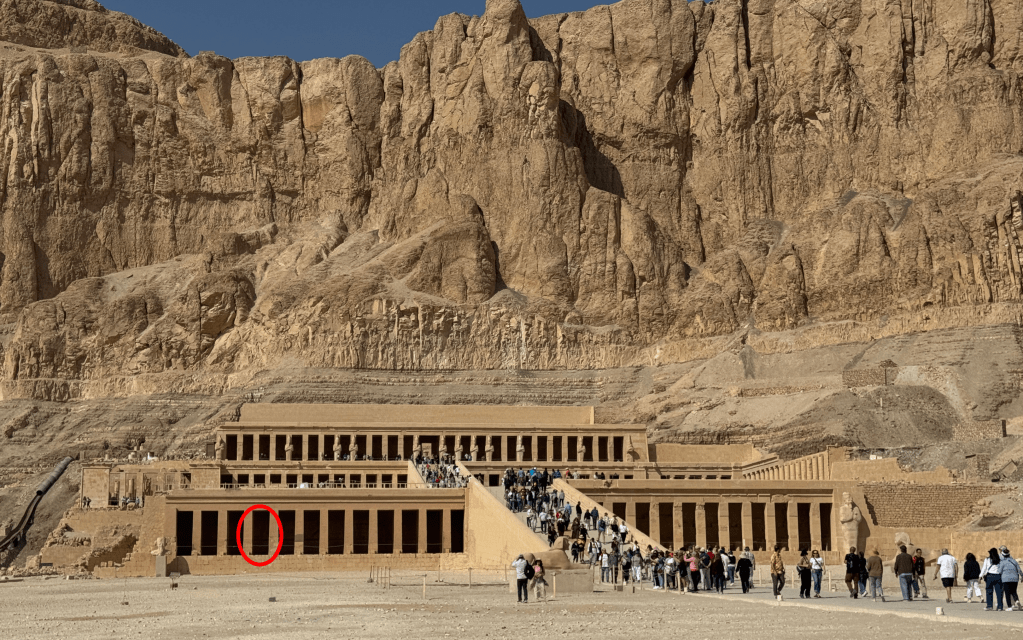
The Mortuary Temple (Deir Al Bahari) of Queen Hatshepsut – who ruled as Pharoah – is dramatically set under a high cliff. We also visited the Colossi of Memnon, huge statues of Amenhotep III that, having been toppled in earthquakes in antiquity, have been significantly restored.
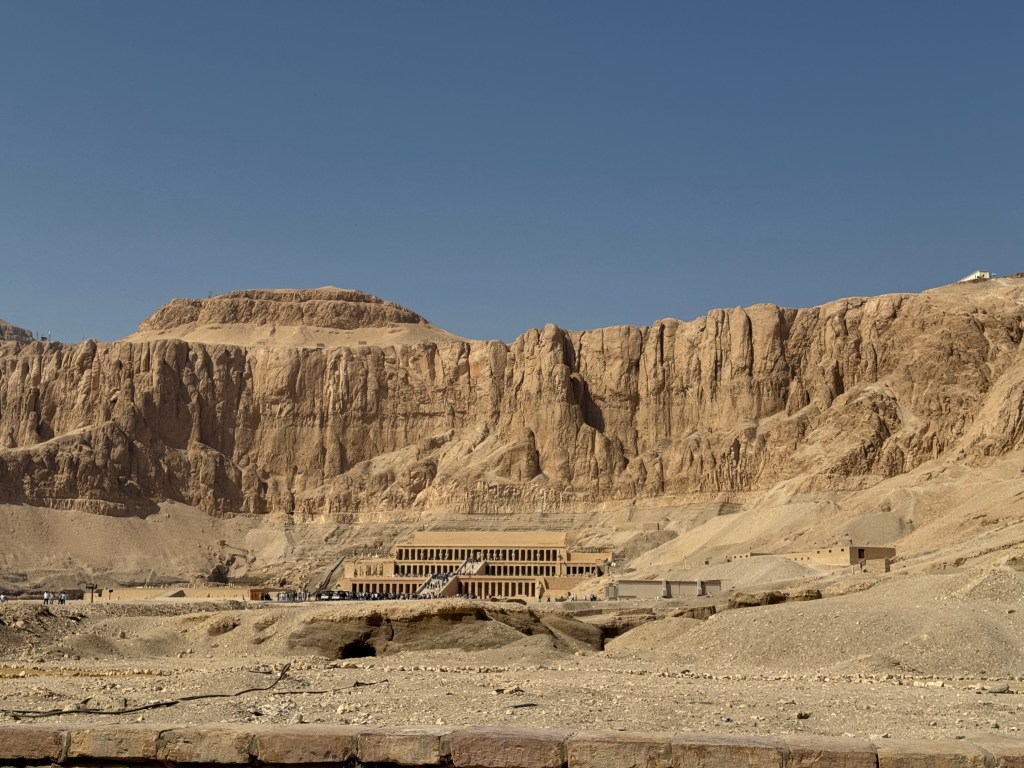
The Mortuary Temple (Deir Al Bahari) of Queen Hatshepsut
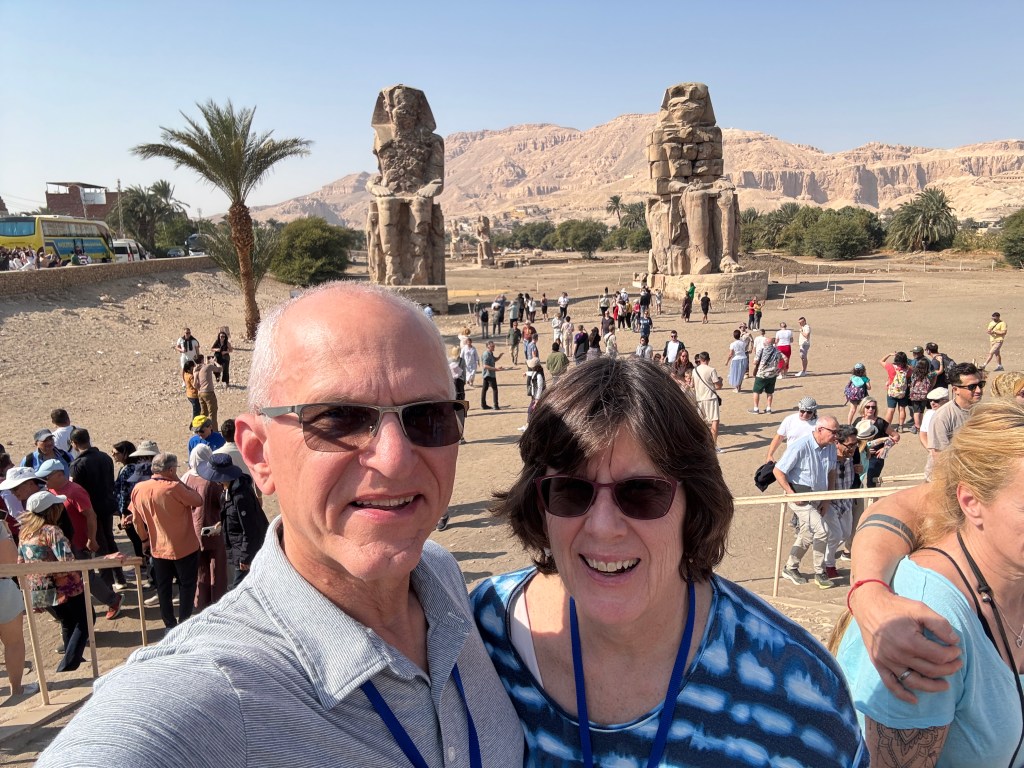
Douglas and Patricia Yeo at the Colossi of Memnon
Following our visit to the Valley of the Kings and Queens, it was time to board our ship – the Sanctuary Nile Adventurer – for our cruise up the Nile. We had never been on a river cruise before and all I can say is that this particular experience was memorable beyond words. We were greeted on the dock by a group of Egyptian musicians.
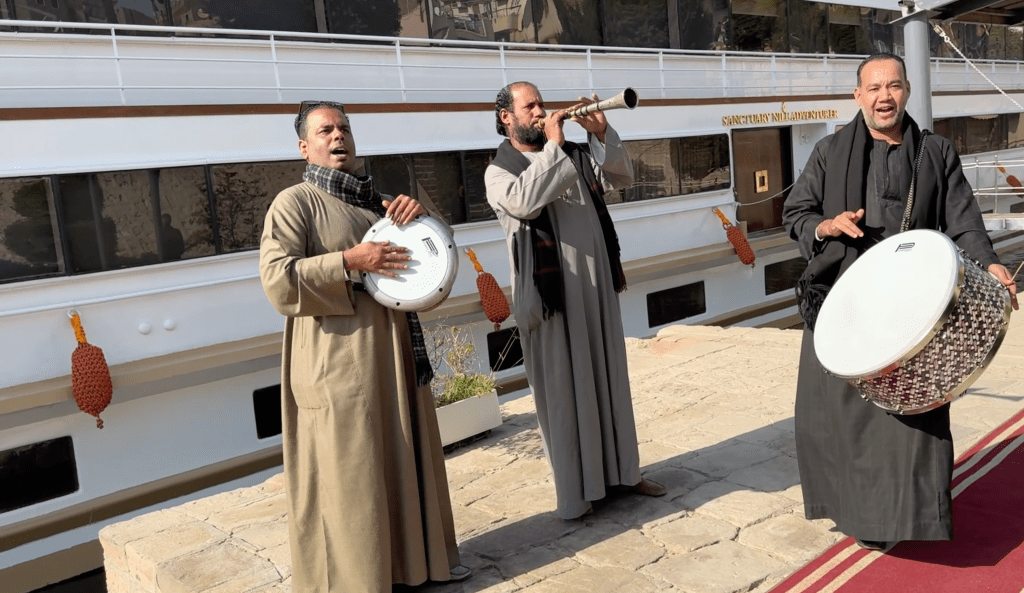
The food, the accommodations, the way the ship was laid out – everything was first class and beautifully, efficiently, and superbly done. Click HERE to see a video about the Sanctuary Nile Adventurer. The video is true to our experience. It was wonderful.
The following morning, I got up early to take a hot air balloon ride. I had never done this before – I’m not wild about heights but I figured that if I didn’t take advantage of this opportunity at this time, when would I ever do it? So I did. It was fantastic. I loved watching the balloon be inflated, and then silently floating above the Temple of Hatshepsut and other sites. Memorable.
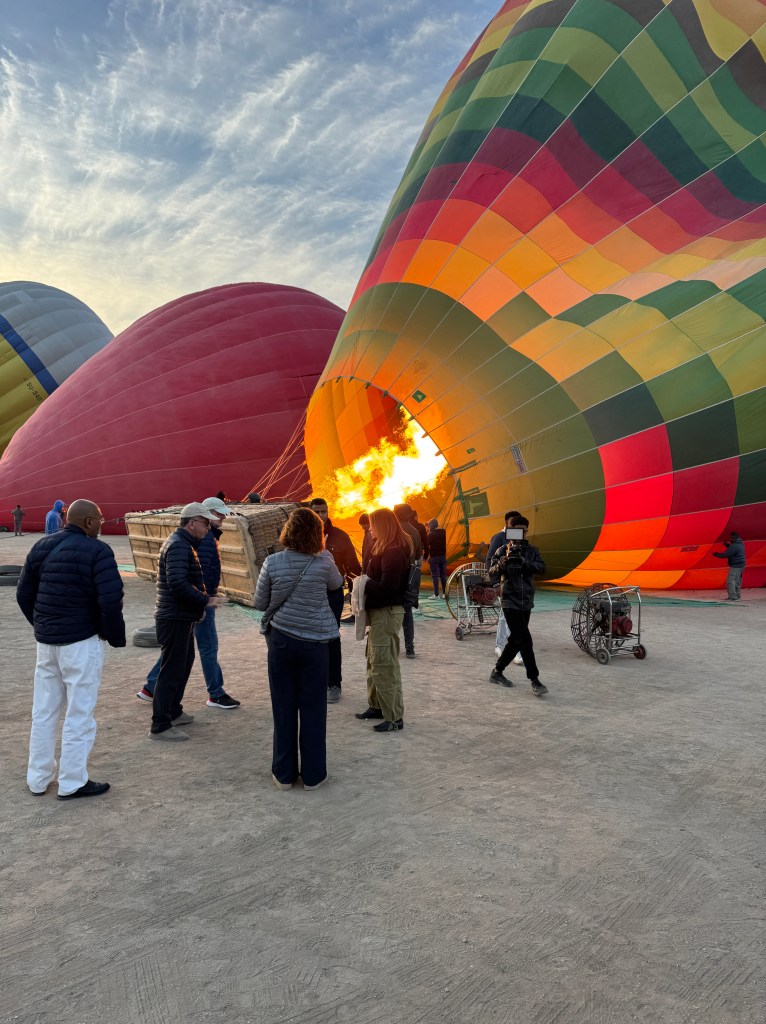
Heating air in the balloon before we rose up
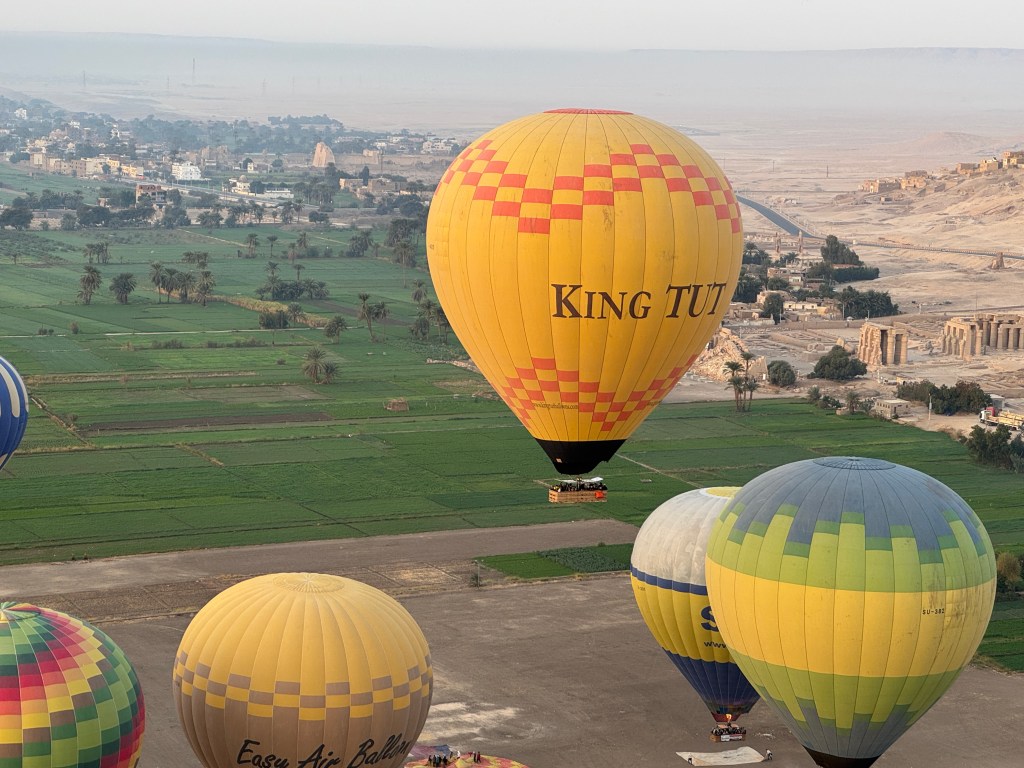
Other balloons seen from our vantage point aloft
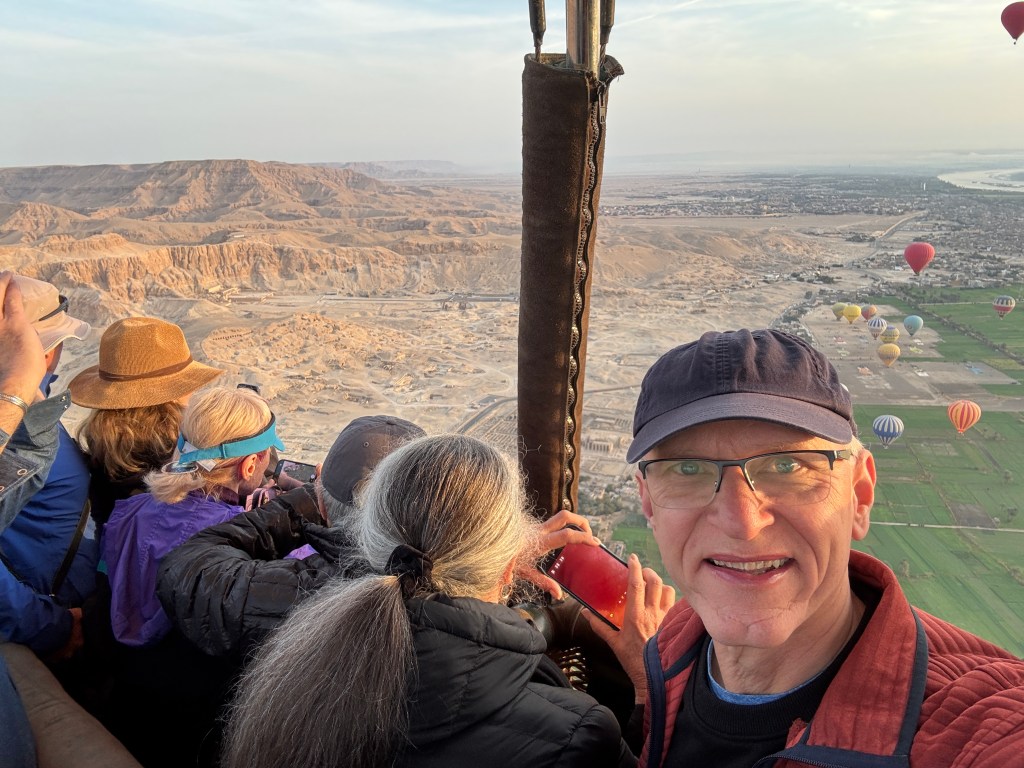
In the air over the Temple of Hatshepsut (in the upper left hand corner). The Nile River can be seen in the upper right hand corner.
We did so much more. So so so much more. We visited Karnak Temple, The Temples at Edfu and Kom Ombo, and the Temple of Philae:
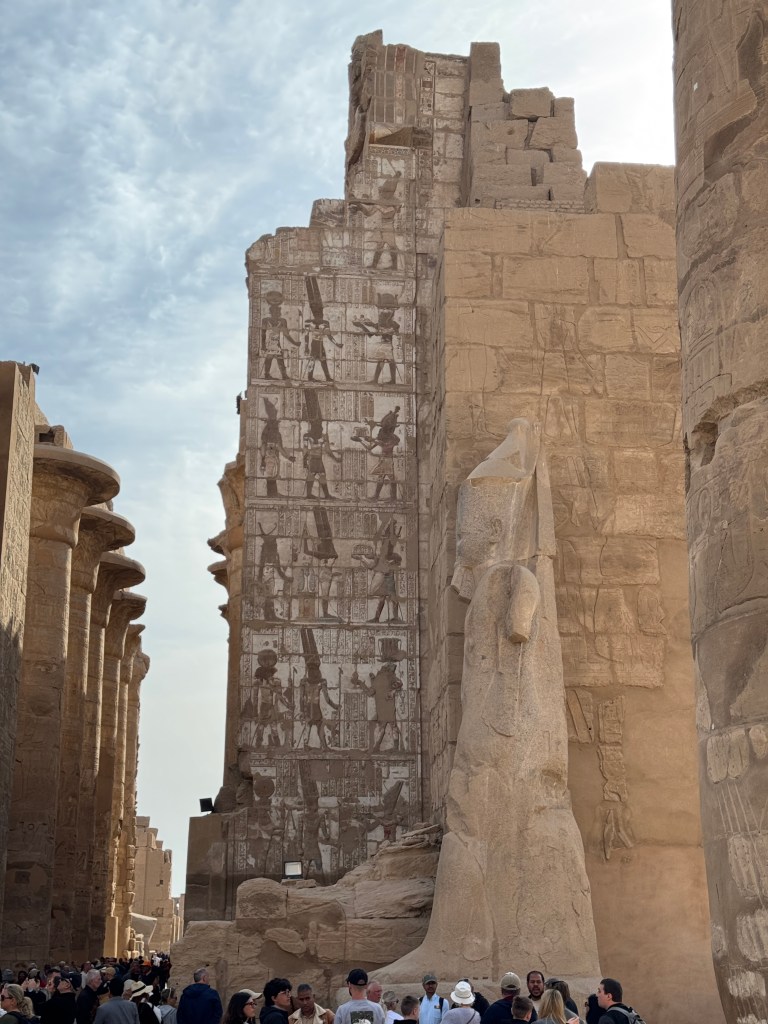
Temple of Karnak
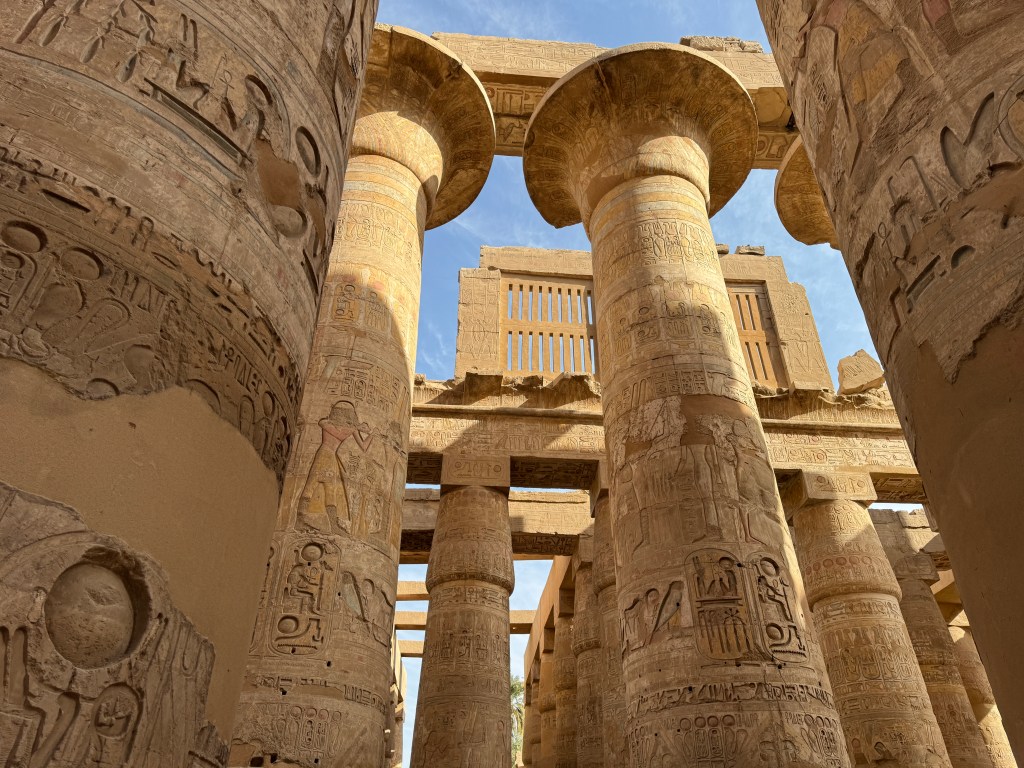
Temple of Karnak
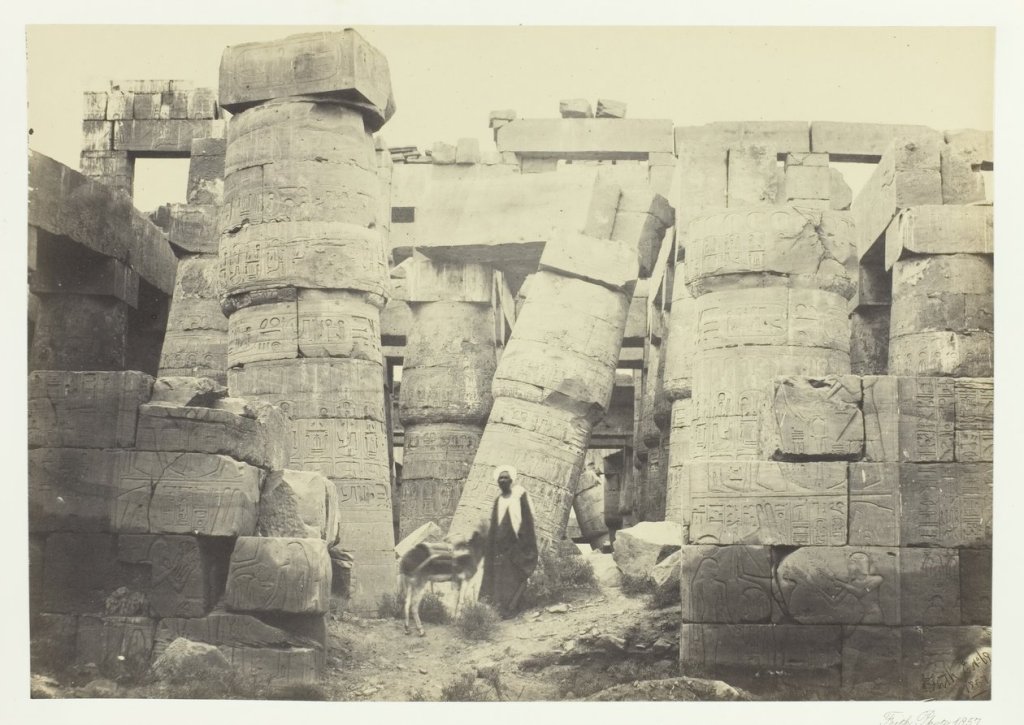
The Great Hall at Karnak by Francis Frith, c. 1857
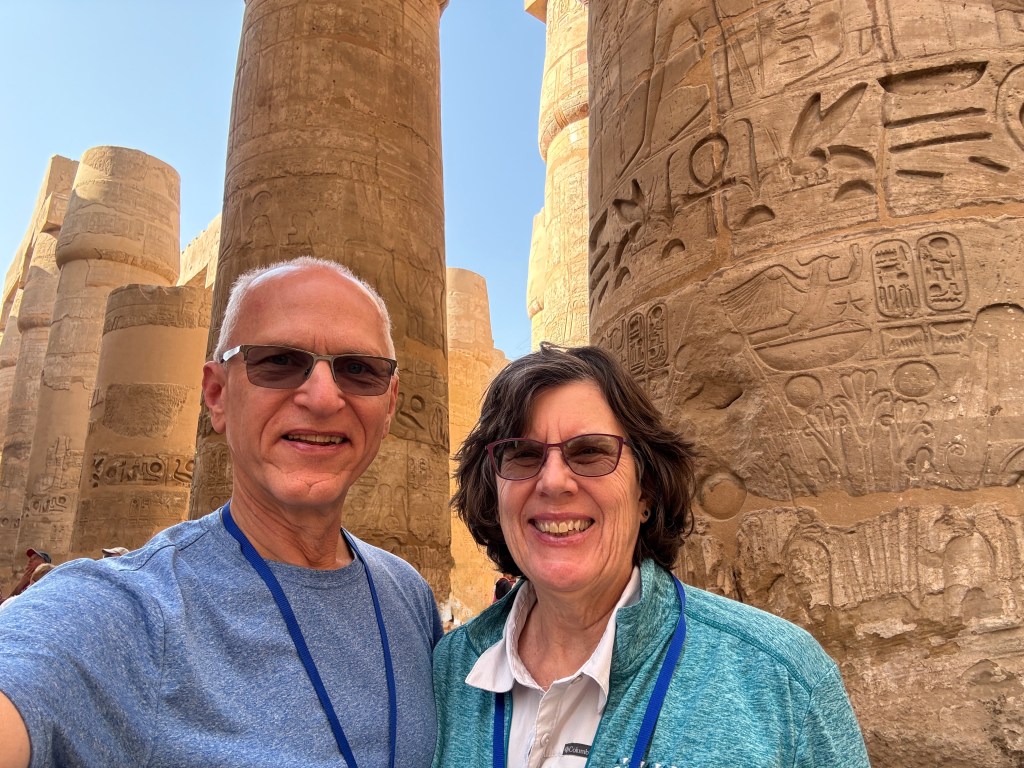
Douglas and Patricia Yeo at the Temple of Karnak
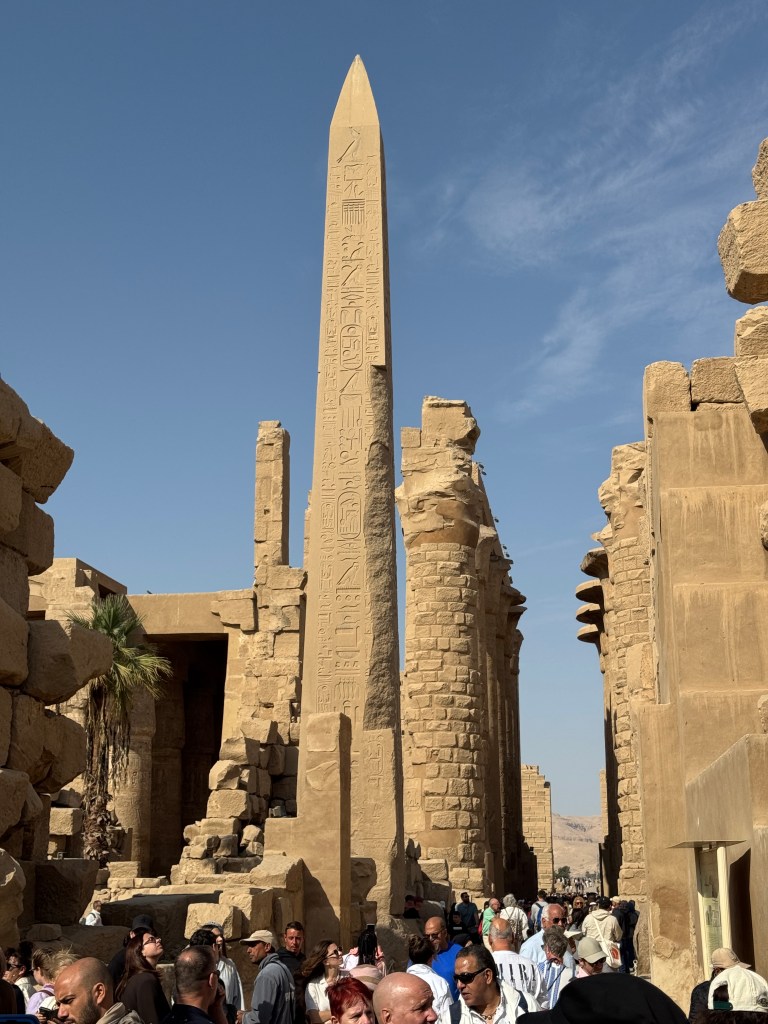
Temple of Karnak
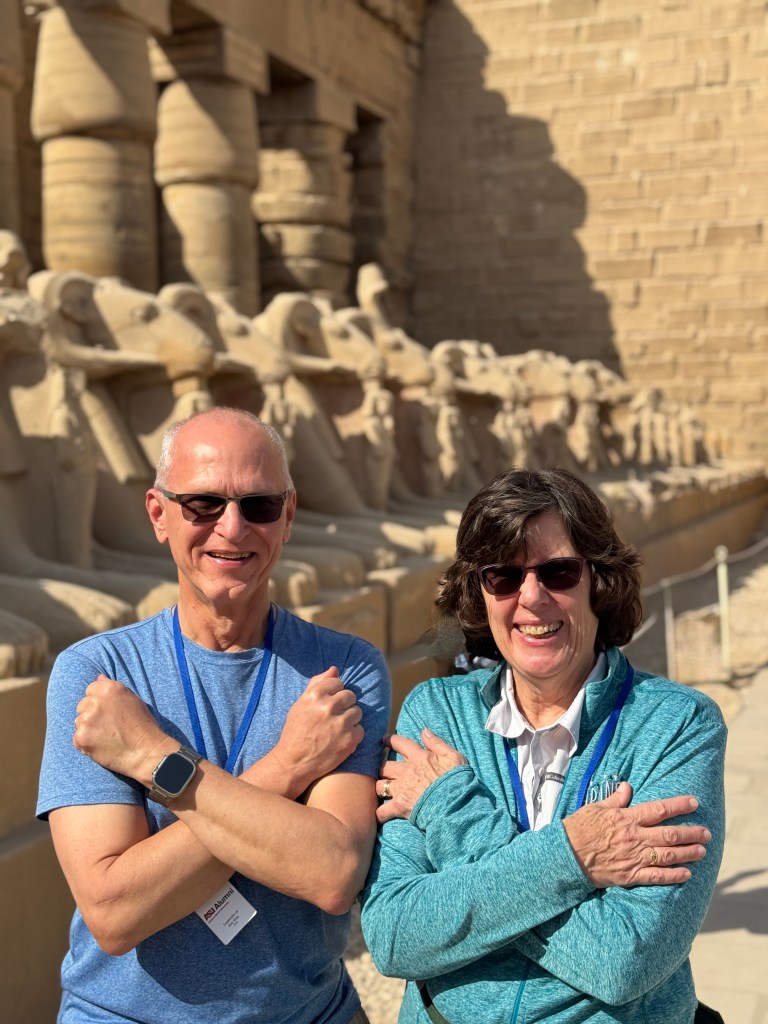
Douglas and Patricia Yeo at the Temple of Karnak. We are posing in the position Pharaohs often assumed in sculptures (and when they were mummified!).
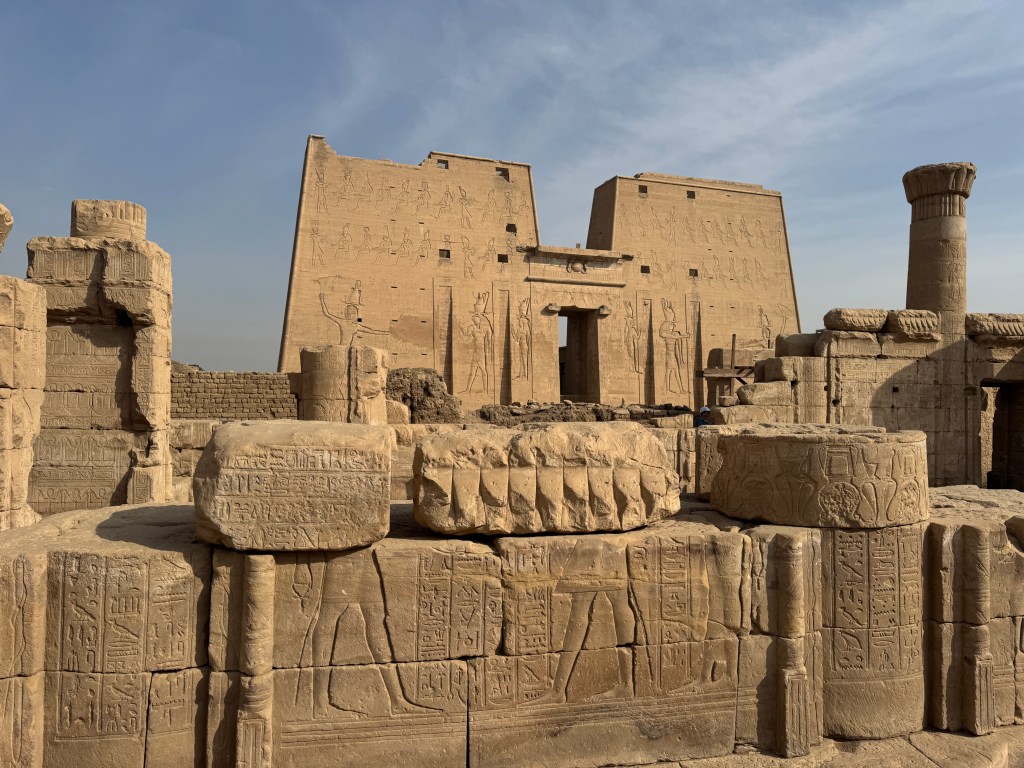
Temple of Edfu
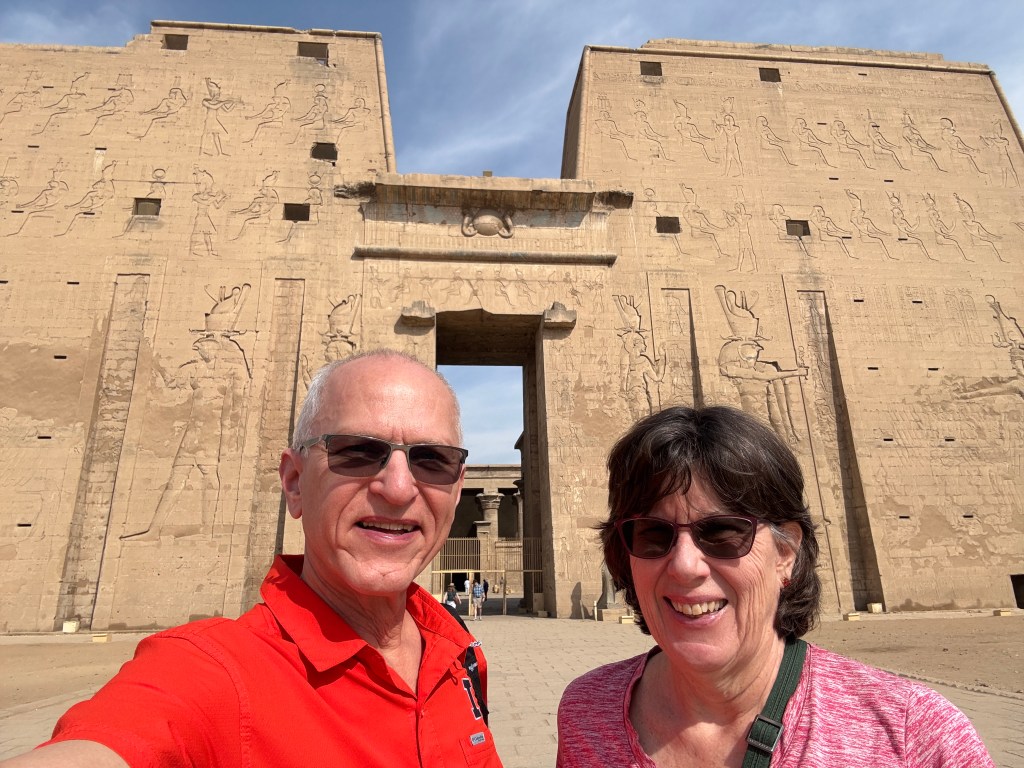
Douglas and Patricia Yeo at the Temple of Edfu, the Great Pylon
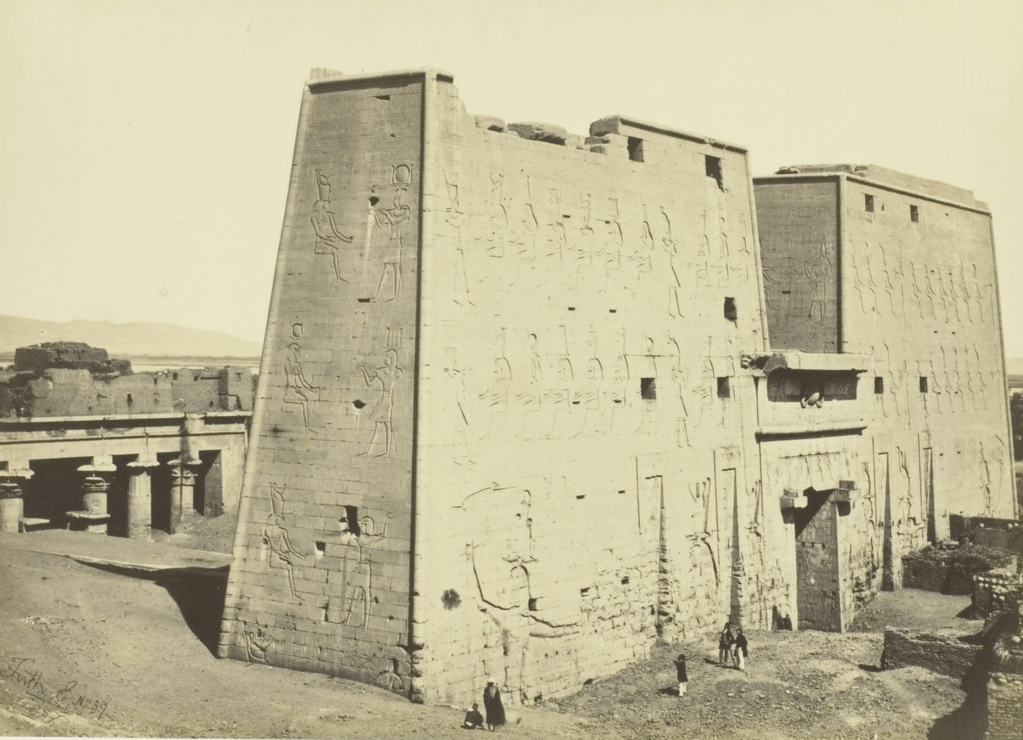
Temple of Edfu, the Great Pylon by Francis Frith, c. 1858
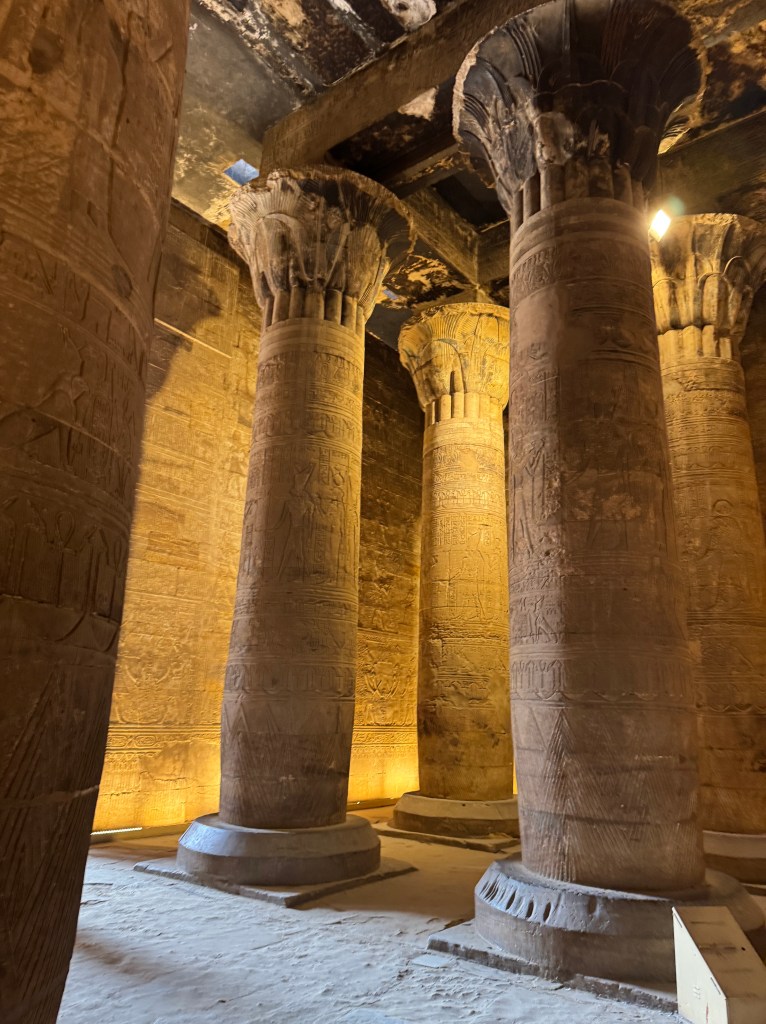
Temple of Edfu
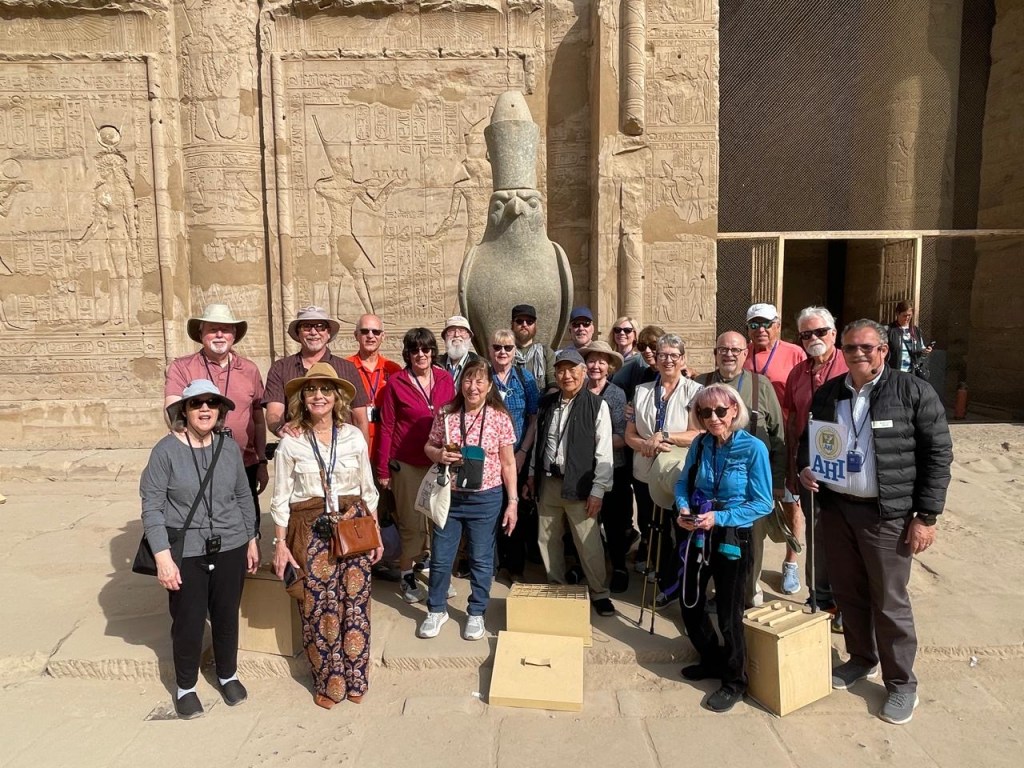
Legends of the Nile tour group at the Temple of Edfu (photo by Ashraf Masoud)
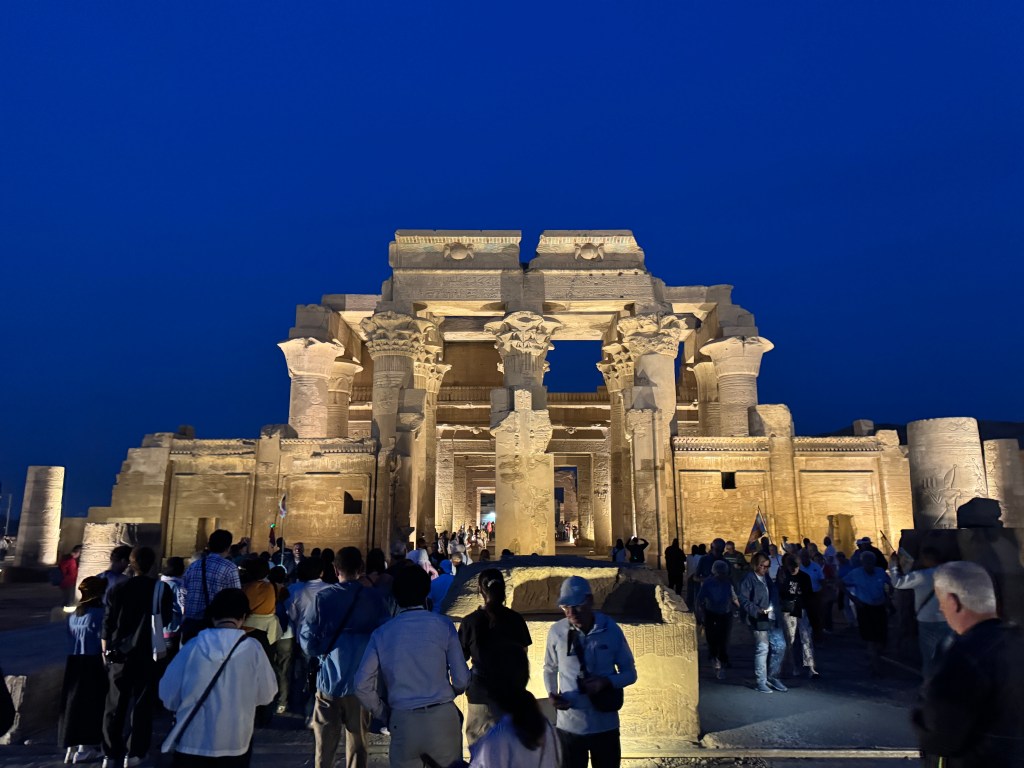
Temple of Kom Ombo
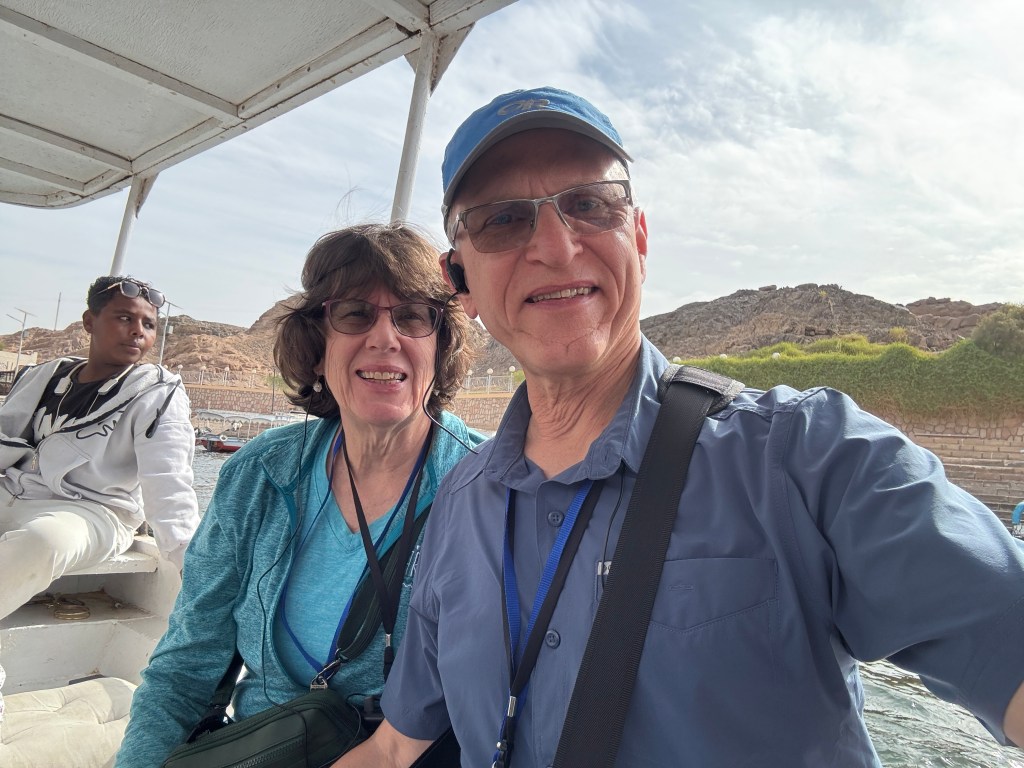
The boat to the Temple of Philae. Our captain (far left) was 13 years old.
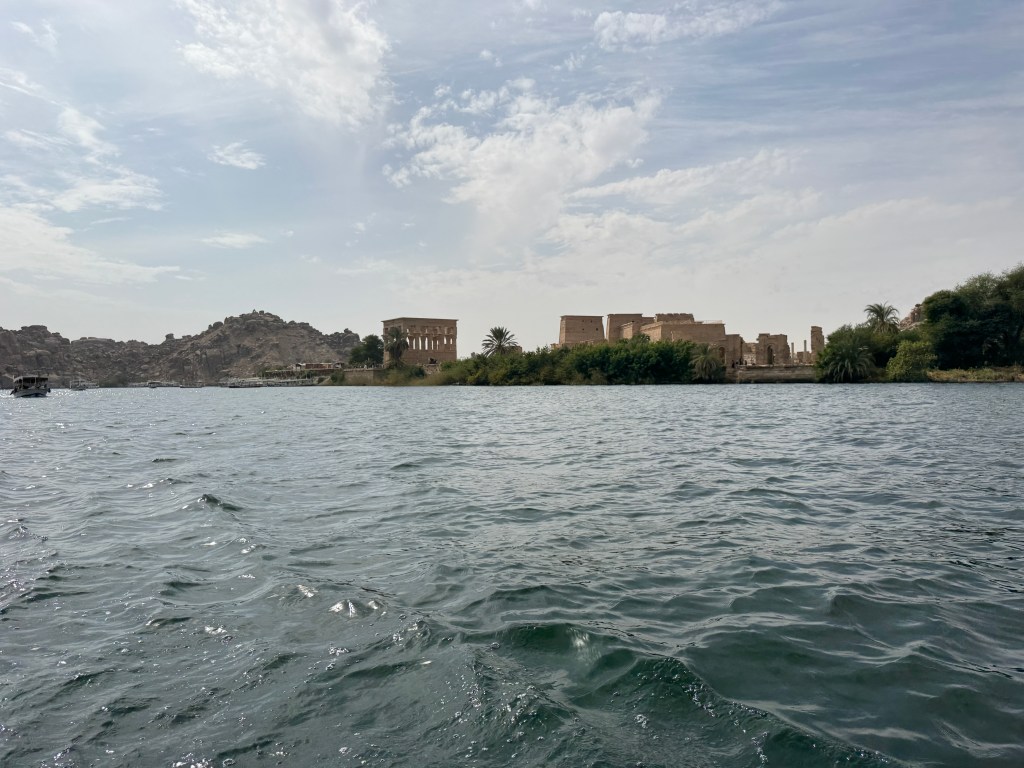
Philae from the boat. The temple was moved from Philae Island to nearby Agilkia Island when the temple was threatened by water with the construction of the Aswan High Dam.
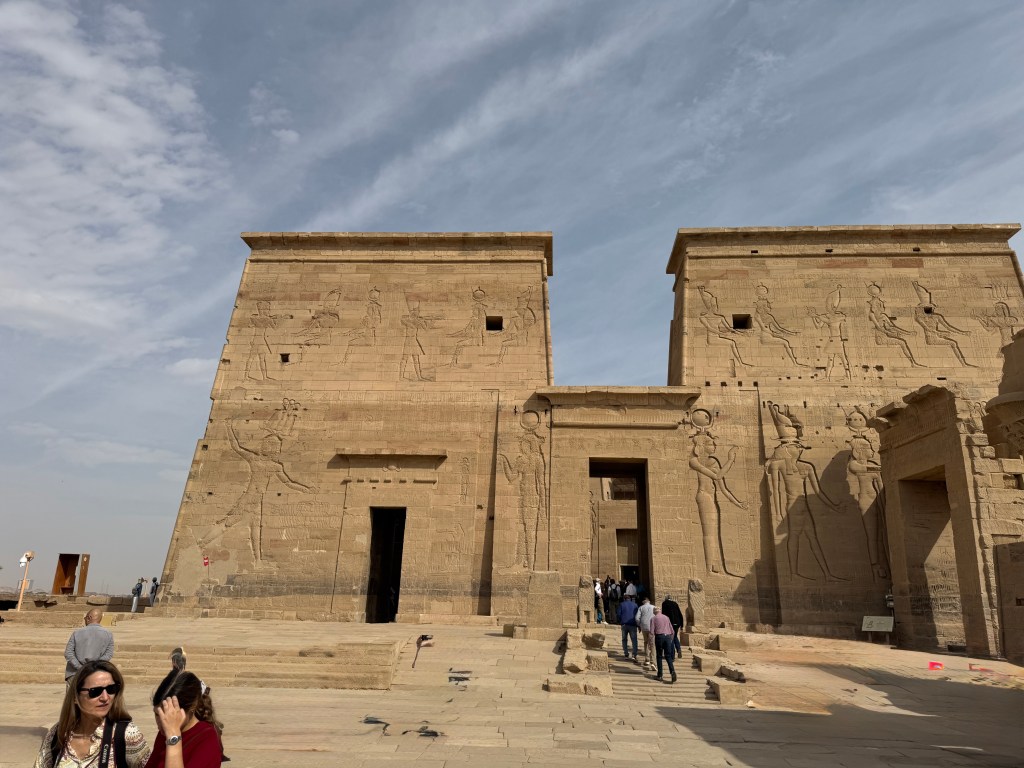
Temple of Philae
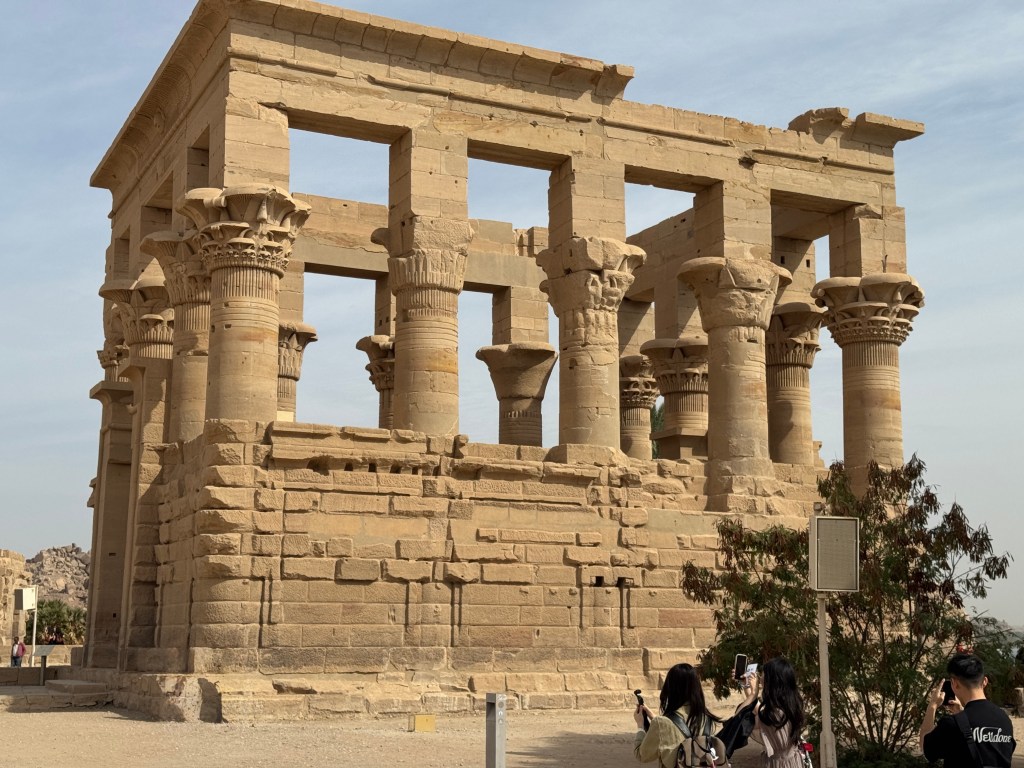
Temple of Philae
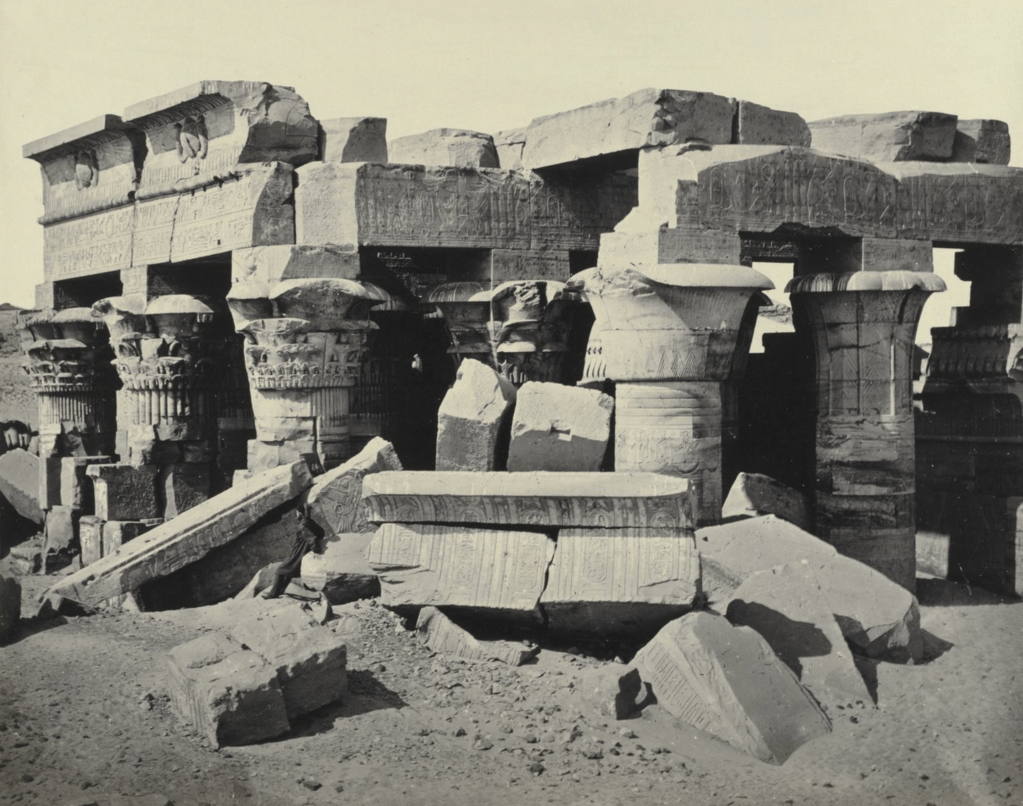
Temple of Philae by Francis Frith, c. 1857
We had a party on the ship where we all dressed up in traditional Egyptian clothes, the galabeya. Everyone got in on the fun and there was dancing, food, and a lot of laughter. The crew of the Sanctuary Nile Explorer was so great to all of us. The cruise was absolutely fantastic from start to end.
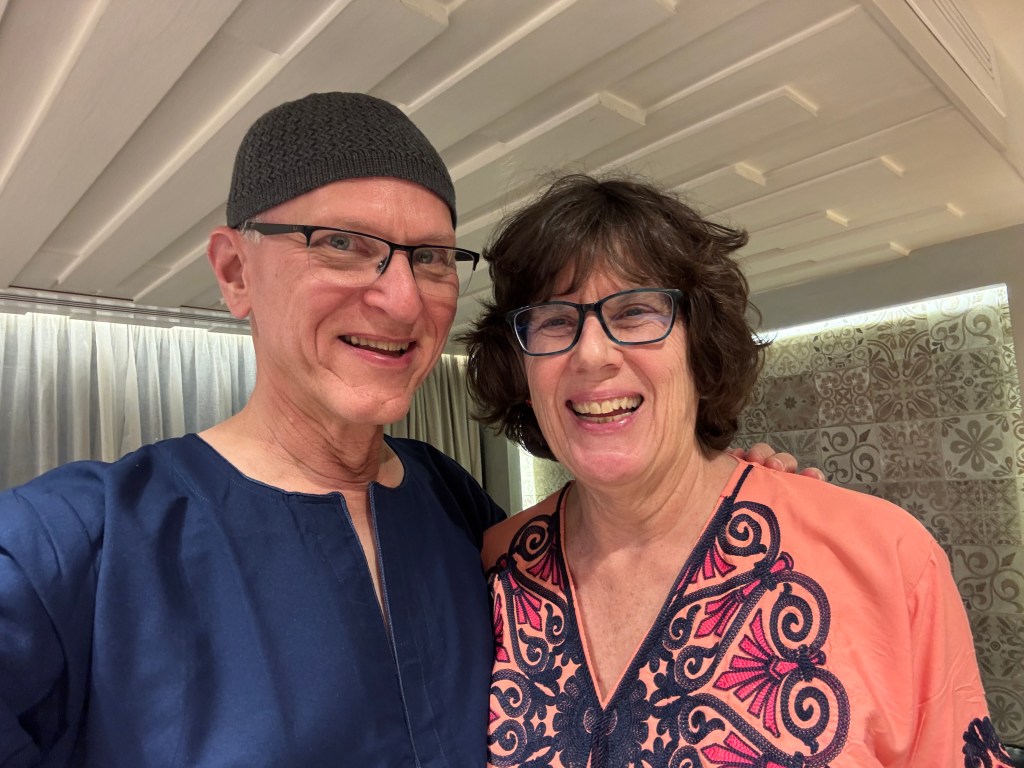
Douglas and Patricia Yeo dressed in Egyptian galabeya
One night, the 1978 movie adaptation of Agatha Christie’s Death on the Nile was shown on board the ship. We watched it and then watched it again when we got home. It was so fun to view the movie – much of which was shot on location in Egypt at the Pyramids and Sphinx, Karnak, and Abu Simbel – knowing so much about the sites. And this was funny: In a scene early in the movie, Linnet Ridgeway-Doyle (played by Lois Chiles) and her husband, Simon Doyle (played by Simon MacCorkindale) ride horses from the Pyramids to the Sphinx. They stop at the Sphinx and then continue riding away. Only if you’ve been to Egypt will you laugh at the impossibility of the scene: After riding FROM the pyramids to the Sphinx, they continue riding off AWAY from the pyramids. But the pyramids are in front of them! Have a look at the sequence below. We still don’t know exactly how ancient Egyptians built the Pyramids. But Hollywood figured out how to move them!
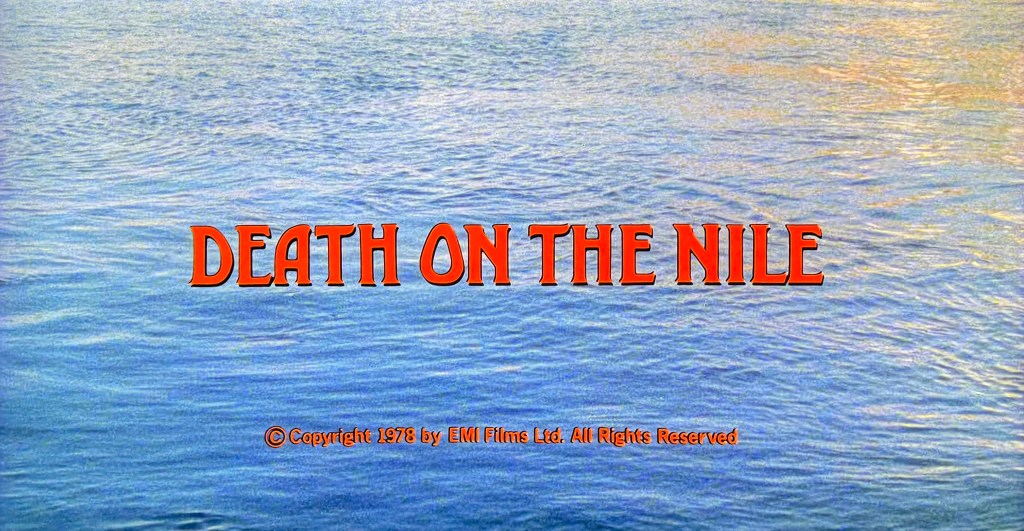
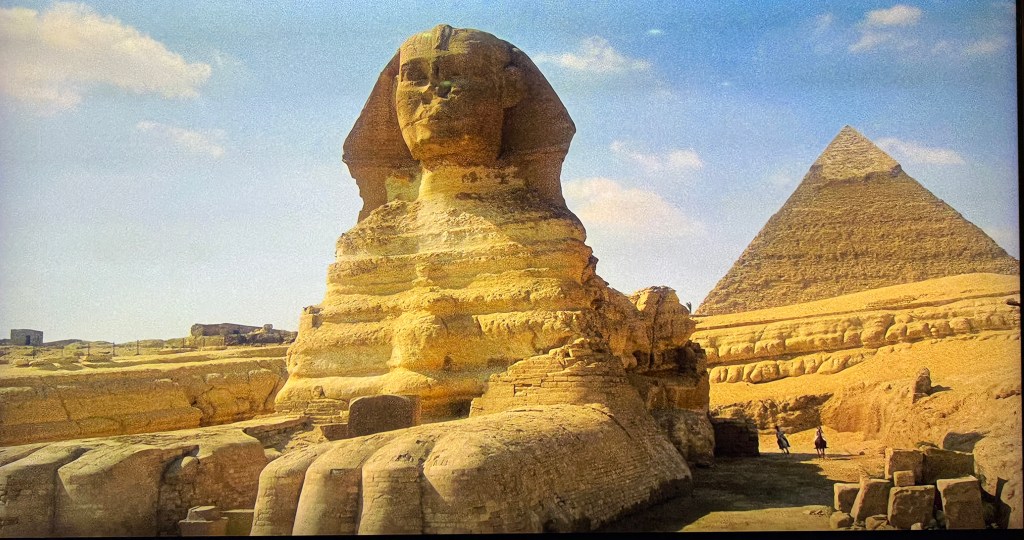
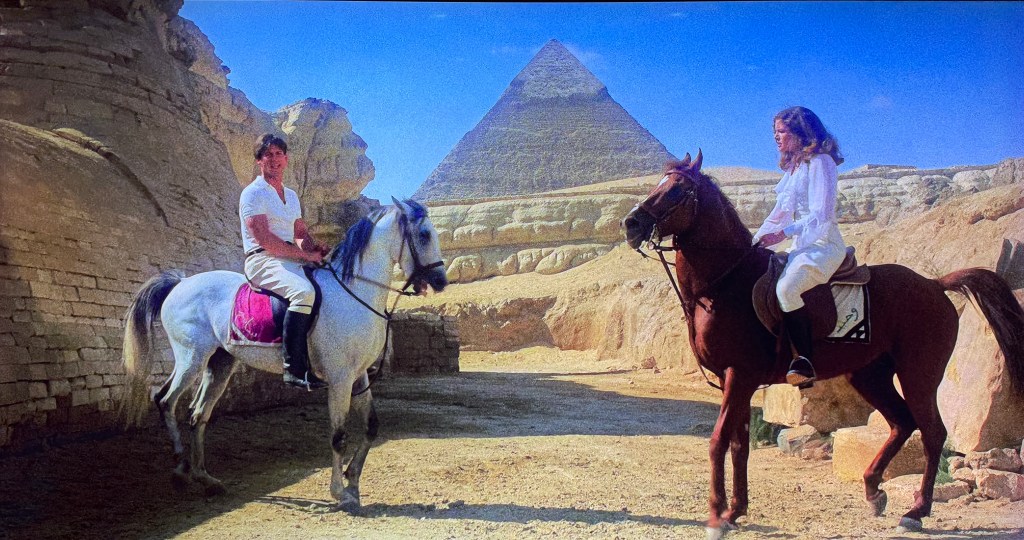
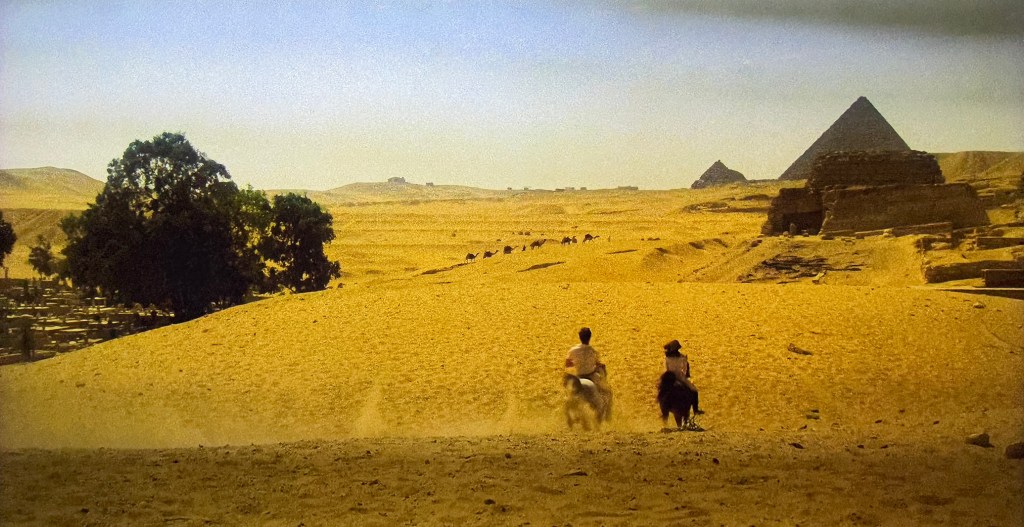
Scenes from Death on the Nile (1978)
But there was one more stop on our tour, and it was a highlight of the highlight of the highlight for me. Abu Simbel. This huge, remarkable monument to Ramesses II and his wife, Nefertari, was threatened with being submerged with construction of the Aswan High Dam. It was the moving of Abu Simbel – to dry land about 100 feet higher – that was one of the things that captivated me long ago while reading those issues of National Geographic magazine at my grandmother’s house. The size of the monument is truly breathtaking, and it’s nearly impossible to see the seams where it was cut apart and reassembled. I confess I got a little emotional at the sight. The Pyramids, King Tutankhamun’s treasures, and Abu Simbel are three things I have dreamed about seeing for six decades. And I finally got to see them. Amazing.
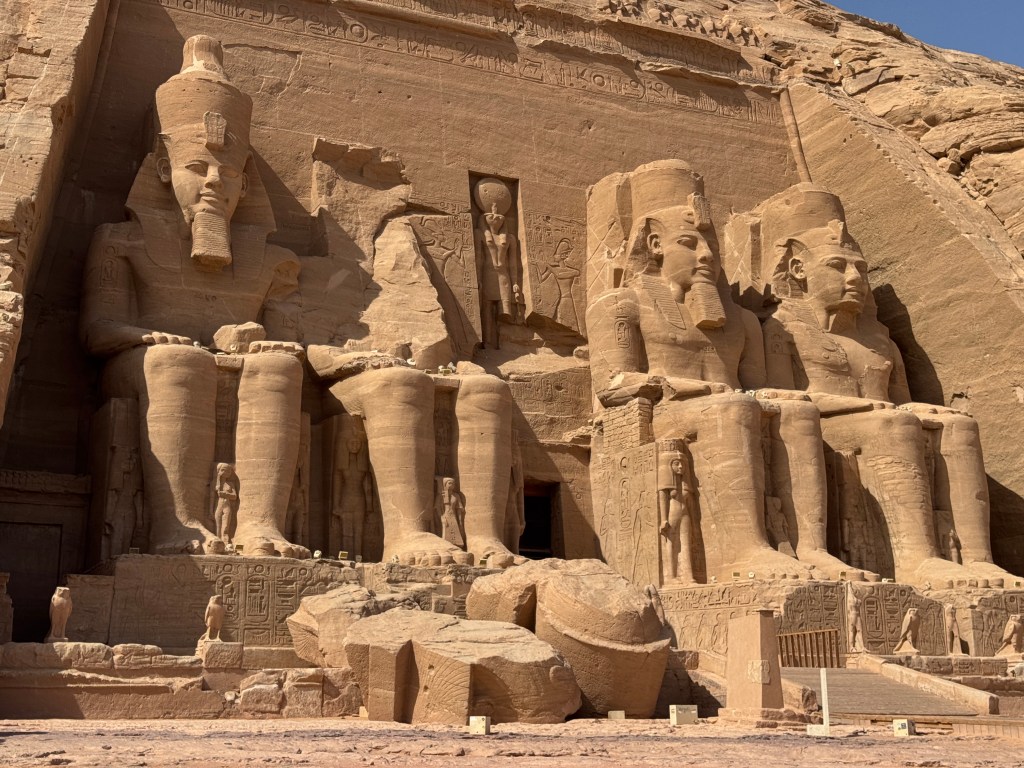
Abu Simbel
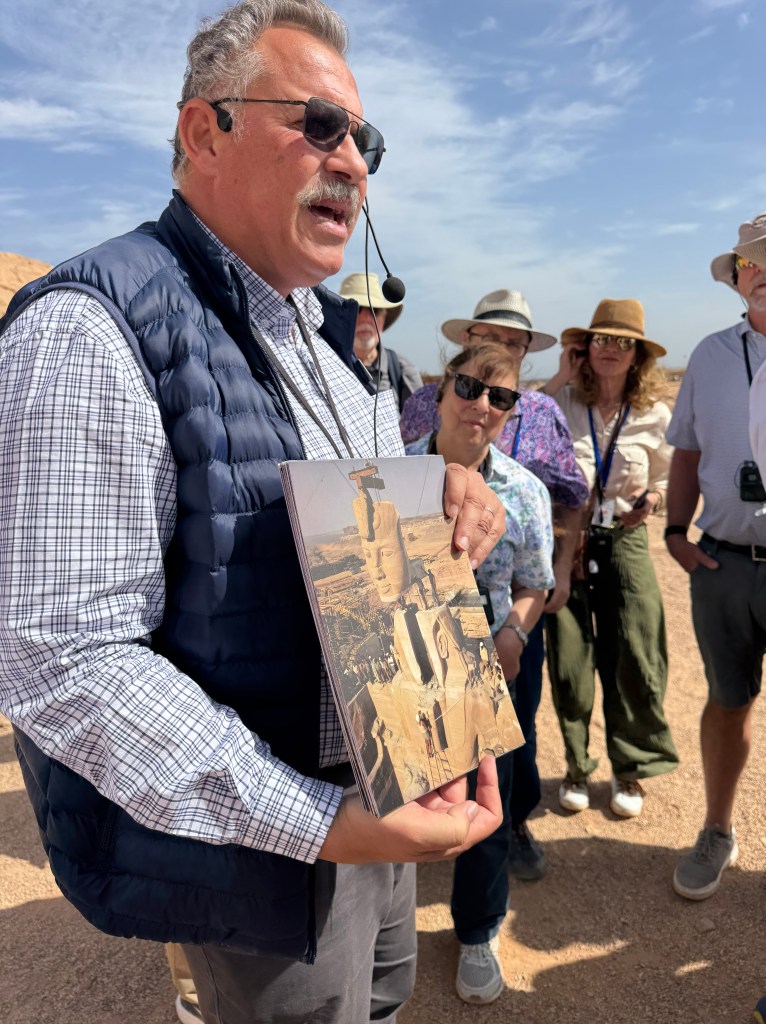
Our superb Egyptologist, Rafaat Khatab (who accompanied us on the entire tour), discussing Abu Simbel with our group
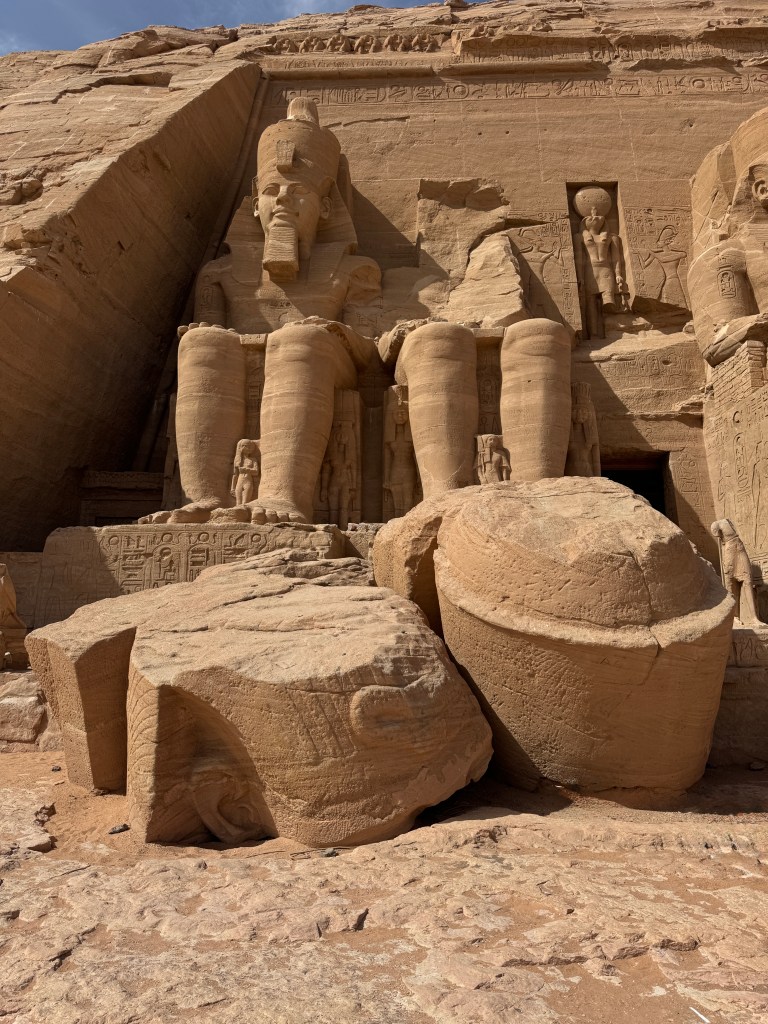
Abu Simbel. One of the monumental statues of Ramesses II was toppled in antiquity by an earthquake.
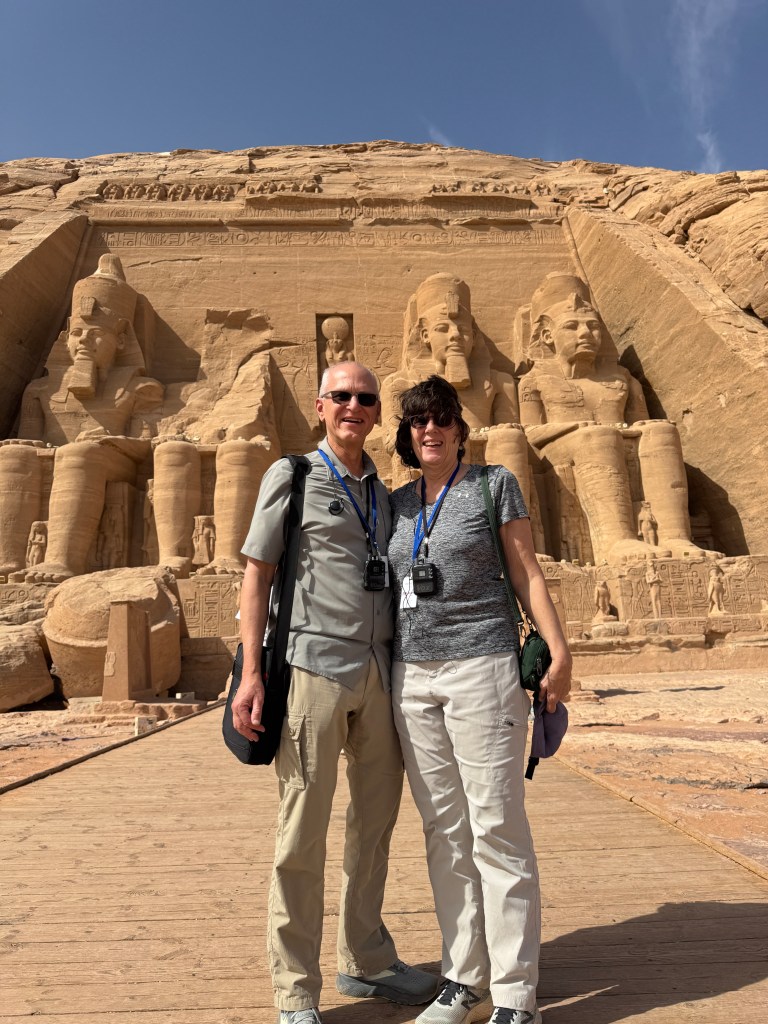
Douglas and Patricia Yeo at Abu Simbel (photo by Ashraf Masoud)
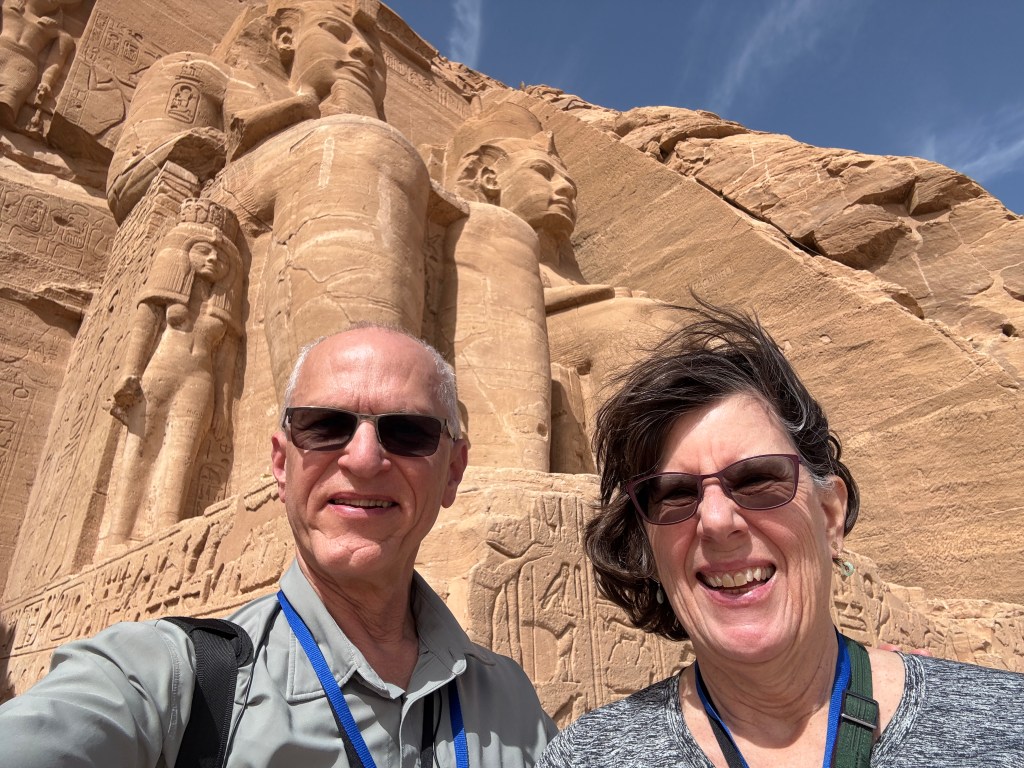 Douglas and Patricia Yeo at Abu Simbel. We are close to the statues of Ramesses II; you can see just how huge they are. These seated statues are 65 feet tall; by contrast, the monumental standing statue of Ramesses II in the courtyard of the Grand Egyptian Museum (shown earlier) is 36 feet tall. If the Abu Simbel statues were standing, they would be about 125 feet tall – the height of a 10–11 story building and taller than the Statue of Liberty (without its pedestal).
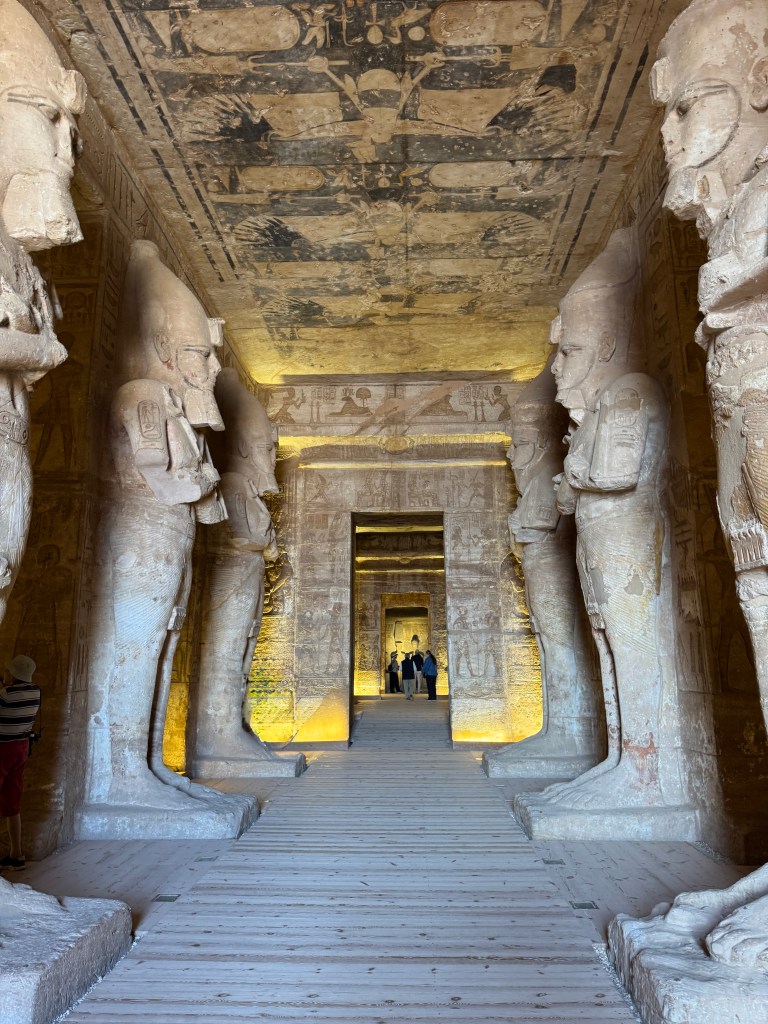
Inside the Temple of Ramesees II, Abu Simbel
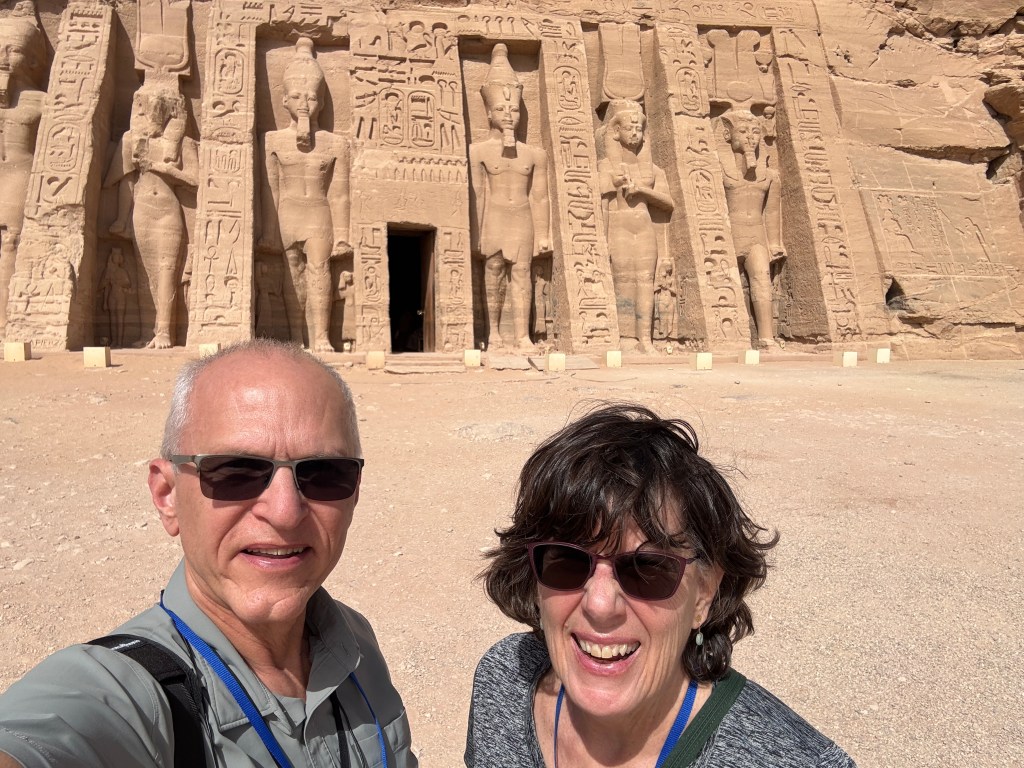
Douglas and Patricia Yeo outside the Temple of Nefertari, Abu Simbel
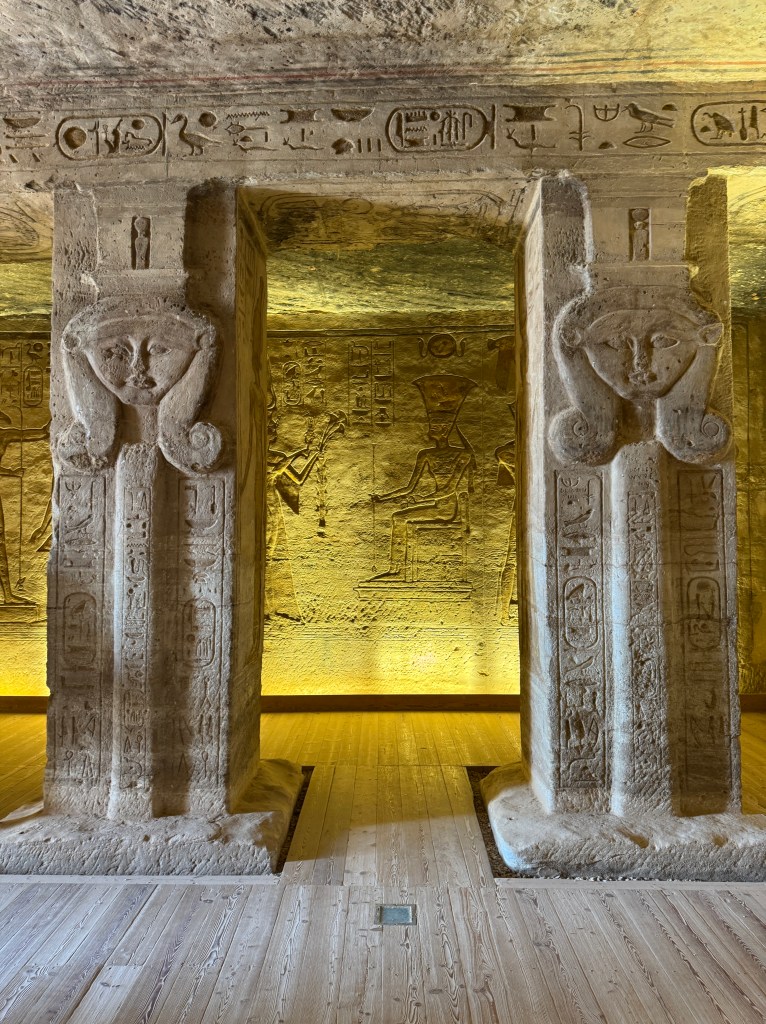
Inside the Temple of Nefertari, Abu Simbel
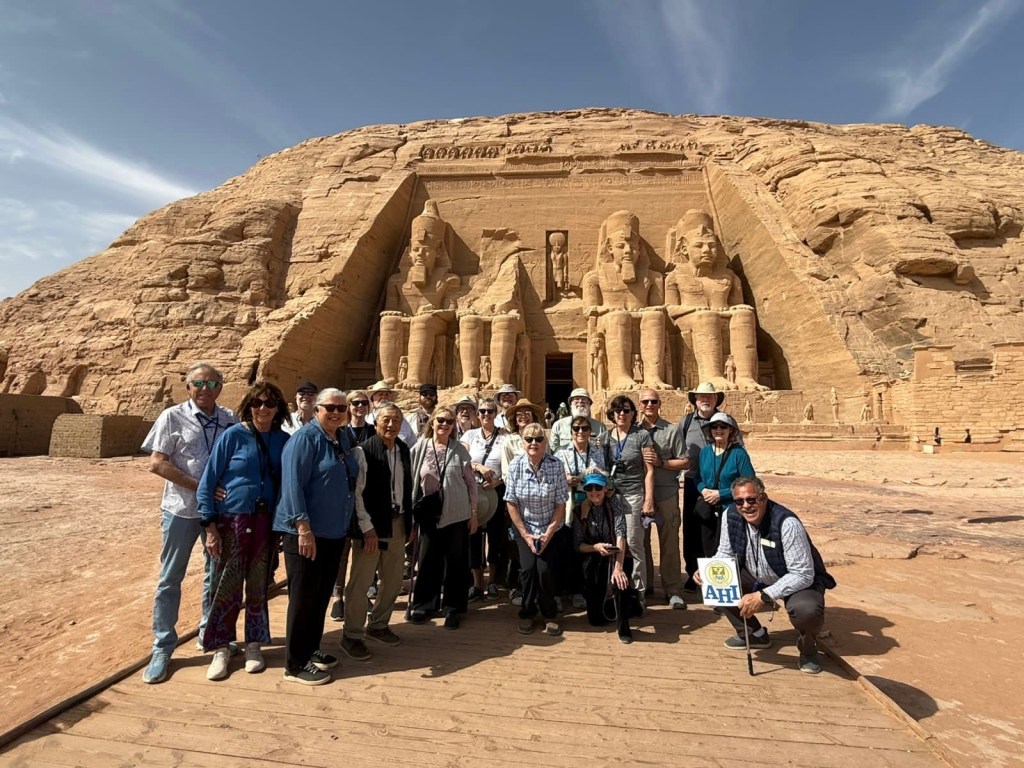
Legends of the Nile tour group at Abu Simbel (photo by Ashraf Masoud)
From Abu Simbel, we flew to Cairo and the next day, we flew home to Illinois.
Throughout the trip, in the midst of all of the remarkable things we saw, experienced, and learned, my maternal grandmother was on my mind. Remember her, she of the National Geographic magazines I read in my youth? 50 years ago, in 1976, she visited Egypt. At that time, she seemed so adventurous to me, and her trip seemed so exotic. She loved seeing the world, and she went to some of its most interesting places. Greece and Rome, Egypt, safari in Africa, the Trans-Siberian Railroad, China, Machu Pichu, Easter Island, and Antarctica. Twice, because she loved penguins. She was an inspiration to me. She never took a camera on her trips; she always said her eyes and mind were the best camera. But I’m grateful that others on the tour took a camera and snapped a few photos of her. Because as Pat and I traveled through Egypt, we followed in her footsteps, a very precious memory of my dear grandmother:
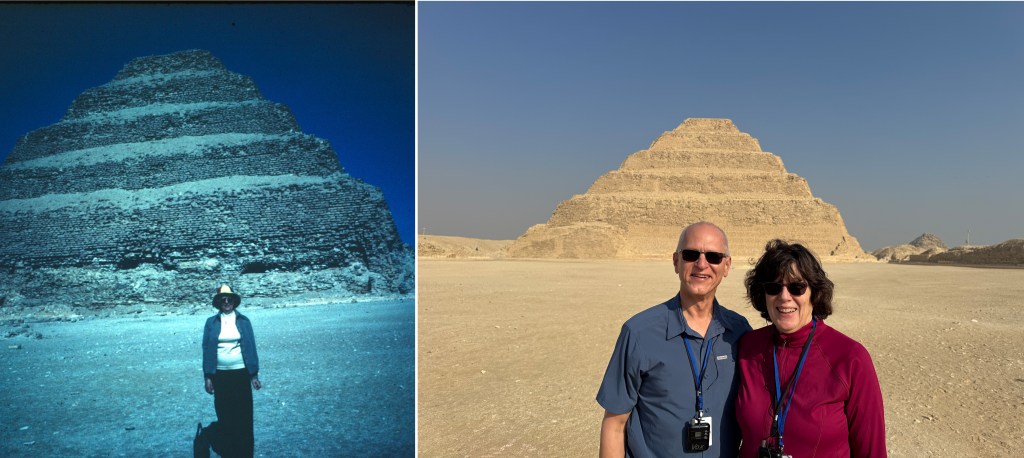
Virginia York Spangler and Douglas and Patricia Yeo at the step pyramid of Djoser, Saqqara (1976 and 2026)
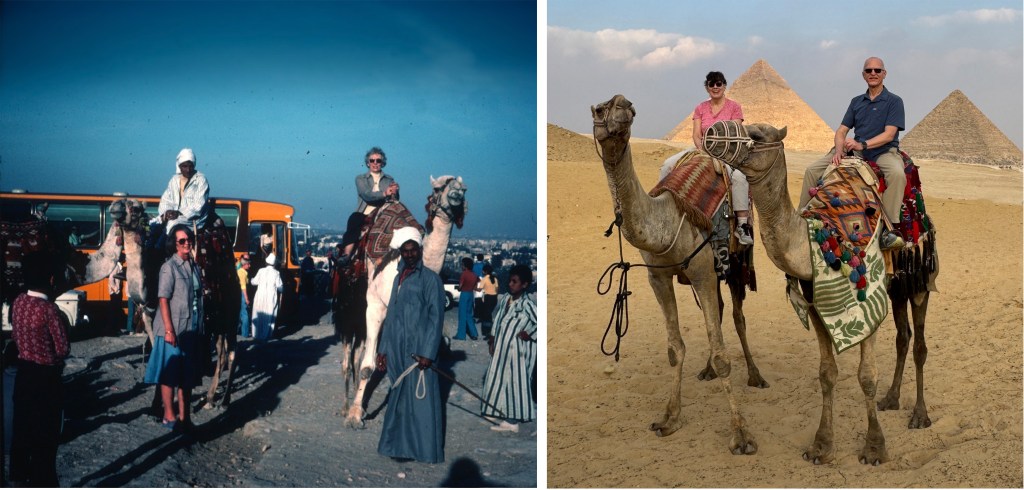
Virginia York Spangler and Douglas and Patricia Yeo riding camels, Giza (1976 and 2026)
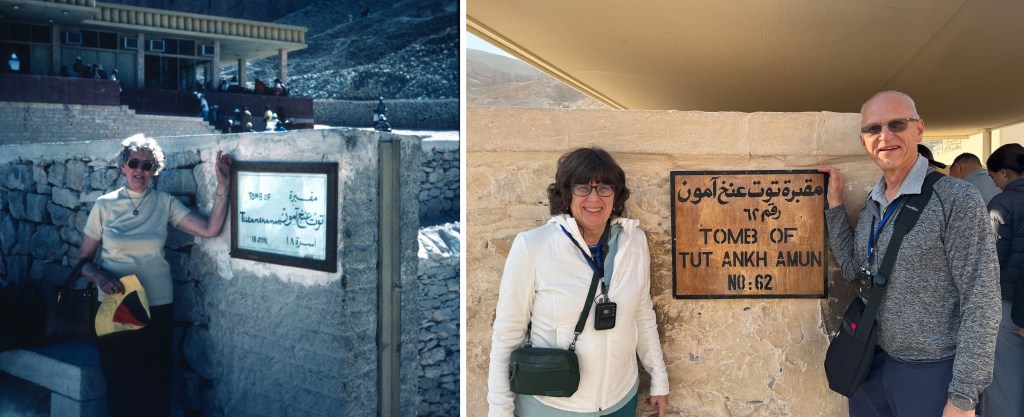
Virginia York Spangler and Douglas and Patricia Yeo at the entrance to there tomb of Tutankhamun, Valley of the Kings (1976 and 2026)
This is the longest blog post I’ve ever written. Not because of the number of words in its text, but because of the large number of photos. But I have just touched the surface of our trip to Egypt. I took hundreds of photos and videos, but the most important images from the trip are the ones that are imbedded in my mind. My grandmother was right: photos don’t do justice to a place like Egypt. You have to be there and see things for yourself.
Many other experiences aren’t even mentioned in this post – visits to many more tombs, our visit to Chicago House of the Institute for the Study of Ancient Cultures at University of Chicago (that has been documenting inscriptions, carvings, and paintings in monuments in Egypt for over 100 years), the Aswan High Dam, a visit to a rug factory, an alabaster factory, the papyrus institute, the hotels, restaurants – the food food food! – the parties, the wonderful weather, the hotel and ship staffs, experiences with the new friends we made in our tour group, and much more.
Yet, after all of these words and photos, I have one more thing to say.
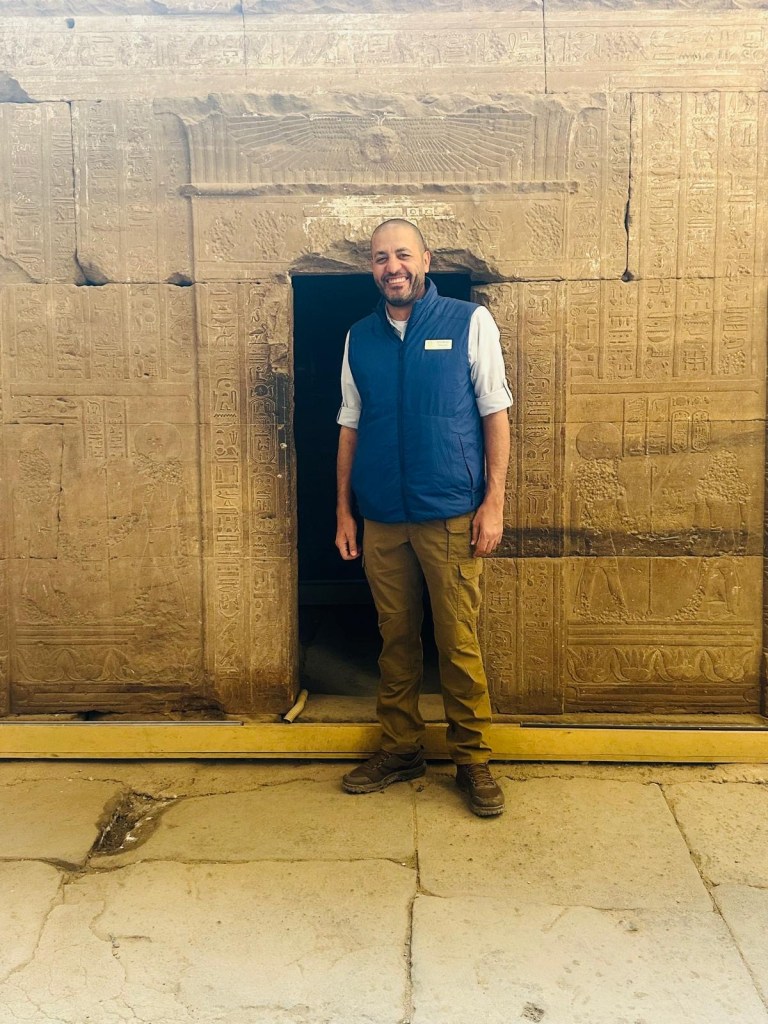
Legends of the Nile tour director, Ashraf Masoud (photo by Susan Throckmorton)
AHI planned a remarkable itinerary for us. Accommodations were first class. The food was outstanding. Service was superb in every way. But Pat and I reserve special thanks and praise for our tour director, Ashraf Masoud.
Ashraf is an experienced world-wide tour director. That we had a director with such expertise didn’t surprise us; we expected that. But Ashraf was so much more. He enlightened us with information about aspects of Egyptian life and history that you would not find on an “average” tour or in a history book. As a native Egyptian – and as a world traveler – he has unique, personal insight. He shared that with us. We asked him thousands of questions. He answered every one. Questions about Egyptian life in the cities and the countryside, the educational system, the political system (past and present), and his hopes and dreams for Egypt. He was kind, gentle, generous, hard-working, imaginative, a problem-solver, funny, fun, serious, and helpful. I will never forget his booming voice when he called our group together – LEGEEEEEEENNNNNNDS! He was fair-minded and informative at all times. It seemed that he knew everyone in Egypt. Everywhere we went – everywhere – people met him with a warm embrace and a smile. He had connections and he opened doors any other tour director could not open. Ashraf’s humanity – his care and love for people – including us – came through every minute. We learned so much from him – about Egypt, Islam, Egyptians, and the world – that we simply would not have learned anywhere else. Over the course of our 12 days in Egypt, Ashraf became much more than our tour director. He became our friend. We grew to love this remarkable man, and he shared his love with us.
We miss Ashraf. We miss Egypt. Even though we’ve been home for over a week, Pat and I think and talk about Egypt throughout each day. Now, reminders about Egypt are all over our house – paintings on papyrus, alabaster, photos, and decorative trinkets. They make us smile. Egypt became far more than an article in a National Geographic magazine, or a headline in the news. It jumped off the pages and became real, with real people, real events, real history. I run out of superlatives when I try to describe the trip.
I want to go back. I want to see the sites all over again, sail on the Nile River, and see my friend, Ashraf again. You must go to Egypt. When you go to Egypt, the trip will CHANGE YOUR LIFE. If you have the resources for a first-class tour, consider going with AHI. And be sure to ask if Ashraf Masoud is the tour guide. He is the best of the best of the best.
Now that we’re back home, I am doing the many happy, engaging things that occupy my life including activities with our family and church, research, writing another book, teaching, and making music. More travels are ahead for us. I have no complaints; God is good. But these days, Egypt is always on my mind.
Perhaps the words written under the pyramids cakes that we enjoyed at our last dinner on the Sanctuary Nile Explorer will turn out to be a prophecy. Egypt: I hope to “See You Soon.”
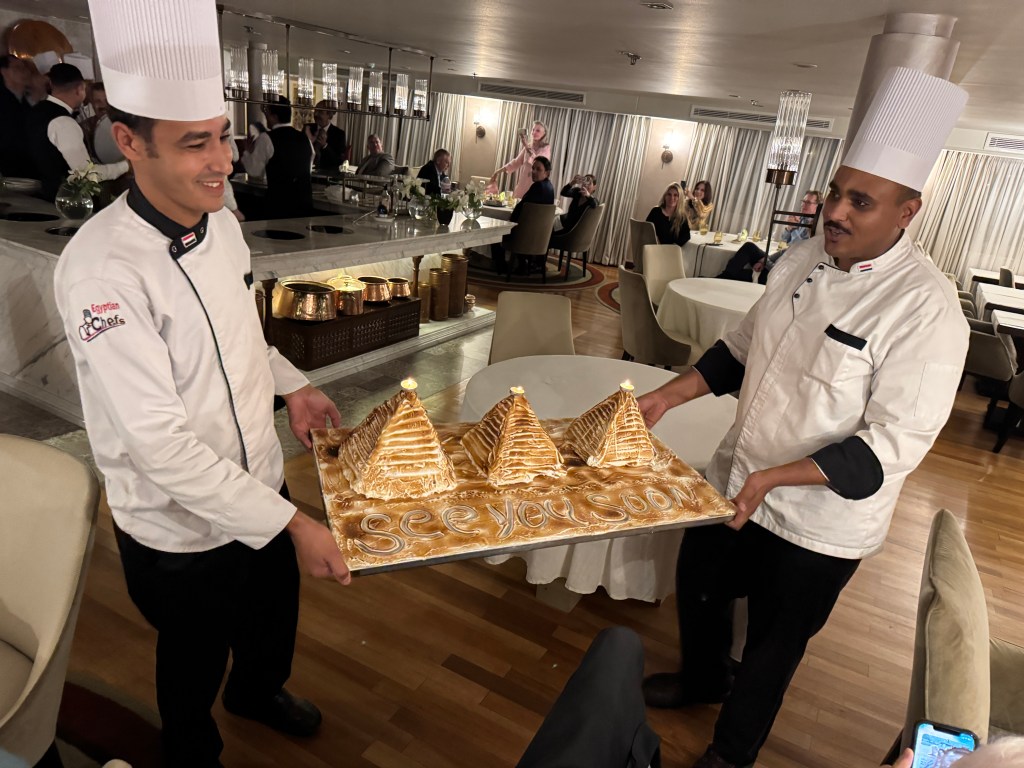
Pyramid cakes on the Sanctuary Nile Explorer
[Header photograph: The Sphinx and the Great Pyramid of Khufu, Giza.]








 The Last Trombone – Douglas Yeo