Category: faith

For the benefit and enjoyment of the people

For the benefit and enjoyment of the people

It has often been called “America’s best idea.” There is no country in the world with anything like it. I speak of our National Park system, founded in 1872 with the establishment of Yellowstone National Park. This week, the National Park Service – the federal agency charged with care of the Parks – celebrated its 100th birthday. We all do well to stop for a moment and consider, with gratitude, this tremendous gift in our midst.

My wife and I first began exploring our National Parks in 1978 when we took a six-week camping vacation from New York City to California and back. Since that time, we have enjoyed dozens of trips to National Parks and National Monuments, as well as to National Historic Places. It is one of the primary reasons that we moved from Boston to Arizona, so we could be in close proximity to the great national parks of the west. As the inscription atop the great arch that spans the northern entrance to Yellowstone National Park says (photo, above), the parks were established “For the benefit and enjoyment of the people.” Every time I come up to the Yellowstone Arch a deep wave of emotion comes over me. Because I have been one who has benefitted from and enjoyed these parks – places of exceptional beauty and tranquility, wonder and excitement. I can say with great certainty that I would not be the artist/musician I am today were it not for the many hours spent in our National Parks, hiking, gazing upon and engaging the tremendously diverse landscape of this piece of land the world calls the United States of America.

I have always encouraged my students to get out of the practice room and get outside so their playing would be informed by more than what was on the music stand. Appreciating the natural, created order of the universe does more than release positive endorphins into the blood stream. It changes us; it gives us a sense of perspective and certainly it inspires us. The words of Psalm 8 often come to mind as I gaze on a remarkable landscape:

O Lord, our Lord, how majestic is your name in all the earth!

When I look at your heavens, the world of your fingers, the moon and the stars, which you have set in place, what is man that you are mindful of him, and the son of man that you care for him? (Psalm 8:1, 3-4, English Standard Version)

So here, in celebration of the anniversary of the National Park Service, is a little gallery of photos I have taken in a just a few our National Parks. We all are in debt to President Ulysses Grant who established the National Park system in 1872, to President Theodore Roosevelt who championed it, and to all those who have worked so hard to balance preservation and access so these remarkable places can continue to be enjoyed by people from around the world.

Grand_Prismatic

Grand Prismatic Spring, Yellowstone National Park, Wyoming

Observation_Point_small

View from Observation Point, Zion National Park, Utah
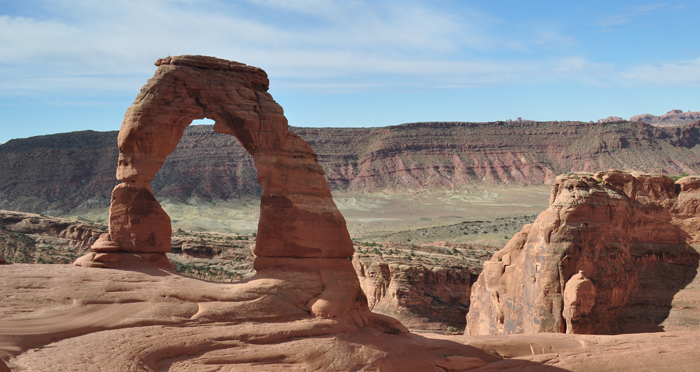
Delicate_arch_small

Delicate Arch, Arches National Park, Utah
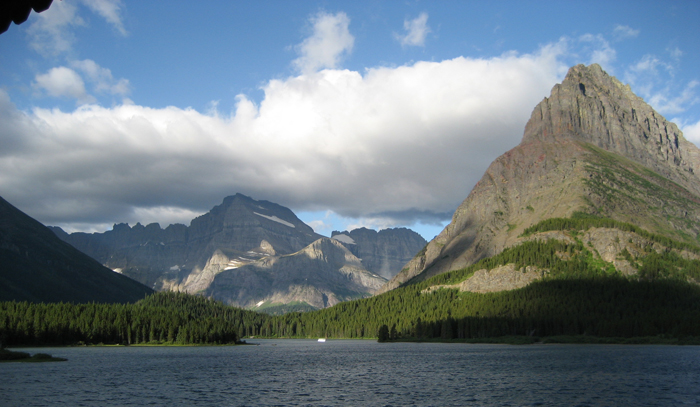
Glacier_Swiftcurrent_lake_small

Swiftcurrent Lake, Glacier National Park, Montana
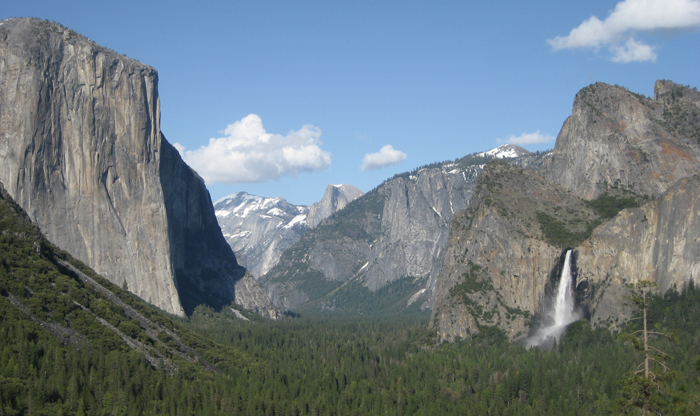
Yosemite_Valley_small

El Capitan, Half Dome and Bridal Veil Falls, Yosemite National Park, California

acadia_national_park_small

Jordan Pond and the Bubbles, Acadia National Park, Maine
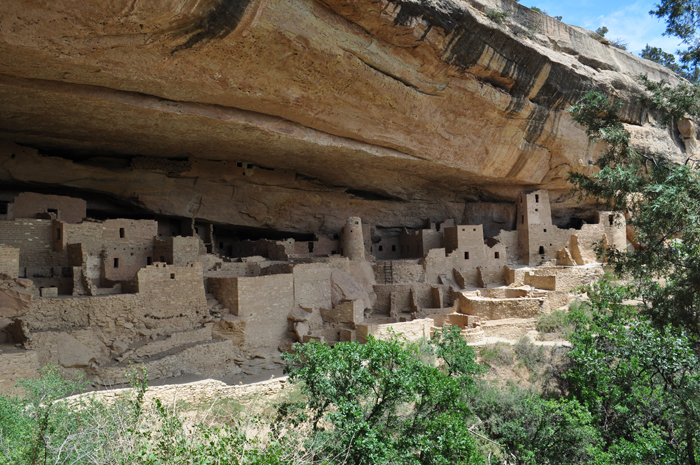
Mesa_Verde_cliff_dwelling_small

Cliff dwelling, Mesa Verde National Park, Colorado

Petrified_Forest_small

Petrified Forest National Park, Arizona

Grand_Canyon_Douglas_Yeo_2012small

Grand Canyon National Park, South Rim, Arizona
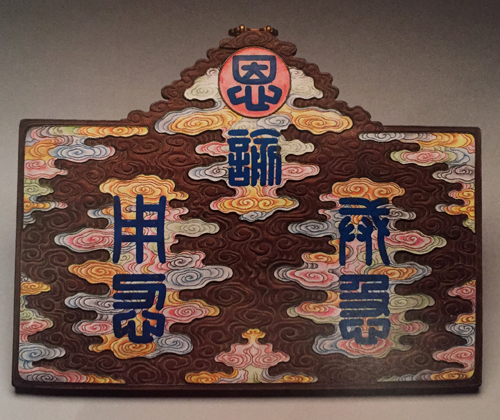
Heed rashness and use perseverance

Heed rashness and use perseverance

Last week I was in San Francisco, and took the opportunity to visit the Asian Art Museum. In my travels I have been to Japan, Taiwan and mainland China and have come to appreciate the cultures and art of these fascinating places. The Asian Art Museum has a special exhibition of items from the National Palace Museum in Taipei and it was quite something to behold. Included in the exhibition is one of the most popular and important pieces of Chinese art, the so-called “meat shaped stone” or “priceless porkbelly”, carved from a piece of jasper during the Qing Dynasty and appearing in the United States now for the first time.

But something else caught my eye and I kept returning to it. It is a sign in lacquer on wood, created for the Emperor Yongzheng who reigned from 1723-1735. Apparently the emperor, when he was a prince, was prone to some habits that displeased his father, Emperor Kongxi. The son took his father’s advice to heart, and had signs made that he put around the palace to remind him of his shortcomings. The photo above shows one of these signs and the message is:

Heed rashness and use perseverance.

In other words, pay attention to your tendency to act rashly and take your time to carefully persevere in tasks.

This is a phrase that has been around since the beginning of time. But this father’s words of wisdom – beautifully portrayed in this sign – are a reminder of the importance of carefully considering what we say and do. We live in an age where it is too easy to “shoot from the hip” – or lip – without thinking through an action. Of course any successful musician has learned the value of the disciplined life, of not acting rashly or looking for quick fixes, but persevering through difficult tasks in order to find success.

When I need advice on how to proceed in a situation, I often turn to the book of Proverbs in the Bible. It has a tremendous amount of wisdom that speaks to every situation you may encounter. On the subjects of rashness, perseverance and heeding advice, it has a great deal to say:

There is one whose rash words are like sword thrusts, but the tongue of the wise brings healing. (Proverbs 12:18)

A wise son hears his father’s instruction, but a scoffer does not listen to rebuke. (Proverbs 13:1)

Whoever loves discipline loves knowledge, but he who hates reproof is stupid. (Proverbs 12:1)

The way of a fool is right in his own eyes, but a wise man listens to advice. (Proverbs 12:15)

And this passage that speaks to the value of perseverance, with a model taken from one of the smallest animals on earth:

Go to the ant, O sluggard; consider her ways, and be wise. Without having any chief, officer, or ruler, she prepares her bread in summer and gathers her food in harvest. How long will you lie there, O sluggard? When will you arise from your sleep? A little sleep, a little slumber, a little folding of the hands to rest, and poverty will come upon you like a robber, and want like an armed man. (Proverbs 6:6-11)

My trombone teacher, Edward Kleinhammer (bass trombonist of the Chicago Symphony Orchestra, 1940-1985) taught me important lessons about perseverance. In the book we wrote together, Mastering the Trombone, Mr. Kleinhammer wrote these important and challenging words:

World class trombone players do not just happen. Their talents are forged by the dual furnaces of determination and diligence.

In this, Edward Kleinhammer was acting like the loving Emperor Kongxi, reminding his son, Emperor Yongzheng, of the importance to “Heed rashness and use perseverance.”

I think I need to go practice now…

Thanks be to God, he laveth the thirsty land

Thanks be to God, he laveth the thirsty land

It rained today.

Now, where you live, that might not seem like such a big deal. In fact, when I lived in Boston, when it rained, it usually meant that plans were spoiled and something had to be postponed. But where I live now, in the Sonoran Desert of Arizona, rain is a VERY big deal. We only get about nine inches of rain a year. Most of it comes in the summer which still leaves us with over 300 days of sunshine to do fun things outside. But since moving to Arizona, I’ve gained a new appreciation for rain.

This afternoon we heard thunder and watched as dark clouds moved in. We could hear neighbors opening their doors. Rain was coming. And when it did, my wife and I hugged and smiled. We haven’t had rain in weeks. While it’s great to have sunshine, we know how valuable rain is to life, to the land, to everything that is on earth. When the skies opened up and gave us a long deluge, we stood on our back patio (photo above) and thanked God for the rain. It was a beautiful thing, coming down from the sky, bringing new color to all of the green around us, the ground gratefully soaking it up.

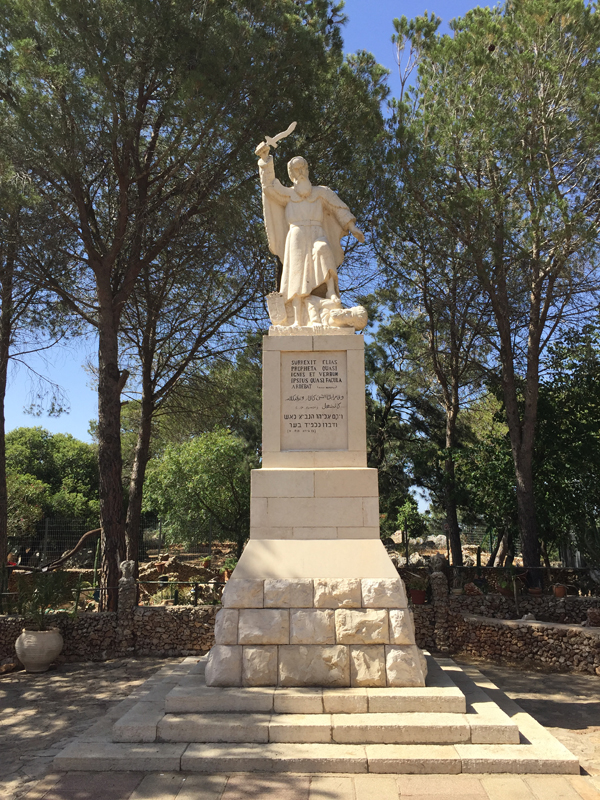
It reminded me of our recent trip to Israel, were we found ourselves on the top of Mount Carmel, where the prophet Elijah dramatically confronted the priests of Baal, a false god. The story is told in the Bible, in the book of 1 Kings, Chapter 18. Take a minute and read this dramatic story. It is about drought, and the need for rain, and how God revealed himself to be true and Baal to be false. Most of all, it was a moment when God called His people to faithfulness, back to Himself.

Elijah_01

On the top of Mt. Carmel (see  above, the statue of Elijah in front of the Carmelite Monastery on top of Mt. Carmel), as I looked out to the plain where the Prophets of Baal met their end after their god has been proven to be false, I turned to the west, toward the Mediterranean Sea. There I was reminded of how God provided rain. In the words of the Bible set to music to tremendous effect in Mendelssohn’s great oratorio, Elijah, a little boy looks to the west and says,

Behold, a little cloud ariseth now from the waters: it is like a man’s hand! The heavens are black with clouds and wind; the storm rusheth louder and louder!

To which the chorus replies, with great rejoicing, words from Psalm 93:3-4:

Thanks be to God, He laveth the thirsty land. The waters gather, they rush along! They are lifting their voices! The stormy billows are high; their fury is mighty. But the Lord is above them, and Almighty.

And so he does. As he did today here in the Sonoran Desert. Water for the thirsty land. Thanks be to God.

Trust in times of uncertainty

Trust in times of uncertainty

There is lot happening around the world and you can’t go very far without seeing something that causes you to scratch your head and wonder where things are going. Brexit, terrorism, illegal immigration, the global economy and stock market, wealth and poverty, ethnic conflicts and much more. Don’t worry. I don’t plan to use this blog to talk about politics.

But people often turn to politics and politicians to solve problems, and put trust in them to make things better. It’s easy to think that your political view can fix things if only everyone would get on board and listen. But time and time again, throughout all of history, men and women have only been able to accomplish so much. Political systems come and go; civilizations rise and fall. This is easy to forget. Our recent trip to Israel was full of vivid reminders that the great Roman Empire lasted only 400 years. Put this in context: the “American experiment” is 240 years old. One of my favorite painters from the Hudson River School, Thomas Cole, depicted this in his group of five epic paintings, The Course of Empire. One is shown above, Consummation of Empire, but the full group tells quite a story. Have a look at Cole’s sequence of the rise and fall of a civilization here:

Thomas Cole: The Course of Empire

These days, with so much going on in the world, I come each day to a reminder of the perspective that I need to hold in order to understand and contextualize both the confusion and order that is found all around. It’s found in the Bible, in Psalm 20:7 (English Standard Version):

Some trust in chariots and some in horses, but we trust in the name of the LORD our God.

Here is the center to which I hold. Whether it is chariots or horses, armies or material things, whether political parties or knowledge and intellect, there is nothing in the world that in and of itself can ultimately fix anything. The Sovereignty of God – one of the core theological doctrines of my Reformed Christian faith that teaches that all things are under God’s watchful rule, order and control – gives me great comfort. While my Christian faith calls me to help others and work to make things better, I know that ultimately all of history is heading toward the end of time when there will be a new heaven and a new earth, one that is not polluted by the fallen, sinful, selfish nature of mankind. Neither I nor any man-made system of government or thought can ultimately fix things now; at best we can improve and help a little while time marches to its inevitable close and rebirth. And for those who share this faith, the Bible calls us to a standard of conduct and living to which we aspire:

Let love be genuine. Abhor what is evil; hold fast to what is good. Love one another with brotherly affection. Outdo one another in showing honor. Do not be slothful in zeal; be fervent in spirit, serve the Lord. Rejoice in hope, be patient in tribulation, be constant in prayer. Contribute to the needs of the saints and seek to show hospitality.

Bless those who persecute you; bless and do not curse them. Rejoice with those who rejoice, weep with those who weep. Live in harmony with one another. Do not be haughty, but associate with the lowly. Never be wise in your own sight. Repay no one evil for evil, but give thought to do what is honorable in the sight of all. If possible, so far as it depends on you, live peaceably with all. (Romans 12:9-18, English Standard Version)

So, I work each day to try live these words – however imperfectly because I am a very imperfect person – in my interactions with people with whom I come in contact. But I have learned not to put my ultimate trust in anything but God. This is a great comfort and the reason I can sleep well at night in the midst of a chaotic and disordered world. Yes, we work to improve things as we can, helping “the least of these” (Matthew 25:40). And I always vote in elections, even if doing so means holding my nose and voting for the best among what I believe to be several poor options. But I dare not trust that anything – horses, chariots, armies, the Fed or World bank, or any political party – can ultimately solve the problems of the world. The great truth and comfort is that it is our LORD our God who alone is worthy of our trust. Because He is Sovereign.