Category: composers, conductors, performers

FRATRES progress report: Cover image and video

FRATRES progress report: Cover image and video

The process of bringing the new CD, FRATRES, to completion continues at a rapid pace. This new recording, by Gerry Pagano (bass trombonist of the St. Louis Symphony) and me, along with Michael Lake, will be mastered tomorrow by Nathan James at Vault Mastering in Phoenix. I’m very much looking forward to spending the day with Nathan as we create the master disc for replication. I am also at work today arranging for mechanical licenses for the album, so the copyright holders of the compositions we recorded are recognized with a well-deserved royalty payment.

In the meantime, Ben Krueger, our designer, has been at work on the CD packaging. The gratifying level of support we have been getting on our Kickstarter program means we are able to develop enhanced packaging, including an eight page booklet of information about the  recording, its music, and performances. Ben is doing an outstanding job with this and I’m very happy to share his evocative cover below:

FRATRES_pages

We’ve titled Ben’s cover image, The West and Its Gateway: The St. Louis Gateway Arch and the East and West Mittens of Monument Valley Navajo Tribal Park, Arizona. This recording, that features Gerry – who lives in St. Louis but also lived in Phoenix for several years early in his career – and me – who lives in the foothills of the Sierra Estrella, west of Phoenix, beautifully brings together several important elements and messages in the recording. Ben’s superb work carries through the rest of the CD packaging. More on that soon.

Michael Lake has also put together another video about the project that includes an interview with me about Tommy Pederson – we recorded seven of Tommy’s great duets for bass trombones on the album – as well as some surprises. Have a look at Mike’s newest video about FRATRES (click the video below or click HERE to view the video on YouTube). (You can see Mike’s first video about the project by clicking HERE.

Gerry and I want to say THANK YOU once again to all who have generously supported our vision with FRATRES. If you’re interested in adding your voice to that of many others who are on board with this project, and if you’d like to open your mailbox in a few weeks and find not only a copy of the CD (or a download card) but some “swag” as well, have a look at our Kickstarter page by clicking HERE. There are 13 days left on our campaign. Thank you for partnering with us in this innovative new recording project.


Kickstarter-button

DY_GP_black_medium

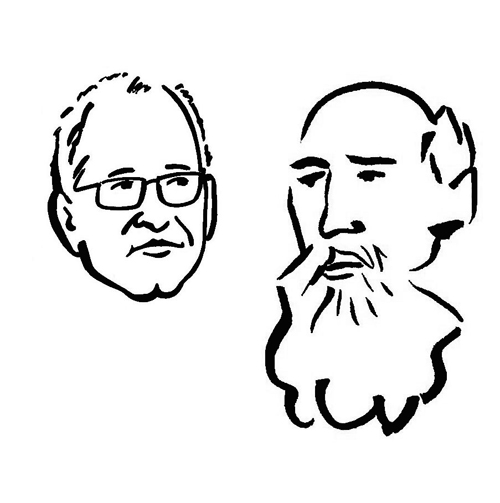
[Drawing of Douglas Yeo by Lennie Peterson. Drawing of Gerry Pagano by an unknown waiter at a New York City restaurant.]

The trombone in popular culture

The trombone in popular culture

I’ve been researching the use of the trombone in popular culture as a subject for one of the several books I’m working on at this time. I find it fascinating that the trombone, of all instruments, has been used in particular ways that have very little to do with its capabilities as a musical instrument. Rather, the trombone has often been used as a prop – sometimes humorous, sometimes serious, but always interesting. For instance, the trombone has often been used in advertising. Not advertising designed to sell trombones, but advertising to sell other products. Over the years, I’ve collected advertisements that use the trombone to sell beer, cigarettes, cars, tires, record players, and much more. I’ll be writing more about those advertisements down the road.

But of particular interest to me is when manufacturers use the trombone in a physical way, and produce a product you can hold in your hands that features the trombone in a context far removed from the concert stage or band stand.

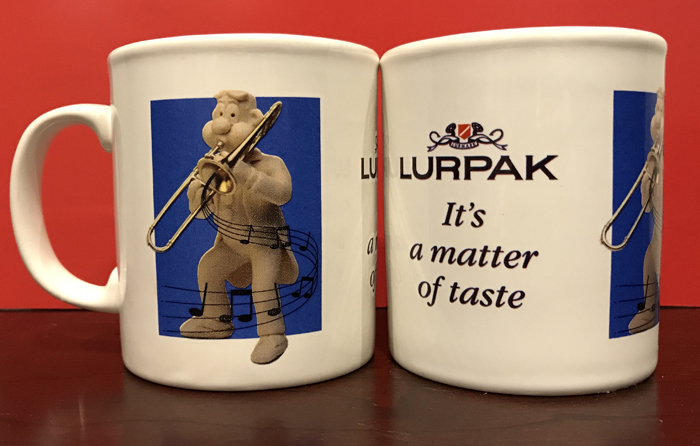
One of the iconic uses of the trombone in advertising was Douglas the butter man. Lurpak, the Danish brand of butter, used an animated trombone-playing character, Douglas, who got into mischief on the dinner table. In 1985, Douglas was introduced – he was created by Aardman Animations, the creator of the popular Wallace and Gromit claymation films – and his antics were juxtaposed against the voice of British actress Penelope Keith. Douglas appeared in many Lurpak ads before being retired in 2003.  Here is a Lurpak ad for butter featuring Douglas (click the video below or HERE to view the video in YouTube):

Several years ago, Lurpak manufactured a coffee/tea mug featuring Douglas and his trombone, along with the commercial’s tag line, “It’s a matter of taste.” As one with the same name as this mischievous butter man, why wouldn’t I have one (actually, two) of these in my studio?

Lurpak_Douglas_trombone_mug

Then there is the professional WWE (World Wrestling Entertainment) wrestler Xavier Woods (whose real name is Austin Watson), who has used the trombone as part of his work in and outside the ring identity.

Here is a compilation of some of Woods’ wrestling match moments with his trombone, mostly with his WWE compatriots Big E and Kofi Kingston (click the video below or HERE to view the video on YouTube). This video concludes with a crushing moment when Wood’s trombone is destroyed by Chris Jericho (spoiler alert: yes, it really is broken, and it is a very, very sad moment).

I’m not sure how many people have been inspired to pick up and learn the trombone based on what they hear from Xavier Woods, and I definitely do not recommend using the trombone in or near a wrestling ring. But what trombonist’s studio wouldn’t be complete without an Xavier Woods vinyl figure made by Funko to provide inspiration while practicing,?

Xavier_Woods_trombone

In 1972/73, I was a member of the McDonald’s All-American High School Band. It was a big moment for me, to march in the Macy’s Thanksgiving Parade in New York City and the Tournament of Roses Parade in Pasadena, California, while a senior in high school. Two high school players from every state came together to make a 100 piece marching band and I was one of the players selected from New Jersey. Here’s a photo of me (far right) along with my fellow New Jersey compatriot, Jeff Venho, Rose Parade Grand Marshall, Betty White (yes, THAT Betty White), conductor Paul Lavalle, and Rose Queen Sally Noren.

yeo_mcdonalds_rose_parade_1973_small

In the year before I was in the All-American Band (1971), McDonald’s introduced an advertising character, Grimace, an anthropomorphic, cuddly, purple blob. Grimace was used in commercials and he/she/it also began to appear in Happy Meal boxes. One of Grimace’s finest moments was when McDonald’s issued a coffee mug with a musical theme, with a handle that featured Grimace playing trombone.

Grimace_McDonalds_trombone_mug

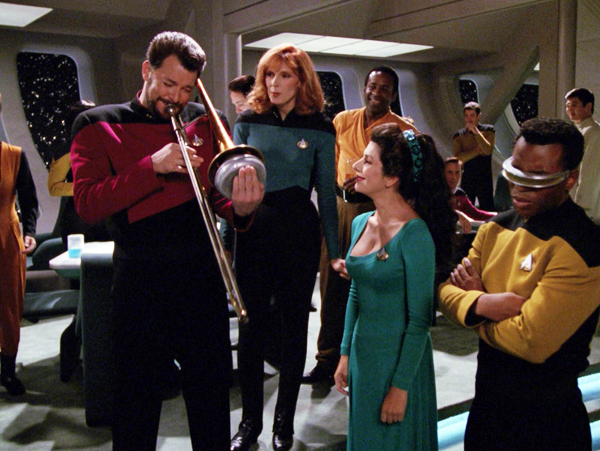
While we know that the trombone has been with us since around 1460, do we know what the future holds for the instrument? Evidently it will be around at least for another three hundred years since Captain/Commander/Admiral William Thomas Thelonius Riker, Commander of the Starship U.S.S. Titan, has played the trombone on several episodes of Star Trek, The Next Generation. Born in 2335, Riker – who in various episodes has been addressed both as William and, using his middle name, Thomas – graduated from Starfleet Academy in 2357. Whether that is where he got his trombone training is not known, but it’s clear that in this clip, he sometimes uses the trombone to do his talking (click the video below or HERE to view the video in YouTube):

Actor Jonathan Frakes, who plays Riker in the television series, actually DOES play the trombone. It’s gratifying to know that in a world of inter-gallectic technology, the trombone is still going to be with us. And as a reminder, ArtAsylum has made a Captain Riker action figure, and of course it comes complete with his trombone. No trombone studio would be complete without one, yes?

Riker_Star_Trek_trombone

Butter, professional wrestling, fast food, and space travel. Isn’t the trombone just great?

Counting down to FRATRES: The Yeo/Pagano Project

Counting down to FRATRES: The Yeo/Pagano Project

As I mentioned in a previous post on The Last Trombone, my friend, Gerry Pagano (Bass Trombonist of the St. Louis Symphony), and I have recently recorded a compact disc of music for two bass trombones. In this we were assisted by Michael Lake, who not only was the recording engineer for the project, but also contributed superb accompaniments and enhancements to many of the tracks. And he also wrote a piece for the album. And he played alto trombone along with us on three tracks. And a partridge in a pear tree. You get the idea. This new album is a true collaboration between Gerry, Mike, and me, and we believe we have some very interesting, unusual, special, challenging, and inspiring music and performances to bring to life in the coming weeks.

Doug_Gerry_Desert_03

Gerry and I recorded the project in Michael Lake’s studio in Phoenix, Arizona, a place where we could do things that just couldn’t be achieved in a large, live acoustic space. I wrote about this previously so there’s no need to repeat myself here. But we are now moving ahead with the final phases of production of the album that include mastering, design, licensing, manufacturing and distribution. We hope to have the finished product in our hands by the end of this calendar year.

Gerry_Doug_recording_01

At this time, Gerry and I are reaching out to people who we hope will be interested in supporting our project. FRATRES – Latin for “brothers” – is an album that we hope will inspire others to look at the bass trombone differently. We’ve recorded a wide range of repertoire that spans nearly 600 years. Over his career, Gerry has released four solo albums and I’ve released five. This kind of duet collaboration is something new for us, and something that, in a sense, was 31 years in the making, with the seed of it planted long ago in 1986 when Gerry and I first met and played duets together.

So we have launched a Kickstarter program to invite people who are interested in what we are doing to stand alongside and support our vision for FRATRES. As much as we value your investment in our project – and as you will see when you visit our Kickstarter page, we are offering a number of “thank you” gifts for your support including a digital download of the album, a physical CD copy of the recording, pencils, t-shirt, beer/iced tea glass, and a coffee mug – we are most of all interested in your partnership in our vision.

Michael Lake has also made a video about the project that includes some interviews with Gerry and me, and photos from the session. Gerry and I really appreciate Mike’s many contributions to the project and I think you will catch his excitement about it if you view his video (click below or see it on YouTube by clicking here):

While we were making our recording, we also took some time out of our schedule to record a music video in the desert. Michael Lake’s drone was able to capture both the grandeur of the Arizona landscape and also the fun Gerry and I had in working together. The soundtrack to this video is one of the pieces we recorded for inclusion on our album, Tommy Pederson’s Below 10th Street, with rhythm and Hammond B-3 organ added by Mike (click below or see it on YouTube by clicking here):

Michael Lake has also posted the recording of his new piece, Devils & Angels, that he composed for our album. It’s a compositional tour de force that includes a sophisticated accompaniment to Gerry (left channel) and me (right channel), as well as Mike’s alto trombone improvisation, a section where the three of us are overdubbed in five parts, and some improvisation by me on serpent at the end. Have a listen by clicking here.

With all of this, we hope you are getting a picture of what we’ve been doing and why we’re so excited about getting this project released.

FRATRES. Friends – brothers – working together to make music to share with others. On behalf of Gerry and me, we thank you for your support.

Kickstarter-button

DY_GP_black_medium

[Drawing of Douglas Yeo by Lennie Peterson. Drawing of Gerry Pagano by an unknown waiter at a New York City restaurant.]

Three trips: music, friends, and faith

Three trips: music, friends, and faith

The last few months have been full of travel, as I’ve criss-crossed the United States several times to play and speak at a number of events. It is times like this that are very refreshing and invigorating to me, as I get to be with other fine musicians and make music at a high level. At the same time, my conversations with others are always very rich, and when I come home, I find myself energized and grateful for the blessing of a life lived with music.

The first of these three tripe was to the International Trombone Festival (June 27-July 1), which was held at University of Redlands, California. As I mentioned earlier in this blog, I played duets with three friends: Jim Markey (bass trombonist of the Boston Symphony), Megumi Kanda (principal trombonist of the Milwaukee Symphony), and Gerry Pagano (bass trombonist of the Saint Louis Symphony). In addition, Megumi and I gave a class titled The One Hundred: Effective Strategies for Successful Audition Preparation.

[From top left, clockwise: Douglas Yeo with Megumi Kanda, Gerry Pagano, Bill Watrous, Jennifer Wharton]

Part of the fun of being at these kinds of events is meeting up with old friends. I ran into jazz great, Bill Watrous, while walking through the vendor area at the ITF. Bill was tremendously influential on me – and countless other players – when I first hear him on his Manhattan Wildlife Refuge recording in 1975; have a listen to his iconic and influential performance of Fourth Floor Walk-Up. Years later, we began a friendship that, interestingly enough, does not center around jazz. Rather, when we speak on the phone, Bill always wants to talk about classical music, especially Edward Elgar. Bill is expertly conversant in classical music, something that may come as a surprise to many who know him as a jazz trombone icon. I recall hearing him give a clinic at Lexington High School in Massachusetts (the town in which my wife and I lived from 1985-2012 when I was a member of the Boston Symphony) where he played Samuel Barber’s Adagio for Strings on trombone using multiphonics. To say his performance was stunning is a profound understatement.

I also got to meet up with my former student, Jennifer Wharton, who was at the ITF to play in the XO All Stars jazz trombone quartet. Jen is a remarkable person and player, living in New York City with her husband, John Fedchock, playing a Broadway show, teaching, and freelancing. Jen is one of the most positive and engaging people I’ve ever met, and having time to meet up with her, have some conversation and a meal together, and play duets was a real joy.
Natl_parks_pass

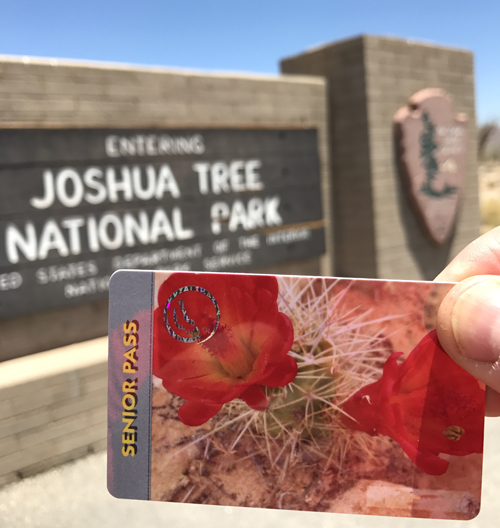
While on my way to Redlands, I stopped off at Joshua Tree National Park in California to purchase my National Parks Lifetime Senior Pass. Getting older bring with it some challenges, for sure, but my first “senior discount” after turning 62 this past May was this Pass, a real deal for $10.00; I got mine just before the fee changed to $80.00. Going to National Parks is a real passion for my wife and me, and to hold this lifetime pass in my hand was a moment that made me smile. More on our recent trip to five National Parks in a future post on The Last Trombone.
Scott_Doug_posed

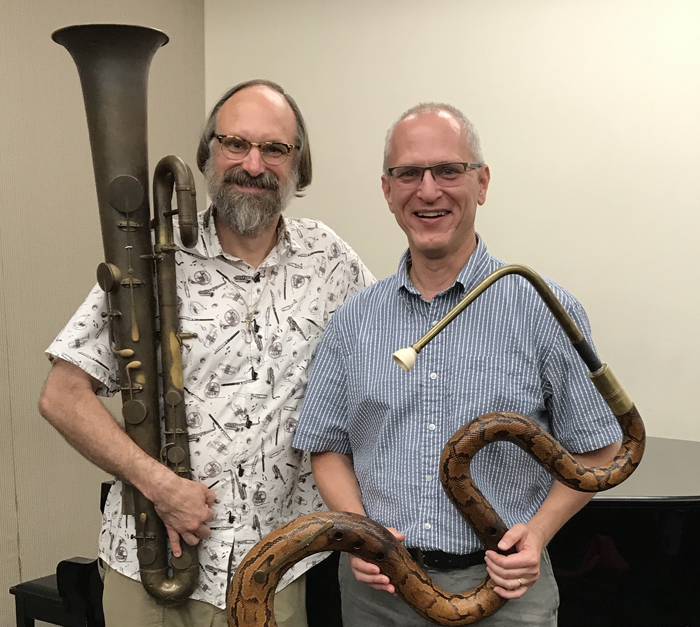
[Scott Robinson, ophicleide; Douglas Yeo with serpent by Keith Rogers]

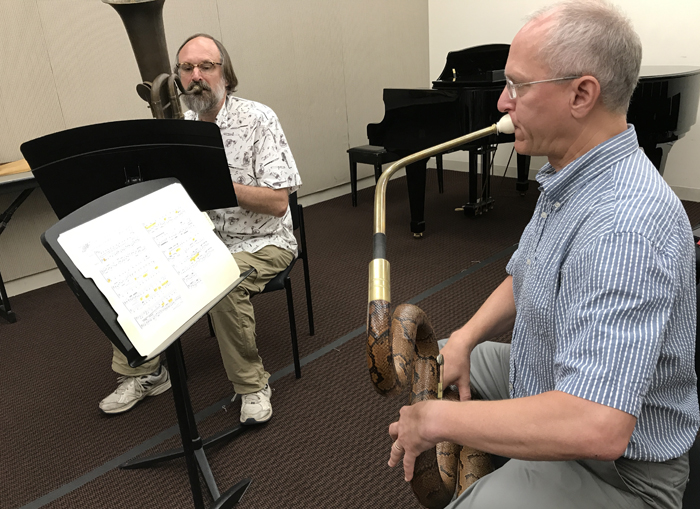
Just a few days after the ITF in California, I flew to New York City for the Third Historic Brass Symposium (July 12-14). This time I didn’t have a trombone in my hand. Rather, I brought along a serpent, for I was at the Symposium to premiere a new duet for serpent and ophicleide commissioned by the Historic Brass Society, Caduceus Mixtus, by Jaron Lanier. My partner for the duet was Scott Robinson, known mostly for his superb playing on saxophone, but he also plays ophicleide. The piece was difficult, interesting, and rewarding to play, and our performance at New York University happened to be in the same recital hall where I gave my two graduate recitals when I was a student at NYU for my master’s degree back in 1979. For this performance I used a serpent made by the late Keith Rogers that was entrusted to me by his wife, Kathryn, after Keith’s death in 2008. It is made of plum wood and covered with a (pre-ban) python skin. It seemed to be the right instrument to use for a piece that had as part of its inspiration, the caduceus, with its intertwined snakes.

Scott_Doug_performance

In addition to hearing scholars present exceptionally interesting papers at the Symposium, we enjoyed a day of papers and concerts at the Metropolitan Museum of Art. The Museum is one of my favorite places in the world, having grown up in and around New York City and then returning there after I graduated from Wheaton College, from 1976-1979. The musical instrument gallery of the Museum is closed for a complete renovation, but we were given a preview of the construction and also saw some of the Museum’s new acquisitions, including a Baudouin serpent and the Bellophone, a combination tuba and euphonium that was made for the legendary tuba player, Bill Bell, by the H.N. White company.

We also got an up close look at a stunning new installation on the balcony between the two rooms of musical instruments, Fanfare, that features about 60 brasswind instruments. It is an exceptional installation and to have the opportunity to be among the first to see it up close was a real privilege.

MET_Fanfare

I also had time to view some of my favorite works of art at the Museum, including Rembrandt’s Aristotle With a Bust of Homer, a beautiful stained glass window, Autumn Landscape, by Tiffany Studios, and several sculptures by one of my favorite artists, Daniel Chester French. His Angel of Death and the Sculptor and Mourning Victory are displayed in the Museum as marble copies made by French of his bronze cemetery monuments that I discuss in my website resource, Daniel Chester French: Sculpture in Situ.

[From top, clockwise from left: Rembrandt, Aristotle With a Bust of Homer; Tiffany Studios Autumn Landscape; Daniel Chester French, Mourning Victory and The Angel of Death and the Sculptor]

While in New York, there was one thing I wanted to see that was not connected to the Symposium: the 9/11 Memorial and Museum. Anyone alive on September 11, 2001, remembers that horrific, difficult day; the world has never been the same since. Having been up the World Trade Center tower many times, its destruction hit me, as it did many others, very hard. Going to the 9/11 Memorial and Museum was a very strong, powerful experience. To see wreckage of the Twin Towers and a crushed fire truck up close is something I will always carry with me, even as I admired the new building, 1 World Trade Center (originally nicknamed the “Freedom Tower”), that has arisen to the height of 1,776 feet and now is a new icon in the New York Skyline. The fountains that form the memorial, covering the original footprints of the World Trade Center towers, are a powerful and moving thing to behold.

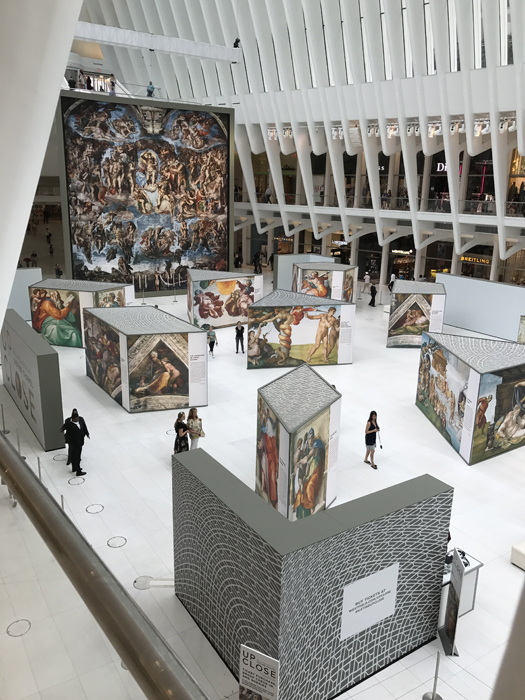
But there was an unexpected surprise. As I came out of the subway to go to the Memorial and Museum, there was a new shopping center, Oculus, that featured a remarkable display of images from the Sistine Chapel at the Vatican in Rome. In nearly life size, enormous photographs of the ceiling and altar wall were on display. I found this to be serendipitous, since my wife and I will be soon be traveling to Rome and we will see the Sistine Chapel with our own eyes. To walk around this installation and see Michaelangelo’s  frescos of the ceiling of the Chapel up close was a delightful surprise.
WTC_Sistine_Chapel

On to the third trip.

Just last week, I was back on the east coast, at Duke Divinity School in Durham, North Carolina, to perform at two programs that focused on theology and music (August 30-September 2).

DITA_poster_2017

These were led by Dr. Jeremy Begbie, professor of theology at Duke Divinity School. Last year, about a dozen musicians took part in the first of these kinds of events, sponsored by Duke Initiatives in Theology and the Arts. After the success of that event, a much large scale offering was planned for this year, with over 30 musicians invited to take part in the events.

A concert at Duke’s Nasher Museum of Art was in conjunction with a new exhibition, The Medici’s Painter: Carlo Dolci and 17th-Century Florence. The exhibition was revelatory, and at the evening’s program that included two fascinating lectures about Dolci and his work, our group of eight brass players performed two Italian Renaissance works while a chamber music group played as part of two lectures and also performed the first movement of Bach’s Brandenburg Concerto 2. If you find yourself in the Durham area soon, I urge you to visit this superb exhibit at the Nasher.

[Carlo Dolci, Virgin and Child, late 1640s. Collection of The Bob Jones University Museum & Gallery, Greenville, South Carolina, installed at The Nasher Museum, Duke University]

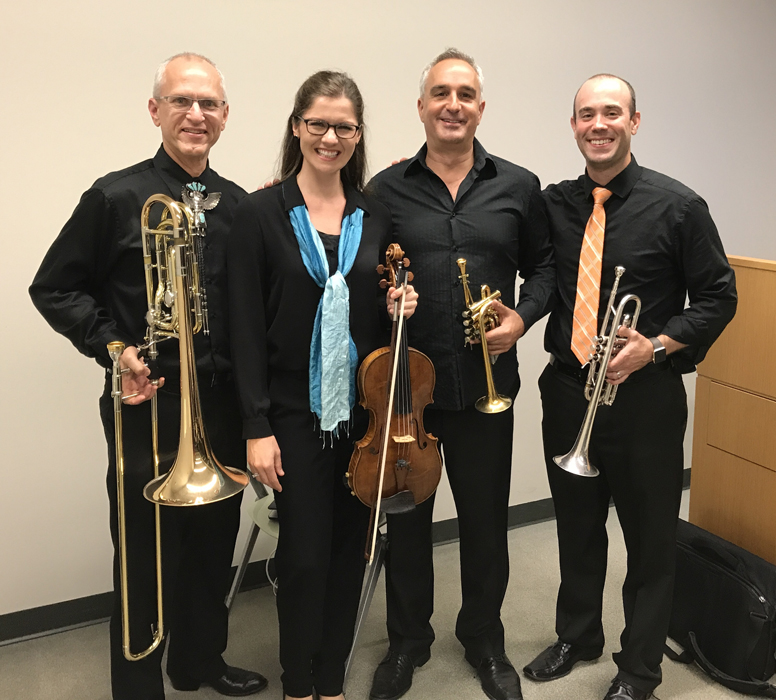
The players at these DITA events are all Christians and come from symphony orchestras and universities from around the United States. Working with these like-minded colleagues was pure joy, and our playing, meals together, and conversations were invigorating. After the program at the Nasher, we took a photo of current and former members of the Baltimore Symphony Orchestra who were participating in the program. Here you can see me (I played bass trombone in the Baltimore Symphony from 1981-1985), Rebekah Edewards (now a violist with the Boston Symphony), and current principal trumpeter Andrew Ballio and second trumpeter, Nate Hepler.
DITA_Baltimore_Sym_players

[Left to right: Douglas Yeo, Rebekah Edewards, Andrew Ballio, Nate Hepler]

As to the trombone section for the events, I was reunited with Megumi Kanda and Jim Kraft, who for many years played trombone in the National Symphony in Washington, D.C. A concert with what was named The New Caritas Orchestra was titled, Home, Away, & Home Again: The Rhythm of the Gospel in Music. Led by Jeremy Begbie – who made insightful and powerful comments throughout the evening and also was a superb piano soloist in works by Rachmaninoff and Shostakovich – the concert was a benefit for The Corner House in Durham, a house where disabled and non-disabled people live together in community. The House is supported by Reality Ministries, and it was truly beautiful to see residents of the house at the concert, and hear some of them speak and others play percussion instruments with us on the final piece on the program. It was a moving, joyful time.

DITA_Doug_Megumi_Jim

[Left to right: Douglas Yeo, Megumi Kanda, Jim Kraft]

At the request of those of us who played the DITA event in 2016, a seminar was given for the orchestra members on Saturday morning, led by Jeremy Begbie (whose book Resounding Truth: Christian Wisdom in the World of Music is one of the finest I’ve ever read about the intersection of music with the Christian faith) and Alan Torrance. I confess that the three hours spent in this seminar were revelatory. Alan’s presentation on God’s covenant relationship with His people – especially his unpacking of Hebrew words and how they, over time, were poorly translated into Latin and then to English, something that has had an important effect on our understanding of God’s covenant-– and Jeremy’s discussion on the Holy Trinity have given me much to think about and meditate on. God was at work at Duke Divinity School last week and I left there refreshed and challenged.

Three trips in just a few weeks (and another, much longer trip in the middle of these trips about which I will write soon), back and forth over our great country, from sea to shining sea. Music, friends, and faith.