Category: Chicago and the Midwest

An Easter reflection

An Easter reflection

Today is Easter. It is a day that remembers an event of monumental importance: the resurrection of Jesus Christ. The story has been told countless times, and Christians around the world celebrated Easter with song, sermons, and the reading of Scripture.

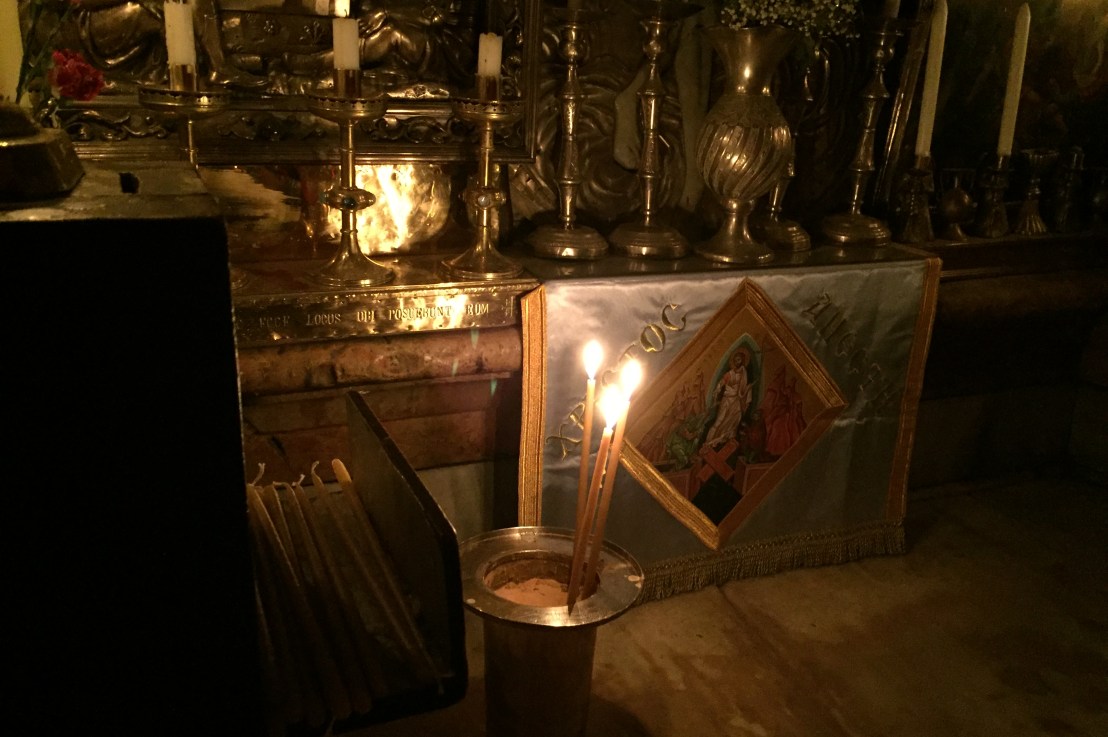
There are four accounts of the death and resurrection of Jesus in the Gospel accounts in the Bible – Matthew, Mark, Luke, and John. Each highlights particular moments in those world-changing days nearly 2000 years ago. In 2016, my wife and I traveled to Israel with a tour group sponsored by our undergraduate alma mater, Wheaton College. The trip was life changing, as we visited many of the traditional sites where pivotal events in the Bible took place. One such site was the Church of the Holy Sepulchre, built over the traditional sites of the crucifixion and burial of Jesus. The photo at the top of this blog entry on The Last Trombone is one I took of the tomb of Jesus in the Church of the Holy Sepulchre. Do we know for sure that he was actually buried there? No, but since at least around 400 AD, Christian pilgrims have venerated this particular place as being the site. I do not engage in debates over whether this or that site is THE site. It enough that I was in the neighborhood.

Artists over the centuries have depicted the resurrection of Jesus as a cataclysmic event, replete with angels and earthquakes, and the moving away of the stone that covered the entrance of the tomb. The Bible tells of this (Matthew 28:1-4):

And behold, there was a great earthquake, for an angel of the Lord descended from heaven and came and rolled back the stone and sat on it. His appearance was like lightning, and his clothing white as snow. And for fear of him the guards trembled and became like dead men.

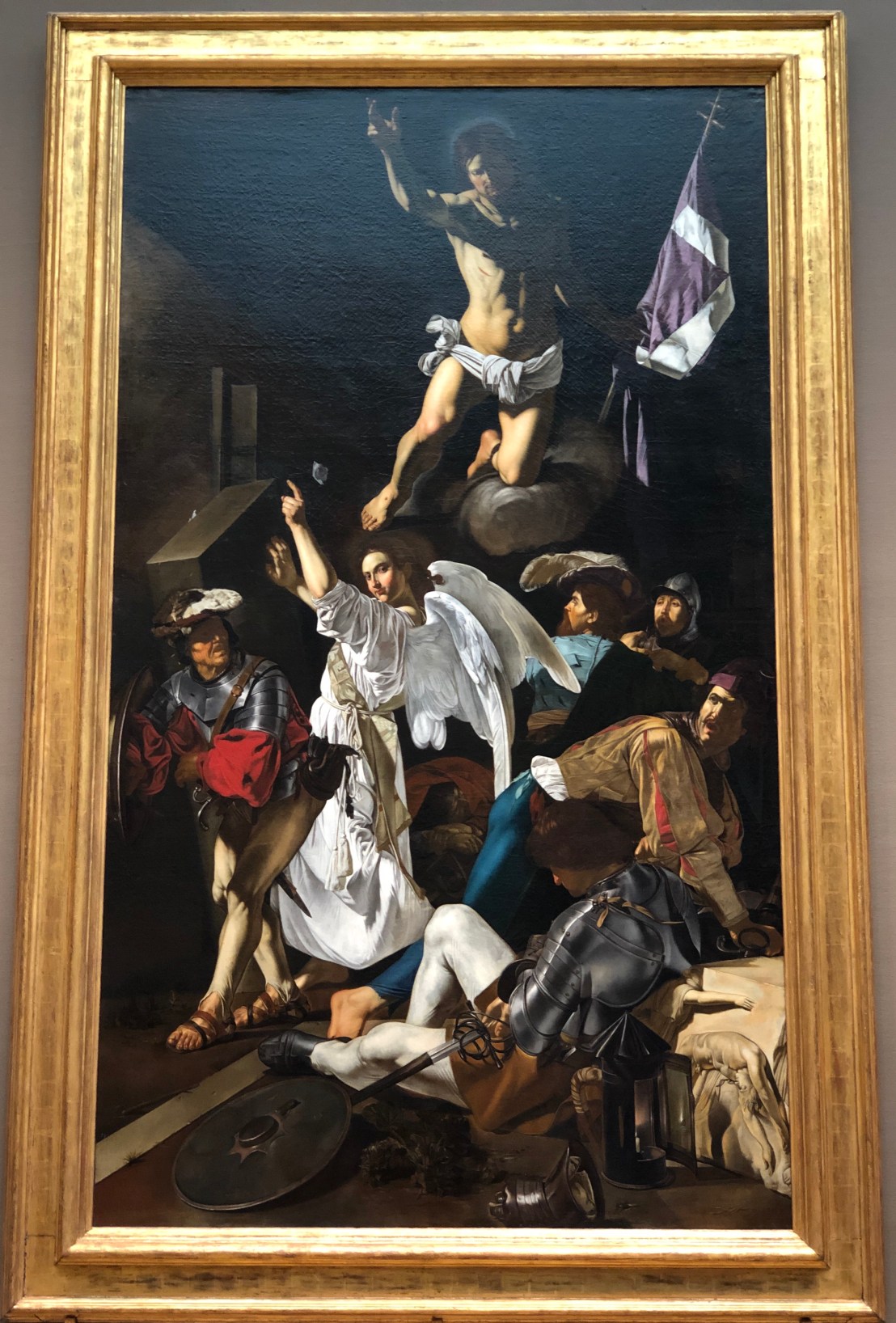
Typical of such artistic representations is the one below that I saw a few days ago at the Art Institute of Chicago.
IMG_2304

The painting is by Cecco del Caravaggio, whose real name was Francesco Buoneri, and it was painted in 1619-1620. Christ appears on top of his tomb, and an angel is dispatching Roman soldiers who were guarding the tomb. Cecco’s use of light and dark is exceptional, and I spent a long time sitting in the museum’s gallery and contemplating the event that it depicts.

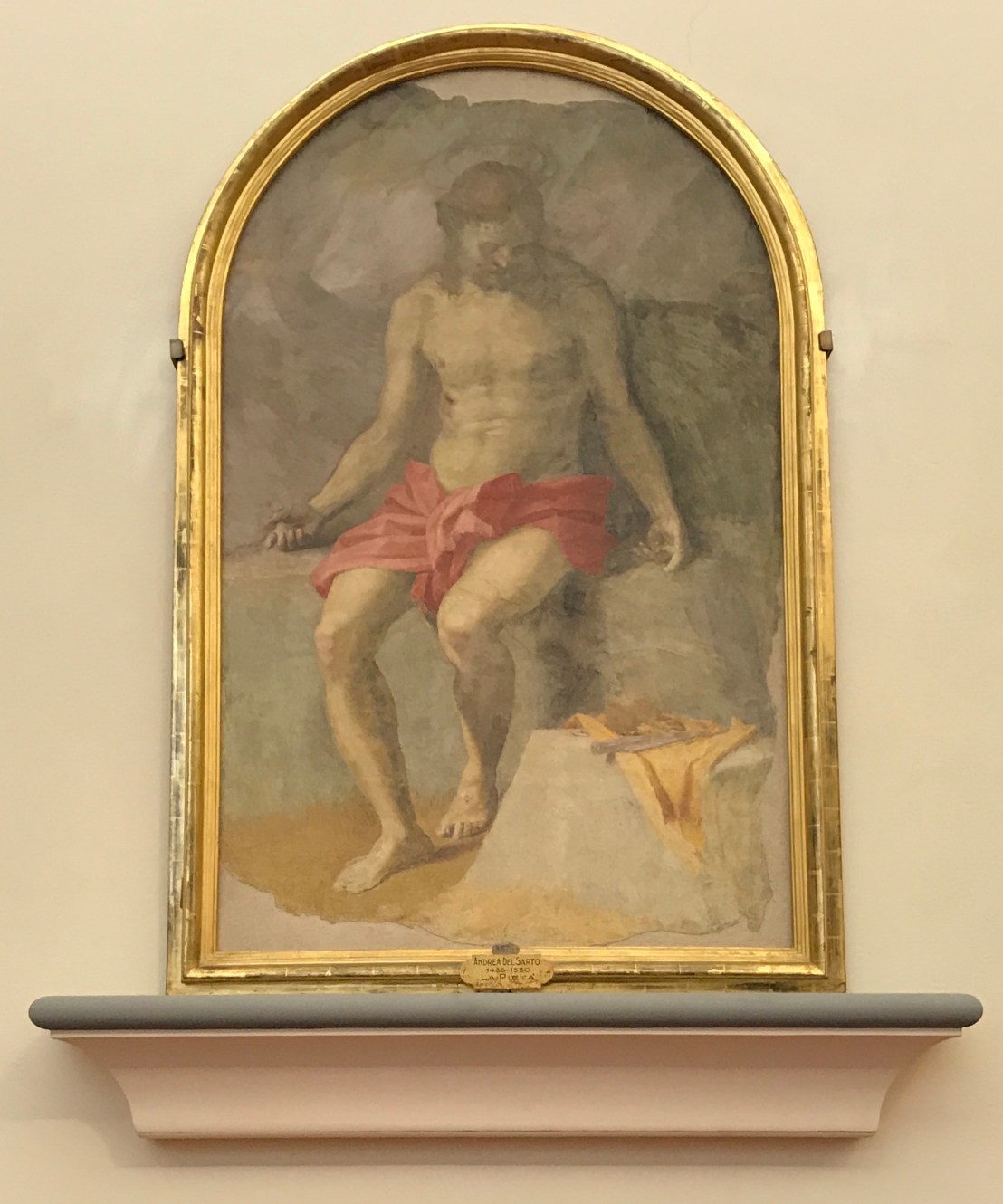
But in 2017, when my wife and I traveled to Italy on another Wheaton College alumni tour — a tour that took us to Florence and Rome — I saw another painting of the resurrection that has stuck in my mind ever since. This painting was in the Galleria dell’ Accademia in Florence, in the same museum that houses Michelangelo’s iconic statue of David. The painting, by Andrea del Sarto, was painted in the early sixteenth century and presents a very different view of the resurrection of Christ.
IMG_2377

Here is a moment before the the earthquake; we see no guards, no angel. It shows Jesus in His tomb at the moment of his resurrection. The wounds from his crucifixion are visible, as are some of his burial cloths. The image is one of quiet contemplation. I am sure I was not alone, when standing before this painting, in asking the question: What was Jesus thinking at this moment?

What I find interesting in all of this is that the Bible is silent about what actually happened inside the tomb at the moment when Christ was raised from the dead. He was dead, buried in the tomb. Then at some point over the next two days, Christ was resurrected, and somehow, in some way, he left the tomb. Two days after his agonizing death on the cross, the tomb was empty. Mary Magdeline was shocked to see the tomb empty when she came to visit it two days after the crucifixion of Jesus, but an angel spoke to her with these earth-shattering words (Matthew 28:6):

He is not here, for he has risen.

I like to meditate on both of these paintings which depict two moments surrounding the resurrection of Jesus. Both speak to the same thing: Jesus was dead, buried, and was raised from the dead. In the days and weeks that followed, He appeared in physical form — not as some kind of ghost or apparition — before hundreds of people. This is documented not only by the Bible, but by other, independent writers. The resurrection of Jesus happened. It was and is true, and it changed the world and the life of every person in it. As the Apostle Paul reminds us (1 Corinthians 15:17-20):

If Christ has not been raised, your faith is futile and you are still in your sins. Then those also who have fallen asleep in Christ have perished. If in Christ we have hope in this life only, we are of all people most to be pitied.

But in fact Christ has been raised from the dead.

C. S. Lewis spoke to this fact in his book, Mere Christianity. I have previously quoted him in my article on The Last Trombone about Christmas, but his words are worth repeating here:

I am trying here to prevent anyone saying the really foolish thing that people often say about [Jesus]: “I’m ready to accept Jesus as a great moral teacher, but I don’t accept his claim to be God.”

That is the one thing we must not say. A man who was merely a man and said the sort of things Jesus said would not be a great moral teacher. He would either be a lunatic — on the level with the man who says he is a poached egg — or else he would be the Devil of Hell. You must make your choice.

Either this man was, and is, the Son of God, or else a madman or something worse. You can shut him up for a fool, you can spit at him and kill him as a demon or you can fall at his feet and call him Lord and God, but let us not come with any patronizing nonsense about his being a great human teacher. He has not left that open to us. He did not intend to.

The death of Jesus Christ. His burial. His resurrection. It happened. And it matters. Happy Easter.
On the move

On the move

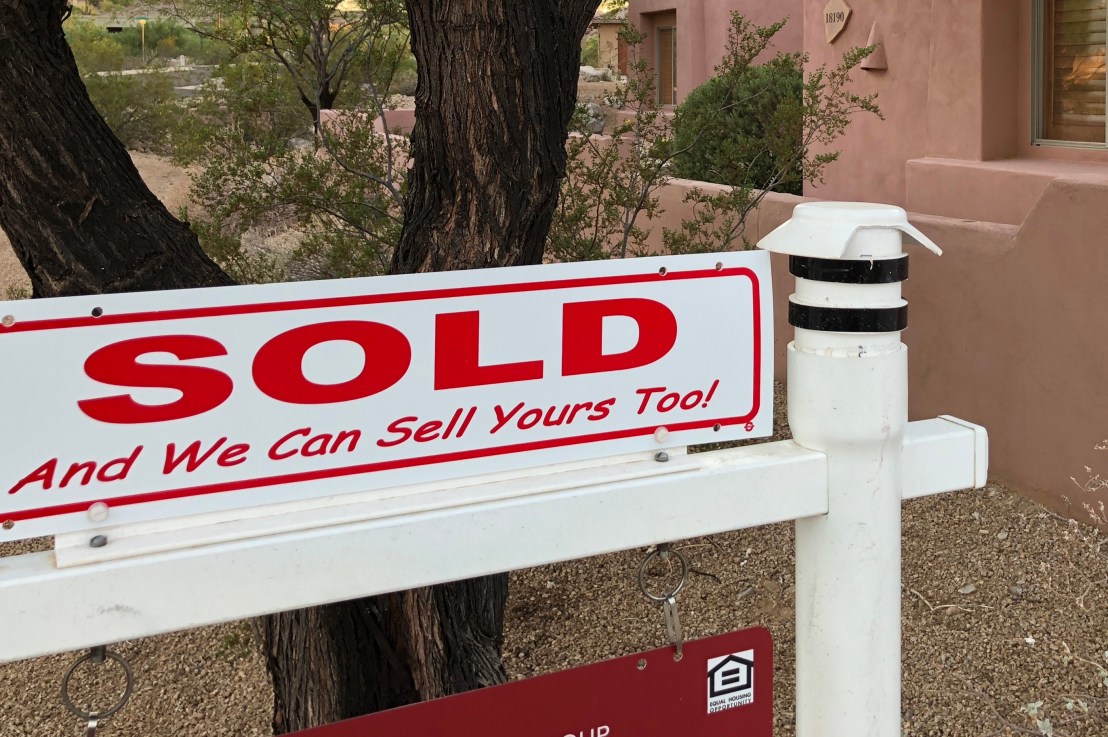
It is a sign I have seen in front of my house only once before, in 2012, when I retired from the Boston Symphony and my wife and I sold our home in Lexington, Massachusetts. The sign tells a much larger story than its single word. But at the fundamental level, a SOLD sign means we are on the move again.

In 2010, we purchased a beautiful home in the Estrella community of Goodyear, Arizona. We knew that someday we would want to live in the southwest and that someday came in May 2012 when we left Massachusetts and moved into our home. We’ve enjoyed six years in this beautiful place. I have had a music room that I could only dream about, a place to play trombone, read, and write.

IMG_9618

But today all of this is going away and we are moving to a new place. United Van Lines pulled up to our home yesterday and our driver, Amerigo, and his assistant, Justin, spent the afternoon taking inventory of our belongings. Today they returned, with three more men, and they are at work right now packing up a huge van with everything we own.

IMG_0782

I have great respect for people and the work they do. Everyone does something. I play the trombone. Others pack up houses. To see Americo and his crew at work is to see people who have strength, knowledge, understanding, and creativity. It is not easy to fit 500 boxes, pieces of furniture, and other items into a rectangular truck. And get everything safely to a new destination. But as I watch them carefully wrap furniture and systematically fit things into the truck, I have to smile. These guys know what they are doing. They are, in their own way, artists.

IMG_0797

In March, we made the big decision to leave Arizona and move to a western suburb of Chicago. Into a much smaller house. Back to winters of cold and snow. I confess that I never imagined we would leave Arizona, a place that we have loved in so many ways. But there was only one thing that could lead us to make this big decision.

Our grandchildren.

IMG_8156

When we made the decision to purchase our home in Arizona in 2010, these two precious ones were not a part of our lives. But all of that changed a few years ago as first Hannah, and then Caleb, were born. As time has marched on, we have enjoyed many visits with them both here in Arizona and in Illinois where our oldest daughter and her family live. But several visits a year and daily FaceTime calls are not enough. Our hearts wanted more. After they visited us in March of this year for a week of Chicago Cubs baseball spring training, I turned to my wife, Pat, and dropped a big one: let’s leave Arizona and move to Illinois. I never imagined those words would come from my mouth. But it seemed that God was prompting us to do something radical, something completely unexpected but at the same time quite wonderful. At first I thought that we would consider moving near to our grandchildren at some undefined time in the future. That rapidly changed to considering doing “the snowbird thing” – living in Arizona in the winter and in Illinois in the summer. But when we ran the numbers, it just didn’t make good, prudent fiscal sense. And we concluded that if we were in Illinois for half the year, we’d miss so many things that happened there in the other half of the year. So in a short time – just a few weeks – we decided to purchase a home in Illinois just 10 minutes from Linda and her family. Since then we have done an extreme makeover of our new place and it will be ready for us when we arrive there in a few days.

So, here we go. Back to Illinois, near Wheaton, where Pat and I were undergraduates at Wheaton College in the early 1970s. Back to the land where I met my trombone teacher and mentor, Edward Kleinhammer (bass trombonist of the Chicago Symphony, 1940-1985). Most of all, we are heading to a place where we can be a bigger part of the lives of our precious grandchildren. Anyone who has grandchildren will surely appreciate what I am saying here.

Yes, I will miss Arizona. But we will be back. We have much more left to explore in the southwest. But no matter how much we love being here, we know that the old adage “family first” is true. We have no regrets about leaving; we are moving ahead, looking to the future with great anticipation.

IMG_0791

This morning I watched the sun rise for the last time from the roof of our home. As it rose over the Estrella Mountains, I felt such gratitude to God for the opportunity to have lived here for the last six years. I have learned so much, and I will share some of that in future articles on The Last Trombone. By the end of the day today, our home in Arizona will be empty. Next Friday, Amerigo and his truck will pull up to our new home in Illinois and a few hours later, it will be full. Soon, the sound of the laughter of children will ring in its rooms. There are no words in the English language that mean more to me than, “I love you, grandpa. I love you, grandma.” That is why we are leaving Arizona. God is good.

Keith Brown (1933-2018)

Keith Brown (1933-2018)

My trombone teacher during my freshman year of college at Indiana University (1973-74), Keith Brown, died today after a long battle with Parkinson’s Disease.

Keith Brown’s name is certainly known to thousands upon thousands of trombone students and professionals. If one did know that he had been a member of the Indianapolis Symphony (1957-58), the New York Brass Quintet (1958-1959), the Symphony of the Air (1958-1959), the Philadelphia Orchestra (1959-1962), the Metropolitan Opera Orchestra (1962-1965), the Aspen Festival (1957-1969) the Casals Festival Orchestra in Puerto Rico (1958-1980), Professor of Music at Temple University (1965-1971), and Professor of Trombone and conductor of orchestras at Indiana University (1971-1997), one certainly knew him from his dozens of publications for International Music Company, including ten volumes of orchestral excerpts. “The Brown Books” were known to players by the color of their covers. “See you at 7 o’clock for excerpts; bring the red, yellow and blue Brown books” was often heard coming from the lips of college trombone players. Everybody had them.

IMG_9428

His editions of the Kreutzer Violin Etudes, and the K. Stephanovsky Bass Trombone Etudes are on my music stand every day. Every day.

IMG_9429

Those I bought in my first weeks of studying with him along with Richard Fote’s edition of selected studies by G. Kopprasch; the photo below shows the first page of my Kopprasch book. His students will recognize his handwriting at the top of the etude with the date he first assigned it to me: 9/26/[1973], the first semester of my freshman year.

IMG_9430

I met Keith Brown in Boston in January 1973. I was a senior in high school, and by virtue of my being first chair trombone in New Jersey All State Orchestra in 1972, had been selected to be a member of the All Eastern Orchestra in 1973. The orchestra – made up of students from the states of Maryland northward through New England – met in Boston and Keith Brown was the conductor. My trombone section included Doug Elliott, the renowned mouthpiece maker, and trumpeter Dennis Alves, who is now Director of Artistic Planning for the Boston Pops; I played bass trombone. It was actually the first time I had ever played bass trombone, and the program consisted of Leonard Bernstein’s “Overture to Candide,” Dvorak Symphony No. 8 and Brahms Symphony No. 3. Mr. Brown spoke to me several times during that week and he encouraged me to apply to Indiana University and come to study with him. So I did.

Screen Shot 2018-05-10 at 6.53.32 AM

I learned a lot from Keith Brown. A lot. It was with him that I really started working seriously on the bass trombone. During my first semester, I played in Orchestra 4 at IU, in a section along with William McElheney who became a very close friend; he later went on to be a trombonist with the Vienna State Opera (Vienna Philharmonic) for many years. It was with that orchestra I first played Tchaikovsky’s Symphony 5. With Keith Brown conducting.

IMG_9426

By my second semester, I was playing in IU’s top orchestra, the Philharmonic, where I played Alban Berg’s opera, “Wozzeck.” As a freshman. It was a heady time for me, plowing through repertoire with Mr. Brown, developing my low register, learning orchestral repertoire. His students formed a trombone choir that played at his church on Easter Sunday 1974, followed by a dinner at his home. We called him “Coach,” and we referred to him among ourselves as “K.B.” Long before NIKE had adopted the slogan in 1988, Keith would tell me, in lessons, “Doug, just do it.” He even gave me a button with that slogan.

IMG_9435

He was kind, generous, and helpful (even if he did sometimes have a cigar in his hand during a lesson!). This photo below shows Keith Brown and me at my last lesson at IU, May 3, 1974. Earlier that year, I had decided to transfer to Wheaton College in Illinois. Not because I was unhappy at IU, but because there was this girl going to Wheaton in the fall. My high school sweetheart, Patricia, and this August we will celebrate our 43rd wedding anniversary. Wheaton also brought with it the opportunity to study with Edward Kleinhammer, bass trombonist of the Chicago Symphony. But that is a story for another time.

img156

Over the years, I kept in touch with Mr. Brown. He was always happy to hear my voice on the phone, and when he started a sentence with, “Well, very honestly, Doug. . .” I knew I needed to pay attention. I went to IU in 2010 to give a masterclass and spent an afternoon with Keith at his home. We had a great time remembering old times, and he was so proud of my long career as a member of the Boston Symphony (1985-2012).

yeo_brown

In 2010, the Boston Symphony trombone section consisted of Toby Oft (principal), Steve Lange (second) and myself (bass). As it turned out, all three of us studied with Keith Brown at Indiana University, at least for a time. So in 2011, Toby, Steve, and I got the idea to invite Keith and his wife, Maggie, to the Boston Symphony’s summer home, Tanglewood, to hear three of his former students play together in one of the world’s great orchestras. The program: Tchaikovsky Symphony 6. Seeing Keith in the audience, front and center, grinning from ear to ear, standing and cheering for Toby, Steve, and me, is something I will never forget.

After the concert, everyone came with their families over to our home for a cookout. It was a wonderful time of conversation, remembering our lessons with Keith, talking about the orchestra business. It was a beautiful day. Memorable. It was the last time that I saw him.

Steve_Toby_Keith_Doug_01

[Photo above: Steve Lange, Toby Oft, Keith Brown, Douglas Yeo – July 11, 2011]

Keith and I would talk on the phone from time to time in the years that followed. But Parkinson’s Disease began to ravage his body and he little by little slipped away. Today, he breathed his last. I’m glad he was a part of my life, as he was a part of so many lives. Part of me is who I am today because of Keith Brown.

[Header photo of Keith Brown from his LP recording, Keith Brown: Trombone, Golden Crest Recital Series RE 7043, recorded c. 1972]

Two upcoming concerts in the Midwest: playing serpent, and a bass trombone solo with orchestras in Illinois and Iowa

Two upcoming concerts in the Midwest: playing serpent, and a bass trombone solo with orchestras in Illinois and Iowa

Over the next two weekends, I will find myself in the Midwest, playing concerts with two symphony orchestras. If you happen to live near Chicago or Sioux Center, Iowa, I invite you to come to these performances.

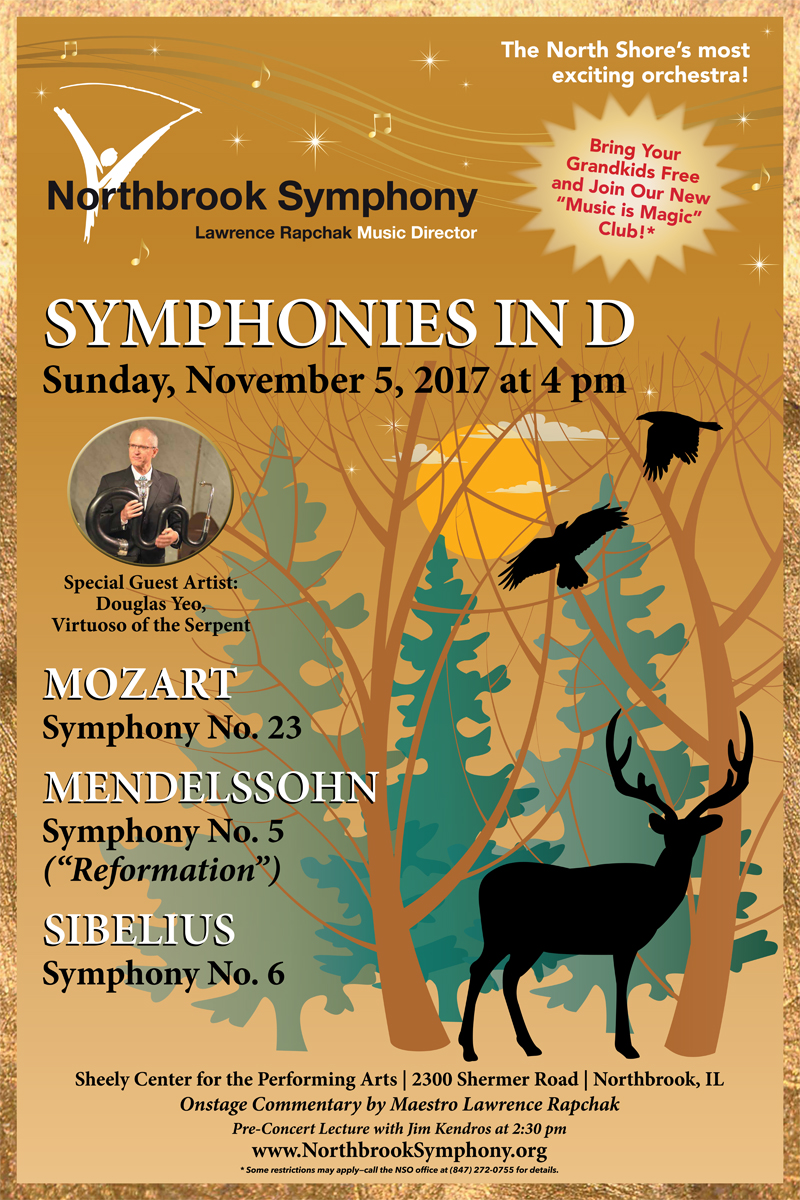
On Sunday, November 5, I will be playing serpent in the Northbrook Symphony in Illinois, in a performance of Felix Mendelssohn’s “Reformation” Symphony. With today being the 500th anniversary of the Protestant Reformation, the inclusion of Mendelssohn’s Symphony on this program – a piece that uses Martin Luther’s composition, A Mighty Fortress Is Our God, in its finale – is certainly timely. Mendelssohn used the serpent in a number of his works and it is always a pleasure to enter into the woodwind section of an orchestra where I will be sitting next to the contrabassoonist. Mendelssohn understood the unique blending qualities of the serpent and contrabassoon, something that is explained in an article about serpent and contrabassoon acoustics by Dr. Murray Campbell (click this link to read the article).

What makes this concert particularly nice for me is that my oldest daughter, Linda Leonard, is the bass trombonist of the Northbrook Symphony. To share the stage with her, and to play the serpent in Mendelssohn’s great piece, combine to make this concert very special. Visit the Northbrook Symphony website for ticket information.

Northbrook_Symphony_serpent_Mendelssohn_poster_2017_small

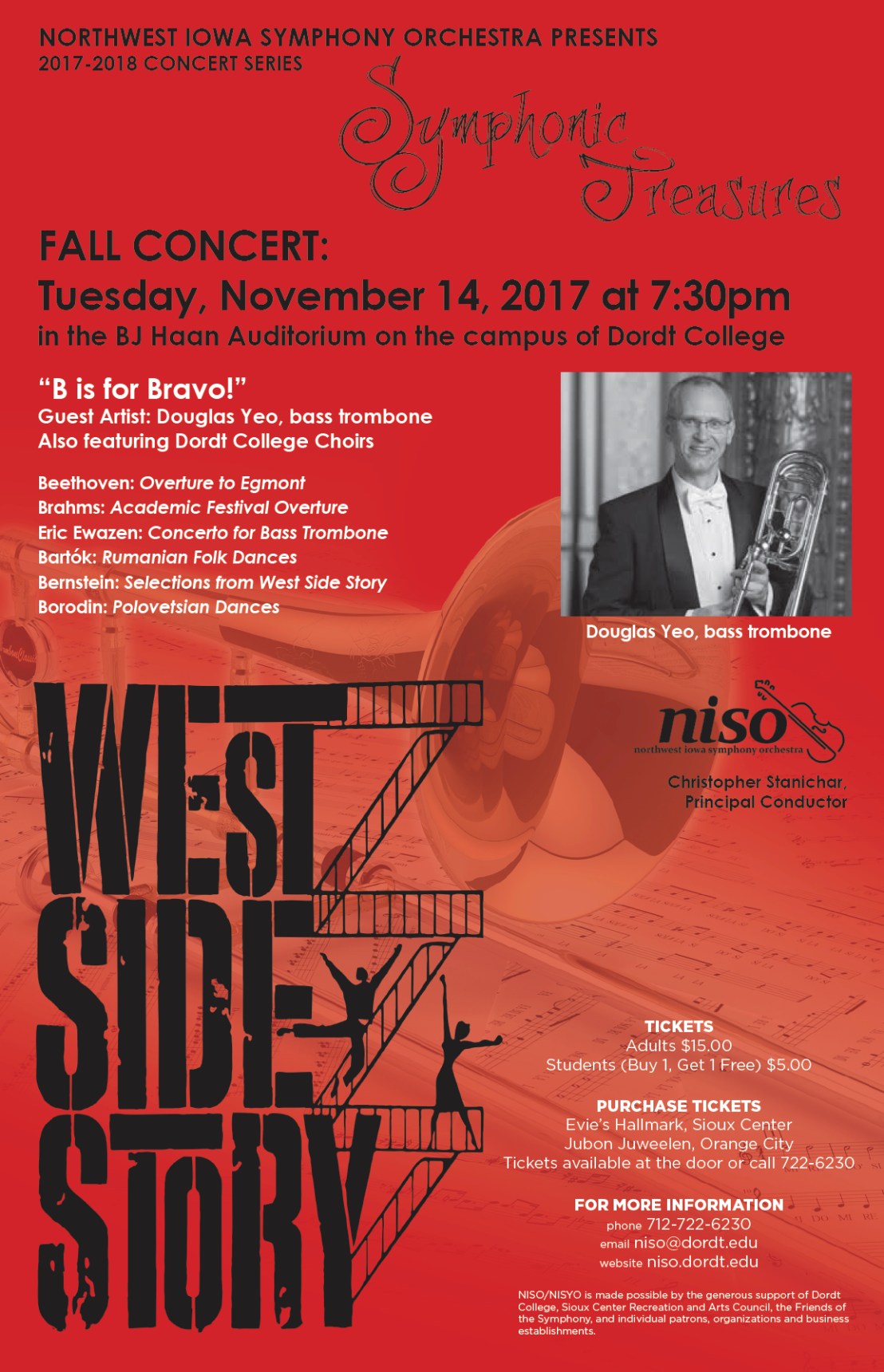
Then, on Tuesday, November 14, I will be soloist with the Northwest Iowa Symphony Orchestra in Eric Ewazen’s Concerto for Bass Trombone. In fact, I will be playing the Concerto twice on that day, first at a NISO Youth Concert and then at their evening concert. I have enjoyed playing Eric’s Concerto on many occasions, both with piano and with symphony orchestra accompaniment. It is a piece that, to me, speaks deeply to the optimistic, American spirit, something about which I wrote about recently on The Last Trombone. Visit the Northwest Iowa Symphony Orchestra website for ticket information and details about both concerts.

Dordt_Fall-Concert-poster-2017-web-copy