Year: 2016

Thanks be to God, he laveth the thirsty land

Thanks be to God, he laveth the thirsty land

It rained today.

Now, where you live, that might not seem like such a big deal. In fact, when I lived in Boston, when it rained, it usually meant that plans were spoiled and something had to be postponed. But where I live now, in the Sonoran Desert of Arizona, rain is a VERY big deal. We only get about nine inches of rain a year. Most of it comes in the summer which still leaves us with over 300 days of sunshine to do fun things outside. But since moving to Arizona, I’ve gained a new appreciation for rain.

This afternoon we heard thunder and watched as dark clouds moved in. We could hear neighbors opening their doors. Rain was coming. And when it did, my wife and I hugged and smiled. We haven’t had rain in weeks. While it’s great to have sunshine, we know how valuable rain is to life, to the land, to everything that is on earth. When the skies opened up and gave us a long deluge, we stood on our back patio (photo above) and thanked God for the rain. It was a beautiful thing, coming down from the sky, bringing new color to all of the green around us, the ground gratefully soaking it up.

It reminded me of our recent trip to Israel, were we found ourselves on the top of Mount Carmel, where the prophet Elijah dramatically confronted the priests of Baal, a false god. The story is told in the Bible, in the book of 1 Kings, Chapter 18. Take a minute and read this dramatic story. It is about drought, and the need for rain, and how God revealed himself to be true and Baal to be false. Most of all, it was a moment when God called His people to faithfulness, back to Himself.
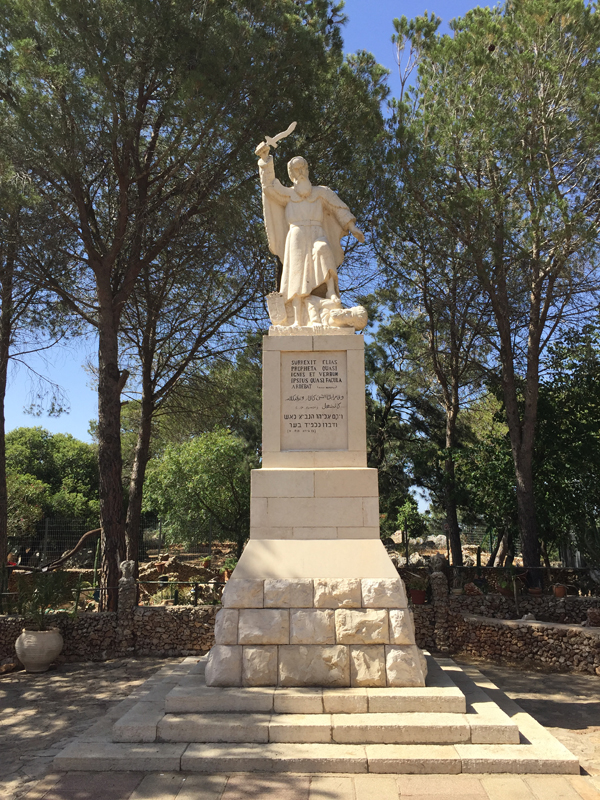
Elijah_01

On the top of Mt. Carmel (see  above, the statue of Elijah in front of the Carmelite Monastery on top of Mt. Carmel), as I looked out to the plain where the Prophets of Baal met their end after their god has been proven to be false, I turned to the west, toward the Mediterranean Sea. There I was reminded of how God provided rain. In the words of the Bible set to music to tremendous effect in Mendelssohn’s great oratorio, Elijah, a little boy looks to the west and says,

Behold, a little cloud ariseth now from the waters: it is like a man’s hand! The heavens are black with clouds and wind; the storm rusheth louder and louder!

To which the chorus replies, with great rejoicing, words from Psalm 93:3-4:

Thanks be to God, He laveth the thirsty land. The waters gather, they rush along! They are lifting their voices! The stormy billows are high; their fury is mighty. But the Lord is above them, and Almighty.

And so he does. As he did today here in the Sonoran Desert. Water for the thirsty land. Thanks be to God.

Motivation

Yesterday, I was at a  New Balance factory outlet buying some new sneakers. I’ve always liked New Balance shoes. They fit. Their shoes are made in the USA. When we lived in Boston, we often passed by their corporate headquarters that was near the headquarters for the flagship public radio and television stations, WGBH. So when I needed some new sneakers, it was off to the New Balance factory outlet near our home.

Nice people work there. Attentive, knowledgable. And I walked out of the store with two pairs of sneakers. While browsing around, I noticed a display of t-shirts with slogans on them. Here are two of them:

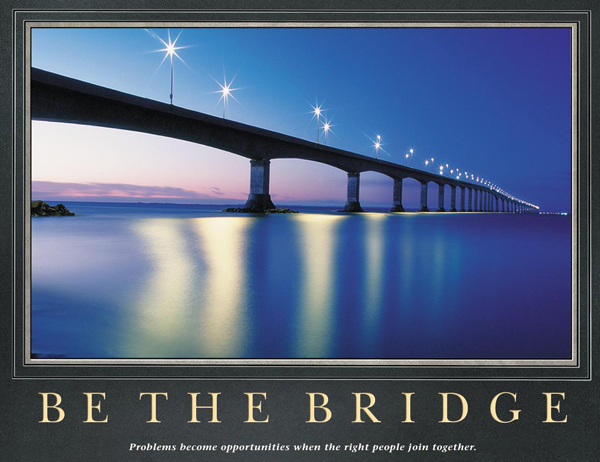
Motivational slogans. You see these all the time. They are very big in the corporate world. How many times have you been in an office and seen one of these posters:

Be_the_bridge

Motivational posters by Successories.com

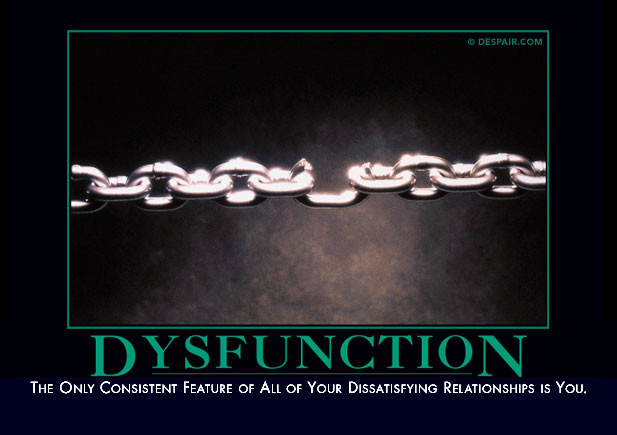
They have also provoked a backlash, the cynical DE-motivational poster:

dysfunctiondemotivator

Demotivational posters by Despair.com

One of the big threads of conversation in the teaching world is how to motivate students. Anyone who has been a teacher of any subject knows that a classroom is full of students who have different goals, different energy and skill levels, and who approach tasks differently. Teachers try many things to help students want to learn. Countless books have been written on the subject.

For over 20 years of my career in the Boston Symphony Orchestra, I sat next to Norman Bolter. Norman played second trombone in the BSO and principal trombone in the Boston Pops Orchestra. We are nearly the same age – he’s my big brother by four months – and we were and remain good friends even since we have both retired from the orchestra. We both taught together at New England Conservatory of Music and we spent a lot of time talking about teaching, our students and trombone pedagogy. One day, we were talking about some of our students who just didn’t seem to be making progress. I commented that one of my students was very talented but he seemed lazy and wasn’t working to his potential. To which Norman said:

“Doug, I can give my students a lot of things. But I can’t give them desire.”

BINGO. I cannot motivate my students. I cannot make them want to work hard, want to be curious, want to explore, want to go the extra mile, want to understand what is needed to succeed, want to be great at what they do. Those things need to come from the inside, not the outside. But I CAN lead by example, be honest, share all I know, offer strategies for improvement. These are two different things. If a student doesn’t have the desire, the motivation to work, then someone else can’t give it to them. A pretty poster won’t give it to them either.

Norman was – and is – right. You can’t give someone else desire. The fuel to get better, the fuel to become great at something, the fuel to make a difference has to come from within. For me, that fuel has fed and feeds my engine in two ways:

  1. When I was a student at Wheaton College, the great trumpet player Maurice André gave a concert on campus with a small chamber orchestra. My teacher, Edward Kleinhammer, also came to the concert and the next day I had a lesson with him. I burst into his studio in the Fine Arts Building in Chicago and began babbling away, “Wow, wasn’t Andre amazing?! I’ve never heard anything like that!”Blah, blah, blah.  After my superlatives were spent, Mr. Kleinhammer looked at me and said, quietly, “André. Yes, he was really good. But, look. Did you see that bass player? He made a concerto out of every note.” I missed it. I was focused on one thing – the great trumpet soloist. But I missed the bass player who was doing his job excellently in support of the great soloist. I learned at that moment that I needed to pay attention. Pay attention to things – even and especially little things – so I did not miss something that I could take and make my own. Paying attention gave me fuel for my engine as I internalized my observations of others who were demonstrating excellence in their field, whether music, art, business, or even the act of being a knowledgeable shoe salesman.
  1. I am very aware that my talents and abilities are a gift from God; I cannot take credit for them. As a result, I have a responsibility to be a good steward of those gifts, to use them well and wisely. So my desire to improve on the trombone, or write an article that gives people something to think about, or share what I have been given with others, comes from my understanding that everything I have is a gift from God and I have a responsibility to use it wisely. The Parable of the Talents  is fuel for my engine, a daily reminder of how I return to God the investment I make with that which he has given to me.

The New Balance t-shirt slogans are cute. I smiled when I saw them. But I wasn’t fooled. They didn’t make me want to go home and practice. Something else fueled that within me. Something much bigger.

Trust in times of uncertainty

Trust in times of uncertainty

There is lot happening around the world and you can’t go very far without seeing something that causes you to scratch your head and wonder where things are going. Brexit, terrorism, illegal immigration, the global economy and stock market, wealth and poverty, ethnic conflicts and much more. Don’t worry. I don’t plan to use this blog to talk about politics.

But people often turn to politics and politicians to solve problems, and put trust in them to make things better. It’s easy to think that your political view can fix things if only everyone would get on board and listen. But time and time again, throughout all of history, men and women have only been able to accomplish so much. Political systems come and go; civilizations rise and fall. This is easy to forget. Our recent trip to Israel was full of vivid reminders that the great Roman Empire lasted only 400 years. Put this in context: the “American experiment” is 240 years old. One of my favorite painters from the Hudson River School, Thomas Cole, depicted this in his group of five epic paintings, The Course of Empire. One is shown above, Consummation of Empire, but the full group tells quite a story. Have a look at Cole’s sequence of the rise and fall of a civilization here:

Thomas Cole: The Course of Empire

These days, with so much going on in the world, I come each day to a reminder of the perspective that I need to hold in order to understand and contextualize both the confusion and order that is found all around. It’s found in the Bible, in Psalm 20:7 (English Standard Version):

Some trust in chariots and some in horses, but we trust in the name of the LORD our God.

Here is the center to which I hold. Whether it is chariots or horses, armies or material things, whether political parties or knowledge and intellect, there is nothing in the world that in and of itself can ultimately fix anything. The Sovereignty of God – one of the core theological doctrines of my Reformed Christian faith that teaches that all things are under God’s watchful rule, order and control – gives me great comfort. While my Christian faith calls me to help others and work to make things better, I know that ultimately all of history is heading toward the end of time when there will be a new heaven and a new earth, one that is not polluted by the fallen, sinful, selfish nature of mankind. Neither I nor any man-made system of government or thought can ultimately fix things now; at best we can improve and help a little while time marches to its inevitable close and rebirth. And for those who share this faith, the Bible calls us to a standard of conduct and living to which we aspire:

Let love be genuine. Abhor what is evil; hold fast to what is good. Love one another with brotherly affection. Outdo one another in showing honor. Do not be slothful in zeal; be fervent in spirit, serve the Lord. Rejoice in hope, be patient in tribulation, be constant in prayer. Contribute to the needs of the saints and seek to show hospitality.

Bless those who persecute you; bless and do not curse them. Rejoice with those who rejoice, weep with those who weep. Live in harmony with one another. Do not be haughty, but associate with the lowly. Never be wise in your own sight. Repay no one evil for evil, but give thought to do what is honorable in the sight of all. If possible, so far as it depends on you, live peaceably with all. (Romans 12:9-18, English Standard Version)

So, I work each day to try live these words – however imperfectly because I am a very imperfect person – in my interactions with people with whom I come in contact. But I have learned not to put my ultimate trust in anything but God. This is a great comfort and the reason I can sleep well at night in the midst of a chaotic and disordered world. Yes, we work to improve things as we can, helping “the least of these” (Matthew 25:40). And I always vote in elections, even if doing so means holding my nose and voting for the best among what I believe to be several poor options. But I dare not trust that anything – horses, chariots, armies, the Fed or World bank, or any political party – can ultimately solve the problems of the world. The great truth and comfort is that it is our LORD our God who alone is worthy of our trust. Because He is Sovereign.

Writing a book – 1

Writing a book – 1

I’ve always loved to read and write. My father was President of the local public library when I was a young boy and books were my best friends. I read everything, but especially history. They say that music and math go together but not for me. My body rejected math and science and nobody was surprised that when I graduated from high school, I received the senior class music and English awards. Over the years I’ve written dozens of articles and book chapters, and I never tire of reading, researching and writing. It’s my nature, my innate curiosity to want to know more about things.

Before I decided to retire and enter this season of life, I sat down and made a list of projects I would like to do while I’m still on this side of the grass. It’s three pages long, single-spaced, and includes my desire – no, my intention – to write five books, three music arrangements, twelve articles, a museum catalog and several book chapters. And that’s just the writing projects on page one. One day at a time, and my work on some of these projects will be the subject of future blog posts. At the moment I am at work on three books simultaneously, having signed contracts to write books for Encore Music Publishers, University of Illinois Press and Oxford University Press. The deadlines for me to submit those manuscripts come over the next several years.

This past January, at our first Trombone Studio Class of the semester at Arizona State University, I took the time to give a master class on the subject of time management. Over the years, I realized that this is a big problem for a lot of people. Over the years I have developed strategies for juggling competing demands and one of them is this: when you have a deadline, don’t look at the due date and think that you have a lot of time to get the job done. Start working on it the day you receive the assignment and make a plan of how you will get it done. Too many people wait until the last minute to do any task and the result is not only a lot of stress in the process, but shoddy work that is far from ones’ best. This simple strategy does require discipline but in my experience it is proven to reap great rewards.

So these days, when my wife and I are not going out to do something together, I have taken my lead from great composers like John Williams and Igor Stravinsky, who are/were disciplined enough to get something done every day. They would compose each morning for several hours, have lunch, take a walk or a nap, then compose in the afternoon for several hours. Every day. Whether they wanted to or not. Sometimes they would look at what they did and throw it away. Sometimes they would write only a few measures in a day. But sometimes their disciplined time bore rich fruit. The process of writing every day for a dedicated amount of time allows/allowed them to be tremendously productive. I have used this strategy in the past and now, with much more time at my disposal, I am employing it every day. And it is a rich time of research and writing.

But no one should be fooled; this is real work! Yesterday, I spent four hours on the hunt for a small piece of information that will amount to no more than a few sentences in one of my books. I was doing some genealogical work, tracing a family tree in hopes of finding the relationship between two people who had the same last name. Two Civil War veterans who were in the same regiment. One was a corporal, one was a bugler. Were they related? If so, how? It seemed like a needle in a haystack, but after a day’s work, I had my answer: they were first cousins. And I had an interesting fact that will enhance my discussion of this family. But it took time.

More on all of this in future posts. For now, at the top of this post is a fragment of a letter, written to me on February 14, 1994 by my teacher, mentor, and friend, Edward Kleinhammer (1919-2013), who played bass trombone in the Chicago Symphony from 1940-1985. He was a remarkable person, player and teacher, and his deeply-held, vibrant Christian faith informed everything he did. I saved the hundreds of letters he wrote to me over the years and they are a wealth of wisdom. [And, yes, one of the books I plan to write is about Edward Kleinhammer.]

His words speak for themselves. This was a man who knew the word discipline, the value and importance of the disciplined life, who understood the need to manage time, to get done what was important, to sacrifice present pleasures for future rewards. He was not allergic to hard work. Take some time to digest his words. “Laziness was not in the dictionary.”