Category: Uncategorized

The music goes on.

The music goes on.

There are no concerts today at Carnegie Hall, or Symphony Hall, Boston, or in Edman Memorial Chapel on the campus of Wheaton College (IL) where I teach trombone. The Star Spangled Banner won’t be sung tonight before any sporting events. The world of live, public performances of music is shuttered now—all around the world. To even write these words seems incomprehensible. Yet, for the good of humankind, we are taking extraordinary measures to help prevent the spread of COVID-19. Even as we do what we can, we pray that God will deliver us from this pandemic and also give us the eyes to see and the ears to hear what it is that we should learn from this challenging experience.

It is an adjustment, for sure, to not be able to listen to live music and to make it together in community. In addition to the loss of the performances themselves, we ache for the musicians who were to have played them. Most of those players are not getting paid now. Many of our country’s top symphony and opera orchestras have been telling their players that their salaries will be reduced or cut completely in the coming days, although many employers say they will continue to pay for their players’ health insurance benefits. Freelance musicians are adrift, with neither salaries or health insurance. Tomorrow is April 1; rents and mortgages are due and without any income, many people are facing an existential threat. These are real challenges that are felt by all of us in the trickle-down connectedness of our world.

My own trombone playing is now being done solo, by myself. Many engagements that I had planned for these weeks—a solo appearance at a brass band festival in Seattle, a masterclass at Interlochen Arts Academy, concerts in Helsinki and Japan with the Finnish National Radio Orchestra—have been cancelled and I expect more planned engagements will be cancelled as well.

Yet music is still important to us, and there are still ways to hear it. While watching performances in front of a computer or smartphone screen can’t take the place of live music, with a set of headphones, earbuds, or AirPods, or connecting those devices to a larger stereo system or television or other remote speakers, we can enjoy performances from the past on demand. Many orchestras and popular music groups are offering superb videos of recitals and performances. A a quick look throughYouTube brings countless offerings.

I think one of the most interesting classical music offerings is that by the San Francisco Symphony. Click HERE to go to the orchestra’s YouTube channel and their fantastic series of documentaries and performances by several composers, Keeping Score. The programs are superbly produced, the Symphony sounds fantastic, and Michael Tilson Thomas’ commentary is informative and engaging. Have a look!

I’ve put together a few videos of my own performances that have enjoyed some popularity on YouTube. Below, you’ll find performances I gave while I was professor of trombone at Arizona State University (2012-2016), several from my time with the Boston Symphony and Boston Pops (1986-2012), a video I made in the YAMAHA factory in Japan about how trombones are made, and a few other surprises. We pray for the day when we can all go to enjoy music while sitting chairs in concert halls, jazz clubs, and sports arenas. Until then, we can be grateful we live in such a time as this when we have at our fingertips so many enjoyable and inspiring performances to help us get through each day. For each of the videos below, you can view them right here on The Last Trombone or click on the YouTube link that’s provided..

The Star Spangled Banner, arranged by Robert Elkjer. Arizona State University Desert Bones Trombone Choir, Douglas Yeo, conductor at Chase Field, Phoenix, August 31, 2014. I have played the national anthem at more sporting events than I can count, including Super Bowl XXXVI in 2002 as a member of the Boston Pops Orchestra. When I came to Arizona State University, I wanted to share that great experience of playing the national anthem at a sporting event with my students. We played at Arizona Diamondbacks baseball games several times, as well as at several ASU games. This performance was from the first of our appearances at Chase Field; the video was made and supplied to us by the Diamondbacks. Click HERE to view this on YouTube.


Making trombones. A tour of the YAMAHA Toyooka factory in Japan with Douglas Yeo, 2004. I have been playing YAMAHA trombones since 1986, and in 2004, I was asked to make a video of a tour of the YAMAHA factory where many of their trombones are made. It’s a fascinating process—as you can see. Click HERE to view this on YouTube.


Prayer from Jewish Life, No. 1, by Ernest Bloch, arr. Gordon Cherry. Douglas Yeo, bass trombone; Aimee Fincher, piano, 2014. This performance was recorded on my 2014 faculty recital at Arizona State University. Bloch’s Prayer was originally written for cello and was beautifully arranged by my friend, Gordon Cherry, former principal trombonist of the Vancouver Symphony and owner of the music publishing company, Cherry Classics. Click HERE to view this on YouTube.


Heart, We Will Forget Him from Three Emily Dickinson Songs by Michael Hennagin. Douglas Yeo and Randall Hawes, bass trombone; Aimee Fincher, piano, 2015. In 2015, I invited my friend, Randy Hawes (bass trombonist of the Detroit Symphony) to give a masterclass at Arizona State University. At the beginning of the class, we played this beautiful duet by Michael Hennagin. This was recorded in the large rehearsal room where we had our weekly ASU trombone studio class. Click HERE to view this on YouTube.


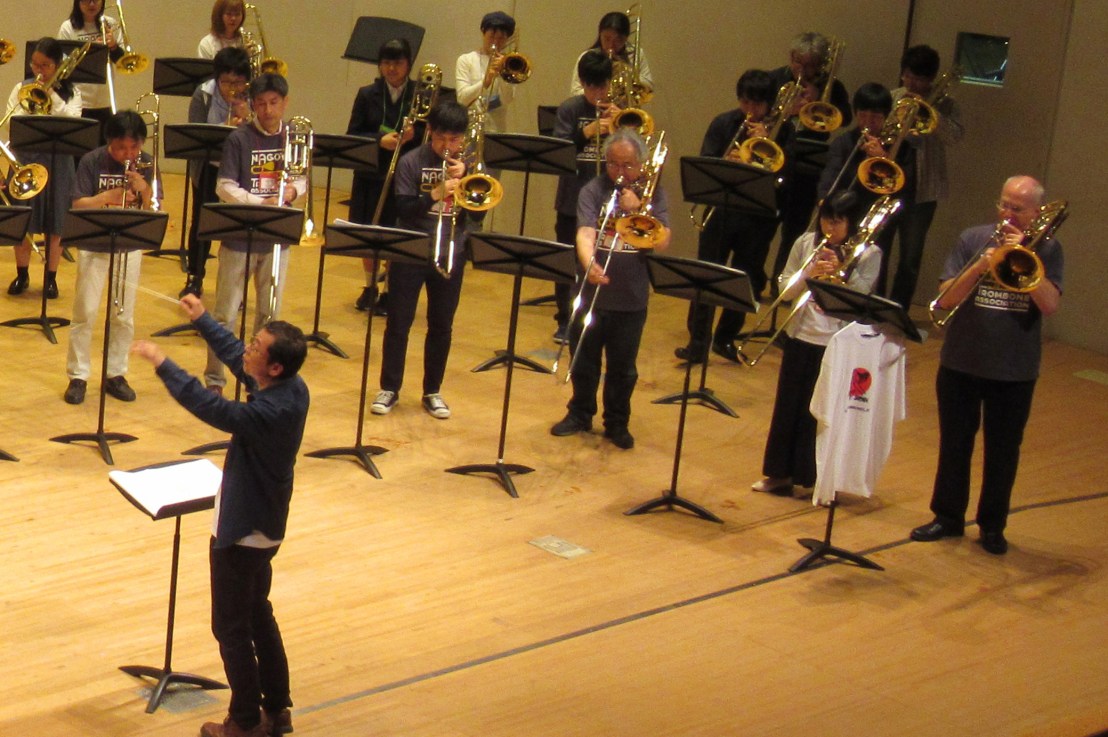
The Chief  for bass trombone and trombone ensemble by John Stevens, and A Song for Japan by Steven Verhelst. Douglas Yeo, bass trombone solo, with members of the Nagoya Trombone Association, 2018. In 2018, I traveled to Nagoya, Japan, to be the guest artist at the Nagoya Trombone Festival. The gala concert at the end of the Festival included several trombone ensemble works, including John Stevens’ tribute to the great trombone teacher, Emory Remington, The Chief, and an arrangement of Steven Verhelst’s beautiful A Song for Japan. The two pieces are combined in this video, below. Click HERE to view this on YouTube.


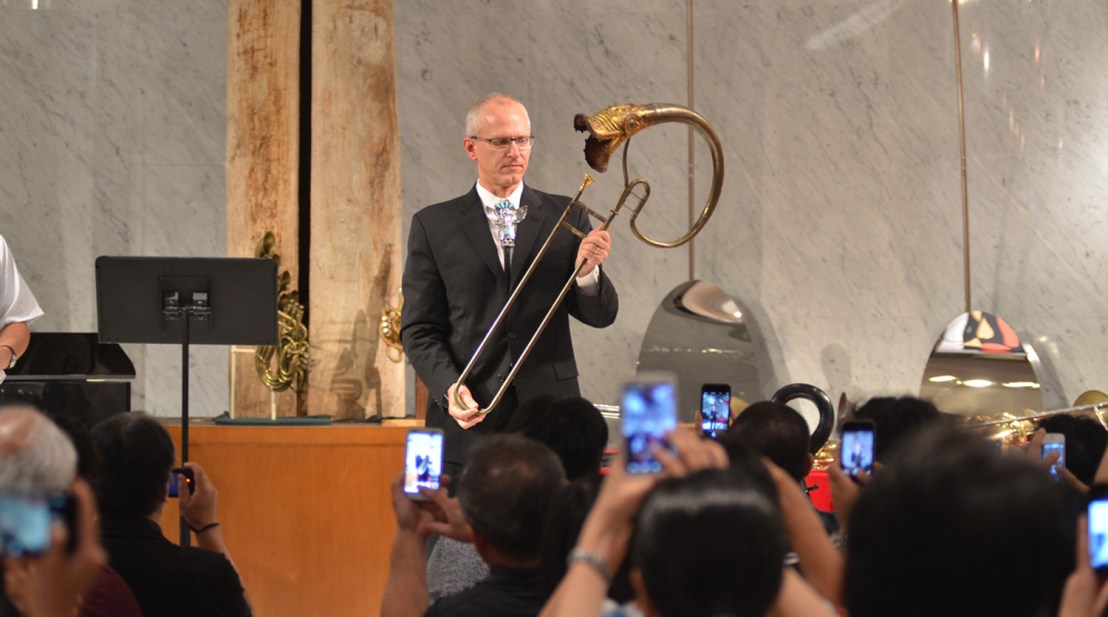
Demonstration of a buccin (dragon bell trombone) at the Museum of Fine Arts, Boston. Douglas Yeo, buccin. While living in Boston, I had a long and happy relationship with those in the Musical Instrument Gallery of the Museum of Fine Arts. I gave many concerts and demonstrations there, and conducted a great deal of research in its back rooms. A few years ago, I recorded some demonstration videos on several MFA-owned instruments, including a buccin made by Jean Baptiste Tabard around 1830. I’m playing a bit of the buccin part from Hector Berlioz’s Messe solennelle. Note the tongue that moves in the instrument’s bell throughout! Playing the buccin is like playing the trombone with your eyes closed; with the bell over my head, I don’t have the bell in front of me as a visual reference point to aid in accurately hitting all of the slide positions. It is a great challenge but great fun to play, with its deep, teutonic sound and rather unconventional overtone series that is related to but not exactly like a modern trombone. Click HERE to view this on YouTube.


The Lost Chord by Sir Arthur Sullivan. Douglas Yeo, ophicleide; Kimberly Marshall, organ, 2012. In 2012, I gave my first faculty recital at Arizona State University. The concert featured me playing bass trombone, bass sackbut, serpent, and ophicleide, all accompanied by ASU’s organ professor, Dr. Kimberly Marshall. She had been the Director of the ASU School of Music when I was hired and I told her that I wanted my first recital to be a collaboration with her, in thanks for her confidence in hiring me. This performance of The Lost Chord, a well-known Victorian era vocal and instrumental solo, features me playing the ophicleide, used extensively in the nineteenth and early twentieth century particularly in France, Belgium, and England (although it was in use around the world) before the nearly universal adoption of the tuba as the preferred bass brass instrument. Click HERE to view this on YouTube.


Rhapsody for Bass Trombone by Stephen Bulla. Douglas Yeo, bass trombone, with the New England Brass Band; Terry Everson, conductor, 2008. I was music director of the New England Brass Band for 10 years, from 1998–2008. We played many concerts together, and also recorded five compact discs in Boston’s Symphony Hall. My last concert with the Band was at Hope Church in Lenox, Massachusetts, near the summer home of the Boston Symphony, Tanglewood. This performance is from that concert, and I chose to play Rhapsody by my good friend, Steve Bulla, who succeeded me as music director of the NEBB. I recorded the Rhapsody in 1996 with England’s Black Dyke Mills Band on my first solo CD, Proclamation, and it was always a joy to play it with my hometown band, the NEBB. Click HERE to view this on YouTube.


Southern Gothic from Three Imaginary Landscapes by James M. David. Douglas Yeo, bass trombone with Sangmi Lim, piano, 2019. In March 2019, I traveled to Del Mar College in Corpus Christi, Texas, to give a recital and masterclass. I performed the recital on my YAMAHA YBL-822G bass trombone with a carbon fiber bell, tuning slide, and outer hand slide by Dave Butler of Butler Trombones in Dallas. I’m very enthusiastic about Dave’s work with carbon fiber and you can hear the result for yourself. This video was put up without editing out my introductory comments where I speak about the carbon fiber trombone so if you want to go right to the music, drag the slider to 1:24. Click HERE to view this on YouTube.


The Crimson Collop by Tommy Pederson. Douglas Yeo and Gerry Pagano, bass trombones, 2014. In 2014, I invited my friend, Gerry Pagano, bass trombonist of the St. Louis Symphony, to give a masterclass at Arizona State University. We opened the masterclass with a performance of this great duet by Tommy Pederson but after the class, we learned that the camera operator forgot to hit RECORD. So after the class, Gerry and I went back to my office and recorded the duet. It’s an informal collaboration between two friends that later led to us deciding to make a CD of bass trombone duets. More about that below. Click HERE to view this on YouTube.


Star Wars Main Title by John Williams. Boston Pops Orchestra, John Williams, conductor, 1993. This performance was recorded in 1993 in a concert from the Boston Pops Orchestra’s tour of Japan. The concert was entirely of John’s music and that evening was one of the highlights of my career with the Boston Symphony/Boston Pops. Yup, look at all of that 90s hair. . . The trombone players in this performance are Norman Bolter, Douglas Wright, Darren Acosta, and me. Click HERE to view this on YouTube.

There are also several other videos from that 1993 concert that appear on YouTube that can’t be imbedded here on The Last Trombone. If you’re interested, click HERE to see the March from Raiders of the Lost Ark, and click HERE to see Adventures on Earth from E.T.


Selections from Horn Trios, Op. 82 by Anton Reicha, arr. John Ericson. John Ericson, horn; Douglas Yeo, bass trombone; Deanna Swoboda, tuba, 2013. This performance of several trios by Anton Reicha was given at a Trombone Studio class at Arizona State University in 2013. Subsequently, my good friends John Ericson, Deanna Swoboda, and I recorded a CD on Summit Records, “Table for Three,” that included these trios and other pieces for horn, bass trombone, and tuba. The performance is rather informal but it’s a very happy memory of many nice collaborations with these friends. Click HERE to view this on YouTube.


Bone Moan by David Jones. Ryan Haines, trombone solo; Arizona State University Desert Bones Trombone Choir, Douglas Yeo, conductor, 2015.  I met David Jones in the 1990s when he was a student at New England Conservatory. I conducted several performances of his superb work for tenor trombone solo and trombone choir, Bone Moan, with the New England Trombone Choir at New England Conservatory with Douglas Wright (now principal trombonist of the Minnesota Orchestra) as soloist. The opportunity to conduct the piece again arose when I was at ASU and Ryan Haines, who at the time of this recording was the jazz trombone teacher at ASU, gives a great performance of this evocative and unusual piece. Click HERE to view this on YouTube.


Song for Lotta by Jan Sandstrom. Douglas Yeo, bass trombone; Aimee Fincher, piano, 2013. I have played Jan Sandstrom’s Song for Lotta many times over the years, in recitals all around the world, including in China and Japan. I have found it is a very powerful final piece on a recital. Rather than something flashy, I like playing something soft and contemplative which gives the audience something special to think about as they leave the concert hall. Click HERE to view this on YouTube.


Theme and Variations on Arkansas Traveler by David Herring. Douglas Yeo, bass trombone; Natural State Brass Band, Rusty Morris, conductor, 2010. The world of the British-style brass band has been important to me for many decades. Earlier in this article, you saw a performance by me of Stephen Bulla’s Rhapsody for Bass Trombone with the New England Brass Band. I’ve also enjoyed a long friendship with members of the Natural State Brass Band of Little Rock, Arkansas, especially the band’s former music director, Rusty Morris. In 2010, I joined the band on their tour of England, both as guest conductor and guest soloist. A bonus of the trip was that my wife and oldest daughter played baritone horn and bass trombone with the band on the tour. David Herring’s piece based on the familiar folk tune, Arkansas Traveler, and was especially written for me to perform on this tour. This performance was recorded in a Wesleyan Church in Bolton, England, just north of Manchester. Click HERE to view this on YouTube.


Below 10th Street by Tommy Pederson. Gerry Pagano and Douglas Yeo, bass trombone; Mike Lake, Hammond Organ and drums. 2017. In August 2017, in the thick of the heat of the Arizona summer, Gerry Pagano and I came together make a new CD of duets for bass trombones, FRATRES. We recorded the album in the studio of Michael Lake, a tremendously gifted jazz trombonist, recording engineer, and digital media guru. The album has many duets by Tommy Pederson (including The Crimson Collop which you have seen earlier in this article). Mike had the idea to add accompaniment to several of the duets and Below 10th Street features Mike on Hammond B-3 organ and drums. Thanks to Mike’s drone, he put together a promotional video of Gerry and me in the Sonoran desert north of Phoenix, horsing around with our trombones to the background of our performance of Below 10th Street. Fun times. For those interested, I start the piece, followed by Gerry, although our parts go back and forth between the top and bottom voice throughout. Click HERE to view this on YouTube.


Quidditch from Harry Potter by John Williams. Boston Pops Orchestra Brass Section. While I was a member of the Boston Symphony/Boston Pops Orchestra, I played many concerts with John Williams; earlier you saw several videos of performances of his music with the Boston Pops Orchestra from our 1993 Japan tour. Here is a video of John’s arrangement of his Quidditch—a game played by Harry Potter and his friends—from a performance in the early 2000s. The video begins with a little spoken commentary from John. The trombone players are Norman Bolter, Darren Acosta, and me. Click HERE to view this on YouTube.


Dear Lord, I Love Thee, by Wycliffe Gordon. Arizona State University Desert Bones Trombone Choir, Douglas Yeo, conductor, 2015. The great jazz trombonist, Wycliffe Gordon, is a good friend, and he came to Arizona State University in April 2015 to give a masterclass for my students. He brought along some music he had written and later that month, I decided to include one of them on our trombone choir concert. Click HERE to view this on YouTube.

His piece, “Dear Lord, I Love Thee,” is beautiful in its simplicity. Wycliffe composed words to the piece which he included in the trombone parts. It is a fitting benediction for this playlist that reminds us that while the concert halls around the world are dark, the music still goes on. In this challenging time, Wycliffe’s prayer is shared by me and so many others, as we turn to God, the giver of everything, for guidance and sustenance.

Dear Lord, I love thee. Saviour that saved me.

Lost, my soul was in sin, cleansed, made whole from within

     by my Lord God, Jesus, who made me and saved me.

He’s God! God, mighty Lord, God who saved me.

Wretched my soul was in sin, then He gave me life anew.

Dear Lord, I love thee. Saviour that saved me.

Came inside and made me whole.

Blessed me, then saved my soul!!!


Hope.

Hope.

We are living through an extraordinary crisis. Words fail. Everyone has a story; no one is immune from the implications of COVID-19. Every part of every life is impacted on every level.

As I, like everyone on our planet, work to navigate the challenges before us, I am reminded that there is one thing we cannot do: we cannot give up hope. Everyone hopes in something. My hope is in God. I do not doubt God’s wisdom or rightness; God is Sovereign—God is in, around, above, before, behind, under all things. In this present crisis, as always, I have some questions for God. But I know God  hears my prayers every day. I trust God even in the midst of the storm; God is teaching us something in all of this.

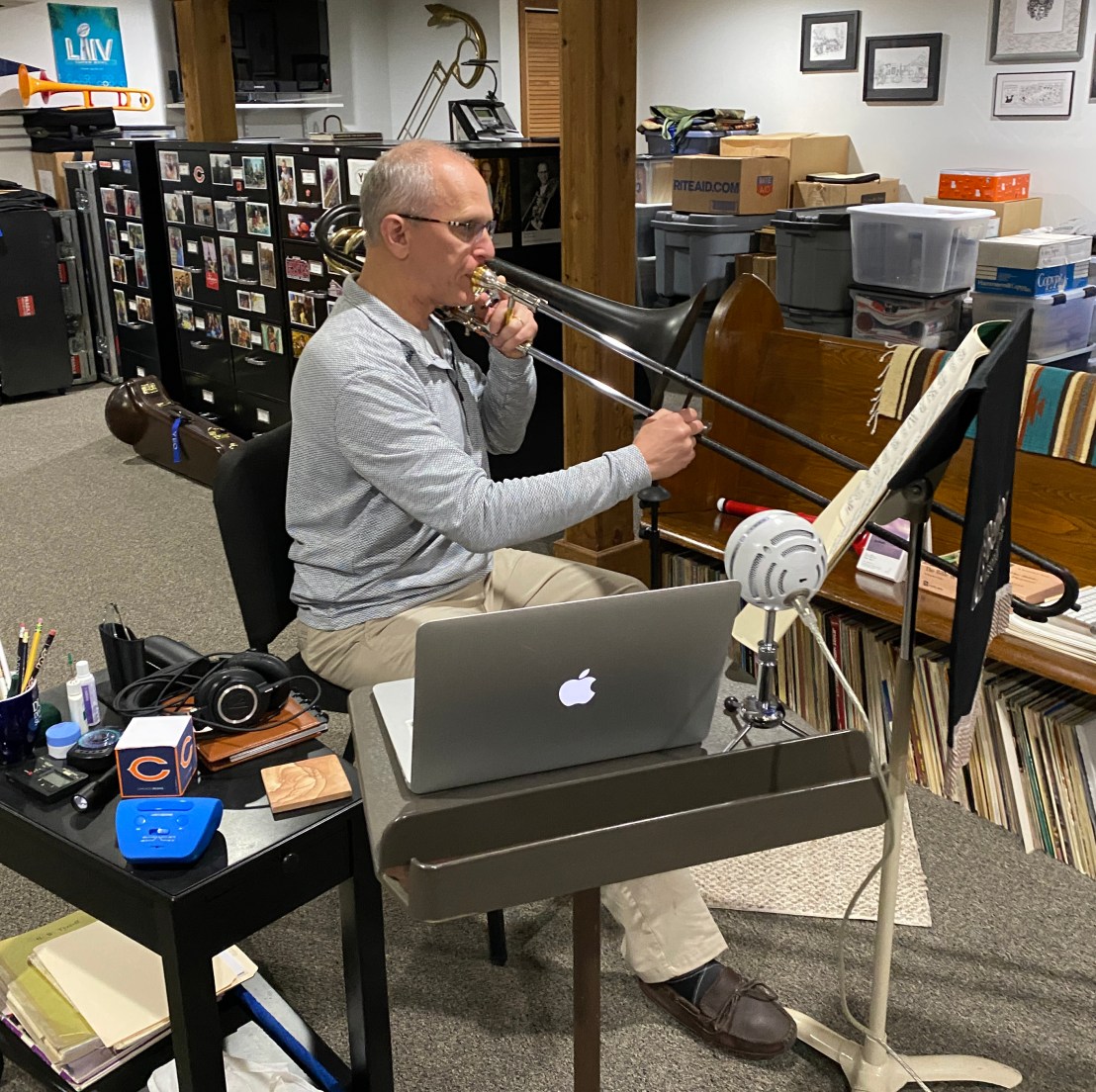
With life now sideways and our feet treading in quicksand, I spent a few hours yesterday cleaning up our basement where I practice trombone and have most of my music, books, recordings, and files. It is there where tomorrow, I will begin teaching remote lessons to my students at Wheaton College (Illinois).

Yeo_remote_teaching

Sometimes when you go looking for something, you find something else. While filing away some documents yesterday, I came across the Boston Symphony Orchestra program for opening night, September 24, 2008, four years before I retired from the orchestra in 2012. It was the fifth year of James Levine’s tenure as music director of the orchestra, and the program included Pictures at an Exhibition of Modeste Mussorgsky, orchestrated by Maurice Ravel. The concert remains memorable to me, but the reason I saved that program is because of its beautiful cover image. It shows the center of the ceiling of Symphony Hall, Boston, where the middle of three crosses on the ceiling is illuminated by a chandelier. I spent many hours looking at that ceiling and its three crosses, which always reminded me of three crosses on a hill called Golgotha outside Jerusalem 2000 years ago where my Hope, Jesus Christ, lived, died and rose again, and gave me the Hope I hold. And now, looking at this beautiful, artistic photograph, I am reminded again of my Hope. Light in darkness. Good in the midst of evil. The solid rock in the midst of sinking sand.

Symphon_Hall_Boston_ceiling_Low_res

In the midst of this storm, the only hope we have is in God. Pray for deliverance from this pestilence. Pray for safety. Pray for wisdom in how we can help others. Pray for others who have greater challenges than we have. Pray that when this ordeal is over, we will act in new ways in light of the lessons we are learning today. This we pray. Amen.

So we do not lose heart. Though our outer self is wasting away, our inner self is being renewed day by day. For this light, momentary affliction is preparing for us an eternal weight of glory beyond all comparison, as we look not to the things that are seen but to the things that are unseen. For the things that are seen are transient, but the things that are unseen are eternal. (2 Corinthians 4:16-18)

[Header image: Sunrise over the Sierra Estrella, Goodyear, Arizona, 2012. I took this photo from the front porch of our home where we lived from 2012-2018. Sunrise. A new day. Hope.]

A musical miscellany

A musical miscellany

I was trained as a classical musician although I am very grateful my musical life did not fit narrowly into that single stylistic box. I am a firm believer in the value of the pluralistic musical life, whether as a performer or listener. During my long career as bass trombonist of the Boston Symphony Orchestra (1985-2012), I was very fortunate to play much of the important canon of western orchestral music that contained trombones: Beethoven (Symphonies 5 and 9), Mozart (he didn’t score for trombones in his symphonies, but I played his Requiem and several operas), all of the symphonies of Brahms, Schumann, Mahler, Tchaikovsky, and Bruckner, the tone poems of Richard Strauss, and so much more. And this I was blessed to do with some of the finest conductors of the twentieth and twenty first centuries—including Leonard Bernstein, Bernard Haitink, Seiji Ozawa, James Levine, Simon Rattle, Sir Colin Davis, and many others—and great soloists—including Mstislav Rostropovich, Anne-Sophie Mutter, Yo-Yo Ma, Jesseye Norman, Evgeny Kissin, Thomas Quasthoff, Gil Shaham, and many others—who inspired me in countless ways.

Yeo_Haitink_Sym_Hall_final_bow_2012

[Above: My final bow at Symphony Hall as a member of the Boston Symphony Orchestra, May 2012. Behind me, standing, are concertmaster Malcolm Lowe and conductor Bernard Haitink following a performance of Beethoven Symphony No. 9.]

After graduation from Wheaton College (IL) in 1976—where I studied trombone with Edward Kleinhammer (bass trombonist of the Chicago Symphony from 1940-1985) and I have now come full circle as the College’s trombone professor since fall 2019—my wife and I moved to New York City. There I had a remarkably diverse performing life, playing concerts with the Mostly Mozart Festival Orchestra and American Symphony, Broadway shows (many performance of “The King and I” starring Yul Brynner), studio jingles and record sessions, jazz bands (including the Gerry Mulligan Big Band, the Elgart Band, and the Dave Chesky Band), and the Goldman Band, with which I played many concerts under the batons of Richard Franko Goldman and Ainslee Cox.

Douglas_Yeo_Goldman_Band_1977

[Photo above: That’s me, warming up before a concert by the Goldman Band, summer of 1977, at the Guggenheim Bandshell next to the Metropolitan Opera House, Lincoln Center. That summer, by the way, was when the New York City blackout of 1977 occurred on June 13, 1977. I was playing a concert with the Goldman Band at Lincoln Center at the moment the blackout struck. Seriously. But that’s another story. In this photo, sitting next to me, which his back to the camera, is trombonist Fred Braverman. Other members of the band at that time included William Arrowsmith, then principal oboist of the Metropolitan Opera, Abraham Perlstein, who had been the second trombonist of the NBC Symphony, and Bill Barber, tuba, who had played with Miles Davis in the seminal “Birth of the Cool” recording sessions and concerts. I learned a lot from my time playing in the Goldman Band. A. Lot.]

In all of this musical activity in New York City I was a free lancer, and a substitute in groups (apart from the Goldman band where I was a full member for four summer seasons, 1977-1980—six concerts a week for six weeks each summer). From day to day, I didn’t know what kind of music I might playing. The phone would ring, I would accept an engagement, gather up my trombone and bag of mutes, and head off to play. This plurality of musical styles served me well when I joined the Baltimore and then the Boston Symphony Orchestras, where “pops” concerts required me to play credibly in a host of styles.

Yeo_Brubeck_Concerto_Boston_Pops_Lockhart_2011

Some of the richest fruit of my early experience in the jazz and commercial worlds came when I performed the two Bass Trombone Concertos written by my friend, Chris Brubeck, with the Boston Pops Orchestra. Working with Chris was pure joy, as was meeting his father, Dave Brubeck. I played Chris’ first Bass Trombone Concerto several times with the Boston Pops, including a performance of the third movement, “James Brown in the Twilight Zone,” on national television as part of the “Evening at Pops” television show. The photo above shows me performing the Concerto with the Boston Pops in 2011, with Keith Lockhart, conductor (photo by Michael J. Lutch). Susan Stempleski reviewed the concert for classicalsource.com and wrote, in part:

Lockhart introduced Douglas Yeo, bass trombonist of the Boston Symphony and Boston Pops orchestras, who delivered a wonderful and lively rendition of “James Brown in the Twilight Zone”, a movement from Chris Brubeck’s jazz-flavored Concerto for Bass Trombone and Orchestra. Yeo’s virtuosic performance electrified the audience. Brubeck was in the audience.

Yeo_buccin_Hamamatsu_2015

In 1996, I began my exploration into early music, first with serpent, then ophicleide, then the early trombone (often referred to as “sackbut”), buccin (dragon bell trombone), and six-valve trombone. This opened another musical world to me, where I have taken part in performances of music that I would not have ever played on bass trombone. I’ve played serpent on a host of pieces with orchestras (both modern orchestras and early music groups) including Hector Berlioz’s Messe solennelle and Symphonie fantastique, Mendelssohn’s Symphony No. 5 (Reformation) and Meerestille und glückliche Fahrt overture (Calm Seas and Prosperous Voyage), ophicleide on Berlioz’s Damnation of Faust and Mendelssohn’s A Midsummer Night’s Dream, and early trombone on Monteverdi’s Vespers of 1610 and L’Orfeo. And I’ve given many recitals that feature serpent, ophicleide, six-valve trombone, and buccin, such as when I gave a concert on nine different instruments in 2015 at the Hamamatsu Museum of Musical Instruments in Hamamatsu, Japan, shown in the photo above.

Today, in this season of life since I retired from the Boston Symphony in 2012, I feel exceptionally blessed to continue to explore playing music in a host of styles, genres, and types of ensembles. Recent months have brought a number of rewarding musical experiences into my orbit. I do not take this for granted, and I am grateful that I continue to get invitations to do interesting things with a trombone (or another instrument) in my hand.

Elijah_Austin_2019

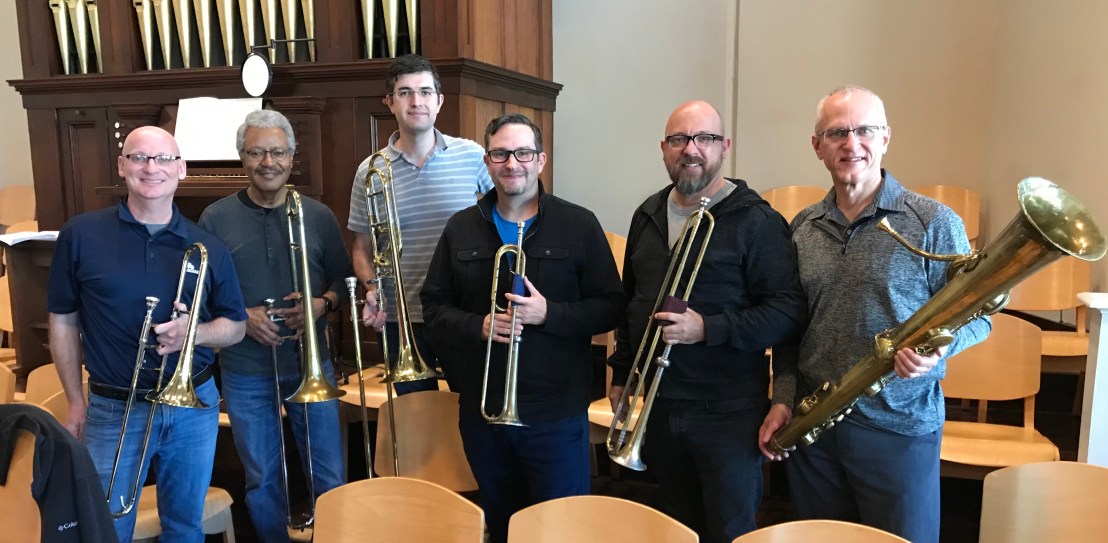
In December 2019, I was in Austin, Texas, taking part in performances of Felix Mendelssohn’s oratorio, Elijah. The concerts were organized by George Dupere, Chief Musician of Redeemeer Presbyterian Church (PCA) in Austin. I have played this piece many times, both the bass trombone and ophicleide parts, and I never tire of it. Never. The piece is so masterfully composed, and it contains such tremendous drama. This time, I played ophicleide with a fine orchestra including some of our brass section, above (left to right): Jamey Van Zandt, Nathaniel Brickens, and Owen Homayoun, trombones, and Chris Carol and Shelby Lewis, natural trumpets.

Gordon_Pagliuca_Yeo_Midwest_2019

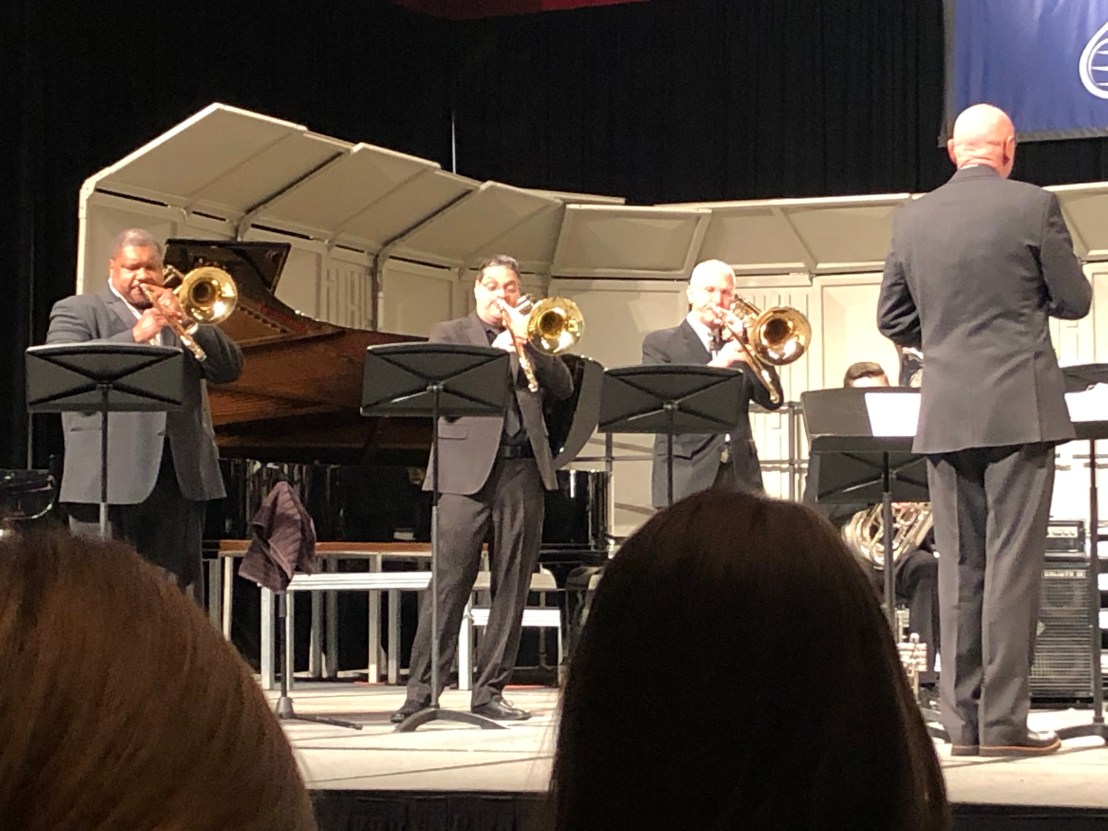
Just a few days later, I switched musical gears into the jazz world. I was delighted to be asked to be part of an “all star” brass jazz ensemble that was put together by YAMAHA for the Midwest Clinic, an annual convention held in Chicago. The Clinic features classes and performances over several days, and is one of the largest (the largest?) such events in the world. Our concert featured some terrific Christmas music, including carols arranged for trumpets, horns, trombones, tuba, and rhythm section by Stan Kenton, Ralph Carmichael, Sam Pilafian, JD Shaw, Jose Sibaja, and others. Boston Brass made up the core of the group and our trombone section (shown in performance above) consisted of Wycliffe Gordon, Domingo Pagliuca (of Boston Brass) and me. Great guys; great players. John Wittman conducted (shown in the photo on the right).

Yeo_trumpets_Midwest_2019

The trumpet section? Not a bad lineup, actually. Ha! Actually, this was a remarkable group of some of the greatest trumpet players in the world, shown backstage with me before the concert: Jose Sibaja (Boston Brass), Allen Vizzutti, Wayne Bergeron, (me), Jeff Conner (Boston Brass), Rex Richardson, and Jens Lindeman. Any questions?

Yeo_Gordon_Midwest_2019

It was such a pleasure to work with Wycliffe Gordon once again. He needs no introduction and it’s no secret to say he is one of the finest jazz trombonists of our time, for a long time member of the Lincoln Center Jazz Orchestra (I first met him at a joint concert between the LCJO and the Boston Symphony Orchestra), and now leader of his own combo. He has more albums out than I can count, and we are simpatico in so many ways. For years I’ve referred to Wycliffe as “my brother from another mother.”

In 2015, Arizona State University hosted Wycliffe for some masterclasses; this happened  while I was Professor of Trombone at ASU. I included his trombone ensemble piece, Dear Lord, I Love Thee on our April 2015 concert. Have a look and listen, above (to open this video in YouTube, click HERE). It was really, really great to see and work with Wycliffe again at the Midwest Clinic.

Kanda_Yeo_SLLBC_2020

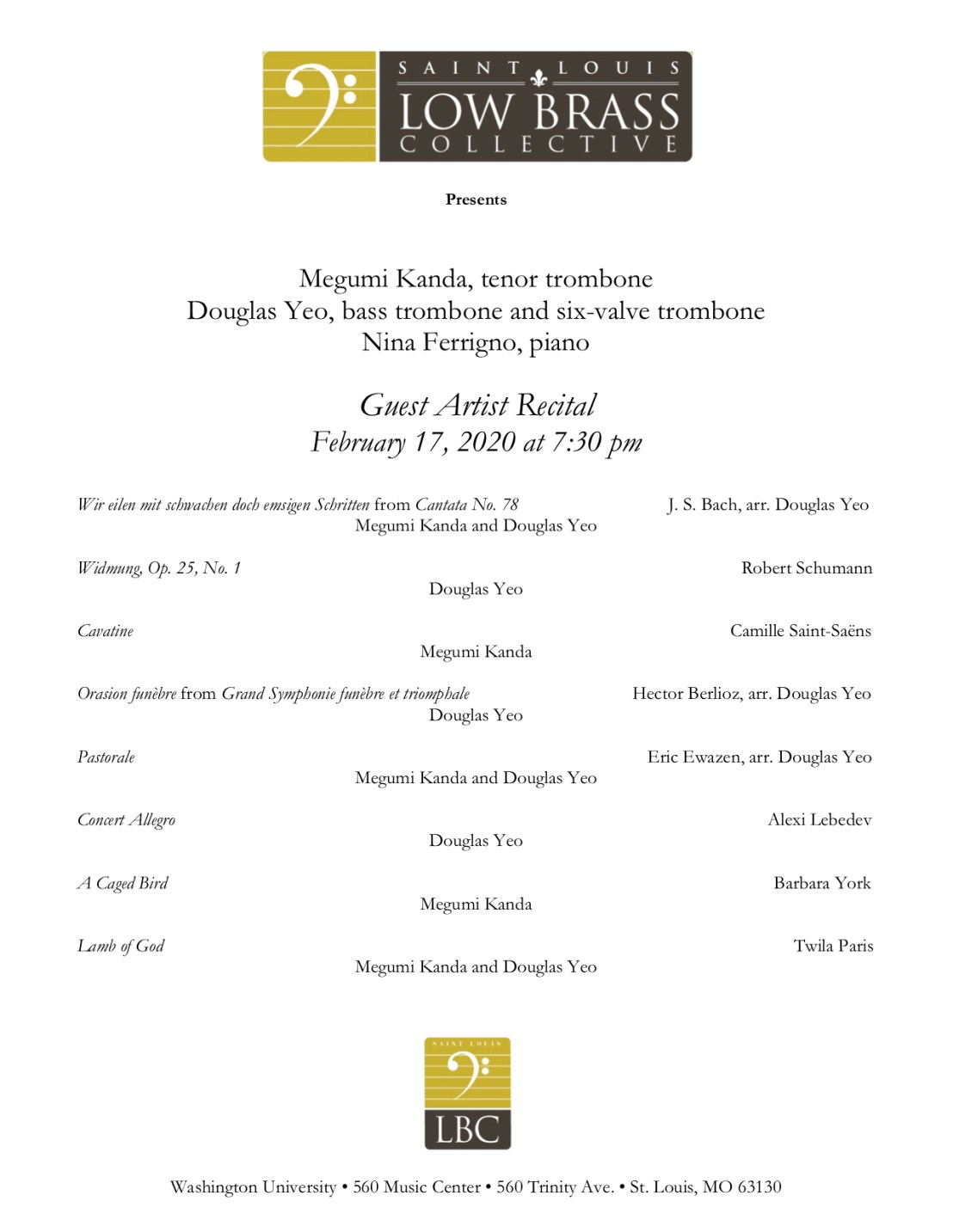
February 2020 brought more fun in a different musical world. My good friend Megumi Kanda—principal trombonist of the Milwaukee Symphony— and I travelled to St. Louis to give a joint recital and masterclass, sponsored by the St. Louis Low Brass Collective (STLLBC). Megumi is a superb player and wonderful person (I often refer to her as “my sister from another mother”), and we have done a number of joint events over the years. We also are authors of books about trombone orchestral excerpts and performance. Published by Encore Music Publishers, the annotated orchestral excerpt books, The One Hundred: Essential Works for the Symphonic Trombonist and The One Hundred: Essential Works for the Symphonic Bass Trombonist. To all of you who are reading this who have made our books part of your library: Thank you! And if you’re interested in the books, just click the links on the titles, above.

We began our masterclass with a duet, a movement of Philipp Telemann’s Canonic Sonata No. 3 that I arranged for inclusion in my book, Trombone Essentials, published by G. Schirmer.

Megumi_Kanda_SLLBC_2020

Yeo_SLLBC_2020

We continued the class by each speaking to the assembled audience and then working with several young players. As you can see from the photos above, Megumi and I tend to be  similarly demonstrative when we teach. How about a caption contest?! By the way, I should mention that Megumi is the recipient of the International Trombone Association’s 2020 ITA Award, the Association’s highest honor. She is so deserving of this honor, and it’s a pleasure for me—the 2014 recipient of the ITA Award—to welcome her into this special group of trombonists who have been so honored. I am at work on an article about her to be published later this year in the ITA Journal. Stay tuned; she has quite a story to tell!

Kanda_Yeo_Recital_program_St_Louis_2020

Kanda_Yeo_St_Louis_2020

Our recital on February 17 featured us playing solos and duets. I even used my six-valve trombone to perform Hector Berlioz’s Orasion funèbre from his Grand symphonie funèbre et triumphale. I want to send a shout out and big thank you to my good friend, Gerry Pagano (bass trombonist of the St. Louis Symphony) and all of those in the STLLBC who made this trip possible.

Gaudete_Yeo_Wheaton_College_selfie_2020

From a solo and duet recital in St. Louis I came back home to the Chicago area to play chamber music. On February 21, the Wheaton College Artist Series presented a concert that featured the Chicago-based brass quintet, Gaudete Brass, as well as organist Nicole Simental and the combined Wheaton College choral groups, conducted by Jerry Blackstone. The centerpiece of the concert was a performance of Morton Lauridsen’s Lux Aeterna. On the first half of the concert, Gaudete Brass performed Ingolf Dahl’s Music for Brass Instruments; Dahl was Lauridsen’s composition teacher at University of Southern California and the piece requires six players. I joined Gaudete Brass as its second trombonist (selfie of me with Gaudete Brass after a rehearsal in Edman Chapel, above).

Gaudete_Yeo_Wheaton_College_2020

[Photo above: Gaudete Brass in Adams Art Gallery on the campus of Wheaton College after our performance. (Left to right) Bill Baxtresser (trumpet), Joanna Schulz (horn), Charles Russell Roberts (trumpet), me, Paul Von Hoff (trombone), and Scott Tegge (tuba)

I have played Dahl’s piece on numerous occasions with groups in performances around the world. But I have to say that this collaboration was, to me, particularly special. First, Gaudete Brass is a superb group of musicians. They play at the highest level and it was a joy to work with them; I hope we will do more things together. Nice people, too! Also, the concert was held in Edman Memorial Chapel at Wheaton College, where, as a student there from 1974-1976, I took part in many concerts on that stage. Many memories came flooding back as I played in Edman Chapel with Gaudete Brass. And there was this. . .

Fine_Arts_Building_Chicago

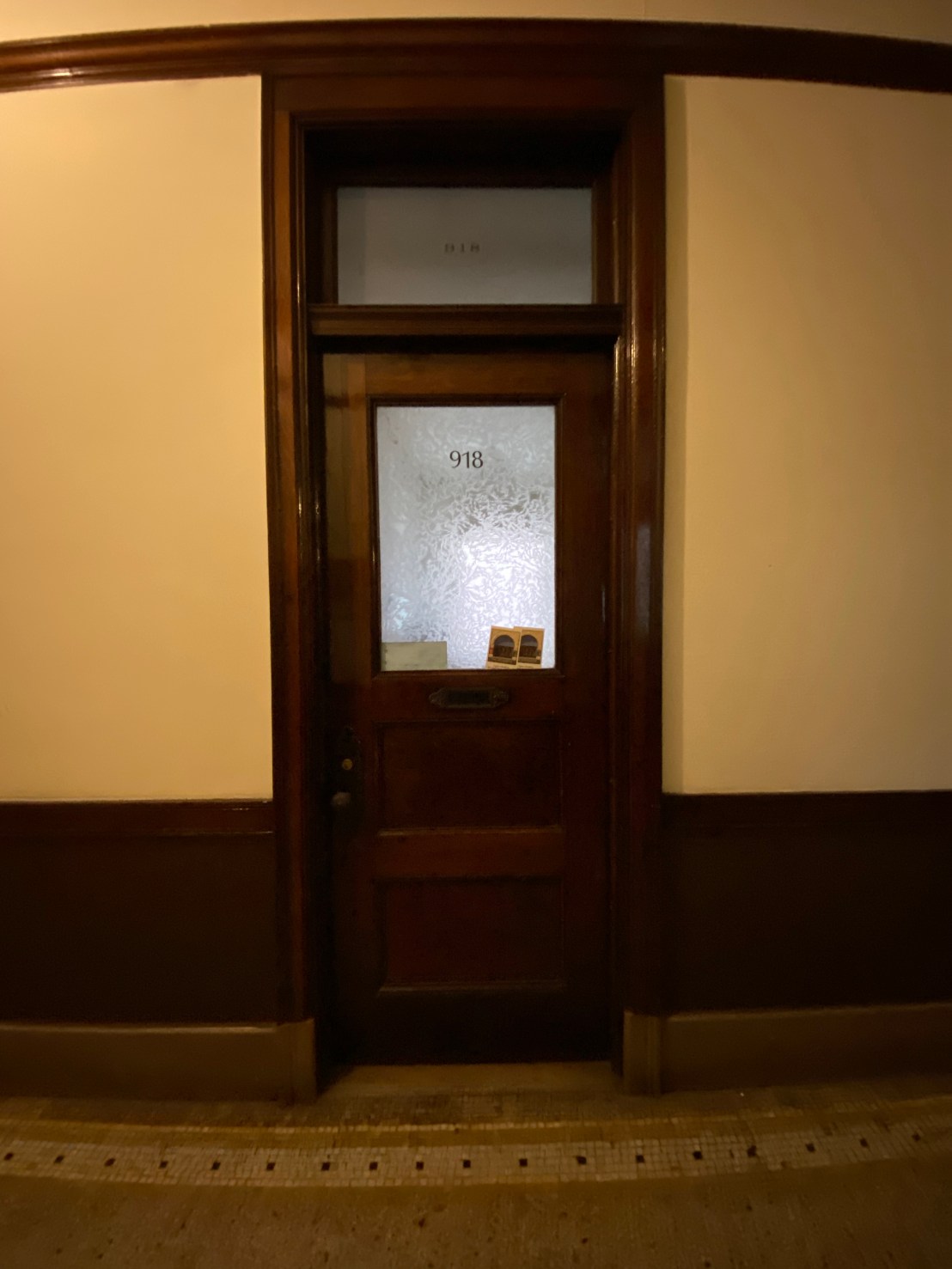
In December, Gaudete Brass and I had a rehearsal in the Fine Arts Building, on Michigan Avenue in downtown Chicago. That building has very special meaning for me: it was there, on the ninth floor, that I had my weekly trombone lesson with Edward Kleinhammer (bass trombonist of the Chicago Symphony Orchestra from 1940-1985) while I was a student at Wheaton College. I had not been in that building since my last lesson with him in May 1976. Walking through the front doors brought back a flood of memories.

Hallway_ninth_floor_Fine_Arts_Building_Chicago

Kleinhammer_Studio_Fine_Arts_Building_2020

After the rehearsal with Gaudete Brass, I climbed the stairs up to the ninth floor, to once again walk down that long hallway (which has not changed a bit since 1976) and stand in front of room 918 where Mr. Kleinhammer had his studio. As I stood there, I reflected on how those lessons impacted me in so many ways. I could not go in the room this time, but I remember every detail of that small space: two chairs, two music stands, a table for music, and a sink (the bathroom is down the hall). This photo, below, shows the two of us after my last lesson in room 918 in 1976:

Kleinhammer_Yeo_1976

In that room my life was changed.  If you did not see it earlier, click HERE to read the photo essay/tribute I wrote about him last year on what would have been his 100th birthday. He was a remarkable man.

And there is more to come. While my planned trip to Seattle to be guest soloist this weekend at the Northwest Band Festival was cancelled due to the coronavirus outbreak in Seattle, my calendar is full of other events in the coming months, including masterclasses at Interlochen Arts Academy and the Csehy Summer School of Music, performances with the Finnish National Radio Orchestra in Helsinki and Japan (unless the coronavirus has something to say about that trip), teaching at the Pokorny Seminar—hosted by Chicago Symphony tubist, Gene Pokorny—and teaching at the Wheaton College Summer Music Camp. Details may be found on the schedule page on my website, yeodoug.com.

[Header photo: Boston Symphony Orchestra, Bernard Haitink, conductor. My final performance in Symphony Hall as a member of the Boston Symphony, May 9, 2012; Beethoven Symphony No. 9. Photo by Stu Rosner; courtesy the Boston Symphony Orchestra.]

Super Bowl LIV – an exceptional fan experience thanks to the Chicago Bears and the NFL

Super Bowl LIV – an exceptional fan experience thanks to the Chicago Bears and the NFL

by Douglas Yeo (February 6, 2020)

My wife and I love professional football and are season tickets holders (STH) for the Chicago Bears. Last fall, I entered a contest that the Bears sponsored, and the prize was a pair of tickets to Super Bowl LIV (54), held in Miami on February 2, 2020. Well, not just tickets to the game. A few other things were included as well.  As I wrote about previously on The Last Trombone, I entered the contest—which required entrants to compose a 100 word essay to answer the question, “Who would you take to the Super Bowl, and why?”—and I nominated my son-in-law, Chad. And my essay was selected as the winner out of thousands of entries. Wow.

Ever since Chicago Bears Chairman George McCaskey (son of Bears owner, Virginia Halas McCaskey) called me last November to give me this happy news, Chad and I have been preparing to go to the Super Bowl. We knew the Bears were giving us tickets to the game, three nights of lodging in a Miami hotel, and airfare to Miami. What more could we ask for?! What we didn’t know was exactly what was in store for us during those days apart from going to the game itself. Now that we are back home from what I can only describe as a remarkable experience, I’ve had a little time to reflect on all that happened thanks to the generosity of the Chicago Bears.

Friday, January 31

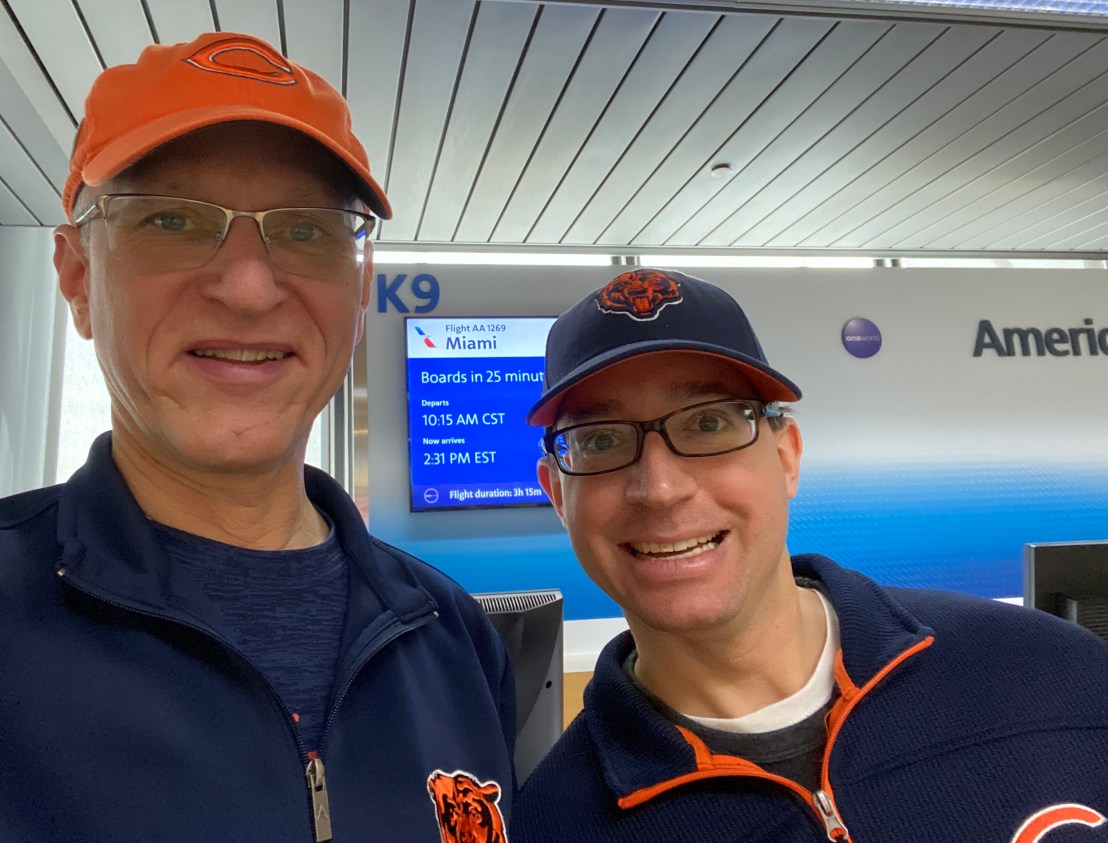
Doug_Chad_OHare_Super_Bowl LIV_flight

It was snowing as I pulled out of our driveway to pick up Chad and drive to Chicago’s O’Hare airport. Fortunately, the flight to Miami was uneventful and after we landed, we navigated Miami’s terminal to rent a car.

Doug_Chad_Miami_Airport_Super_Bowl_LIV

The airport was in full blown Super Bowl host mode, with Super Bowl signage and extra staff that was happy to help the huge invasion of visiting fans. While the Chicago Bears were not in the Super Bowl, we were proud to represent the Bears in Miami on behalf of all Bears season ticket holders. For us, it was all Bears gear, all the time, as you can see in these photos of us from Super Bowl weekend.

We drove to our hotel, the Biltmore Miami/Coral Gables. This is not the kind of hotel where our family usually stays on vacation! But the Bears and the National Football League (NFL),who partnered in this experience, pulled out all the stops in booking us in a 5-star, luxury hotel. Our room’s bathroom was bigger than a lot of hotel rooms I’ve stayed in. I’m serious!

Biltmore_Miami_dinner_Super_Bowl_LIV_Yeo

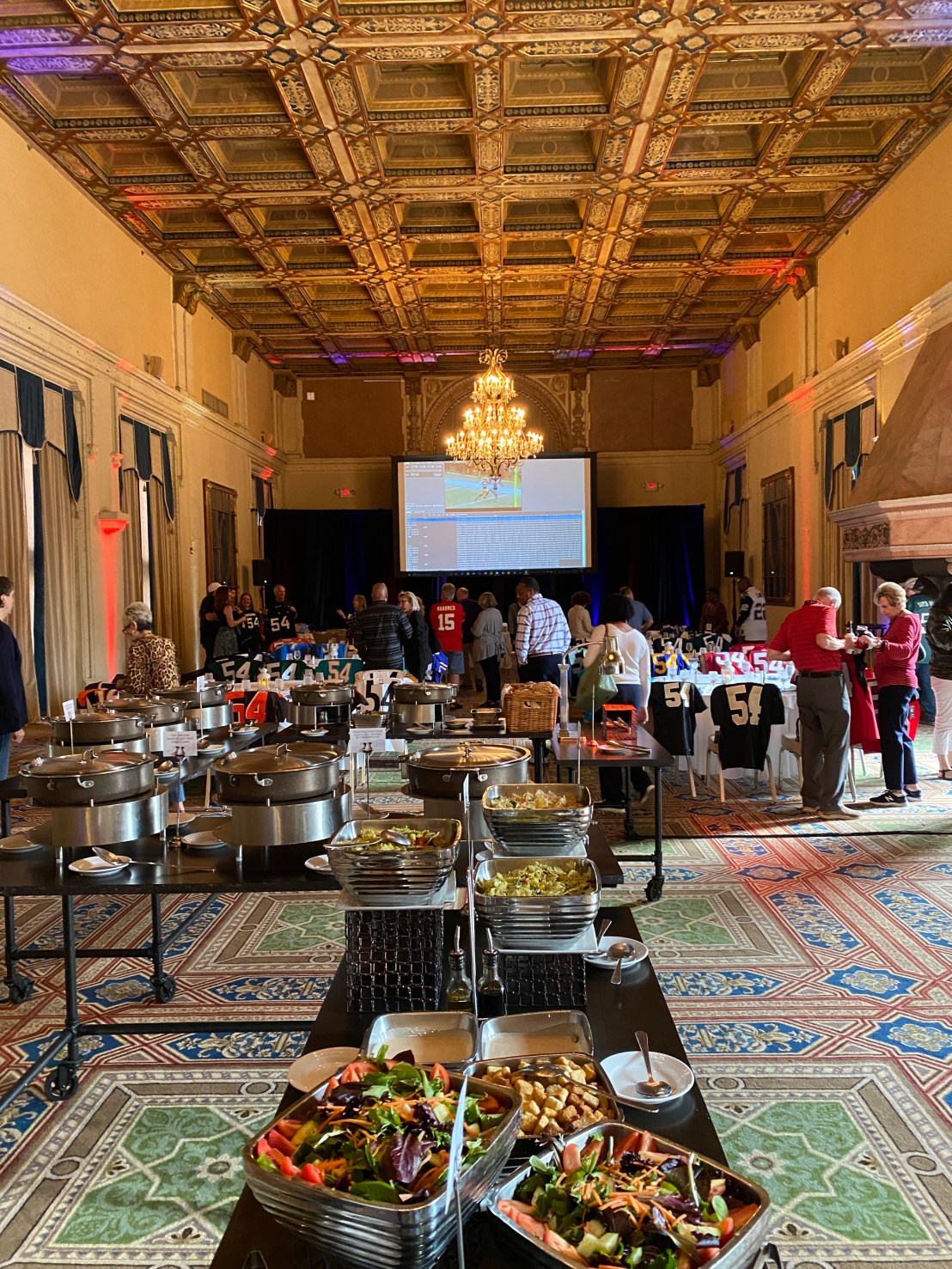
Immediately upon checking in, Chad and I headed to our first activity of the weekend, a dinner in the Biltmore’s Ahlambra Ballroom. It was a spectacular feast and it was there that we learned more about what we would be doing throughout the weekend.

As we were told, each of the NFL’s 32 teams selected a season ticket holder (along with one guest) to receive a unique Super Bowl experience. Most teams conducted a random drawing; the Bears were the only ones (as far as I could learn) who chose a fan through an essay contest. At dinner, we began to meet the fans from other teams who had been selected to share in this special Super Bowl Experience.

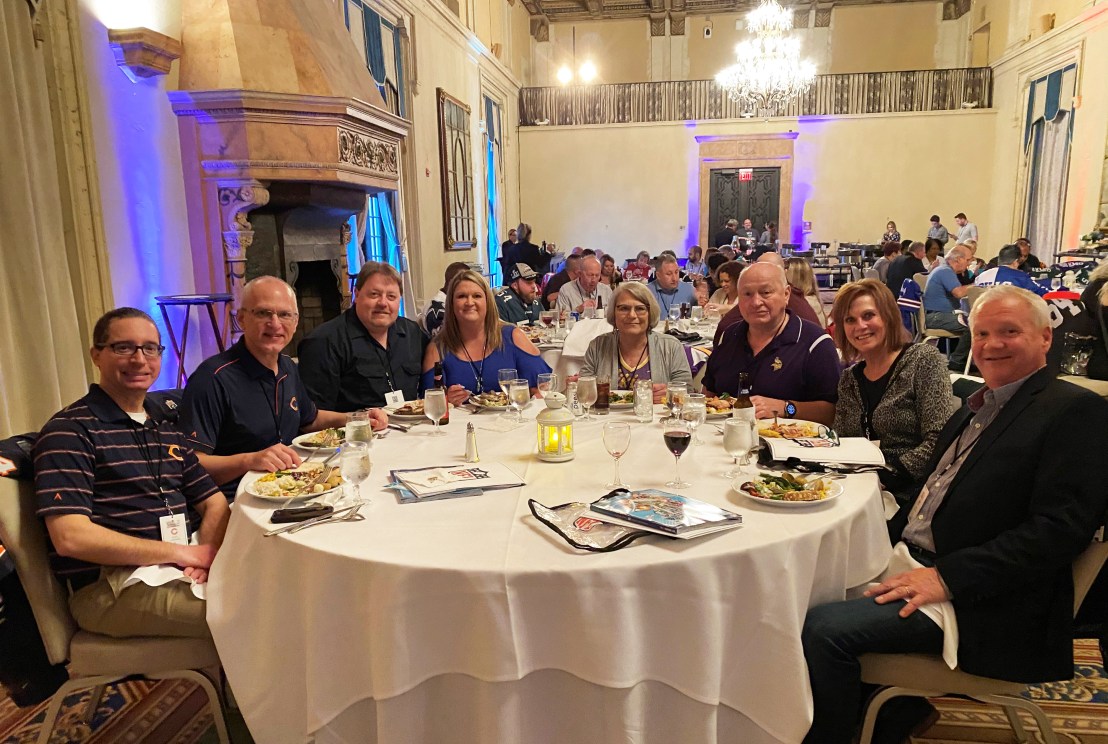
NFC_North_table_Biltmore_Super_Bowl_LIV

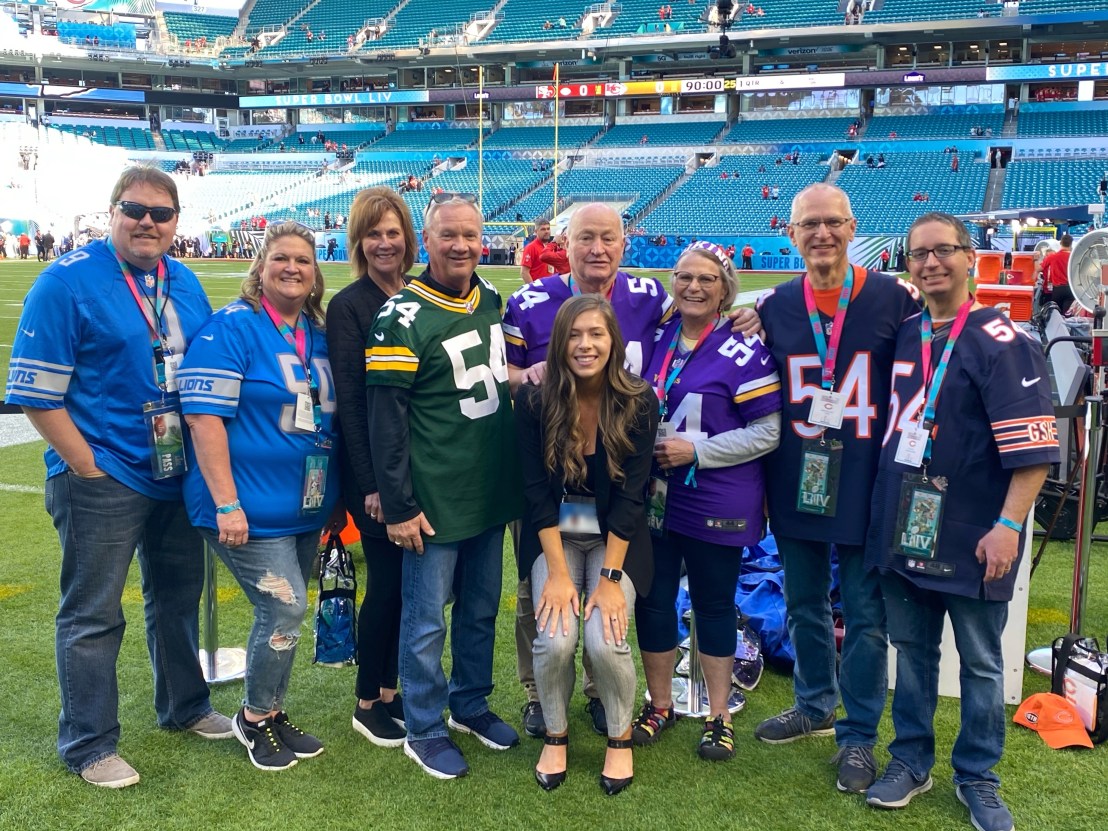
[NFC North table at the Biltmore. Left to right, fans from the Chicago Bears (Chad and me), Detroit Lions, Minnesota Vikings, and Green Bay Packers. Photo by Nicole Blake.]

We were all seated at tables according to our NFL division. Our table, representing the NFC North, was in the front of the room, and we sat with fans from the Detroit Lions, Minnesota Vikings, and Green Bay Packers. We also met Nicole Blake; she works for the NFL and was our exceptionally helpful NFL representative who took great care of our division throughout the weekend.

Doug_Chad_jersey_Super_Bowl_LIV

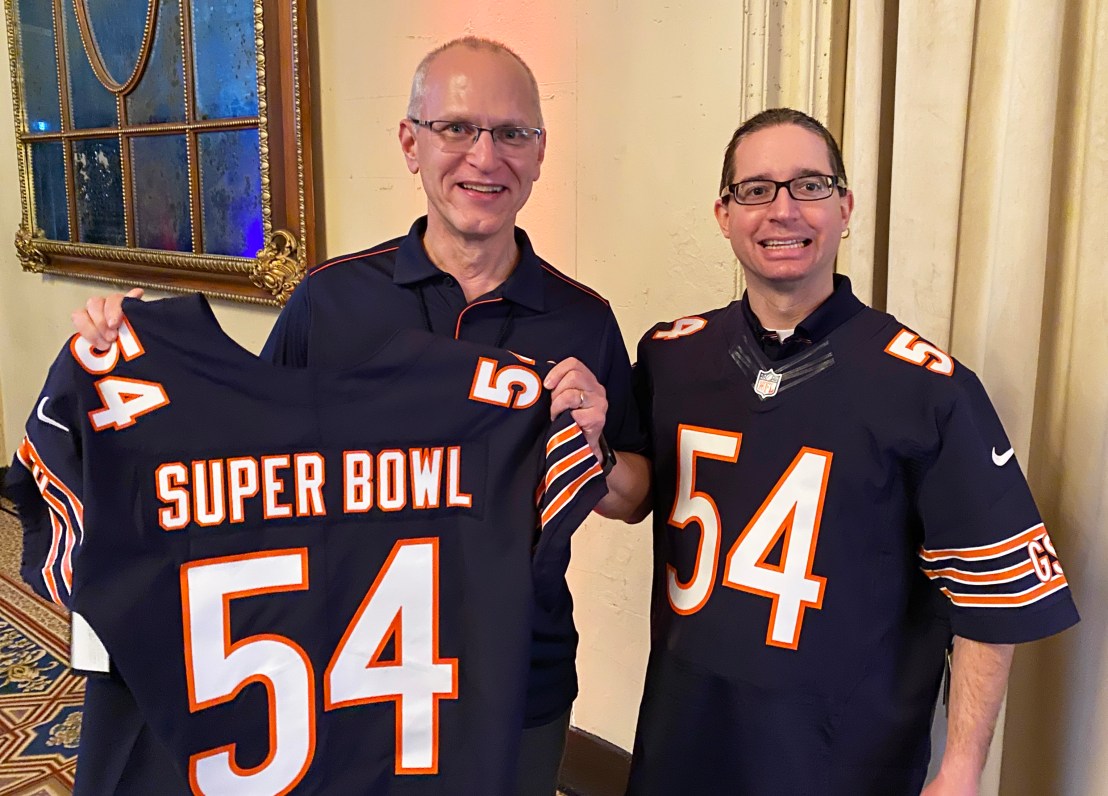
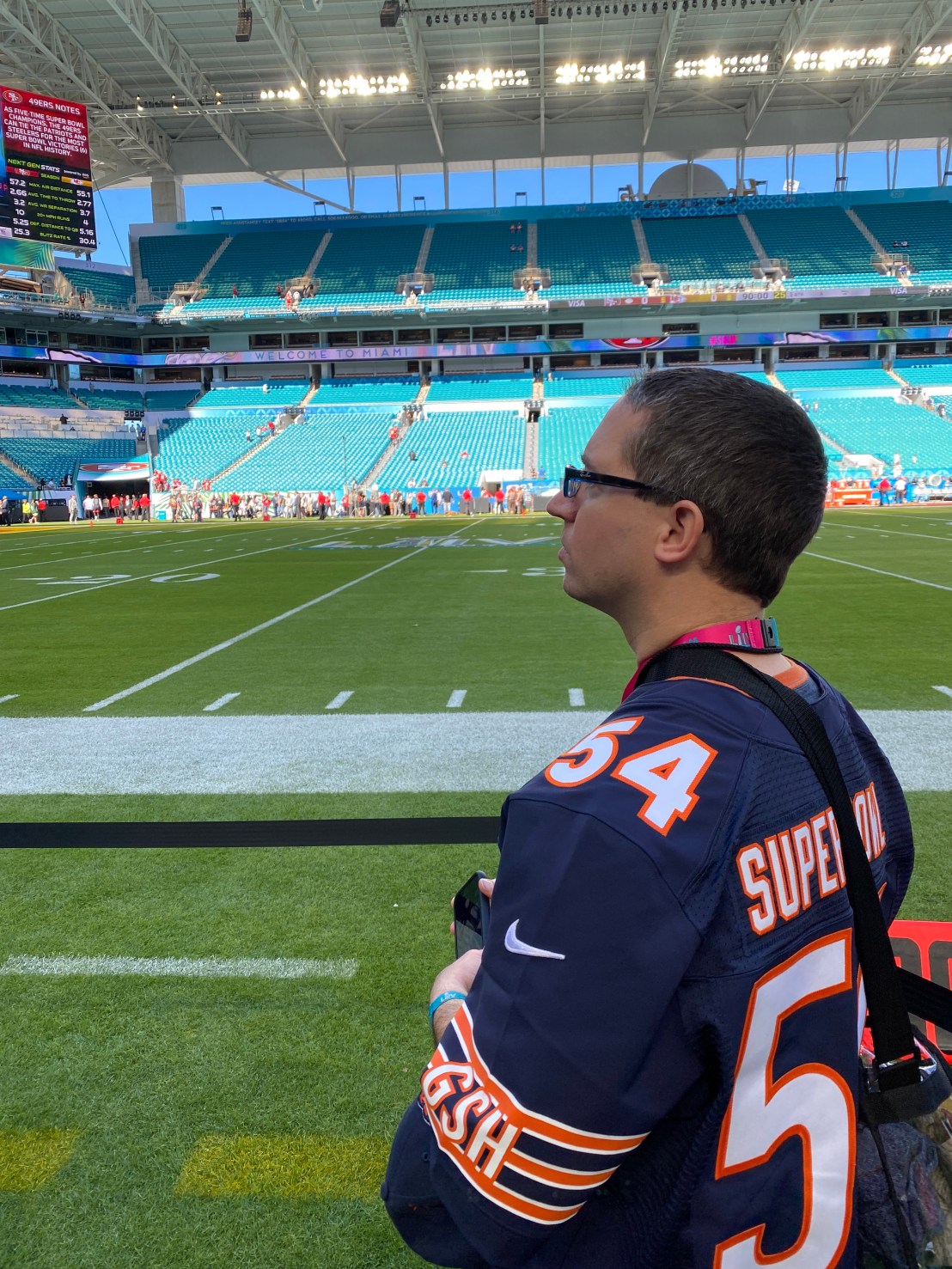
We were all given a custom NFL jersey in the style of our team’s jersey, each with the number 54 emblazoned on the front and back (for Super Bowl LIV), and the words “Super Bowl” across the back. These are real really special jerseys, and for us, it’s nice that they bear the number 54 which was worn by Bears Hall of Fame linebacker, Brian Urlacher. We wore the jerseys to all events during the weekend which was a good way for us to visually keep up with our group (and for our NFL reps like Nicole Blake to keep up with us).

Al_Riveron_presentation_Super_Bowl_LIV

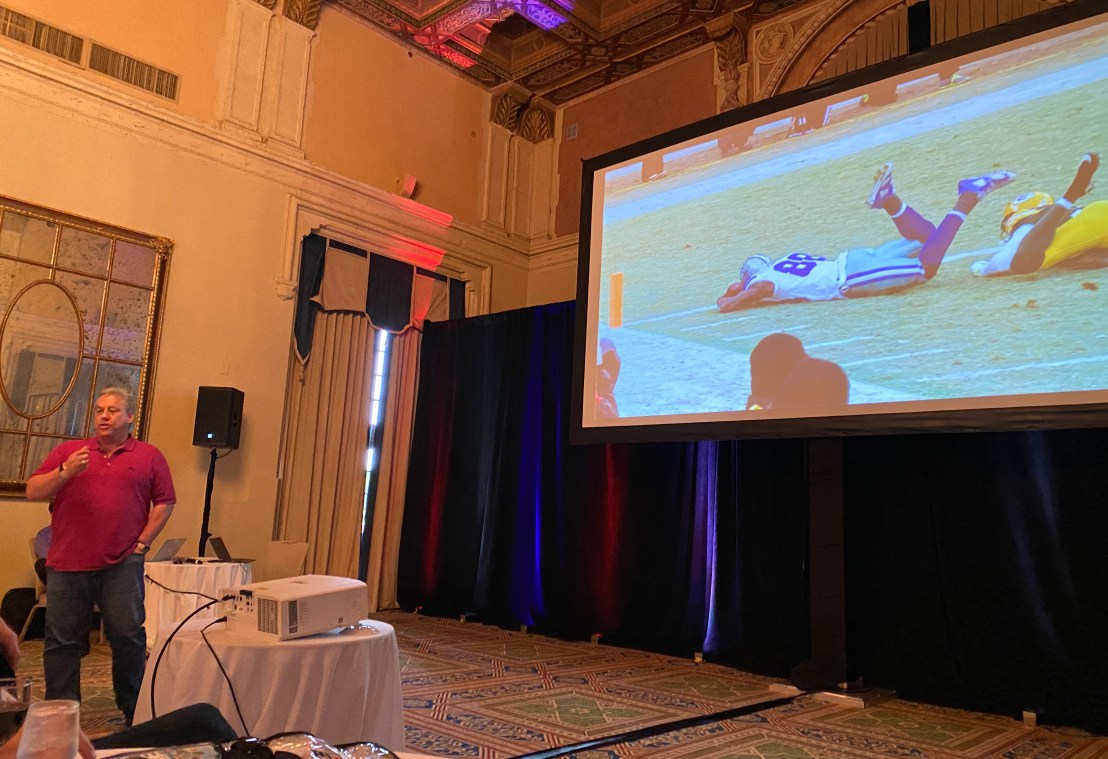
During dinner, we had a private presentation by Al Riveron, the NFL’s Sr. Vice President of Officiating. This was really interesting. Really. Interesting. Every fan is passionate about officiating—especially when calls don’t go the way you want them to go. We all learned a lot about NFL rules and how they are applied—much more than had previously known—and there was an energetic back-and-forth between all of us and Al Riveron as he explained the nuances of rules and officiating. Sorry, Cowboy fans, Dez Bryant didn’t catch the ball (as shown on the photo above). But the rule, “What is a catch?”, was changed the next season and under the current rule, it would have been a catch. It was a terrific presentation, and it made me want to read the NFL rule book, a link to it which was kindly provided to me by Nicole Blake. You can read the rule book for yourself; click HERE to see it on the NFL website as a downloadable PDF file.

Doug_Chad_STH_profile_Super_Bowl_LIV

We also received a booklet with information about all of the participants in the STH program, a bit of each of our story, and how we were selected. Here (photo above) is what the Bears submitted about Chad and me.

Doug_Chad_NFL_Experience_01

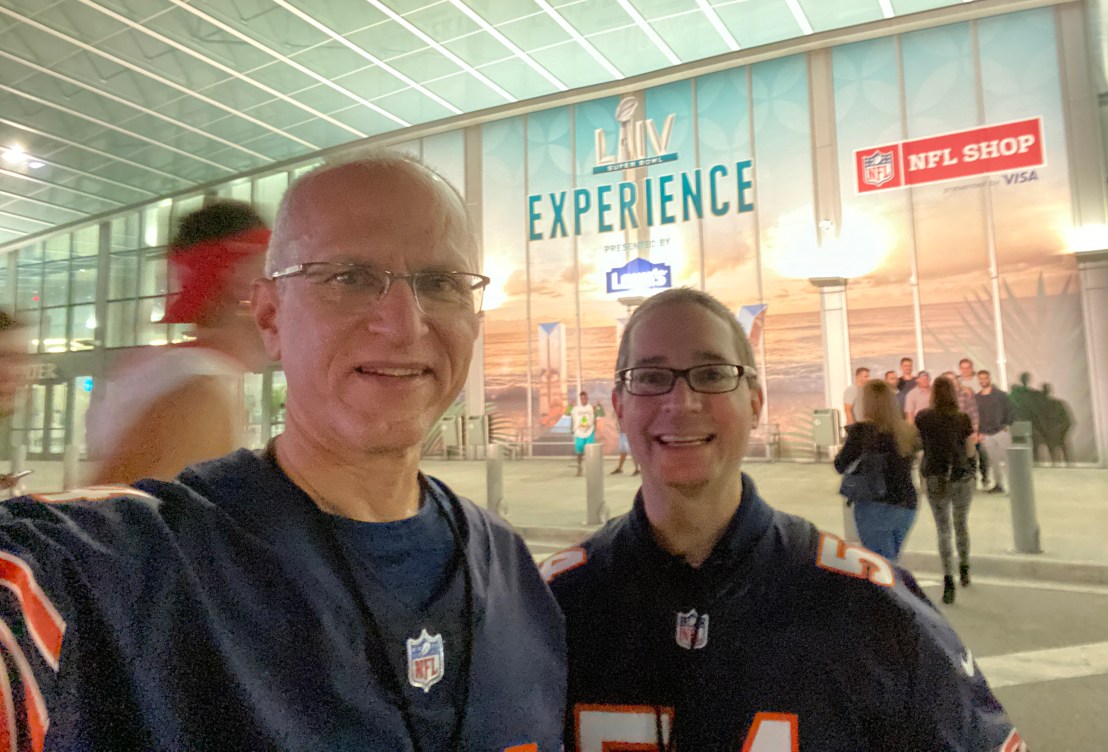
After dinner, Chad and I drove to Miami Beach to take in the Super Bowl LIV Experience. The NFL provided us with tickets to the event which mostly had interactive games and activities for fans, as well as a NFL shop of epic proportions full of Super Bowl LIV gear.

Chicago_Bears_Super_Bowl_XX_ring

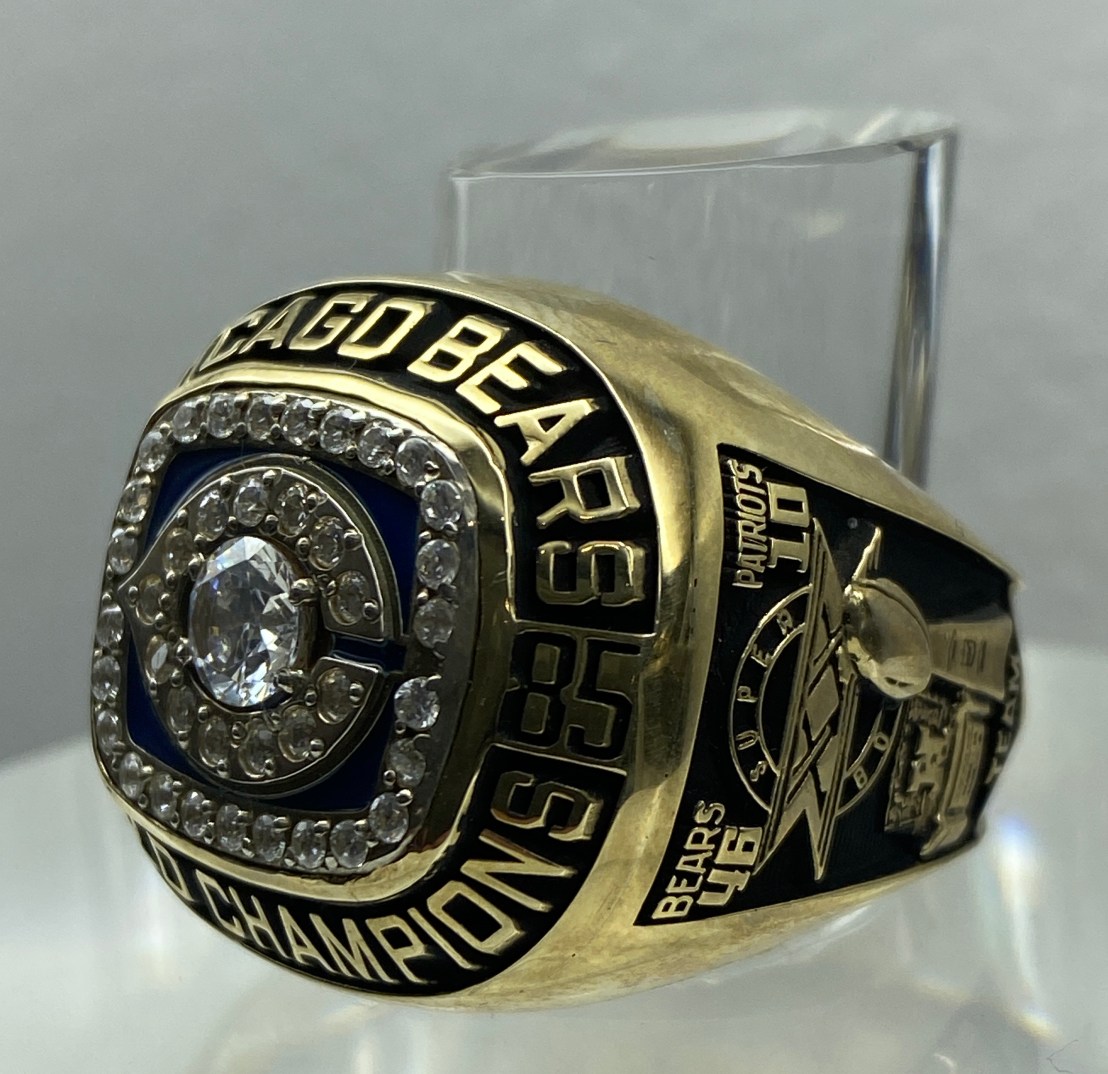
Among the many exhibits at the Super Bowl LIV Experience was a display that featured all 53 Super Bowl Champion rings. Among them was the Chicago Bears Super Bowl XX ring from 1986, when the Bears defeated the New England Patriots, 46-10. The display was really impressive, from the modest rings of early Super Bowls to the outrageously large ring made for the New England Patriots when they won Super Bowl LIII last year, their record (along with the Pittsburgh Steelers) sixth Super Bowl victory.

George_Halas_trophy_Super_Bowl_LIV

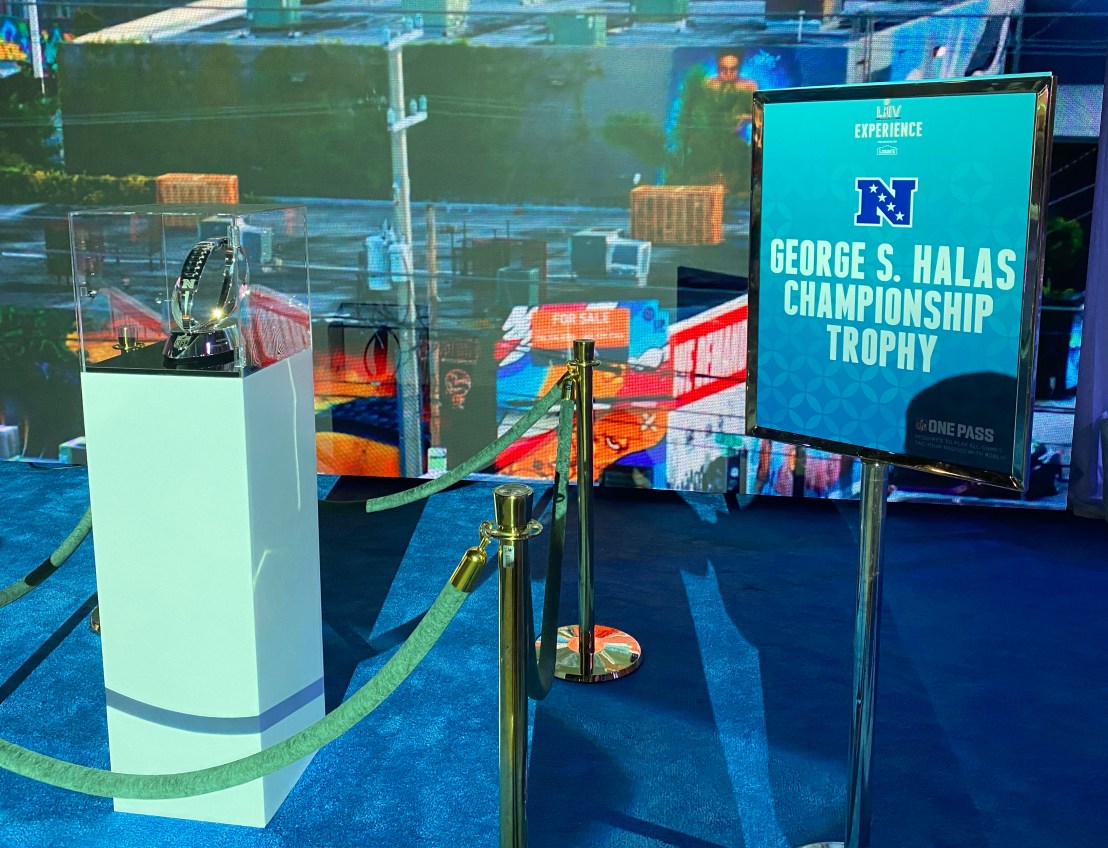
There were also displays that included championship trophies, including the George S. Halas Championship Trophy, given each year to the NFC Conference Champion. It was named after George S. Halas, founder, owner, player, and coach of the Bears, and the man who is considered to be the “father of the NFL’ when it was founded in 1920.

And Chad and I had a little fun, climbing up behind a model of a 6’6″ Chicago Bear. Uh, no, those are not really our bodies!

Saturday, February 1

Saturday was devoted to attending the annual NFL Honors event where players and coaches are honored with awards in various categories, including Most Valuable Player, Offensive and Defensive Player of the Year, Coach of the Year, etc. Chad and I had watched the program on television in previous years so we were really interested to get a first hand, up close look at how it all came together.

Doug_Chad_NFL_Honors_2020_01

After meeting in the lobby of the Biltmore Hotel, we all boarded two busses for the Adrienne Arsht Center in Miami. This was one of the great things about the weekend: for both NFL Honors and the Super Bowl, we left the driving to someone else. Traffic around Miami was truly crazy, and we were very happy to just go along for the ride. We walked along the red carpet past dozens of media outlets whose photographers and videographers were busy setting up for the arrival of NFL players, coaches, and celebrities.

9th Annual NFL Honors

Once inside, we were all positioned on risers backstage where we could watch the proceedings on huge television monitors while being up close to many of the attendees and award winners before and after they received their awards. This was, to me, much more interesting than being out in the audience in the theater, since we got to see how photos, videos, and interviews came about. [Photo above by Logan Bowles, courtesy the National Football League.]

Jackson_Henry_NFL_Honors_2020

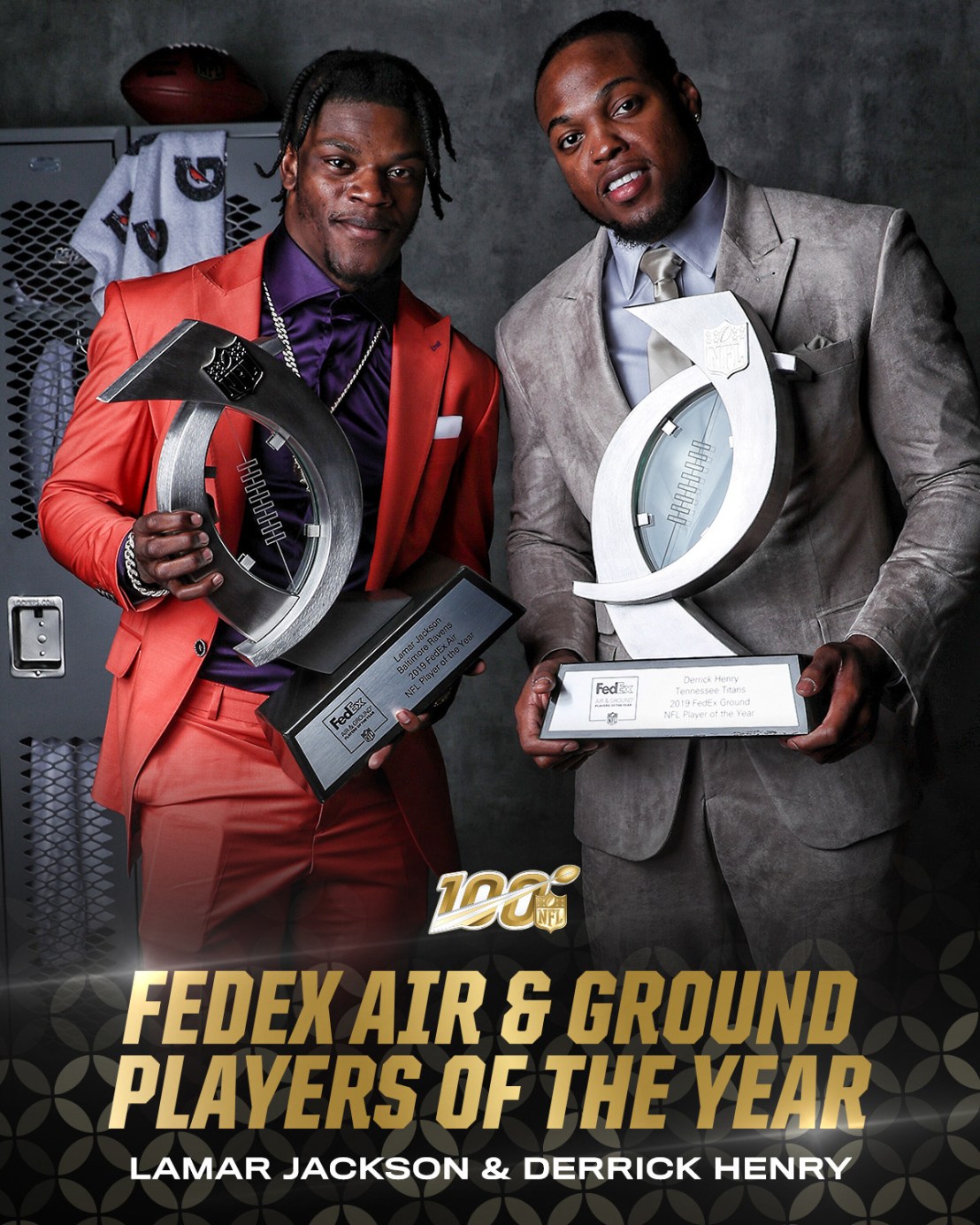
For instance, Baltimore Ravens quarterback Lamar Jackson and Tenessee Titans running back Derrick Henry were named FedEx Air and Ground Players of the Year. Before the ceremony, they came backstage to be photographed with their trophies. The photo above was taken by me from our vantage point backstage. In the somewhat chaotic scene,  you can see the photographer, a man who is operating a laptop that showed each photo, and another person assisting in the setup.

Jackson_Henry_NFL_Honors_NFL

The photo above shows the same moment, as the photo was post-produced for the NFL’s  Twitter feed [photo courtesy of the National Football League]. No more chaos; just two happy players with their awards. I love seeing how things work and come together. While it was a long day of sitting and standing, ours was a very special view of the NFL Honors event.

9th Annual NFL Honors

NFL Commissioner Roger Goodell came by to greet us, and Chad and I each enjoyed a brief moment of conversation with him. While it’s easy for fans to be critical of the Commissioner when he metes out discipline to a player on your team, I have to say that we have great respect for the Commissioner. He has a Herculean job and all things considered, we feel he does an excellent job of helping to steer the NFL in good directions for fans, players, and owners. It was a privilege to meet him, have a few words with him, and shake his hand. [Photo above by Logan Bowles, courtesy the National Football League.]

Chad_John_Harbaugh_NFL_Honors_2020

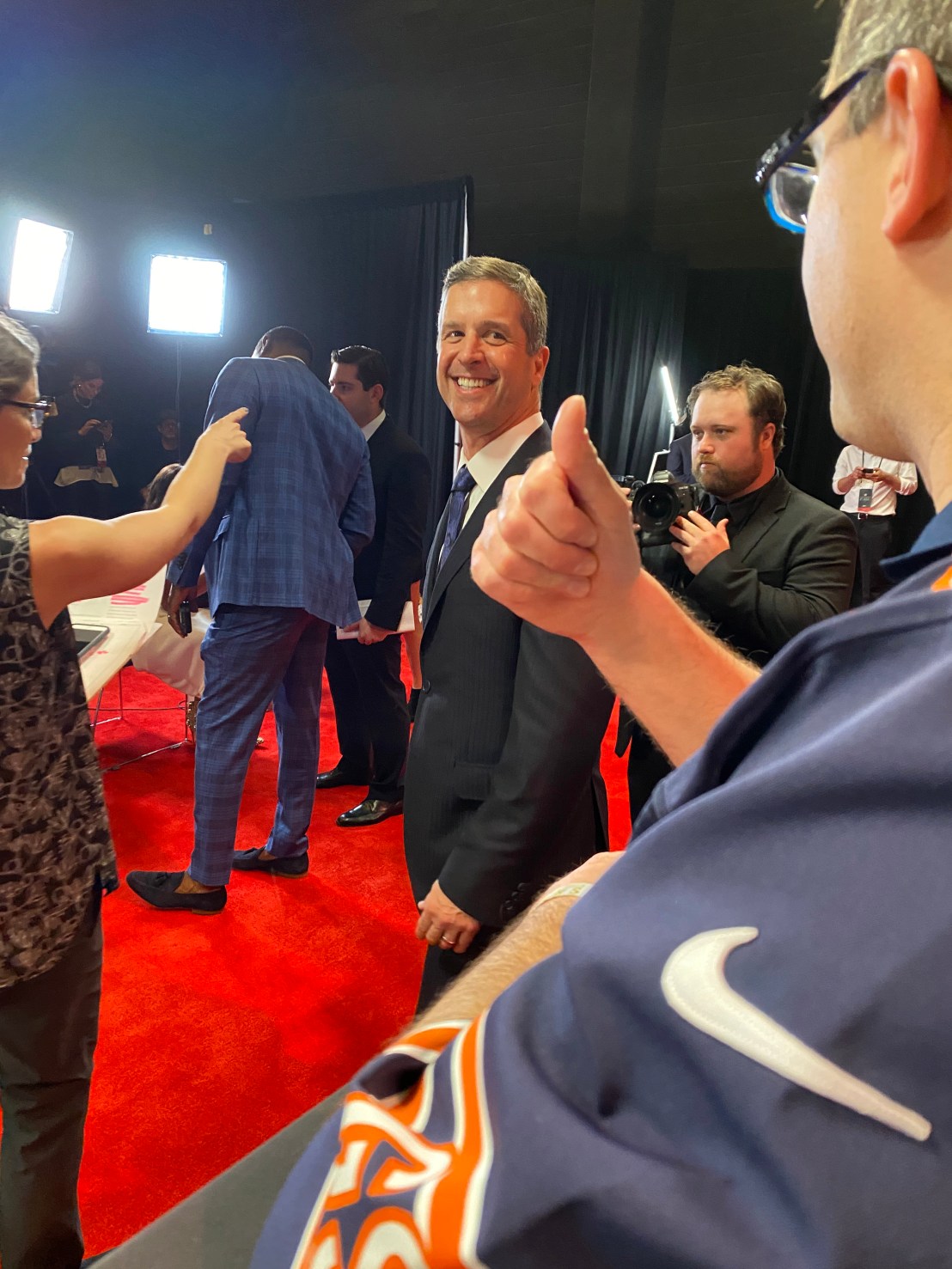
Baltimore Ravens coach John Harbaugh came backstage to be photographed and interviewed after he accepted the NFL Honors award for NFL Coach of the Year. He recognized our Bears jerseys and immediately came up to Chad and me. Harbaugh’s younger brother, Jim, had been a quarterback for the Bears from 1987-1993 (he is now the football coach at University of Michigan). Chad had a nice chat with Coach Harbaugh who was enthusiastic over seeing Bears fans backstage.

Steve_Harvey_Chad_Doug_NFL_Honors_Super_Bowl_LIV

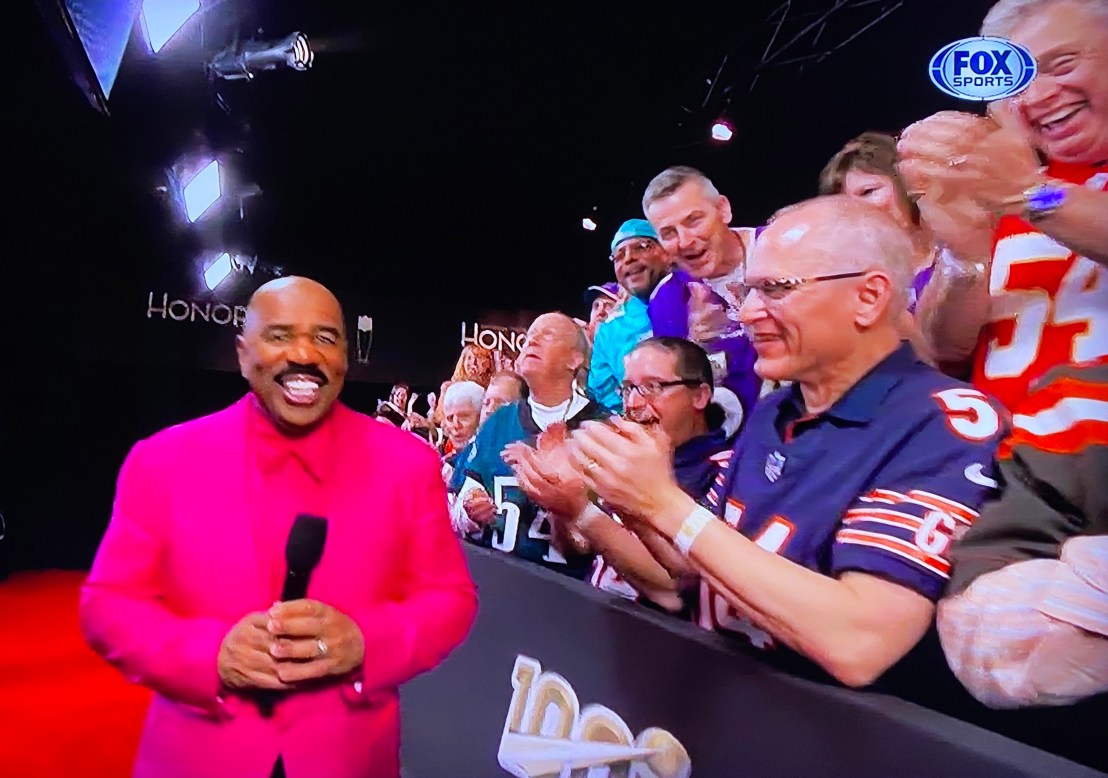
Chad and I also had a brief moment on camera in the NFL Honors telecast, when host Steve Harvey came through the red carpet to interview a few of us. The photo above shows Chad and me on the broadcast as we appeared on the television broadcast. Fun stuff.

IMG_5924

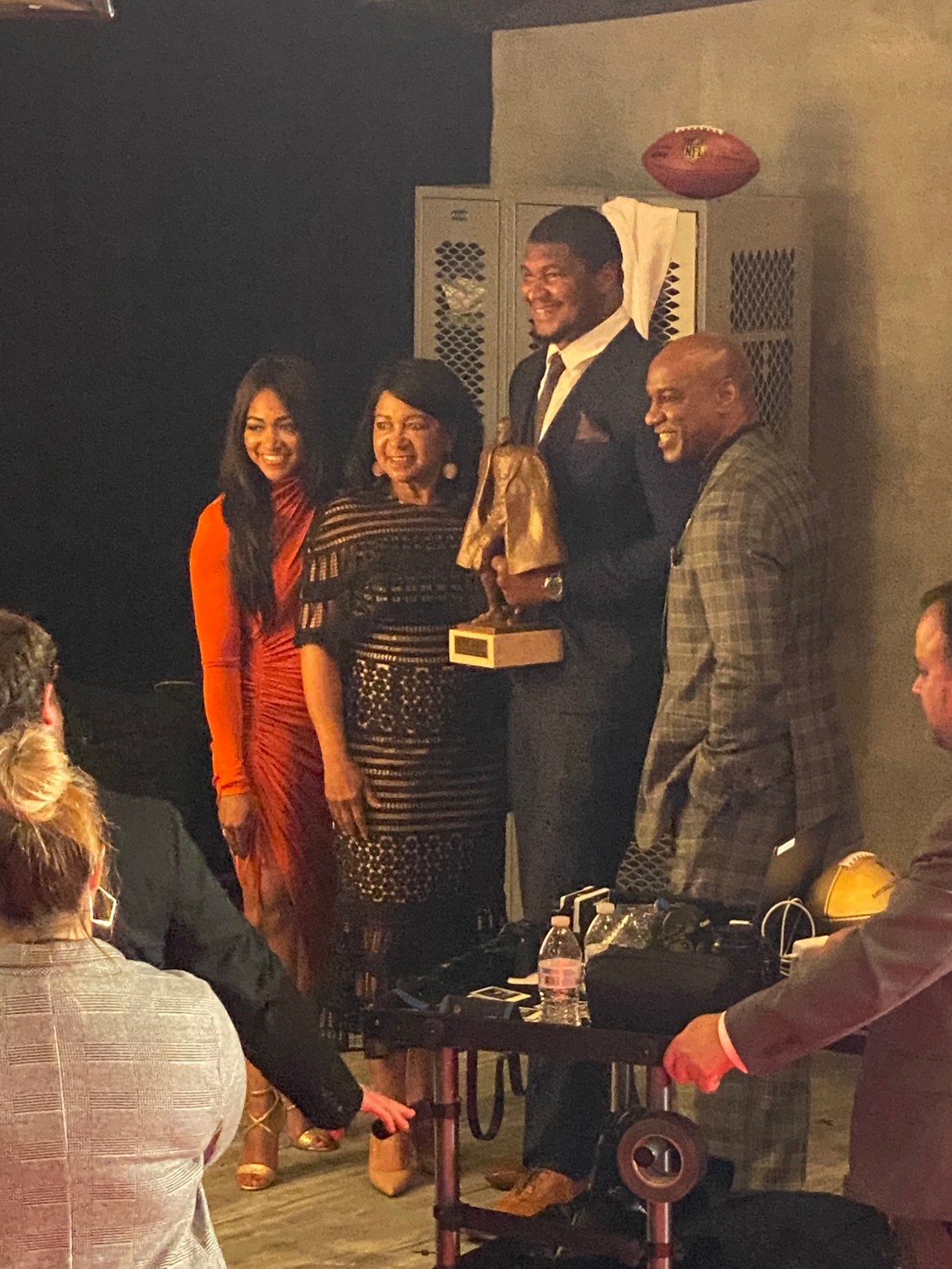
A highlight of the NFL Honors experience was seeing the 2019 Walter Payton Man of the Year, Jacksonville Jaguars defensive end Calais Campbell. This annual award, named for Walter Payton, legendary running back of the Chicago Bears, is given to one NFL player each year in recognition of his exceptional volunteer and charity award. Shown above is Calais Campbell with (left to right), Brittney Payton (Walter Payton’s daughter), Connie Payton (Walter Payton’s widow), and Jarrett Payton (Walter Payton’s son). We have a lot of pride in Chicago that this award is named for one of our own Chicago Bears. I had seen Calais Campbell play many times when my wife and I lived in Arizona (for six years before we moved to the Chicago area) and we were season ticket holders with the Arizona Cardinals; Campbell was a member of the Arizona Cardinals from 2008-2016. I was delighted to see Campbell honored as the 2019 NFL Walter Payton Man of the Year. He is highly deserving of this, the NFL’s highest honor.

Sunday, February 2

Mike_North_presentation_Biltmore_Super_Bowl_LIV

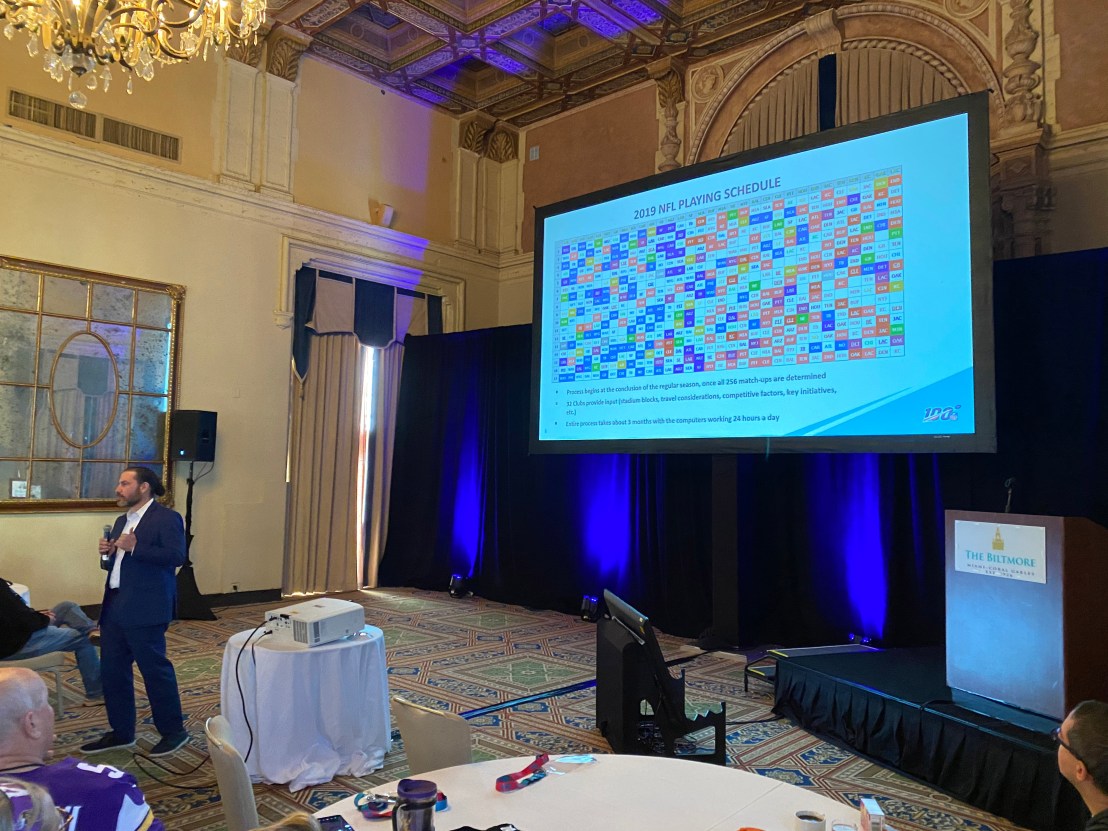
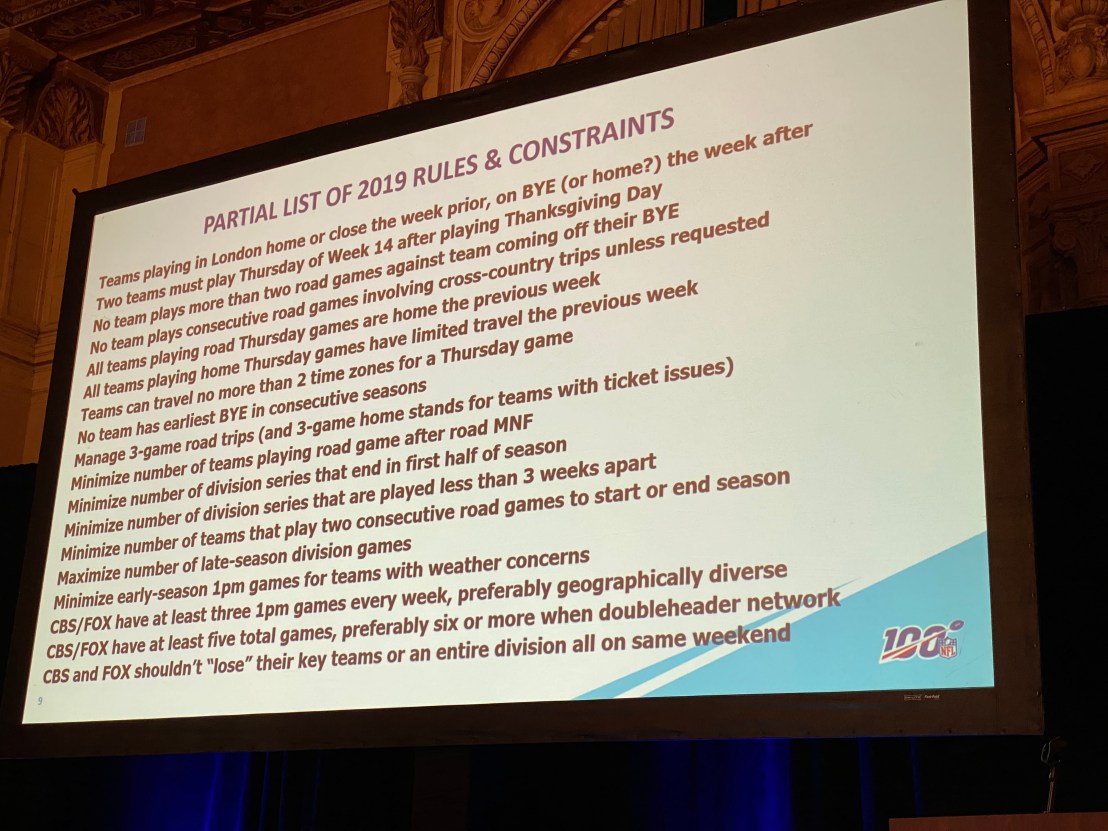
Super Bowl Sunday began with breakfast at the Biltmore Hotel’s Alhambra Ballroom , where NFL Vice President of Broadcast Planning, Mike North (shown in the photo above), gave a presentation on how the NFL schedule is made up each year. I’ve known it’s complicated, but Mike North let us see just HOW complicated it is. There are so many factors to take into consideration. How is THIS (below) for a list of just SOME of the factors that have to be taken into consideration when the schedule is made each year:

NFL_Schedule_constraints_Super_Bowl_LIV_Mike_North_presentation

Mike North, like Ron Riveron on Friday night, was very engaging, and we all enjoyed interacting with him, asking questions and learning so much. Chad and I left the presentation with an even greater appreciation for all the NFL does to put the product we know as the National Football League in front of fans around the world from August into February each year.

Doug_Chad_Super_Bowl_LIV_tickets

After breakfast, Chad and I took a walk around the impressive Biltmore property and then got ready to go to the game. We all met in the lobby of the Biltmore hotel where we were given our game tickets. Our seats were to be in an end zone, section 330, row 12. While my wife and I are certainly spoiled by our incredible 50 yard line seats as season ticket holders for the Chicago Bears, it’s always interesting to sit in different locations and get a different view of the playing field and stadium. With tickets in hand, we headed for the bus and we were off to Hard Rock Stadium for Super Bowl LIV.

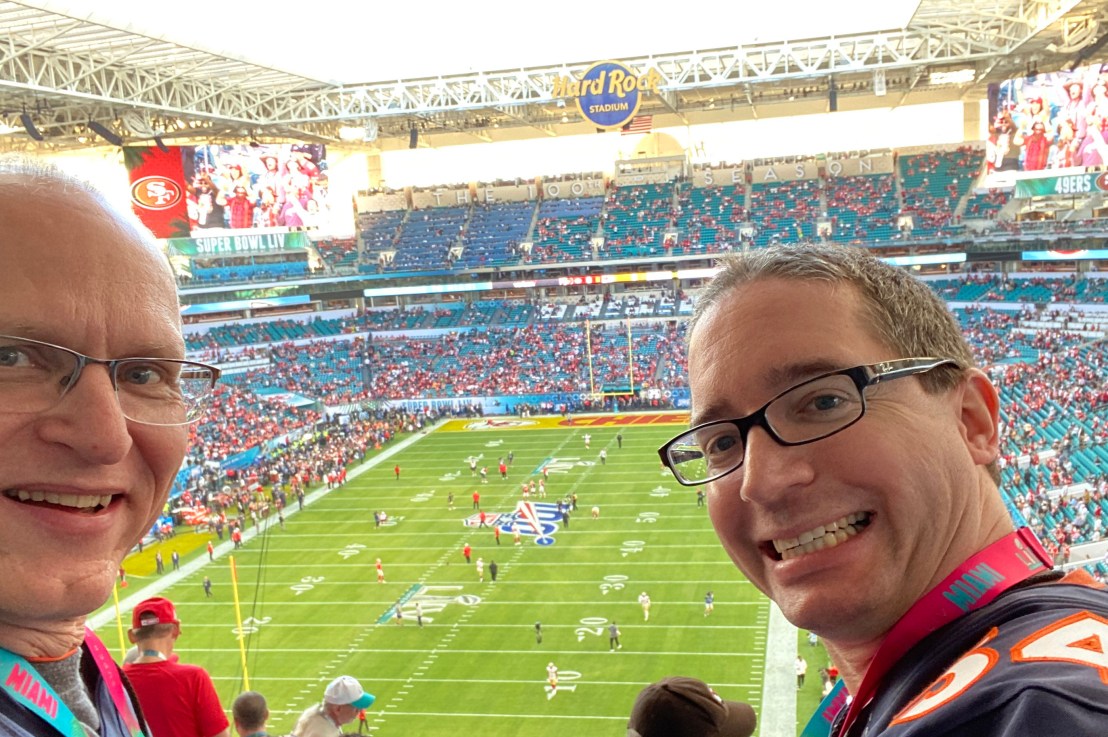
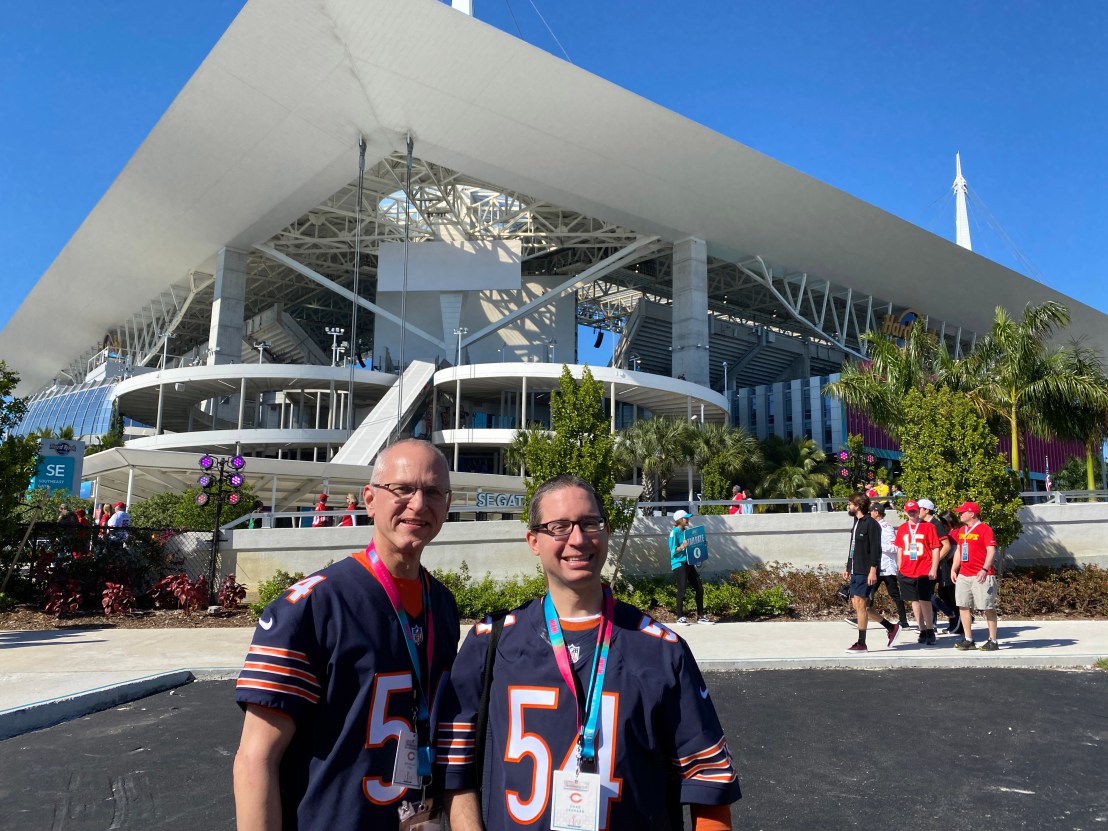
Doug_Chad_Hard_Rock_Stadium_Super_Bowl_LIV

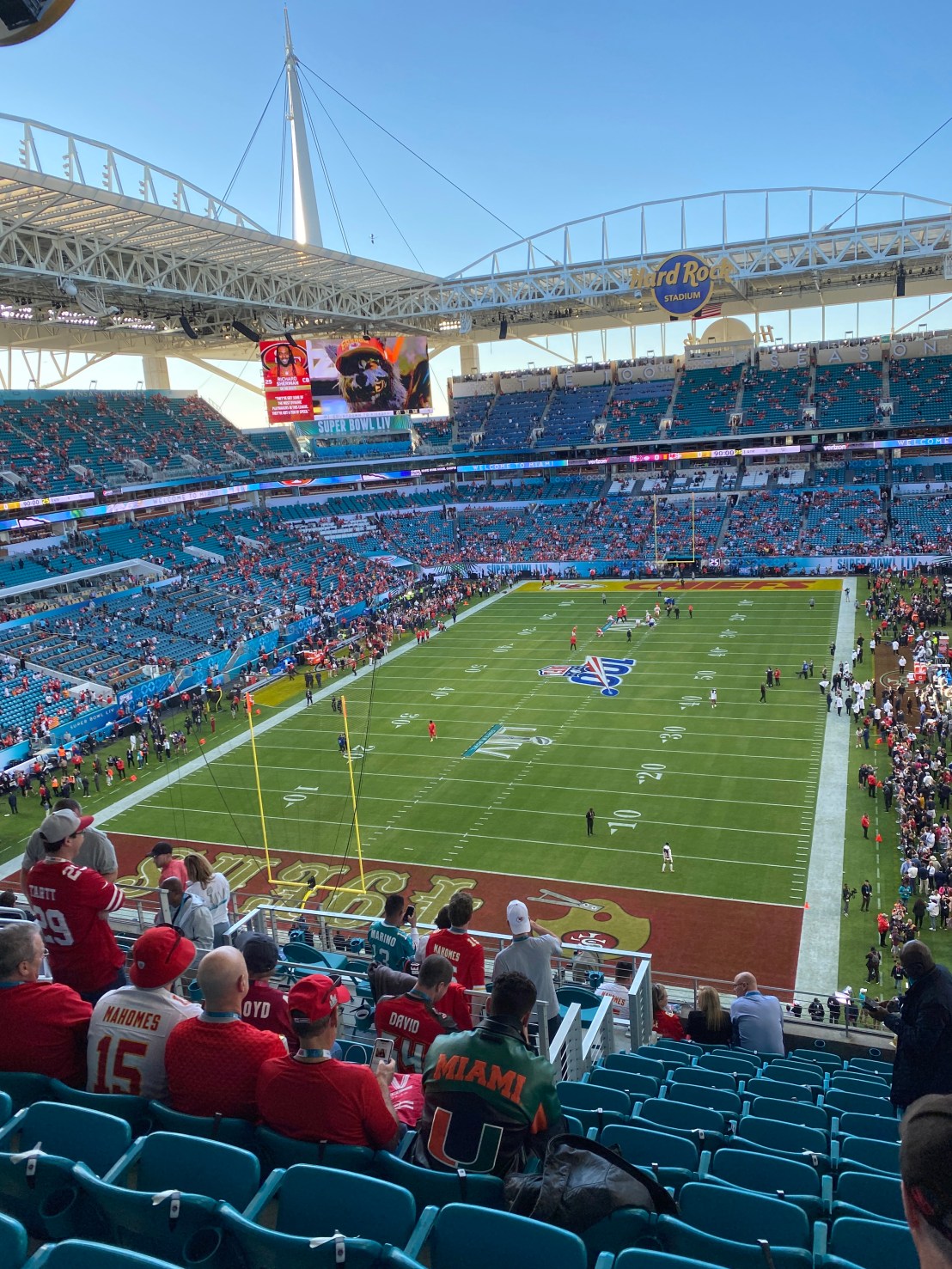
Once again, we were really happy someone else was doing the driving. Having our own charter bus to get to Miami’s Hard Rock Stadium (the home of the Miami Dolphins) made getting to the stadium a very relaxing experience. We arrived at the stadium at 2:00 pm (kickoff would be at 6:30 pm). Once there, we began to take in the scene. From cold and snowy in Chicago two days ago, Chad and I were standing in Miami’s 70 degree sunshine. Hard Rock Stadium underwent a major renovation in 2015. Among the many changes made at that time was the addition of a canopy that covers all seats and protects fans from rain and sun, leaving a large opening in the middle so the field is exposed to sunlight. The result was a modernistic update to the stadium that was originally built in 1987.

Kansas_City_Chiefs_fan_bus

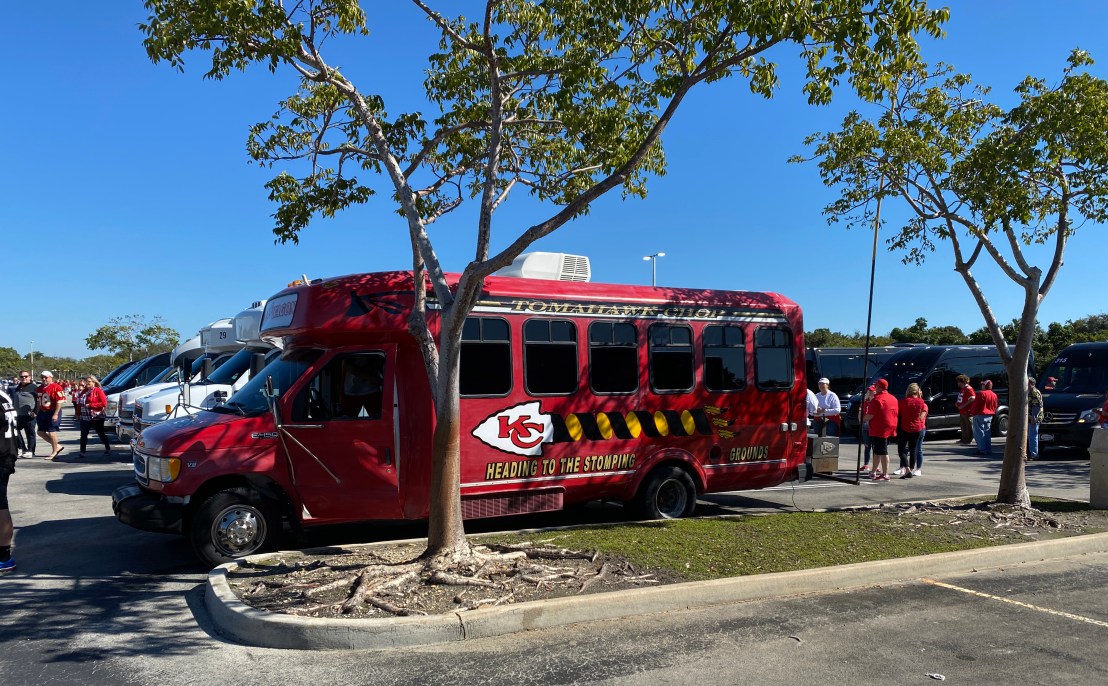
Super Bowl LIV was to be played by the San Francisco 49ers (representing the NFC) and the Kansas City Chiefs (representing the AFC). The two teams had great seasons and we knew we were in for a terrific matchup and game. Because we didn’t have a rooting interest in either team, we were going to enjoy a game where we could just appreciate the whole experience without the stress of seeing our team losing—or the joy of seeing it winning. Chiefs and 49ers fans were out in full force (such as the funny Kansas City Chiefs fan bus in the photo above) and the fan vibe outside the stadium was raucous, enthusiastic, and fun.

Hard_Rock_Stadium_Super_Bowl_LIV

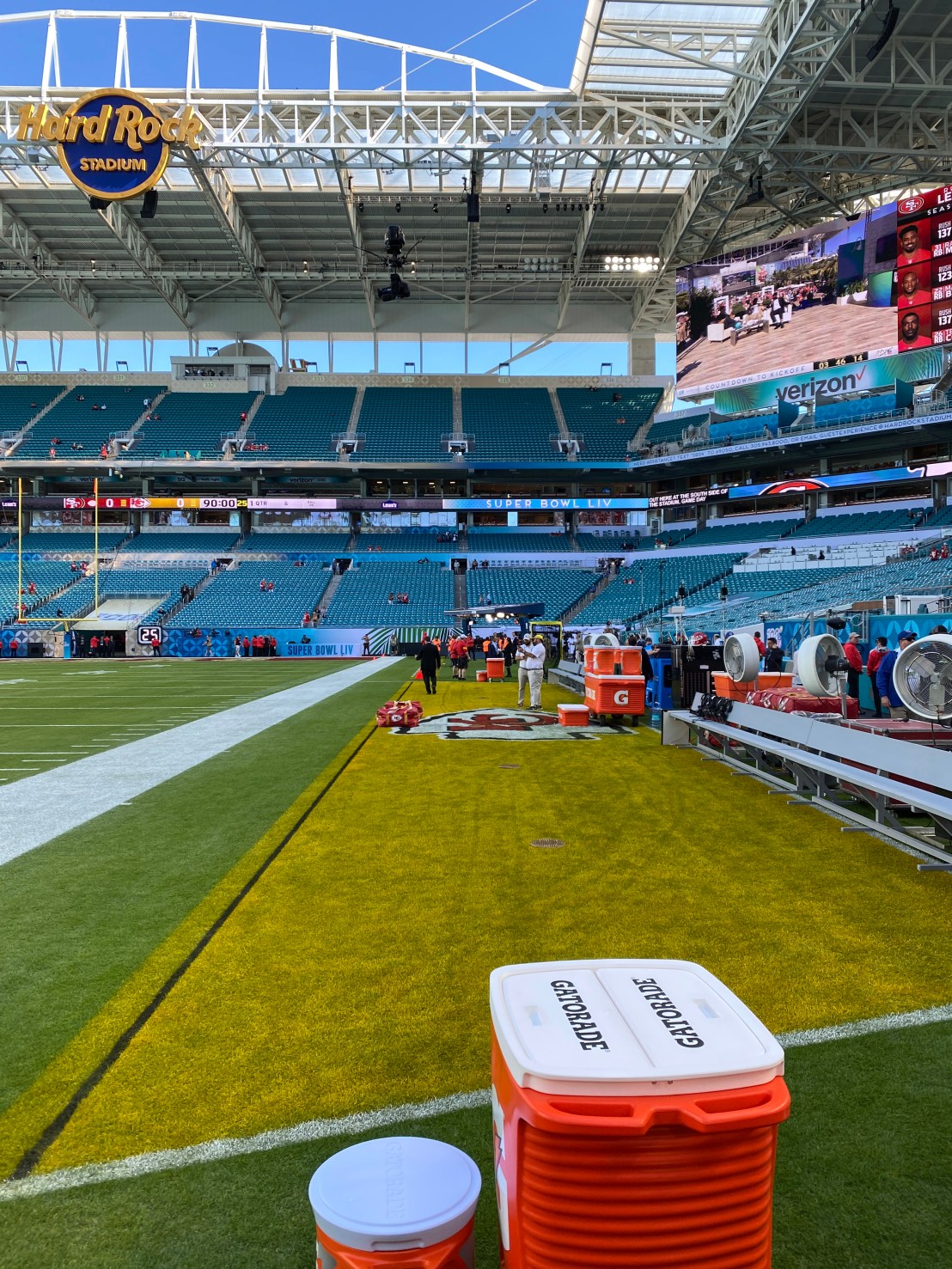
When we met at the Biltmore lobby and our Super Bowl tickets were distributed, we were also given wristbands (with embedded security chips) that would allow all of us to have access to the field at Hard Rock Stadium before the game. When we passed through security at 2:50 pm and got our first view of the inside of the stadium, the “wow factor” was in full force. We were virtually alone in the stadium, and as we made our way to the field, the full impact of just how special it was to be there began to sink in.

Kansas_City_bench_Hard_Rock_Stadium_Super_Bowl_LIV

Our on-field access was to a dedicated area only for us, next to the Kansas City bench, near the Chiefs’ end zone. As time went on, players, coaches, and others began to arrive to get set up for the game.

Chad_Hard_Rock_Stadium_Super_Bowl_LIV

Chad loves sports stadiums. He’s been a passionate sports fan since he was a young boy, particularly for the Chicago Bears. He has a prodigious memory for stadium details, even down to particular plays he’s seen in different venues. It was a real joy to see him at Hard Rock Stadium, just taking in the scene.

Super_Bowl_LIV_Hard_Rock_Stadium_panorama

Being on the field was a spectacular experience. The panoramic photo above gives you a sense of where we were and what we looked out and saw. It was beautiful and more.

Doug_Chad_representing_Chicago_Bears_Super_Bowl_LIV

While our Chicago Bears were not in this year’s Super Bowl, we were keenly aware that the Bears had given us this amazing experience and in a very real sense, we were representing the team at the game. Many fans recognized our jerseys and shouted out “Go Bears!” and gave us high-fives and fist pumps. While on the field, I reached into my bag and pulled out a Bears rally towel, one that was given out at a Bears game this past season at Soldier Field. The Bears, as a founding franchise of the NFL in 1920 (one of only two still in existence, along with the Arizona Cardinals), celebrated their 100th season along with the NFL. Posing with my Bears rally towel was yet another tribute we could make to the team we love, in thanks for all the joy they give to our family and to so many other fans.

Patrick_Mahomes_Super_Bowl_LIV

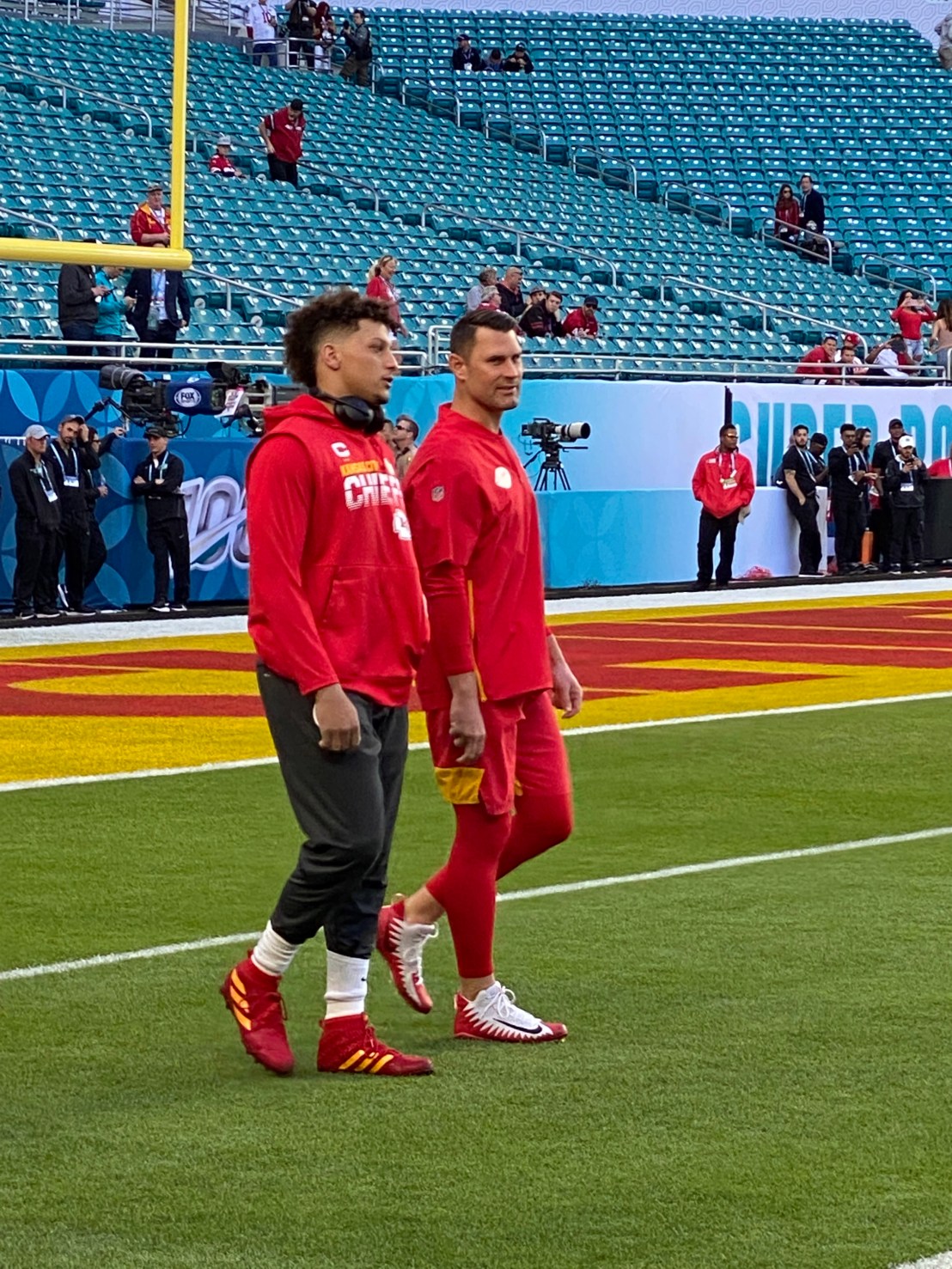
From our vantage point on the field, we saw many players arrive. Shown above is Kansas City Chiefs quarterback Patrick Mahomes (on the left) who, just a few hours later, would be both a Super Bowl champion and also Most Valuable Player (MVP) of Super Bowl LIV. We also saw various media outlets on the sideline conducting interviews and reporting from the scene.

NFC_North_on_field_Super_Bowl_LIV

The time on field was a rich one, as all of us in the STH Experience were together taking photos and taking it all in. A nice moment came when all of us representing teams from the NFC North (Lions, Packers, Vikings, and Bears) got together for a photo with Nicole Blake (center in the photo above). I have to say, Nicole took exceptionally great care of our division. She was always available to help in any way possible and was a fount of information. We could not have asked for a more competent, helpful, poised person to assist us in so many ways. You heard it here first: Don’t be surprised if some day, you hear that Nicole Blake is commissioner  of the National Football League. I’m serious. She’s that good! [Photo above by Logan Bowles, courtesy the National Football League.]

STM On Field Experience

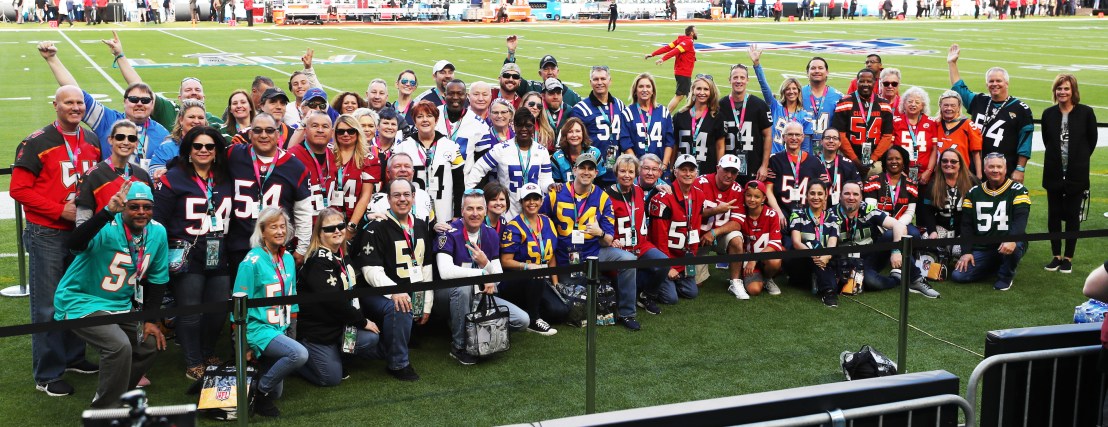
Before we left the field, all of us who had been given this amazing Season Ticket Holder experience gathered for a group photo. Getting to meet and know many of these fans was a highlight of the weekend and something we will keep with us for a very long time. It was great to be with fans who were there to enjoy the game, were passionate about their team, and engaged in friendly, positive, collegial (non-“trash talk”) conversation. I’m glad to have met them. You can see Chad and me kneeling in the middle of the group in the right hand third of the photo. [Photo above by Logan Bowles, courtesy the National Football League.]

Hard_Rock_Stadium_section_330_Super_Bowl_LIV_view

By 4:45, we decided to leave the field and head to our seats. The stadium was slowly filling up and pregame entertainment was beginning to appear on the jumbotrons. We did a little shopping for Super Bowl souvenirs for family members and then walked up the ramp to section 320.

Doug_Chad_George_McCaskey_Super_Bowl_LIV

Then an extraordinary thing happened. We had been in our seats only a few minutes when who should come up to us but George McCaskey, Chairman of the Chicago Bears (center in the photo above). It was George who called me last November to tell me that my essay had been selected as the winning entry in the Bears’ Season Ticket Holder Super Bowl Contest. We have great admiration for the McCaskey family, beginning with George’s mother, Bears owner Virginia Halas McCaskey, who is the daughter of George Halas. From our seats in section 309 at Soldier Field, we can turn around and see Virginia McCaskey and her family in her owner’s box. We are very grateful for the way the McCaskey family runs the team. They are “stand up” people, a family that loves God, loves football, loves the Bears, and is very aware of the legacy that of which they are stewards. That George took the time to come to visit us in our seats was something I never could have expected. I didn’t see any other owners or Chairmen of any other teams making their way to visit winners of their Super Bowl ticket contest. We had a great conversation with George about the Bears, the Super Bowl, and how we all looked forward to the day when we would see the Chicago Bears in the Super Bowl once again. Thank you, George, for all the Chicago Bears and McCaskey family means to our family and to Bears fans around the world.

Part of the pregame entertainment was the airing of the NFL’s new commercial titled, “Next 100.” It is a continuation of the story that started at the beginning of this just past season, which was the 100th anniversary season of the NFL. Before the first game of the season (which was between two of the most storied franchises in NFL history, the Chicago Bears and Green Bay Packers), the NFL aired a commercial that featured dozens of current and former players at a banquet celebrating the NFL’s centennial. What happened as Commissioner Roger Goodell was addressing the players was quite something. Have a look at the NFL’s “100-year Game” commercial (to view the commercial on YouTube, click HERE):

As a follow up, the NFL created a new commercial that aired during the Super Bowl LIV pregame show. “Next 100” features 13 year old Maxwell Bunchie and a cast of current and former NFL players as well as youngsters who are currently playing the game. The commercial ended with Bunchie running onto the field at Hard Rock Stadium with a group of young players to the cheers of the crowd at Super Bowl LIV. The commercial became real. Have a look (to view the commercial on Youtube, click HERE):

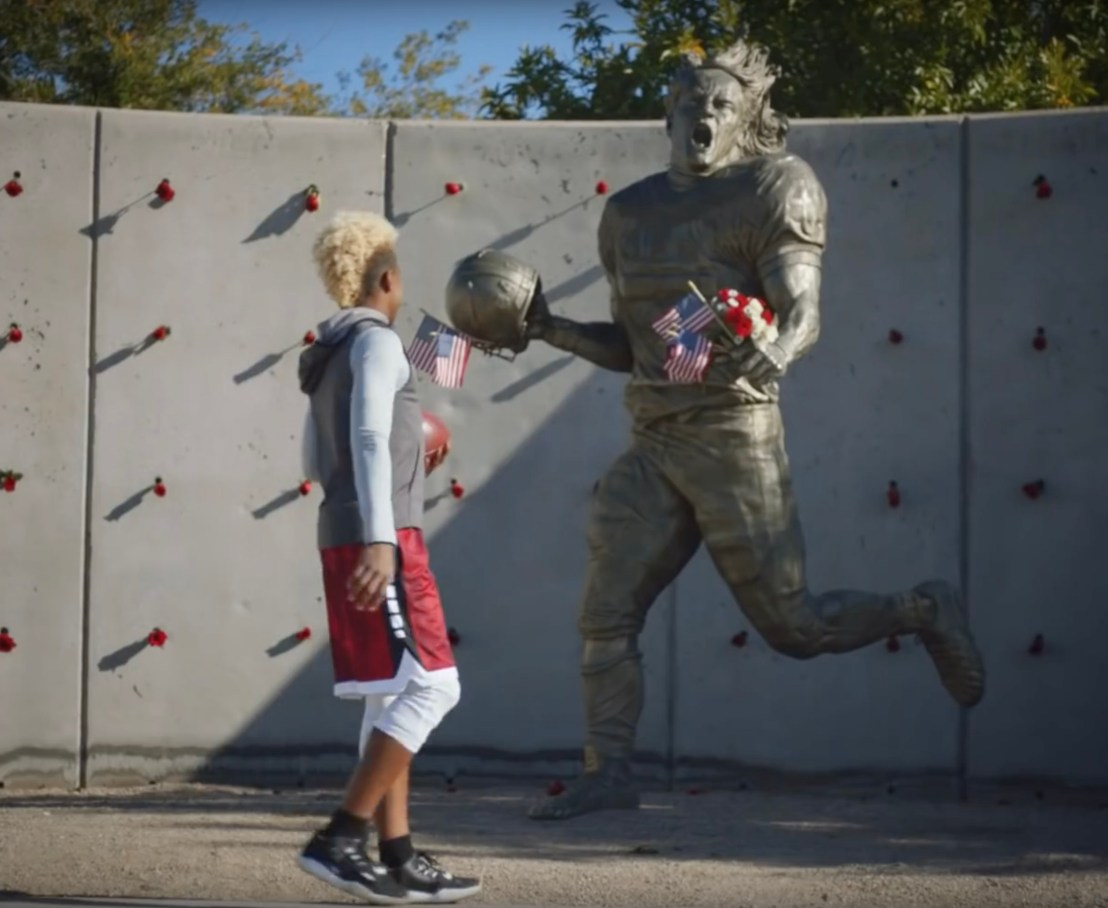
I think this commercial is terrific. It brings together the youth football movement and the NFL, and it shows something of the future of the League. Of the many exceptional moments in the film, I was deeply moved by two segments. The first is where Maxwell Bunchie stands in front of the statue of Pat Tillman (who, while a member of the Arizona Cardinals, left the team after the 9/11 attacks and joined the U. S. Army; he was killed in Afghanistan in 2004) at State Farm Stadium in Glendale, Arizona, home of the Arizona Cardinals. All music and other sounds stop in the commercial for a few seconds as Bunchie considers the sacrifice Tillman made in the service of his country.

Pat_Tillman_Next100_NFL

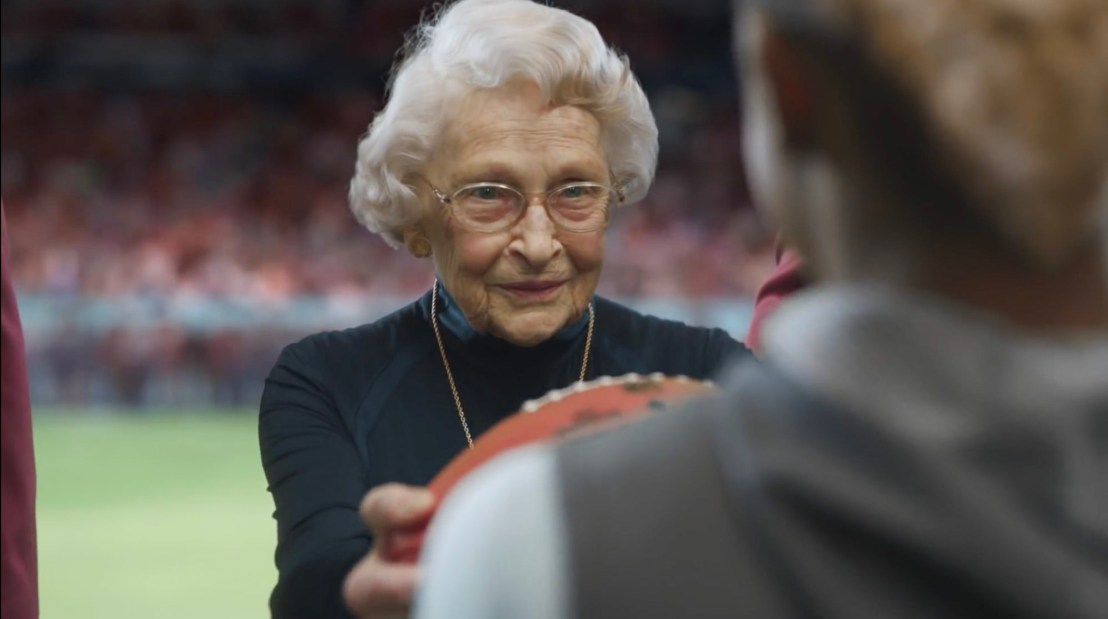
The other special moment is near the end, when Bunchie walks a gauntlet of NFL players to the end of the tunnel to a playing field. There he is met by Chicago Bears owner Virginia Halas McCaskey—now 97 years old—who gives Bunchie the game ball for the kickoff of Super Bowl LIV and says, “You know what to do.” Bunchie accepts the ball, nods his head, and runs onto the field in Hard Rock Stadium. Film to reality without missing a beat.

Virginia_Halas_McCaskey_Next100_NFL

With the showing of the “Next 100” commercial, the pregame activities moved ahead quickly. There was the introduction of many members of the NFL 100 All-Time Team, the 100 best players and 10 best coaches in NFL history. And then here was the singing of America the Beautiful by Yolanda Adams, and the National Anthem by Demi Lovato, both done very well and respectfully. Here is the video of Lovato singing the National Anthem (to view this video on YouTube, click HERE):

The coin toss was won by the 49ers who deferred to the second half, meaning the Chiefs got the ball first.

Kickoff_Super_Bowl_LIV

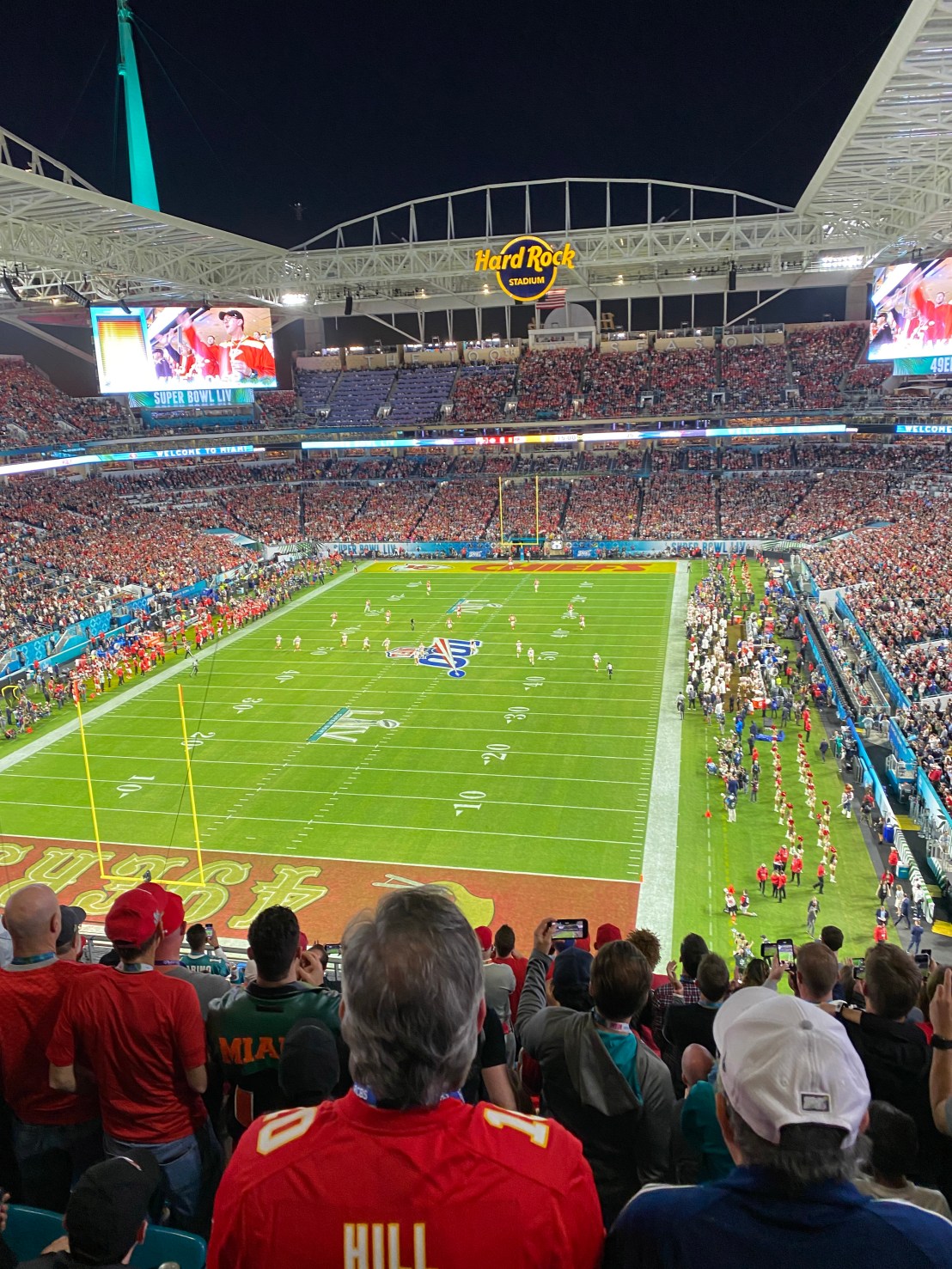
When the 49ers kicked off (photo above), Super Bowl LIV was underway. The first half seemed evenly matched which seemed a bit of a surprise. Many fans were expecting a high scoring game, but when halftime came and the score was tied at 10-10, it seemed like the game was wide open. But before the second half began, we had the Super Bowl halftime show ahead of us.

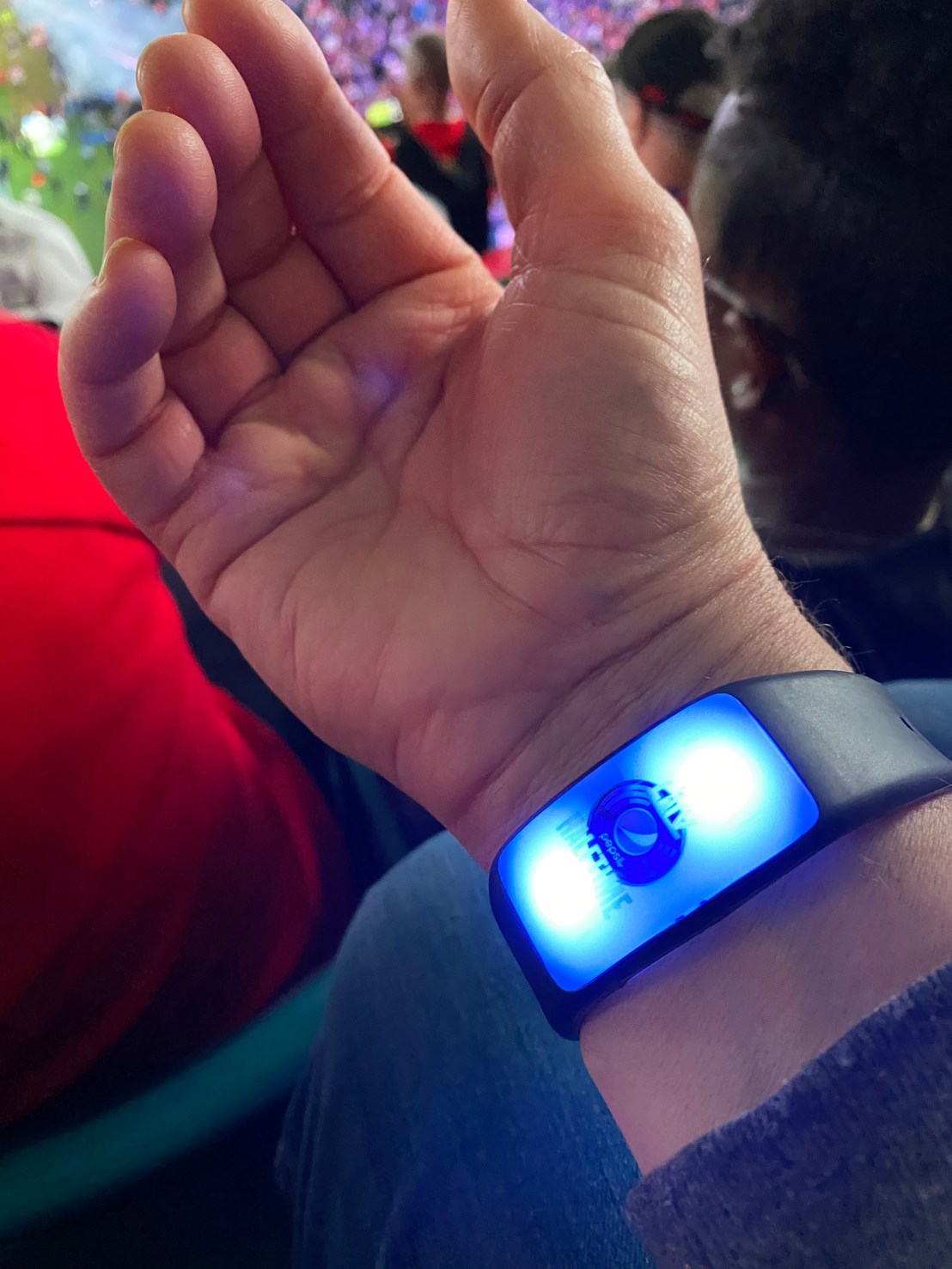
Suuper_Bowl_LIV_halftime_show_fan_bracelet_light

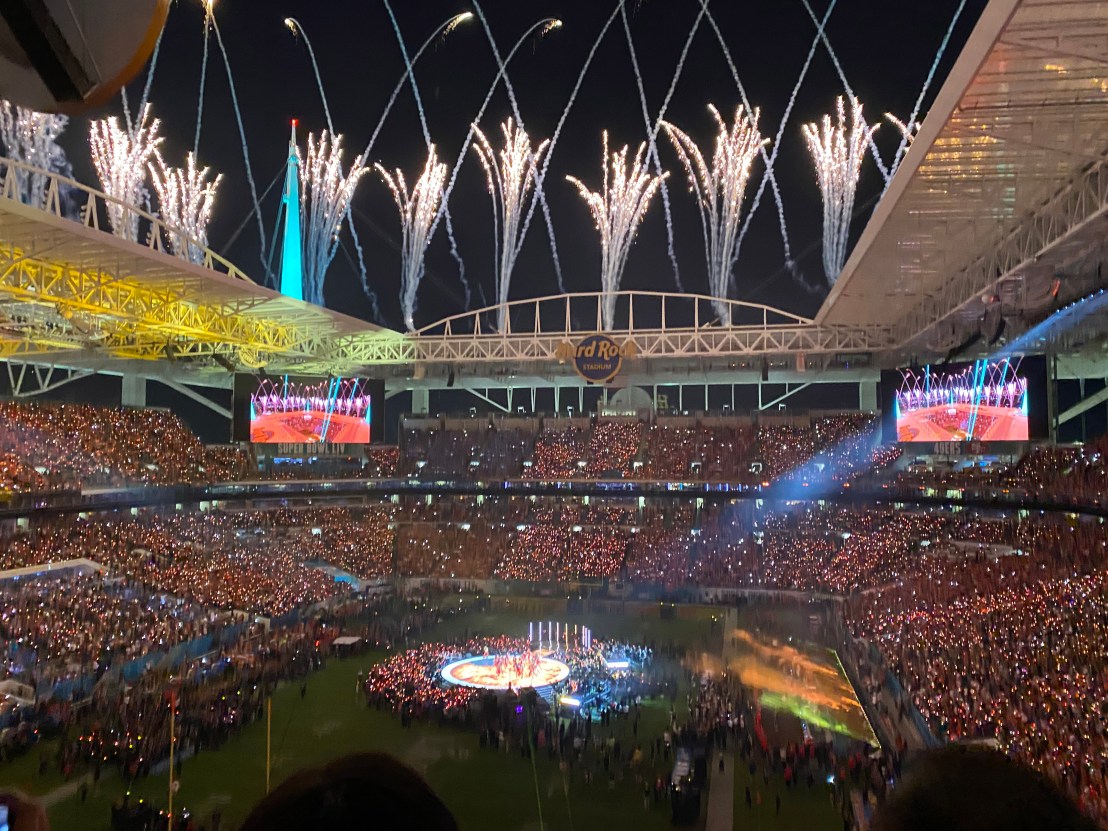
When we arrived at our seats before the game, we found a bracelet taped to the back of the seat. As we learned, every fan in the stadium was issued a bracelet with instructions to put it on before the halftime show and hold our hand up. The halftime show, which featured singers Shakira Ripoli and Jenifer Lopez, turned out to be much more than a musical event.

Super_Bowl_LIV_halftime_lights_01

Super_Bowl_LIV_halftime_lights_02

Super_Bowl_LIV_halftime_lights_03

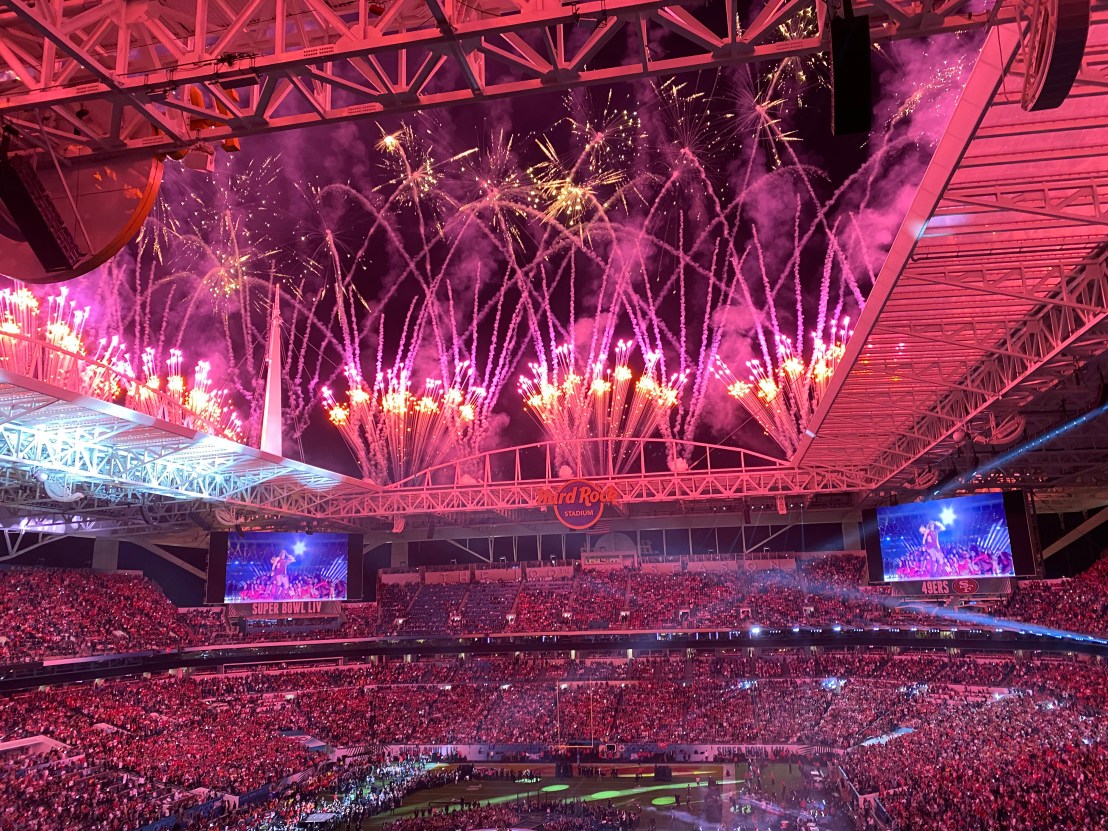
The show was a technological tour de force, where each of the 62,000 bracelet lights were remotely controlled to give the audience a spectacular, ever-changing light show. In addition to the bracelet lights, fireworks were fired skyward throughout the show. While I confess the musical aspect of the halftime show was not especially interesting to me and I was disappointed in the not-exactly-family-friendly, hyper-sexualized dress and movements of the star singers, I was fascinated by the innovative use of technology that kept the audience aware of the always changing environment. When I got home and saw the halftime show on television, I realized just how unique our view of the action was.

Super_Bowl_LIV_confetti_beginning

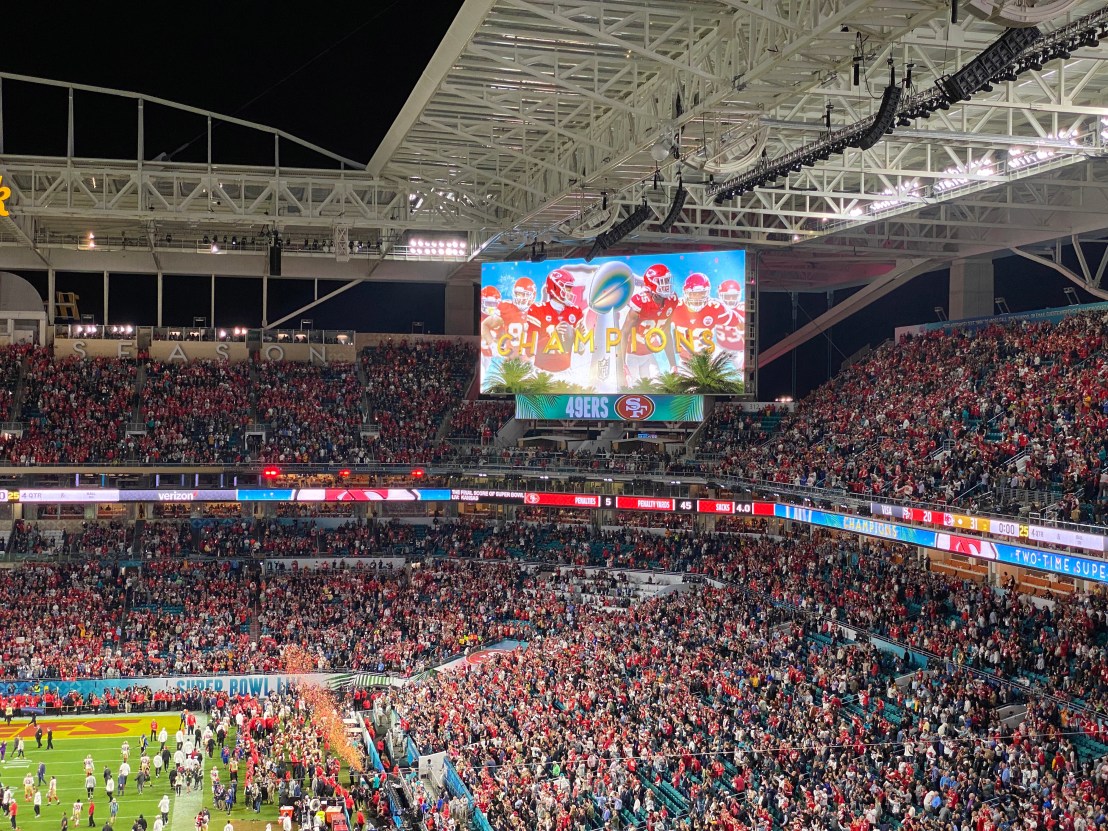
After halftime, the game resumed. The 49ers seemed to be in control of the game, scoring 10 unanswered points after halftime, but in the middle of the fourth quarter, the Chiefs became a different team. They quickly scored 21 unanswered points and won Super Bowl LIV handily, 31-20. The game was exciting and very interesting, and kudos to the Chiefs for continuing to fight even when it looked like they were poised to lose. As soon as the game was over, confetti in Kansas City Chiefs colors was shot over the field from confetti cannons. Look in the bottom left/center of the photo above to see the moment the confetti began.

Super_Bowl_LIV_trophy_ceremony

Then followed the presentation of the Vince Lombardi trophy to the Chiefs (photo above), and the Most Valuable Player trophy to Chiefs quarterback Patrick Mahomes.

Super Bowl LIV was history, a game that was more than worthy of concluding the year-long celebration of the 100th season of the National Football League.

Hard_Rock_Stadium_after_Super_Bowl_LIV

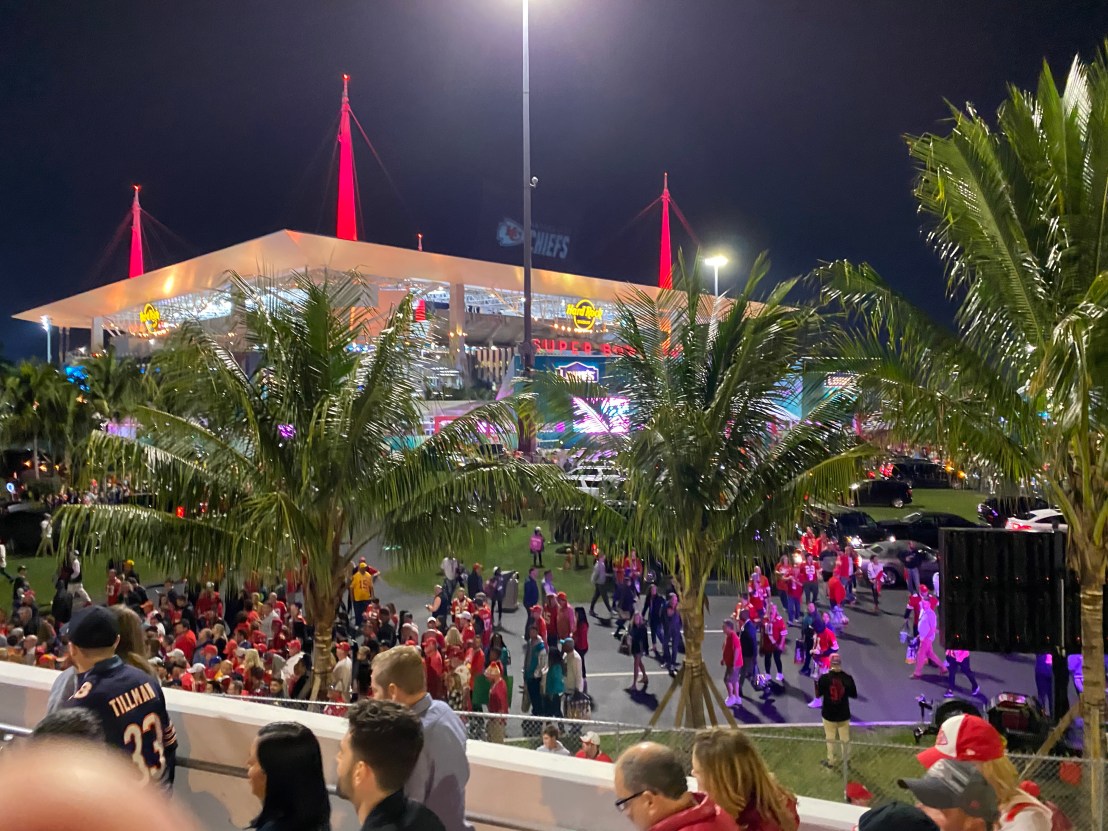
As we left Hard Rock Stadium to return to our bus to take us back to the Biltmore Hotel, Chad and I turned around for one more look at the Stadium. It was beautifully lit on a beautiful night, palm trees moving in a gentle breeze. It seemed like the ideal end to a weekend to remember. Given all that we received from the Chicago Bears and the NFL, it’s difficult to find words that are adequate to express our gratitude. What started with writing a 100 word essay and entering a contest culminated in a trip of a lifetime. Thank you, Chicago Bears. Thank you, McCaskey family. And thank you, National Football League. Because of all of you, Chad and I were a part of football history last weekend, and that is something for which we are very, very grateful.

Oh, and. . .

Go_Bears