Category: National Parks

For everything there is a season

For everything there is a season

by Douglas Yeo (May 19, 2024)

The Bible gives us answers, and it reminds us of this (Ecclesiastes 3:1-8, English Standard Version):

For everything there is a season, and a time for every matter under heaven:

a time to be born, and a time to die; a time to plant, and a time to pluck up what is planted;

a time to kill, and a time to heal; a time to break down, and a time to build up;

a time to weep, and a time to laugh; a time to mourn, and a time to dance;

a time to cast away stones, and a time to gather stones together; a time to embrace, and a time to refrain from embracing;

a time to seek, and a time to lose; a time to keep, and a time to cast away;

a time to tear, and a time to sew; a time to keep silence, and a time to speak;

a time to love, and a time to hate; a time for war, and a time for peace.

For each of us, our lives are full of seasons, and I have recently turned the page on a very long season of life and a new season is upon me.

Pearce_trombone_Concert_stylings

One of the Bill Pearce solo trombone with piano books that my first trombone student, Lloyd, gave to me in payment for trombone lessons I gave him at Wheaton College in the summer of 1974.

I have been teaching trombone lessons since the summer of 1974. At that time, I was a student at Wheaton College and another student on campus, Lloyd, asked if he could take some lessons with me. Lloyd wasn’t a trombone major; in fact, he was a student at Wheaton College for only that one summer quarter. But I was happy to help him improve his skills. At the end of the lessons, Lloyd told me he didn’t have money to pay me but if I would accept them, he would give me five books of solos for trombone and piano by the great gospel trombonist Bill Pearce. 50 years later, I still have and use those books. After that summer, I began teaching weekly lessons to young players through the College’s Preparatory Department. Doing so helped me get through college without any debt (that job along with other jobs that included working as student manager of the College artist series, working two days a week at a local White Hen Pantry, and shoveling snow for an office park in the winter).

Since that time, I’ve taught regularly in many schools, first as a high school band director, then as trombone teacher/professor of trombone:

STA_My_Fair_Lady_pit_band

St. Thomas Aquinas High School, Edison NJ (1979-1981) — with students in rehearsal for the school’s production of My Fair Lady, 1981.
Peabody_News_1982

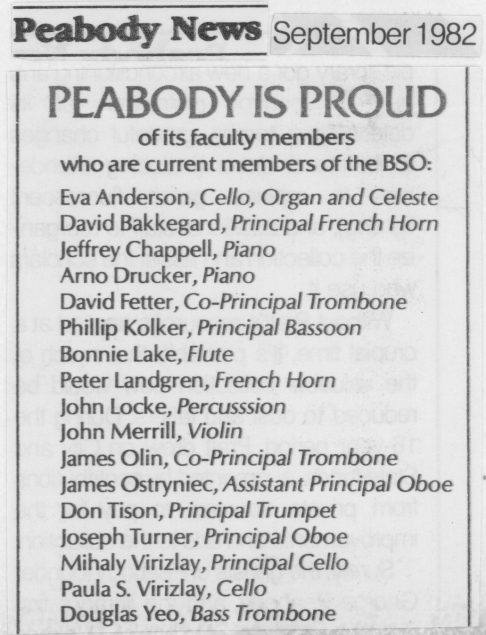
Peabody Institute of Johns Hopkins University, Baltimore MD (1982-1985) — Announcement from September 1982  in Peabody News listing faculty members who were members of the Baltimore Symphony Orchestra

NEC_Trombones_1990_01

New England Conservatory of Music (1984-2012) — conducting the New England Trombone Choir at New England Conservatory, 1990
ASU_Desert_Bones_2016

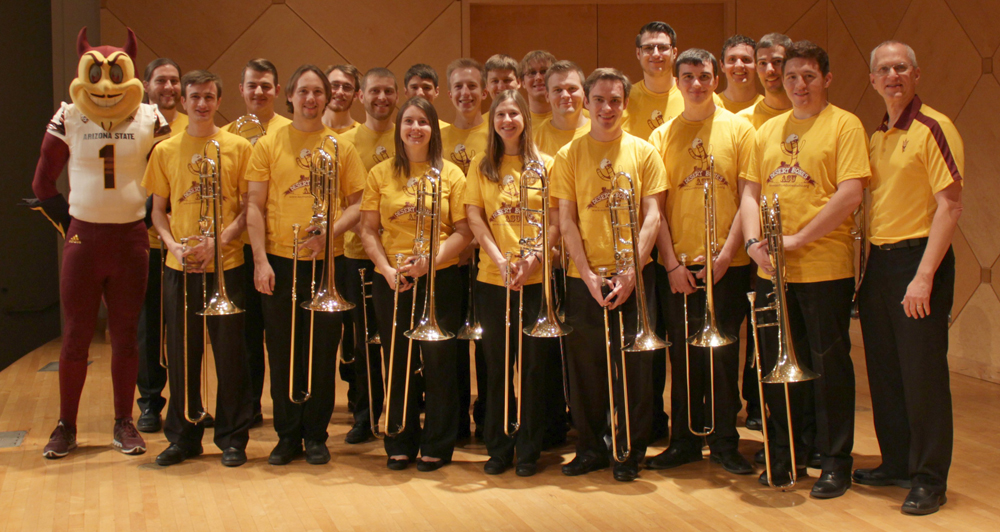
Arizona State University, Tempe AZ (2012-2016) — ASU Trombone Studio with the University’s mascot, Sparky, 2016

Wheaton College, Wheaton IL (2019-2023) — performance of Canzone by Girolamo Frescobaldi, arr. Eddy Koopman, Wheaton College faculty recital, April 23, 2022

UIUC_Illinois_trombone_studio_2024_signed_photo

University of Illinois Urbana-Champaign, IL (2022-2024) — signed photo given to me by members of the University of Illinois Trombone Studio, May 2024

Since I retired from the Boston Symphony Orchestra in 2012 after more than 27 years as a member of that great orchestra, my life has taken many turns. My wife, Patricia, and I moved to Arizona where I immediately flunked retirement and accepted the full time position as professor of trombone at Arizona State University. In 2018, we moved to the Chicago area to be near our grandchildren (grandkids truly make you do crazy things, like move from Arizona to the Midwest) and I flunked retirement again when I was asked to teach at my undergraduate alma mater, Wheaton College. When University of Illinois asked me to take a one year position as professor of trombone for 2022-2023—a position that came to me most unexpectedly and I thoroughly enjoyed—I looked forward to trying this retirement thing again in 2023 when that appointment was up and, at the same time, I decided to step away from teaching at Wheaton College. But as things turned out, one year of teaching at Illinois turned into two years. Happily, the Illinois School of Music recently hired a new full time trombone professor and my appointment at Illinois concluded.
Yeo_UIUC_office_letter

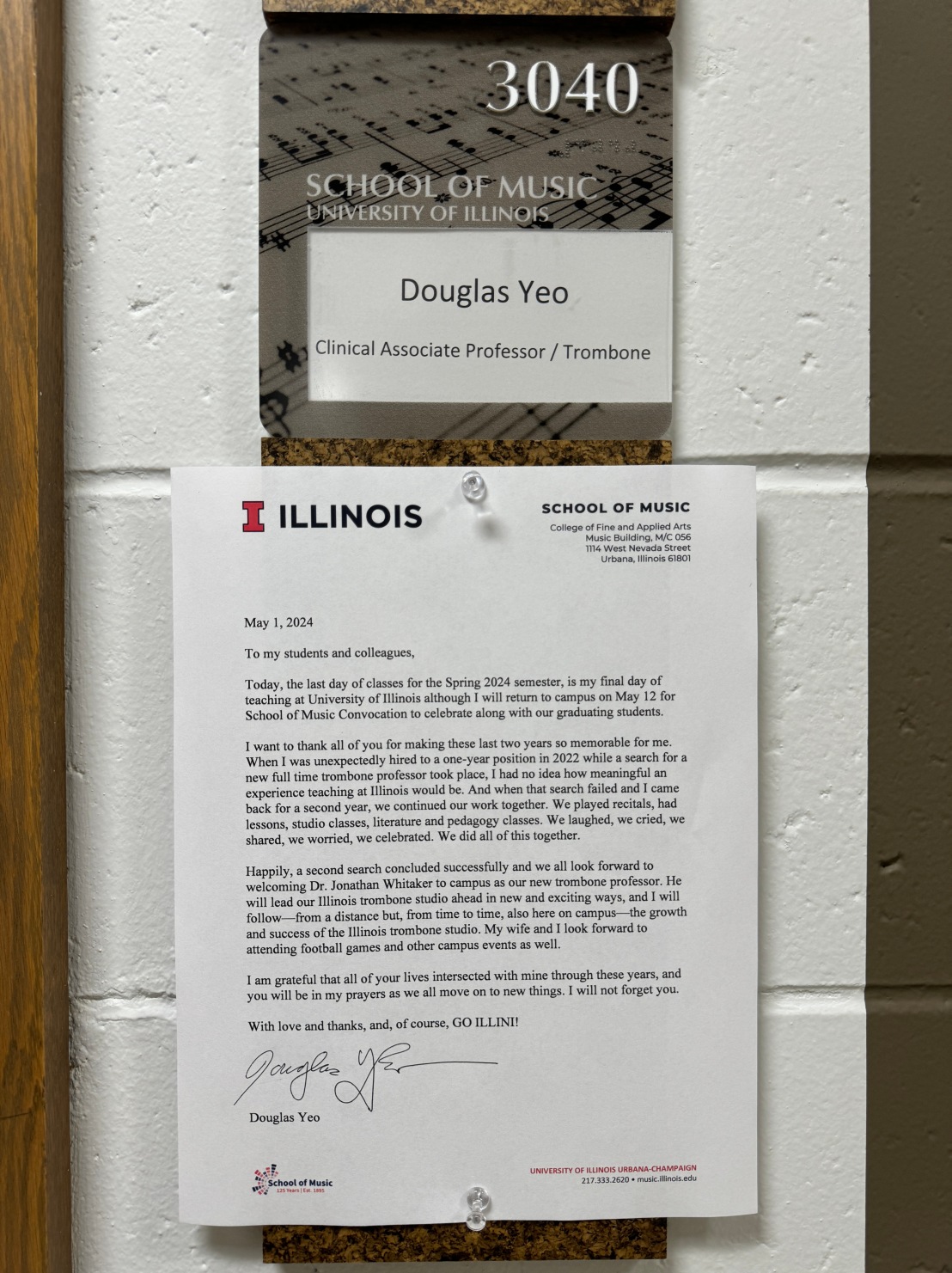
I taught my last trombone lessons at University of Illinois Urbana-Champaign on May 1 and before I headed home, I wrote a letter to my students and colleagues that I posted on the bulletin board next to my office, shown above.

UIUC_Convocation_students_2024

With my graduating students at University of Illinois Urbana-Champaign School of Music Convocation, May 12, 2024. Left to right: Rachel Lin (Bachelor of Music Education), Jerry Min (Bachelor of Music), Lorraine Montana (Master of Music)

I returned to campus on May 12 when  University of Illinois held a Convocation ceremony for the School of Music and I celebrated the graduation of three of my students. In a sense it was a graduation ceremony for me, too, as I closed out two memorable years teaching at University of Illinois, a campus community where I feel a very strong connection. When the ceremony was over, I took off my academic regalia, switched off the lights in my office, and turned in my keys. On the long drive home through the beautiful, newly planted Illinois cornfields, I began to reflect on all that had just happened. A new season had begun.
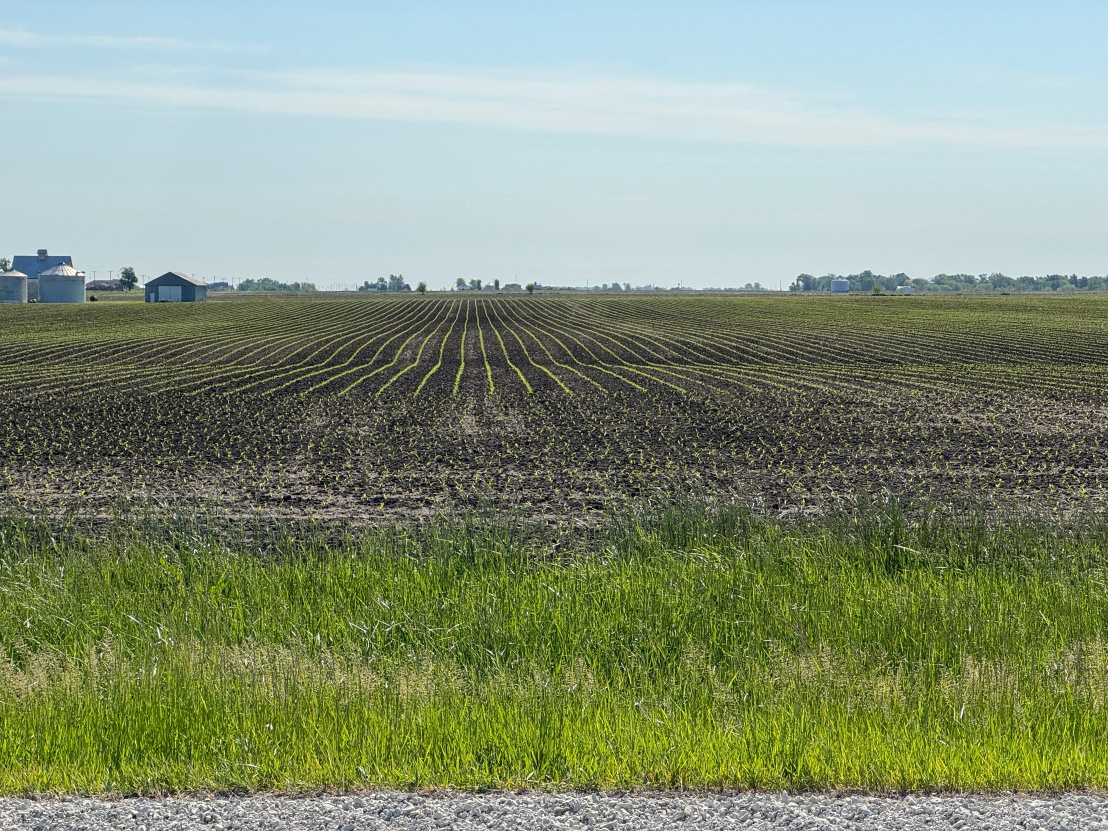
Illinois_cornfields_May_2024

Newly planted Illinois cornfields along Illinois Route 115, May 12, 2024

Illinois_corn_May_2024

The corn is now just a few inches tall and in late fall it will be, in the words of the song, “Oh, What a Beautiful Mornin'” from the musical Oklahoma!, “as high as an elephant’s eye.”

As I see it, “retirement” is a lousy word. When I decided to retire from the Boston Symphony, many of my colleagues asked me, “So, are you going to take up golf?” Nope. Golf doesn’t interest me. And I never saw “retirement” as a season of life devoted to non-stop self-entertainment. After decades playing in symphony orchestras, I looked forward to new adventures. I wanted to have more time to research and write, to travel with my wife, to enjoy more time with our daughters and their families, and, with open hands, respond to God’s call to His purposes for my life.

Retirement, as it turned out, meant not playing golf or kicking back and “doing nothing,” but, rather that I was busy doing a host of engaging activities.

UIUC_trombone_studio_Lincoln_poster

The poster that hung in my office at University of Illinois for the last two years. It contains a logo my friend, Lennie Peterson, designed for our trombone studio, my five core tenets of teaching, and a quotation from Dr. Robert E. Gray that sums up the ethos of the University of Illinois Trombone Studio.

I’ve spent most of the last 12 years teaching at colleges and universities each week of the academic year: Arizona State, Wheaton College, University of Illinois. Working with those students has been such a big part of my life. But as I near a birthday with a zero on the end of it (it’s not 60; that was a long time ago. . .), I decided, after much thought and prayer, to step aside from weekly trombone teaching and have more time to do other things. This doesn’t mean I’ve taught my last trombone lesson. I love teaching; I still do. But this change in my life means I won’t be doing that teaching every week as a school’s trombone professor. This freedom gives me time to explore and enjoy both new and familiar things.

And there is a lot ahead for me. Later this month, I’ll travel to Texas Christian University (TCU) in Fort Worth, Texas, to take part in the International Trombone Festival. I’ll give a recital, serve on two roundtable discussion panels (one is about diversity considerations in recital programming; the other is about trombone research), give a major presentation about the celebrated trombonist Joannès Rochut, perform with the TCU trombone choir, and accept the International Trombone Association’s Lifetime Achievement Award. This summer my wife and I will take hiking trips to Grand Canyon and Zion National Parks (with our oldest daughter’s family, including our grandchildren), and Sequoia and King’s Canyon National Parks (with our youngest daughter and her husband). In September, I’ll conduct a trombone residency at University of Texas, Austin. In October I’ll play ophicleide in concerts with the San Francisco-based early music group, Philharmonia Baroque. We’ll attend many baseball games this summer (Chicago Cubs, Schaumberg Boomers, Chicago Dogs, Kane County Cougars, Oakland Ballers), and fall will bring us to our seats in Chicago’s Soldier Field for Chicago Bears football. A major American symphony orchestra has asked if I would be willing to substitute with them in the coming season. Research and writing projects are on my plate (watch the July 2024 issue of the International Trombone Association Journal for my article about the history and a chemical analysis of trombone slide oil, and the January 2025 issue for my article about Joannès Rochut; I’m also at work on a new book for Oxford University Press), as are hikes, walks and tandem bicycle rides with Patricia. And serving our church and enjoying life with our grandchildren.

Doug_Pat_Zion_Observation_Point_June_2023

With my wife, Patricia, at Observation Point, Zion National Park, June 2023. We will return to this special place next month; it will be our 19th trip to Zion National Park.

So, as my long season of institutional teaching has turned a page, I look back at those decades with great fondness and gratitude. And I have learned this: I don’t know all of what God has for me going forward.  With open hands, I’m grateful for the opportunities I’ve had to serve, learn, and contribute. I plan to keep doing that in both new and familiar ways as God leads. I look forward to seeing you along the road.
Independence Day 2022: Our Lives, our Fortunes and our Sacred Honor

Independence Day 2022: Our Lives, our Fortunes and our Sacred Honor

By Douglas Yeo

Today is Independence Day in the United States of America. It’s a holiday; banks, the post office, and the stock market are closed. Friends of ours are coming over to our house later today and we’ll have dinner together. Grills across the country are firing up and families are having cookouts and picnics. There will be patriotic concerts, and fireworks will light up the night sky.

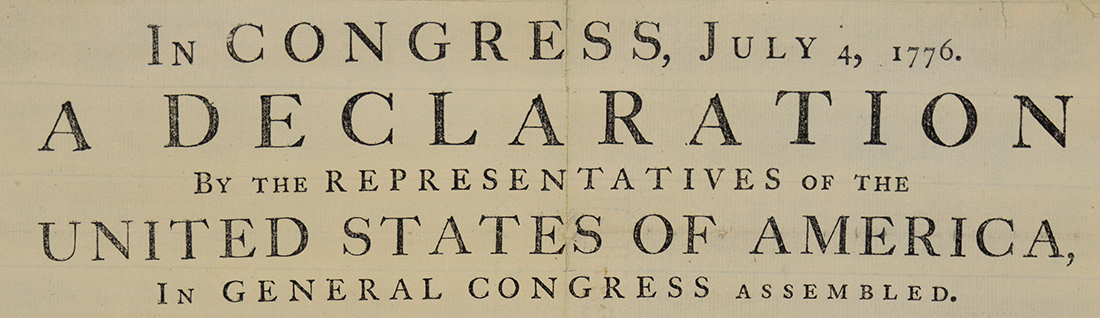
Of course, July 4 is more than all of that. This holiday isn’t just a day off. It’s a day to remember July 4, 1776, when a group of of representatives from the Thirteen Colonies gathered to sign a Declaration of Independence from Great Britain. The cause was justice and freedom, and these brave individuals signed their names under the Declaration’s final sentence:

And for the support of this Declaration, with a firm reliance on the protection of divine Providence, we mutually pledge to each other our Lives, our Fortunes and our Sacred Honor

They were serious. Very, very, serious. They put everything on the line for justice and freedom.

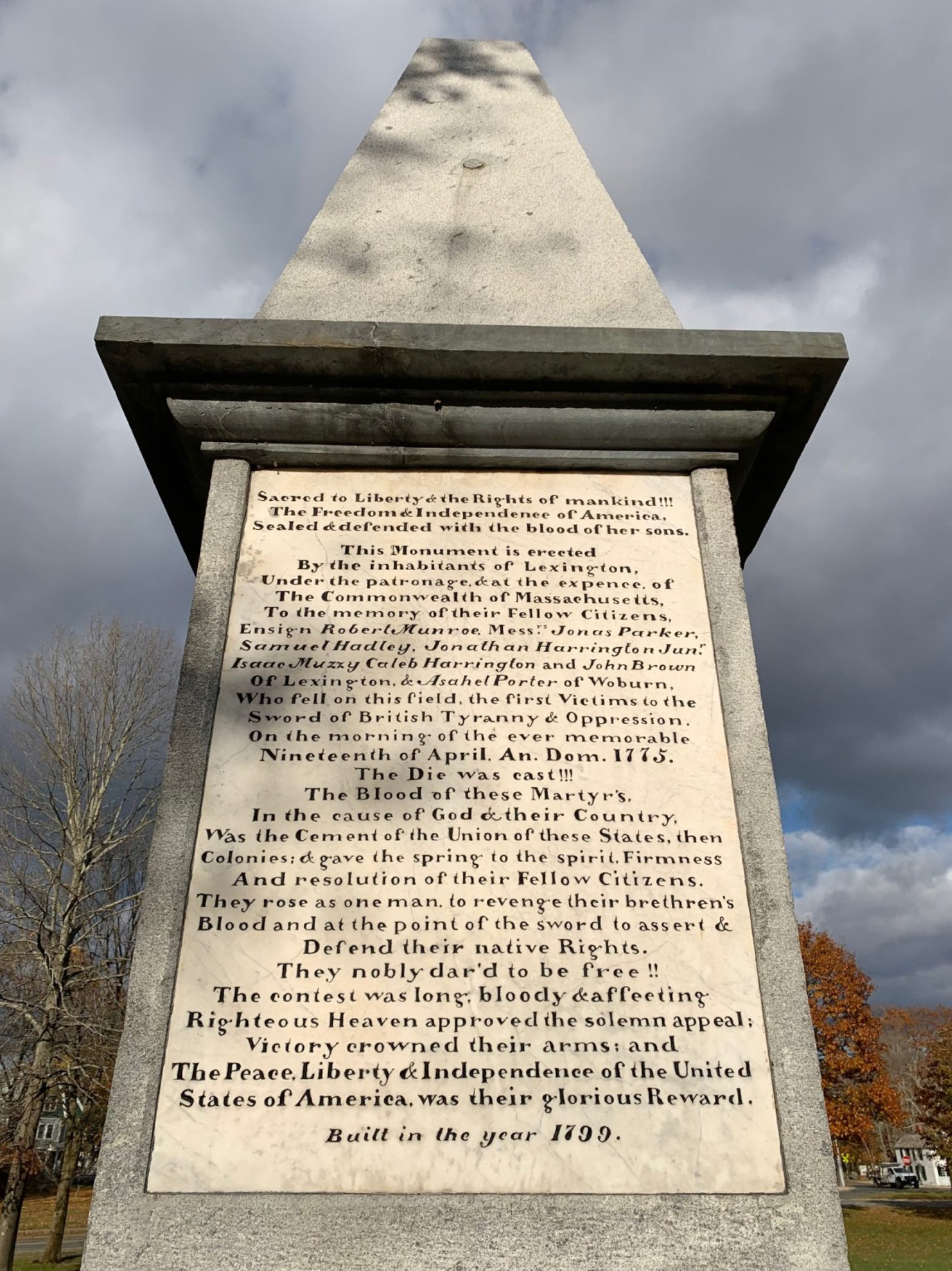
Lexington_Battle_Green_Monument_1799

The first monument to the Revolutionary War erected in the United States, 1799. Lexington (Massachusetts) Battle Green.

My wife and I lived in Lexington, Massachusetts, for over 27 years during the time I was bass trombonist of the Boston Symphony Orchestra. It was in Lexington where “the shot heard ’round the world” was fired on April 19, 1775, the first battle of what came to be called the American Revolution. Lexington’s Battle Green is full of monuments, including the first Revolutionary War monument in the United States (photo above), erected on July 4, 1799, and around which are buried the bodies of the eight Colonial militiamen who died on that April morning. Take a moment to read the inscription. And think of the eight men who died, whose names are inscribed on the tablet. They had families, friends, occupations. And they sacrificed everything for the cause of justice and freedom. If you live in the United States, they died for your freedom. And my freedom, too.

Our country is facing great challenges right now. I can’t fix all of them. Neither can you. But like anyone who is reading these words, I can do something. I can start—you can, too—by emulating the fruits of the Holy Spirit, as outlined in the Bible, in Galatians 5:22-23:

The fruit of the Spirit is love, joy, peace, patience, kindness, goodness, faithfulness, gentleness, and self-control.

That’s a good place to start. Then, in the words of the old gospel song by Ina Duley Ogdon:

Do not wait until some deed of greatness you may do,

Do not wait to shed your light afar;

To the many duties ever near you now be true,

Brighten the corner where you are.

I look to the promise of the Declaration of Independence. We have imperfectly implemented its aspirational goals that so many have died to defend. But my father often said, “The United States has the worst system of government in the world. Except for all the others.” I have been around the world; I have visited 30 countries. I love many things about all of them. But the United States is home to me, and our system of government and governing, and our country—though full of imperfect, sinful people, and creaking under great stress right now—is still worth fighting for. Just because we haven’t fixed it doesn’t mean we shouldn’t keep trying to fix it. I hold on to the promise of the Preamble of the Declaration of Independence, and I work to implement it with my thoughts, words, and deeds:

We hold these truths to be self-evident, that all men [and women] are created equal, that they are endowed by their Creator with certain unalienable Rights, that among these are Life, Liberty, and the pursuit of Happiness.

Douglas_Yeo_American_flag_1960

Douglas Yeo at home in Valley Stream, New York. Memorial Day, 1960.

When I was a boy, I lived in Valley Stream, New York. We moved there in spring, 1960, from Queens, New York, and I began kindergarten that fall. That’s me, above, on Memorial Day, 1960. I don’t have that flag anymore (a good eye will notice that flag I’m holding has only 48 stars—Alaska became the 49th state on January 3, 1959, and Hawaii became the 50th state on August 21, 1959), and the Volkswagen Beetle parked in our neighbor’s driveway long ago went to a junkyard. But the American flag still waves. It is a beacon of hope, a symbol of the promise that we citizens of the United States of America should work every day to fulfill.

Dr. Howard Clark was my pastor for several years in the 1980s. He closed Sunday morning worship services with this benediction, below. It is based on some of the words of the Apostle Paul, his First Letter to the Thessalonians, 5:12–15. I call it to mind every day because it reminds me of how I should think and act as one who has one foot in the Kingdom of God, and one foot in that place I call home here on earth, the United States of America:

Now go into the world in peace.

Have courage; hold on to that which is good.

Honor all men and women; strengthen the fainthearted, support the weak.

Help the suffering, and share the Gospel.

Love and serve the Lord in the power of the Holy Spirit.

And may the grace of our Lord Jesus Christ be with you all. Amen.

If you live in the United States, take a few minutes today to read the Declaration of Independence. Today is about more than cookouts, parades, and fireworks. It’s about gratitude and hope, and our duty to work to fulfill the promise of that day in 1776. 

Yeo_Lutch_Boston_Pops_2011

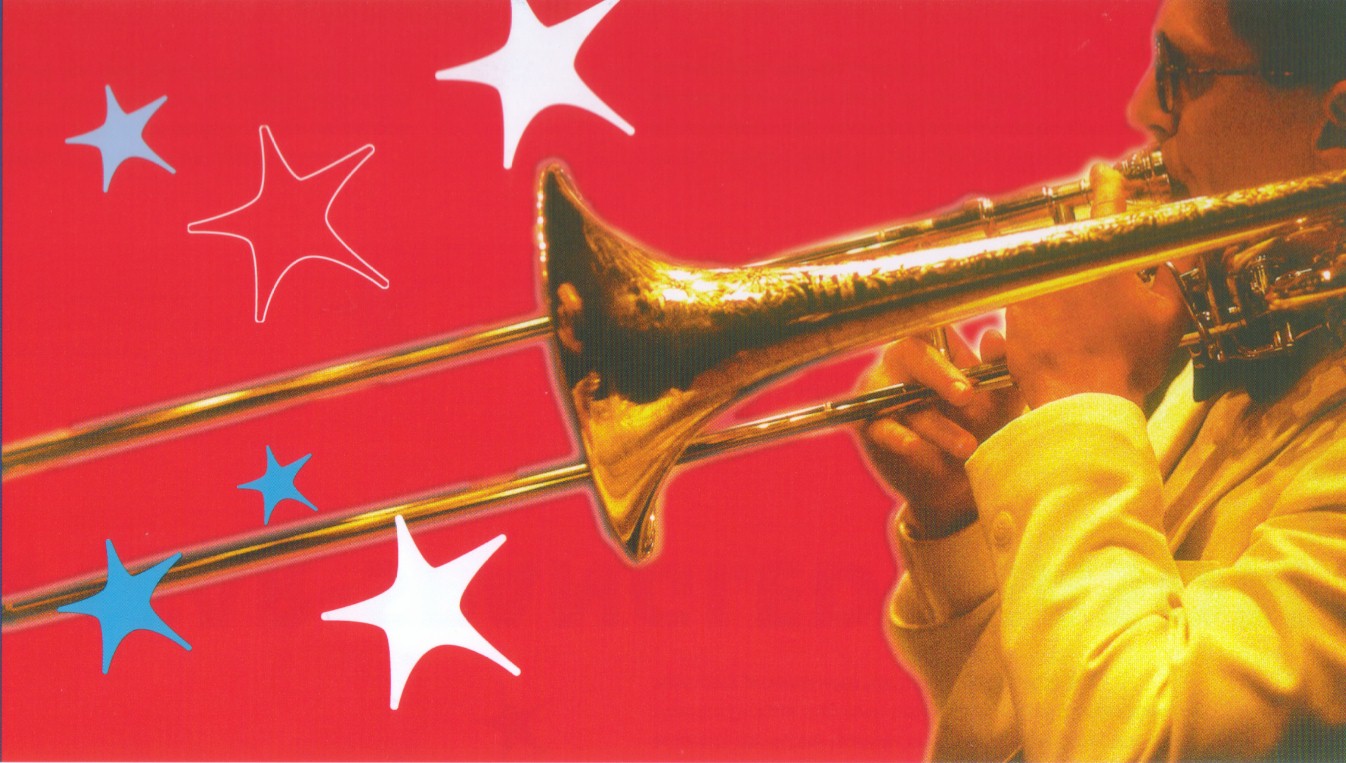
Promotional photo from a brochure produced by the Boston Symphony Orchestra, for concerts by the Boston Pops Orchestra, early 1990s. The brochure tapped into the fact that the encore for every Boston Pops concert was John Philip Sousa’s The Stars and Stripes Forever. Photo of Douglas Yeo by Michael J. Lutch.

The beauty of the saguaro cactus

The beauty of the saguaro cactus

My wife and I live on the southwest side of Phoenix in the foothills of the Estrella Mountains. We love living there. It is quiet and dark at night, and we are surrounded by stunning natural beauty. We live just south of the Gila River, in an area that used to part of Mexico before the Gadsden Purchase transferred 29,670 square miles of Mexico to the United States in 1853 (for a payment of $10 million dollars, roughly $270 million dollars today). Most of that land became part of the Arizona Territory and nearly 60 years later, in 1912, Arizona became the last of the lower 48 states to be admitted to the Union – State 48.

We also live in what is called the Sonoran Desert, a unique ecosystem that covers 100,000 square miles of southern Arizona, a small part of southern California, and Sonora and Baja, Mexico. It is a remarkable place with an iconic, ever changing landscape. Principal among the things that make the Sonoran Desert so interesting is the saguaro cactus.

This cactus — pronounced “soh-WAHR-oh” —along with the American bison, has become the symbol of the American west. They grow slowly and they grow tall. They usually sprout arms, and have beautiful, white, trumpet bell shaped flowers in the spring. They live for many decades. And then they die.

Today, my wife and I enjoyed a very nice four mile hike in the desert just a few minutes from our home where we were surrounded by these great cacti. It occurred to me as we were hiking that we got to see saguaro cacti in nearly their whole life cycle. So I took a few photos to share with readers of The Last Trombone.

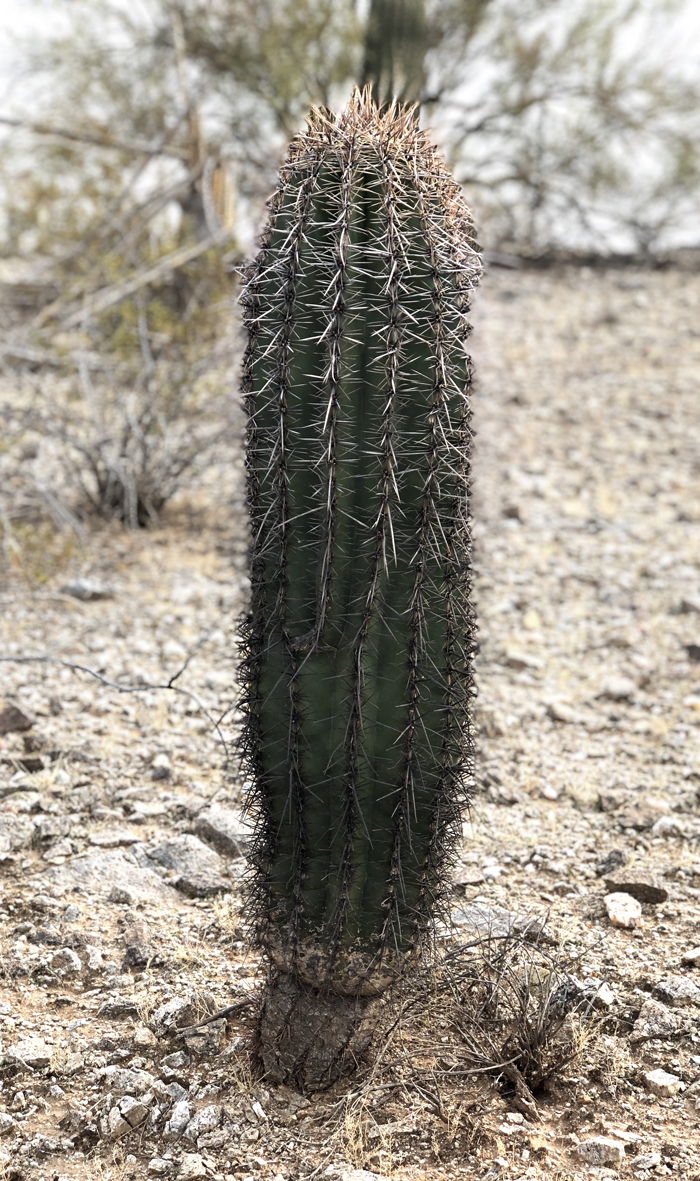
saguaro_01

Like every plant, the saguaro cactus starts out small. This young saguaro, above, is about three feet high. If it sprouts arms, that won’t happen for many years. The growth cycle of the saguaro cactus isn’t fully understood and some saguaros will bud arms when they are about 60 years old while others stay tall and straight with no arms for their whole lives.

saguaro_02

Pictured above is a saguaro cactus with three small buds that have just started to grow.

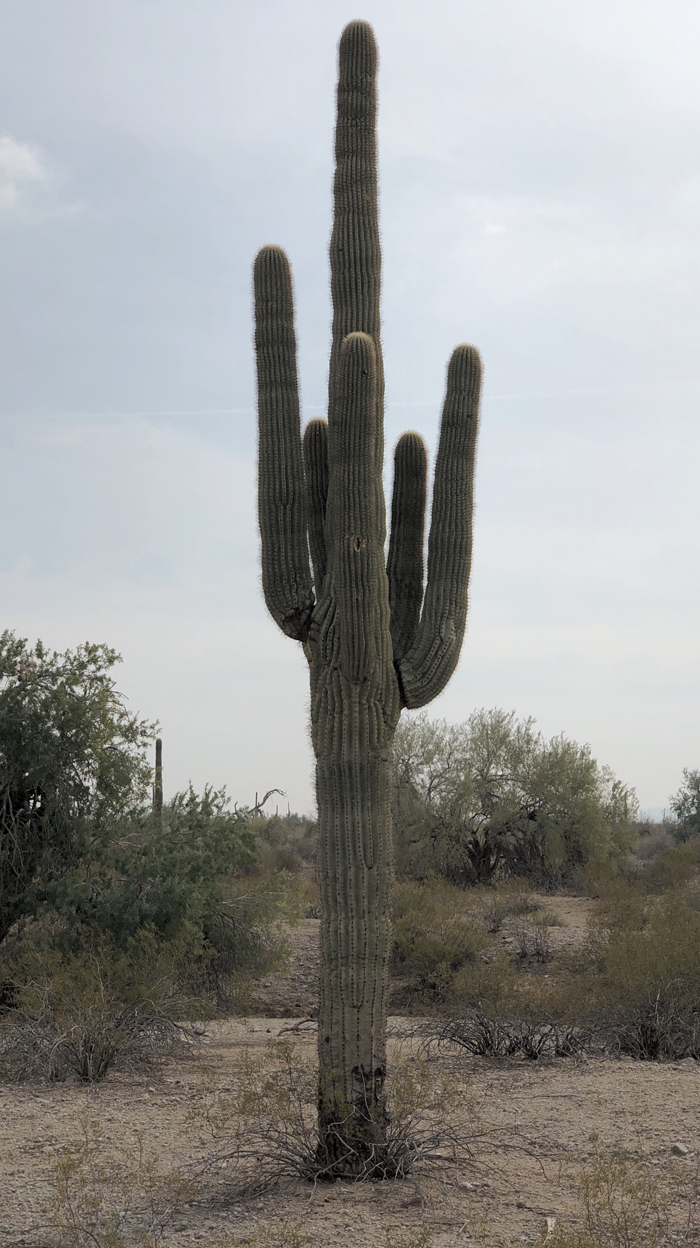
saguaro_03

In time, those buds may grow to be very large, like arms, and create the iconic image (above) of a saguaro cactus. Arizona State University’s Alma Mater sings of this:

Where the bold Saguaros raise their arms on high,

Praying strength for brave tomorrows from the Western sky,

Where eternal mountains kneel at sunset’s gate,

Here we hail thee, Alma Mater, Arizona State.

saguaro_05

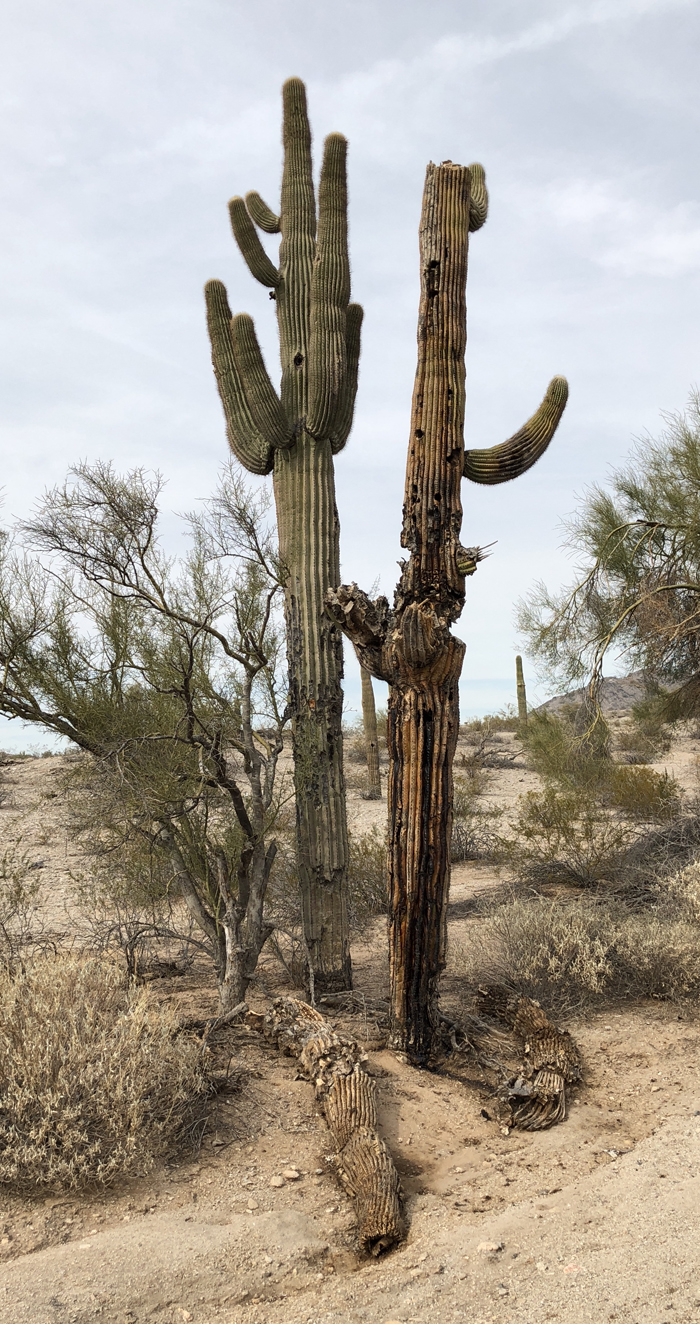
Eventually a saguaro changes as it nears the end of its life. This process may take many years. At first, the cactus will begin losing its needles and outer pulp, exposing the hard, stiff skeleton that brings water up from the ground to the entire cactus. In the photo above, you can see that water in the wash in the foreground — yes, this would be full of raging water when it rains — has eroded the bottom of the cactus and it is from the bottom that these cacti have begun to rot. Two cacti have already fallen, one remains in good condition, and one is showing the evolution of decay.

saguaro_06

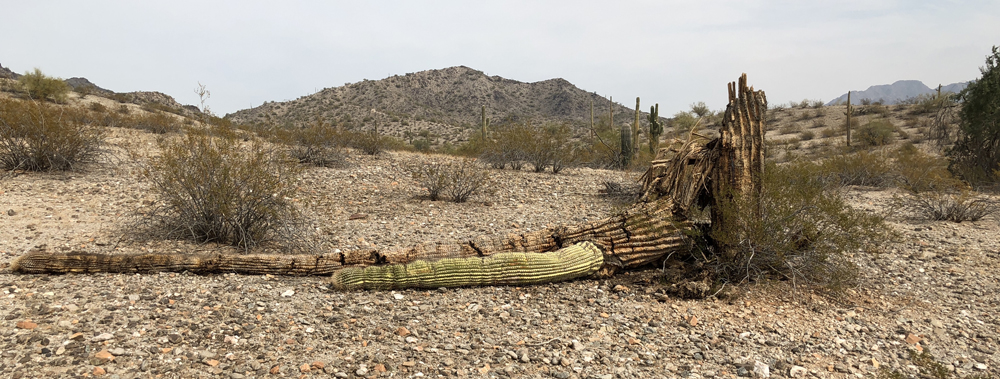
Eventually the saguaro falls. They usually break near their base and fall to the ground in the same shape in which they were standing, as seen in the photo above.

saguaro_07

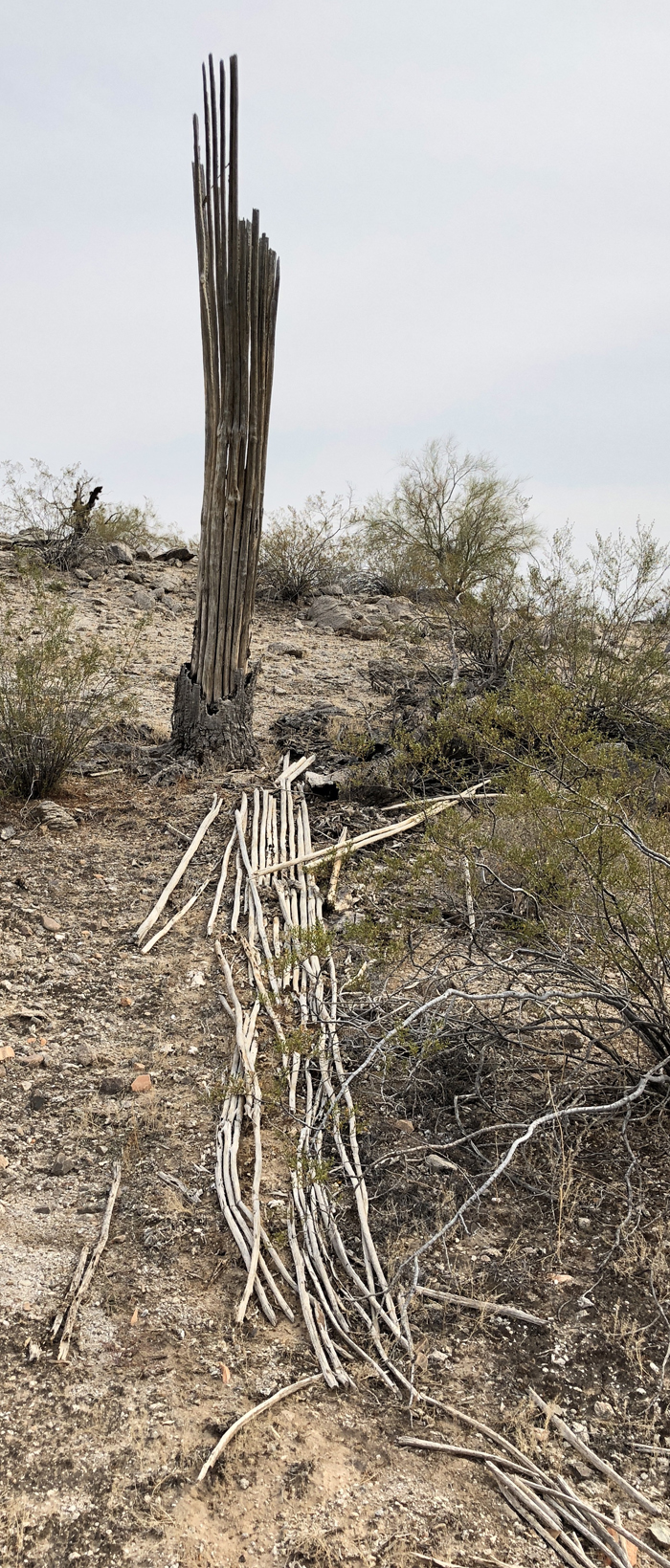
When the saguaro falls in an orderly way, its “bones” eventually are left exposed on the ground in a straight line.

saguaro_08

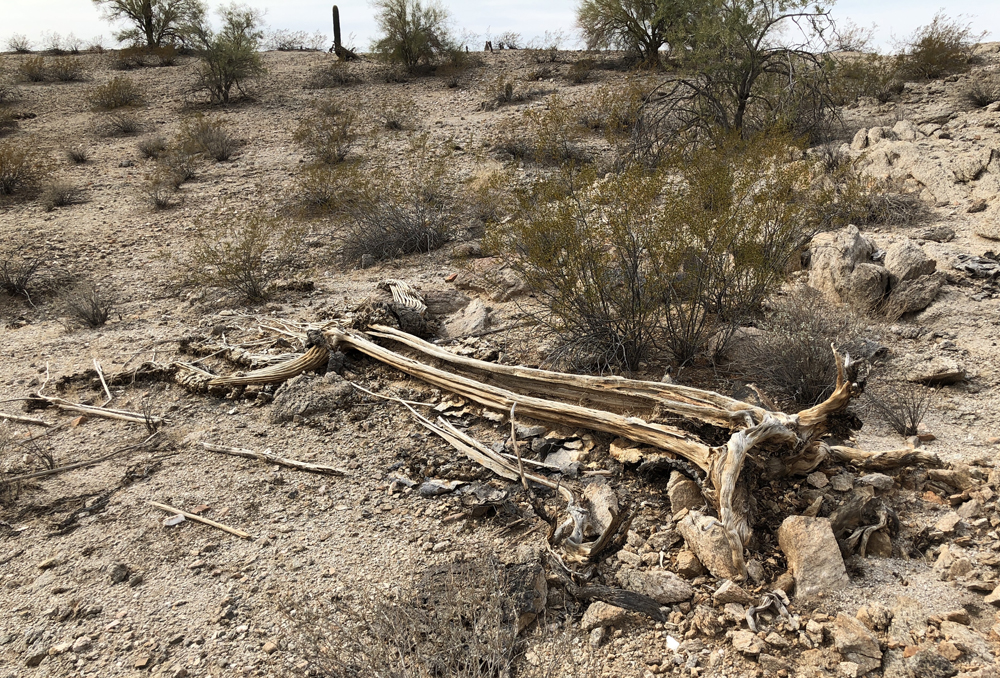
Sometimes, the saguaro falls in a chaotic way, uprooted by violent wind, with parts scattered around.

saguaro_11

Other times, the cactus begins to die from its top and as it sheds its pulp, the bones begin to form beautiful shapes as they are pushed by the wind and their own weight.

saguaro_09

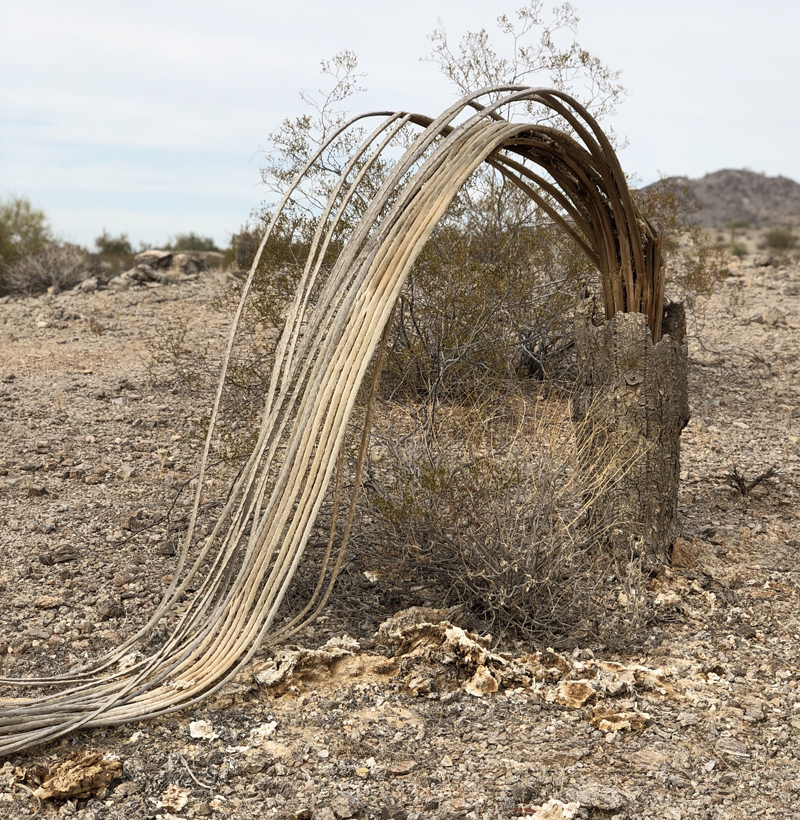
On rare occasions, the saguaro falls from its top into an elegant arch. This always reminds me of the St. Louis Gateway Arch, the gateway to the west. The beauty of these fallen saguaro arches is really something to behold.

saguaro_10

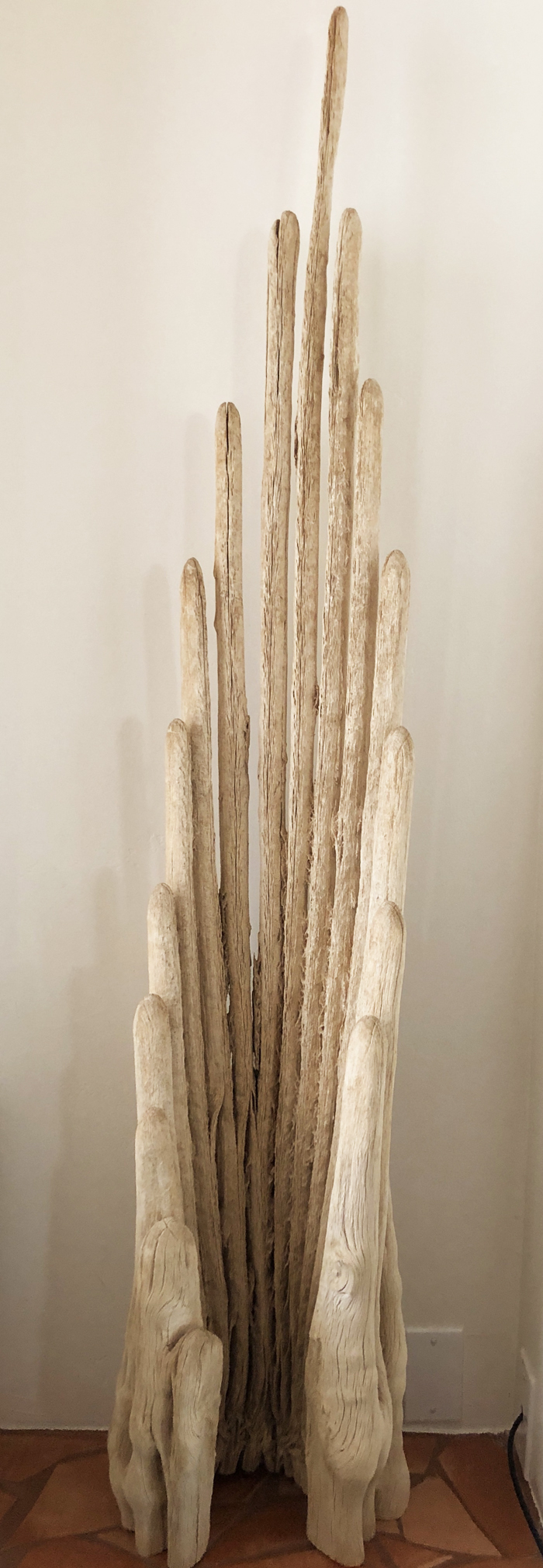
Not all saguaros that fall in the desert decompose and go back to the earth. A few years ago, we purchased these saguaro bones (pictured above) that had been collected by a talented artist who did little more to them than saw the base so they could stand up. These bones — I think they look like organ pipes — stand in our living room. They remind us every day of the beauty and ever changing nature of God’s creation that is around us in this special place, the Sonoran Desert.

GC_08

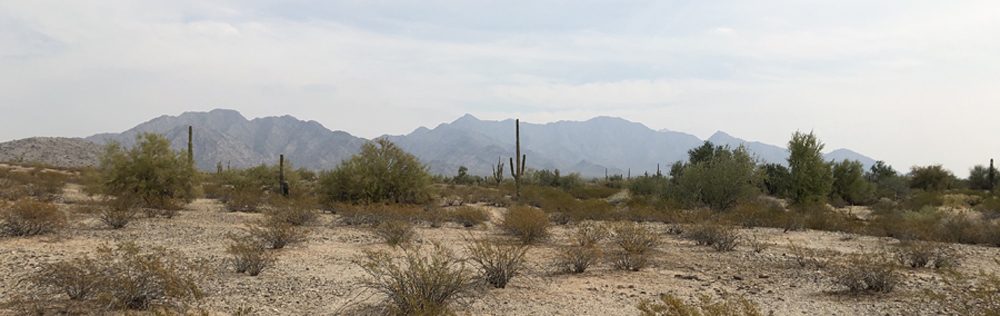
Photo in the header of this article: Estrella Mountains, Arizona.

Photo at the end of this article: Sign at Hermit’s Rest, Grand Canyon National Park:

O Lord, how manifold are thy works!

In wisdom hast thou made them all: the earth is full of Thy riches.

  • Psalm 104:24

And below, a prayer:

Father almighty, wonderful Lord, Wondrous Creator, be ever adored;

Wonders of nature sing praises to You, Wonder of wonders –

I may praise, too!


Touched by beauty

Touched by beauty

The least frequently performed of Paul Hindemith’s sonatas for various instruments is his Sonata for Alto Horn in E-flat and Piano. It was written for an instrument that is not played in concert bands and symphony orchestras, but rather is mostly used in British style brass bands. Still, I believe this Sonata is one of Hindemith’s finest and it also has a unique feature. Before the final movement, Hindemith wrote a poem to be recited in dialogue by the soloist and accompanist. Titled The Posthorn, the poem speaks about technology, memory, and beauty. Its final lines are among my favorites in literature:

Your task it is, amid confusion, rush, and noise

to grasp the lasting, calm, and meaningful,

and finding it anew, to hold and treasure it.

I am very interested in “the lasting, calm, and meaningful.” The world is a loud, busy, chaotic place. I seek out its antidote: quiet, beautiful, and ordered places. One of the reasons why my wife and I moved to Arizona in 2012 when I retired from the Boston Symphony is so we could be in proximity to the great National Parks of the west, places we have turned to time and time again for refreshment.

This past August, we took a three week road trip through California and up to Oregon, where we spent time hiking in several National and State Parks. Here are a few photos from that trip. I don’t need to provide extensive commentary; you can click on the links in the caption to each photo for information about each park, but perhaps at this particular moment in time, you, like I, might receive some refreshment from looking at these photos. Perhaps they will stir your own memory of a visit to these places, or inspire you to want to see them yourself. They are, indeed, “lasting, calm, and meaningful.”

Sequoia National Park

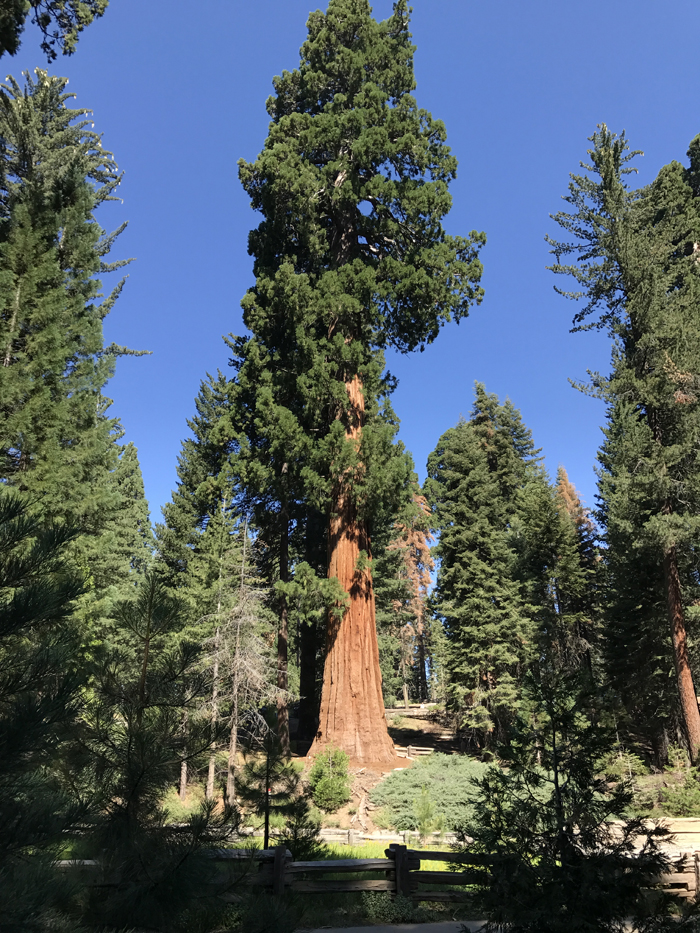
The giant sequoia trees of Sequoia National Park defy description. These trees are the largest living things on earth; some are as tall as 275 feet high. Think about that. Nearly as tall as the length of a football field. We took a long hike through the Giant Forest Grove and did not see another person for over two hours. We were alone with these magnificent trees. Here is a photo of Sentinel Tree, mature sequoia tree that is just outside the Giant Grove Visitor Center.

00.Sequoia_tree

It’s difficult to get a sense of perspective of just how large these trees are from a photo. So here is a video to help get a grip on this. It shows my wife, Patricia, standing in front of “The Happy Family” group of giant sequoia trees in the General Grant Grove in Kings Canyon National Park, adjacent to Sequoia National Park. A picture is worth a thousand words. A video is worth a million. And listen carefully while playing the video in a quiet place; you can hear the chirping of birds. We took this video very early one morning when no other people were in the area. To view this video on YouTube, click on THIS LINK:

Kings Canyon National Park

As mentioned above, Kings Canyon National Park is adjacent to Sequoia National Park; they are jointly administered by the National Park service. A small part of Kings Canyon has giant sequoia trees, but most of the park is the dramatic canyon, a mile deep, through which flows the Kings River. There are peaks in the park that are over 14,000 feet high; here is a photo of the Grand Sentinel peak which is at the end of the Kings Canyon Scenic Byway.

00.Kings_Canyon

Mount Shasta region

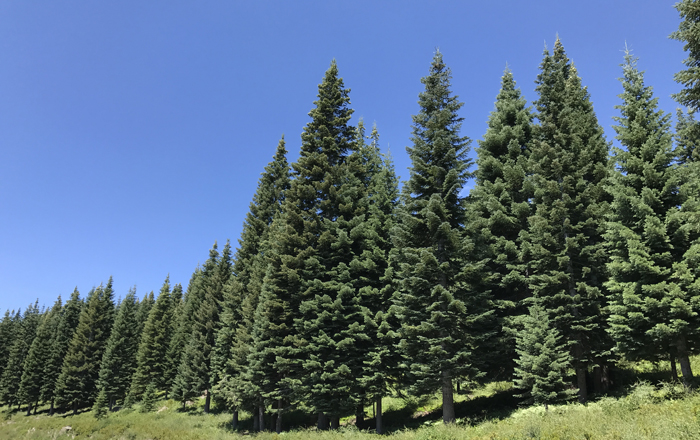
From Sequoia and Kings Canyon National Parks we entered California’s Mount Shasta region. Mount Shasta is 14,179 feet high and covered with snow year round. On the way to our trailhead, we passed thousands of perfectly formed pine trees. I had never seen such symmetry in trees; it was stunning to behold.

00.Shasta_trees

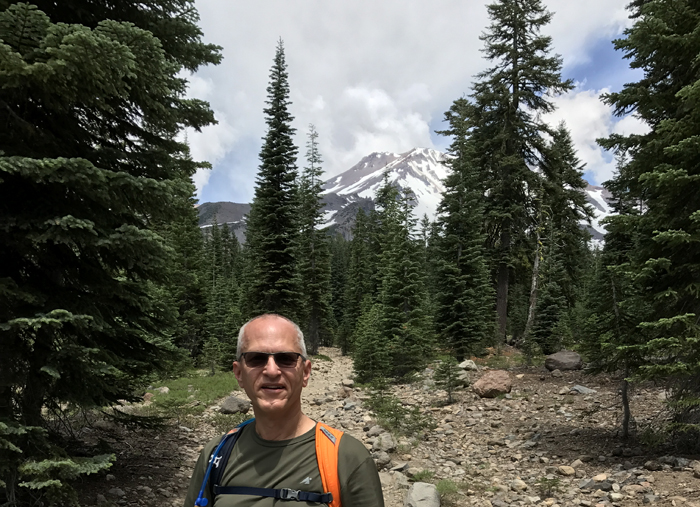
We had intended to hike from Gray Butte but the road to the trail was closed. It was blocked by snow. In late July. So we parked at Bunny Flat and hiked to the Sierra Club Cabin at Horse Camp. The view of Mount Shasta was stunning.

00.Doug_Shasta

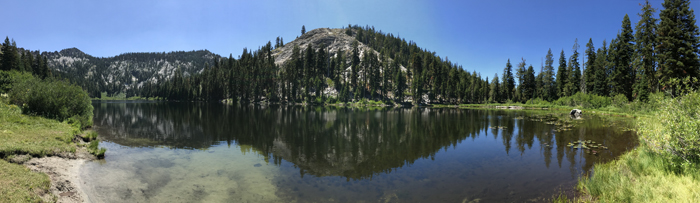
Pat has an aunt and uncle who live in northern California so we stopped to see them a few days. It was a bit of a family reunion, too, with several of her cousins and their families there as well. We spent a morning driving and then hiking to a remote alpine lake, a pristine body of water in a stunningly beautiful setting. This panoramic photo gives only an idea of the majesty and solitude of this remarkable place.

00.CA_lake

Crater Lake National Park

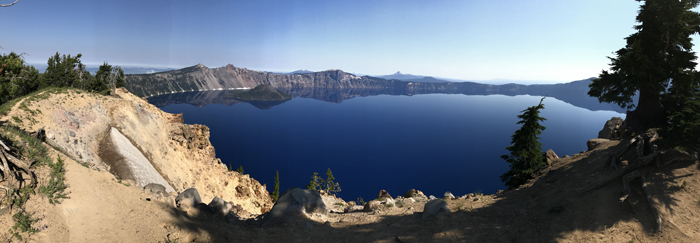
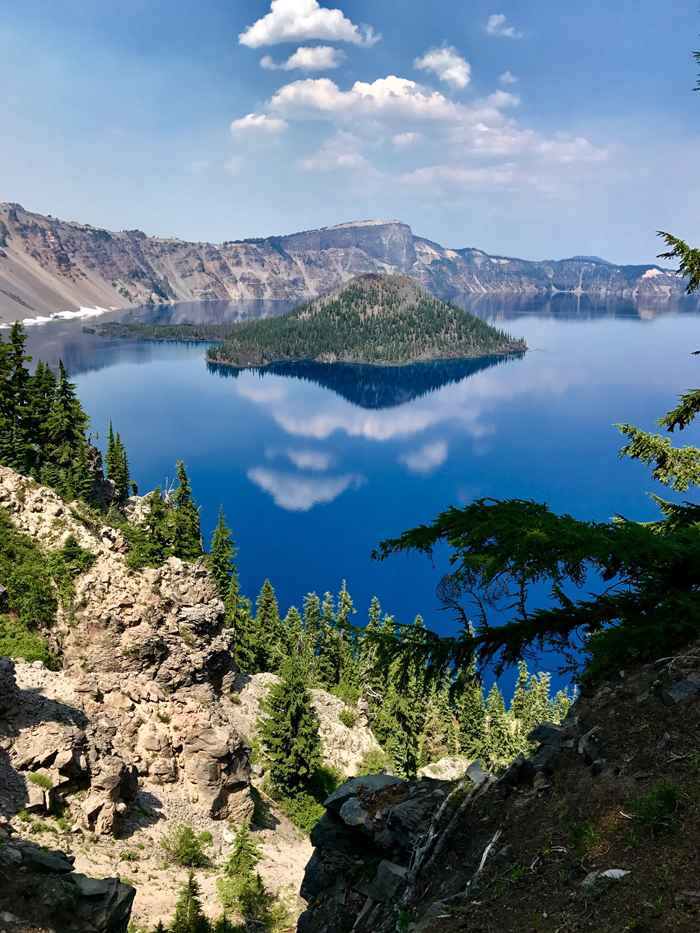
I have been fascinated by Crater Lake National Park since my childhood. Located in Oregon, the lake formed when Mount Mazama literally blew its top. The lake is 1,943 feet deep at its deepest point and is six miles across. I was unprepared for its size; it is breathtaking. Inside the lake is Wizard Island, a volcano inside the volcano. Sometimes things come together to allow our eyes to see an iconic view that is then called to mind every day thereafter. Such was the case at the moment I took this photo, below. The stillness of the water, the reflections of the crater and clouds in the water, the bits of snow, and the deep green of the trees all came together to give us a memorable moment in time. A panoramic photo of Crater Lake I took a few minutes later is at the top of this article.

00.Crater_Lake

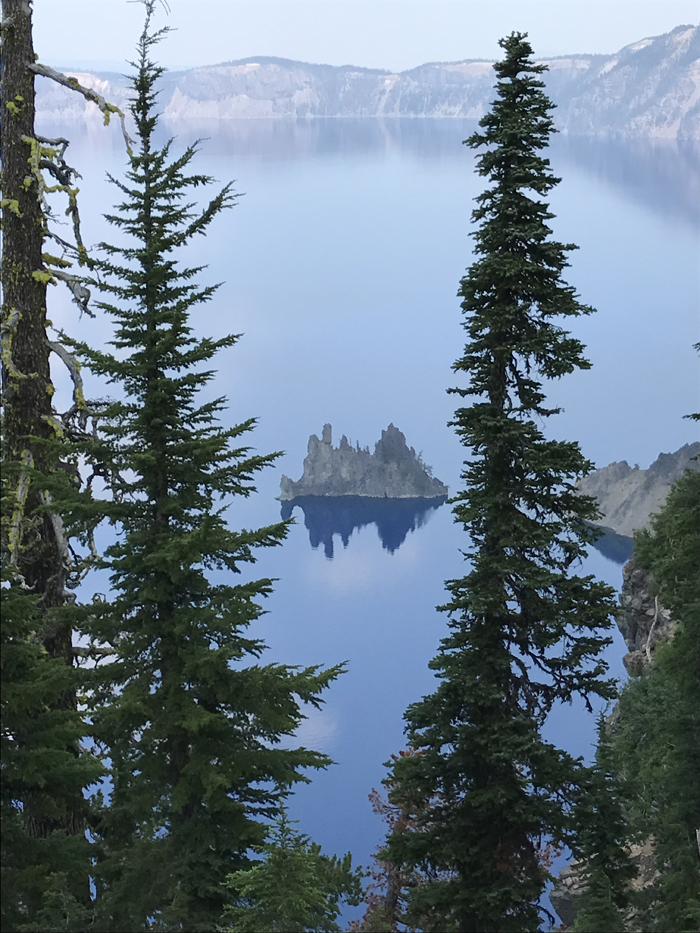
In addition to Wizard Island, there is one other geologic feature that comes up through the surface of the water at Crater Lake. That is Phantom Ship, a rocky outcropping that stands 200 feet high. Getting close to Phantom Ship was the last thing we did at Crater Lake, and seeing it was the realization of a long held dream. You can also see the difference in the clarity of the air between this photo and the one above. Smoke from wildfires in the area created a light haze, and these fires were precursors to the horrific and damaging fires that burned in the San Francisco Bay and Los Angeles areas later in the year.

00_Crater_Lake_Phanton_Ship

Redwood National Park

Giant redwood trees are not the same as giant sequoia trees. Redwoods grow taller, and do not have the same, thick, soft bark as sequoias. They are also not as wide at their base as sequoias. Redwood National Park in California is one of the few places in the world where these majestic coastal redwoods grow. The park is actually a collection of parks, some of which are state parks, that form a chain of areas that protect these majestic trees.

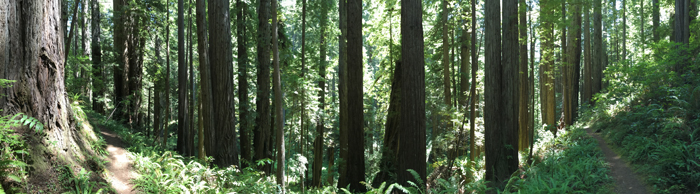
As we took hikes on the Hope Creek and Rhododendron Trails in Redwood National park, we were instantly transported into a dramatic, quiet, lush forest. It reminded me of the opening lines of Henry Wadsworth Longfellow’s epic poem, Evangeline, where he wrote:

This is the forest primeval. The murmuring pines and the hemlocks,

Bearded with moss, and in garments green, indistinct in the twilight,

Stand like Druids of eld, with voices sad and prophetic,

Stand like harpers hoar, with beards that rest on their bosoms.

Loud, from its rocky caverns, the deep-voiced neighboring ocean

Speaks, and in accents disconsolate answers the wail of the forest.

00.Redwood_pano_primeval

The tallest redwood tree is 379 feet and like the giant sequoia trees, a photograph simply cannot give a sense of perspective. So here is a video of me looking up at a giant redwood in Redwood National Park. Again, if you listen carefully, you can hear the sounds of birds. We did not see another person on this hike. To view this video on YouTube, click on THIS LINK.

Lassen Volcanic National Park

We had intended to visit Lassen Volcanic National Park on the first part of our trip, on our way up to Crater Lake. But the park road was closed due to snow. We kept checking the status of the snow plowing at the park and we were very pleased when the road cleared just as were beginning our trip south back home to Arizona. We rejigged our plans so we could spend a day at Lassen.

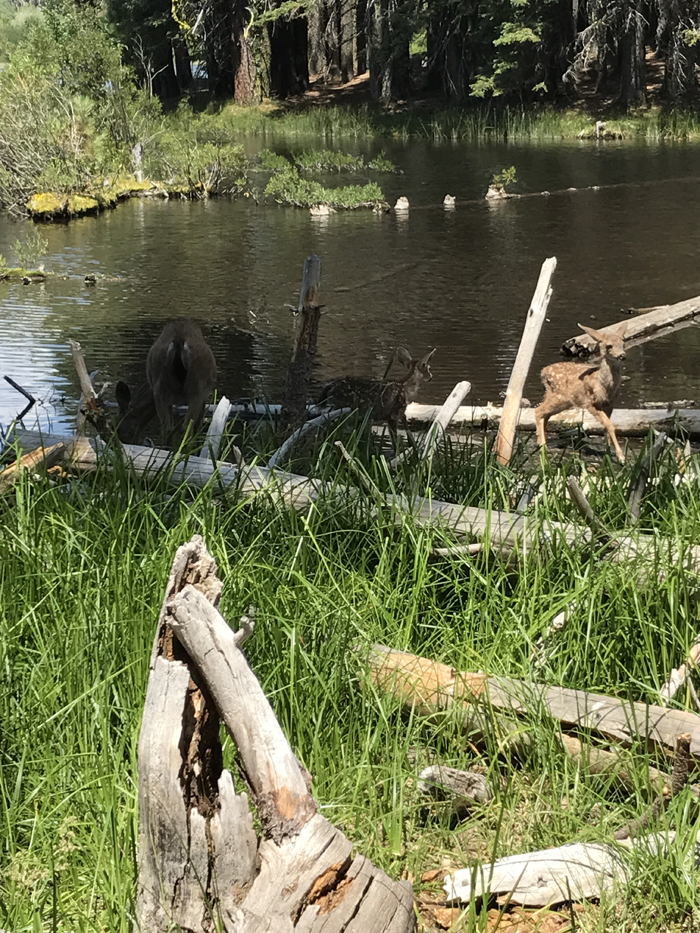
This was an unexpectedly wonderful park. Like Mount Shasta, it features a snow covered mountain as its centerpiece. But on our hike around Manzanita Lake, we saw a group of deer, a doe and two fawns. They were aware of our presence but we quietly passed. It was a beautiful moment.

00.Lassen_deer

Manzanita Lake provided us with another of those remarkable views that combined water, sky, mountain (Lassen Peak), and trees. It was a “postcard view” that we stopped and took in for quite awhile.

00.Lassen_mountain

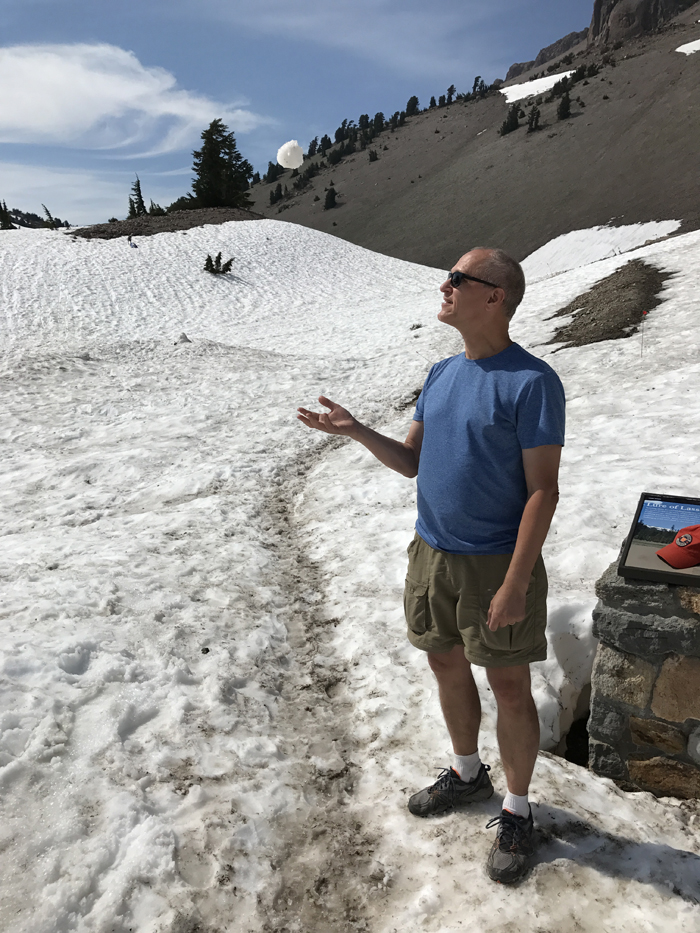
We did not climb to the top of Lassen Peak but we did go to its trailhead. It was this area of the park that had the most snow in the winter of 2016-17 and the last to be cleared of snow. As we walked around the area, I did something I had not done since the winter of 2011-12: I made a snowball. Pat snapped this photo of me tossing the snowball up in the air and she caught it just as it was at the peak of my toss. Holding snow in my hands brought back a lot of memories of our life in New England, although I confess I had never done this before in the month of August!

00.Lassen_Doug_snow

These trips to National Parks refresh, invigorate, and inspire us. They are, indeed, part of what God has given to us to enjoy that embody Hindemith’s memorable words, “the lasting, calm, and meaningful.” We never tire of visiting them, either for the first time, as was the case with all of the parks we visited on this trip, or over and over, like Grand Canyon National Park.  The Parks are, indeed, in the words of historian Wallace Stegner, America’s best idea. But while their preservation and access are the responsibility of our great National Park Service, it is the Creator who made all of this for us to enjoy who receives my greatest thanks and praise:

O Lord, how manifold are thy works!

In wisdom has thou made them all: the earth is full of Thy riches.

• Psalm 104:24