
Among the great joys of my life is time spent in many museums around the world, particularly museums and parts of museums that are devoted to musical instruments. I write about these from time to time because musical instruments are such an important part of my life, and I enjoy seeing, hearing and playing instruments both old and new.
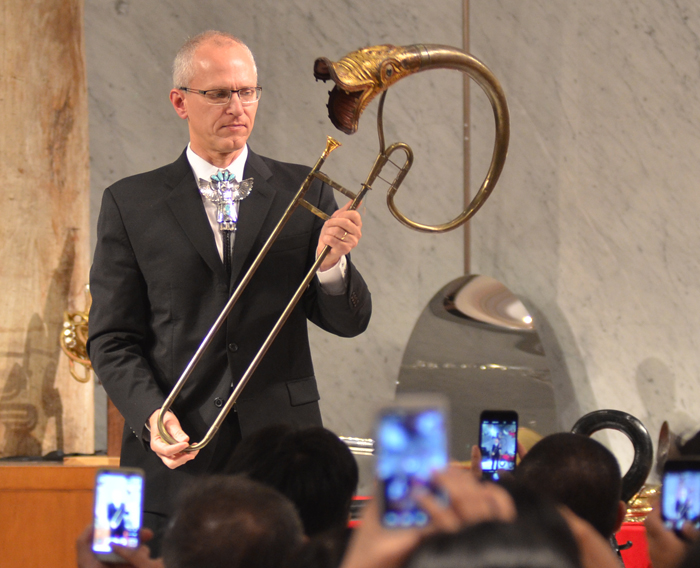
I have had a nice friendship for many years with Kasuhiko Shima, Director of the Musical Instrument Museum in Hamamatsu, Japan. The Museum in Hamamatsu is the only museum in Japan that is devoted to musical instruments and I have visited there many times over the years. in 2015, I gave a recital there, playing many of the Museum’s instruments for an enthusiastic audience that was so eager to learn about old instruments and what they sound like.

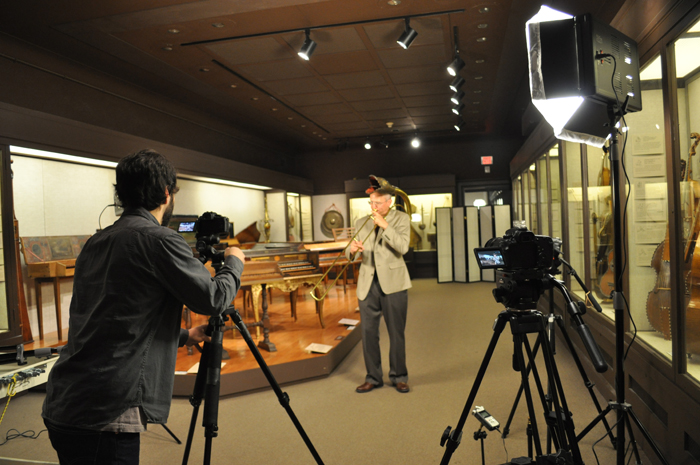
This is one of the things I like about the Hamamatsu Museum in particular: they give regular programs where many of their instruments are played. Also, most of the museum’s instruments are not under glass or in cases. Rather, you can get very close to them and examine them from many angles. Audio and video guides help visitors to better understand the instruments as well.
I’ve been asked to write a Preface to a new book about the Hamamatsu Musical Instrument Museum. I could have just written, “The museum is terrific – come and visit!” But I used this invitation as an opportunity to talk a little more deeply about my views of creativity and music. Yes, please do visit the Musical Instrument Museum in Hamamatsu. But no matter where you see or hear instruments, I hope this little essay will give you a new sense of perspective as we think about WHY musical instruments are so important in our lives. This catalog will be published later this year and I will let readers know when it is available. For now, here is my introductory essay. . .
• • •
People often ask me why I chose to play the trombone. I tell them that I didn’t choose the trombone. The trombone chose me.
When I was nine years old, my school gave me the opportunity to play a musical instrument. Like most of the boys in my class, I wanted to play the trumpet. It was small, shiny and loud. But by the time the school band director got to people whose name was at the end of the alphabet – like me, whose last name begins with “Y”, the next to last letter in the English alphabet – the trumpets had already been given to other students. I was very disappointed when I was handed a trombone. Very disappointed.
I recall walking home from school that day feeling sad. The trombone seemed very large and heavy in my hand. But then something happened. Something wonderful and surprising happened. When I opened the case and put the trombone together and produced my first note, my whole world changed. With one note I my eyes were opened. One note! If one, could there be two? Yes! And then three! Notes came forth at my command. In time, with a great deal of work and a lot of guidance from people who cared about me, I learned how to play scales and songs. I sat in a band and then in an orchestra and a jazz ensemble. I realized that with the trombone in my hands, I could say things that I could not say with my voice. I could speak of love and pain, joy and sorrow. I could sing about sunrise or sunset, of a turbulent sea or a calm mountain lake. These were things the words from my mouth could not adequately express.

Since those days long ago, I have used the trombone as my expressive voice in one of the great orchestras of the world, the Boston Symphony Orchestra. Under the skilled baton of inspiring conductors like Seiji Ozawa, Leonard Bernstein, James Levine, Simon Rattle and Bernard Haitink, the trombone has taken me around the world, all over the United States and to Africa and South America, Europe and Asia. And especially to Japan, a land with a people who have a rich, abiding love for music and music making. One of the great joys of my musical life has been my exploration of old instruments, the predecessors of the instruments that I use in the modern symphony orchestra. This interest brought me to learn to play instruments with strange, curious names, like the serpent, ophicleide, sackbut and buccin. Once completely unknown to me, these old instruments have now become my friends, and these friends are often found in museums around the world–including the Hamamatsu Museum of Musical Instruments–where I have been privileged to give talks and concerts to teach others about their mysteries.
Yet not everyone understands the most important thing about musical instruments.
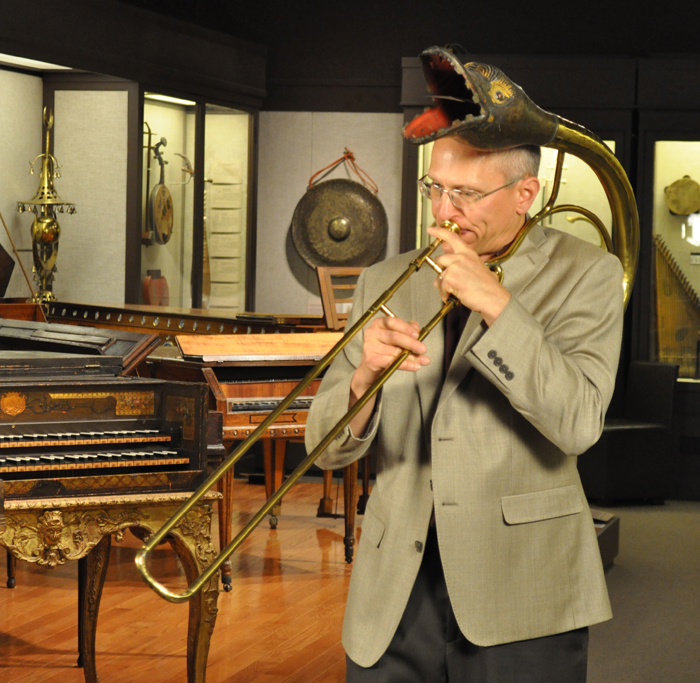
Several years ago I was in Germany, presenting a scholarly paper at a conference about musical instruments and playing a recital on the serpent, an ancient musical instrument that was invented over 400 years ago to accompany the singing of chant in the church in France. One of the conference participants, who was the director of a well-known museum in Europe, scolded me: “Mr. Yeo, your serpent is 200 years old. It should be in a museum! Why are you playing it?” To which I quietly replied, “Because it was made to make music.”

The modern idea of a museum dates only from the eighteenth century, and most museums are places where objects are preserved and displayed for the enjoyment, edification and education of the public. They are important repositories of pieces of the cultural history of the human race and the natural history of the world we inhabit. Preservation of artifacts is a role that all museums share and we are the grateful beneficiaries of the care that museums take to restore and display objects that inspire, challenge and inform our views of both history and the future.
Yet when we see a musical instrument hanging on a wall in a museum, we are often left with more questions than answers. How do you hold it? How was it constructed? What does it sound like? Why does it look like that? What is it made of? Is there anything on the back of the instrument? We can – and do – admire the instrument’s beauty as an object of art, like a statue or a painting, the product of a skilled craftsman. But to do so greatly limits our appreciation and understanding of a musical instrument, and if this is all that a museum can offer to the visitor, then the museum has become nothing more than a graveyard, a final resting place for the bones of something that was once vibrant and alive but now is silent and dead.
When observing a musical instrument, we are faced with even more fundamental questions: what is music? Is it sound? Or is music simply the dots written on a piece of paper in a kind of secret code, with clefs and notes and flats and sharps? Is it the idea of a vibration of a column of air before it is heard? Is all sound music, or is all music sound? Or all of these? Or none? Can music be touched or can it only touch us? Can music exist without a physical mechanism of some kind to push it from thought to idea to reality?
In our modern time, we often observe that music, however we define it, is everywhere. We hear sounds of different pitches – high and low – and in different dynamics – loud and soft – in the cry of a baby, the playground song of a school child, the voice of an opera singer, the utterance of the kabuki performer. All of these use their bodies to create sound, and the organization of these sounds one after another becomes, in a way that science cannot fully explain, something we call music. Museums cannot hold this sound; it cannot ever be replicated or made again in exactly the same way. Music like this has been with us since before recorded history, and the diversity of sounds that have come from human voices are as many as there are sands in the sea.
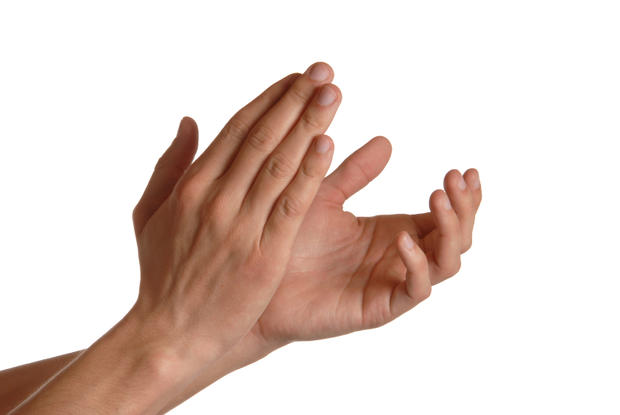
But somewhere, at some time now lost to the ages, someone had an idea. Not content to simply make sounds with his or her voice, someone made a discovery. It was probably, at first, the clapping of hands. Or perhaps it was the snapping together of fingers. A new sound came forth, something that did not require the use of lungs and vocal chords. Voice and body now produced two sounds from the same person. But while related, these sounds were very different, unlike each other.
Close your eyes and travel back to that moment, the instant where voice and hands first came together. There was now more than melody. There was an accompaniment to singing, something that could provide rhythm, even harmony. Close your eyes even more tightly and imagine the next moment. The moment when the hands picked up two sticks or rocks and a musical instrument was born.

Born! From the mind came an idea – pick up two sticks or two rocks. Why? What was in the mind of man that caused him to do this radical, new thing? The idea conceived an action – strike them together. Why? This had never been done before. Would it be pleasant or dangerous? Was it done with anticipation, or joy, or fear? The action made a new sound, never before imagined but now there was no turning back. The simple act of striking two natural objects together blossomed. Who first found a conch shell on the beach and, after eating the succulent snail, thought to cut off the tip of the shell and blow air into it past his vibrating lips to create a note that resonated across the shore to a distant place? Now man had done another new thing: he changed a natural object with his own hands to make it something never before seen nor heard. Another musical instrument had come to life.

But one note was not enough. If one note could be made, surely there could be two. Thought, trial and error, accident, intention, practice, and skill – these all combined to bring forth another new idea: tighten or loosen the lips while they vibrate. With no knowledge of physics or what we now call the overtone series, higher and lower notes came from the shell. What is this? One object but now two sounds? If a shell, why not carve out a sounding chamber of wood? If sticks could be hit together, could they strike something else? Strike a rock, a tree, a bone. And what if the tree was hollow? Would that make a different sound? Imagine! IMAGINE! Could an animal skin be stretched over a bowl of wood and then struck and still another new sound come forth?
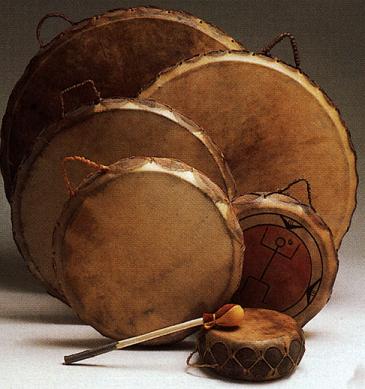
Who was it that discovered that a vine stretched and then plucked would make a sound – a harmonious tone? And imagine you were there when for the very first time the vine was stretched more tightly and plucked once again and yet a different tone came forth. One tone, then two, then three, then more. And why did this all happen?
The explosion of music had begun. Instruments came forth in all cultures, fashioned in myriad ways all around the world. They were blown, struck, plucked and bowed. Vibrations came from lips, strings, membranes and reeds. Ivory and bone, turtle shells and rope, wood and clay and pottery, iron, copper, silver, gold, glass and brass. All of this was put to use in the service of music – an idea, a thought, a concept, a need – that somehow spoke to the heart of mankind and expressed something that words could not say.

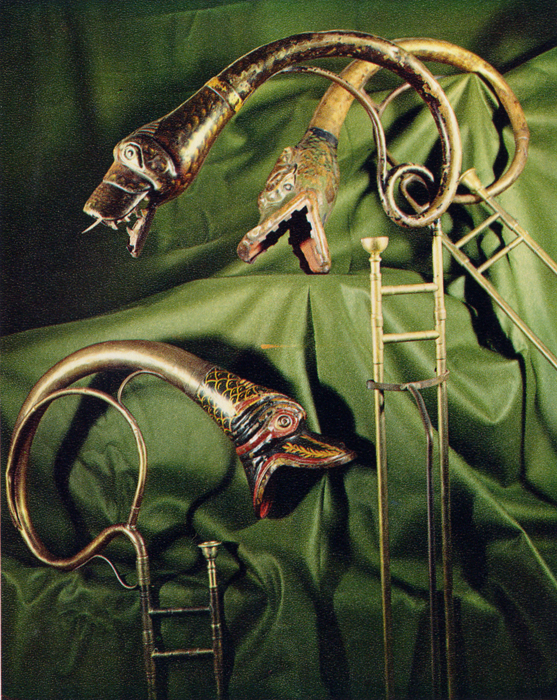
But there was yet more. It seemed it was not enough to simply fashion an instrument for the purpose of creating a new sound. No – now you must close your eyes again; yes, really close them – there had to be more. The sound was a sound of wonder, and wonder beheld truth and beauty, joy and pain, love and hurt. The instrument needed to reflect the imagination of the sound. And so the craftsman appeared. Instruments began to exhibit beauty for their own sake. They were curved and rounded, sometimes straight and angular. Jewels and pearls decorated them; designs both simple and complex appeared on them. While these shapes and adornments sometimes changed the instrument’s sound, they mostly brought pleasure to the eye and the eye brought imagination to the brain. Images were carved into them, of deities, of children, of mythological beings. They took fanciful shapes of animals both real and imagined, and those who played them were greeted with wide-eyed and open-eared wonder. Instruments were given names like Heike-biwa, gamelon, lur, ocarina, bagpipe, euphonium, harpsichord and violin. Some took the name of the one who first imagined them, like Saxhorn or Heckelphone. In time, instruments evolved and changed. New materials were used, new methods for shaping them were devised, and new ways were envisioned to use them. Old instruments were discarded in favor of the new. As musical instruments took on a role as more than simply sound-makers or sound-amplifiers, as they spoke of beauty and wonders, invoked God, as they inspired the very soul of men and women with both their sight and sound and the technique of those who brought forth their sounds, another idea was born.

We must preserve them. More than that, we must remember why these instruments were made, what they were used for. We must understand how they were put together, what they sounded like. And above all, we must keep them alive to allow them to continue to sing their songs of the ages to those of us living in a new time.
Into this idea of preserving, of restoring, of displaying, of understanding and of keeping alive came the Hamamatsu Museum of Musical Instruments. At the time it was opened in 1995, it presented a radically new idea for a museum. It was not the first museum in the world devoted to the display of musical instruments. But at its heart, the mission of the Hamamatsu Museum of Musical Instruments was not simply to restore and display musical instruments for the enjoyment of the eye. The Museum’s mission – from the very beginning – was to recognize that instruments were made to make music.

Look around the Hamamatsu Museum of Musical Instruments. What do you see? Instruments hang on walls and are displayed on tables. But they are not behind glass. You can examine them very closely; you can see their extraordinary detail. So you first can appreciate them as objects for the eye. But there is more. Oh, there is so much more. Dozens of video screens show how the instruments are held and played. The instruments come to life, breaking free from the walls on which they are displayed to make music once again. In the hands-on room, you can play instruments yourself; nobody will tell you not to touch them. In its regular series of concerts and classes, instruments are put into the hands of skilled performers who make them sing again, as they did many years ago. In this, the Hamamatsu Museum of Musical Instruments – The Space of God, Prayer and Beauty – speaks to all people from all countries and all cultures. There each person on earth finds something familiar, something from which they came, a respect for their ancestors and the past while inspiring us as we all move into to an ever more complicated and uncertain future. The instruments are restored to their glory as if they were made yesterday but their sounds are heard once again, speaking deep into our lives, our imaginations and our souls. The Hamamatsu Museum of Musical Instruments has banished the glass case in favor of accessible instruments, live concerts, educational programs, video screens and audio samples played through headsets that ensure every visitor leaves having had a comprehensive experience. Let other museums put their instruments in graveyards. Musical instruments in Hamamatsu are alive! Come, learn, enjoy and be inspired.




 The Last Trombone – Douglas Yeo