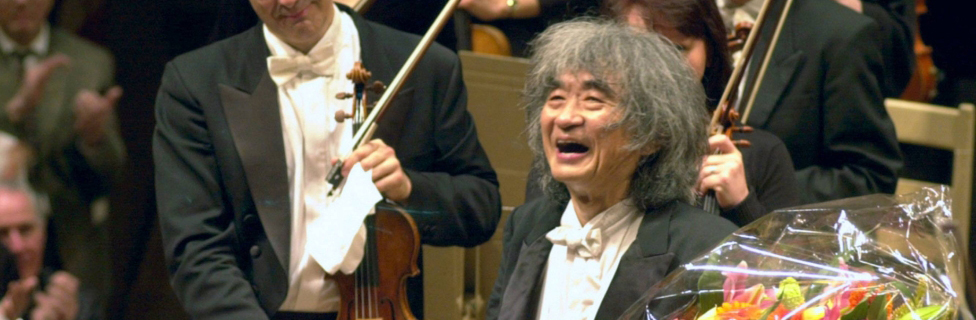
Category: Japan

Remembering Seiji Ozawa (1935–2024)

Remembering Seiji Ozawa (1935–2024)

by Douglas Yeo (February 12, 2024)

Last Friday, I arrived at my office at University of Illinois Urbana-Champaign at 7:00 am to get ready for a full day of teaching. As is my habit before taking out my trombone and warming up, I opened my laptop, quickly checked my email, and scanned the morning’s news headlines where I read an announcement that conductor Seiji Ozawa had died on Tuesday, February 6, at the age of 88.

I burst into tears and cried like a baby.

Seiji Ozawa hired me into the Boston Symphony Orchestra in 1985. At age 29, I joined the BSO for a career that extended until 2012, 27 years of memorable music making and other wonderful experiences. Seiji was music director of the BSO from 1973 to 2002, and his death brings back unforgettable memories of the intersection of our lives. Here is the Seiji Ozawa I knew and will always remember.
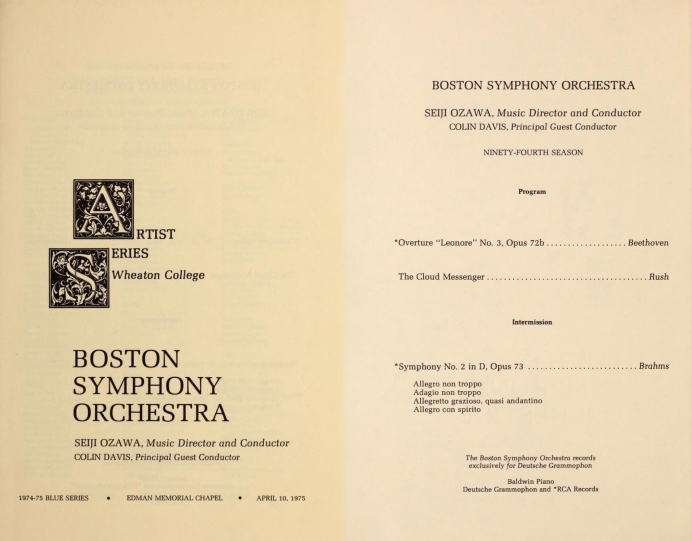
BSO_Wheaton_College_1975_program

Wheaton College Artist Series program, Boston Symphony Orchestra, April 10, 1975

I first met Seiji Ozawa in April 1975 while I was a student at Wheaton College, Illinois. The college had an artist series of eight concerts each year and the Boston Symphony Orchestra came to give a performance in Edman Memorial Chapel. I had been tapped to be student manager of the artist series for my senior year at Wheaton, 1975-1976, so, being groomed for that position the season before, I had backstage access to the BSO concert. I was wowed that I got to see and hear the Boston Symphony Orchestra up close. Even though I was studying trombone with Edward Kleinhammer, the great bass trombonist of the Chicago Symphony Orchestra from 1940-1985, and the CSO was front and center in my orchestral universe, I had always loved the Boston Symphony Orchestra. In fact, in my high school yearbook (1973), in that pretentious paragraph seniors get to write about themselves with our favorite inspirational quotations and our hopes and dreams for the future, I wrote, “I want to play in the Boston Symphony Orchestra.”
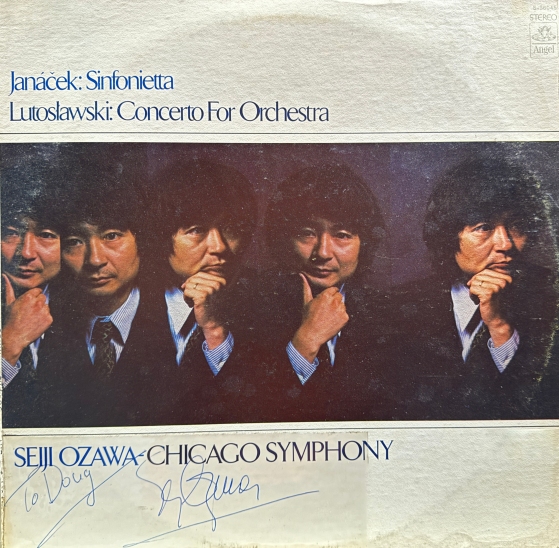
CSO_Janacek_Ozawa_LP

Chicago Symphony Orchestra recording of Janéček Sinfonietta and Lutoslawski Concerto for Orchestra with Seiji Ozawa, conductor. Angel S-36045; recorded 1970.

I met the orchestra’s trombone section: William Gibson, Ronald Barron, and Gordon Hallberg. And I met Seiji Ozawa. I brought a record for him to autograph which he graciously did (above). Today I look back and shake my head: I asked him to sign a recording he made with the Chicago Symphony (Seiji had been music director of the Ravinia Festival, summer home of the CSO), not the Boston Symphony! But he was kind to sign the record jacket for me and I still have that LP; it is a treasure. At the concert, held the door to the stage open a little bit when the BSO’s principal trumpet player, Armando Ghitalla, played the offstage trumpet solo to Beethoven’s Leonore Overture No. 3. The whole experience was unforgettable. Little did I know that 10 years later, I would be sitting on stage with many of those same Boston Symphony players with Seiji conducting me.
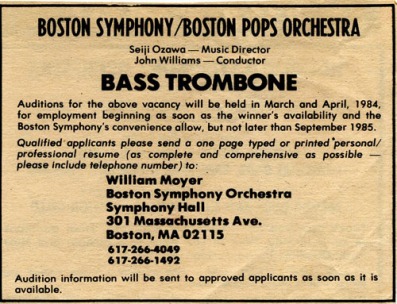
BSO_bass_trombone_audition_ad_1984

Advertisement in the International Musician for the Boston Symphony Orchestra bass trombone position, 1984.

After graduation from Wheaton College in 1976, my wife and I moved to New York City where she completed her nursing degree at Columbia University and I freelanced, worked a secretarial job to pay the bills, and got my master’s degree at New York University. After two years as a high school band director from 1979-1981, I joined the Baltimore Symphony Orchestra. And it was at intermission of a Baltimore Symphony rehearsal in 1983 that Joseph Silverstein, who, at that time, was both concertmaster of the Boston Symphony Orchestra and principal guest conductor of the Baltimore Symphony, came up to me at the break in a rehearsal. He said he liked my playing, and he wanted me to know that the Boston Symphony Orchestra would be having an audition for a bass trombonist. Soon. Sure enough, a few months later, the International Musician, the monthly publication of the American Federation of Musicians, ran an advertisement for the position (above). Of course I had to take that audition. I was very happy in the Baltimore Symphony, but the Boston Symphony? Boston?? I got ready for the audition.

I submitted my resume and a few weeks later, I was asked to make a pre-screening audition tape. I had taken a number of auditions by that time and this was the first time I was asked to make a pre-screening tape. So I did. You can hear my Boston Symphony audition tape HERE. I did not find out until many months later that the orchestra had received 88 pre-screen tapes for the audition and they had accepted only one: mine. Joining me at the audition were about a dozen other fine bass trombonists who had positions in other major American symphony orchestras. They were invited directly to the live rounds of the audition without having to make a pre-screening tape.
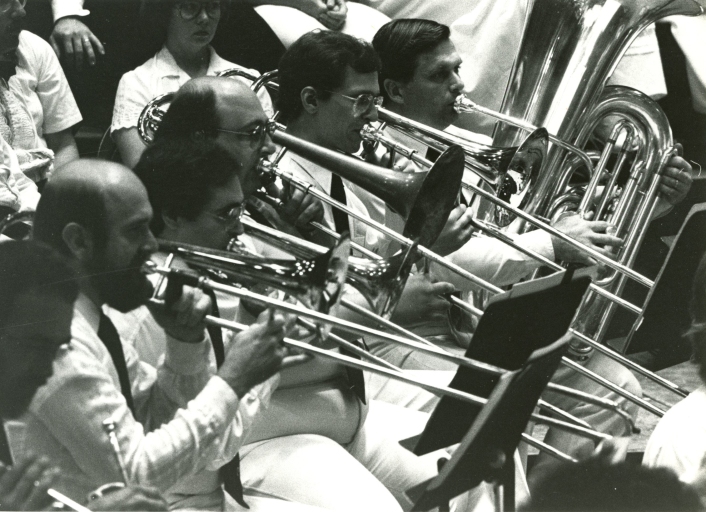
Mahler_2_Tanglewood_1984_BSO

Boston Symphony Orchestra low brass section, Mahler Symphony No. 2, Tanglewood, August 1984. Ronald Barron, Norman Bolter, Lamar Jones, Douglas Yeo, Chester Schmitz (tuba).

The audition was held in Spring 1984 and at the end of the day, I was the last candidate standing. But I was not offered the position. Seiji told me he liked my playing very much but he would like me to make some small changes to my sound and approach. There would be another audition later in the year but in the meantime, he asked me to come to Tanglewood, the summer home of the Boston Symphony Orchestra, to play two weeks of concerts, then go to Europe with the BSO for three weeks, and then return to Boston to make a recording of Richard Strauss’ Don Quixote with Yo-Yo Ma as soloist. I was thrilled to accept the offer of weeks to play with the BSO. Those weeks at Tanglewood, in Europe, and in Boston were unforgettable. Symphony No. 2 of Gustav Mahler with Jessye Norman as soloist, Don Quixote and the Dvorak Cello Concerto with Yo-Yo. Dvorak Symphony No. 9 and Shostakovich Symphony No. 10, and more.
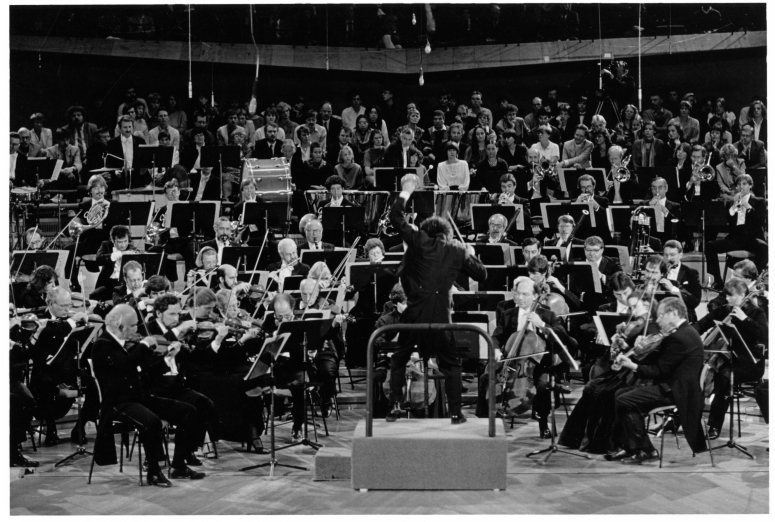
BSO_1984_Berlin_Shostakovich_10 copy

Boston Symphony Orchestra, Seiji Ozawa, conducting. Performance of Shostakovich Symphony No. 10, Berlin Philharmonie, September 1984. Trombones in the back row, right, are Ronald Barron, Carl Lenthe (substitute), Douglas Yeo, bass.

I returned home to Baltimore and at a second audition in December 1984, I won the bass trombone position with the Boston Symphony Orchestra and began my tenure there in May 1985.

Thus began my remarkable adventure as a member of the Boston Symphony Orchestra. It was electrifying to sit under Seiji’s baton. Yes, we all called him Seiji. Not maestro, not Mr. Ozawa. Seiji saw the BSO as a family. He cared deeply about the orchestra, the institution, its history, and its members. Seiji was so much more than a superb musician. He cared. He cared so much about so many things. And he loved Boston. Unlike so many music directors today, Seiji was deeply involved in the city of Boston, and Tanglewood was his happy place.
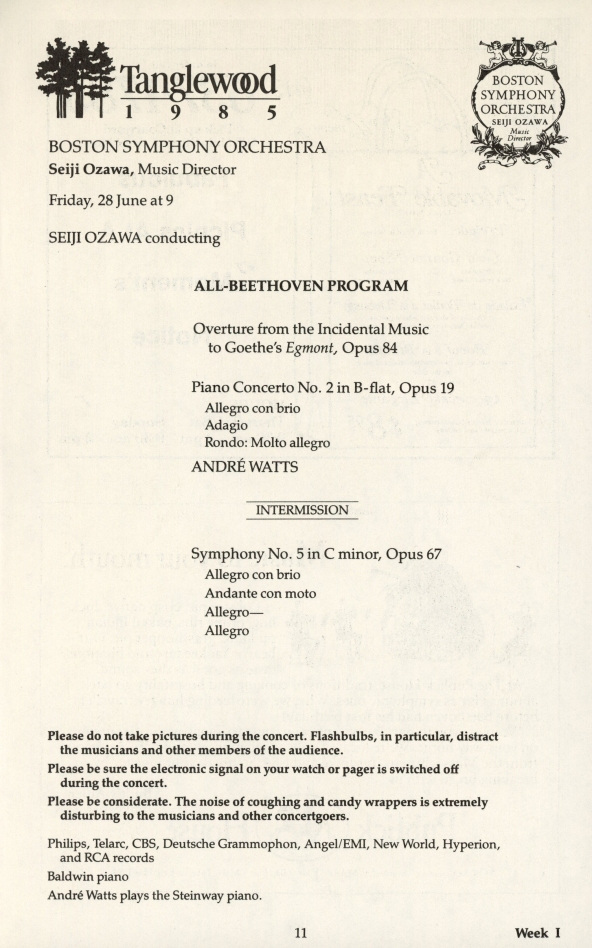
1985_Tanglewood_opening_night

Boston Symphony Orchestra, Seiji Ozawa conducting. Program for opening night at Tanglewood, June 28, 1985.

My first opening night concert with the Boston Symphony Orchestra was at Tanglewood, June 28, 1985. Seiji conducted an all-Beethoven program. It was a memorable start to my years with the BSO, playing what is arguably the most famous symphony ever written, Beethoven’s Symphony No. 5.
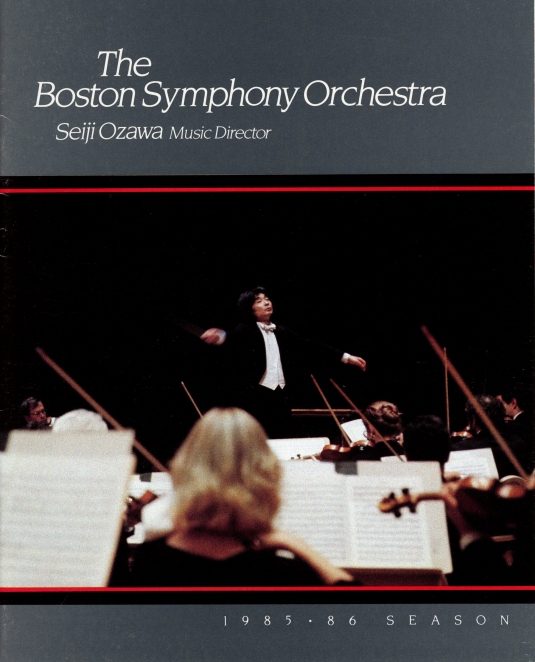
BSO_1985_1986_season_brochure

Boston Symphony Orchestra 1985–1986 season brochure.

The 1985–1986 season was my first full season with the Boston Symphony Orchestra. It was like a dream come true. The conductors: Seiji, Bernard Haitink, Giuseppe Sinopoli, Kurt Masur, Christoph Eschenbach, Pierre Boulez, Jeffrey Tate, Leonard Slatkin. The soloists: Maurice André, Itzhak Perlman, Viktoria Mullova, Alicia de Larrocha, Maurizio Pollini, André Watts, Hildegard Behrens, Gilbert Kalish. The repertoire: Brahms Symphonies 1 and 4, Shostakovich Symphony 8, Mahler Symphony 3 and 7; the list goes on. And it was like that every year, with Seiji headlining the season.
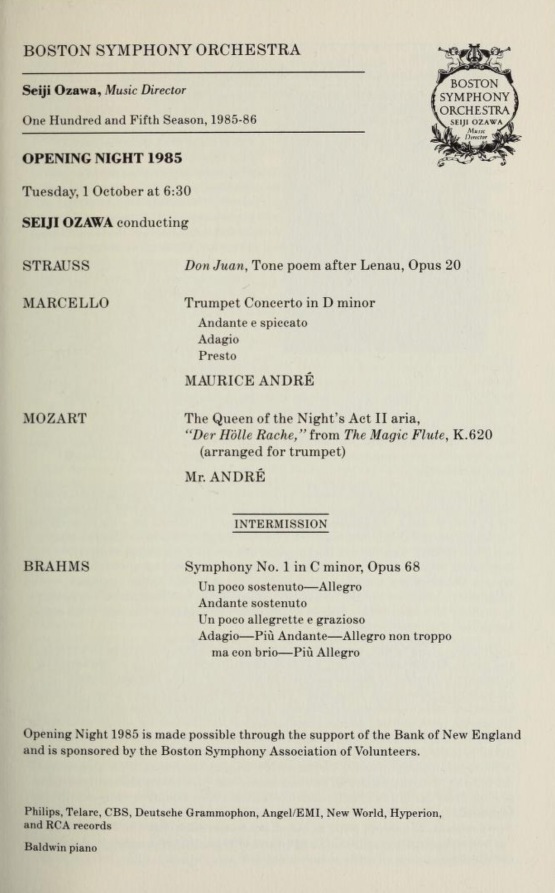
BSO_opening_night_Symphony_Hall_October_1985

Boston Symphony Orchestra, Seiji Ozawa conducting. Program for opening night at Symphony Hall, October 1, 1985.

Opening night at Symphony in 1985, my first Symphony Hall opening night, featured Don Juan by Richard Strauss, Brahms’ Symphony 1, and with trumpet soloist Maurice André. I had played the Brahms Symphony with the BSO earlier that year at Tanglewood with Leonard Bernstein (I wrote about that experience HERE). Now I was playing it in the glorious acoustics of Boston’s Symphony Hall. Then there was Maurice André, a remarkable trumpet player. When I was a student at Wheaton College, he came to the college Artist Series and played a spectacular, memorable recital. Now I was up close, sitting in Symphony Hall to hear him in rehearsal (there were no trombones called for in his solo pieces).
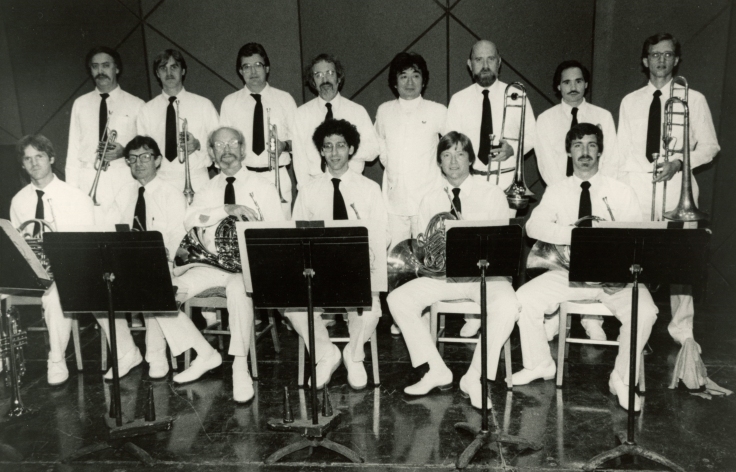
BSO_brass_Ozawa_1987

Boston Symphony Orchestra brass section, Seiji Ozawa (center), conductor. Tanglewood, Summer 1987. Trombones: Ronald Barron, Norman Bolter,  Douglas Yeo.

Symphony Hall. That proud temple of music in Boston, built in 1900, considered to be acoustically perfect, and one of the three greatest concert halls in the world along with Carnegie Hall in New York City and the Concertgebouw in Amsterdam. Seiji reveled in Symphony Hall. Its warmth fit the Boston Symphony Orchestra like a glove. The BSO could deliver power when called for. But it was the elegance of the orchestra for which it was known. Seiji brought out that elegance like no other conductor. When he conducted, Seiji was poetry—he was ballet—in motion. He had no self-serving, extraneous motions. His body communicated the essence of the music and we in the orchestra knew exactly how to respond.
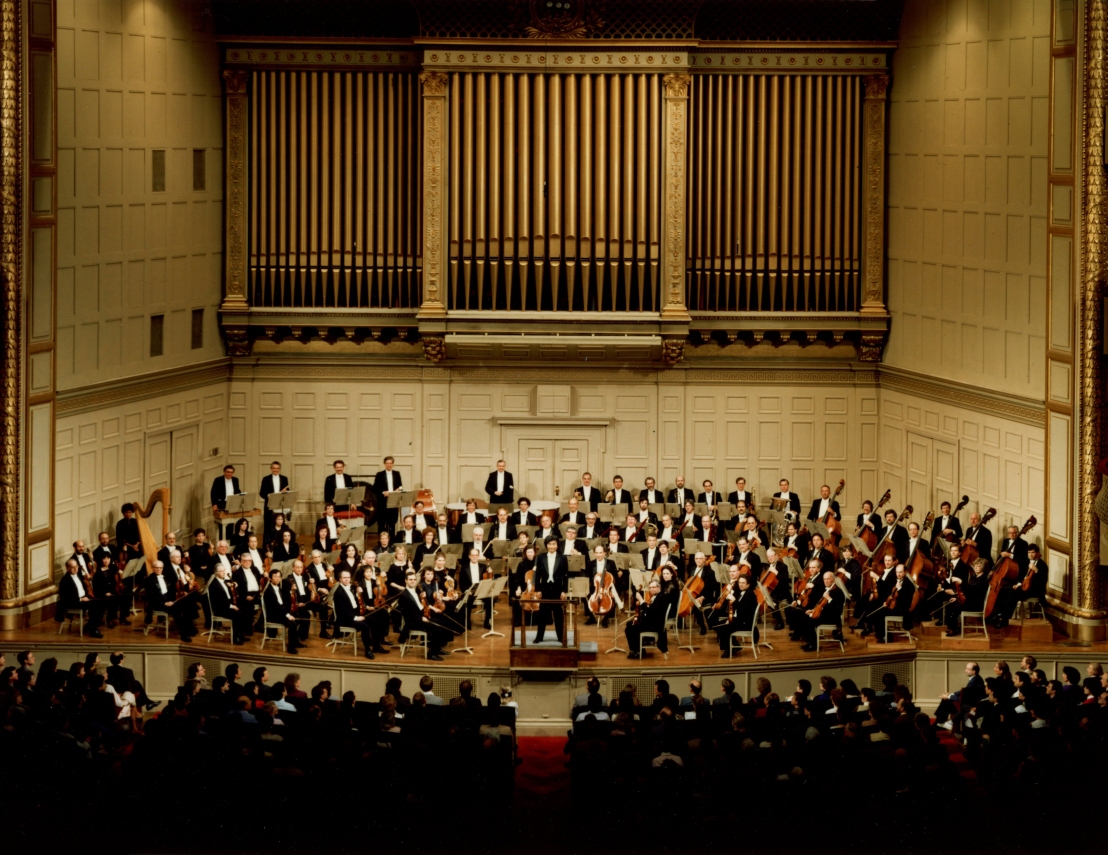
BSO Symphony Hall May 1988

Boston Symphony Orchestra, Seiji Ozawa, music director. Symphony Hall, Boston, May 1988.

Seiji Ozawa was a truly great artist, musician, conductor. We all knew it; the world knew it. But for me, his musical persona was secondary to the fact that he was a genuine, caring human being. He loved the Boston Symphony Orchestra and its players. He showed this over and over. I had many personal encounters with Seiji, memorable moments that are frozen in time, so indelibly imprinted in my mind. One of the most significant is from the summer of 1989 when my oldest daughter, Linda, and I were in a horrific car accident at Tanglewood (a fuel oil truck sped through a red light and hit us broadside; we never saw it coming). Linda and I were taken by ambulance to the hospital; she was seriously injured and was in a coma. At first it was touch and go whether or not Linda would live but we prayed and prayed and prayed. The day after the accident, Seiji came to the hospital to visit our family. He had no entourage; he came without an announcement. He didn’t come as my boss, as “Music Director of the Boston Symphony Orchestra.” There were no cameras or microphones around. He came as the father of two children of his own who was visiting a friend whose daughter was profoundly injured. Seiji and I hugged and cried. We walked into the intensive care unit together to see Linda; Seiji was shaken. Fortunately, God gave us a miracle and Linda recovered—today she is a fine bass trombonist and music teacher, and the mother of our grandchildren—to see her now is a testament to God’s mercy, grace, and healing power. And Seiji’s visit—a visit that came with no fanfare—remains in my mind as I remember him as not only a great musician, but as a caring person.

I also remember many conversations I had with Seiji about God and faith. When we met and spoke in private, he opened up about many things. Seiji’s mother was a Christian; his father was Buddhist. In a conversation, he told me that the first Western music he ever heard was his mother singing to him, in English, the old African-American spiritual, “Nobody knows the trouble I’ve seen, nobody knows but Jesus.” When asked in an interview what he thought was the most important piece of classical music ever written, Seiji said—without hesitation—”The Bach Saint Matthew Passion.” When he retired from the Boston Symphony Orchestra in 2002, I gave Seiji a book of memories of our time together along with a New Testament Bible in Japanese. He received the gift with gratitude and grace.

Yeo_Ozawa_Japan_1989

Douglas Yeo and Seiji Ozawa, Boston Symphony Orchestra Japan tour, 1989.

When the BSO was on tour, Seiji always threw a party for the orchestra. Nowhere were these parties more lavish and fun than when we toured Japan. There, Seiji was truly in his element, his comfort zone, so happy to be showing off his orchestra to his country, and so engaged with all of the orchestra’s players. The photo above shows Seiji and me at a party on a tour of Japan in 1989, one of those memorable times when, without instruments or batons in our hands, Seiji’s fun side came out.
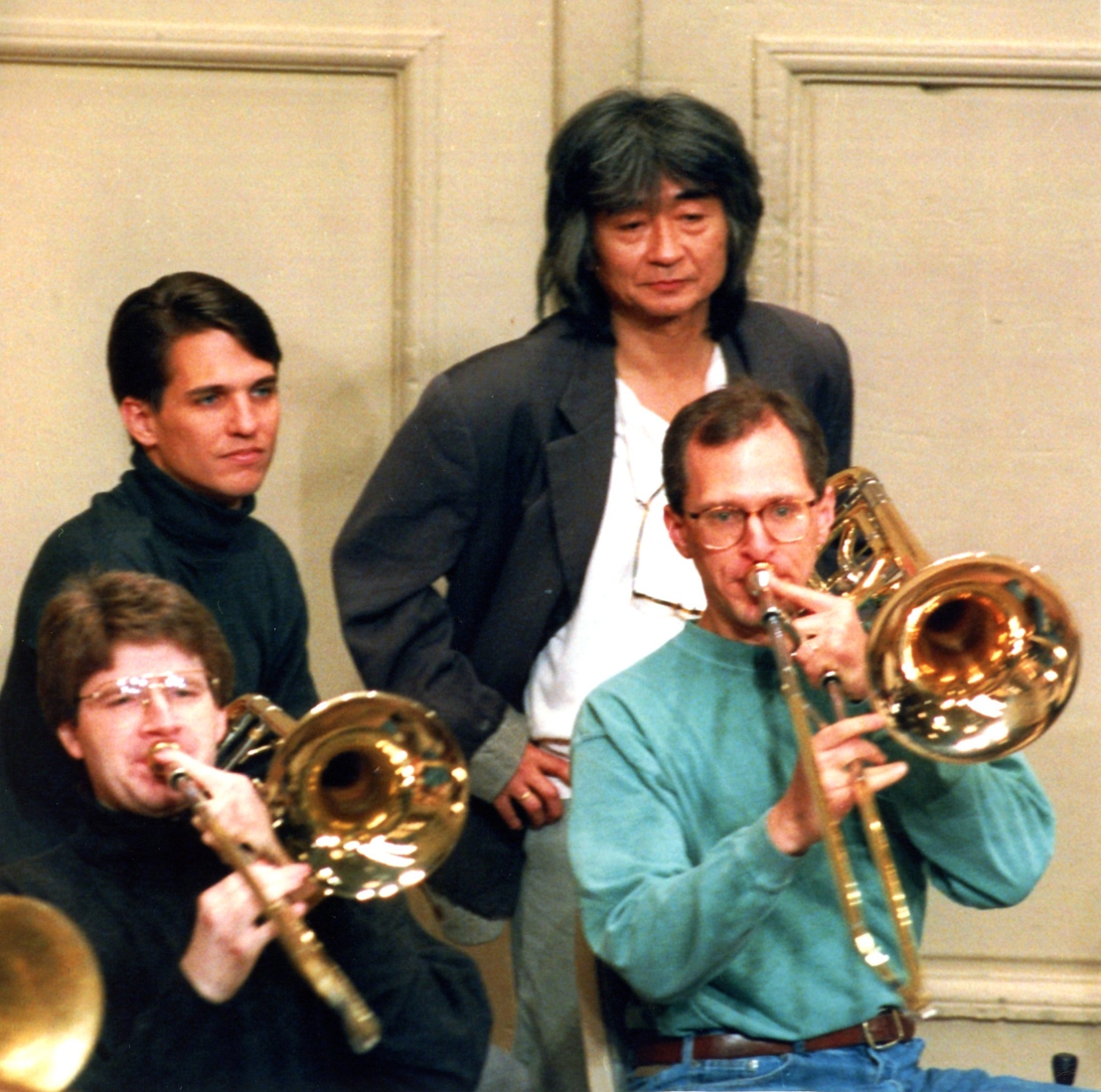
Ozawa_Lockhart_Yeo_Wright_2_6_1995

Keith Lockhart and Seiji Ozawa with R. Douglas Wright and Douglas Yeo. February 6, 1995.

This is one of my favorite photos of Seiji, above. Keith Lockhart was named conductor of the Boston Pops in February 1995. That day, during a rehearsal at Symphony Hall, Keith and Seiji walked behind the back row of brass players and parked themselves behind R. Douglas Wright and me. Doug, who is currently principal trombonist of the Minnesota Orchestra, was the BSO’s and Boston Pops’ regular substitute player for many years, and we laughed when this photo appeared in the Boston Globe on February 7, 1996 with the caption, “New Boston Pops conductor Keith Lockhart (rear left, with Boston Symphony Orchestra music director Seiji Ozawa) will also direct the BSO’s youth concerts. ‘I can’t wait to get started,’ he said.” Somehow that caption never felt adequate for the expressions on Keith and Seiji’s faces. Caption contest, anyone?
BSO_Japan_1999_Ozawa_Robin_Yeo

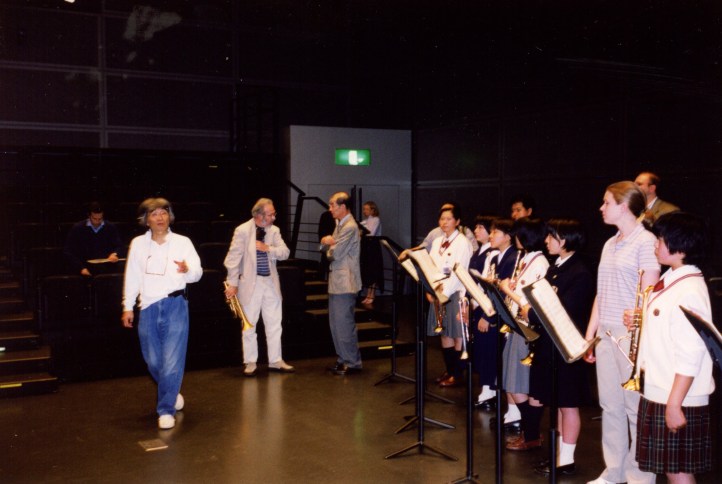
Seiji Ozawa with extra trumpet players for a performance of Respighi’s Pines of Rome, Tokyo Forum, May 1999. Our daughter, Robin, is standing tall, third from right.

Seiji had more interactions with my family. In Spring 1999, I brought our youngest daughter, Robin, on the BSO’s Japan tour.  For this tour, the BSO gave a concert in the Tokyo Forum on a national holiday, “Children’s Day.” As part of the concert, a group of Japanese school children who played trumpet and trombone were selected to play the additional brass parts for Respighi’s Pines of Rome. Since Robin was a fine trumpet player (first chair trumpet in Massachusetts All-State Orchestra and other groups), Seiji agreed to let Robin play with the group of school children at the Tokyo concert. The photo above shows Seiji coming in for a rehearsal in Tokyo with the Japanese students, Robin towering over the other players, trumpet in hand.
BSO_brass_Patriots_Ozawa_Yeo_1999

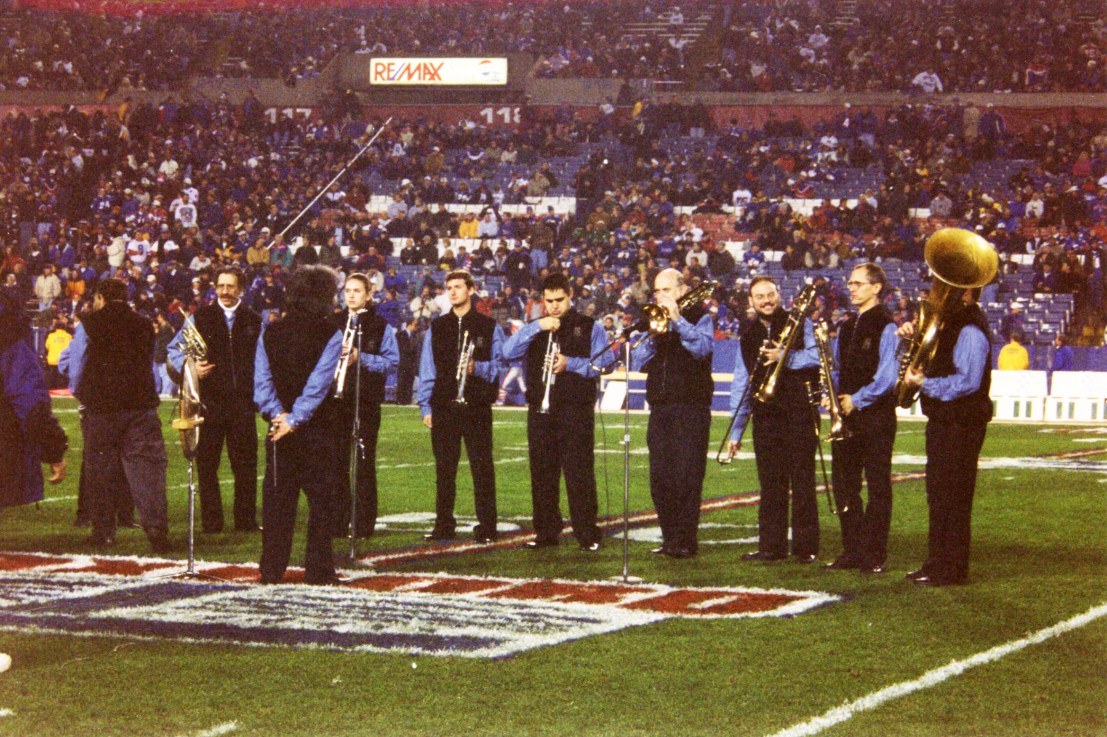
Members of the Boston Symphony Orchestra with extra players, performing the National Anthem at a New England Patriots game, Foxborough Stadium, Massachusetts, fall 1999. Trombone section: Ronald Barron, Darren Acosta, Douglas Yeo. Our daughter, Robin, can be seen just to the right of Seiji Ozawa.

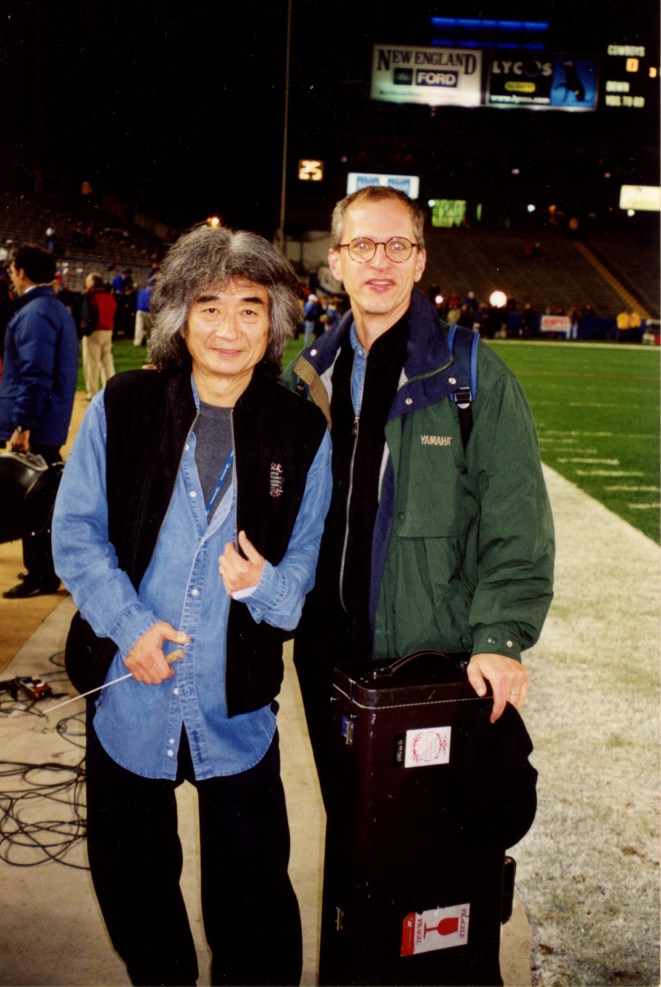
Seiji was an avid sports fan who was deeply invested in Boston sports. Particularly the Boston Red Sox and New England Patriots. Our Boston Symphony brass section played the National Anthem at many Patriots and Red Sox games, and for one Patriots game at the old Foxborough Stadium in 1999, we were in need of another trumpet player and Robin was asked to play with us. It was a thrill for me to stand on the 50-yard line and play the National Anthem with Seiji conducting and Robin just a few feet away from me.
Ozawa_Yeo_Patriots_1999

Seiji Ozawa and Douglas Yeo, Foxborough Stadium, Massachusetts, fall 1999.

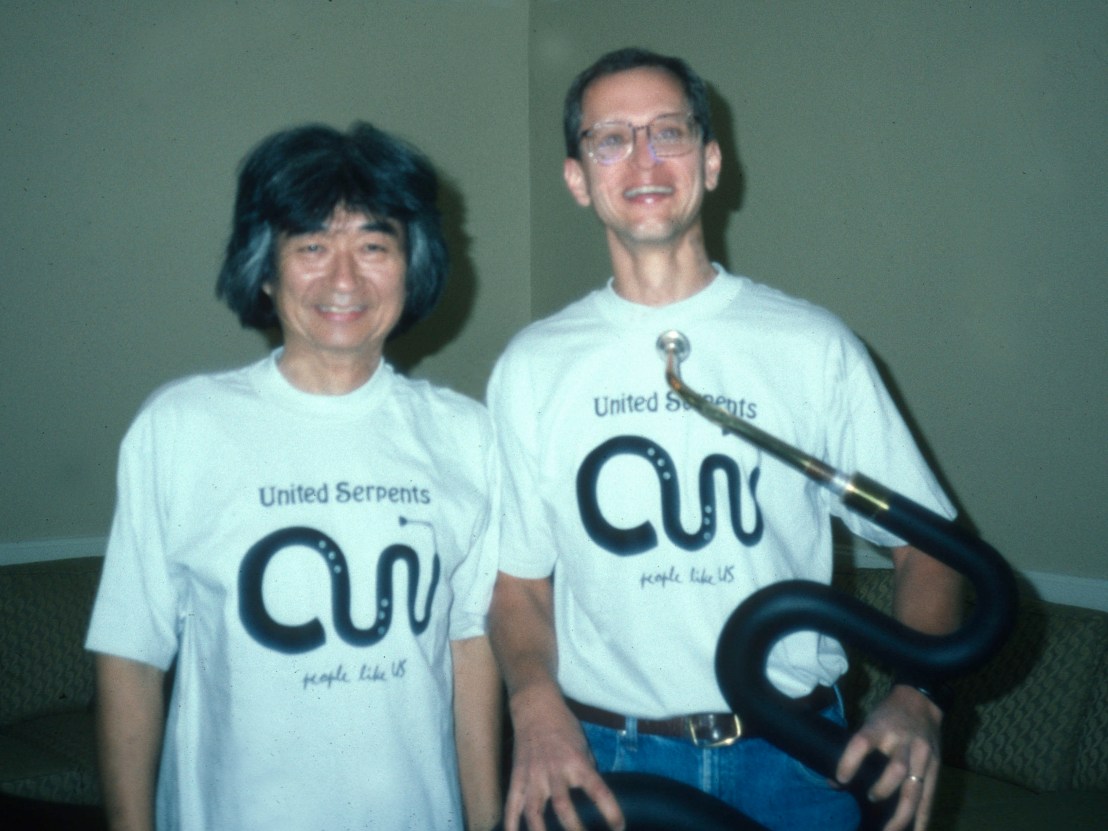
In 1994, the Boston Symphony Orchestra gave the United States and Asian premieres of a newly discovered work by Hector Berlioz, his Messe solennelle. When I looked at the score for the piece, I noticed there was a prominent solo for serpent. I had seen serpents in museums and the Boston Symphony had several serpents in its historical instrument collection. I thought to myself, “I think I’d like to play serpent on the Berlioz Messe.” Having never held a serpent in my hand before and with no idea what I was getting into, I purchased an instrument, learned how to play it, auditioned it for Seiji, and he was thrilled. He’d never heard a serpent before and he was intrigued by the instrument and its sound. Before a rehearsal, I gave Seiji a serpent t-shirt and he immediately pulled off his shirt and put on the t-shirt for the rehearsal. This was classic Seiji: inquisitive, always wanting to learn, and having fun in the process. Seiji gave me a chance with the serpent and since that time, I have played serpent on many concerts with the BSO and other orchestras, given serpent recitals, made a serpent CD and DVD, and enjoyed numerous forays into the “early music” movement because of the serpent. And it all started with Seiji giving the serpent and me a chance.
Ozawa_Yeo_serpent_1994

Seiji Ozawa and Douglas Yeo, Symphony Hall, Boston, Fall 1994.
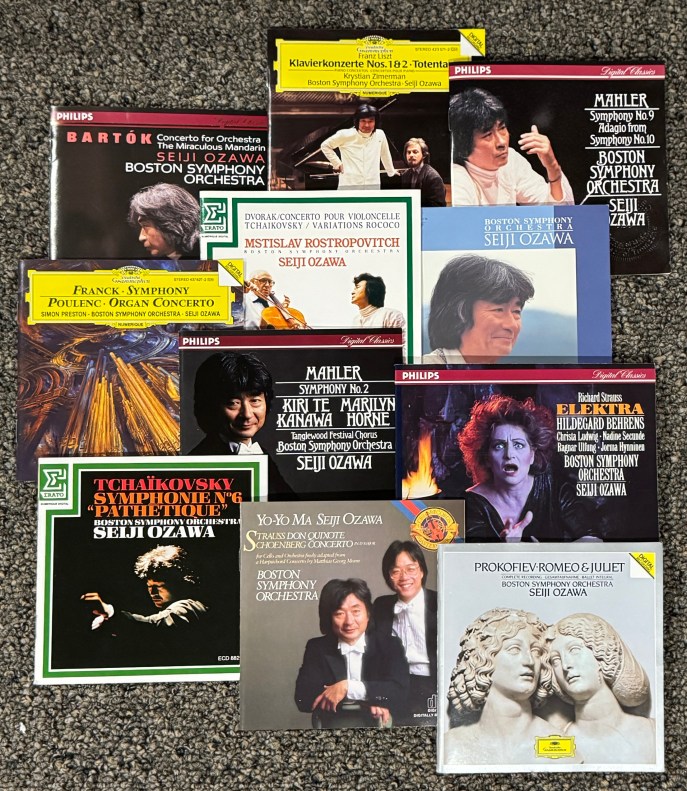
Ozawa_BSO_recordings

 (1985–2002)A sample of recordings made by the Boston Symphony Orchestra conducted by Seiji Ozawa, 1985–2002.

During the years that Seiji’s and my tenures at the Boston Symphony overlapped (1985–2002), we made many recordings together. These included all of the Mahler symphonies except Symphony No. 8 (recorded before I came to the BSO) and Symphony No. 4 (which does not include trombones), concertos with Yo-Yo Ma, Krystian Zimerman, Mstislav Rostropovich, and others, operas, the Concerto for Orchestra and Miraculous Mandarin by Bartok, and much more. That recorded legacy that I shared with Seiji and the Boston Symphony is something I cherish, and it is an ongoing reminder of the remarkable collaborations we shared together. Here’s a list of the recordings I made with Seiji Ozawa and the Boston Symphony Orchestra:

  • Twentieth Century Bach [arrangements of music by J.S. Bach by Stravinsky, Webern, Stokowski, Schönberg, Saito] (Philips/Boston Symphony/Ozawa)
  • Bartok: Concerto for Orchestra and The Miraculous Mandarin [complete ballet]                         (Philips/Boston Symphony/Ozawa)
  • Bartok: Concerto for Violin No. 2 (DGG/Mutter/Boston Symphony/Ozawa)
  • Berlioz: Cléopâtre (Decca/Norman/Boston Symphony/Ozawa)
  • Berlioz: Requiem (RCA Victor/Boston Symphony/Ozawa)
  • Britten: Young People’s Guide to the Orchestra (Fun House/Boston Symphony/Ozawa)
  • Britten: Les illuminations (Philips/McNair/Boston Symphony/Ozawa)
  • Britten: Diversions (SONY/Fleisher/Boston Symphony/Ozawa)
  • Debussy: La Damoiselle élue (Philips/McNair/Graham/Boston Symphony/Ozawa)
  • Dutilleux: The Shadows of Time (Erato/Boston Symphony/Ozawa)
  • Dvorak: Cello Concerto (Erato/Rostropovich/Boston Symphony/Ozawa)
  • Dvorak: Dvorak in Prague (Sony/Ma/Perlman/Boston Symphony/Ozawa)
  • Faure: Requiem (DGG/Bonney/Hakegard/Boston Symphony/Ozawa)
  • Faure: Pelléas et Mélisande, Dolly (DGG/Hunt/Boston Symphony/Ozawa)
  • Franck: Symphony in d (DG/Boston Symphony/Ozawa)
  • Gubaidulina: Offertorium (DGG/Kremer/Boston Symphony/Ozawa)
  • Liszt: Piano Concerto No. 1 and No. 2, Totentanz (DGG/Zimerman/Boston                                     Symphony/Ozawa)
  • Mahler: Symphonies 1, 2, 3, 5, 6, 7, 9, 10 (Philips/Boston Symphony/Ozawa)
  • Mendelssohn: A Midsummer Night’s Dream (DGG/Battle/von Stade/Densch/Boston                         Symphony/Ozawa)
  • Poulenc: Gloria, Stabat Mater (DGG/Battle/Boston Symphony/Ozawa)
  • Prokofiev: Romeo and Juliet [complete ballet] (DGG/Boston Symphony/Ozawa)
  • Prokofiev: Concerto for the left hand (SONY/Fleisher/Boston Symphony/Ozawa)
  • Rachmaninoff: Piano Concerto No. 1 and No. 2 (DGG/Zimerman/Boston Symphony/Ozawa)
  • Rachmaninoff: Piano Concerto No. 3 (RCA/Kissin/Boston Symphony/Ozawa)
  • Ravel: Concerto for Piano in D for the left hand (SONY/Fleisher/Boston Symphony/Ozawa)
  • Ravel: Shéherazade (Philips/McNair/Boston Symphony/Ozawa)
  • Sibelius: Violin Concerto (Philips/Mullova/Boston Symphony/Ozawa)
  • Strauss: Elektra [playing bass trumpet] (Philips/Boston Symphony/Ozawa)
  • Strauss: Don Quixote (CBS/Ma/Boston Symphony/Ozawa)
  • Tchaikowsky: Nutcracker [complete ballet] (DGG/Boston Symphony/Ozawa)
  • Tchaikowsky: Pique Dame (RCA-BMG Classics/Boston Symphony/Ozawa)
  • Tchaikowsky: Symphony 6 (Erato/Boston Symphony/Ozawa)

Seiji’s last concert in Symphony Hall as music director of the Boston Symphony Orchestra was on April 20, 2022. By then he had been music director for 29 years. He was ready for a change but it was difficult for me to say goodbye to this man who meant so much to so many of us for so long.
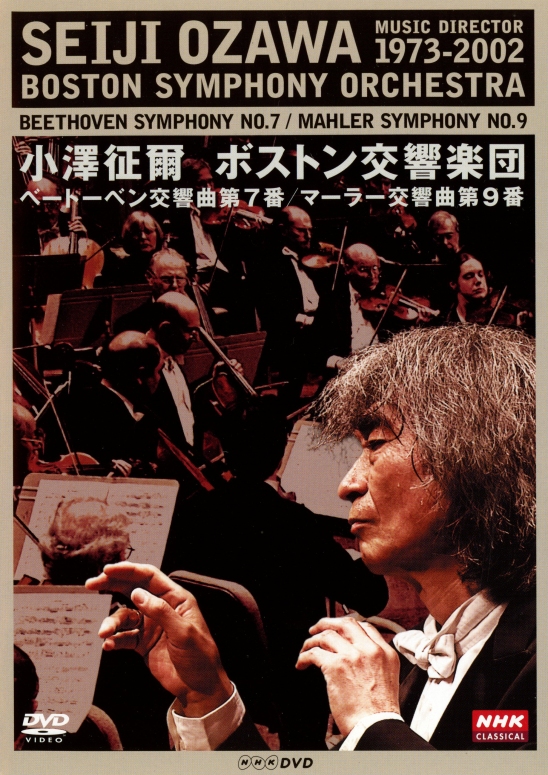
BSO Mahler 9 2008 DVD cover

Cover of the NHK DVD featuring two works performed by the Boston Symphony Orchestra and Seiji Ozawa. Beethoven Symphony No. 7 (Suntory Hall Tokyo, 1989) and Mahler Symphony No. 9 (2002). NHK DVD NSDS-14717; NHK Blu-ray NSBB-14721.

Seiji’s last concert in Symphony Hall as music director of the Boston Symphony Orchestra had a single work on the program: Gustav Mahler’s Symphony No. 9. We had recorded and performed this piece with Seiji on numerous occasions. And it seemed a fitting piece for us to play together as he closed his tenure as music director of the BSO. NHK (Japan) filmed the concert and later released it on a DVD and Blu-ray along with a 1989 performance of the BSO playing Beethoven’s Symphony No. 7. I am so glad to have this document of the concert.
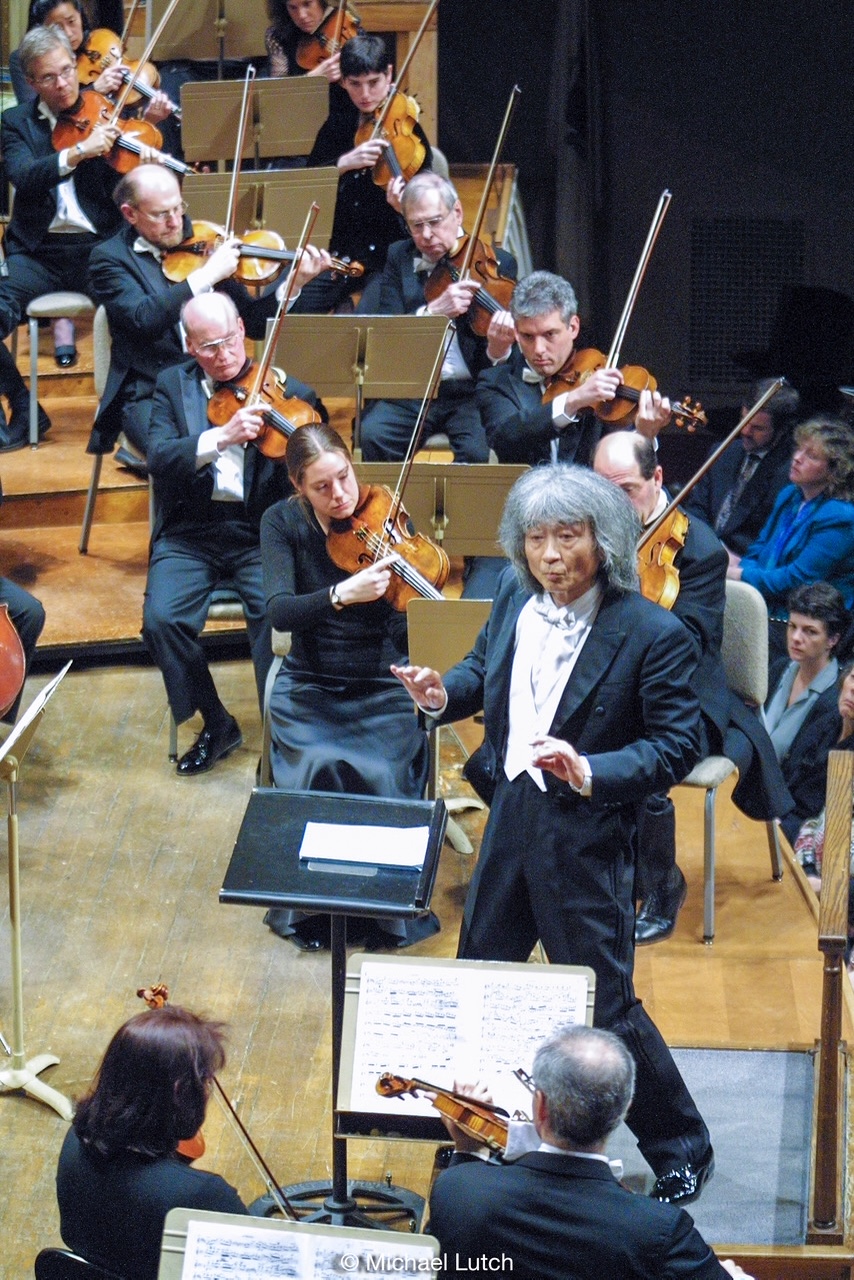
BSO_Ozawa_2002_MICHAEL_ LUTCH

Seiji Ozawa leading the Boston Symphony Orchestra in his final concert in Symphony Hall as Music Director of the BSO, April 20, 2002. Photo © Michael Lutch. Used with permission.
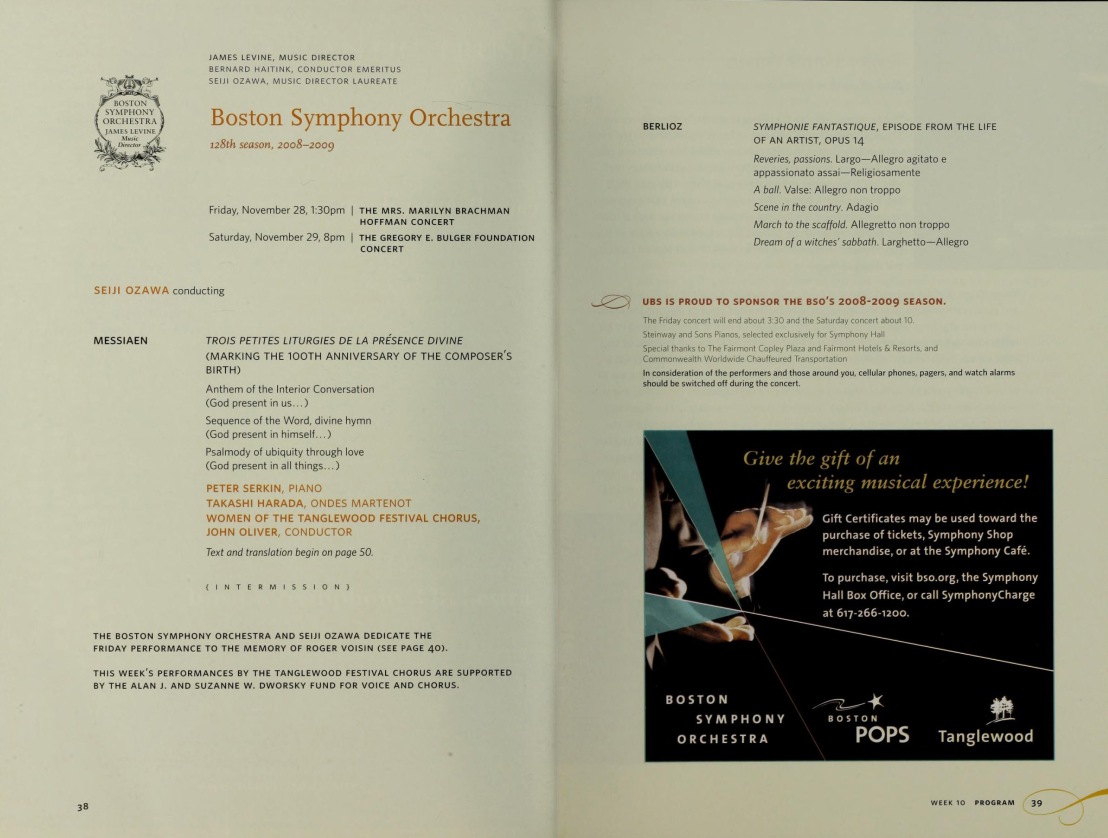
BSO_program_November_2008_Ozawa

Boston Symphony Orchestra program for Seiji Ozawa’s final concerts with the orchestra, November 28 and 29, 2008. Symphony Hall, Boston.

The concert was emotional on so many levels. But, fortunately, we had not really said goodbye to Seiji. In 2006 , he returned for a concert at Tanglewood (a performance of Gustav Mahler’s Symphony No. 2), and in 2008, he returned once again to Symphony Hall for concerts that included Symphonie fantastique by Hector Berlioz. The Symphonie was one of Seiji’s “party pieces,” a piece we played more times than I can count at home and on tour, and a piece that he and the orchestra did exceptionally well. The NHK DVD of Seiji’s final concert as music director of the BSO in 2002 also included a segment about his return to Symphony Hall in November 2008. The DVD contains some video of the rehearsals and concerts from that memorable occasion, as well as interviews by Seiji and a few BSO members, including me.
Yeo_2008_BSO_DVD

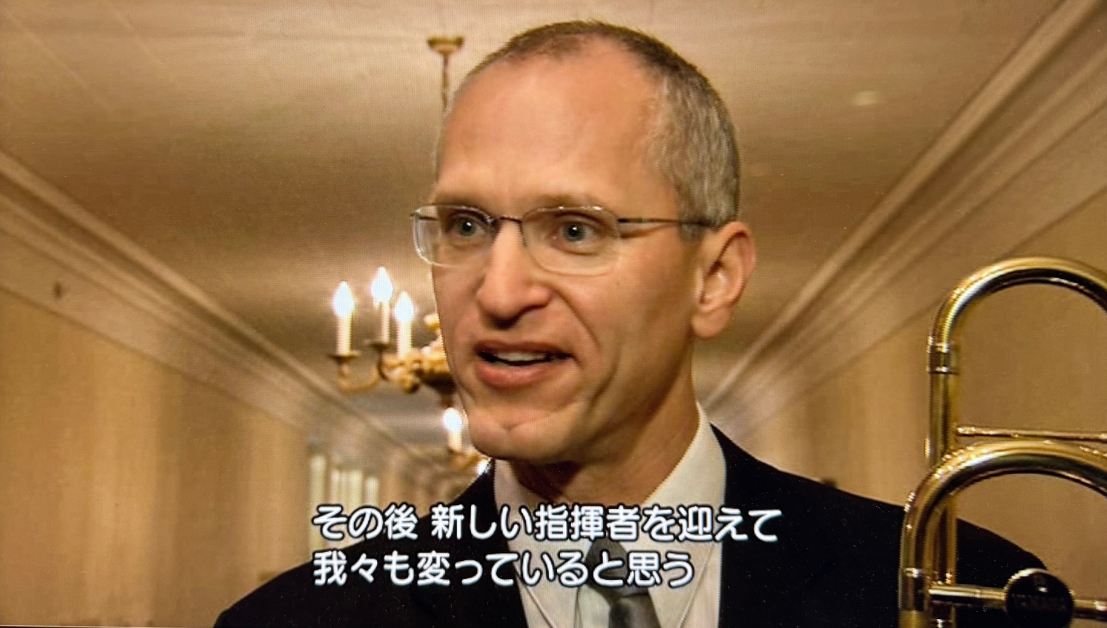
Douglas Yeo interview segment for NHK DVD/Blu-ray of Mahler Symphony No. 9, Beethoven Symphony No. 7, and a special segment on Seiji Ozawa’s return to Symphony Hall in November 2008.

I was so happy to be asked to say a few words on camera about Seiji and what he meant to both the orchestra and to me. Here’s some of what I said:

I think Seiji has such a way of communicating the music with musicians. Now, there’s a combination of his being older and even deeper as a musician, and the musicians of the Boston Symphony trusting him even more. He comes back now as, sort of, like our grandfather, like a hero to us because we had so many years with him. Now we have Seiji come back to remind us of those many years of great performances. And I have to say, for me personally, it is very, very exciting.

It was exciting. It was always exciting. The video (below) produced by WCVB-TV (Channel 5) in Boston when Seiji returned to Symphony Hall in 2008 shows some of the excitement we all experienced with Seiji on the podium.

Television segment produced by WCVB-TV Channel 5, Boston, on the occasion of Seiji Ozawa’s return to Symphony Hall, November 2008.

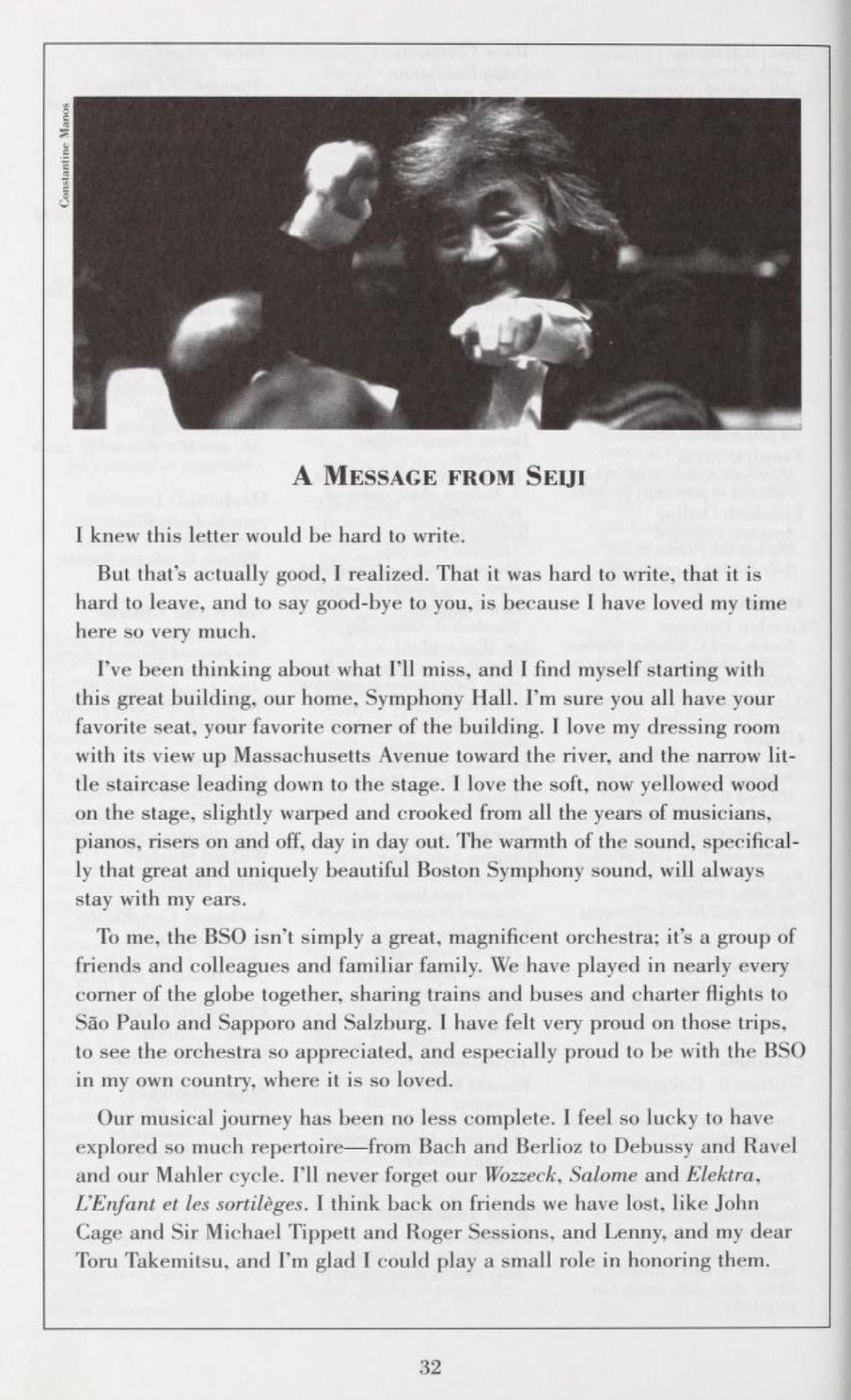
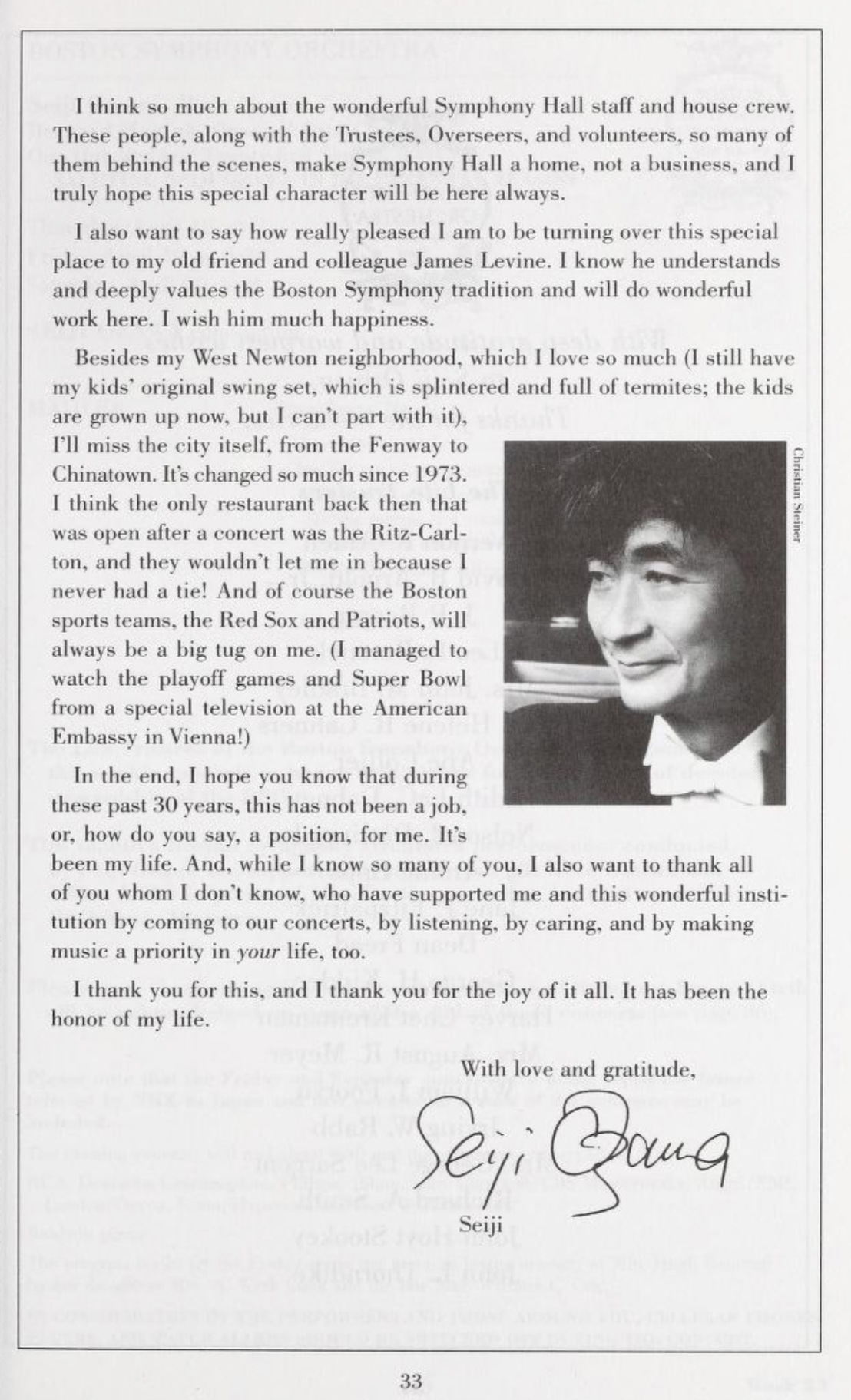
Here is the message that Seiji had for Boston Symphony audiences, from the program book for his final concerts in Symphony Hall as music director of the BSO, April 18, 19, 20, 2002.
Ozawa_farewall_Message_2002_01

Ozawa_farewall_Message_2002_02

Message from Seiji Ozawa, from the Boston Symphony Orchestra program book for April 18, 19, 20, 2002.

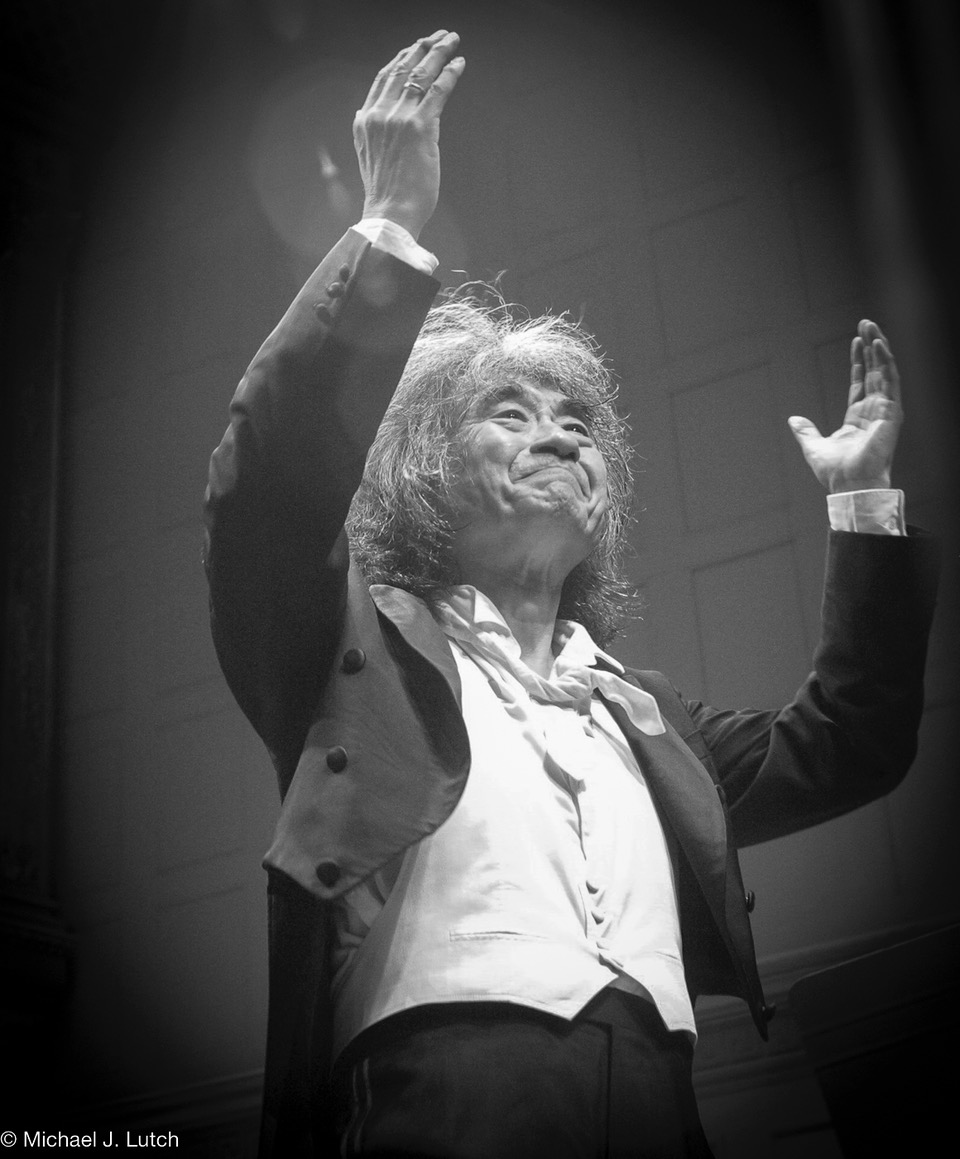
Seiji Ozawa was music director of the Boston Symphony Orchestra for 29 years, from 1973 to 2002. He hired me into the Boston Symphony in 1985 and became one of my musical inspirations as well as a friend. The photo below was taken by my friend, Michael Lutch, at Seiji’s final concert in Symphony Hall as music director of the BSO, on April 20, 2002. This was at the end of our performance of Gustav Mahler’s Symphony No. 9. Seiji was exhausted; emotionally spent. Yet, this is how I will always remember Seiji. His smile, his engagement with the orchestra and the audience, and his commitment to the art of music are things I will never forget. Working with Seiji Ozawa changed my life and I will always be grateful for how God brought our lives together. I miss him, but I will never forget him.
BSO_Ozawa_2002_MICHAEL_LUTCH_02

Seiji Ozawa taking a bow with the Boston Symphony Orchestra after his final concert in Symphony Hall as Music Director of the BSO, April 20, 2002. Photo © Michael Lutch. Used with permission.
The music goes on.

The music goes on.

There are no concerts today at Carnegie Hall, or Symphony Hall, Boston, or in Edman Memorial Chapel on the campus of Wheaton College (IL) where I teach trombone. The Star Spangled Banner won’t be sung tonight before any sporting events. The world of live, public performances of music is shuttered now—all around the world. To even write these words seems incomprehensible. Yet, for the good of humankind, we are taking extraordinary measures to help prevent the spread of COVID-19. Even as we do what we can, we pray that God will deliver us from this pandemic and also give us the eyes to see and the ears to hear what it is that we should learn from this challenging experience.

It is an adjustment, for sure, to not be able to listen to live music and to make it together in community. In addition to the loss of the performances themselves, we ache for the musicians who were to have played them. Most of those players are not getting paid now. Many of our country’s top symphony and opera orchestras have been telling their players that their salaries will be reduced or cut completely in the coming days, although many employers say they will continue to pay for their players’ health insurance benefits. Freelance musicians are adrift, with neither salaries or health insurance. Tomorrow is April 1; rents and mortgages are due and without any income, many people are facing an existential threat. These are real challenges that are felt by all of us in the trickle-down connectedness of our world.

My own trombone playing is now being done solo, by myself. Many engagements that I had planned for these weeks—a solo appearance at a brass band festival in Seattle, a masterclass at Interlochen Arts Academy, concerts in Helsinki and Japan with the Finnish National Radio Orchestra—have been cancelled and I expect more planned engagements will be cancelled as well.

Yet music is still important to us, and there are still ways to hear it. While watching performances in front of a computer or smartphone screen can’t take the place of live music, with a set of headphones, earbuds, or AirPods, or connecting those devices to a larger stereo system or television or other remote speakers, we can enjoy performances from the past on demand. Many orchestras and popular music groups are offering superb videos of recitals and performances. A a quick look throughYouTube brings countless offerings.

I think one of the most interesting classical music offerings is that by the San Francisco Symphony. Click HERE to go to the orchestra’s YouTube channel and their fantastic series of documentaries and performances by several composers, Keeping Score. The programs are superbly produced, the Symphony sounds fantastic, and Michael Tilson Thomas’ commentary is informative and engaging. Have a look!

I’ve put together a few videos of my own performances that have enjoyed some popularity on YouTube. Below, you’ll find performances I gave while I was professor of trombone at Arizona State University (2012-2016), several from my time with the Boston Symphony and Boston Pops (1986-2012), a video I made in the YAMAHA factory in Japan about how trombones are made, and a few other surprises. We pray for the day when we can all go to enjoy music while sitting chairs in concert halls, jazz clubs, and sports arenas. Until then, we can be grateful we live in such a time as this when we have at our fingertips so many enjoyable and inspiring performances to help us get through each day. For each of the videos below, you can view them right here on The Last Trombone or click on the YouTube link that’s provided..

The Star Spangled Banner, arranged by Robert Elkjer. Arizona State University Desert Bones Trombone Choir, Douglas Yeo, conductor at Chase Field, Phoenix, August 31, 2014. I have played the national anthem at more sporting events than I can count, including Super Bowl XXXVI in 2002 as a member of the Boston Pops Orchestra. When I came to Arizona State University, I wanted to share that great experience of playing the national anthem at a sporting event with my students. We played at Arizona Diamondbacks baseball games several times, as well as at several ASU games. This performance was from the first of our appearances at Chase Field; the video was made and supplied to us by the Diamondbacks. Click HERE to view this on YouTube.


Making trombones. A tour of the YAMAHA Toyooka factory in Japan with Douglas Yeo, 2004. I have been playing YAMAHA trombones since 1986, and in 2004, I was asked to make a video of a tour of the YAMAHA factory where many of their trombones are made. It’s a fascinating process—as you can see. Click HERE to view this on YouTube.


Prayer from Jewish Life, No. 1, by Ernest Bloch, arr. Gordon Cherry. Douglas Yeo, bass trombone; Aimee Fincher, piano, 2014. This performance was recorded on my 2014 faculty recital at Arizona State University. Bloch’s Prayer was originally written for cello and was beautifully arranged by my friend, Gordon Cherry, former principal trombonist of the Vancouver Symphony and owner of the music publishing company, Cherry Classics. Click HERE to view this on YouTube.


Heart, We Will Forget Him from Three Emily Dickinson Songs by Michael Hennagin. Douglas Yeo and Randall Hawes, bass trombone; Aimee Fincher, piano, 2015. In 2015, I invited my friend, Randy Hawes (bass trombonist of the Detroit Symphony) to give a masterclass at Arizona State University. At the beginning of the class, we played this beautiful duet by Michael Hennagin. This was recorded in the large rehearsal room where we had our weekly ASU trombone studio class. Click HERE to view this on YouTube.


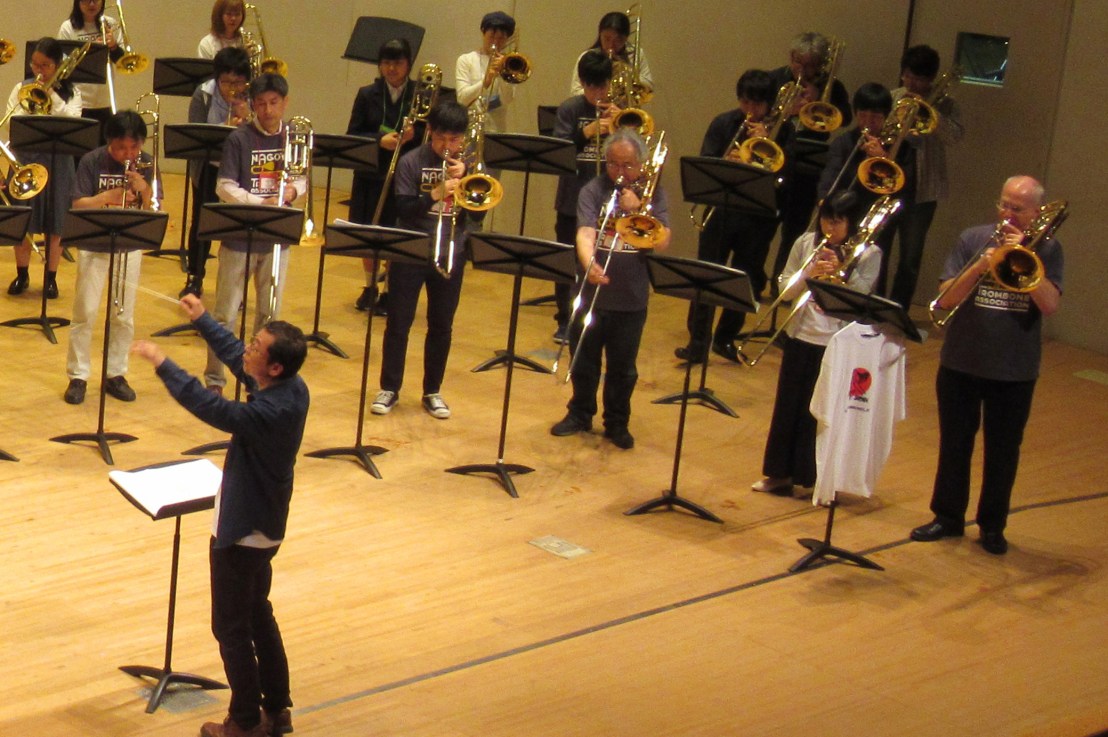
The Chief  for bass trombone and trombone ensemble by John Stevens, and A Song for Japan by Steven Verhelst. Douglas Yeo, bass trombone solo, with members of the Nagoya Trombone Association, 2018. In 2018, I traveled to Nagoya, Japan, to be the guest artist at the Nagoya Trombone Festival. The gala concert at the end of the Festival included several trombone ensemble works, including John Stevens’ tribute to the great trombone teacher, Emory Remington, The Chief, and an arrangement of Steven Verhelst’s beautiful A Song for Japan. The two pieces are combined in this video, below. Click HERE to view this on YouTube.


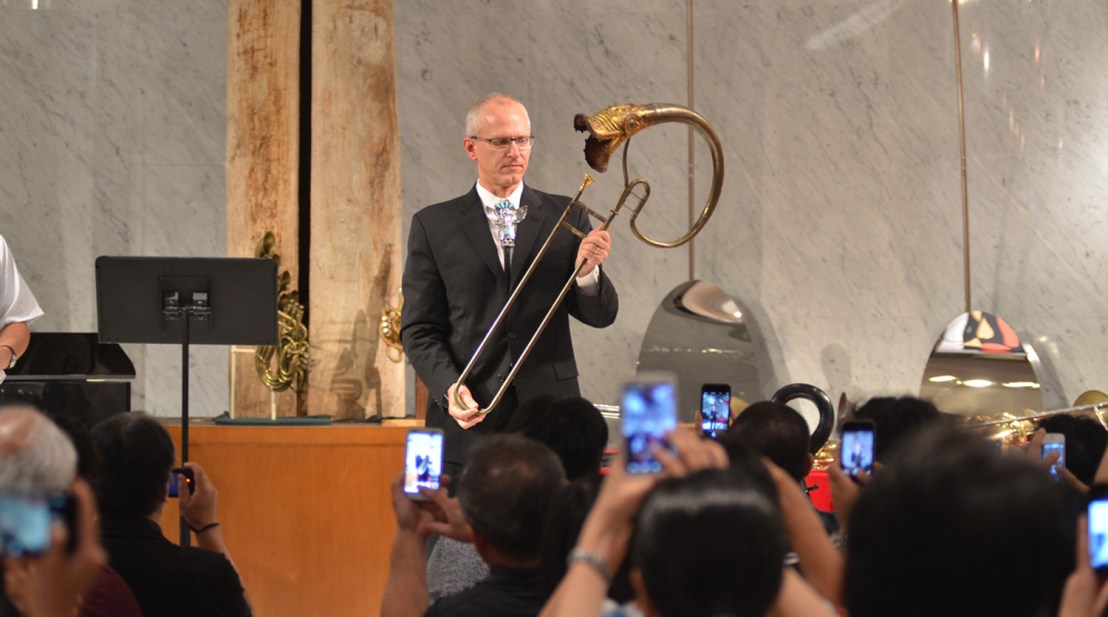
Demonstration of a buccin (dragon bell trombone) at the Museum of Fine Arts, Boston. Douglas Yeo, buccin. While living in Boston, I had a long and happy relationship with those in the Musical Instrument Gallery of the Museum of Fine Arts. I gave many concerts and demonstrations there, and conducted a great deal of research in its back rooms. A few years ago, I recorded some demonstration videos on several MFA-owned instruments, including a buccin made by Jean Baptiste Tabard around 1830. I’m playing a bit of the buccin part from Hector Berlioz’s Messe solennelle. Note the tongue that moves in the instrument’s bell throughout! Playing the buccin is like playing the trombone with your eyes closed; with the bell over my head, I don’t have the bell in front of me as a visual reference point to aid in accurately hitting all of the slide positions. It is a great challenge but great fun to play, with its deep, teutonic sound and rather unconventional overtone series that is related to but not exactly like a modern trombone. Click HERE to view this on YouTube.


The Lost Chord by Sir Arthur Sullivan. Douglas Yeo, ophicleide; Kimberly Marshall, organ, 2012. In 2012, I gave my first faculty recital at Arizona State University. The concert featured me playing bass trombone, bass sackbut, serpent, and ophicleide, all accompanied by ASU’s organ professor, Dr. Kimberly Marshall. She had been the Director of the ASU School of Music when I was hired and I told her that I wanted my first recital to be a collaboration with her, in thanks for her confidence in hiring me. This performance of The Lost Chord, a well-known Victorian era vocal and instrumental solo, features me playing the ophicleide, used extensively in the nineteenth and early twentieth century particularly in France, Belgium, and England (although it was in use around the world) before the nearly universal adoption of the tuba as the preferred bass brass instrument. Click HERE to view this on YouTube.


Rhapsody for Bass Trombone by Stephen Bulla. Douglas Yeo, bass trombone, with the New England Brass Band; Terry Everson, conductor, 2008. I was music director of the New England Brass Band for 10 years, from 1998–2008. We played many concerts together, and also recorded five compact discs in Boston’s Symphony Hall. My last concert with the Band was at Hope Church in Lenox, Massachusetts, near the summer home of the Boston Symphony, Tanglewood. This performance is from that concert, and I chose to play Rhapsody by my good friend, Steve Bulla, who succeeded me as music director of the NEBB. I recorded the Rhapsody in 1996 with England’s Black Dyke Mills Band on my first solo CD, Proclamation, and it was always a joy to play it with my hometown band, the NEBB. Click HERE to view this on YouTube.


Southern Gothic from Three Imaginary Landscapes by James M. David. Douglas Yeo, bass trombone with Sangmi Lim, piano, 2019. In March 2019, I traveled to Del Mar College in Corpus Christi, Texas, to give a recital and masterclass. I performed the recital on my YAMAHA YBL-822G bass trombone with a carbon fiber bell, tuning slide, and outer hand slide by Dave Butler of Butler Trombones in Dallas. I’m very enthusiastic about Dave’s work with carbon fiber and you can hear the result for yourself. This video was put up without editing out my introductory comments where I speak about the carbon fiber trombone so if you want to go right to the music, drag the slider to 1:24. Click HERE to view this on YouTube.


The Crimson Collop by Tommy Pederson. Douglas Yeo and Gerry Pagano, bass trombones, 2014. In 2014, I invited my friend, Gerry Pagano, bass trombonist of the St. Louis Symphony, to give a masterclass at Arizona State University. We opened the masterclass with a performance of this great duet by Tommy Pederson but after the class, we learned that the camera operator forgot to hit RECORD. So after the class, Gerry and I went back to my office and recorded the duet. It’s an informal collaboration between two friends that later led to us deciding to make a CD of bass trombone duets. More about that below. Click HERE to view this on YouTube.


Star Wars Main Title by John Williams. Boston Pops Orchestra, John Williams, conductor, 1993. This performance was recorded in 1993 in a concert from the Boston Pops Orchestra’s tour of Japan. The concert was entirely of John’s music and that evening was one of the highlights of my career with the Boston Symphony/Boston Pops. Yup, look at all of that 90s hair. . . The trombone players in this performance are Norman Bolter, Douglas Wright, Darren Acosta, and me. Click HERE to view this on YouTube.

There are also several other videos from that 1993 concert that appear on YouTube that can’t be imbedded here on The Last Trombone. If you’re interested, click HERE to see the March from Raiders of the Lost Ark, and click HERE to see Adventures on Earth from E.T.


Selections from Horn Trios, Op. 82 by Anton Reicha, arr. John Ericson. John Ericson, horn; Douglas Yeo, bass trombone; Deanna Swoboda, tuba, 2013. This performance of several trios by Anton Reicha was given at a Trombone Studio class at Arizona State University in 2013. Subsequently, my good friends John Ericson, Deanna Swoboda, and I recorded a CD on Summit Records, “Table for Three,” that included these trios and other pieces for horn, bass trombone, and tuba. The performance is rather informal but it’s a very happy memory of many nice collaborations with these friends. Click HERE to view this on YouTube.


Bone Moan by David Jones. Ryan Haines, trombone solo; Arizona State University Desert Bones Trombone Choir, Douglas Yeo, conductor, 2015.  I met David Jones in the 1990s when he was a student at New England Conservatory. I conducted several performances of his superb work for tenor trombone solo and trombone choir, Bone Moan, with the New England Trombone Choir at New England Conservatory with Douglas Wright (now principal trombonist of the Minnesota Orchestra) as soloist. The opportunity to conduct the piece again arose when I was at ASU and Ryan Haines, who at the time of this recording was the jazz trombone teacher at ASU, gives a great performance of this evocative and unusual piece. Click HERE to view this on YouTube.


Song for Lotta by Jan Sandstrom. Douglas Yeo, bass trombone; Aimee Fincher, piano, 2013. I have played Jan Sandstrom’s Song for Lotta many times over the years, in recitals all around the world, including in China and Japan. I have found it is a very powerful final piece on a recital. Rather than something flashy, I like playing something soft and contemplative which gives the audience something special to think about as they leave the concert hall. Click HERE to view this on YouTube.


Theme and Variations on Arkansas Traveler by David Herring. Douglas Yeo, bass trombone; Natural State Brass Band, Rusty Morris, conductor, 2010. The world of the British-style brass band has been important to me for many decades. Earlier in this article, you saw a performance by me of Stephen Bulla’s Rhapsody for Bass Trombone with the New England Brass Band. I’ve also enjoyed a long friendship with members of the Natural State Brass Band of Little Rock, Arkansas, especially the band’s former music director, Rusty Morris. In 2010, I joined the band on their tour of England, both as guest conductor and guest soloist. A bonus of the trip was that my wife and oldest daughter played baritone horn and bass trombone with the band on the tour. David Herring’s piece based on the familiar folk tune, Arkansas Traveler, and was especially written for me to perform on this tour. This performance was recorded in a Wesleyan Church in Bolton, England, just north of Manchester. Click HERE to view this on YouTube.


Below 10th Street by Tommy Pederson. Gerry Pagano and Douglas Yeo, bass trombone; Mike Lake, Hammond Organ and drums. 2017. In August 2017, in the thick of the heat of the Arizona summer, Gerry Pagano and I came together make a new CD of duets for bass trombones, FRATRES. We recorded the album in the studio of Michael Lake, a tremendously gifted jazz trombonist, recording engineer, and digital media guru. The album has many duets by Tommy Pederson (including The Crimson Collop which you have seen earlier in this article). Mike had the idea to add accompaniment to several of the duets and Below 10th Street features Mike on Hammond B-3 organ and drums. Thanks to Mike’s drone, he put together a promotional video of Gerry and me in the Sonoran desert north of Phoenix, horsing around with our trombones to the background of our performance of Below 10th Street. Fun times. For those interested, I start the piece, followed by Gerry, although our parts go back and forth between the top and bottom voice throughout. Click HERE to view this on YouTube.


Quidditch from Harry Potter by John Williams. Boston Pops Orchestra Brass Section. While I was a member of the Boston Symphony/Boston Pops Orchestra, I played many concerts with John Williams; earlier you saw several videos of performances of his music with the Boston Pops Orchestra from our 1993 Japan tour. Here is a video of John’s arrangement of his Quidditch—a game played by Harry Potter and his friends—from a performance in the early 2000s. The video begins with a little spoken commentary from John. The trombone players are Norman Bolter, Darren Acosta, and me. Click HERE to view this on YouTube.


Dear Lord, I Love Thee, by Wycliffe Gordon. Arizona State University Desert Bones Trombone Choir, Douglas Yeo, conductor, 2015. The great jazz trombonist, Wycliffe Gordon, is a good friend, and he came to Arizona State University in April 2015 to give a masterclass for my students. He brought along some music he had written and later that month, I decided to include one of them on our trombone choir concert. Click HERE to view this on YouTube.

His piece, “Dear Lord, I Love Thee,” is beautiful in its simplicity. Wycliffe composed words to the piece which he included in the trombone parts. It is a fitting benediction for this playlist that reminds us that while the concert halls around the world are dark, the music still goes on. In this challenging time, Wycliffe’s prayer is shared by me and so many others, as we turn to God, the giver of everything, for guidance and sustenance.

Dear Lord, I love thee. Saviour that saved me.

Lost, my soul was in sin, cleansed, made whole from within

     by my Lord God, Jesus, who made me and saved me.

He’s God! God, mighty Lord, God who saved me.

Wretched my soul was in sin, then He gave me life anew.

Dear Lord, I love thee. Saviour that saved me.

Came inside and made me whole.

Blessed me, then saved my soul!!!


A musical miscellany

A musical miscellany

I was trained as a classical musician although I am very grateful my musical life did not fit narrowly into that single stylistic box. I am a firm believer in the value of the pluralistic musical life, whether as a performer or listener. During my long career as bass trombonist of the Boston Symphony Orchestra (1985-2012), I was very fortunate to play much of the important canon of western orchestral music that contained trombones: Beethoven (Symphonies 5 and 9), Mozart (he didn’t score for trombones in his symphonies, but I played his Requiem and several operas), all of the symphonies of Brahms, Schumann, Mahler, Tchaikovsky, and Bruckner, the tone poems of Richard Strauss, and so much more. And this I was blessed to do with some of the finest conductors of the twentieth and twenty first centuries—including Leonard Bernstein, Bernard Haitink, Seiji Ozawa, James Levine, Simon Rattle, Sir Colin Davis, and many others—and great soloists—including Mstislav Rostropovich, Anne-Sophie Mutter, Yo-Yo Ma, Jesseye Norman, Evgeny Kissin, Thomas Quasthoff, Gil Shaham, and many others—who inspired me in countless ways.

Yeo_Haitink_Sym_Hall_final_bow_2012

[Above: My final bow at Symphony Hall as a member of the Boston Symphony Orchestra, May 2012. Behind me, standing, are concertmaster Malcolm Lowe and conductor Bernard Haitink following a performance of Beethoven Symphony No. 9.]

After graduation from Wheaton College (IL) in 1976—where I studied trombone with Edward Kleinhammer (bass trombonist of the Chicago Symphony from 1940-1985) and I have now come full circle as the College’s trombone professor since fall 2019—my wife and I moved to New York City. There I had a remarkably diverse performing life, playing concerts with the Mostly Mozart Festival Orchestra and American Symphony, Broadway shows (many performance of “The King and I” starring Yul Brynner), studio jingles and record sessions, jazz bands (including the Gerry Mulligan Big Band, the Elgart Band, and the Dave Chesky Band), and the Goldman Band, with which I played many concerts under the batons of Richard Franko Goldman and Ainslee Cox.

Douglas_Yeo_Goldman_Band_1977

[Photo above: That’s me, warming up before a concert by the Goldman Band, summer of 1977, at the Guggenheim Bandshell next to the Metropolitan Opera House, Lincoln Center. That summer, by the way, was when the New York City blackout of 1977 occurred on June 13, 1977. I was playing a concert with the Goldman Band at Lincoln Center at the moment the blackout struck. Seriously. But that’s another story. In this photo, sitting next to me, which his back to the camera, is trombonist Fred Braverman. Other members of the band at that time included William Arrowsmith, then principal oboist of the Metropolitan Opera, Abraham Perlstein, who had been the second trombonist of the NBC Symphony, and Bill Barber, tuba, who had played with Miles Davis in the seminal “Birth of the Cool” recording sessions and concerts. I learned a lot from my time playing in the Goldman Band. A. Lot.]

In all of this musical activity in New York City I was a free lancer, and a substitute in groups (apart from the Goldman band where I was a full member for four summer seasons, 1977-1980—six concerts a week for six weeks each summer). From day to day, I didn’t know what kind of music I might playing. The phone would ring, I would accept an engagement, gather up my trombone and bag of mutes, and head off to play. This plurality of musical styles served me well when I joined the Baltimore and then the Boston Symphony Orchestras, where “pops” concerts required me to play credibly in a host of styles.

Yeo_Brubeck_Concerto_Boston_Pops_Lockhart_2011

Some of the richest fruit of my early experience in the jazz and commercial worlds came when I performed the two Bass Trombone Concertos written by my friend, Chris Brubeck, with the Boston Pops Orchestra. Working with Chris was pure joy, as was meeting his father, Dave Brubeck. I played Chris’ first Bass Trombone Concerto several times with the Boston Pops, including a performance of the third movement, “James Brown in the Twilight Zone,” on national television as part of the “Evening at Pops” television show. The photo above shows me performing the Concerto with the Boston Pops in 2011, with Keith Lockhart, conductor (photo by Michael J. Lutch). Susan Stempleski reviewed the concert for classicalsource.com and wrote, in part:

Lockhart introduced Douglas Yeo, bass trombonist of the Boston Symphony and Boston Pops orchestras, who delivered a wonderful and lively rendition of “James Brown in the Twilight Zone”, a movement from Chris Brubeck’s jazz-flavored Concerto for Bass Trombone and Orchestra. Yeo’s virtuosic performance electrified the audience. Brubeck was in the audience.

Yeo_buccin_Hamamatsu_2015

In 1996, I began my exploration into early music, first with serpent, then ophicleide, then the early trombone (often referred to as “sackbut”), buccin (dragon bell trombone), and six-valve trombone. This opened another musical world to me, where I have taken part in performances of music that I would not have ever played on bass trombone. I’ve played serpent on a host of pieces with orchestras (both modern orchestras and early music groups) including Hector Berlioz’s Messe solennelle and Symphonie fantastique, Mendelssohn’s Symphony No. 5 (Reformation) and Meerestille und glückliche Fahrt overture (Calm Seas and Prosperous Voyage), ophicleide on Berlioz’s Damnation of Faust and Mendelssohn’s A Midsummer Night’s Dream, and early trombone on Monteverdi’s Vespers of 1610 and L’Orfeo. And I’ve given many recitals that feature serpent, ophicleide, six-valve trombone, and buccin, such as when I gave a concert on nine different instruments in 2015 at the Hamamatsu Museum of Musical Instruments in Hamamatsu, Japan, shown in the photo above.

Today, in this season of life since I retired from the Boston Symphony in 2012, I feel exceptionally blessed to continue to explore playing music in a host of styles, genres, and types of ensembles. Recent months have brought a number of rewarding musical experiences into my orbit. I do not take this for granted, and I am grateful that I continue to get invitations to do interesting things with a trombone (or another instrument) in my hand.

Elijah_Austin_2019

In December 2019, I was in Austin, Texas, taking part in performances of Felix Mendelssohn’s oratorio, Elijah. The concerts were organized by George Dupere, Chief Musician of Redeemeer Presbyterian Church (PCA) in Austin. I have played this piece many times, both the bass trombone and ophicleide parts, and I never tire of it. Never. The piece is so masterfully composed, and it contains such tremendous drama. This time, I played ophicleide with a fine orchestra including some of our brass section, above (left to right): Jamey Van Zandt, Nathaniel Brickens, and Owen Homayoun, trombones, and Chris Carol and Shelby Lewis, natural trumpets.

Gordon_Pagliuca_Yeo_Midwest_2019

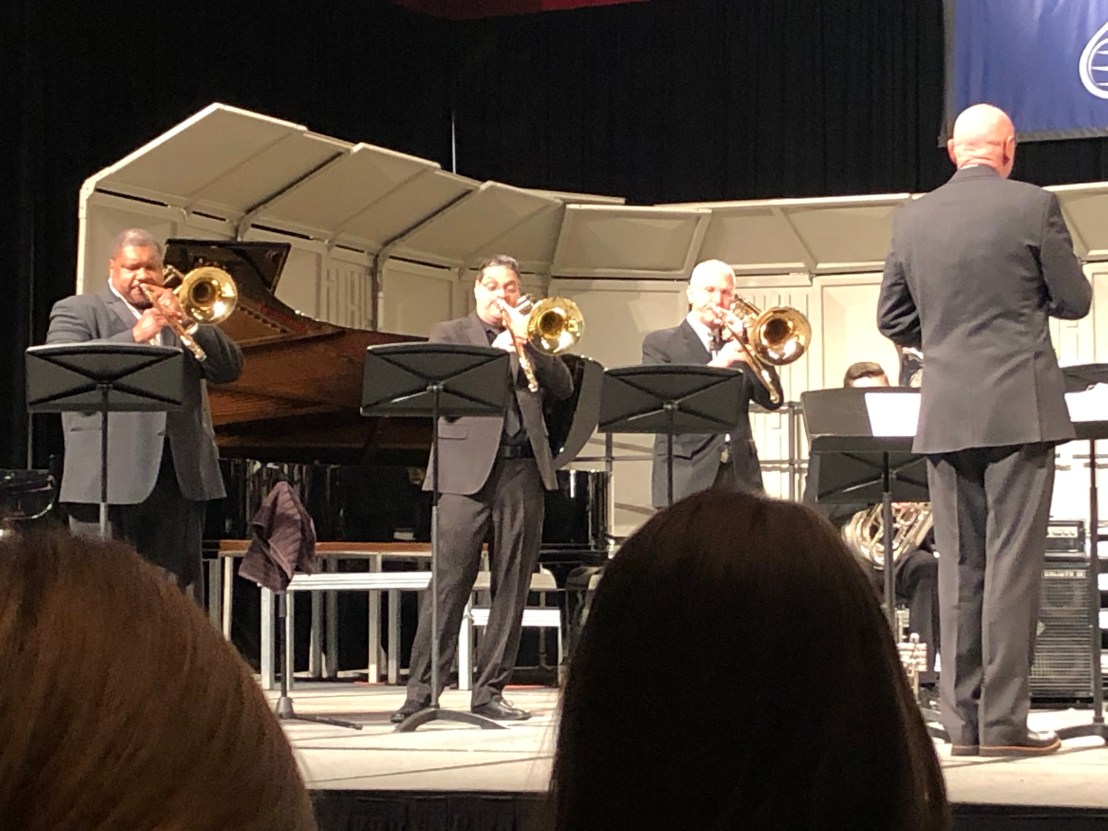
Just a few days later, I switched musical gears into the jazz world. I was delighted to be asked to be part of an “all star” brass jazz ensemble that was put together by YAMAHA for the Midwest Clinic, an annual convention held in Chicago. The Clinic features classes and performances over several days, and is one of the largest (the largest?) such events in the world. Our concert featured some terrific Christmas music, including carols arranged for trumpets, horns, trombones, tuba, and rhythm section by Stan Kenton, Ralph Carmichael, Sam Pilafian, JD Shaw, Jose Sibaja, and others. Boston Brass made up the core of the group and our trombone section (shown in performance above) consisted of Wycliffe Gordon, Domingo Pagliuca (of Boston Brass) and me. Great guys; great players. John Wittman conducted (shown in the photo on the right).

Yeo_trumpets_Midwest_2019

The trumpet section? Not a bad lineup, actually. Ha! Actually, this was a remarkable group of some of the greatest trumpet players in the world, shown backstage with me before the concert: Jose Sibaja (Boston Brass), Allen Vizzutti, Wayne Bergeron, (me), Jeff Conner (Boston Brass), Rex Richardson, and Jens Lindeman. Any questions?

Yeo_Gordon_Midwest_2019

It was such a pleasure to work with Wycliffe Gordon once again. He needs no introduction and it’s no secret to say he is one of the finest jazz trombonists of our time, for a long time member of the Lincoln Center Jazz Orchestra (I first met him at a joint concert between the LCJO and the Boston Symphony Orchestra), and now leader of his own combo. He has more albums out than I can count, and we are simpatico in so many ways. For years I’ve referred to Wycliffe as “my brother from another mother.”

In 2015, Arizona State University hosted Wycliffe for some masterclasses; this happened  while I was Professor of Trombone at ASU. I included his trombone ensemble piece, Dear Lord, I Love Thee on our April 2015 concert. Have a look and listen, above (to open this video in YouTube, click HERE). It was really, really great to see and work with Wycliffe again at the Midwest Clinic.

Kanda_Yeo_SLLBC_2020

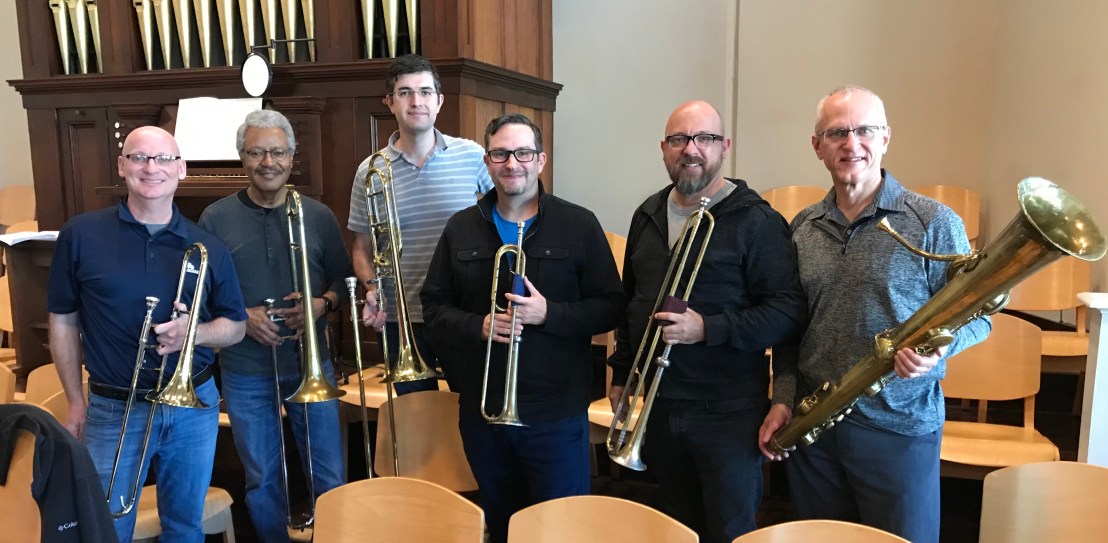
February 2020 brought more fun in a different musical world. My good friend Megumi Kanda—principal trombonist of the Milwaukee Symphony— and I travelled to St. Louis to give a joint recital and masterclass, sponsored by the St. Louis Low Brass Collective (STLLBC). Megumi is a superb player and wonderful person (I often refer to her as “my sister from another mother”), and we have done a number of joint events over the years. We also are authors of books about trombone orchestral excerpts and performance. Published by Encore Music Publishers, the annotated orchestral excerpt books, The One Hundred: Essential Works for the Symphonic Trombonist and The One Hundred: Essential Works for the Symphonic Bass Trombonist. To all of you who are reading this who have made our books part of your library: Thank you! And if you’re interested in the books, just click the links on the titles, above.

We began our masterclass with a duet, a movement of Philipp Telemann’s Canonic Sonata No. 3 that I arranged for inclusion in my book, Trombone Essentials, published by G. Schirmer.

Megumi_Kanda_SLLBC_2020

Yeo_SLLBC_2020

We continued the class by each speaking to the assembled audience and then working with several young players. As you can see from the photos above, Megumi and I tend to be  similarly demonstrative when we teach. How about a caption contest?! By the way, I should mention that Megumi is the recipient of the International Trombone Association’s 2020 ITA Award, the Association’s highest honor. She is so deserving of this honor, and it’s a pleasure for me—the 2014 recipient of the ITA Award—to welcome her into this special group of trombonists who have been so honored. I am at work on an article about her to be published later this year in the ITA Journal. Stay tuned; she has quite a story to tell!

Kanda_Yeo_Recital_program_St_Louis_2020

Kanda_Yeo_St_Louis_2020

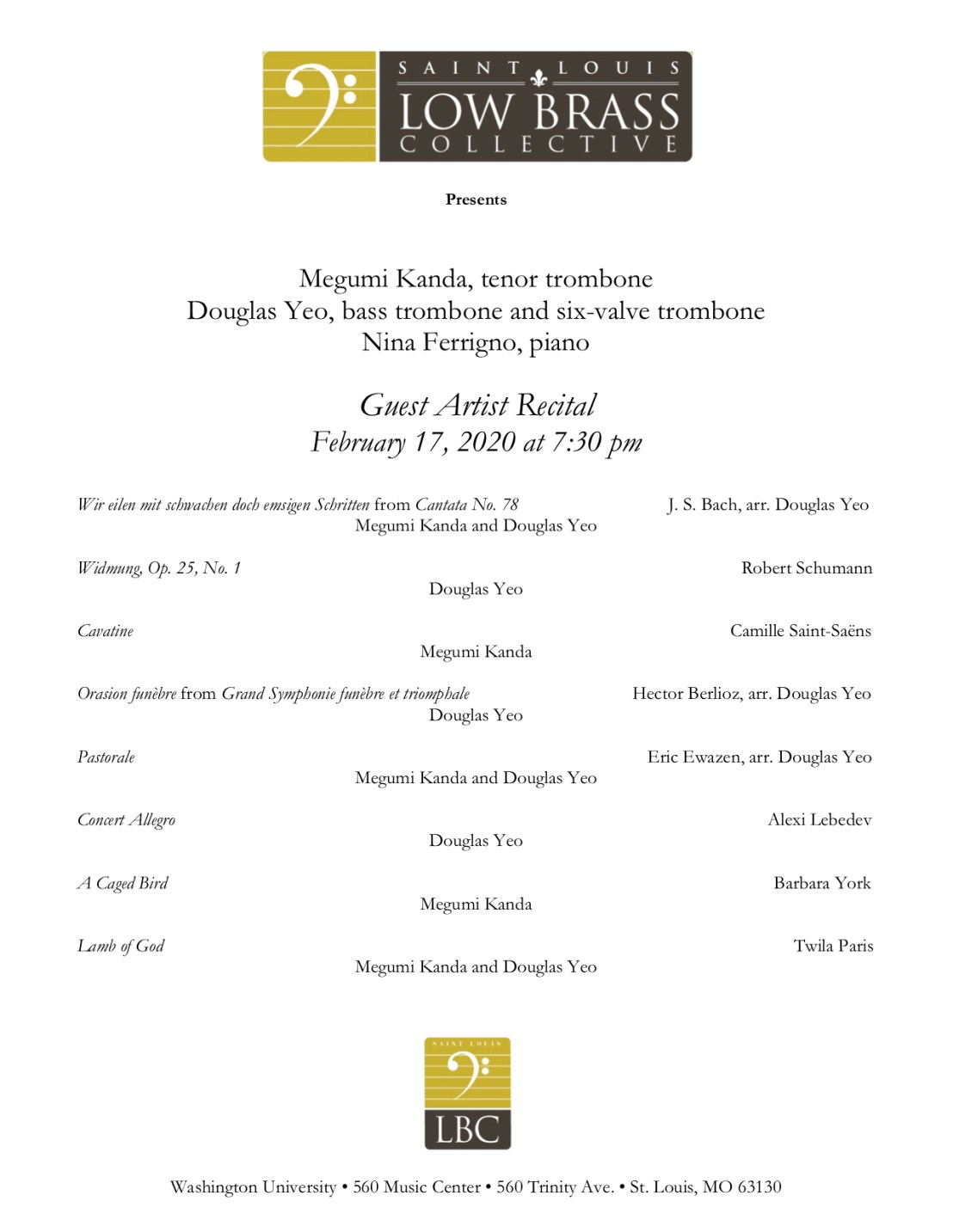
Our recital on February 17 featured us playing solos and duets. I even used my six-valve trombone to perform Hector Berlioz’s Orasion funèbre from his Grand symphonie funèbre et triumphale. I want to send a shout out and big thank you to my good friend, Gerry Pagano (bass trombonist of the St. Louis Symphony) and all of those in the STLLBC who made this trip possible.

Gaudete_Yeo_Wheaton_College_selfie_2020

From a solo and duet recital in St. Louis I came back home to the Chicago area to play chamber music. On February 21, the Wheaton College Artist Series presented a concert that featured the Chicago-based brass quintet, Gaudete Brass, as well as organist Nicole Simental and the combined Wheaton College choral groups, conducted by Jerry Blackstone. The centerpiece of the concert was a performance of Morton Lauridsen’s Lux Aeterna. On the first half of the concert, Gaudete Brass performed Ingolf Dahl’s Music for Brass Instruments; Dahl was Lauridsen’s composition teacher at University of Southern California and the piece requires six players. I joined Gaudete Brass as its second trombonist (selfie of me with Gaudete Brass after a rehearsal in Edman Chapel, above).

Gaudete_Yeo_Wheaton_College_2020

[Photo above: Gaudete Brass in Adams Art Gallery on the campus of Wheaton College after our performance. (Left to right) Bill Baxtresser (trumpet), Joanna Schulz (horn), Charles Russell Roberts (trumpet), me, Paul Von Hoff (trombone), and Scott Tegge (tuba)

I have played Dahl’s piece on numerous occasions with groups in performances around the world. But I have to say that this collaboration was, to me, particularly special. First, Gaudete Brass is a superb group of musicians. They play at the highest level and it was a joy to work with them; I hope we will do more things together. Nice people, too! Also, the concert was held in Edman Memorial Chapel at Wheaton College, where, as a student there from 1974-1976, I took part in many concerts on that stage. Many memories came flooding back as I played in Edman Chapel with Gaudete Brass. And there was this. . .

Fine_Arts_Building_Chicago

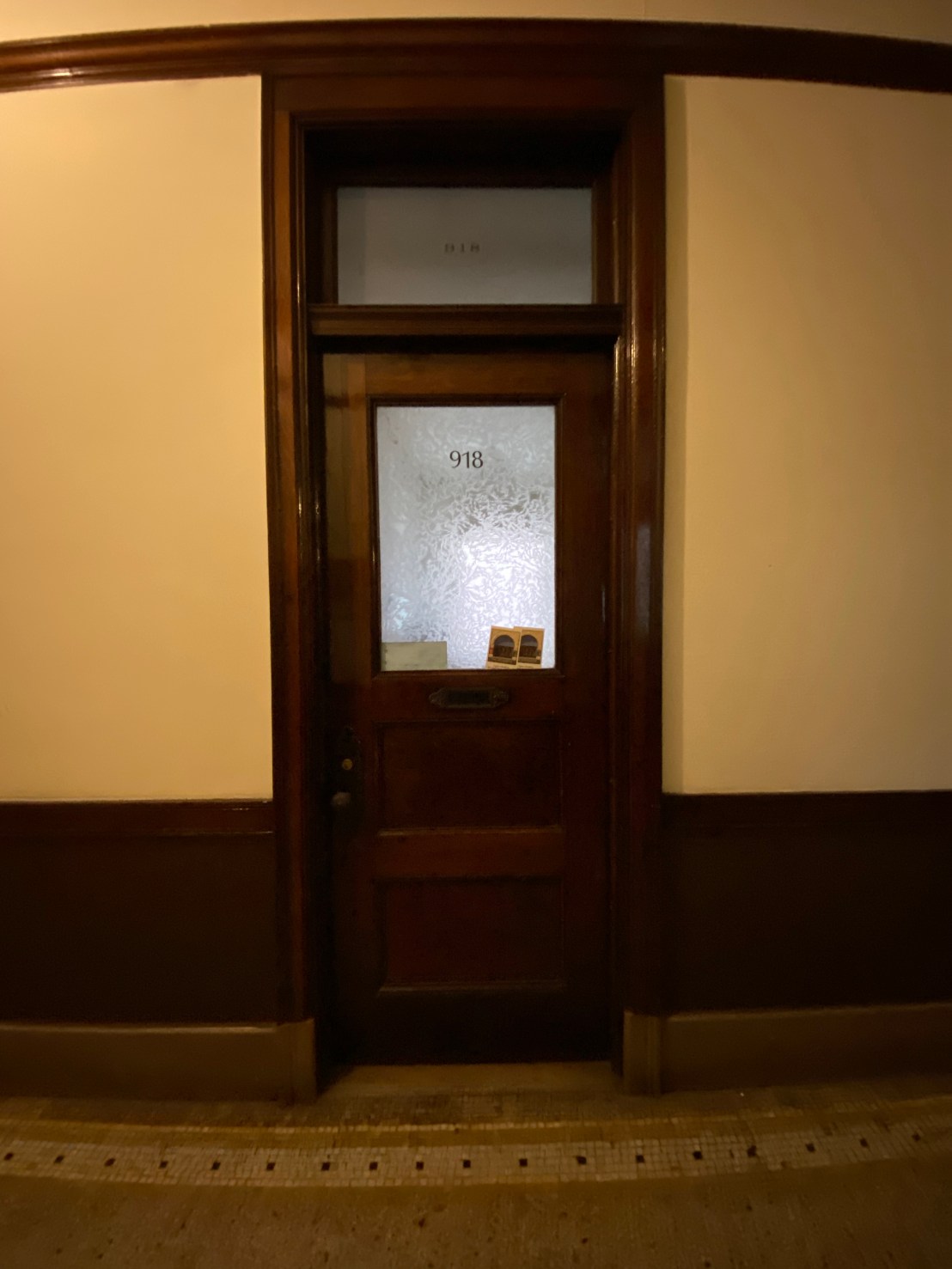
In December, Gaudete Brass and I had a rehearsal in the Fine Arts Building, on Michigan Avenue in downtown Chicago. That building has very special meaning for me: it was there, on the ninth floor, that I had my weekly trombone lesson with Edward Kleinhammer (bass trombonist of the Chicago Symphony Orchestra from 1940-1985) while I was a student at Wheaton College. I had not been in that building since my last lesson with him in May 1976. Walking through the front doors brought back a flood of memories.

Hallway_ninth_floor_Fine_Arts_Building_Chicago

Kleinhammer_Studio_Fine_Arts_Building_2020

After the rehearsal with Gaudete Brass, I climbed the stairs up to the ninth floor, to once again walk down that long hallway (which has not changed a bit since 1976) and stand in front of room 918 where Mr. Kleinhammer had his studio. As I stood there, I reflected on how those lessons impacted me in so many ways. I could not go in the room this time, but I remember every detail of that small space: two chairs, two music stands, a table for music, and a sink (the bathroom is down the hall). This photo, below, shows the two of us after my last lesson in room 918 in 1976:

Kleinhammer_Yeo_1976

In that room my life was changed.  If you did not see it earlier, click HERE to read the photo essay/tribute I wrote about him last year on what would have been his 100th birthday. He was a remarkable man.

And there is more to come. While my planned trip to Seattle to be guest soloist this weekend at the Northwest Band Festival was cancelled due to the coronavirus outbreak in Seattle, my calendar is full of other events in the coming months, including masterclasses at Interlochen Arts Academy and the Csehy Summer School of Music, performances with the Finnish National Radio Orchestra in Helsinki and Japan (unless the coronavirus has something to say about that trip), teaching at the Pokorny Seminar—hosted by Chicago Symphony tubist, Gene Pokorny—and teaching at the Wheaton College Summer Music Camp. Details may be found on the schedule page on my website, yeodoug.com.

[Header photo: Boston Symphony Orchestra, Bernard Haitink, conductor. My final performance in Symphony Hall as a member of the Boston Symphony, May 9, 2012; Beethoven Symphony No. 9. Photo by Stu Rosner; courtesy the Boston Symphony Orchestra.]

From Texas to Japan – help the Univ. of Texas Trombone Choir get there in 2020

From Texas to Japan – help the Univ. of Texas Trombone Choir get there in 2020

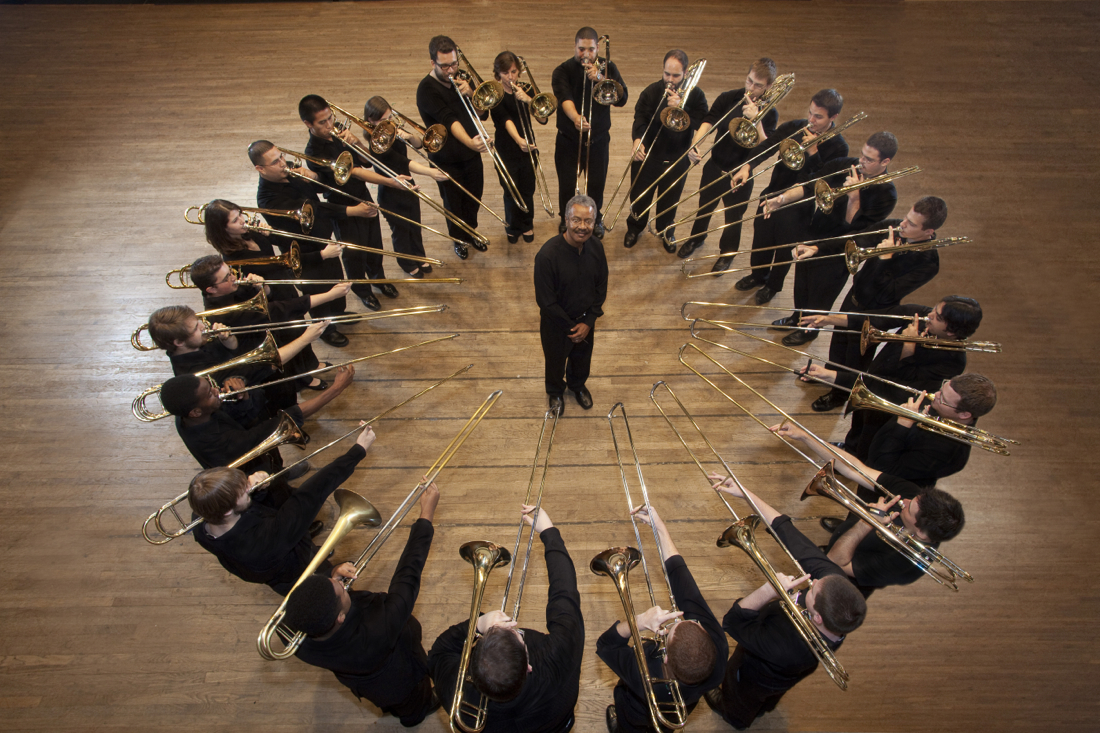
For many years, I have enjoyed a close relationship with the University of Texas (Austin) trombone studio, and its Professor, Dr. Nathaniel Brickens. Nat is one of the most highly-respected trombone teachers in the world, a former president of the International Trombone Association, and a superb player and – most of all – one of the nicest people I know. I have been fortunate to have travelled to UT several times to give masterclasses, perform as soloist with the UT trombone choir, and conduct the choir and large groups of trombonists that came to campus. The photo below shows me conducting a massed choir at UT last year with the UT trombone choir and trombonists from local universities and high schools. That took place during the most recent of my trips to Austin. We were performing Simon Wills’ Tinguely’s Fountain. As you can see, everything is BIG in Texas!

YEO_UT_2018

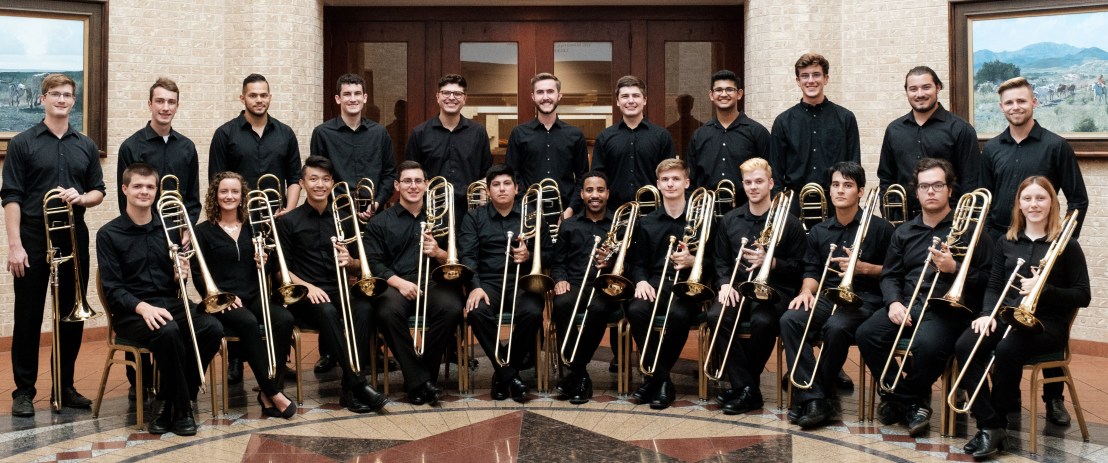
The UT Trombone Choir has been invited to perform at the 2020 International Trombone Festival that will be held in July in Osaka, Japan. This is a huge honor for this group, which is one of the finest collegiate trombone choirs in the world. As one who has been to Japan to teach and perform fifteen times over the years (most recently just a few weeks ago), I know first hand how valuable this trip will be for the UT trombone students who will be visiting Japan for the first time. It is a tremendous opportunity to put this fine group center-stage at the premier trombone event for 2020 – which is also the year of the Summer Olympic Games in Japan. This kind of cross-cultural musical experience will be invaluable both for the UT trombone students, but for those attending the International Trombone Festival, many of whom will be from Asia.

I’d like to ask you to consider contributing financially to help make this trip happen. As you can imagine, it takes not only a huge amount of organizing to get the UT trombone choir to Japan, but a lot of money as well. The trombone choir has started a HornRaiser program, UT’s crowdfunding platform. Click

HERE

to visit the University of Texas trombone choir HornRaiser page.

UT_Trombone_Choir.jpg

Once there, you can view a video that describes their planned trip to Japan, and have the opportunity to join others in supporting the UT trombone choir as they prepare to represent UT, Texas, and the United States at the International Trombone Festival in Japan. My wife and I have just contributed $500 towards this, and while no contribution is too small – every dollar helps and your donation is fully tax deductible – I’d like to urge you to give generously to help these fine students. Donations are accepted by credit card so anyone in the world can help in this effort. This fund raising program just started and continues for a few more days. Please help these students spread their great music making to Japan.

Thanks so much for your help. And, as they say at University of Texas,

HOOK ‘EM!

DY BEVO