Category: faith

Christmas 2018

Christmas 2018

Tomorrow is Christmas.

We believe the story of Christmas is true. Santa Claus, reindeer, candy canes, packages and bows are all very nice and great fun. But the reason we celebrate Christmas —CHRISTmas — is because it recognizes the historical event that changed the course of human history. And the eternal future of every human being.

In 2016, my wife and I went to Israel on a tour sponsored by the Wheaton College Alumni Association. The trip was tremendous, emotional, exhilarating; I run out of adjectives to describe the impact it made on us. Yes, I understand that we cannot be certain that this or that holy site is exactly the place where this or that particular event in history took place. It is enough for me to know that this or that site has been considered to be an important place to commemorate significant events in the Bible, that pilgrims have worshipped there for centuries, and I am in the neighborhood where the events took place. Taking in the sights and sounds (and tastes!) of the land of the Bible changed us. I now view Christmas through the new lens of having been in the land “where Jesus walked.” Here is that story, taken from the Gospel of Luke (English Standard Version), with photos from our trip. This is a true story.

016_Marys_Well

Entrance to the Orthodox Church of the Annunciation and Mary’s Well, Nazareth

In the sixth month the angel Gabriel was sent from God to a city of Galilee named Nazareth, to a virgin betrothed to a man whose name was Joseph, of the house of David. And the virgin’s name was Mary. And he came to her and said, “Greetings, O favored one, the Lord is with you!” But she was greatly troubled at the saying, and tried to discern what sort of greeting this might be. And the angel said to her, “Do not be afraid, Mary, for you have found favor with God. And behold, you will conceive in your womb and bear a son, and you shall call his name Jesus. he will be great and will be called the Son of the Most High. And the Lord God will give to him the throne of his father David, and he will reign over the house of Jacob forever, and of his kingdom there will be no end.”
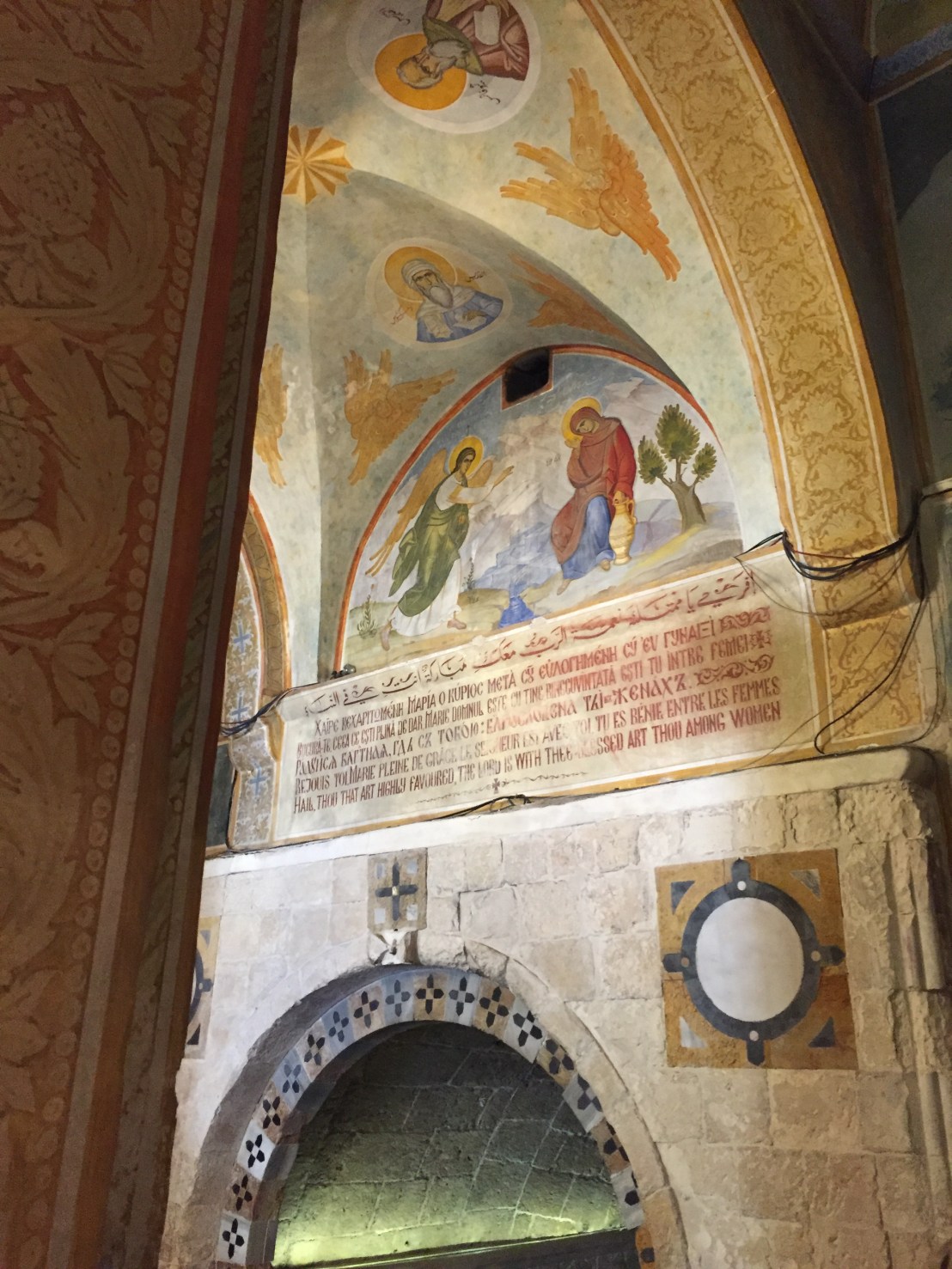
021_Marys_Well

Fresco depicting the Angel Gabriel and Mary,                                 Orthodox Church of the Annunciation, Nazareth

And Mary said to the angel, “How will this be, since I am a virgin?”

And the angel answered her, “The Holy Spirit will come upon you, and the power of the Most High will overshadow you; therefore the child to be born will be called holy—the Son of God. And behold, your relative Elizabeth [the mother of John the Baptist] in her old age has also conceived a son, and this is the sixth month with her who was called barren. For nothing will be impossible with God.

017_Marys_Well

Mary’s well, the traditional site of the Annunciation,                 Orthodox Church of the Annunciation, Nazareth

And Mary said “Behold, I am the servant of the Lord; let it be to me according to your word.” And the angel departed from her.

047_Bethlehem_Church_of_Nativity

Entrance to the Church of the Nativity, Bethlehem, the “Humility door,” so named because one must bow down to crawl through the opening.

In these days a decree went out from Caesar Augustus that all the world should be registered. This was the first registration when Quirinius was governor of Syria. And all went to be registered, each to his own town. And Joseph also went up from Galilee, from the town of Nazareth, to Judea, to the City of David, which is called Bethlehem, because he was of the house and lineage of David, to be registered with Mary, his betrothed, who was with child.

051_Bethlehem_Church_of_Nativity

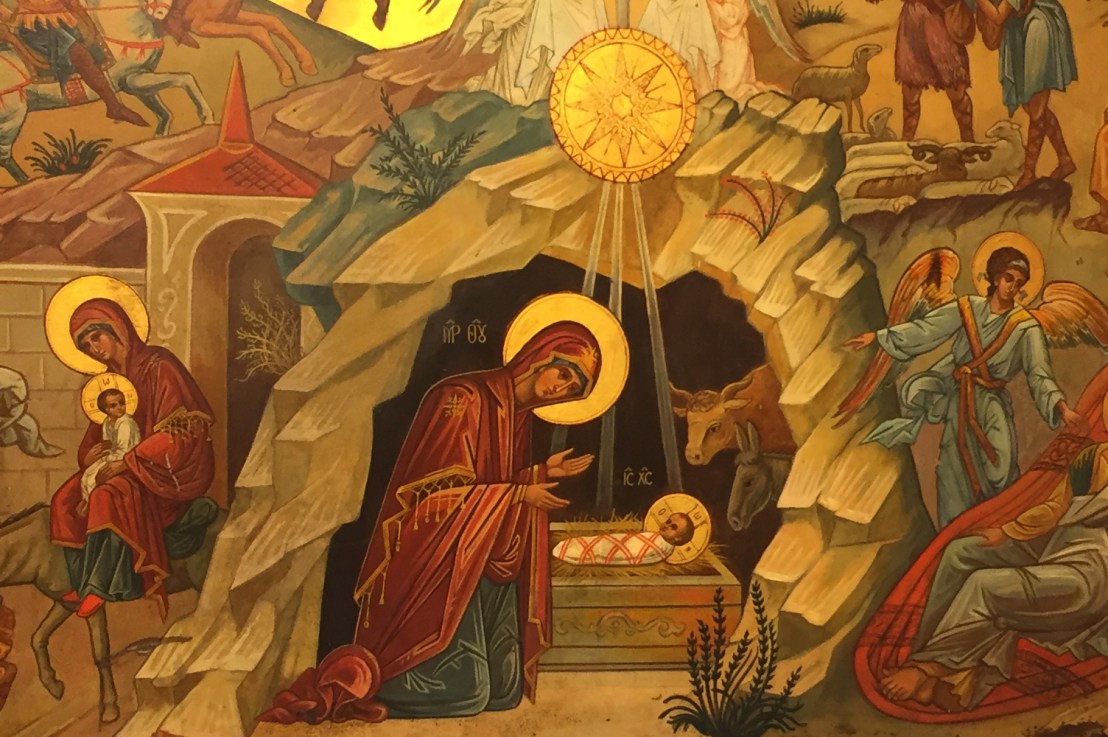
054_crop_Nativity

The traditional site of the birth of Jesus. The silver star has a hole in the middle through which  pilgrims can reach down to touch the bedrock. Grotto, Church of the Nativity, Bethlehem.

And while they were there, the time came for her to give birth. And she gave birth to her firstborn son and wrapped him in swaddling cloths and laid him in a manger, because there was no place for them in the inn.

055_manger_cropped

The traditional site of the manger where Jesus was laid after his birth. Grotto, Church of the Nativity, Bethlehem.

064_shepherds_fields_sign_cropped

Sign to the traditional site of the Shepherds Fields. The sign is in Arabic; Bethlehem is located on the West Bank where many Arab Christians live.

And in the same region there were shepherds out in the field, keeping watch over their flock by night.

067_shepherds_cave_crop

Entrance to a shepherd’s cave, Bethlehem.

074_shepherds_cave_crop

Altar inside the shepherd’s cave, Bethlehem. Note the star mosaic inlaid on the floor in front of the altar.

075_door_shepherds_cave

Bronze door to the shepherd’s cave, Bethlehem.

And an angel of the Lord appeared to them, and the glory of the Lord shone around them, and they were filled with great fear.
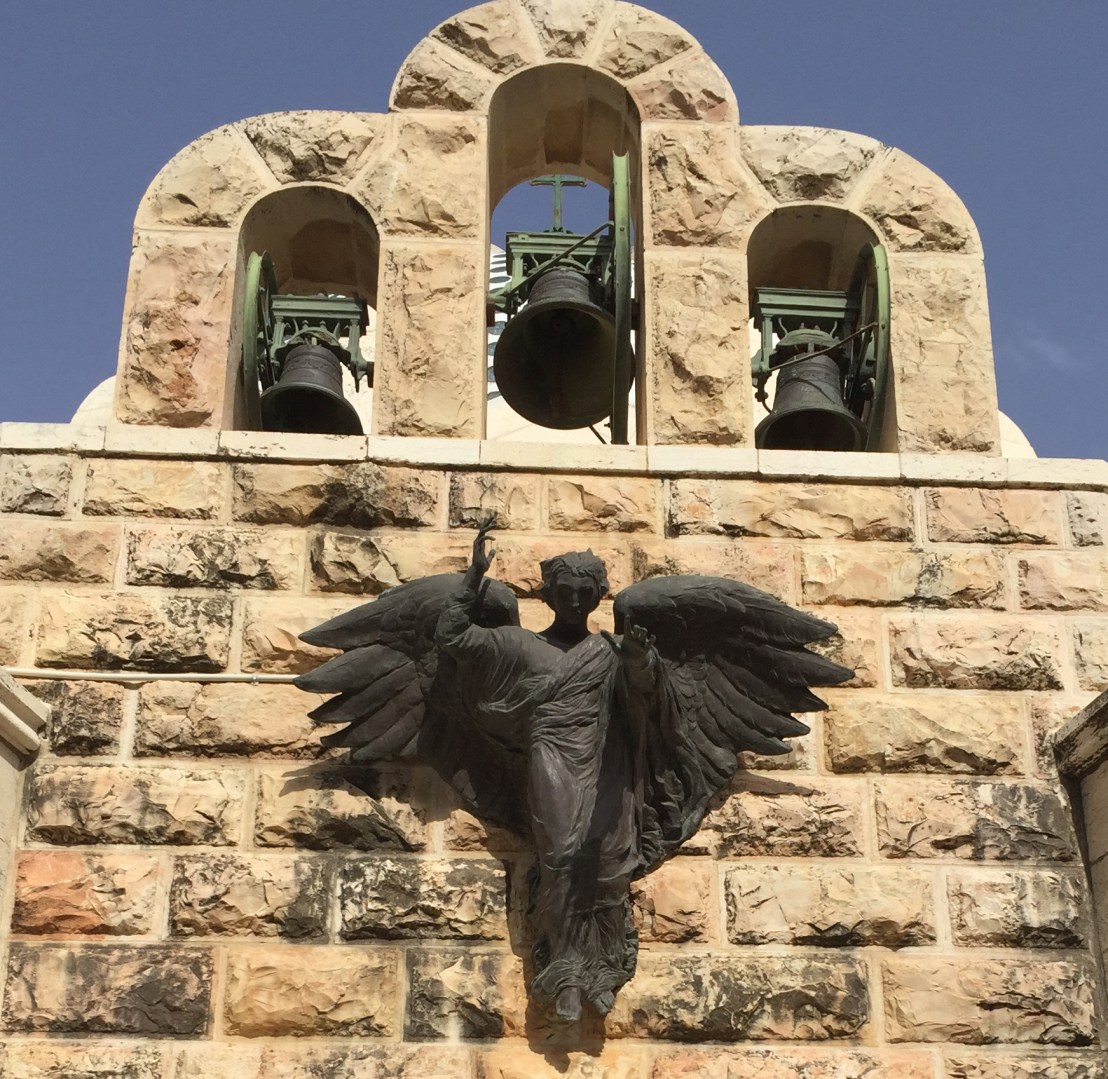
077_Chapel_of_Shepherds_crop

Bronze statue of an angel, above the entrance to the Franciscan Chapel of the Shepherds, Bethlehem.
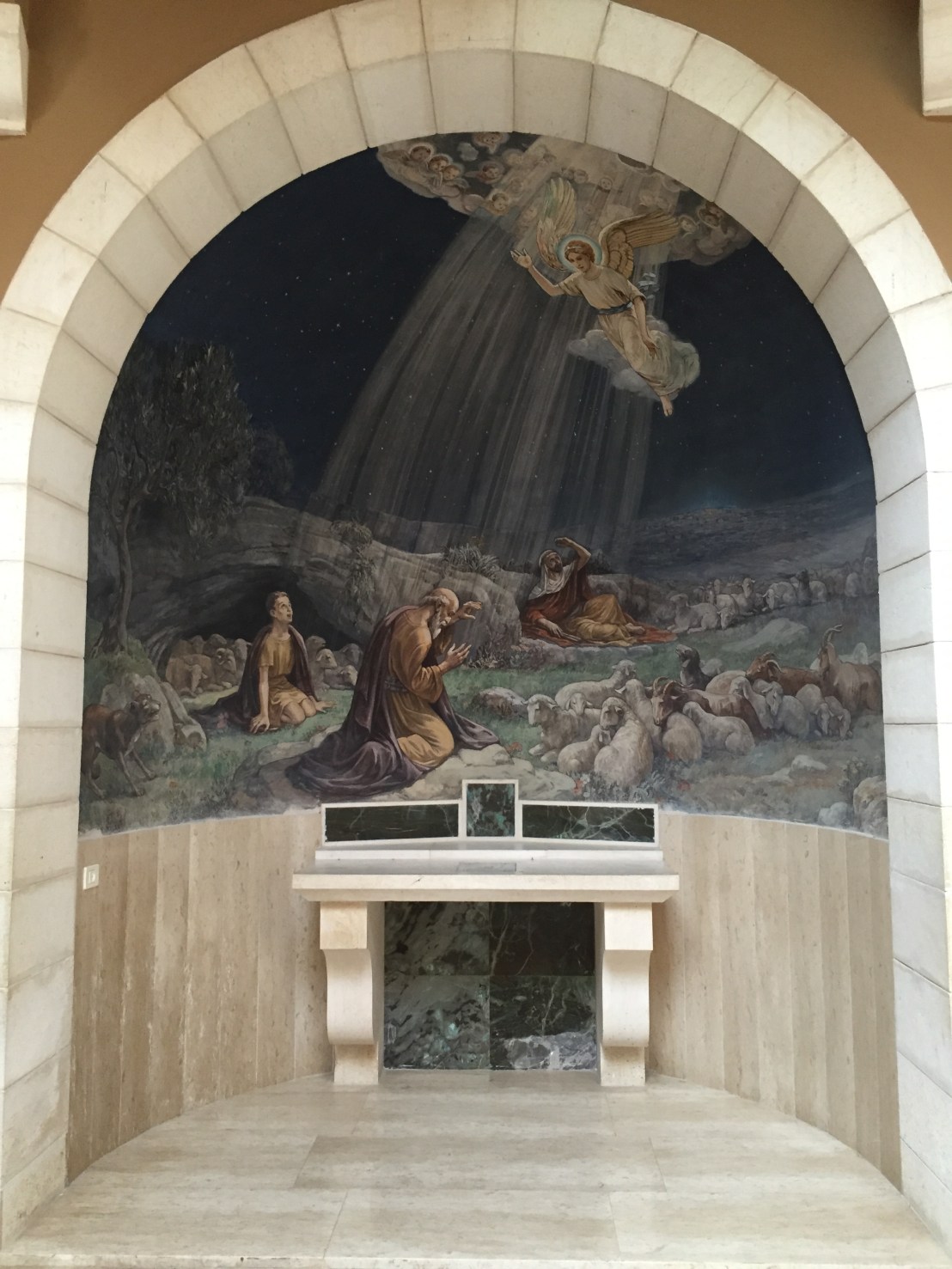
080_Bethlehem_Chapel_of_Shepherds_Fields

A painting of the greeting of the angel to shepherds, Franciscan Chapel of the Shepherds, Bethlehem.

And the angel said to them, “Fear not, for behold, I bring you good news of great joy that will be for all the people. For unto you is born this day in the city of David, a Savior, who is Christ the Lord. And this will be a sign for you: you will find a baby wrapped in swaddling cloths and lying in a manger. And suddenly there was with the angel a multitude of the heavenly host praising god and saying,

“Glory to God in the highest, and on earth peace among those with whom he is pleased!”

079_Bethlehem_Chapel_of_Shepherds_Fields

A painting of the shepherds worshiping Jesus at his birth, Franciscan Chapel of the Shepherds, Bethlehem.

When the angels went away from them into heaven, the shepherds said to one another, “Let us go over to Bethlehem and see this thing that has happened, which the Lord has made known to us.” And they went with haste and found Mary and Joseph, and the baby lying in a manger. And when they saw it, they made known the saying that had been told them concerning this child. and all who heard it wondered at what the shepherds told them.

062_crop

Sign at the Church of the Nativity, Bethlehem. I have seen similar signs that quote verses from the Bible in many languages around the world.

There is much more to this story. This child, Jesus, changed the world. Our calendar revolves around his birth. He, the Son of God, begotten, not made, came to redeem sinful and fallen men and women. Like you and me. Christmas is about this: life, death, redemption, repentance, forgiveness. And Light. Are there any greater themes in history? I think not. It is my prayer that you know this Jesus, this one whom we celebrate in this season.

But who was this Jesus? C. S. Lewis, in his superb book Mere Christianity, starkly laid out the options, what we may think of Jesus Christ:

I am trying here to prevent anyone saying the really foolish thing that people often say about [Jesus]: “I’m ready to accept Jesus as a great moral teacher, but I don’t accept his claim to be God.”

That is the one thing we must not say. A man who was merely a man and said the sort of things Jesus said would not be a great moral teacher. He would either be a lunatic — on the level with the man who says he is a poached egg — or else he would be the Devil of Hell. You must make your choice.

Either this man was, and is, the Son of God, or else a madman or something worse. You can shut him up for a fool, you can spit at him and kill him as a demon or you can fall at his feet and call him Lord and God, but let us not come with any patronizing nonsense about his being a great human teacher. He has not left that open to us. He did not intend to.

I will have more to say about this, the next great climax of this story, around Easter. To be continued.

When classical music meets faith

When classical music meets faith

I have previously written about my time working at Duke Divinity School, and Duke Initiatives for Theology and the Arts. Led by Dr. Jeremy Begbie, the weeks I have spent in Durham, North Carolina working with DITA have been exceptionally rewarding. The photos and commentary I have previously shared gives you a glimpse into what we did with an orchestra of musicians all of whom are Christians — including several of my former colleagues from the Boston Symphony Orchestra as well as trombonists Megumi Kanda (Milwaukee Symphony) and Jim Kraft (National Symphony, retired) and how we were able to impact audiences with important, interesting messages of the intersection of music with faith.

Duke Initiatives for Theology and the Arts has just put together a short video that shows more of what this special weekend last fall was about. I invite you to have a look (the video includes a short interview segment with me), and catch some of the excitement of that moment. Plans are already underway for more events. Have a look at this video, below, and lear more about Duke Initiatives for Theology and the Arts (to view this video in YouTube, click HERE).

Legacy: a full Windsor knot

Legacy: a full Windsor knot

Last Sunday, before the morning worship service started at our church (Phoenix United Reformed Church), my wife came to me with a necktie in her hand. “Would you please tie this for Lloyd?” Lloyd is a good friend, a retired pastor, and in this season of his life — in his 80s — some tasks have become more difficult for him. “Sure,” I said. I put his tie around my neck, tied it, then slide it over my head to give to Lloyd. It took me about 10 seconds and I didn’t give it a second thought. It was a simple thing to do to help a friend.

But that afternoon, I reflected on the very ordinary act of tying a necktie. Frankly, it’s not something I do much these days. Since moving to Arizona in 2012, I’ve switched from neckties to bolos. While I still have many ties — here’s a photo of just a few that I still have in my closet. . .

Yeo_ties

. . . bolos now hang on my tie rack:

Yeo_bolos

It’s a southwest thing, and bolos appeal to my artistic sensibility.

Still, when I tied Lloyd’s necktie, I used the only necktie knot I know how to tie: the full Windsor knot. My mind turned to my father. It was he who taught me how to make this knot when I wore a tie. And every time I tie a tie, I am grateful that he taught me how to do this.

In a sense, part of my father’s legacy to me is having passed down this simple thing, the act of tying a necktie in a particular way. He gave me other gifts as well, such as a love for reading. My mind continued down that road, reflecting on the legacy that many other family members who have also gone to their heavenly home gave to me. My mother’s love of music, my grandmother’s love of adventure, my father-in-law’s love of working with his hands. All of these people and many others had lives that intersected with mine in ways large and small. And each of us is the product of the investment that others made in us. They gave me things that are with me every day. Not physical things, but things that required their investing time with me, to show me how to do something, or how to think of something, or how to recall and remember something and then put it into action.

Tying a necktie is not really such a big deal. But last Sunday morning, it reminded me how grateful I am for those who taught me things like this, and it was an encouragement to me as I have endeavored to pass things on to others. It reminded me of this: never underestimate the value of any kind of investment you make in another person. They may very well remember it long after you’ve forgotten it, long after you are gone. You may not have thought so at the time, but you made a difference; you wrote a small piece of your legacy. Like my father did when he taught his son how to tie a full Windsor knot so I could help a friend on a Sunday morning.

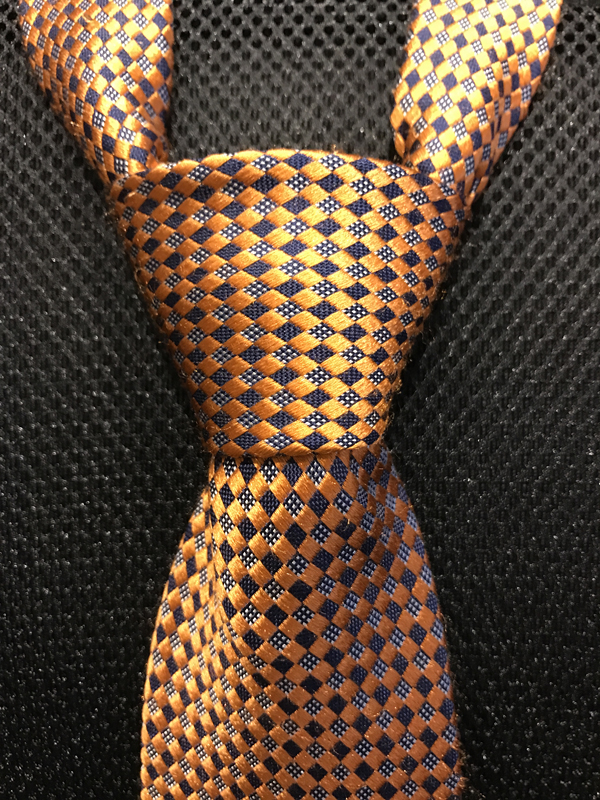
Yeo_windsor_knot

The road to success

The road to success

by Douglas Yeo

The new year is upon us, 2018. Resolutions have been made and probably broken already. Such is our human condition: lots of good intentions but difficulty in being disciplined enough to follow through with them.

Most people I know want to be successful, and my son-in-law, John Freeman, recently shared an old cartoon with me titled “The Road to Success.” It dates from 1913, and I thought it was so interesting that I sought out an original copy. The Etude magazine, a long time publication of the Theodore Presser Company, printed it in its October 1913 issue.  Presser modified a cartoon put out by National Cash Register company that was about the road to business success – you can view the original by clicking HERE – and Presser’s creative changes that point to the road to musical success are really quite clever. Here is Presser’s version of the cartoon. To download a high-resolution copy from my website, click HERE.

The_Road_To_Success_19134_The_Etude

If you follow the road to success, you see there are many pitfalls along the way. You need to keep your eyes open. Many people rush over the threshold of Opportunity but fall into the dark holes of Illiteracy or Conceit. Hotel Know It All has many rooms. So does the Mutual Admiration Society, from which the balloon Hot Air floats. And the Always Right Club has plenty of members. Vices lead immediately to the river of Failure; the same is true for The Faker. Bad Habits lead quickly to Oblivion – as does a Bad Reputation. Jealousy and the desire to Do It Tomorrow are portrayed as spiders with webs that trap many.  Weak morals appear to be an elevator to the top of the mountain but actually send you down a chute right back to the beginning. Have a look at this view of “The Road to Success.” Over one hundred years after it first appeared, it is still fresh.

This was a theme of my trombone teacher, Edward Kleinhammer, who played bass trombone in the Chicago Symphony Orchestra from 1940-1985. In his introduction to the book we wrote together, Mastering the Trombone (Ithaca: Ensemble Publications, 2000, fourth edition, 2012, p. 9), he wrote:

World class players do not just happen — their talents are forged in the dual furnaces of determination and diligence.

In this, Mr. Kleinhammer was mirroring a theme that comes from a memorable passage in the Bible, where the writer turns to one of the smallest animals as a model for discipline and hard work (Proverbs 6:6-11):

Go to the ant, O sluggard; consider her ways and be wise.

Without having any chief, officer or ruler,

She prepares her bread in summer and gathers her food in harvest.

How long will you lie there, O sluggard? When will you arise from your sleep?

A little sleep, a little slumber, a little folding of the hands to rest,

And poverty will come upon you like a robber, and want like an armed man.

The desire for shortcuts is always with us. A few weeks ago, I was at Dordt College in Sioux Center, Iowa, where I gave a trombone masterclass and performed a concerto with the Northwest Iowa Symphony Orchestra. As I was walking around the college’s music building, I spotted this cartoon on a bulletin board. It made me laugh, and shake my head. You’ll probably laugh, too, and then sadly recall the many friends, colleagues, students, and others – including ourselves! – who want to find the quick fix to avoid the hard work required to succeed. “The Road to Success” reminds us that there are no shortcuts. That’s a New Year’s resolution worth keeping.

I'm Awesome