Category: Boston Symphony Orchestra

A dragon-bell trombone solo x one million people

A dragon-bell trombone solo x one million people

by Douglas Yeo (December 13, 2025)

I don’t use any form of social media – Facebook, Instagram, and all the rest. I have my reasons for this but I understand that many people find it useful and helpful. Actually, there was a short time in my life when I did use Facebook. That was during the years I was Professor of Trombone at Arizona State University, 2012–2026. At that time, a Facebook page for our trombone studio was a great way to get out the message of what we were doing at ASU. It also was helpful for recruitment, and parents always seemed to enjoy the photos and videos I would post that included their children. But that was it for me and social media – when I retired from ASU, that was the end of my social media engagement.

Now and then, a friend or colleague will reach out to me and let me know that someone posted something about me, and now and then I hear from people who tag me on social media, wondering why I didn’t respond to them. Well, I don’t use social media; I never saw their tag!

Segue: Last week, I (Douglas Yeo) visited my friend, Dana Hofer, who owns Dana Hofer Brass Repair in Des Plaines, Illinois. He is the go to person for brass players in the Chicago area when they need an instrument fixed. Since we moved here in 2018, I’ve made many trips to his shop to get various instruments repaired. He’s a great technician, a decent, honorable, fair-minded person, and runs his business like he cares for and about his customers and their instruments. Because he does.

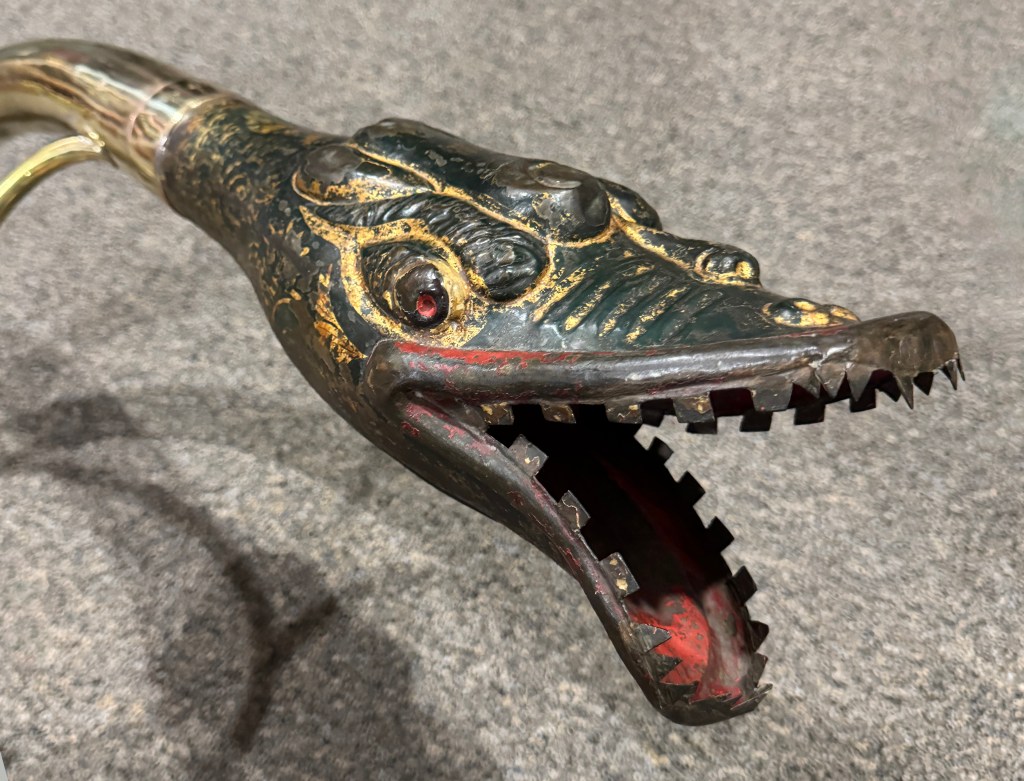
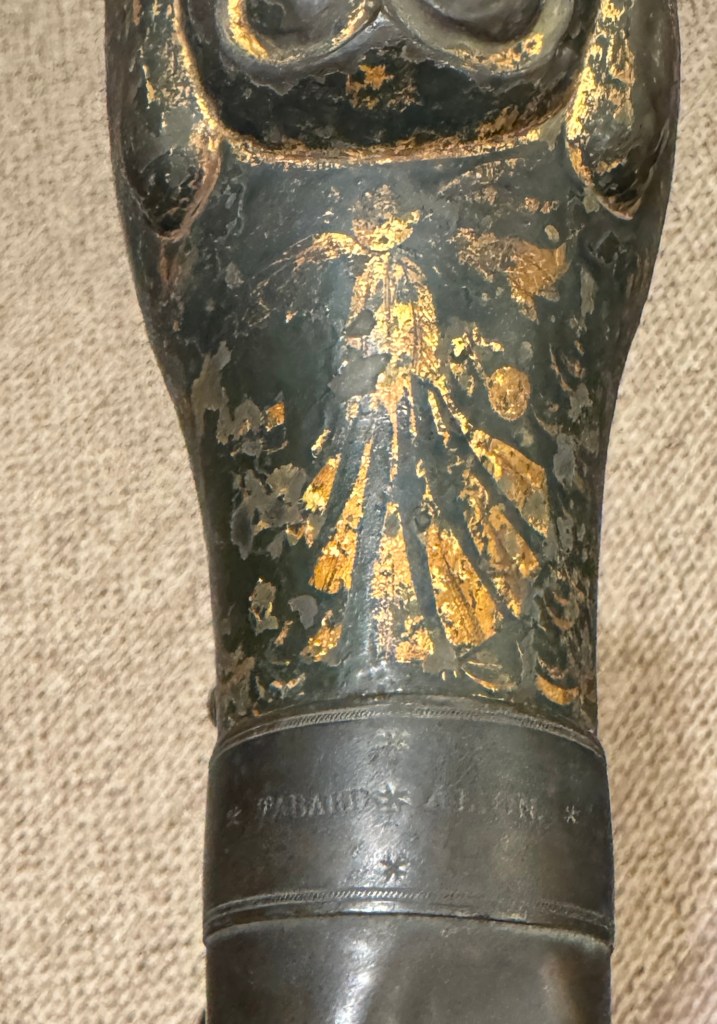
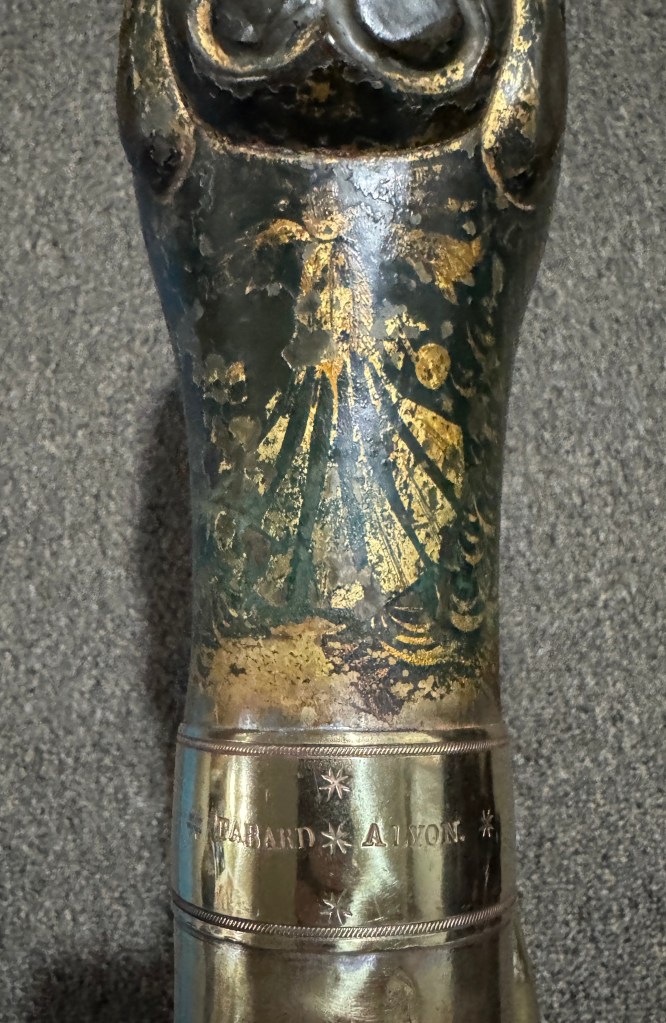
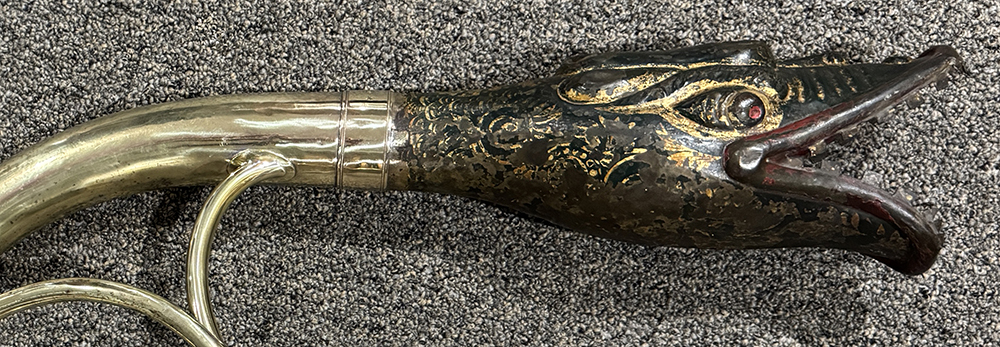
Earlier this year, I acquired a bell to a 200 year old buccin, a “dragon-bell” trombone made by Jean-Baptiste Tabard in Lyon, France. Tabard was active as a maker in the early nineteenth century and the buccin was popular in French military bands at that time. I’ve written about the buccin on TheLastTrombone. I recorded a video of me playing a buccin by Tabard at the Museum of Fine Arts in Boston. I’ve also written the entry about the buccin for The Grove Dictionary of Musical Instruments and several other publications.

The logo of the International Trombone Association, based on a buccin by Tabard owned by New England Conservatory of Music in Boston, Massachusetts.

And. . . the buccin is the official logo of the International Trombone Association. That logo appears on the plaque I received in 2014 when I received the International Trombone Association’s ITA Award. It hangs on the wall above the desk where I am writing this blog post.
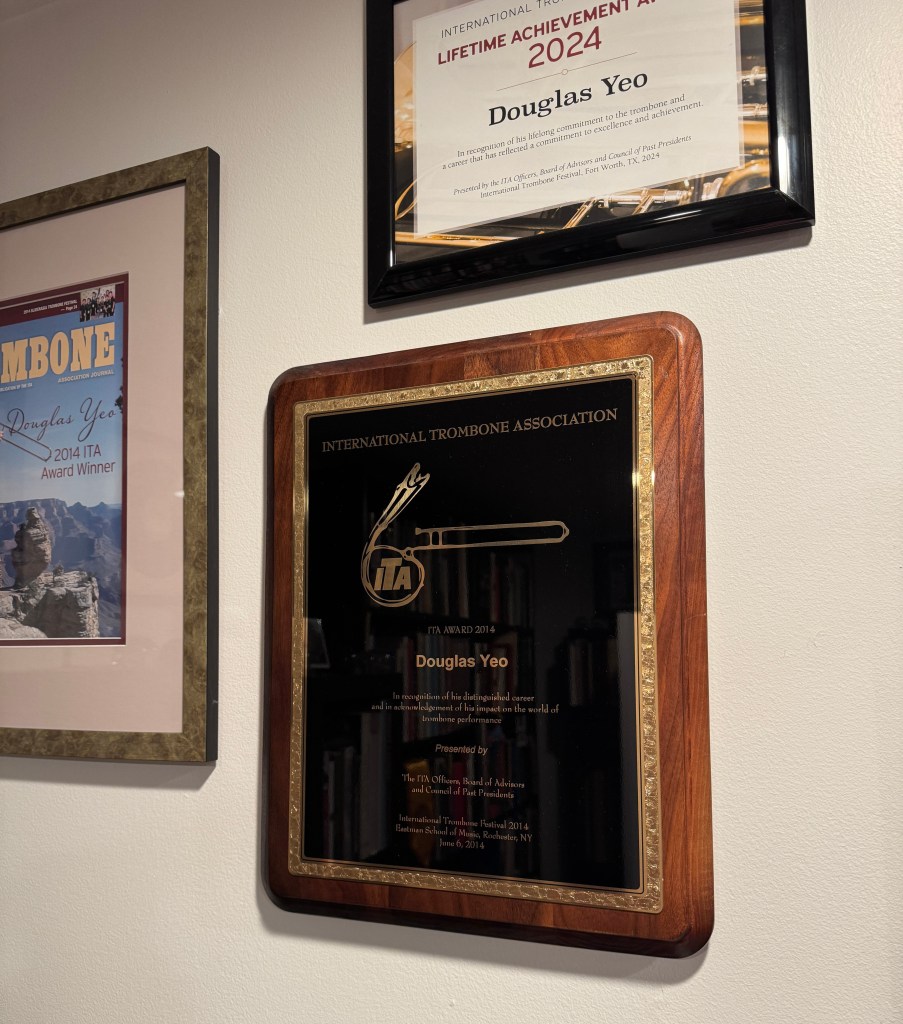
At its founding in 1972, the ITA adopted a stylized buccin logo based on a buccin in the collection of New England Conservatory of Music in Boston, where I taught for 27 years when I was a member of the Boston Symphony Orchestra. And the maker of NEC’s buccin? Tabard. So, now I own a buccin that is a cousin to the one at New England Conservatory of Music, and the ITA’s logo has even more meaning to me.

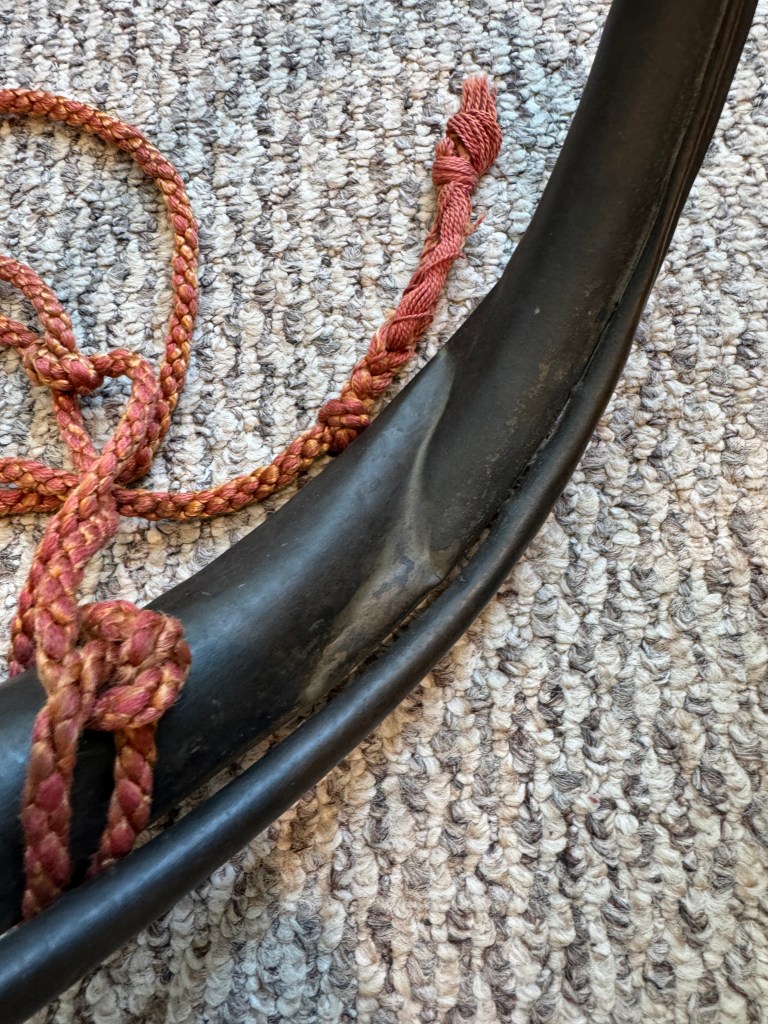
The buccin bell I recently acquired was in very rough shape when it arrived on my doorstep. It was heavily dented, it was missing a brace, another brace had come loose at its flange, and it was covered with two centuries of patina and grime. But I knew that the right person could resurrect it. I asked Dana if he could restore the bell so I could play it. He agreed, and last week, he called and told me it was ready. I went to his shop to pick it up.

I love playing the buccin. I think it’s the coolest trombone ever made. It’s wonky looking and wonky sounding. And because the bell is over your head and not in front of you, you don’t have the bell as a guide to find slide positions. Imagine playing trombone with your eyes closed. That’s how you REALLY get to know the trombone. Playing it is a really fun challenge.

When I dropped the bell off for Dana to restore, I gave him a slide to my other buccin bell by François Sautermeister of Lyon, a slide that had been made for me by Jim Becker (formerly of Osmun Music in the Boston area, now with YAMAHA in New York City). I asked Dana to make a new receiver for that slide so it would fit on my newly acquired Tabard buccin.

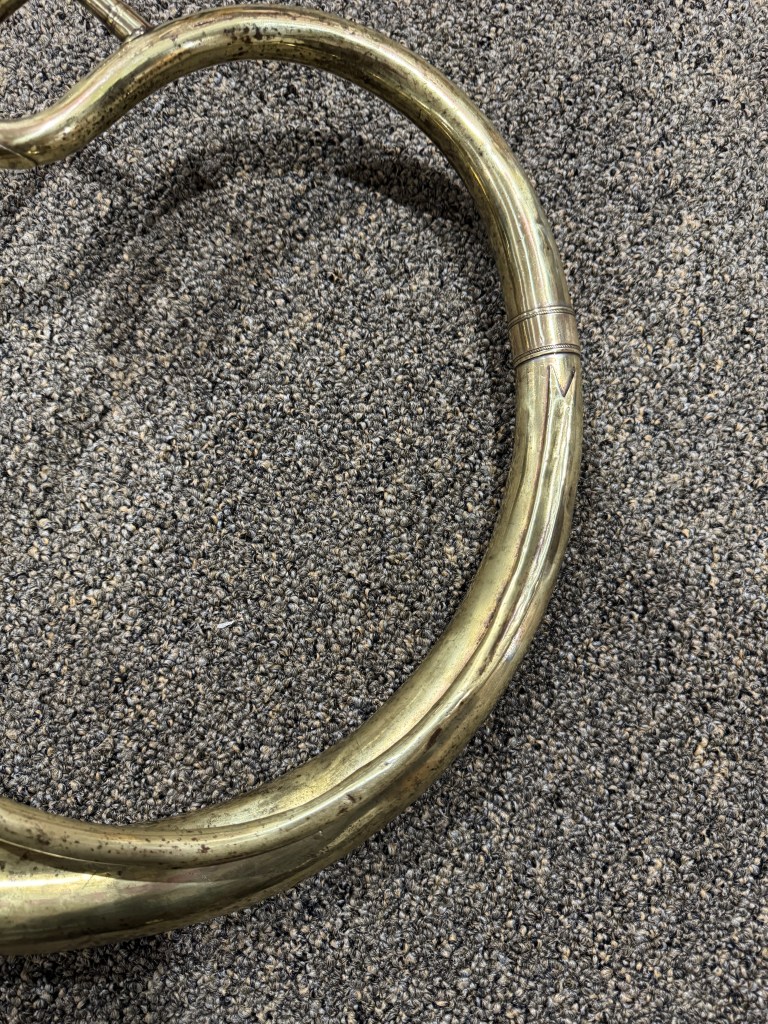
Douglas Yeo’s buccin by Jean Baptiste Tabard, Lyon. Bell restored by Dana Hofer. Slide by James Becker after an original at the Museum of Fine Arts, Boston.

When I saw my buccin at Dana’s shop last week, I was absolutely thrilled with his restoration. The dents were gone, a new brace was in place, the centuries of grime had been removed and I had a beautiful instrument in my hands. Here are some “before and after” photos:


Of course, I wanted to play it right away. After tooting a couple of arpeggios – and noticing that it played in A, not B-flat – Dana said, “Hey, let’s make a video for Instagram.” “Sure,” I said. Dana gave his iPhone to Sam Park, who works with Dana at the shop, and Sam took a video of me playing “We Wish You A Merry Christmas.” It was the first piece I’d ever played on the buccin and that was that.

It was over in 30 seconds. I went home and moved on to some other things.

A little later in the day, Dana texted to say he had posted the video on Instagram and Facebook. If you want to see the video, go to Dana Hofer Brass on Instagram, or Dana Hofer Brass Repair on Facebook. I also put it on my own YouTube channel so I could link the video to this blog post. Here’s the video:

Two hours later, Dana texted me again with a screenshot of his Instagram feed. He wrote:

Just so you know, the Instagram is blowing up. These are pretty high numbers for me.

The video had 13,400 views in two hours. I shook my head. I don’t know how Instagram works, but that seemed wild. Over the course of the week, the numbers kept climbing. Then, this morning, December 13, 2025, Dana texted me with an update and he sent me a message with the screenshot below:

Looks like we might hit 1 million today.

The Instagram feed for Dana Hofer Brass, 11:01 am, December 13, 2025. 997,000 views. Dana Hofer on the left; Douglas Yeo on the right.

Seriously? 997k views? 997,000? Nearly a MILLION views of this video? With 60,800 “likes” and 29,100 shares? I couldn’t believe it. 

Sure enough, the video hit a MILLION views this afternoon. Here’s a screenshot Dana sent when the video hit that milestone:
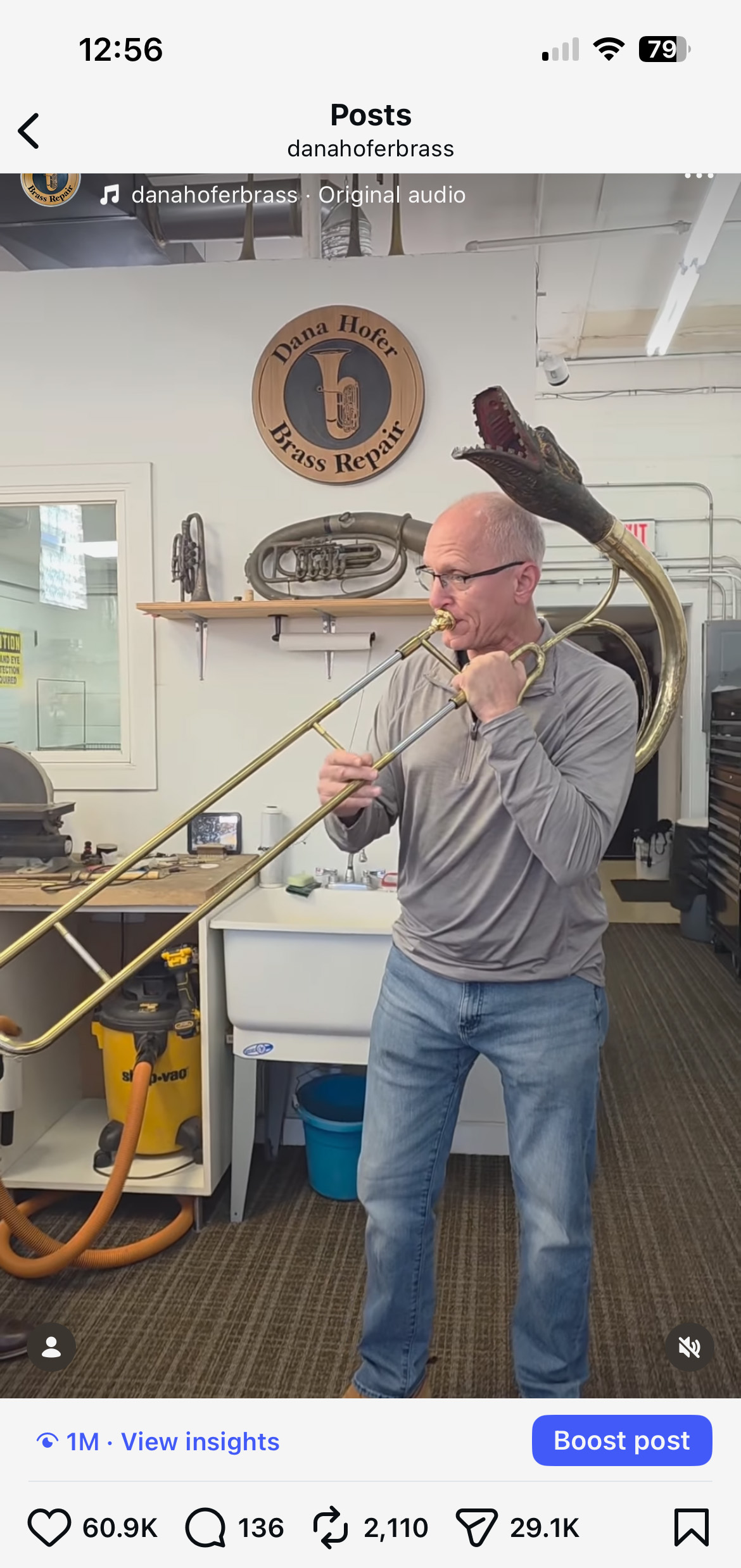
The Instagram feed for Dana Hofer Brass, 12:56 pm, December 13, 2025. 1 million views.

There you go. 1M. 1 million people have watched me play “We Wish You a Merry Christmas” on a two hundred year old buccin. That. Is. Bonkers. You never know when something like this will happen. I was just trying out my new/old trombone. I wasn’t looking for a global audience. I wasn’t planning to play for one million people. And full disclosure: There’s nothing in this for me; there’s no money involved. But I’m thrilled that the buccin has a new audience, and most of all I’m happy for the publicity this has generated for Dana Hofer and his shop. A happy result of this is he’s gained hundreds of new followers for his Instagram and Facebook accounts, and if that results in more people using his services, that’s great news. If you’re in the Chicago area and you need a terrific brass instrument repair person,  Dana Hofer — Dana Hofer Brass Repair — is the person you’ll want to see.

Merry Christmas and Happy New Year to you, friends—all 1 million of you—from Dana Hofer, my buccin, and me.
100 years ago today – Rochut, Brahms 1, and the Boston Symphony Orchestra

100 years ago today – Rochut, Brahms 1, and the Boston Symphony Orchestra

by Douglas Yeo (October 9, 2025)

Readers of The Last Trombone know something about the life and work of the French trombonist, trombonist Joannès Rochut, who was principal trombonist of the Boston Symphony Orchestra from 1925–1930. I have written several articles about Rochut—who is best known for his influential books for trombone, Melodious Etudes for Trombone, arranged from the Vocalises of Marco Bordogni—here on The Last Trombone. You can find those articles here:

In addition, I wrote a 70 page article about Rochut’s life and work, “More than Bordogni: The Life, Work, and Influence of Joannès Rochut,” that appeared in the January 2025 International Trombone Association Journal.

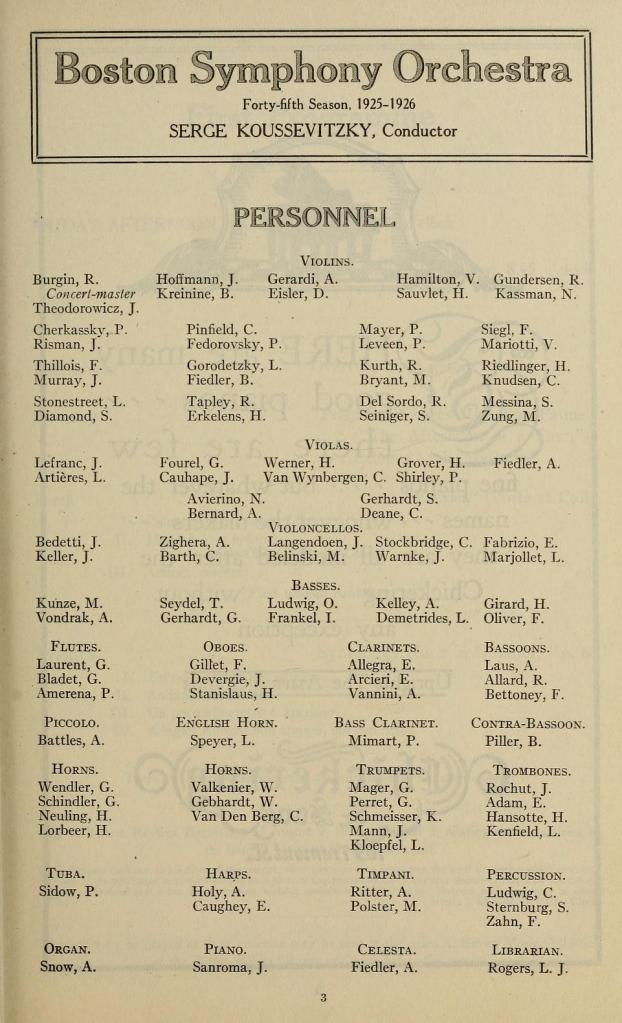
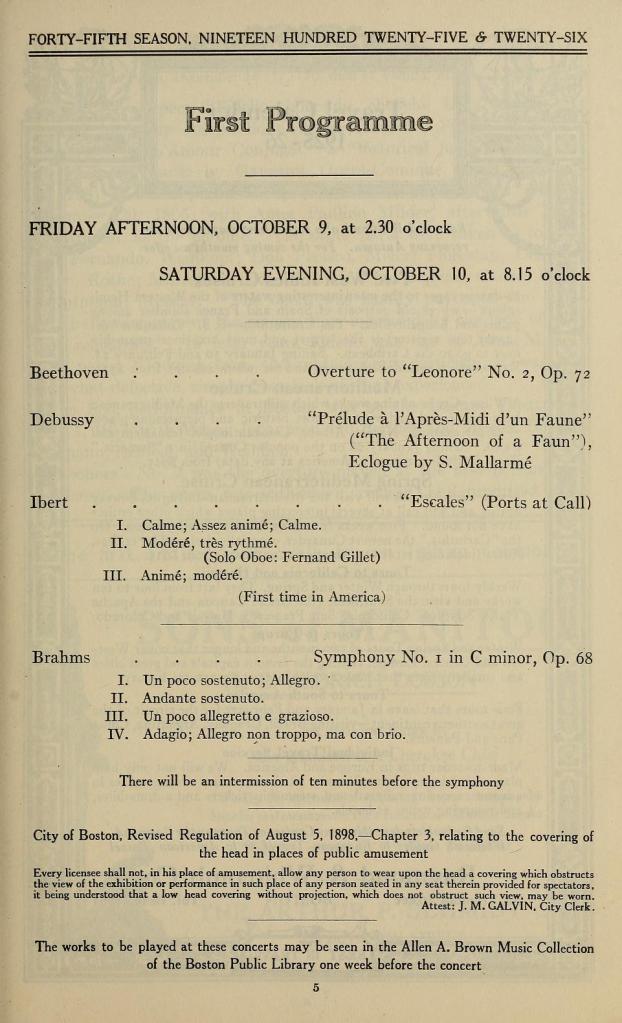
Today, October 9, 2025, is the 100th anniversary of the first concert that Joannès Rochut played with the Boston Symphony. Here is the program and the list of orchestra personnel from the concert:

Program for the Boston Symphony Orchestra’s opening night concert of October 10, 1925

Boston Symphony Orchestra personnel as printed in the program for the concert of October 9, 1925

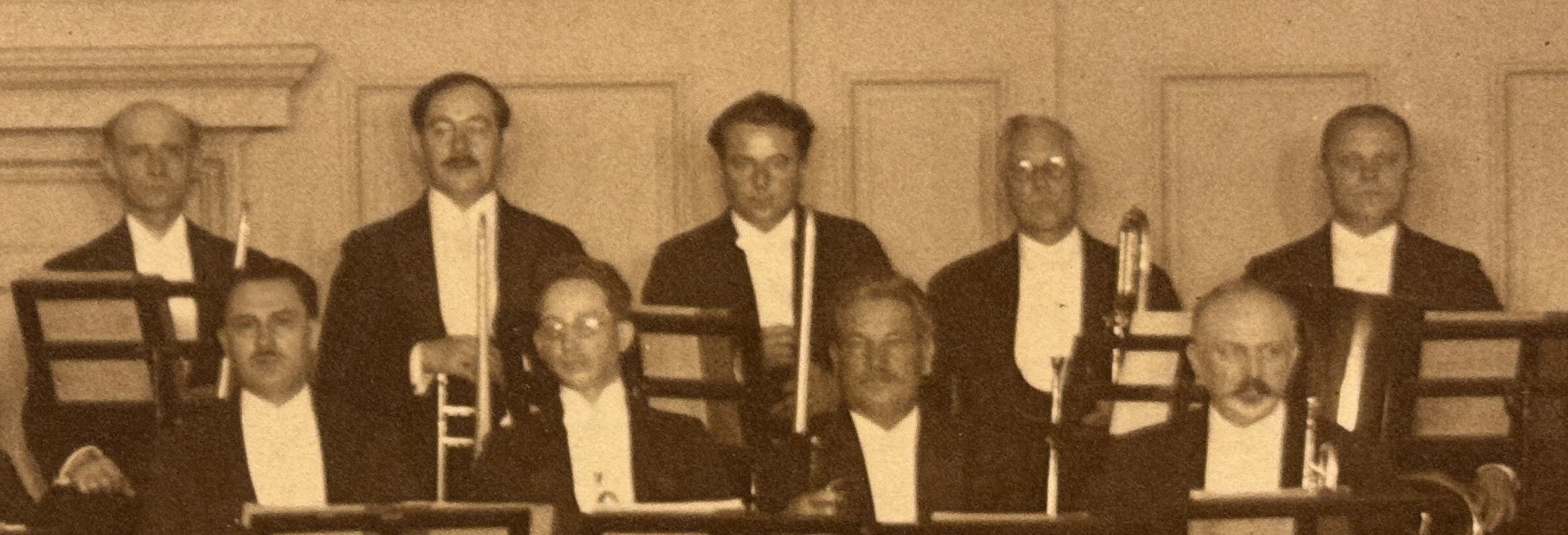
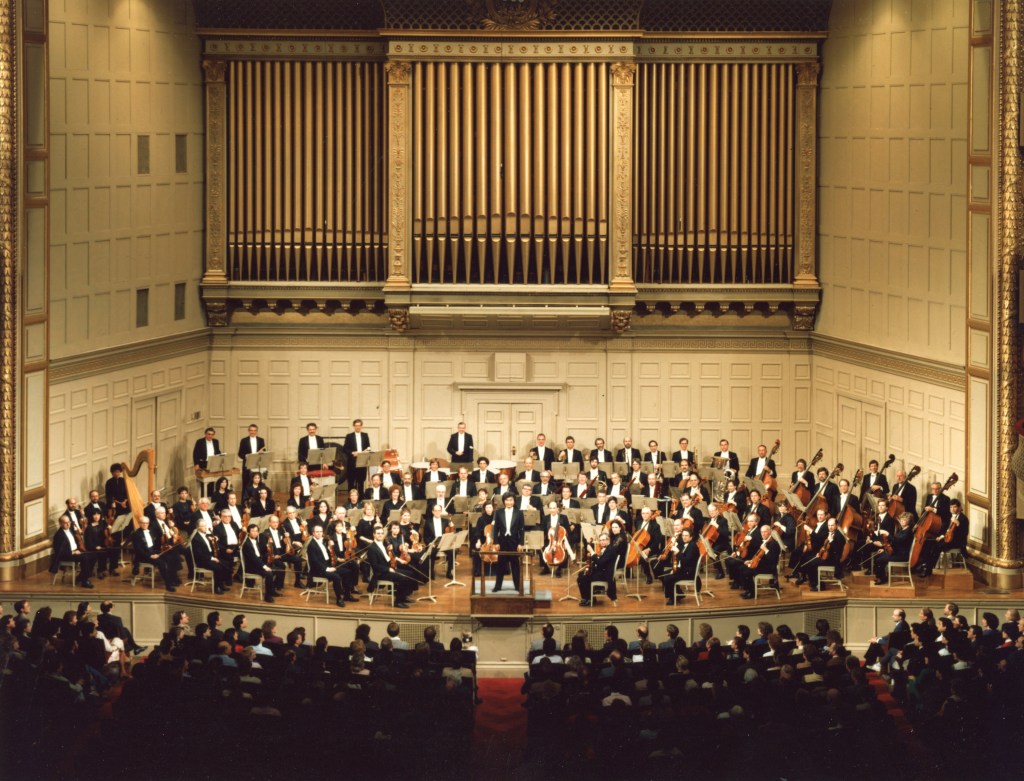
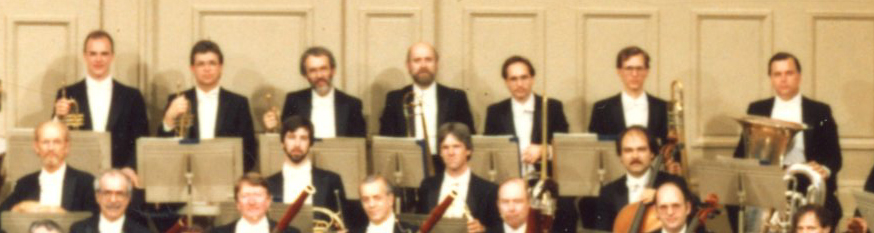
Here is a photograph of the Boston Symphony Orchestra, taken in fall 1925. Joannès Rochut is in the back row of the orchestra just in front of the right side of a doorway that’s in the center of the back wall of the stage. To his left are assistant principal trombonist Eugène Adam, second trombonist Lucien Hansotte, bass trombonist Leroy Kenfield, and tubist Paul Sidow.

Boston Symphony Orchestra on stage at Symphony Hall, Boston. Serge Koussevitzky, conductor. Fall, 1925. Courtesy Boston Symphony Orchestra Archives.

Detail of the photo above. Back row, left to right: Joannès Rochut, Eugène Adam, Lucien Hansotte, Leroy Kenfield, Paul Sidow (tuba)

This anniversary means a little more to me than the fact that I have been fascinated with Rochut’s life and work for over 40 years. That’s because he and I share a connection to our first opening night programs as members of the Boston Symphony Orchestra.

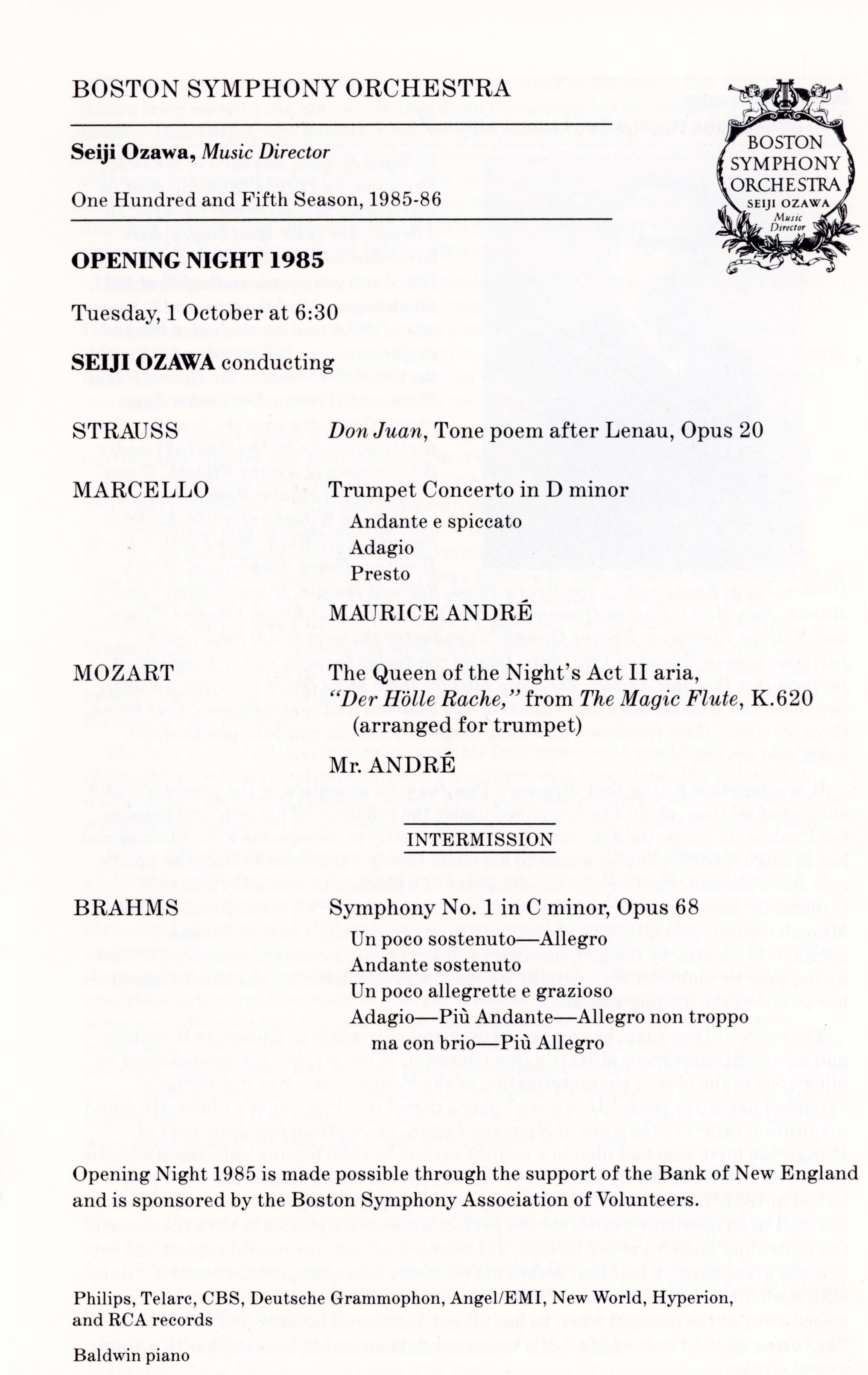
On October 1, 1985, I played my first opening night concert as bass trombonist of the Boston Symphony Orchestra. I joined the BSO in May 1985 and played several weeks of the 1985 Boston Pops season and all of the orchestra’s 1985 summer season at Tanglewood. But opening night of each Boston Symphony season was always a special event. As you can see from the program below, Rochut’s first opening night concert with the Boston Symphony Orchestra and mine shared something: we both played Johannes Brahms’ Symphony No. 1 on the concert. He was conducted by Serge Koussevitzky; I was conducted by Seiji Ozawa.

Program of the Boston Symphony Orchestra’s opening night concert of October 1, 1985

Boston Symphony Orchestra personnel as printed in the program for the concert of October 1, 1985

I don’t have a photograph of the Boston Symphony from my first full season with the orchestra, 1985–1986. But here is the earliest photo I have of the orchestra after I joined, taken in Symphony Hall during the 1987-1988 season.  The trumpets and trombones are along the back wall of the stage (left to right): assistant principal trumpeter Timothy Morrison, second trumpeter Peter Chapman, principal trumpeter Charles Schlueter, principal trombonist Ronald Barron, second trombonist Norman Bolter, bass trombonist Douglas Yeo, and tubist Chester Schmitz.

Boston Symphony Orchestra on stage at Symphony Hall, Boston. Seiji Ozawa, conductor. 1987–1988 season. Courtesy Boston Symphony Orchestra Archives.

Detail of the photo above. Back row, left to right: Timothy Morrison, Peter Chapman, Charles Schlueter, Ronald Barron, Norman Bolter, Douglas Yeo, Chester Schmitz (tuba).

There you have it. Two opening night Boston Symphony Orchestra concerts, 65 years apart. Both concerts were in Symphony Hall, Boston. One common piece, the Symphony No. 1 in C minor of Johannes Brahms. And two new members of the trombone section, Joannès Rochut and me.

This makes me smile. 

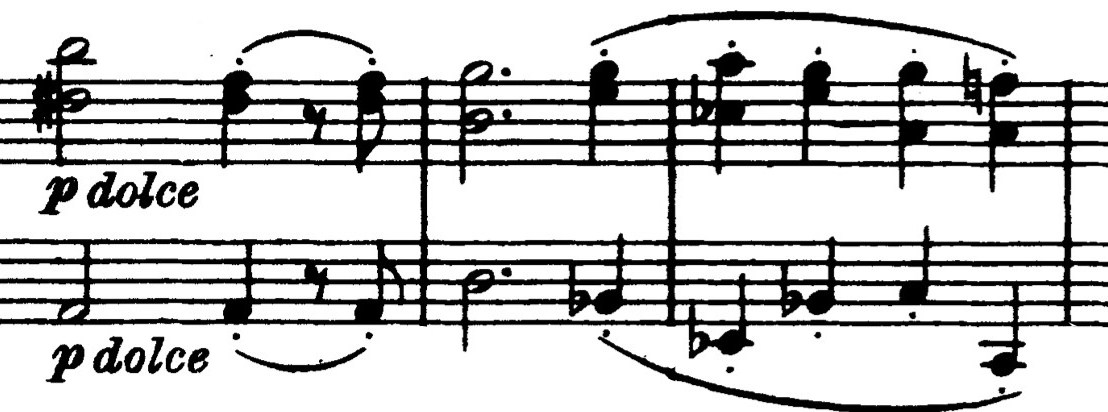
[Header image: The trombone chorale from the 4th movement of Johannes Brahms’ Symphony No. 1.]

Honoring Joannès Rochut in Paris

Honoring Joannès Rochut in Paris

by Douglas Yeo (September 12, 2025) — Cet article paraît en français ci-dessous.

Trombonists around the world are well acquainted with the life and work of Joannès Rochut (1881–1952). Readers of TheLastTrombone may remember the several articles I wrote about him here:

Since 1928, trombone players have relied on Rochut’s three volumes of Melodious Etudes for Trombone, adapted from the vocalises of Marco Bordogni, as important material for development of legato and expressive styles. In January 2025, the International Trombone Association Journal published its largest issue to date, which included my 70-page article, “More Than Bordogni: The Life, Work, and Influence of Joannès Rochut.” In the course of my research, I connected with Rochut’s great-granddaughter, Julie Rochut. From her home in Paris, Julie generously shared family photographs and information—much of it gleaned from conversations with her father, Bernard, and her uncle, Jean-Jacques—that greatly enriched my work.

The entrance to Bagneux Cemetery, France.

In August 2025, my wife, Patricia, and I traveled to Paris to celebrate our 50th wedding anniversary. The trip gave me the chance to meet Julie in person and thank her for her invaluable help. As our plans to meet unfolded, we agreed to gather at the final resting place of Joannès Rochut and his wife, Louise, in Bagneux Cemetery, just south of Paris.

Douglas Yeo with members of the Rochut family at Bagneux Cemetery, France. Left to right: Douglas Yeo, Sophie Rochut, Bernard Rochut, Arthur Allouti-Rochut, Inès Allouti-Rochut, Julie Rochut. August 23, 2025.

Benny Sluchin—my friend and colleague and co-recipient along with me of the International Trombone Association’s 2024 Lifetime Achievement Award—had previously visited the cemetery, photographing Rochut’s grave for my article. Benny joined Patricia and me on our visit, where we were welcomed by several members of the Rochut family: Bernard Rochut (grandson of Joannès), Julie and her sister Sophie (great-granddaughters), and Sophie’s children, Inès and Arthur Allouti-Rochut (great-great-grandchildren).

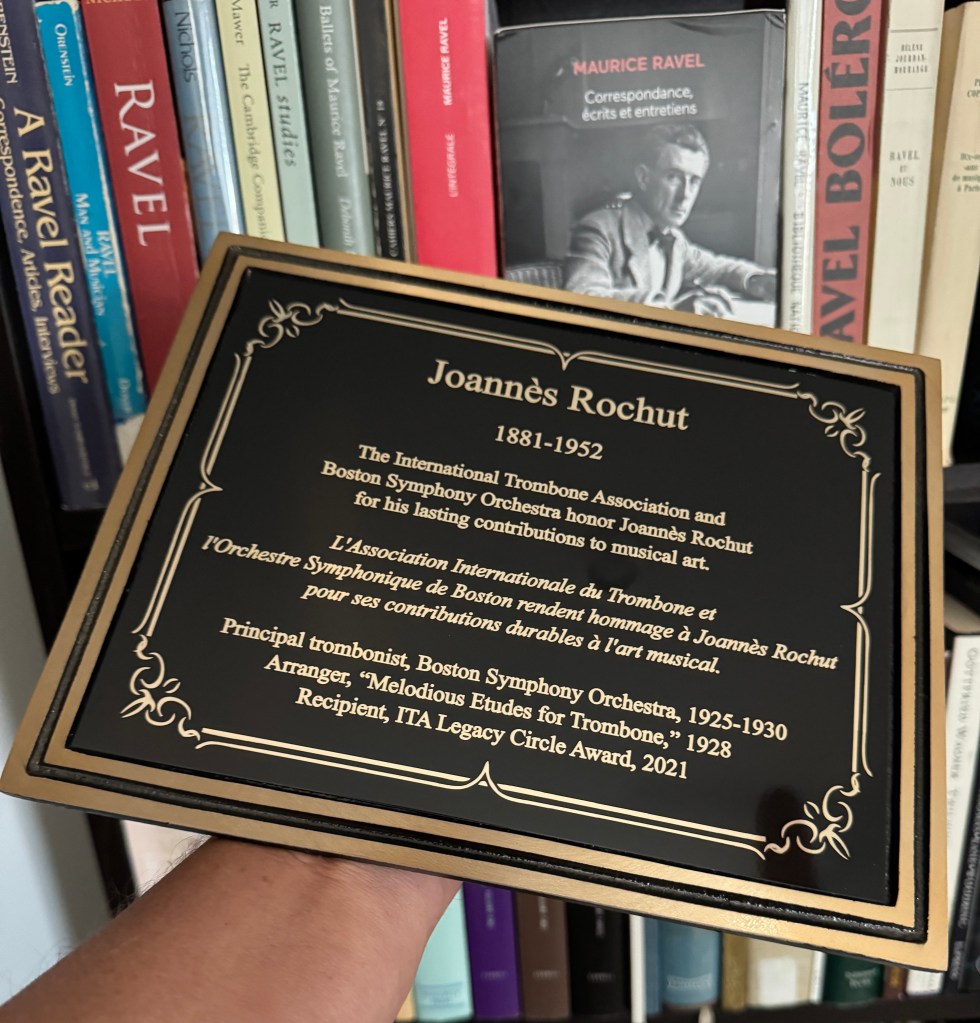
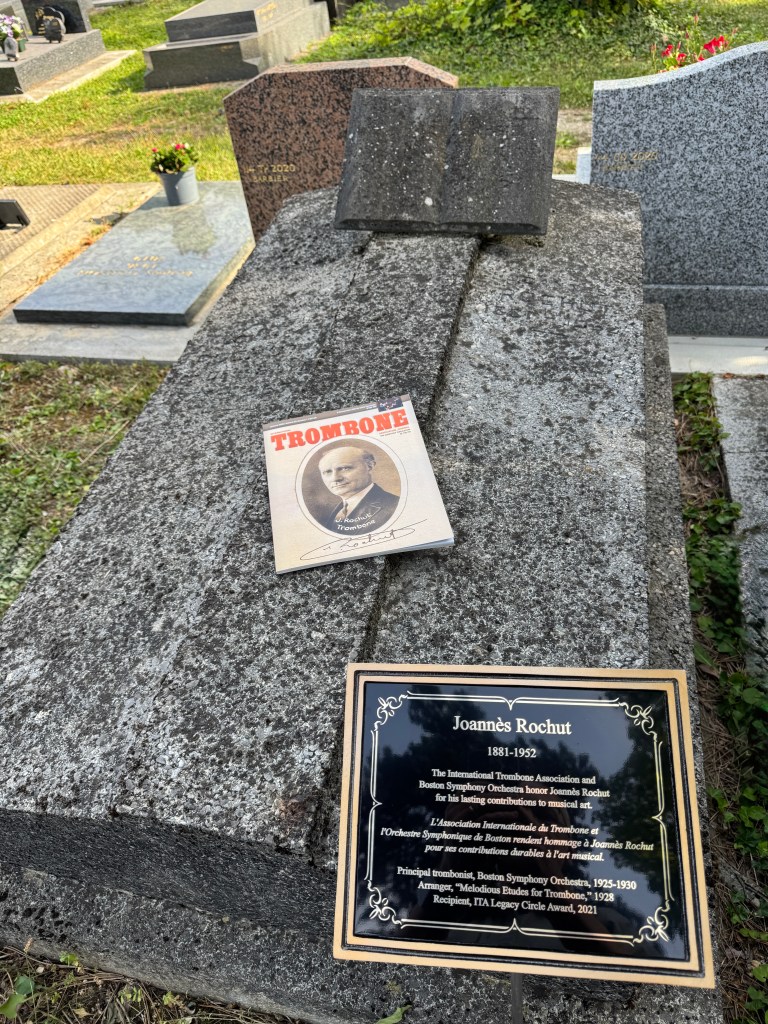
Commemorative plaque commissioned by Douglas Yeo for the grave of Joannès Rochut (2025).

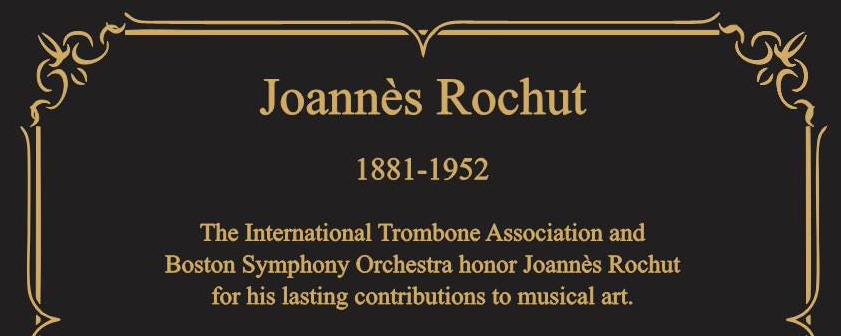
Ahead of our trip, I commissioned a commemorative plaque for Rochut’s grave to honor his enduring influence. I installed on behalf of the ITA and the Boston Symphony Orchestra; the marker bears the following text:

Joannès Rochut

1881–1952

The International Trombone Association and

Boston Symphony Orchestra honor Joannès Rochut

For his lasting contributions to musical art.


L’Association Internationale du Trombone et

l’Orchestre Symphonique de Boston rendent hommage à Joannès Rochut

Pour ses contributions durables à l’art musical.


Principal trombonist, Boston Symphony Orchestra, 1925–1930

Arranger, “Melodious Etudes for Trombone,” 1928

Recipient, ITA Legacy Circle Award, 2021

This is the second commemoration of Rochut’s work that appears at his grave. The grave also includes a tribute to Rochut from his colleagues at Radiodifussion-télévision française (R.T.F.), where he served as Régisseur général des Orchestres (general manager) from 1935 until his death in 1952. This beautiful tribute—carved in stone in the shape of an open book—reads:

SOUVENIR

REGIE DES ORCHESTRAS DE LA R.T.F.

(A remembrance from the Management of the Orchestras of the R.T.F.)


Tribute to Joannès Rochut by his colleagues at Radiodiffusion-télévision française.

At the gravesite, Bernard Rochut brought forth several photographs of Joannès, a photograph of a valve trombone Rochut had owned, and an eight-page hand-written letter Rochut sent in 1930 to his son, Robert, just before Joannès concluded his tenure with the Boston Symphony Orchestra.

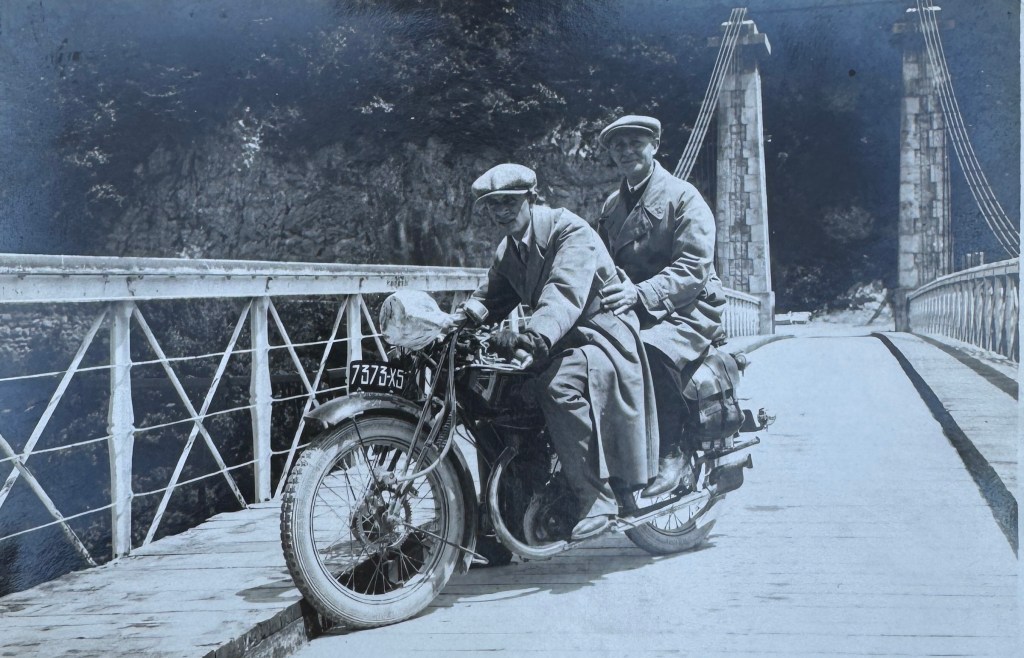
Joannès Rochut riding motorcycle with his son Robert. Undated photo from Bernard Rochut.

The Rochut family also holds additional music manuscripts in Rochut’s hand which they plan to share with me for possible future publication. These materials will form the basis of a forthcoming update to my earlier article.

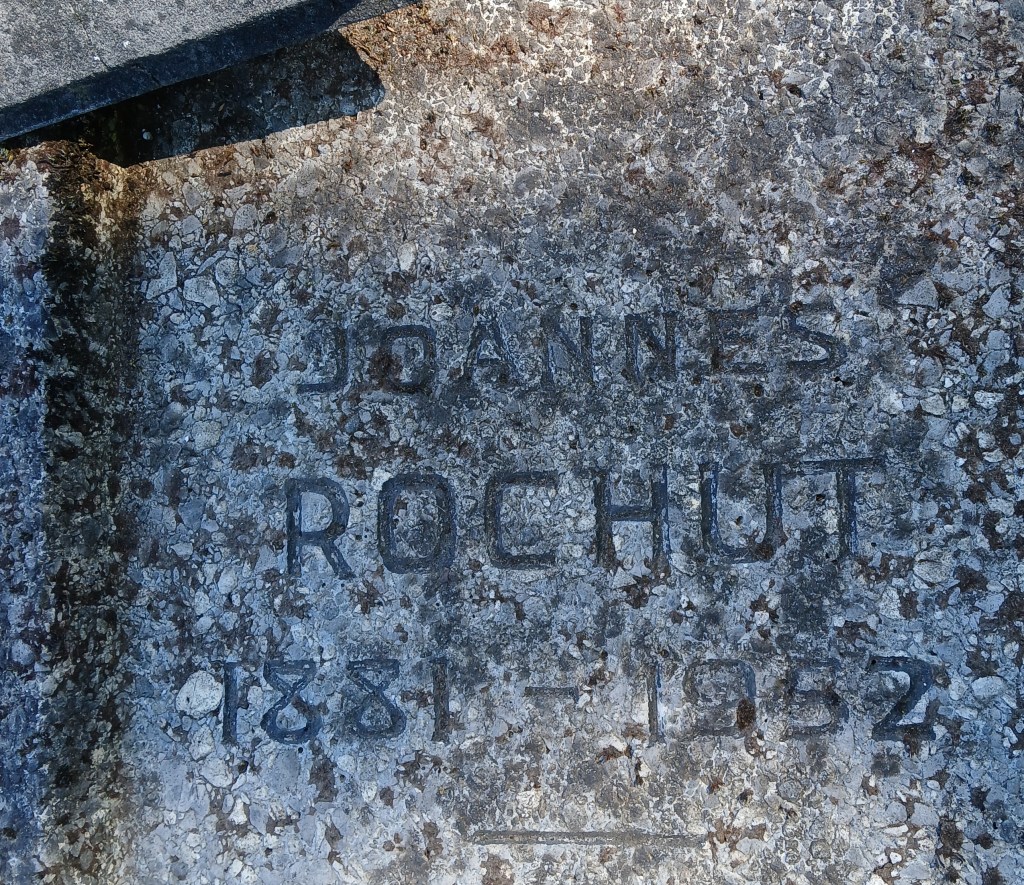
Inscription on the grave of Joannès Rochut.

As we look ahead to the 150th anniversary of Rochut’s birth in 2031, it is especially meaningful to see his great-great-grandchildren continuing in his path: Inès (trombone) and Arthur (percussion) are members of the Paris Opera’s first youth orchestra, Apprentissage de l’orchestre. Their love of music reminds us that Rochut’s legacy is not only preserved in print and performance but is also alive in the next generation of musicians who carry his name—and his influence—into the future.

The grave of Joannès and Louise Rochut, Bagneux Cemetery, France.

• • • • •

Honorer Joannès Rochut à Paris

par Douglas Yeo (12 septembre 2025)

Les trombonistes du monde entier connaissent bien la vie et l’œuvre de Joannès Rochut (1881–1952). Les lecteurs de TheLastTrombone se souviendront peut-être des plusieurs articles que j’ai écrits à son sujet:

Depuis 1928, les trombonistes s’appuient sur les trois volumes des Melodious Etudes for Trombone de Rochut, adaptés des vocalises de Marco Bordogni, comme matériel essentiel pour développer le style legato et expressif. En janvier 2025, le International Trombone Association Journal a publié son plus grand numéro à ce jour, comprenant mon article de 70 pages “More Than Bordogni: The life, work, and influence of Joannès Rochut.” Au cours de mes recherches, j’ai établi un lien avec l’arrière-petite-fille de Rochut, Julie Rochut. Depuis son domicile parisien, Julie a généreusement partagé des photographies de famille et des informations—dont une grande partie recueillie lors de conversations avec son père, Bernard, et son oncle, Jean-Jacques—qui ont considérablement enrichi mon travail.

En août 2025, mon épouse Patricia et moi nous sommes rendus à Paris pour célébrer notre 50e anniversaire de mariage. Ce voyage m’a donné l’occasion de rencontrer Julie en personne et de la remercier pour son aide inestimable. Au fil de nos conversations, nous avons convenu de nous rassembler au lieu de repos final de Joannès et de son épouse, Louise, au cimetière de Bagneux, juste au sud de Paris.

Benny Sluchin—mon ami, collègue et co-récipiendaire avec moi du Prix pour Lifetime Achievement Award par l’International Trombone Association en 2024—avait déjà visité le cimetière, photographiant la tombe de Rochut pour mon article. Benny s’est joint à Patricia et moi lors de notre visite, où nous avons été accueillis par plusieurs membres de la famille Rochut: Bernard Rochut (petit-fils de Joannès), Julie et sa sœur Sophie (arrière-petites-filles), et les enfants de Sophie, Inès et Arthur Allouti-Rochut (arrière-arrière-petits-enfants).

Avant notre voyage, j’avais commandé une plaque commémorative pour la tombe de Rochut afin d’honorer son influence durable. Je l’ai installée au nom de l’Association Internationale du Trombone et du Boston Symphony Orchestra ; elle porte l’inscription suivante:

Joannès Rochut

1881–1952

The International Trombone Association and

Boston Symphony Orchestra honor Joannès Rochut

For his lasting contributions to musical art.


L’Association Internationale du Trombone et

l’Orchestre Symphonique de Boston rendent hommage à Joannès Rochut

Pour ses contributions durables à l’art musical.


Principal trombonist, Boston Symphony Orchestra, 1925–1930

Arranger, “Melodious Etudes for Trombone,” 1928

Recipient, ITA Legacy Circle Award, 2021

Il s’agit de la deuxième commémoration de l’œuvre de Rochut figurant sur sa tombe. Elle comporte également un hommage de ses collègues de la Radiodiffusion-télévision française (R.T.F.), où il fut Régisseur général des Orchestres de 1935 jusqu’à sa mort. Ce bel hommage—gravé dans la pierre en forme de livre ouvert—porte l’inscription:

SOUVENIR

RÉGIE DES ORCHESTRES DE LA R.T.F.

Au cimetière, Bernard Rochut a présenté plusieurs photographies de Joannès, une photo d’un trombone à pistons lui ayant appartenu, ainsi qu’une lettre manuscrite de huit pages que Rochut envoya en 1930 à son fils Robert, juste avant de conclure son mandat avec le Boston Symphony Orchestra.

La famille Rochut conserve également d’autres manuscrits musicaux de sa main qu’elle prévoit de partager avec moi pour une éventuelle publication future. Ces documents formeront la base d’une prochaine mise à jour de mon article précédent.

Alors que nous nous tournons vers le 150e anniversaire de la naissance de Rochut en 2031, il est particulièrement émouvant de voir ses arrière-arrière-petits-enfants marcher dans ses pas: Inès (trombone) et Arthur (percussions) sont membres du premier orchestre de jeunes de l’Opéra de Paris, Apprentissage de l’orchestre. Leur amour de la musique nous rappelle que l’héritage de Rochut ne se conserve pas seulement dans les partitions et les concerts, mais qu’il vit également à travers la nouvelle génération de musiciens qui portent son nom—et son influence—vers l’avenir.

La famille de Robert Rochut, Marseille, France, v. 1942.

Rang arrière: Joannès Rochut, Robert Rochut (fils de Joannès). Rang avant: Jean-Jacques (fils de Robert et Arlette), Arlette (épouse de Robert), Philippe (fils de Robert et Arlette), Louise (épouse de Joannès), Bernard (fils de Robert et Arlette). Collection de la famille Rochut.


A few Olympic Games surprises: Miracle and Bugler’s Dream.

A few Olympic Games surprises: Miracle and Bugler’s Dream.

by Douglas Yeo (July 29, 2025)

During my long career as bass trombonist of the Boston Symphony Orchestra (1985–2012), I participated in hundreds of recording sessions that resulted in commercially available records, CDs, and streaming. Works by Brahms (the symphonies and Ein Deutsches Requiem), Mahler (Symphonies 1, 2, 3, 5, 6, 7, 9, 10), Ravel (a dozen works), Franck (Symphonie in d minor), and many other great composers, plus dozens of recordings with the Boston Pops Orchestra. In addition, I played on three film scores recorded by the Boston Symphony Orchestra: Schindler’s List and Saving Private Ryan (music by John Williams) and Mystic River (music by Clint Eastwood—sort of—but there’s a story behind that for another time. . .). The recording sessions for these films remain very memorable to me.

Covers to soundtrack albums recorded by the Boston Symphony Orchestra: Schindler’s List (1993), Saving Private Ryan (1998), and Mystic River (2003)

Work rules and payments for recording sessions are governed by agreements made between orchestras and their players, and the players are represented by the American Federation of Musicians (AFM). These agreements cover working conditions for the sessions (how long they are, when and how long a break in a session occurs), and payment. I always looked at recording sessions as one of the great benefits of playing in the BSO, because not only was playing great music that would be enjoyed by the public over and over and I was  being paid my regular weekly salary as a member of the orchestra, but I received an additional payment for playing the actual recording sessions. Then, it came as a surprise to me after my first season with the BSO that every year thereafter, I received a check—usually in the summer—that represented royalty, residual, and secondary market payments for those same sessions. Recording sessions were—and are—the gift that keeps on giving to this present day.

Those annual royalty payments fluctuate up and down, and each year, I receive a detailed statement that explains the amount I am paid for each film score or orchestral recording I made. A few years ago, I noticed a new entry on my annual Film Musicians and Secondary Markets Fund statement. In addition to entries for Schindler’s List, Saving Private Ryan, and Mystic River, there was another movie listed: Miracle.

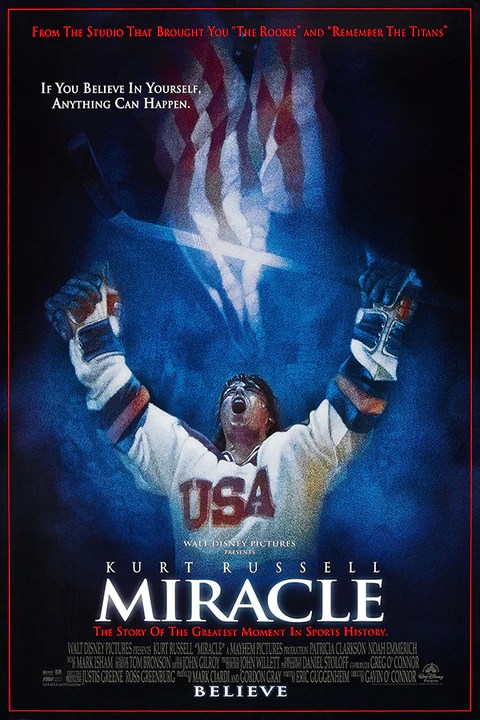
Promotional poster for Miracle (2004)

I didn’t remember playing any recording sessions for Miracle—a movie about the 1980 United States Winter Olympics men’s hockey team that defeated the Soviet Union’s team in the semi-final round and went on to defeat Finland to win the gold medal. But I certainly remember those Olympic games, and I had a vague recollection that a movie had been made about the team and their stunning victory. I don’t go to many movies, so it’s not surprising that I missed it.

But why was Miracle appearing on my annual film payments statement? I asked the Boston Symphony Orchestra’s manager about this and there was a simple explanation: the producers of Miracle wanted to use some music from a Boston Pops Orchestra recording in the film’s soundtrack. They didn’t need to convene a new recording session to do so. They just needed to get permission and pay royalties to the players who were on the original recording session.

As it turned out, the music that Miracle wanted to use was Bugler’s Dream by Leo Arnaud. Arnaud—who was a trombonist and successful composer and arranger who, after moving to the United States from his native France in 1931, worked on more than 160 films. Bugler’s Dream was composed in 1959. It was not “official music” for the Olympics but it was picked up and used by ABC television for their broadcast of the 1968 Winter Olympics (Grenoble, Switzerland). Since then, it has become an iconic piece that’s associated with the Olympic games.

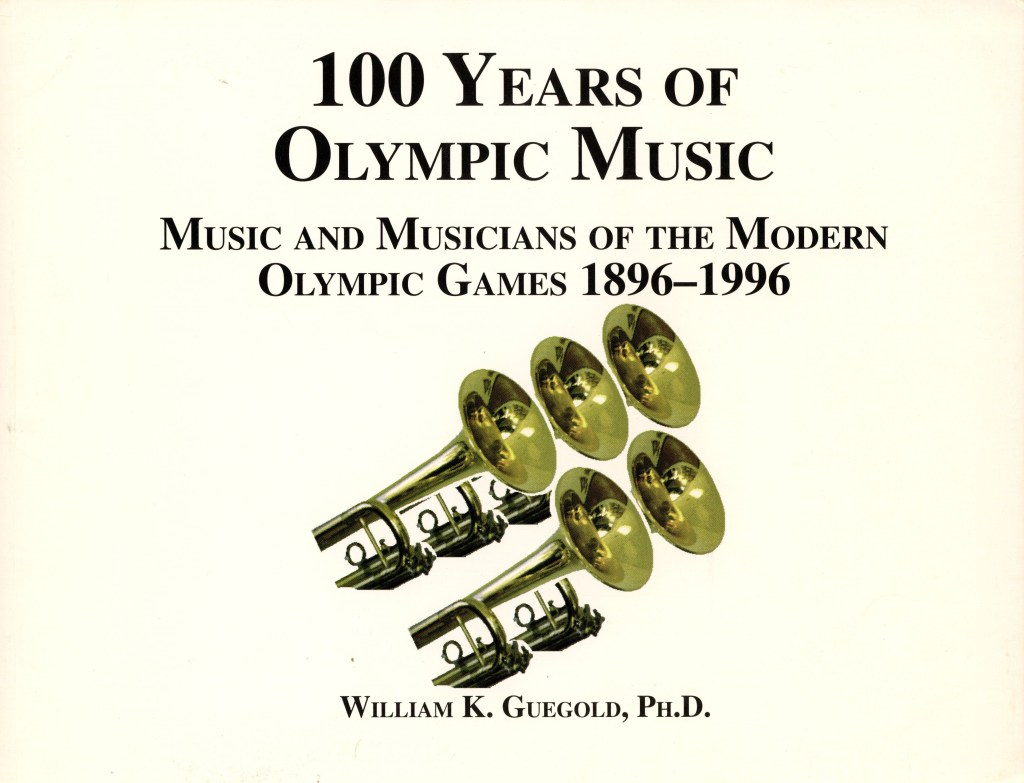
Now, a quick aside. Since 1896, the International Olympic Committee has commissioned music for each Olympics. While Bugler’s Dream was not officially composed for the Olympics, the story of the music that was written for the games is told in William K. Guegold’s book, 100 years of Olympic Music: Music and Musicians of the Modern Olympic Games 1896–1996 (Mantua, Ohio: Golden Clef Publishing, 1996). The book, which is out of print but used copies are readily available, opens with an interview of John Williams and contains detailed commentary about music written for the Olympics including many samples of scores and other images. It’s a fascinating book.

Cover to William K. Guegold’s 100 Years of Olympic Music: Music and Musicians of the Modern Olympic Games 1896–1996

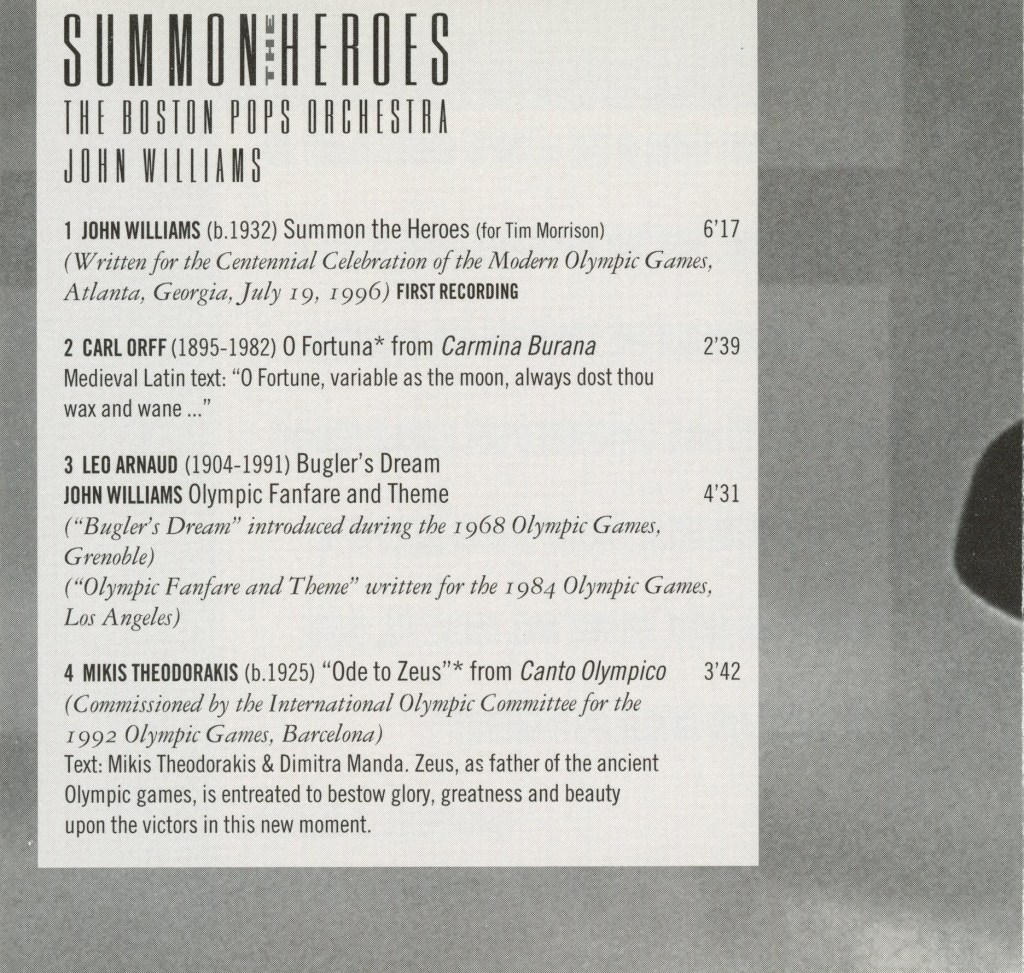
In 1996, the Boston Pops Orchestra made the official album of music for the 1996 Olympics (Atlanta, Georgia). John Williams was commissioned to write the theme music for those Olympic games, and that piece turned out to be Summon the Heroes; that was also the title of the compact disc recording that also included several other Olympic themed selections. Williams had previously written theme music for two other Olympic games: Olympic Fanfare and Theme (1984 Olympic Games, Los Angeles, California), and The Olympic Spirit ( 1988 Olympic Games, Seoul, Korea; this theme was composed for NBC’s television coverage), and in 2002, Williams wrote Call of the Champions (2002 Olympic Games, Salt Lake City, Utah).

For the broadcast of the 1996 Olympic games on NBC, John Williams created a medley that began with Arnaud’s Bugler’s Dream and continued with Williams’ own Olympic Fanfare and Theme. This mashup of two familiar Olympic related pieces proved to be very popular. So popular that many people now assume that Williams wrote Bugler’s Dream. But the recording makes clear who wrote what; there are two pieces with two composers clearly identified on the printed notes to the recording.

Page from the accompanying booklet to the CD recording, Summon the Heroes (Boston Pops Orchestra, John Williams, conductor)

You can hear this recording of the medley of  Bugler’s Dream and John Williams’ Olympic Fanfare and Theme recorded by the Boston Pops Orchestra with John Williams conducting on the 1996 recording, Summon the Heroes, HERE.

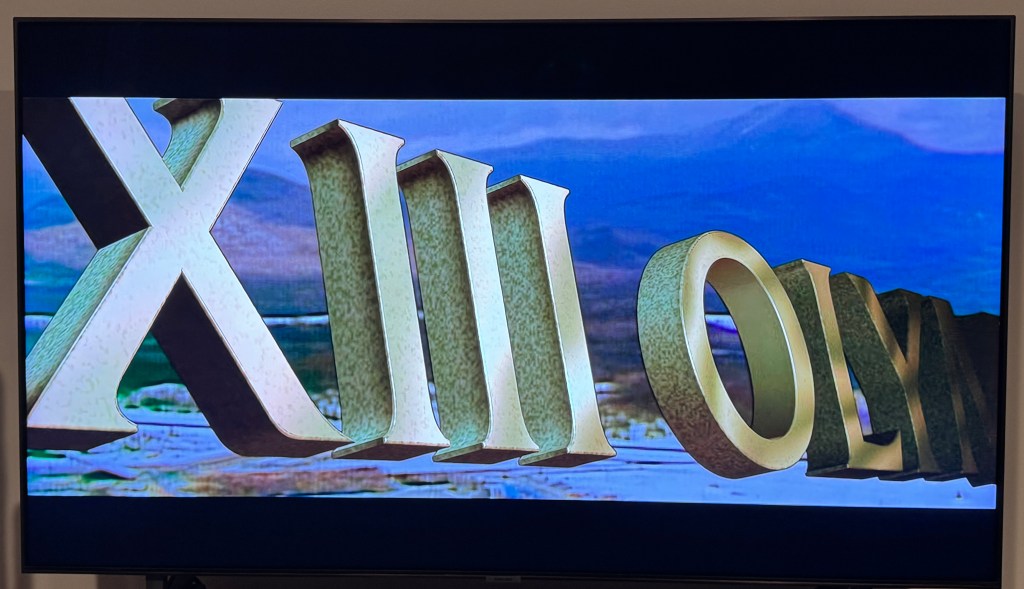
Back to Miracle. The movie about the 1980 US Olympic hockey team wanted to use Arnaud’s Bugler’s Dream, so all of a sudden, I was listed as a performer on the movie’s soundtrack. My contribution: 53 seconds of music. So, each year since 2005, I’ve received a small payment for Miracle in my annual royalty check. The other day, my wife and I finally got around to watching Miracle. It’s a terrific story that’s well told. And there it was: at the beginning of the scene where the US Olympic team gets off the bus in Lake Placid, New York (images below), you can hear the Boston Pops Orchestra playing Bugler’s Dream.

Images from the movie Miracle, showing the moment when Bugler’s Dream is heard, and the end credits.

By the way, if you purchase the soundtrack recording to Miracle, you won’t find the Boston Pops Orchestra track there. The soundtrack album only includes some original music  for the movie composed by Mark Isham (four tracks), and songs by Blue Öyster Cult, J. Geils Band, and Jay Ferguson that were used in the movie. If you want the Bugler’s Dream recording that appears on Miracle, you can purchase the Summon The Heroes recording on amazon.com; you’ll find it there as an LP, CD, or streaming on amazon music.

That’s the first Olympic Games surprise to share with you. At least it was a surprise to me to find myself with credit as a performer on another movie. But here’s another Olympic Games surprise.

A few years ago, I began researching Maurice Ravel’s iconic composition, Bolero. The result of that research will be told in my forthcoming article, “Maurice Ravel’s Bolero: A Fresh Look at a Familiar Masterpiece.” The article will be published in two parts, in the October 2025 and January 2026 issues of the International Trombone Association Journal. In the article, I discuss the origin of Bolero, its premiere and other early performances, and I offer insights and discoveries about Bolero’s famous trombone solo. I’m not going to spoil the story here—you’ll have to read the article for yourself when it comes out—but one of the things I researched were the many claims that Leo Arnaud made about Ravel and Bolero. Arnaud often told stories about his friendship with Ravel, so I wanted to investigate them.

Among the things I researched was Arnaud’s Bugler’s Dream. I wanted to mention Arnaud’s most famous composition when I wrote about him in my Bolero article, but as I always do when I write about history, I do my due diligence to verify everything I read before I write about it. As I was investigating Bugler’s Dream, I learned a lot about the piece that was new to me. And it’s probably new to you, too.

I had known about and performed Bugler’s Dreams for many years. Those 53 seconds of music are an indelible part of our Olympic  Games consciousness. During my research, I learned that Bugler’s Dream was commissioned by conductor Felix Slatkin (father of conductor Leonard Slatkin) in 1959 for the LP recording, Charge! Side 1 of the record has three compositions listed as composed by Arnaud (Charge!, Drummer Boys, and Bugler’s Dream), and side 2 has three arrangements by Arnaud (Fifes and Drums, Bagpipes and Drums, and When Johnny Comes Marching Home).

Front and back covers to Charge! (1959), conducted by Felix Slatkin

I purchased a copy of the Charge! LP and when I listened to it, there were more surprises. The 53 seconds of Bugler’s Dream that we all know and love is only the first part of the composition with that title. Bugler’s Dream is actually 3:55 long. There are five other sections to the piece, and the opening theme is not reprised. So, when we hear Bugler’s Dream on Olympic Games broadcasts, we’re hearing just the first part of the whole piece. Have a listen, below, to the complete Bugler’s Dream, the first 3:55 of this recording on YouTube:

But wait, there’s more.

As I continued researching Bugler’s Dream, there was another surprise waiting for me. Those first 53 seconds of Bugler’s Dream were not COMPOSED by Leo Arnaud. They were ARRANGED by him. While the label of the disc credits Arnaud as the composer of Bugler’s Dream—and every time the piece is recorded or played in concert, Arnaud is credited as the composer—the liner notes to Charge! tell a different story: 

Incipit about Bugler’s Dream from the back cover of Charge!

Bugler’s Dream was “derived from various bugle calls,” and is a “fantasy of classical fanfares and radically modern cadenzas.” Bugler’s Dream is an arrangement. But of what?

I dug around some more and found the source for the famous theme that is credited to Arnaud and heard by millions of people at Olympic Games. The opening theme of Bugler’s Dream was written by Joseph-David Buhl (1781–1860). Buhl was a French trumpeter and composer who revised and wrote many bugle calls for the French Military under Napoleon Bonaparte and Louis XVIII. He published a method for trumpet in 1825, and in his time was highly regarded as a player, band leader, and composer.  

One of Buhl’s bugle calls was Salut aux étendards (sonnerie triumphal)Salute to the Standards (Triumphal Fanfare). It was recorded on the 1986 LP, Glorie à la Cavalerie, with Les Trompettes du “boute-selle” and La Fanfare du 2e Régiment de hussars, conducted by Éric Conrad. Have a listen to Buhl’s fanfare, above. You’ll immediately recognize it as the source for Bugler’s Dream.

Front and back covers to Gloire à la Cavalerie (1986), conducted by Éric Conrad

Leo Arnaud’s Bugler’s Dream begins with an arrangement of Joseph-David Buhl’s Salut aux étendards, and then moves to several more themes. I have not researched the source of these other themes but given what the liner notes to Charge! say about Bugler’s Dream — that it was “derived from various bugle calls” —  I would not be surprised if the other themes in Bugler’s Dream were composed by someone other than Arnaud, too. And wouldn’t be surprised at all  if the rest of Bugler’s Dream was also composed by Buhl. I’ll keep looking. It’s time to research French bugle calls.

Joseph-David Buhl died 165 years ago. He is not here to claim his rightful credit (and royalties, which must be considerable) for a piece that has become an iconic part of the modern Olympic Games. But the next time you hear Bugler’s Dream, tip your hat to Buhl. We can be grateful to Leo Arnaud for making Buhl’s fanfare famous to today’s ears. But we give Arnaud too much credit if we say Bugler’s Dream was composed by him. It was not. Arnaud should have given Buhl credit. Here’s how we should refer to the piece:

Joseph-David Buhl: Salut aux étendards. Arranged and adopted by Leo Arnaud as Bugler’s Dream.

Let’s give credit where credit is due.